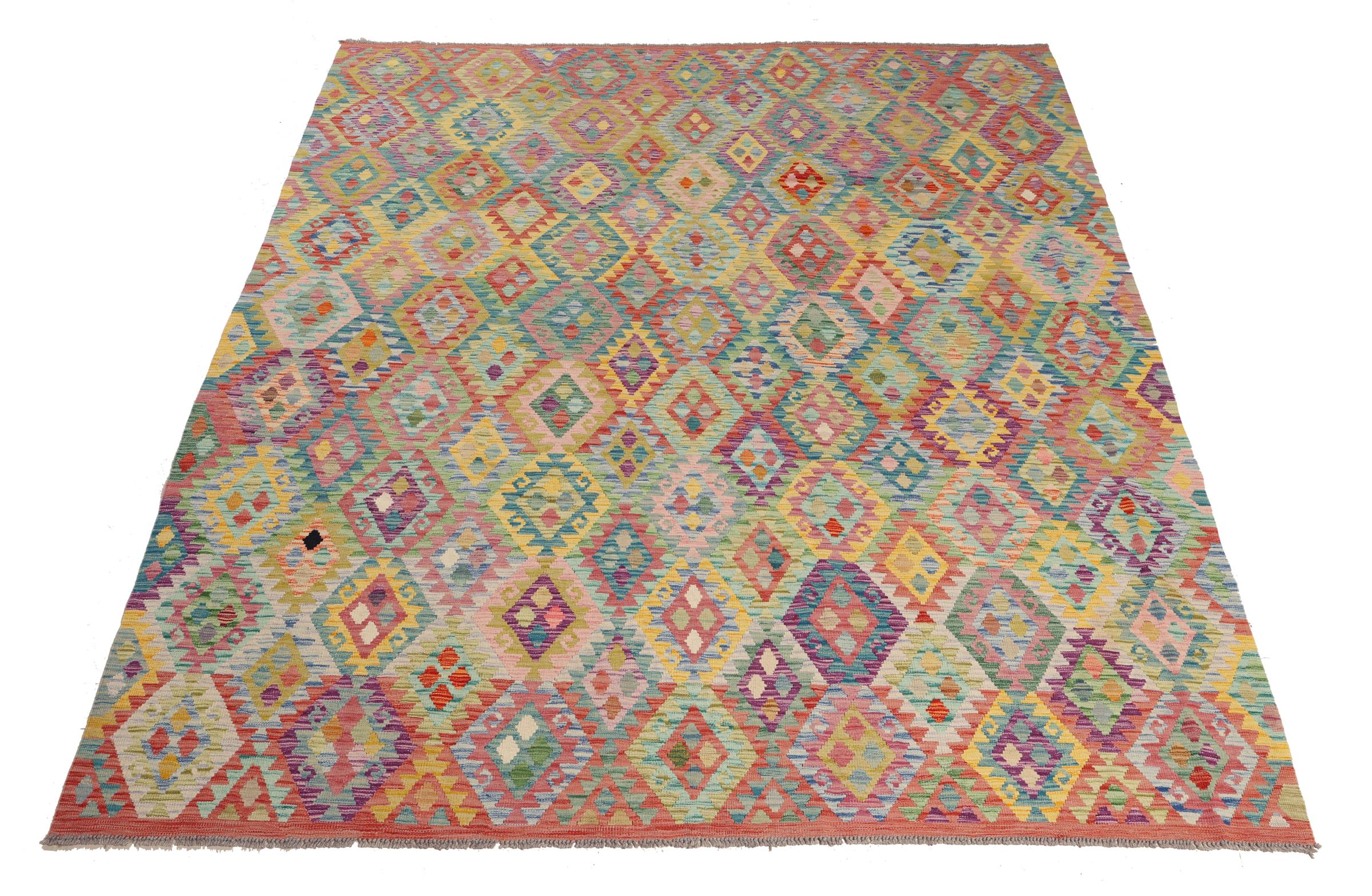
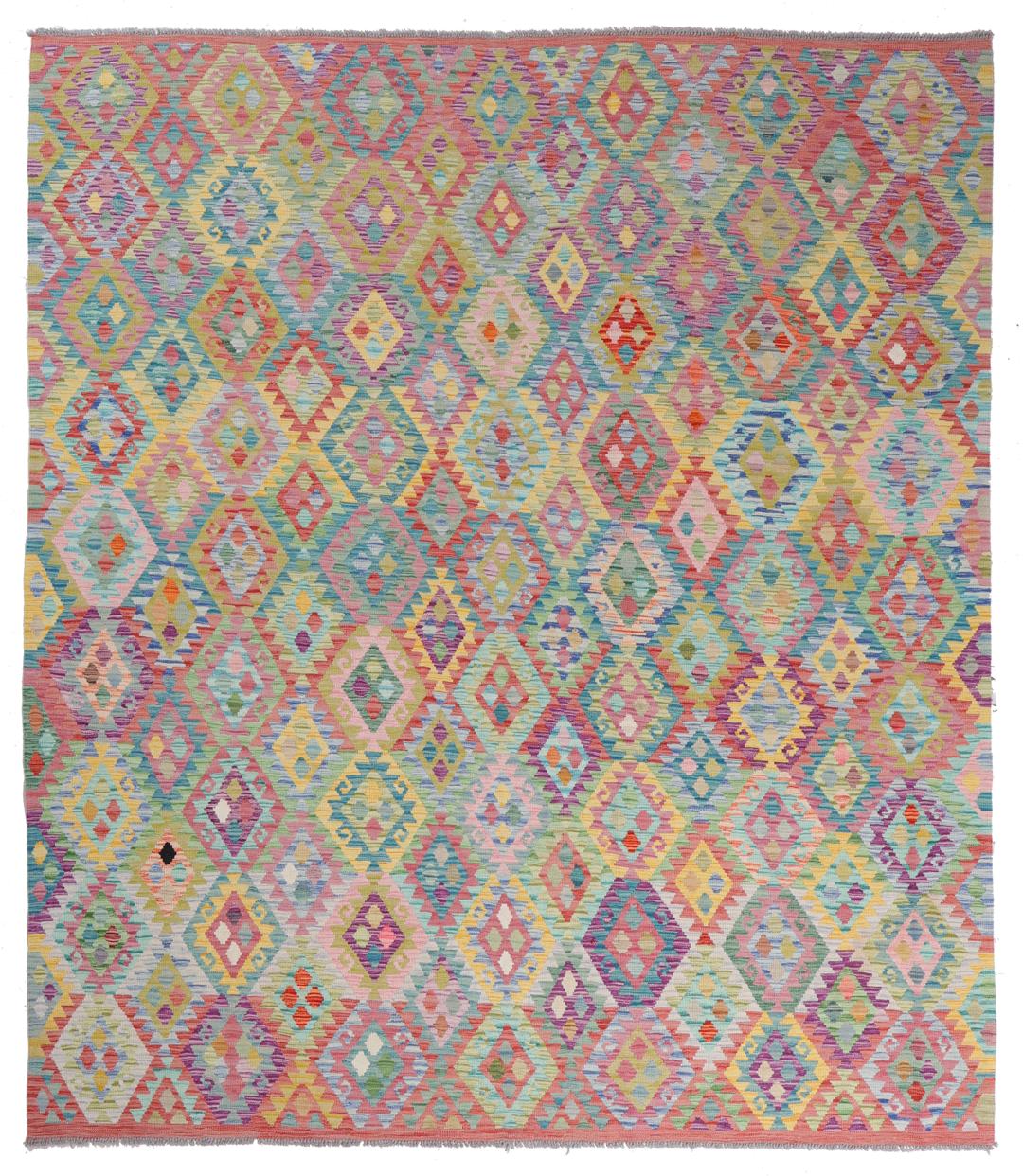
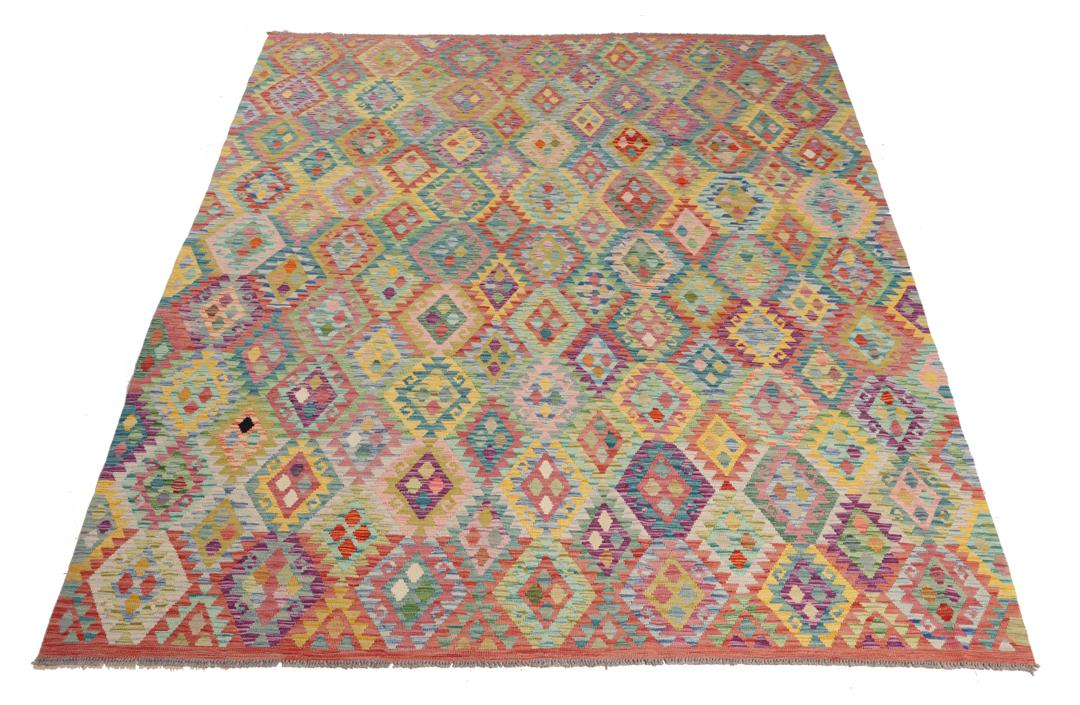
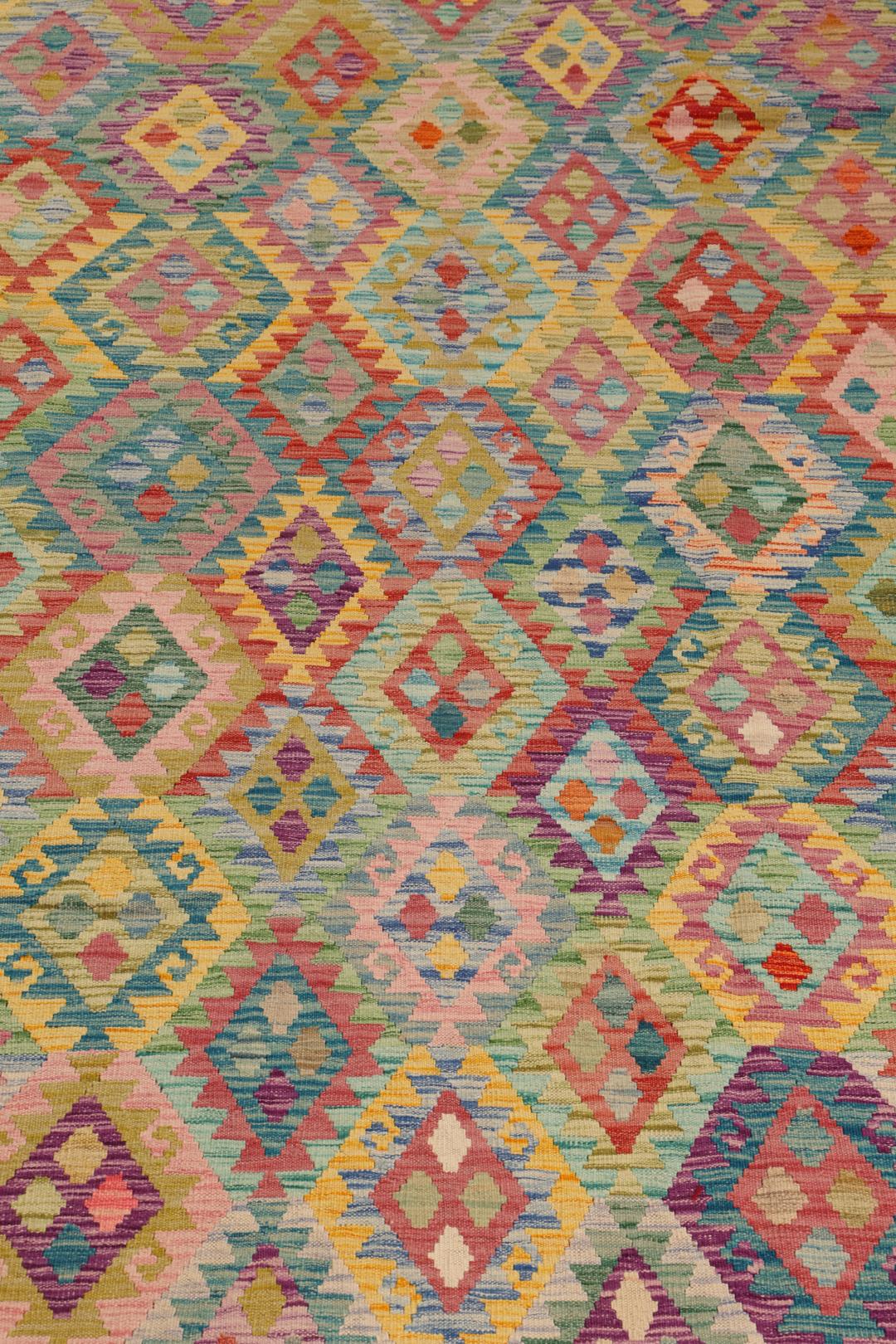
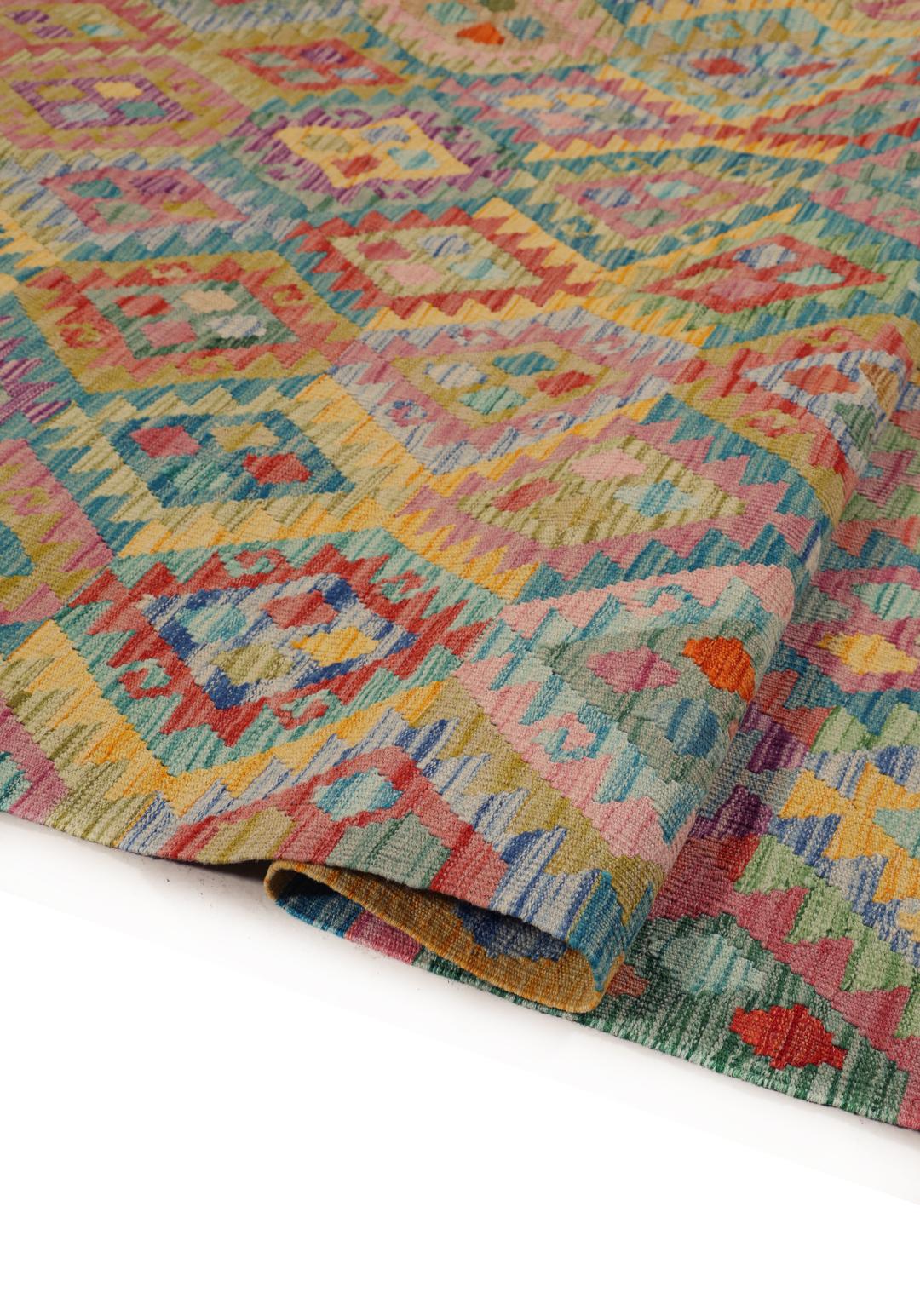
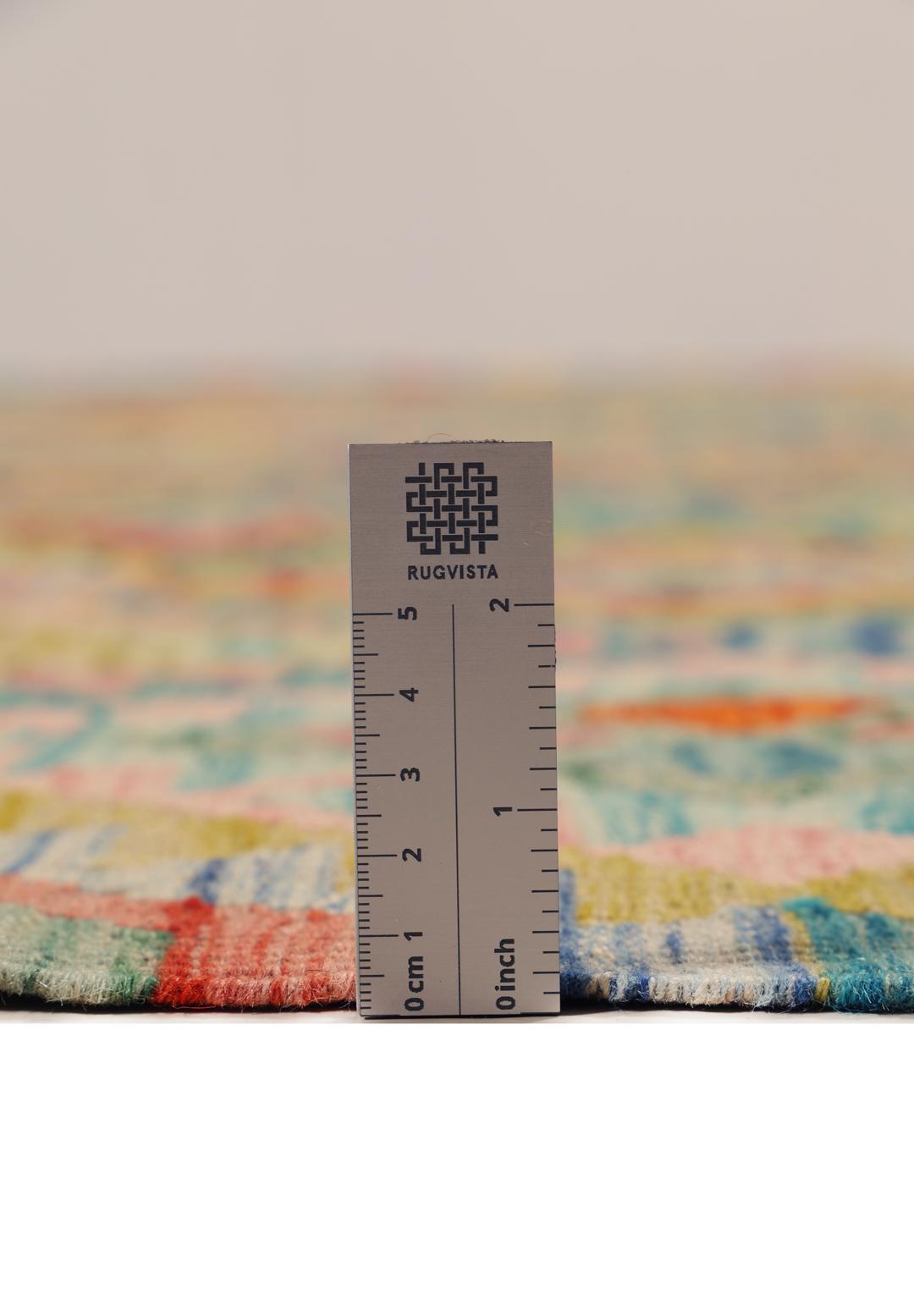
Kelim rugs have been a cornerstone of Middle Eastern textile history for centuries, serving as functional, portable, and artistic items for nomadic and village communities. Originating from the diverse regions of Afghanistan, these flat-woven pieces were traditionally used as floor coverings, wall hangings, and storage bags, reflecting the nomadic lifestyle where portability and durability were paramount.
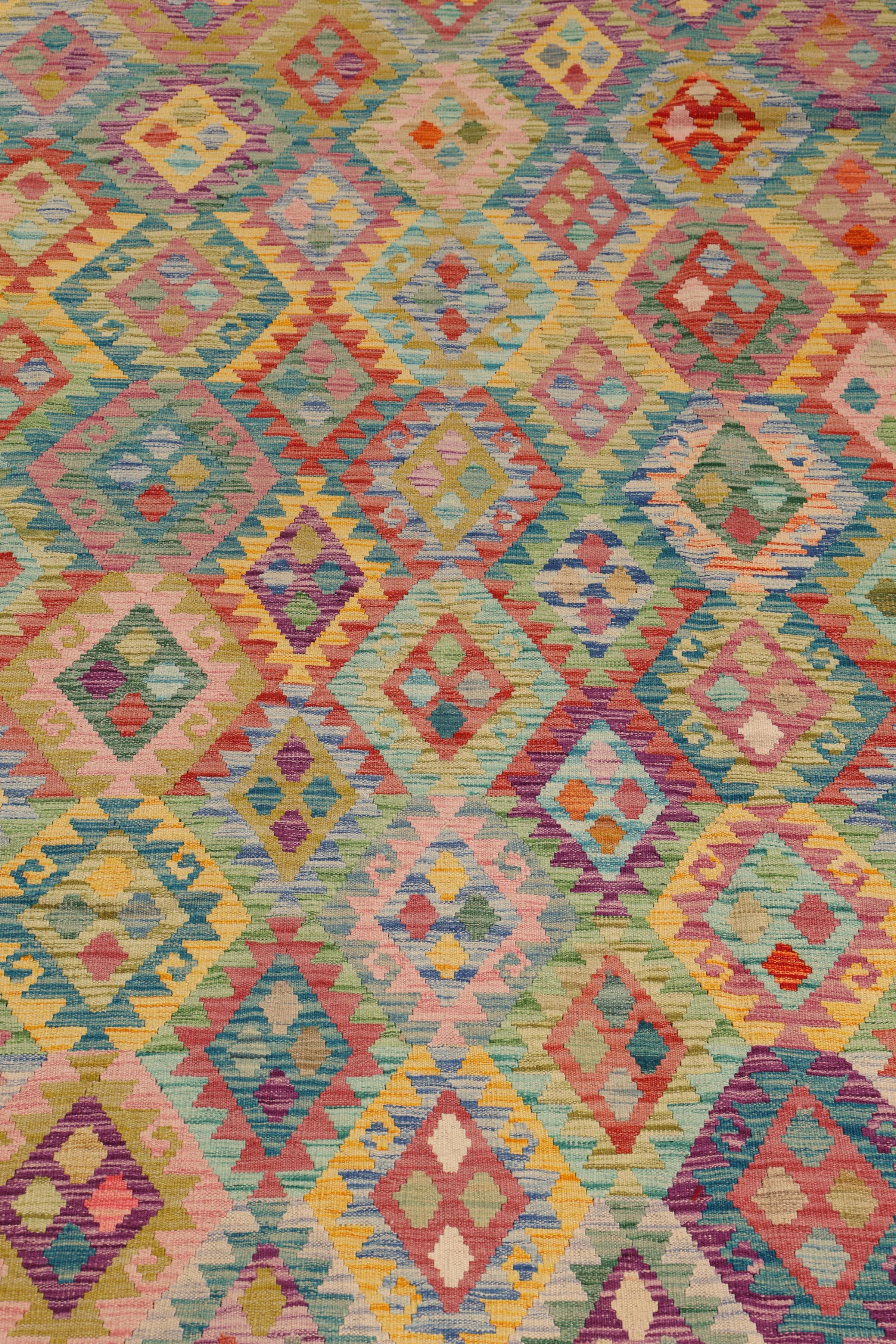
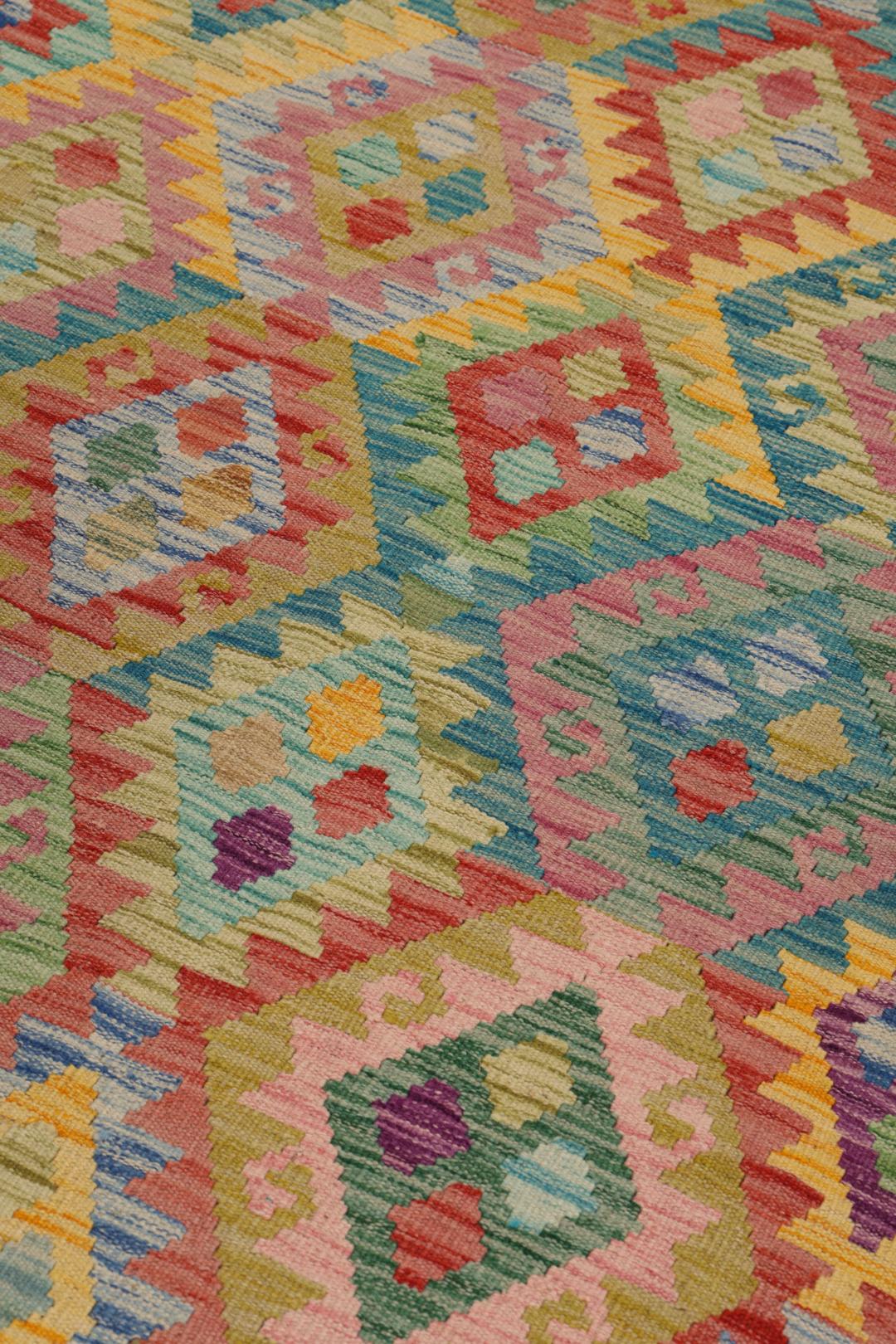
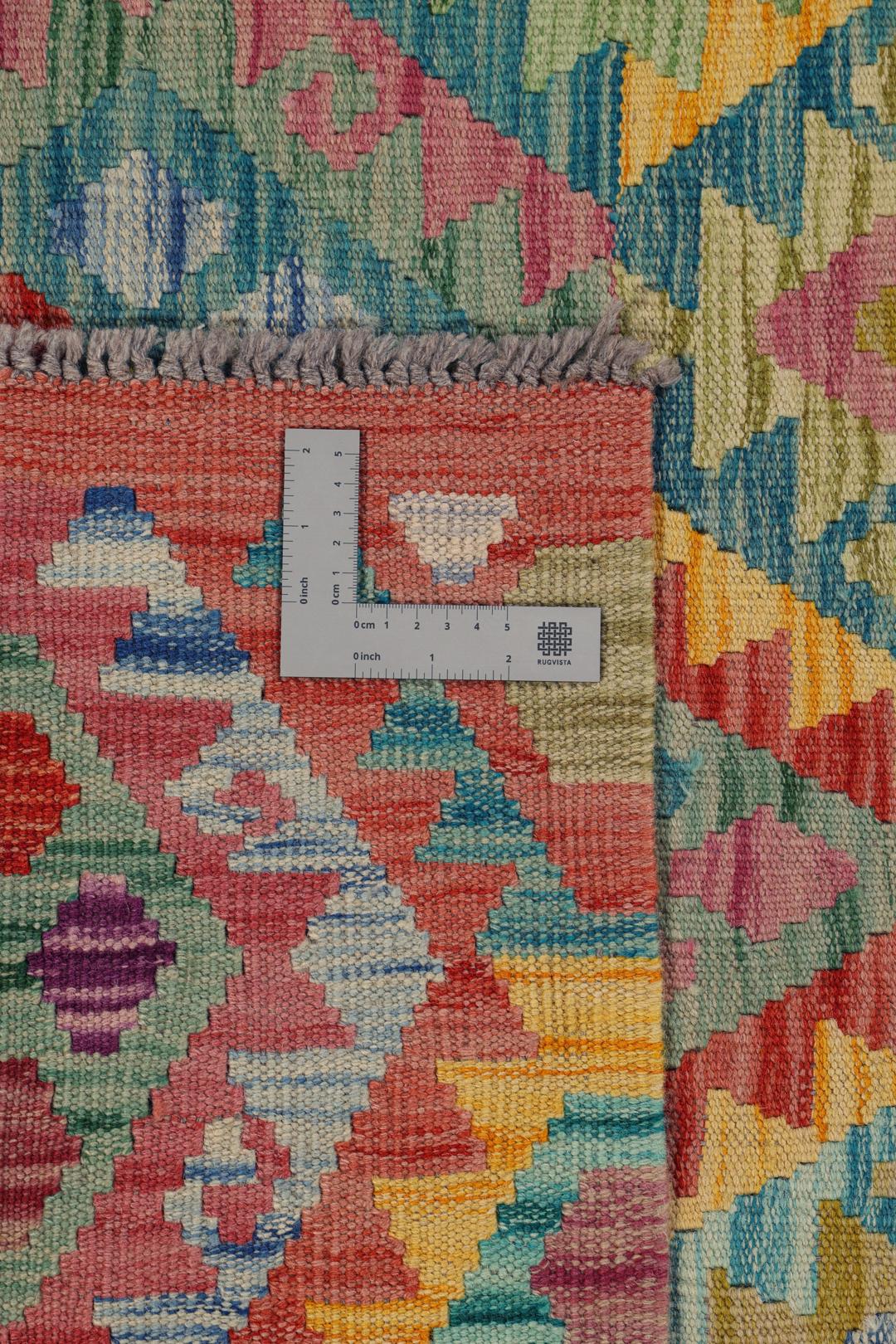
The term 'Kelim' refers to the specific flat-weave technique where the weft and warp yarns are interlaced to create a smooth surface without a pile. This technical approach results in a lightweight yet strong textile. The absence of a pile allows the intricate geometric patterns to appear with exceptional clarity, making the design process a rigorous test of the weaver's mathematical precision and aesthetic vision.
Signature design elements in Afghan Kelims often include bold, repeating geometric shapes, such as diamonds and triangles, which are deeply rooted in tribal symbolism. These motifs often act as a visual language, representing protection, fertility, or the natural landscape. The use of vibrant, locally sourced dyes gives these rugs their characteristic depth, with colours often mellowing beautifully over time to create a softened, storied appearance.
Owning an Afghan Kelim is more than just a decorative choice, as it represents a connection to a centuries-old tradition of artistic expression. These rugs are highly valued by collectors for their authenticity and the human story woven into every thread. By bringing this piece into your home, you are preserving a craft that has survived through generations of cultural evolution and migration.