The Kelim tradition in Afghanistan is deeply rooted in the nomadic and semi-nomadic lifestyles of the region. These rugs were historically created by tribal groups not only for their beauty but as functional, portable essentials that served as floor coverings, wall hangings, and storage bags. The evolution of these textiles reflects the rich cultural tapestry of the Middle East, where weaving is a language of identity and heritage.
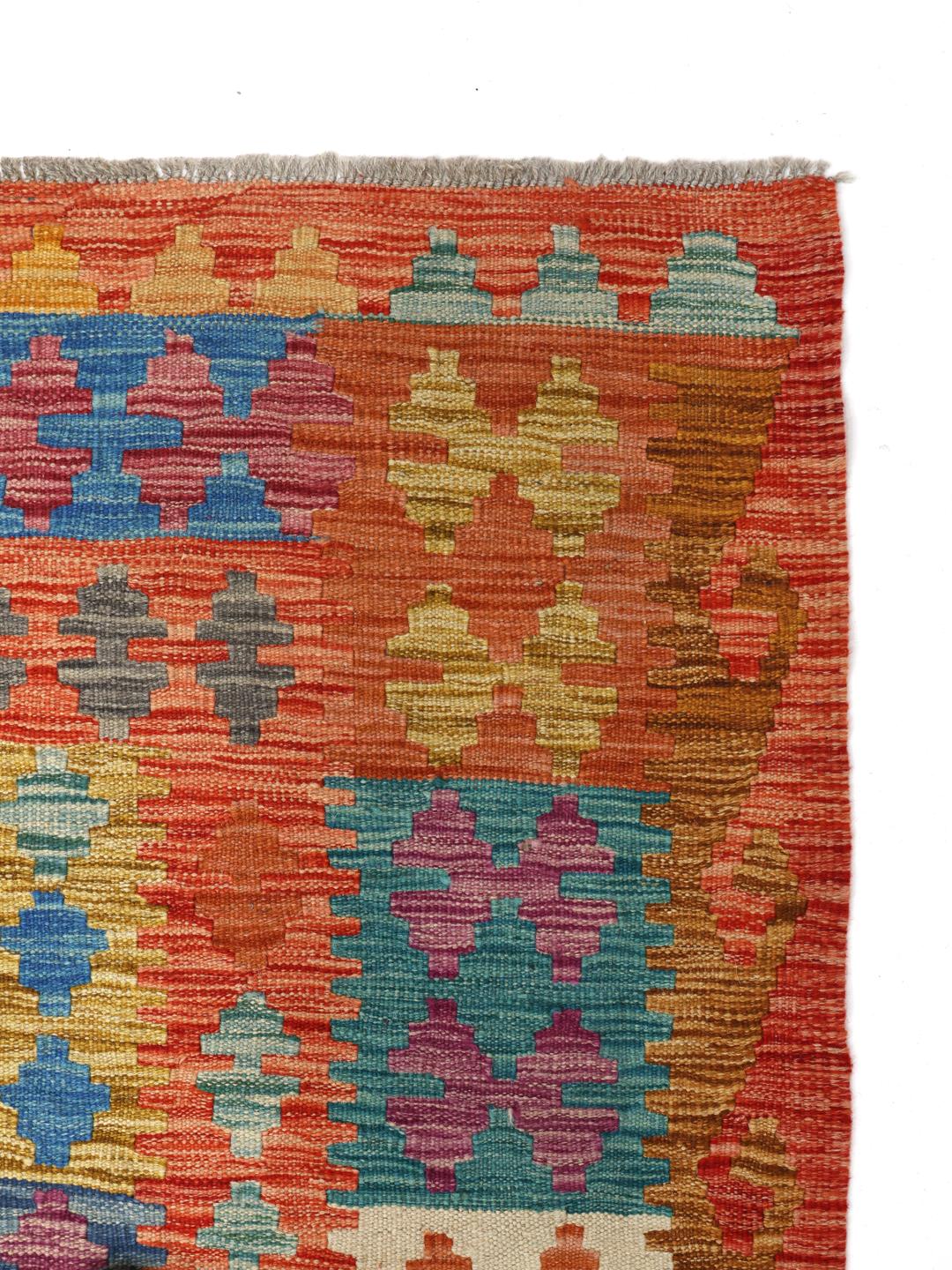
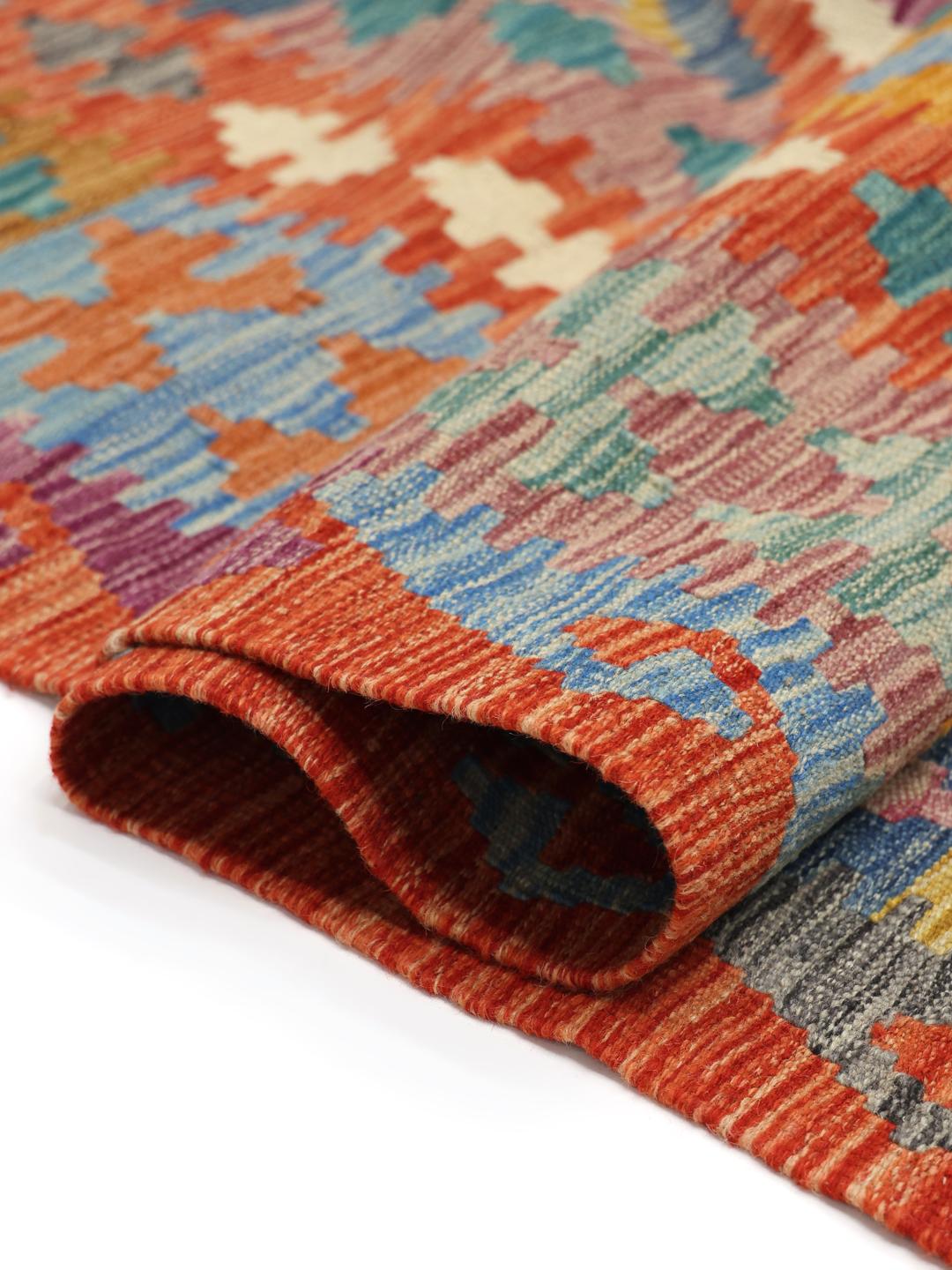
The term 'Kelim' refers to the flat-weaving technique used to create these rugs, which distinguishes them from pile-knotted pieces. By interweaving the coloured weft threads through the warp, weavers create a reversible design with a smooth, durable finish. This technique is highly valued for its ability to produce sharp, graphic lines, allowing for the complex geometric patterns that have become the hallmark of this tradition.
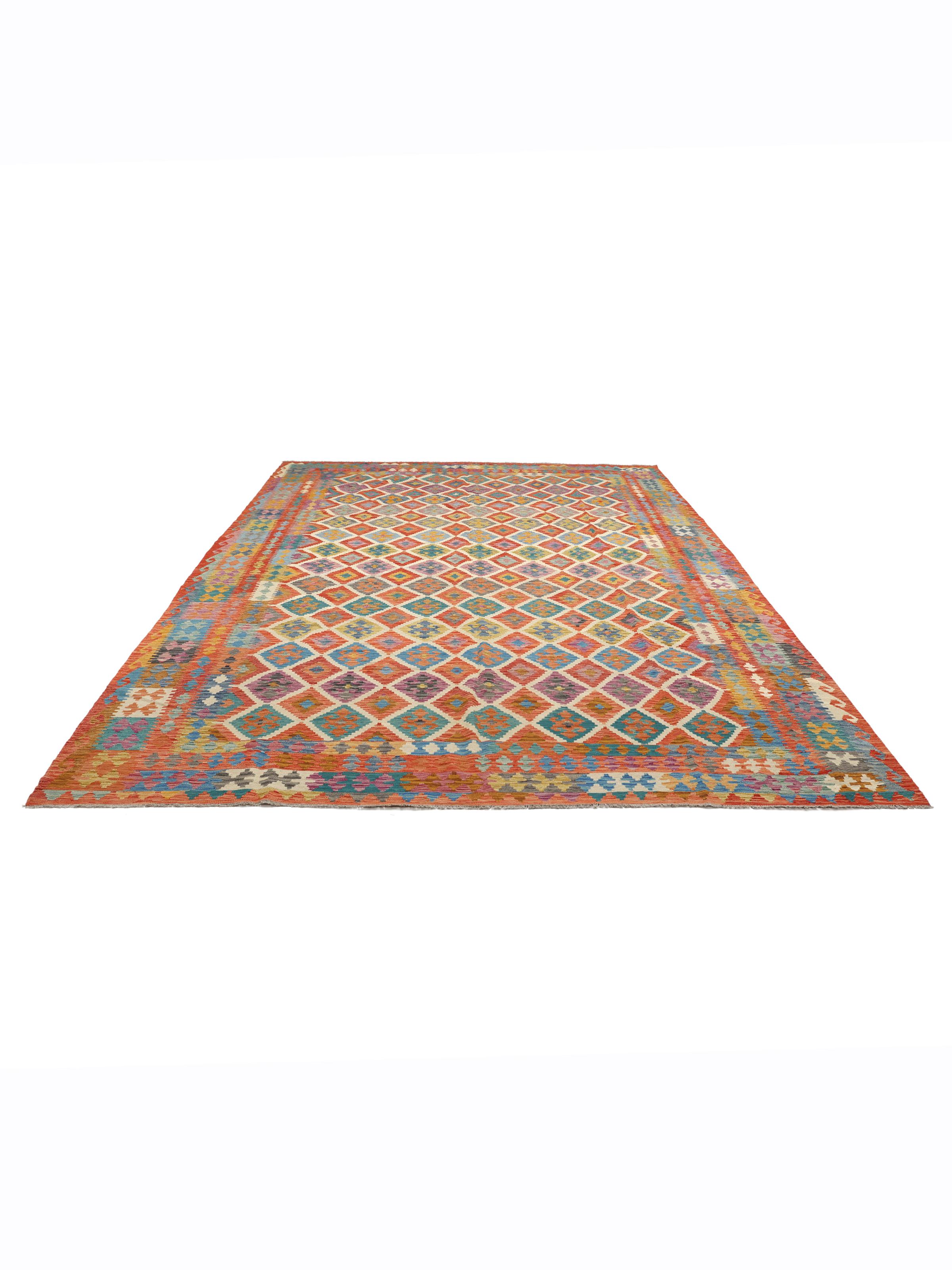
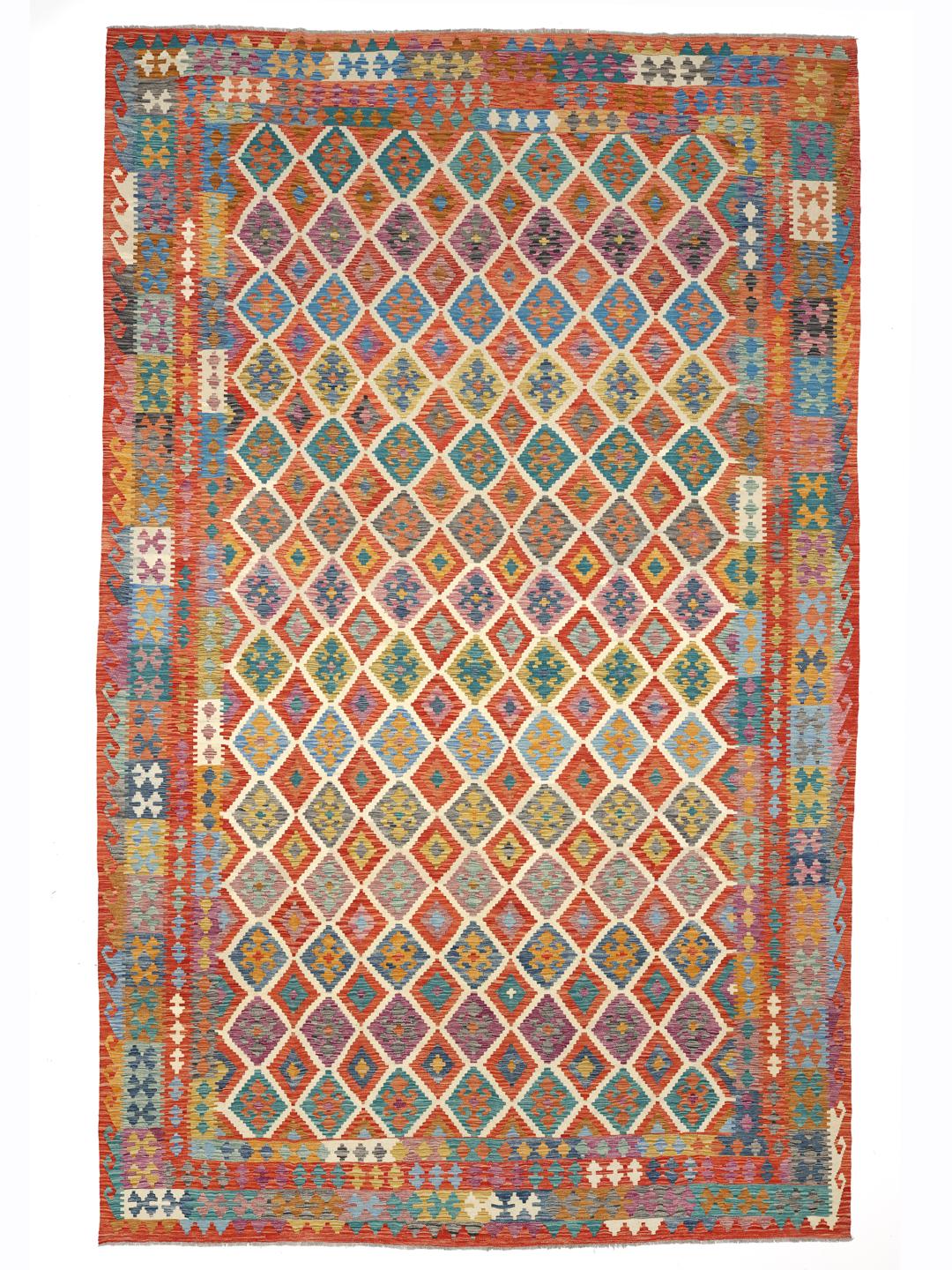
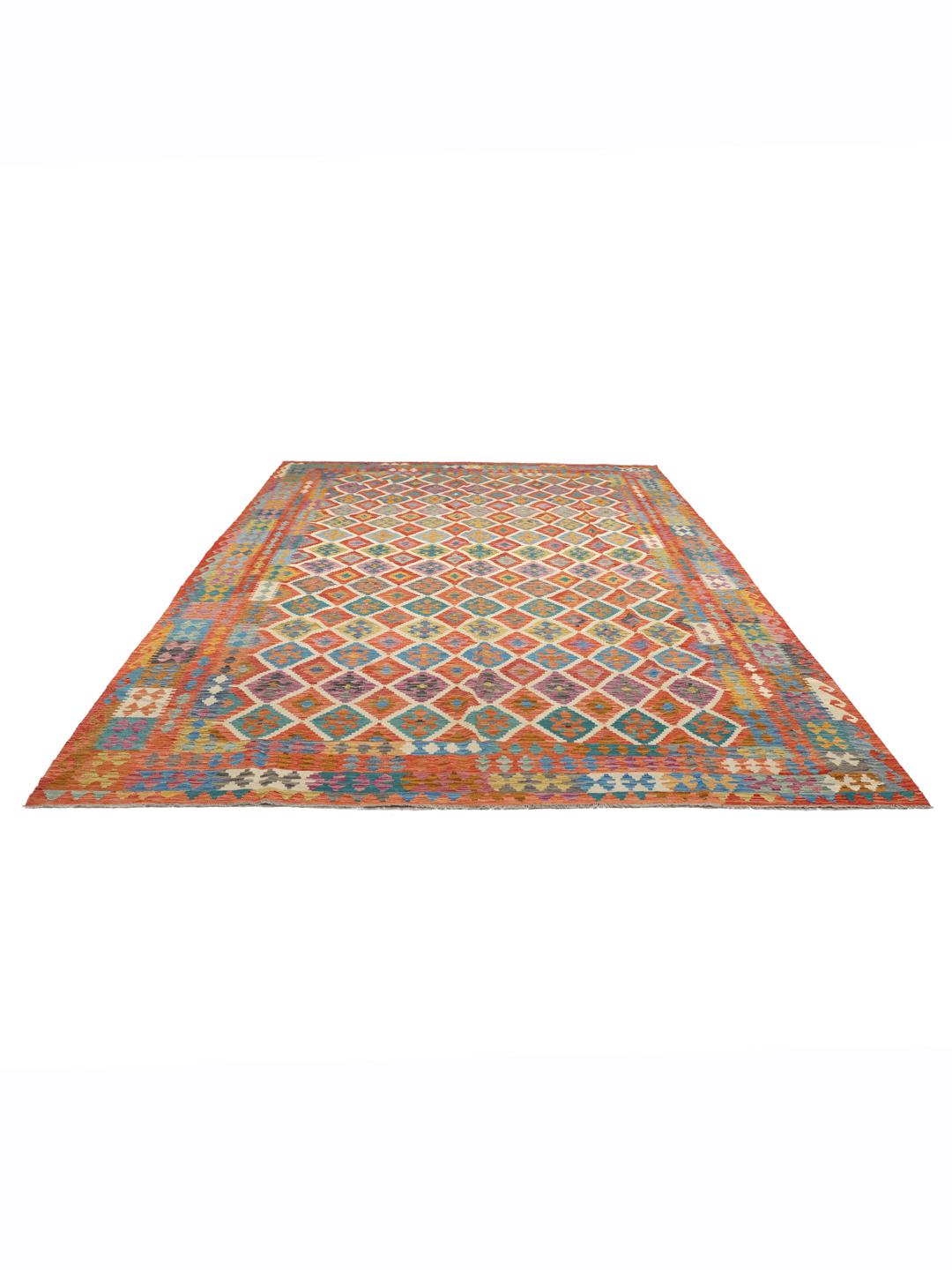
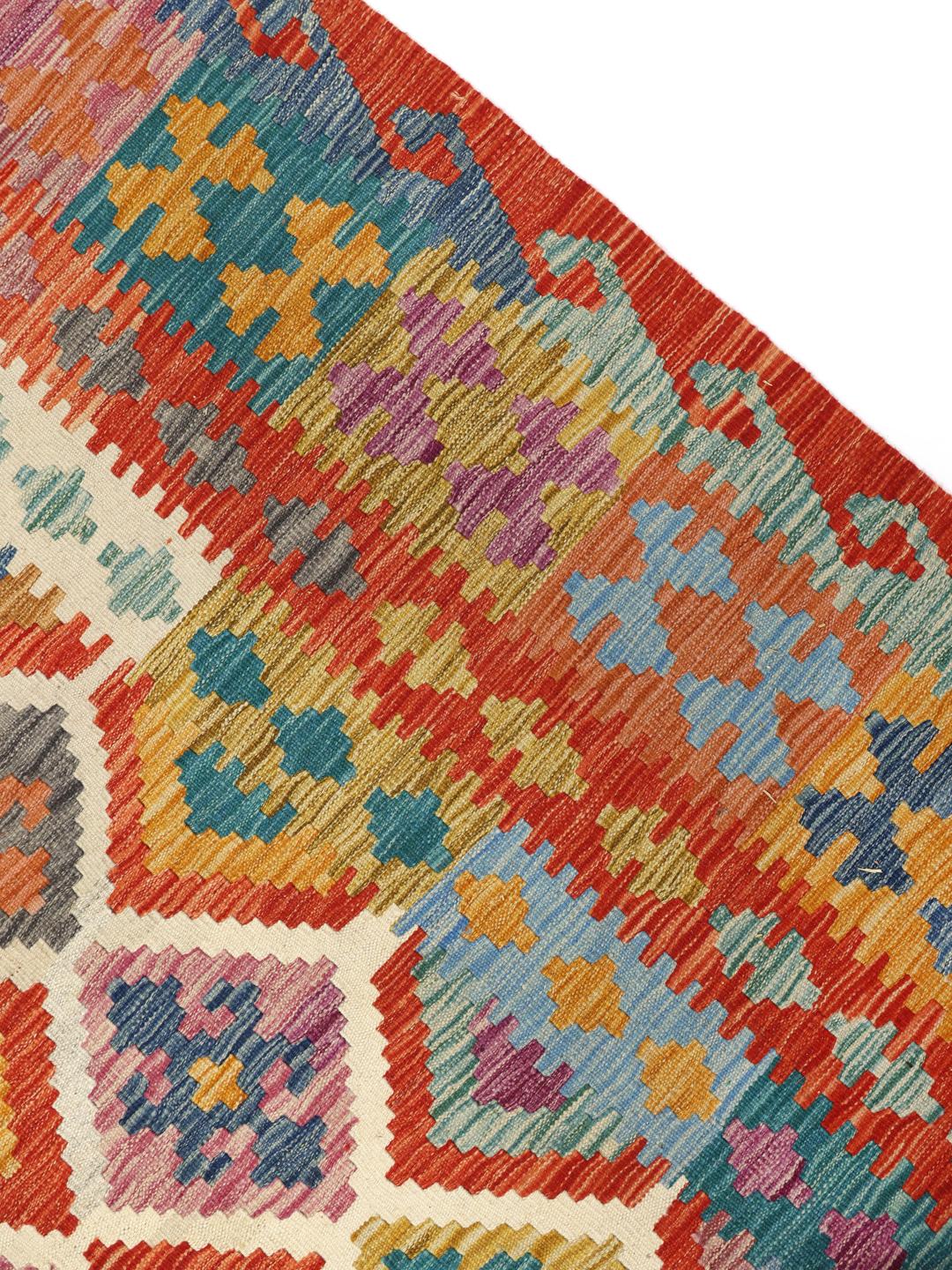
The visual language of Afghan Kelims is defined by bold, symbolic motifs that often carry deep cultural significance. The diamond patterns seen here are frequently used to ward off misfortune or to represent protection and strength. The borders are equally important, often containing repeating patterns that frame the field, creating a formal balance that anchors the overall composition.
Collecting these rugs offers a connection to a centuries-old craft that remains largely unchanged by modern technology. Each piece is a repository of the weaver's personal history and regional style, making them highly prized by those who value authenticity and human-made artistry. Owning an Afghan Kelim is a way to preserve this heritage while bringing a sophisticated, storied element into your own home.