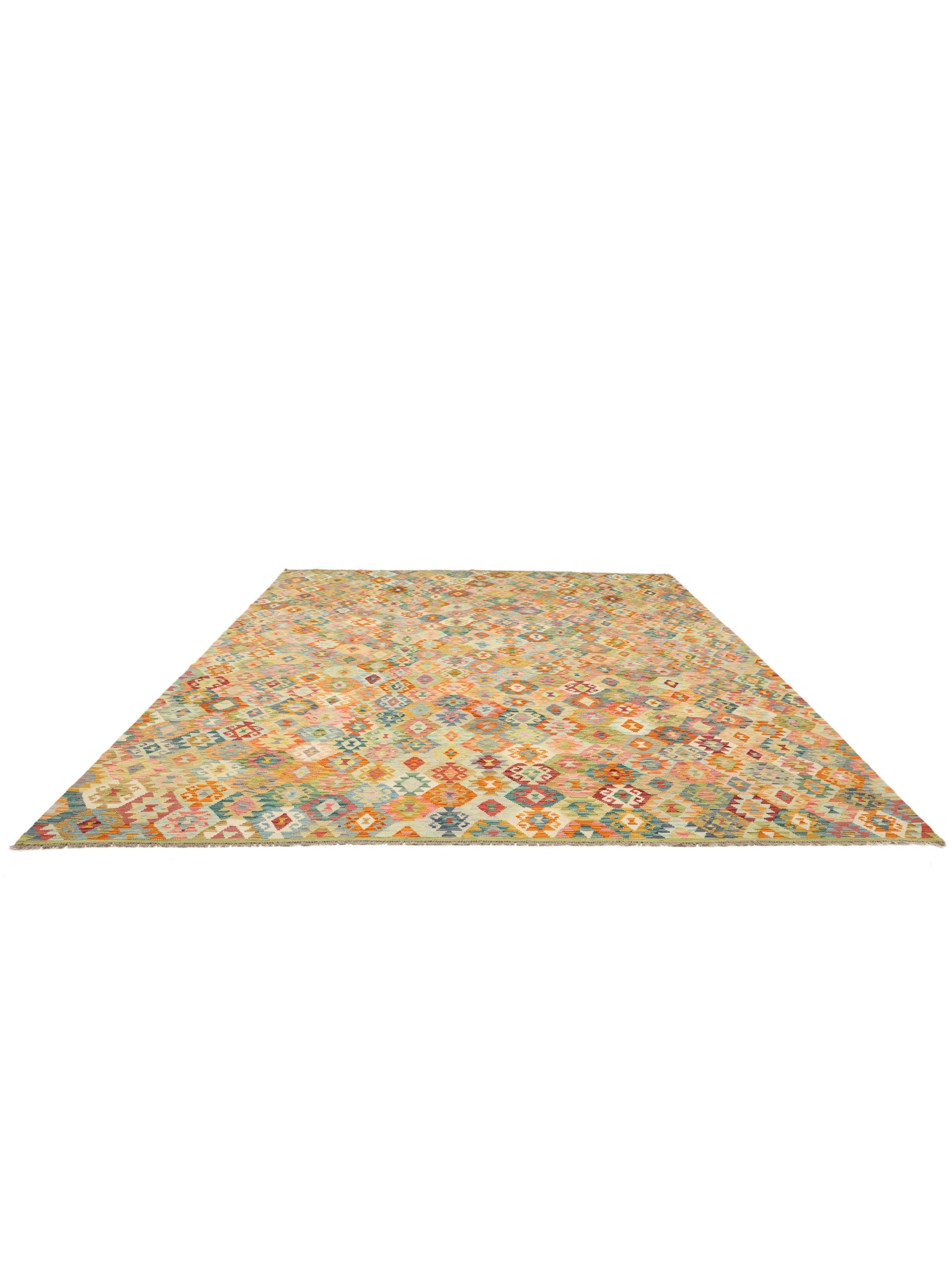
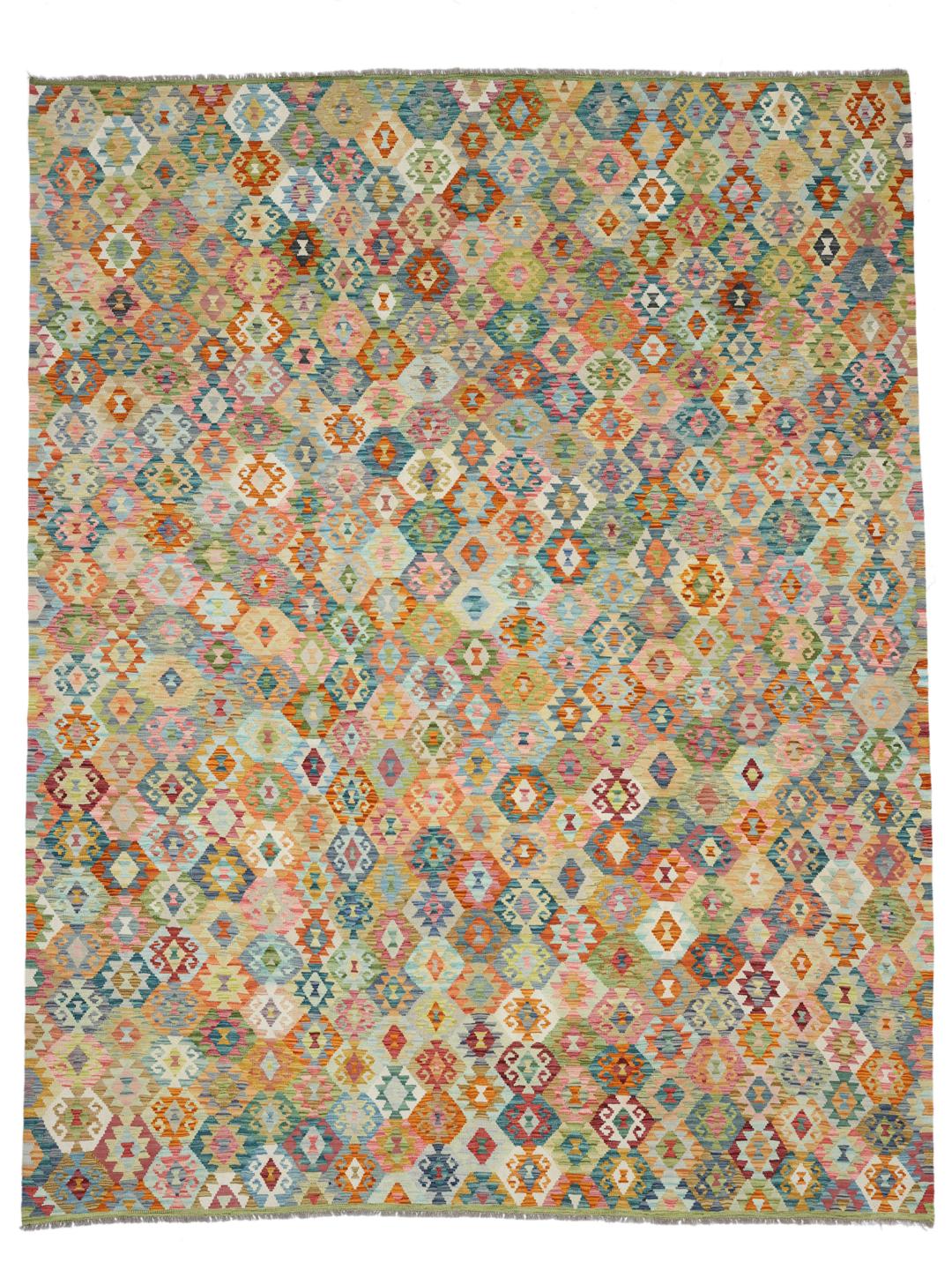
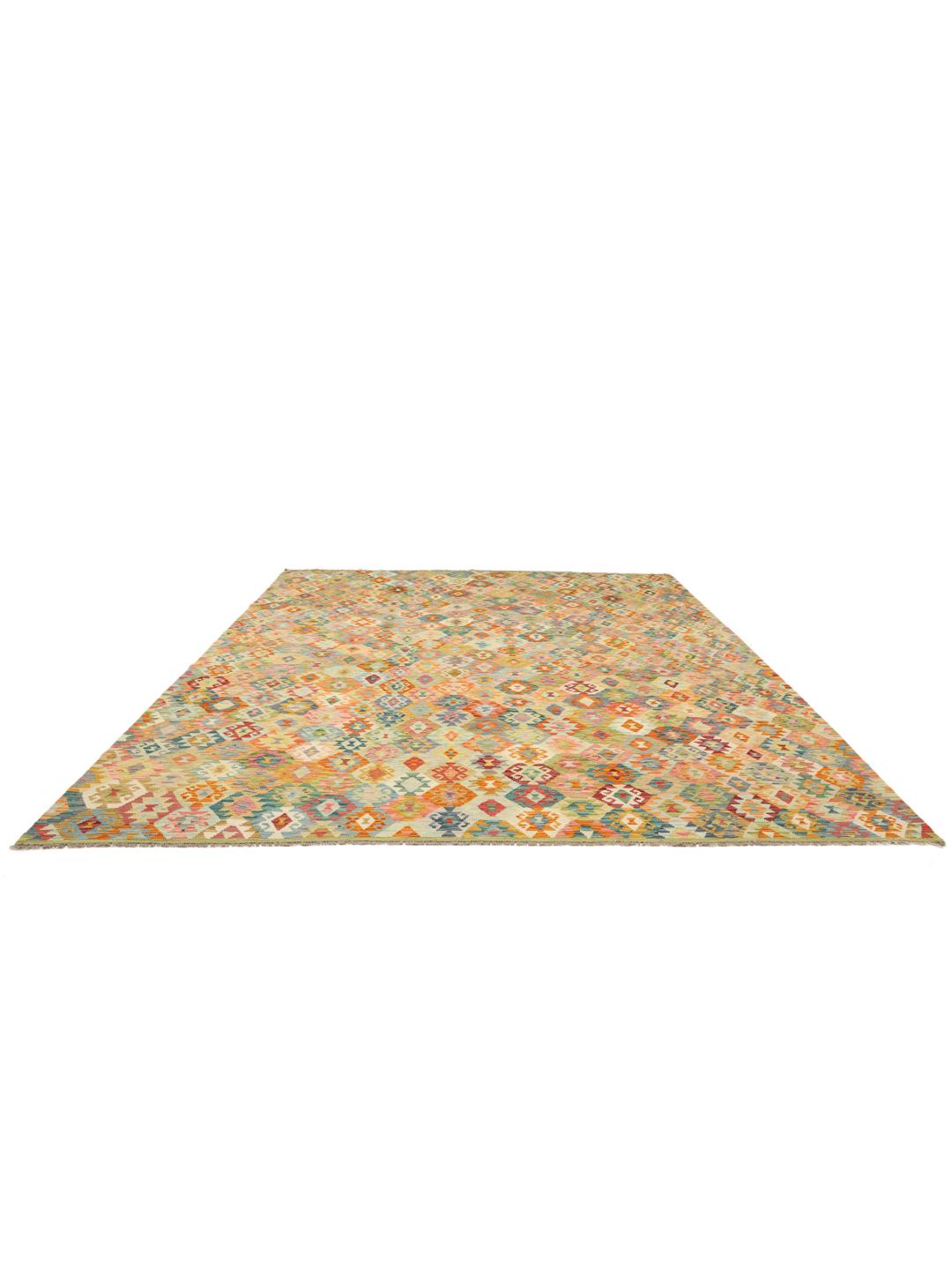
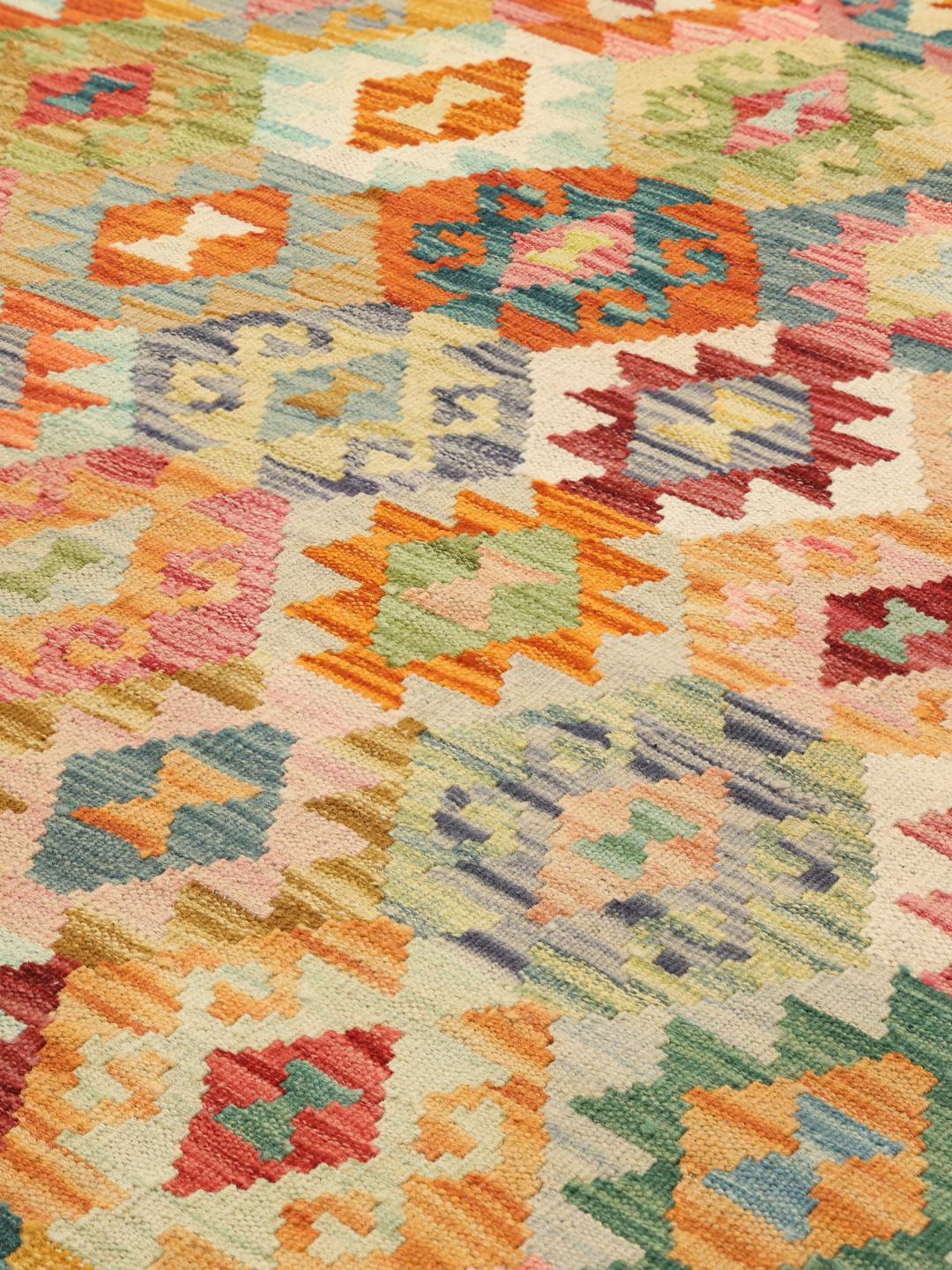
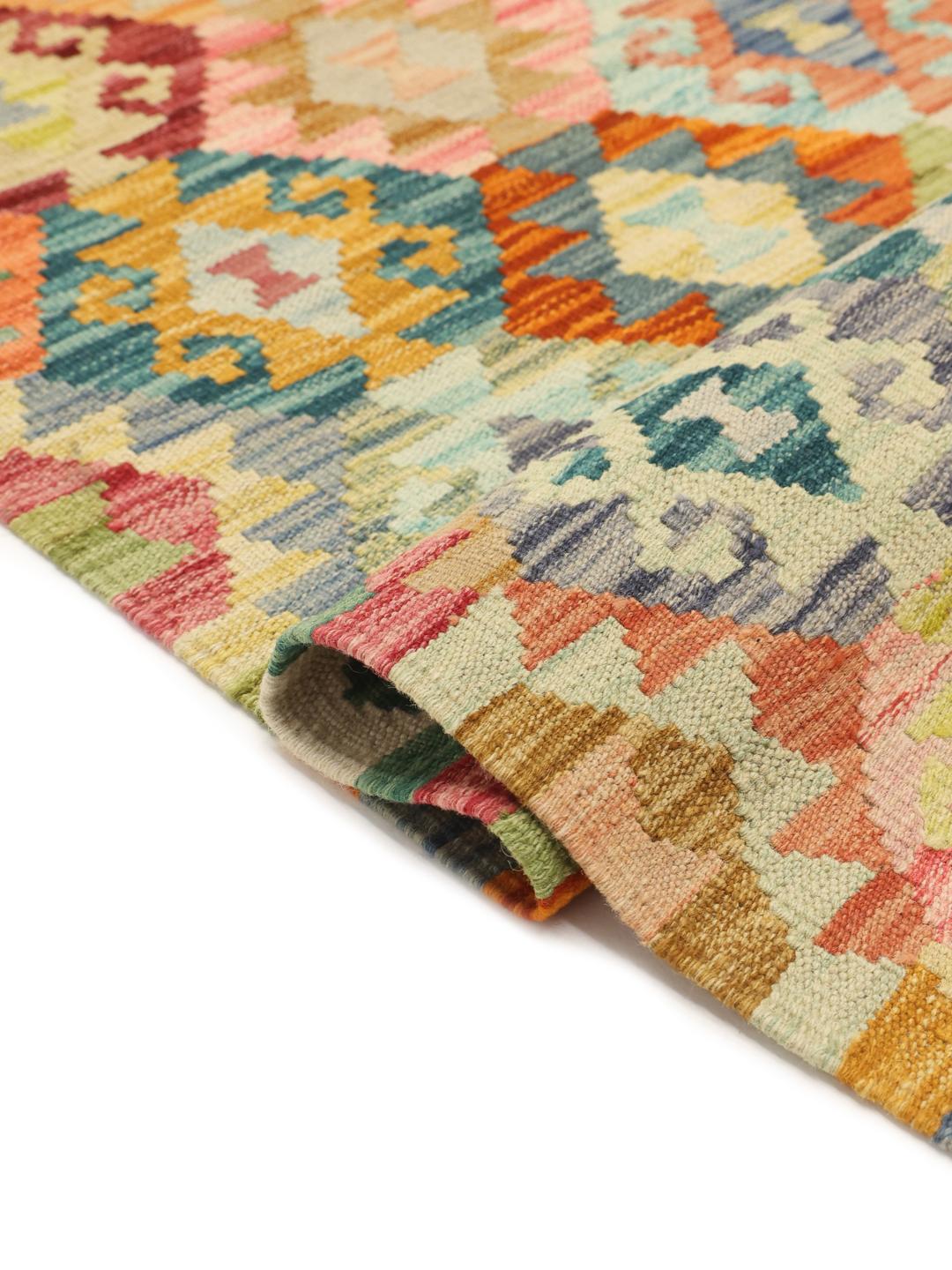
The Kelim tradition in Afghanistan is deeply rooted in the nomadic and semi-nomadic lifestyles of the region. These flat-woven rugs have been produced for centuries, serving not only as essential floor coverings but also as decorative elements within tents and homes, reflecting the cultural identity and creative spirit of the weavers.
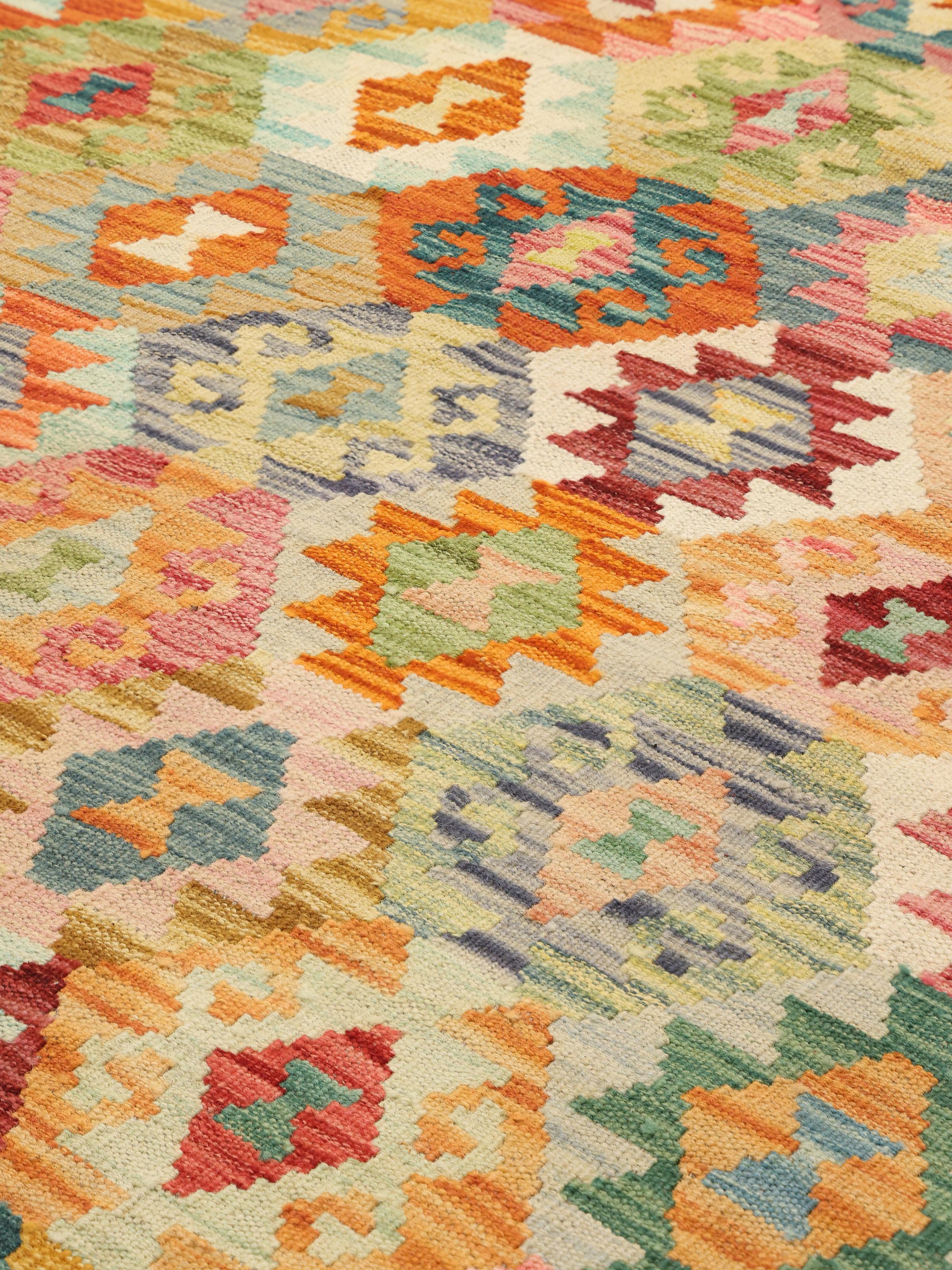
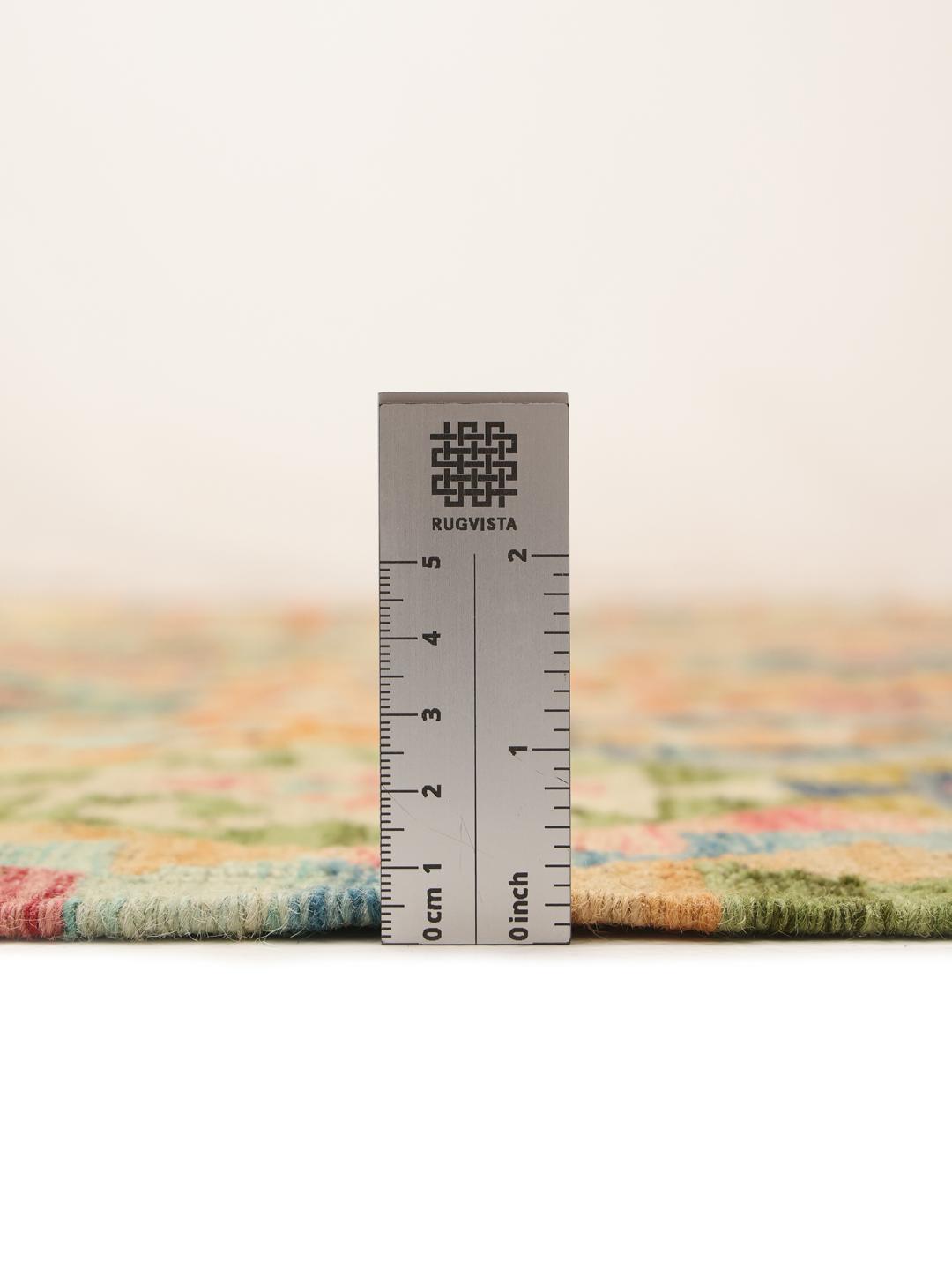
A Kelim is defined by its flat-woven construction, which means it lacks a traditional pile. This technique is achieved by interweaving the warp and weft threads, creating a lightweight yet incredibly strong fabric. The precision required to maintain consistent tension across such a large surface is a hallmark of a high-quality, authentic Kelim.
Visually, these rugs are celebrated for their bold geometric language, often featuring diamonds, triangles, and intricate borders. The colour palettes are traditionally derived from natural dyes, resulting in a harmonious yet vibrant appearance that has captivated collectors for generations.
Owning an Afghan Kelim is more than just a decor choice; it is an appreciation of a heritage that values skill and storytelling. These rugs are highly sought after by those who understand the effort behind each motif, as they represent a bridge between ancient craftsmanship and contemporary home living.