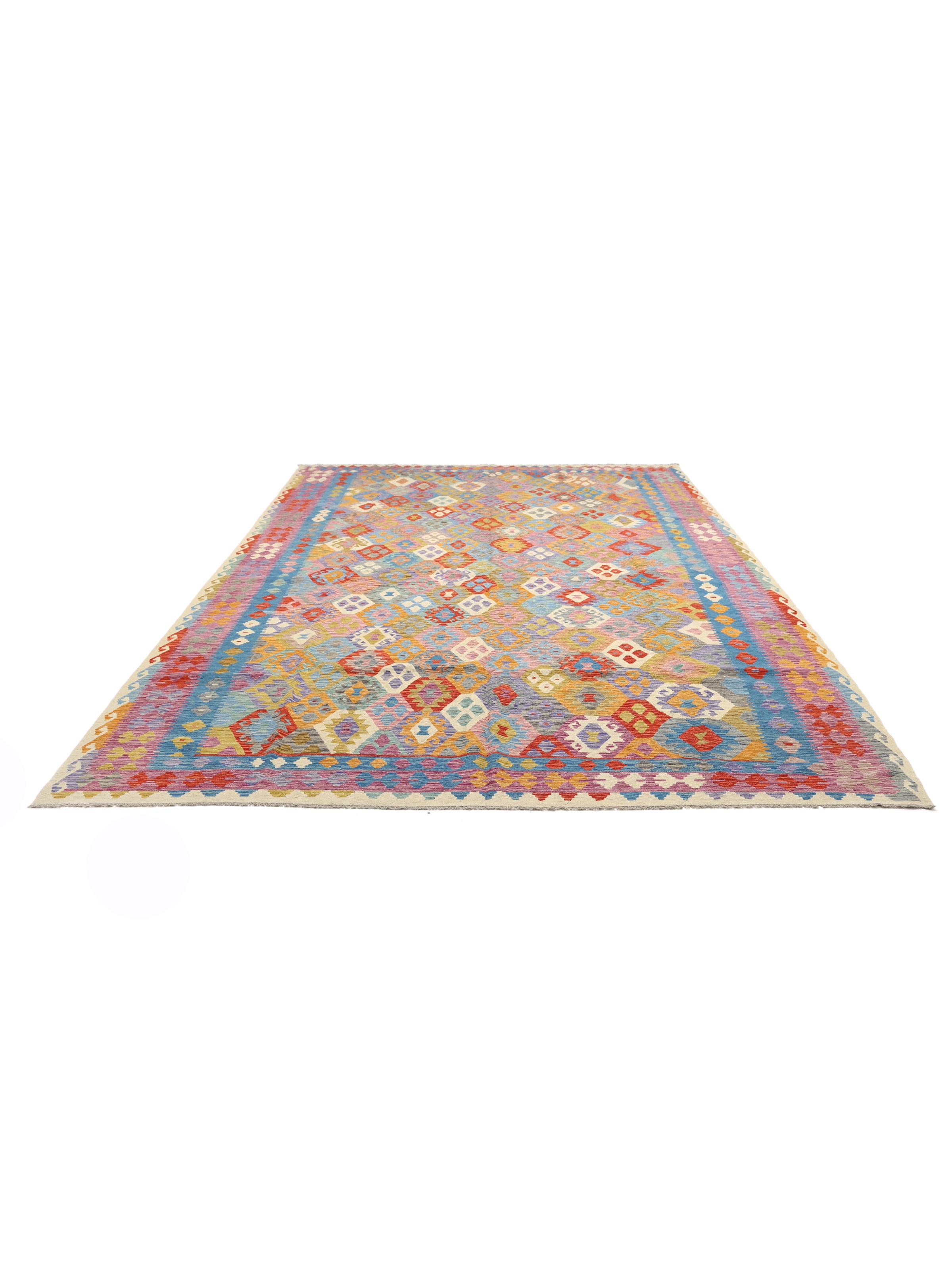
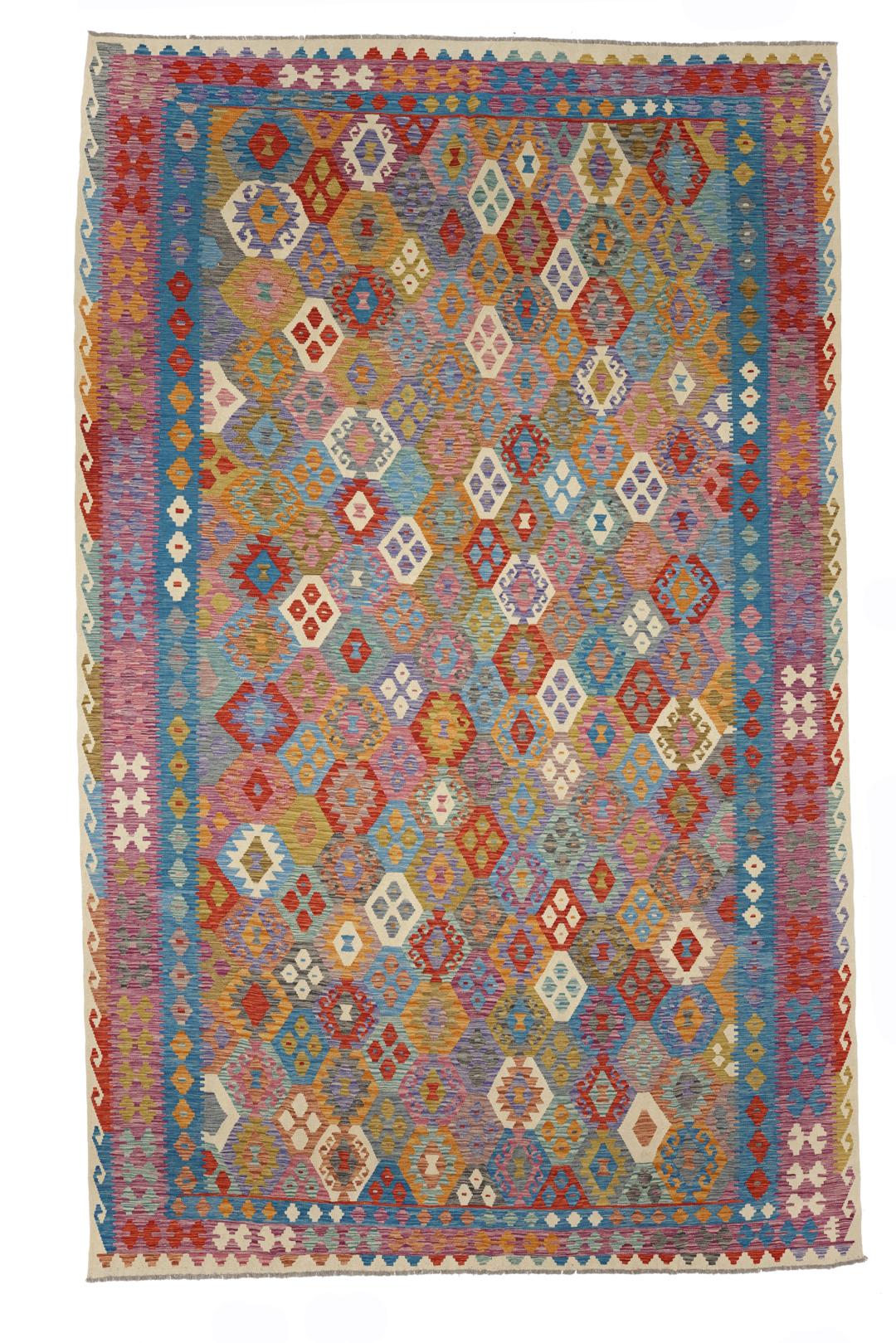
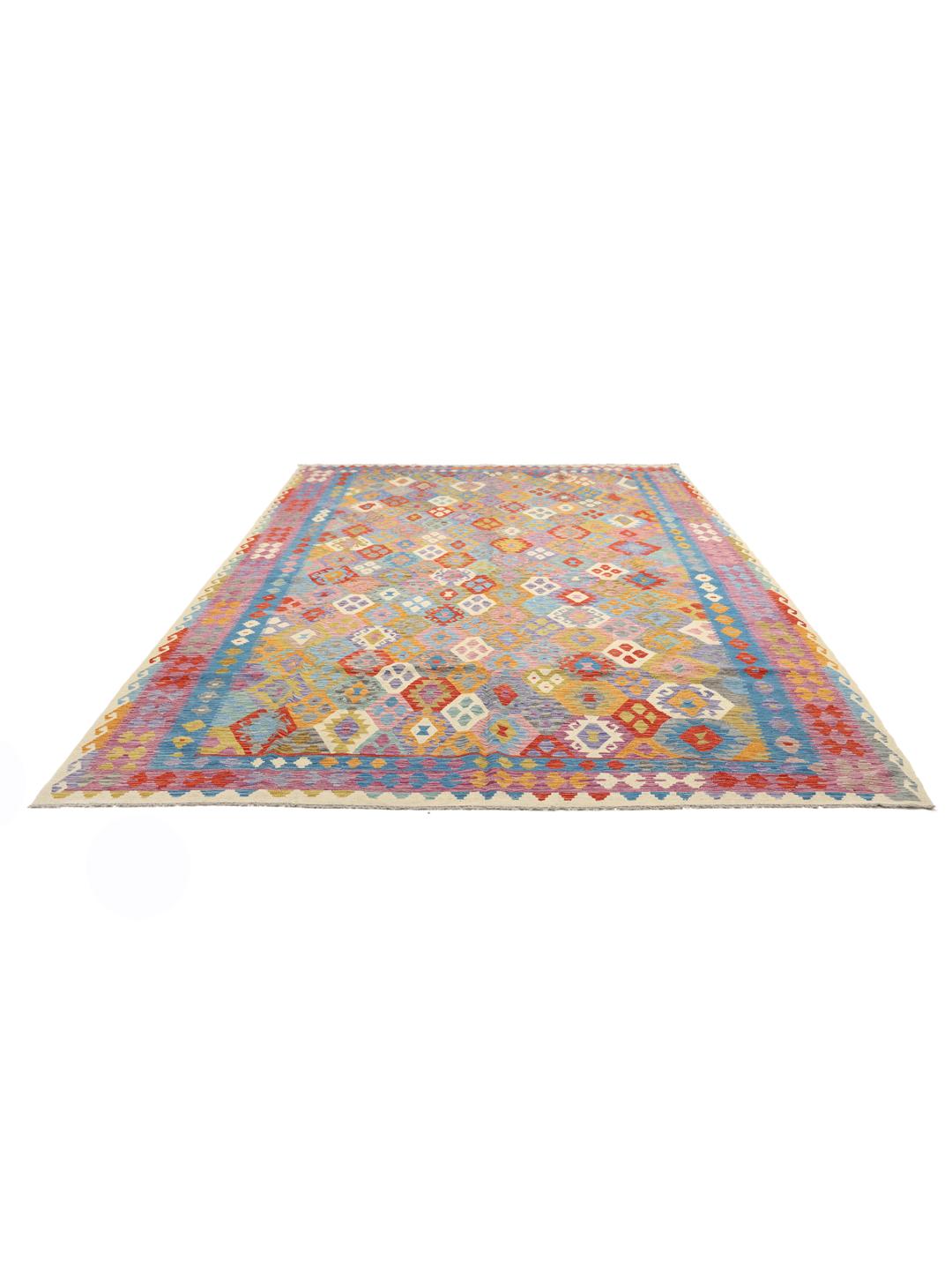
The Kelim tradition in Afghanistan is deeply rooted in the nomadic and semi-nomadic lifestyles of the region, where flat-woven textiles were historically essential for their portability and utility. These rugs were traditionally used as floor coverings, tent dividers, and storage bags, reflecting a culture that valued both artistic expression and functional durability.
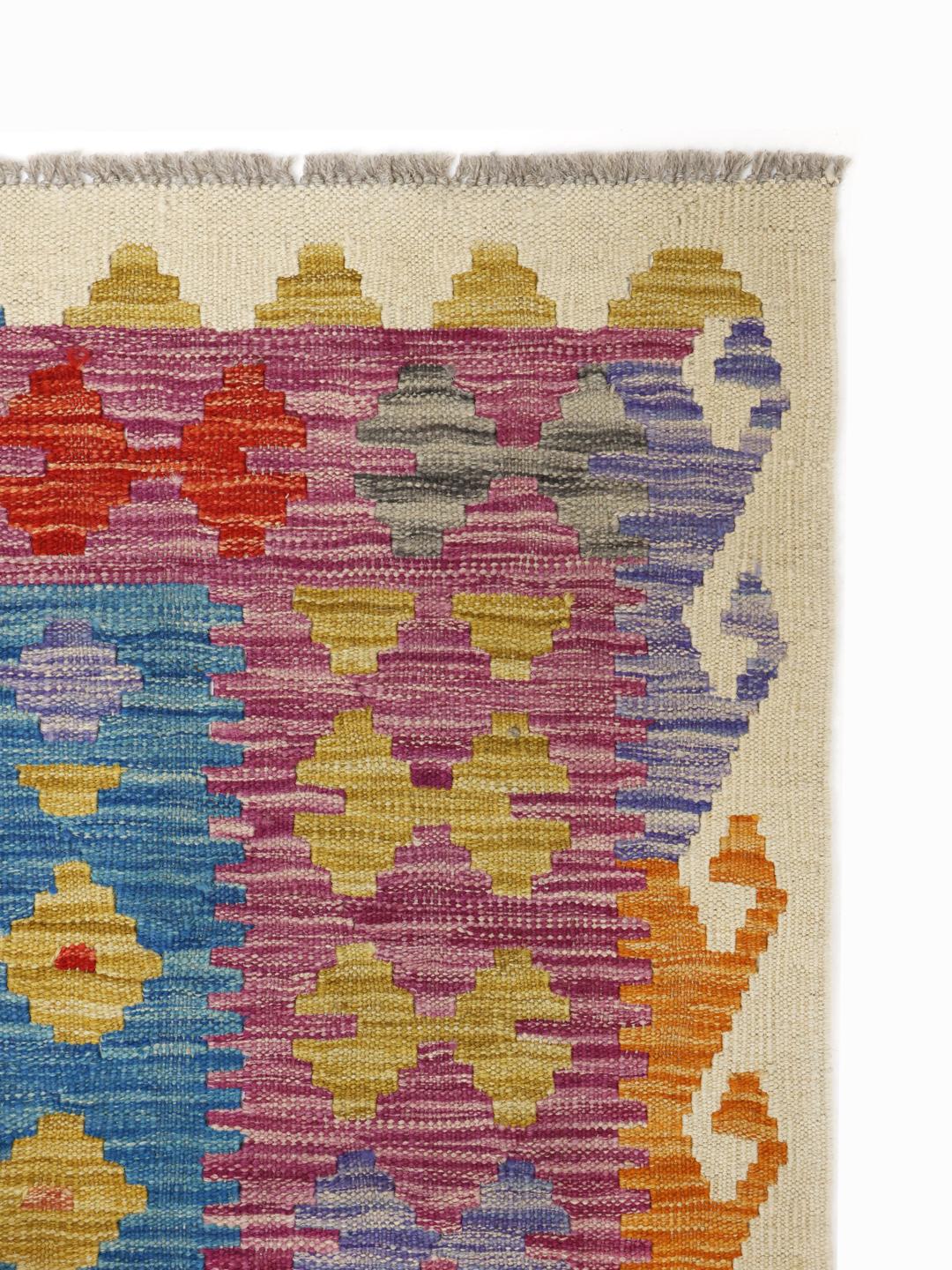
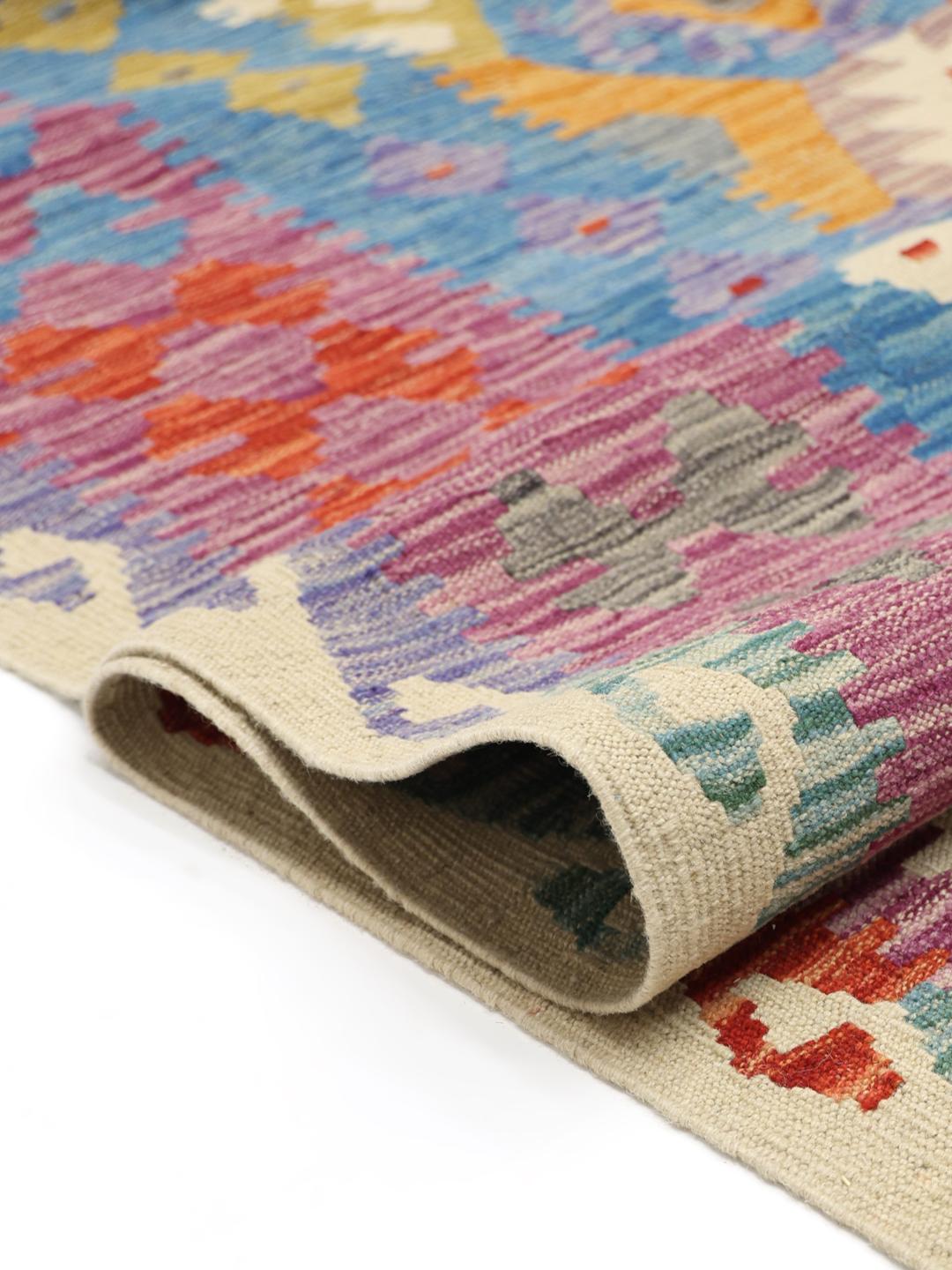
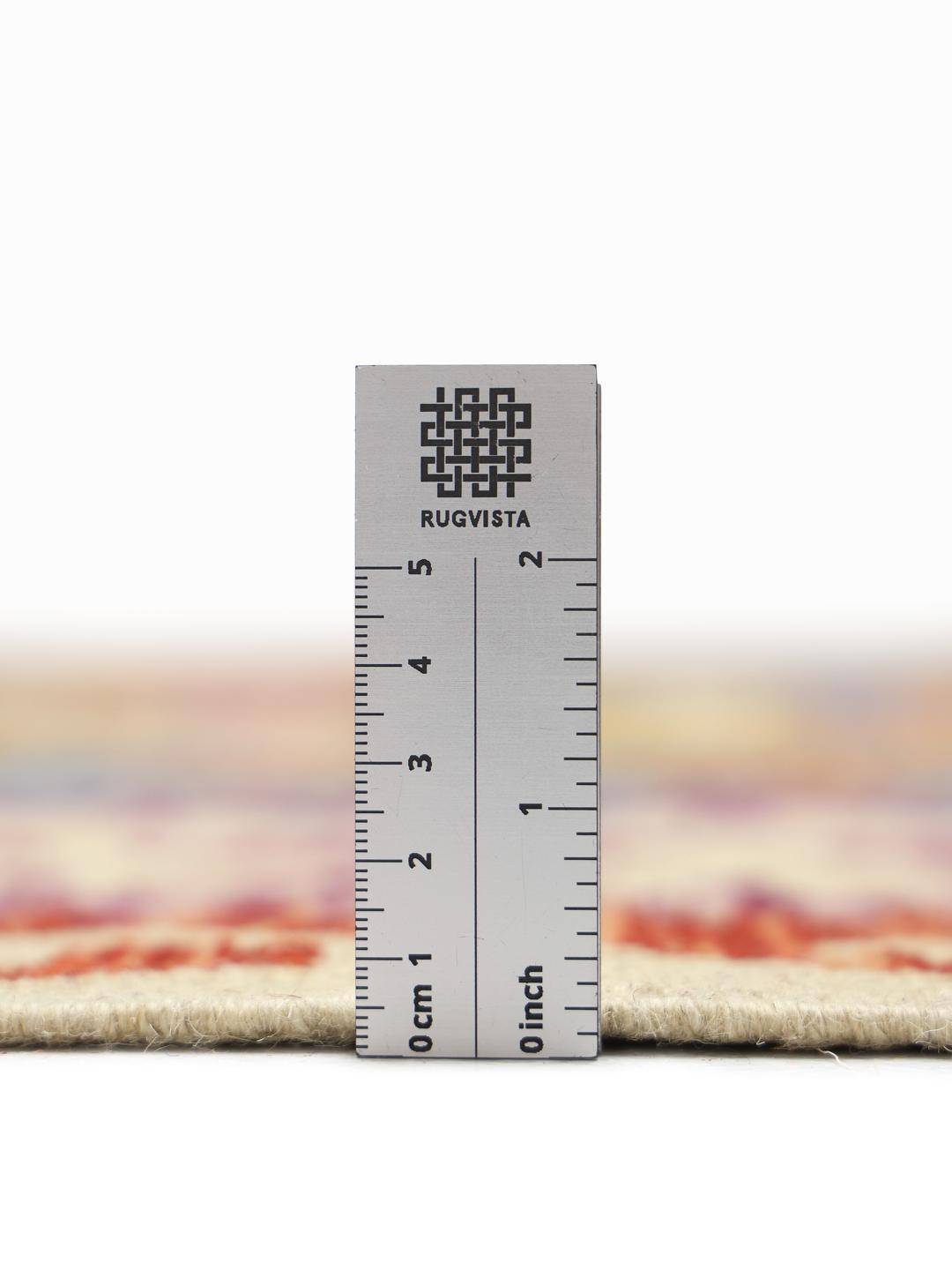
Technically, a Kelim is a flat-weave, meaning it lacks the pile found in knotted rugs. This construction is achieved by interlocking the coloured weft threads tightly with the warp, creating a smooth, durable, and reversible surface. This technique allows for the characteristic crisp, sharp-edged geometric patterns that define the style, as the weaver is limited by the grid-like structure of the loom.
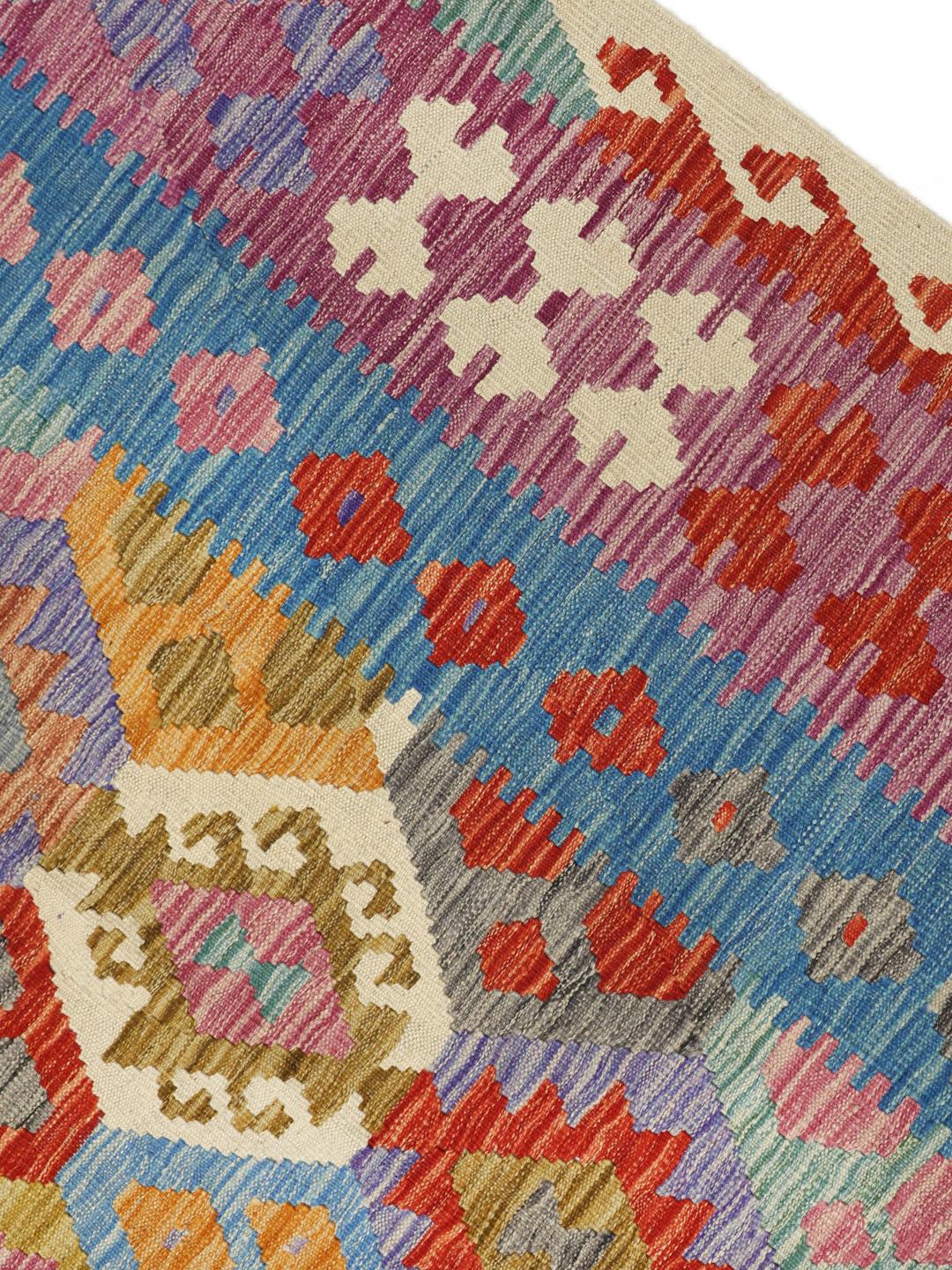
Visually, these pieces are celebrated for their bold use of colour and complex geometric motifs. The diamond and medallion arrangements seen here are classic elements of the Afghan tradition, often inspired by the natural landscape and ancestral symbols. The use of vibrant, contrasting hues is a hallmark of the region, designed to bring warmth and life into the austere environments of the high plateaus.
Collecting a vintage or old-style Afghan Kelim is an act of preserving a dying art form. These rugs are valued not only for their aesthetic appeal but for the immense skill required to produce them without the aid of modern technology. Owning one is a testament to the enduring legacy of Middle Eastern weaving, offering a connection to a craft that has been passed down through families for centuries.