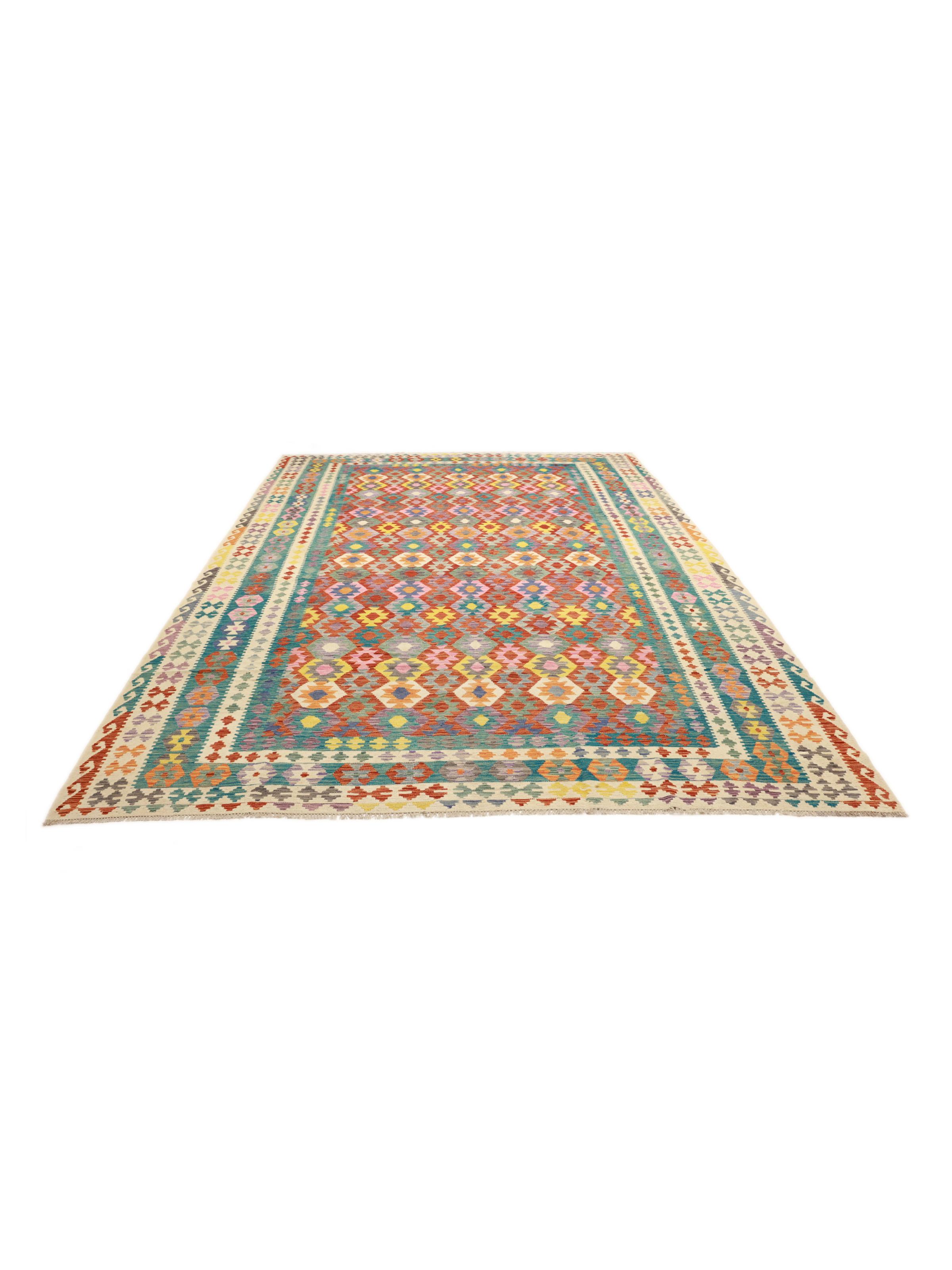
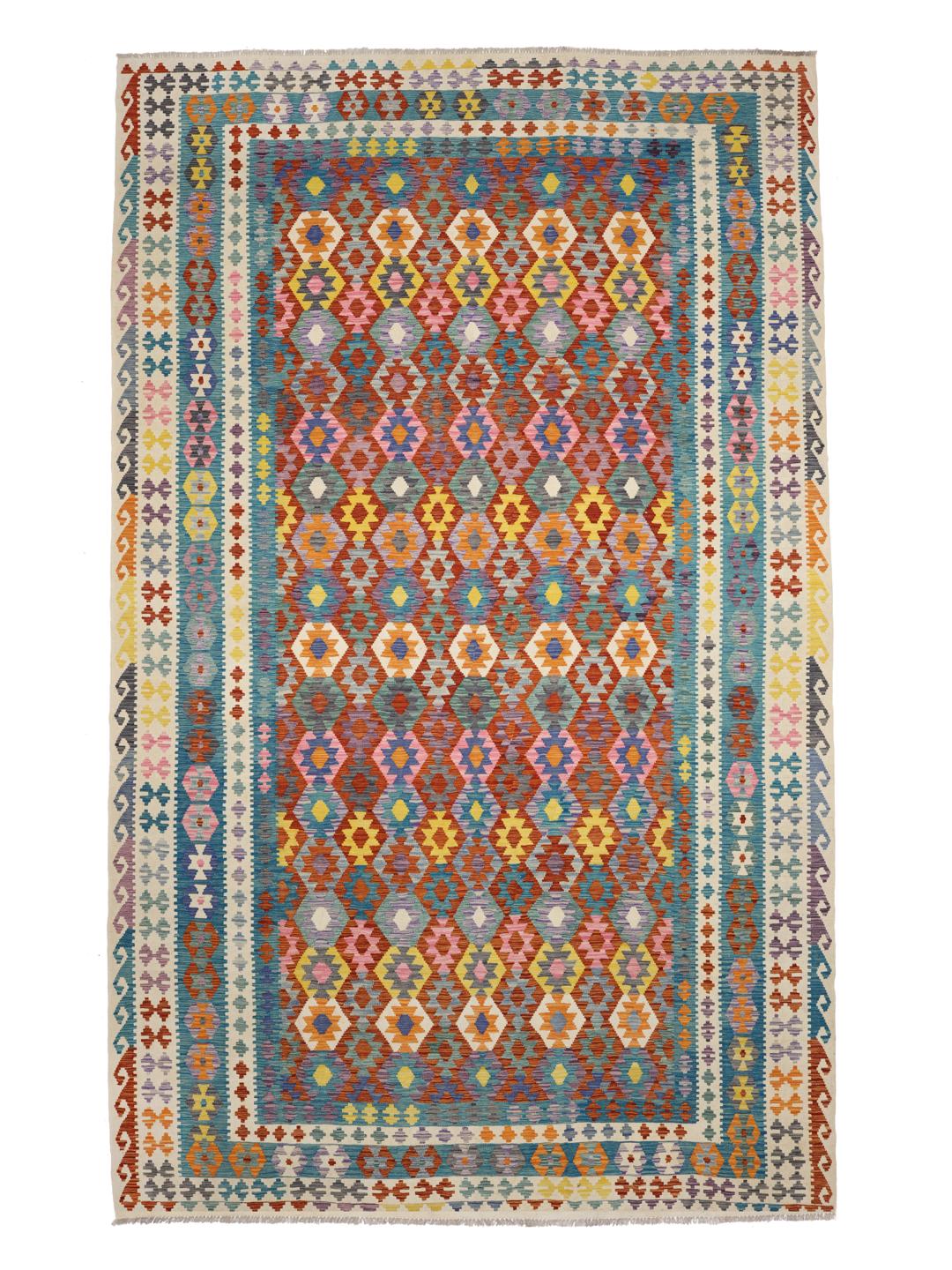
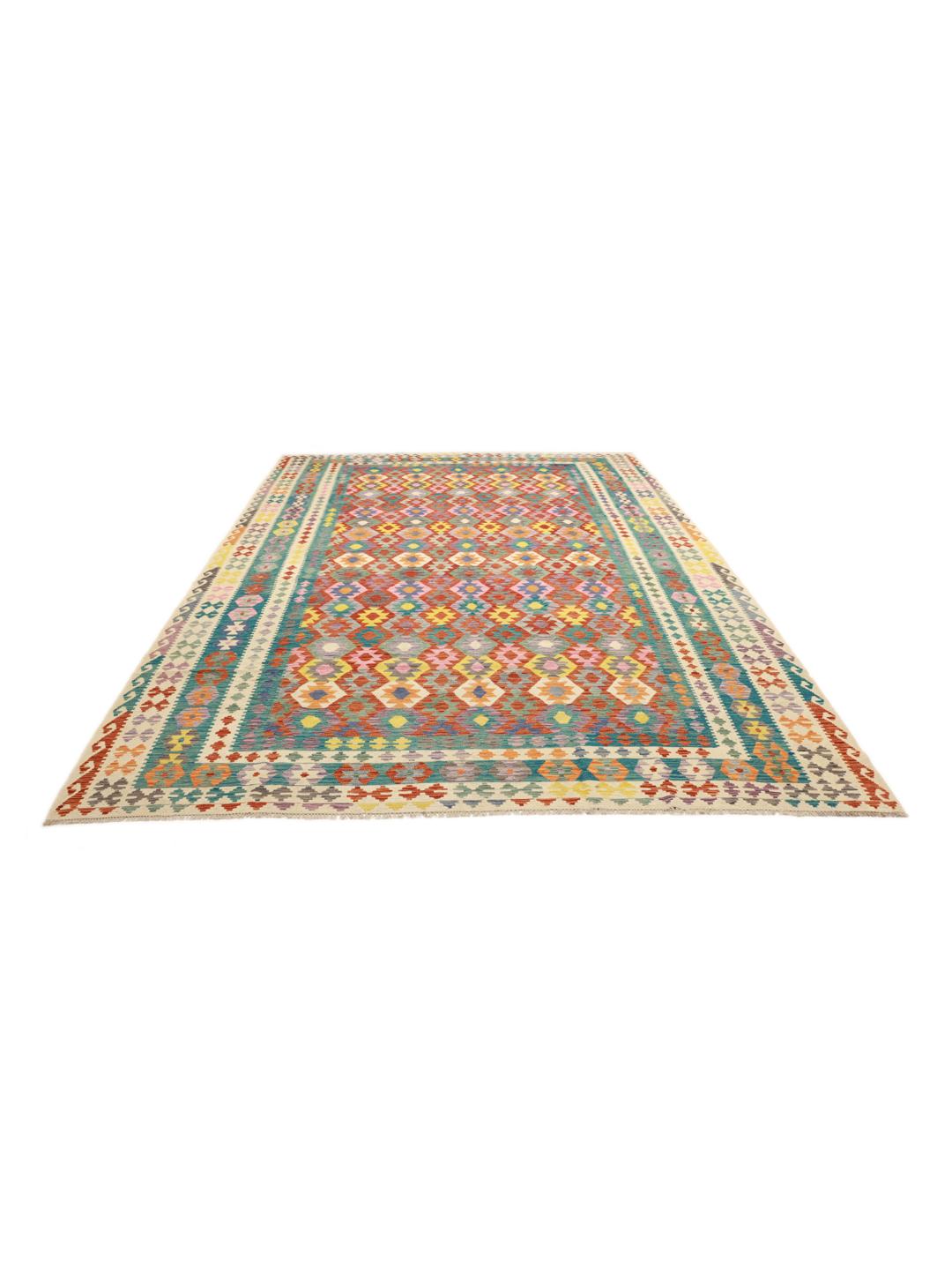
Kelim rugs have a long and storied history across the Middle East, serving as essential household items for nomadic and village communities for centuries. These flat-woven textiles were traditionally used as floor coverings, wall hangings, and storage bags, valued for their portability and exceptional durability in the harsh conditions of the region.
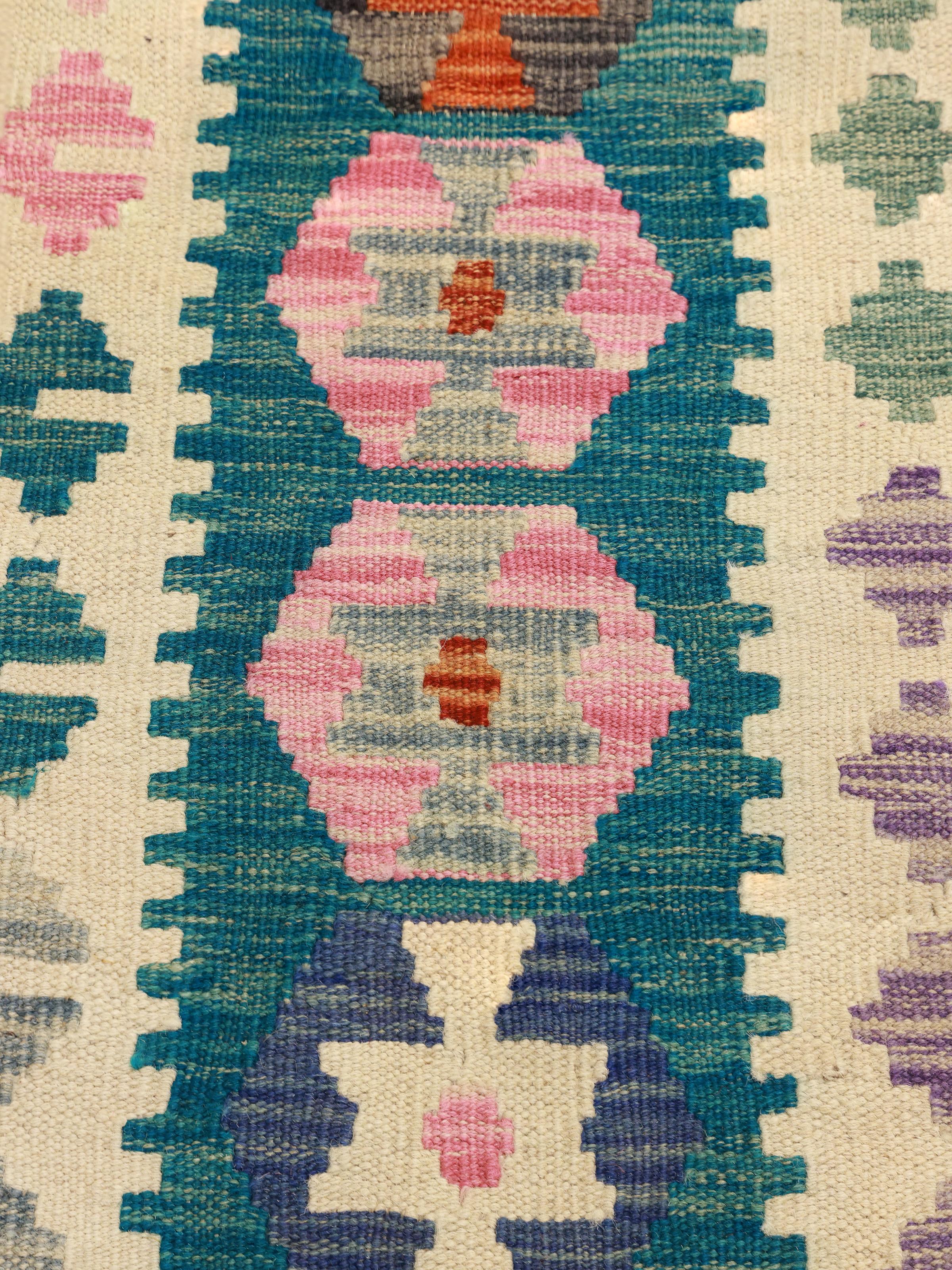
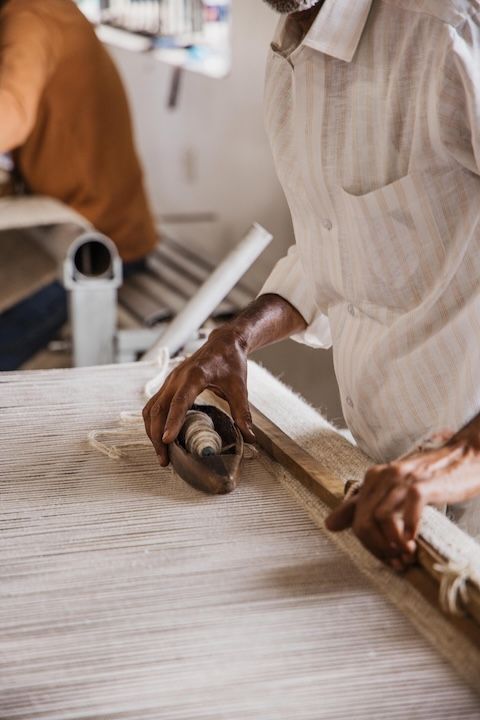
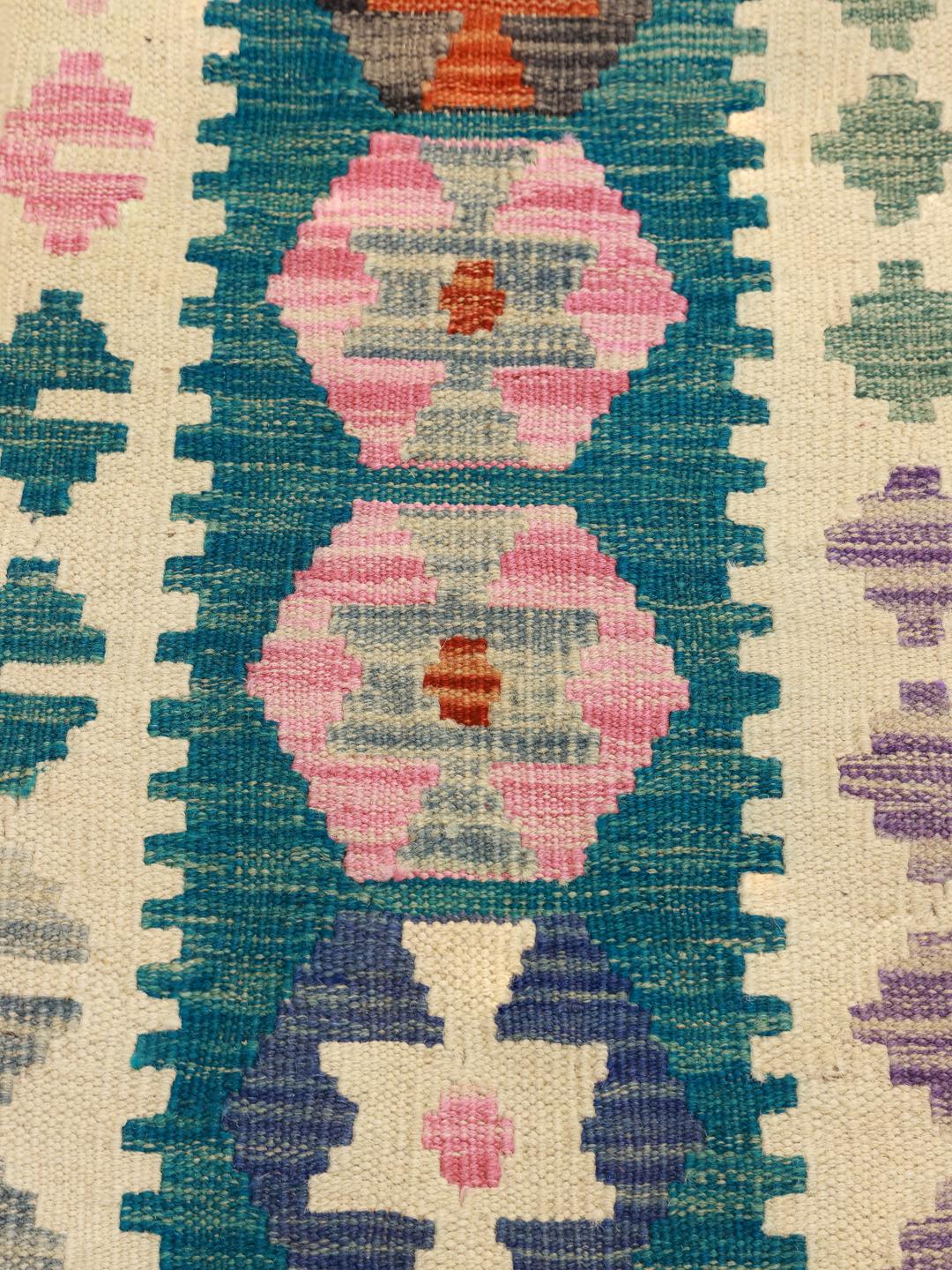
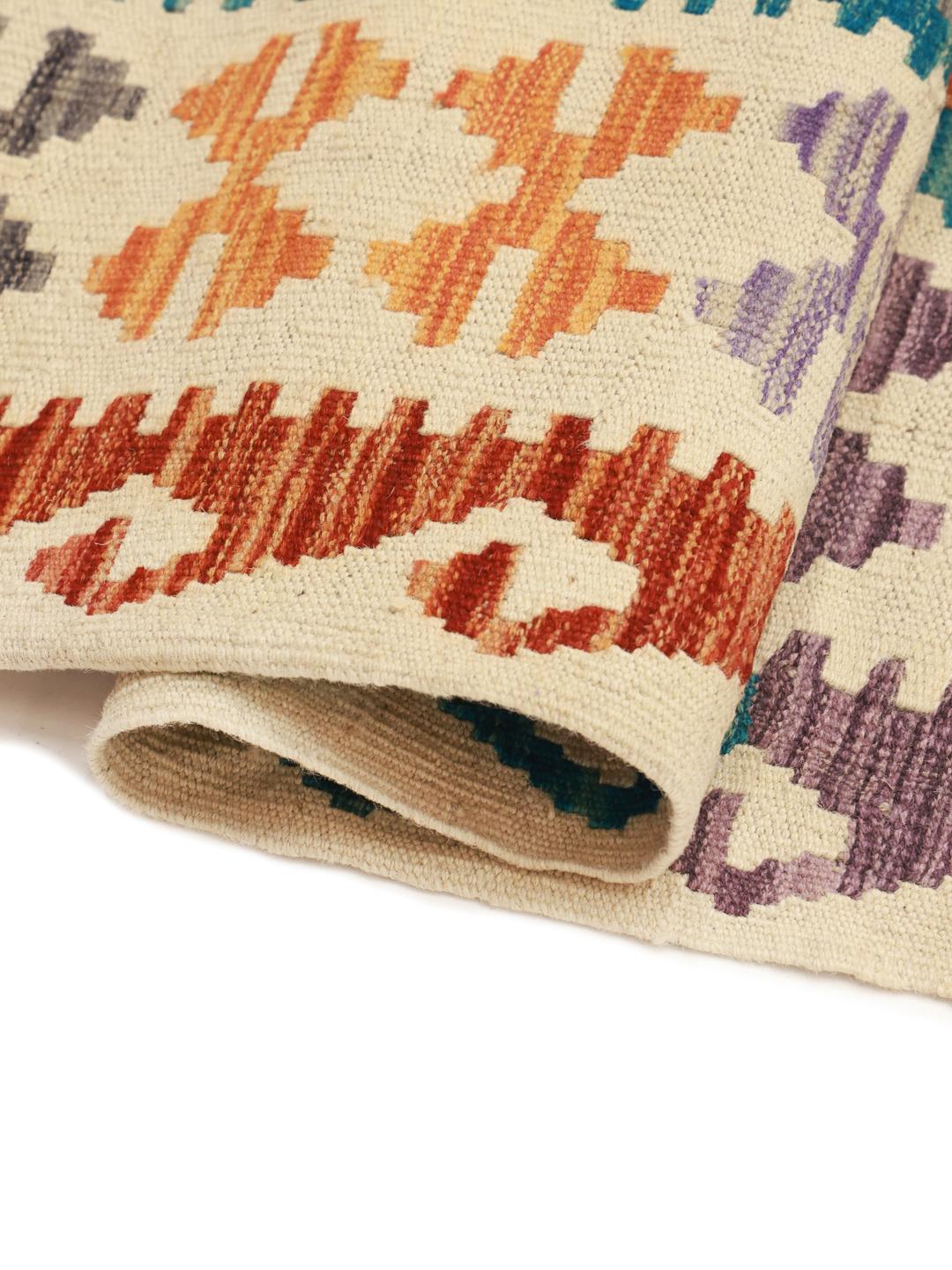
The term 'Kelim' refers to the specific slit-weave technique used to create these rugs, where the weft threads are woven tightly around the warp to produce a smooth, pileless surface. This method allows for the creation of crisp, geometric shapes and intricate patterns that are visible from both sides, a hallmark of the craft that distinguishes it from knotted piles.
The design of this Afghan Kelim is rooted in tribal traditions, utilising a language of geometric motifs that have been passed down through generations. These patterns often hold symbolic meaning, reflecting the weaver's environment, beliefs, and cultural identity. The use of vibrant, saturated colours is characteristic of the Afghan tradition, which often employs natural dyes to achieve deep, lasting hues.
Today, these rugs are highly sought after by collectors and interior enthusiasts alike for their historical weight and visual authenticity. Owning a Kelim is an opportunity to preserve a piece of living history, representing a fusion of ancient skill and cultural storytelling that remains as relevant and beautiful in the contemporary home as it was centuries ago.