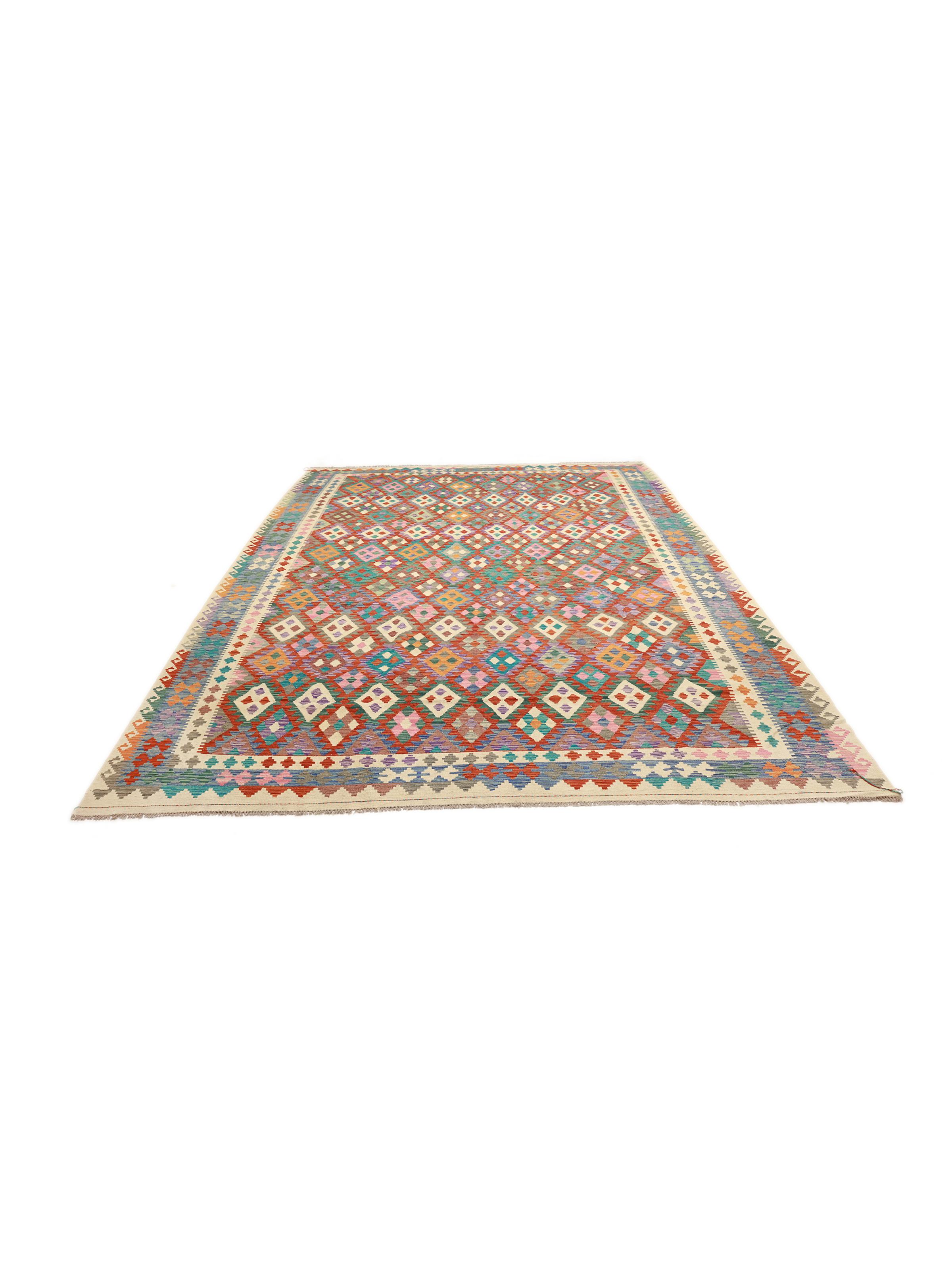
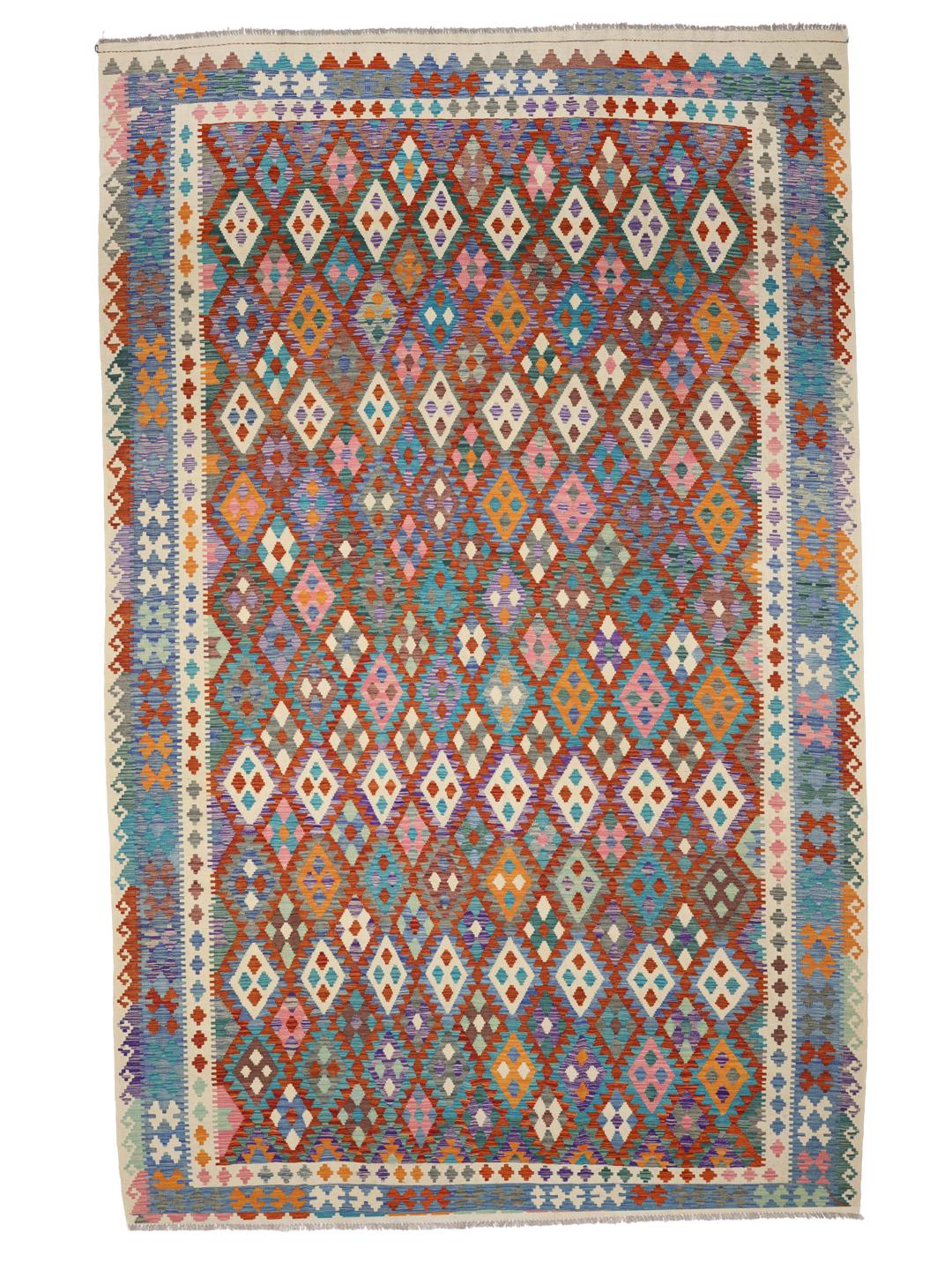
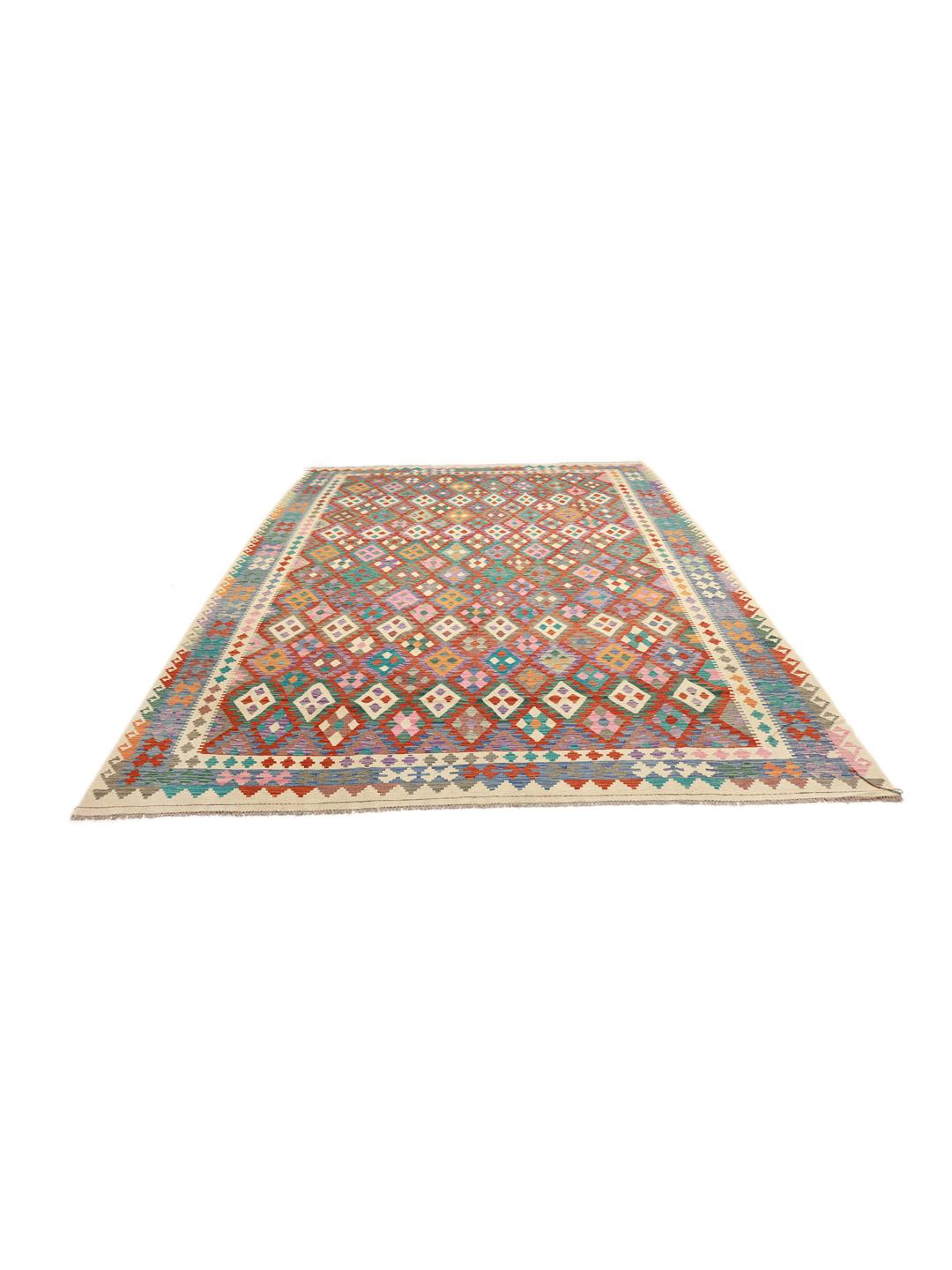
The tradition of the Kelim, or Kilim, originates from the nomadic and semi-nomadic tribes across the Middle East and Central Asia. These rugs were historically created as functional items for daily life, serving as floor coverings, wall hangings, or storage bags for travelling families. The Afghan Kelim specifically draws on centuries of regional expertise, reflecting the aesthetic sensibilities of the local tribes who have passed down these weaving techniques through generations.
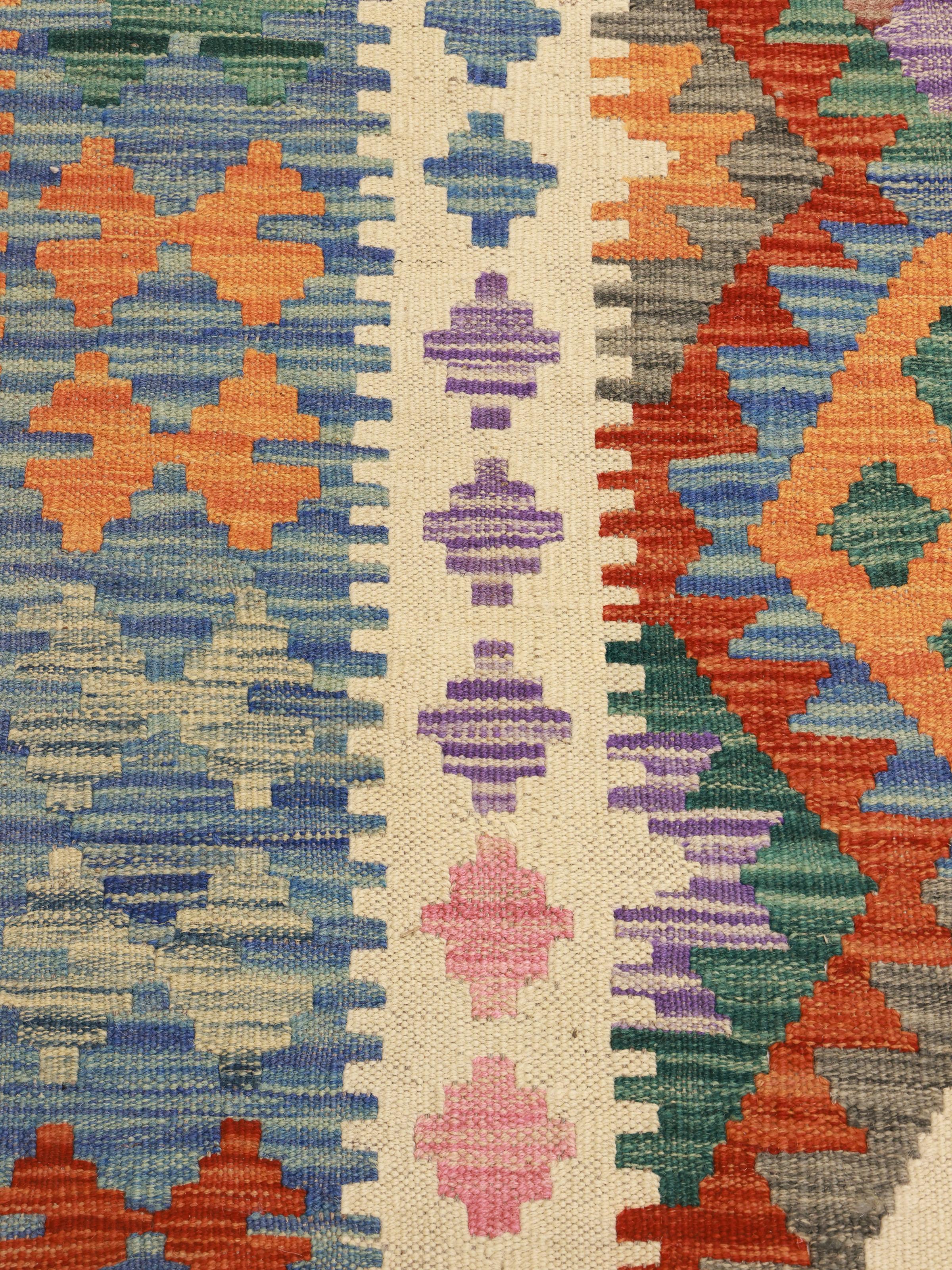
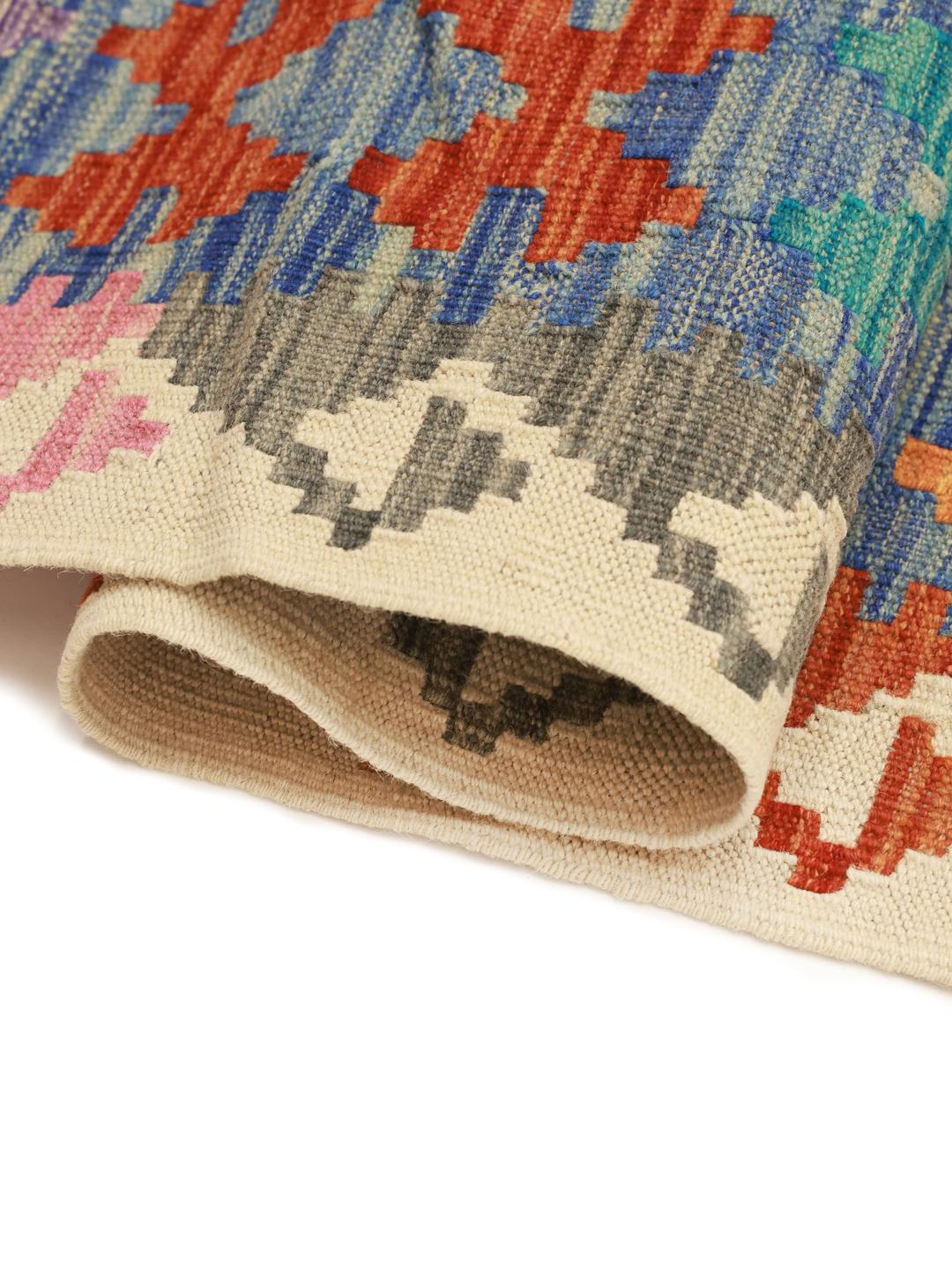
The term 'Kelim' refers to the specific flat-weave technique where the weft threads are pulled tightly over the warp threads to create a smooth, pileless surface. This method does not involve knotting, but rather a sophisticated interlacing that produces a clean, sharp pattern on both sides of the rug. This structural simplicity is what makes Kelims so durable and prized for their longevity in busy households.
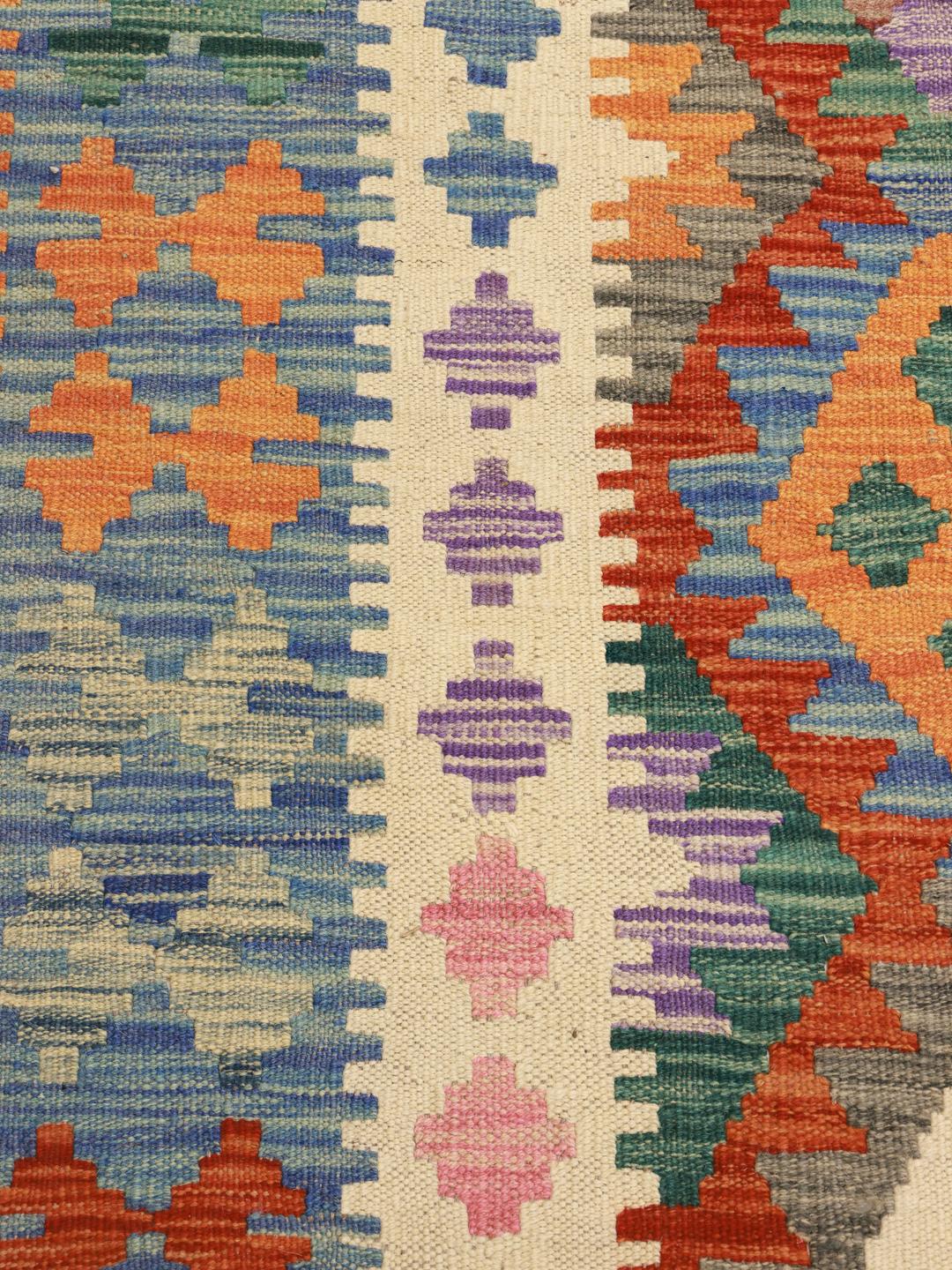
Visually, these rugs are defined by their geometric language. The diamond motifs and repeating shapes seen here are classic elements of the Afghan style, often representing protection, fertility, or the natural landscape. The use of varied colours, traditionally derived from natural dyes, creates a rich, complex aesthetic that is both bold and harmonious. The specific combination of colours in this piece highlights the artisan's individual expression within the broader tribal design framework.
Today, these rugs are highly sought after by collectors and interior enthusiasts for their authenticity and cultural weight. Owning an Afghan Kelim is an investment in a living tradition, connecting your modern home to a vast, historical narrative of craft. Each piece serves as a bridge between the ancient world and contemporary design, offering a level of character and soul that mass-produced items simply cannot replicate.