Kelim rugs have long been a cornerstone of Middle Eastern nomadic and village life. These flat-woven textiles were originally created by tribal communities for their utility, serving as floor coverings, tent dividers, and storage bags. The tradition of weaving in Afghanistan is deeply rooted in this nomadic heritage, where patterns and techniques were passed down through generations.
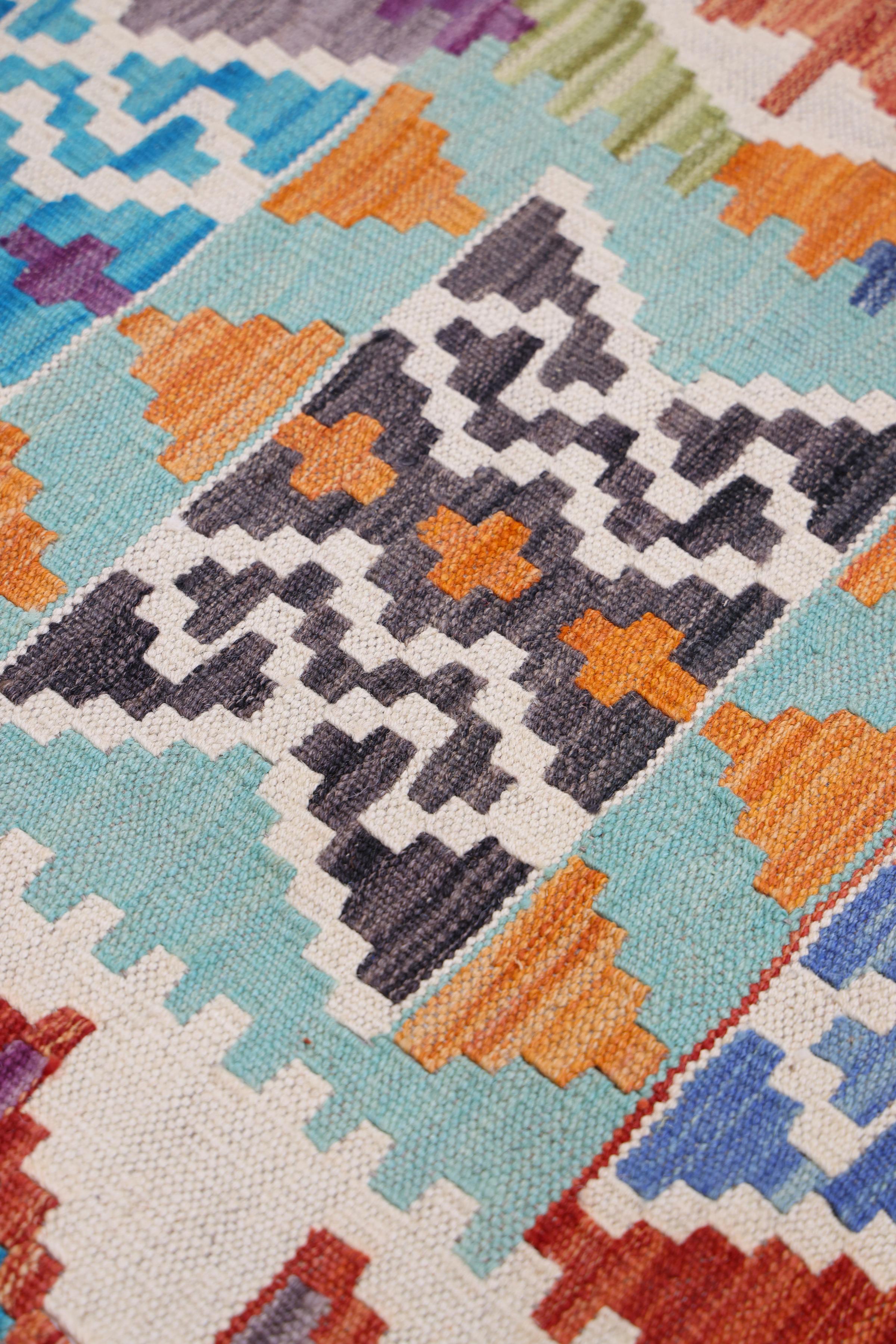
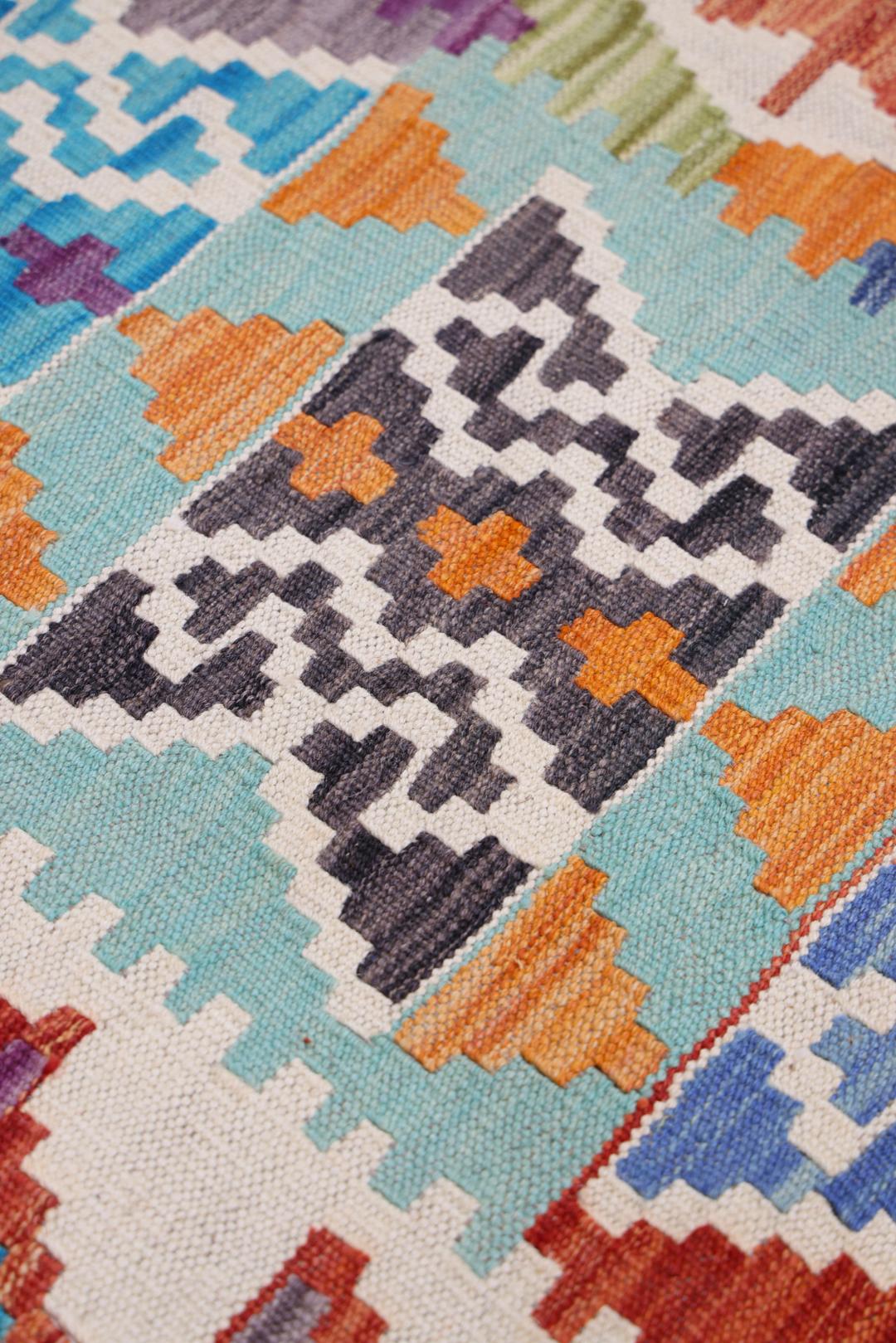
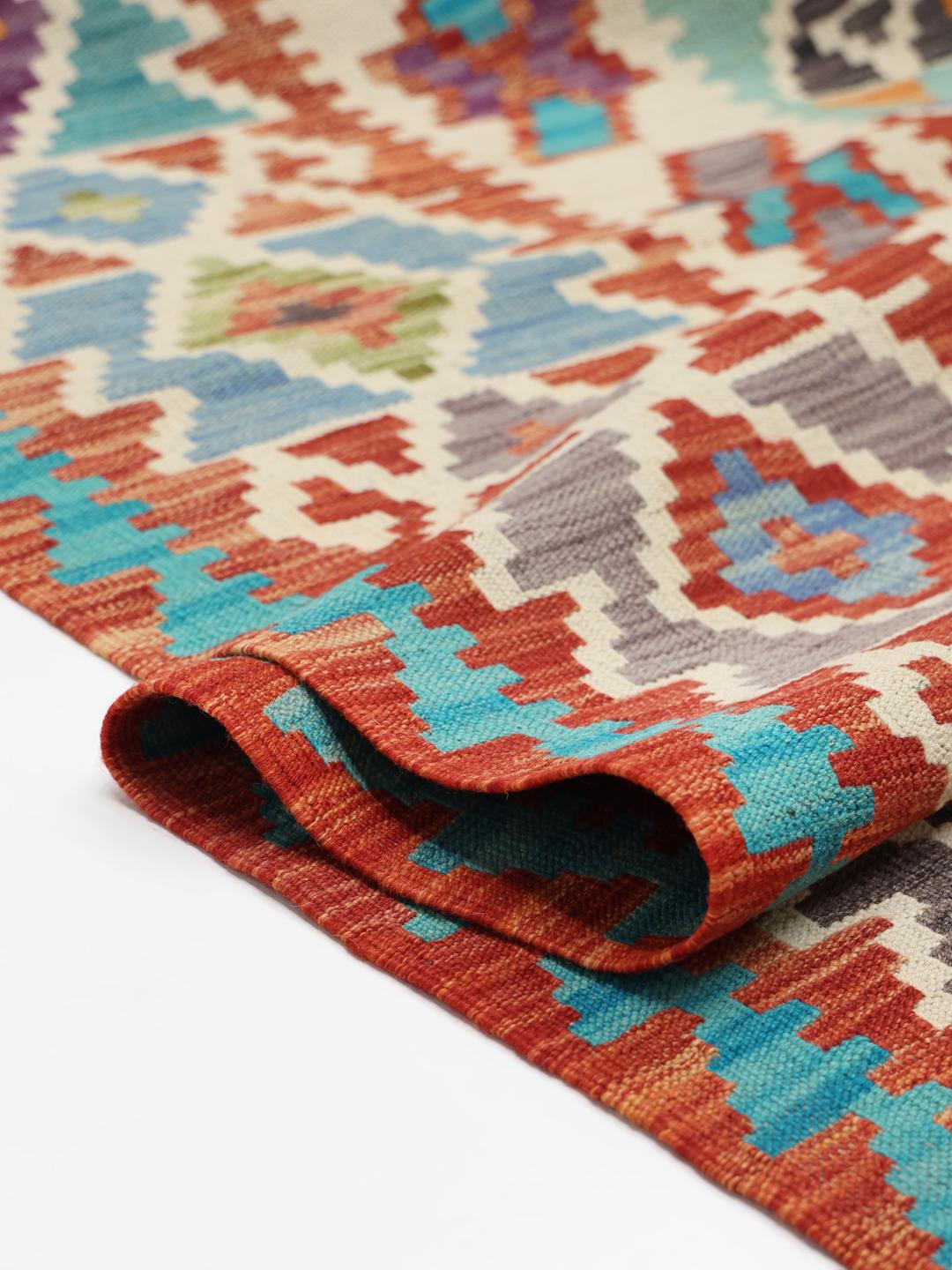
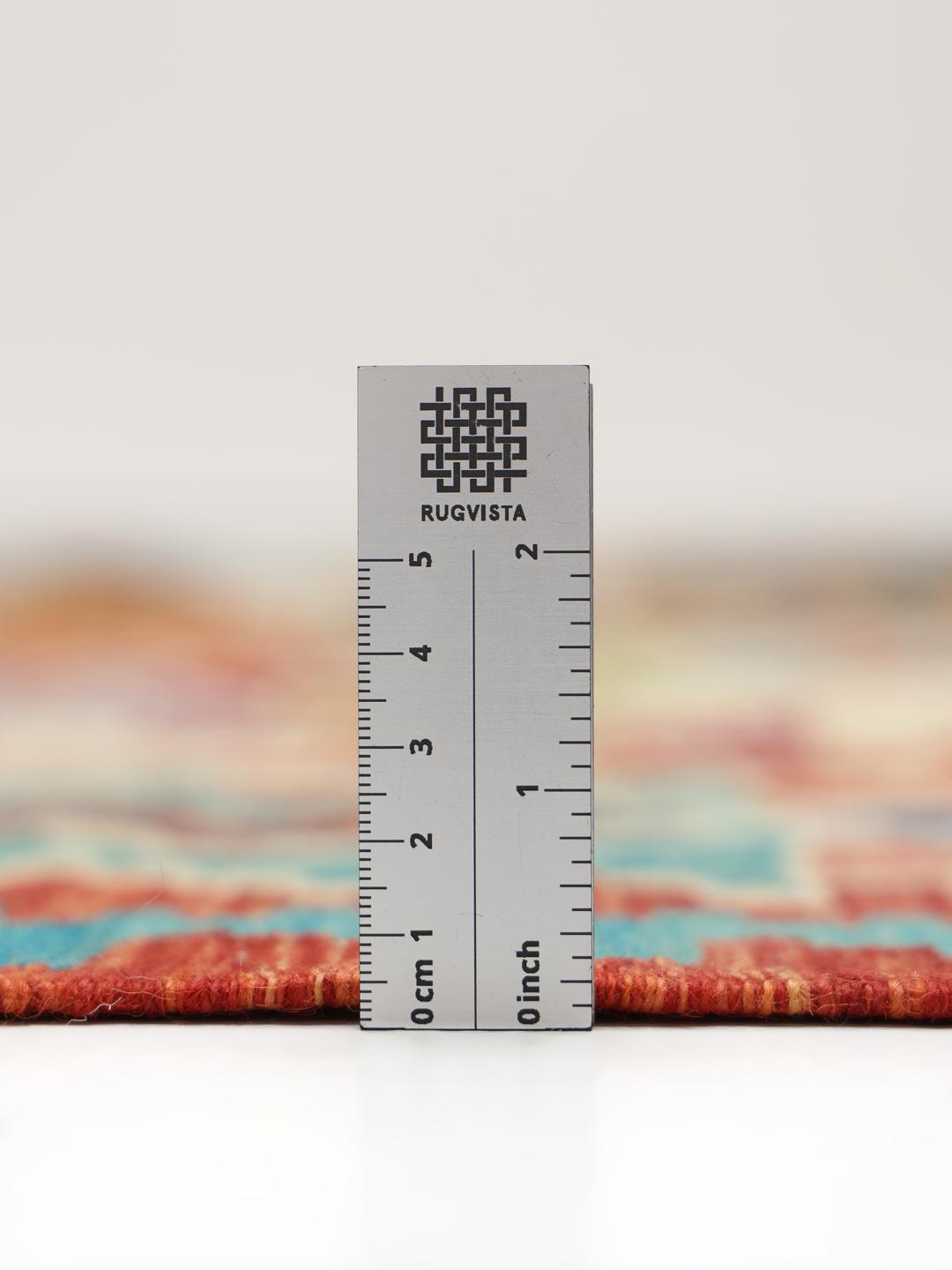
The term 'Kelim' refers to a specific technique where no pile is created, resulting in a thin, versatile fabric. Unlike knotted rugs, these are created by interlacing the warp and weft threads, which requires the weaver to have a complete mental map of the design before they even begin. This technical complexity ensures that the final piece is both lightweight and incredibly durable.
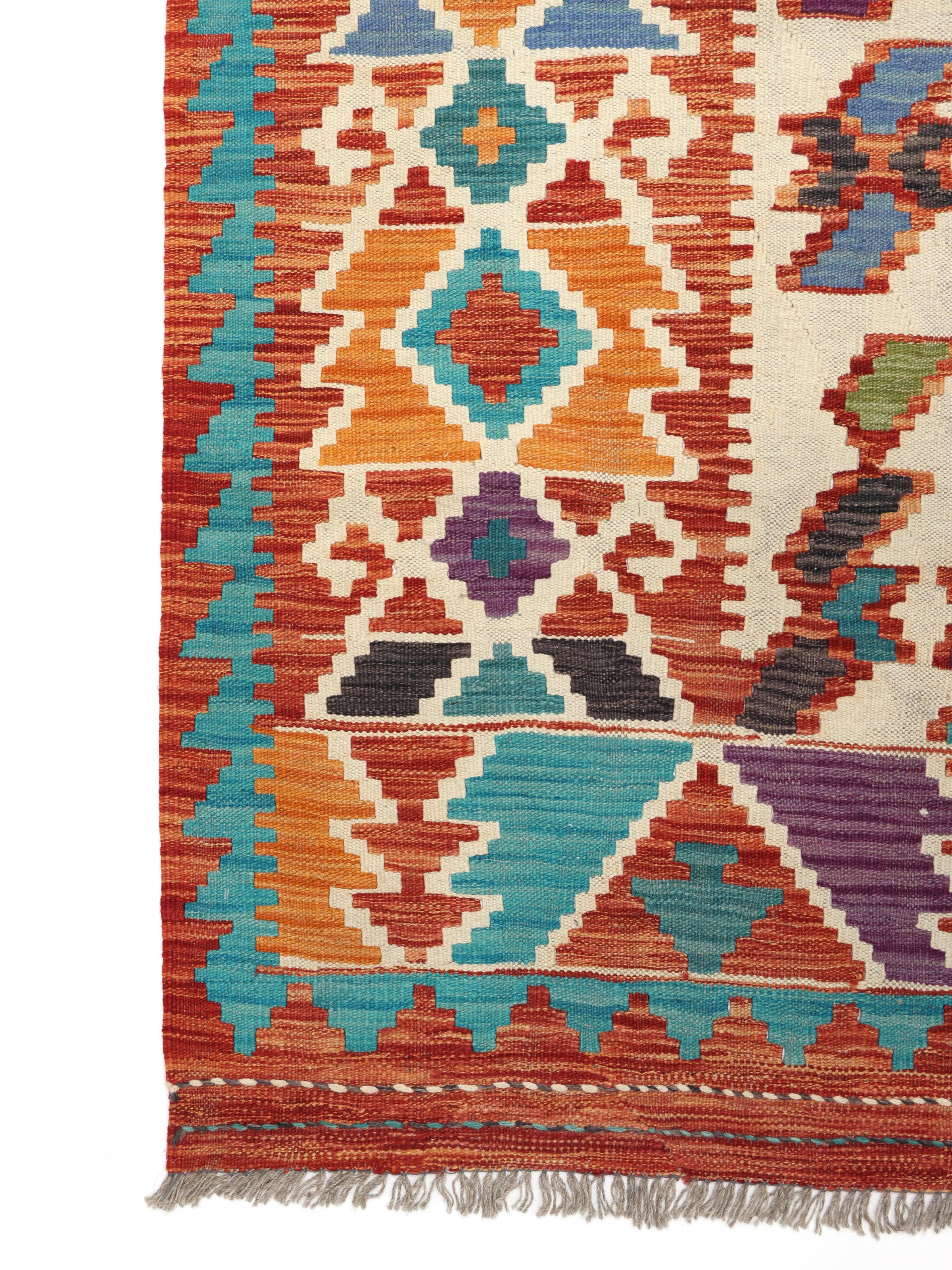
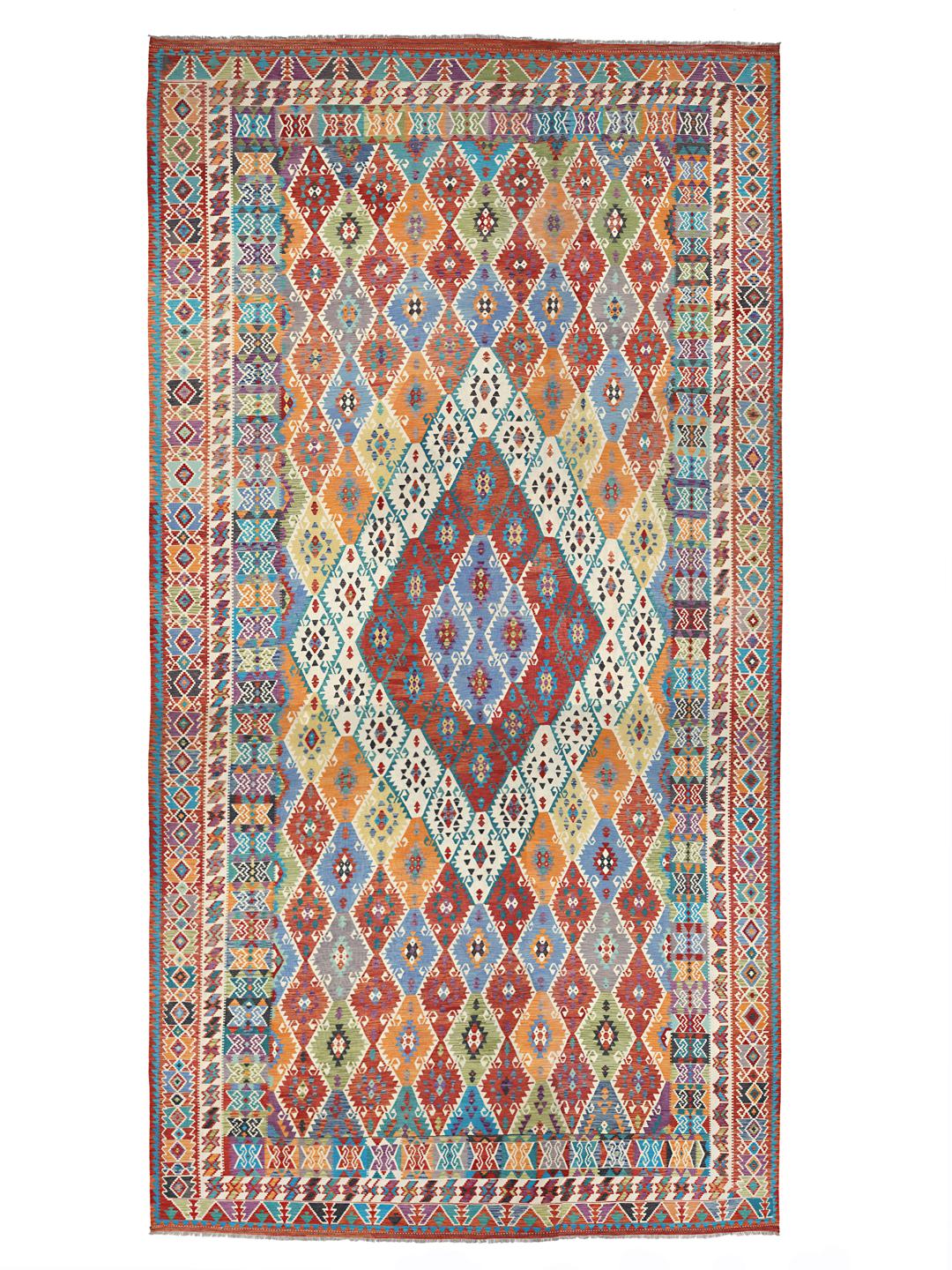
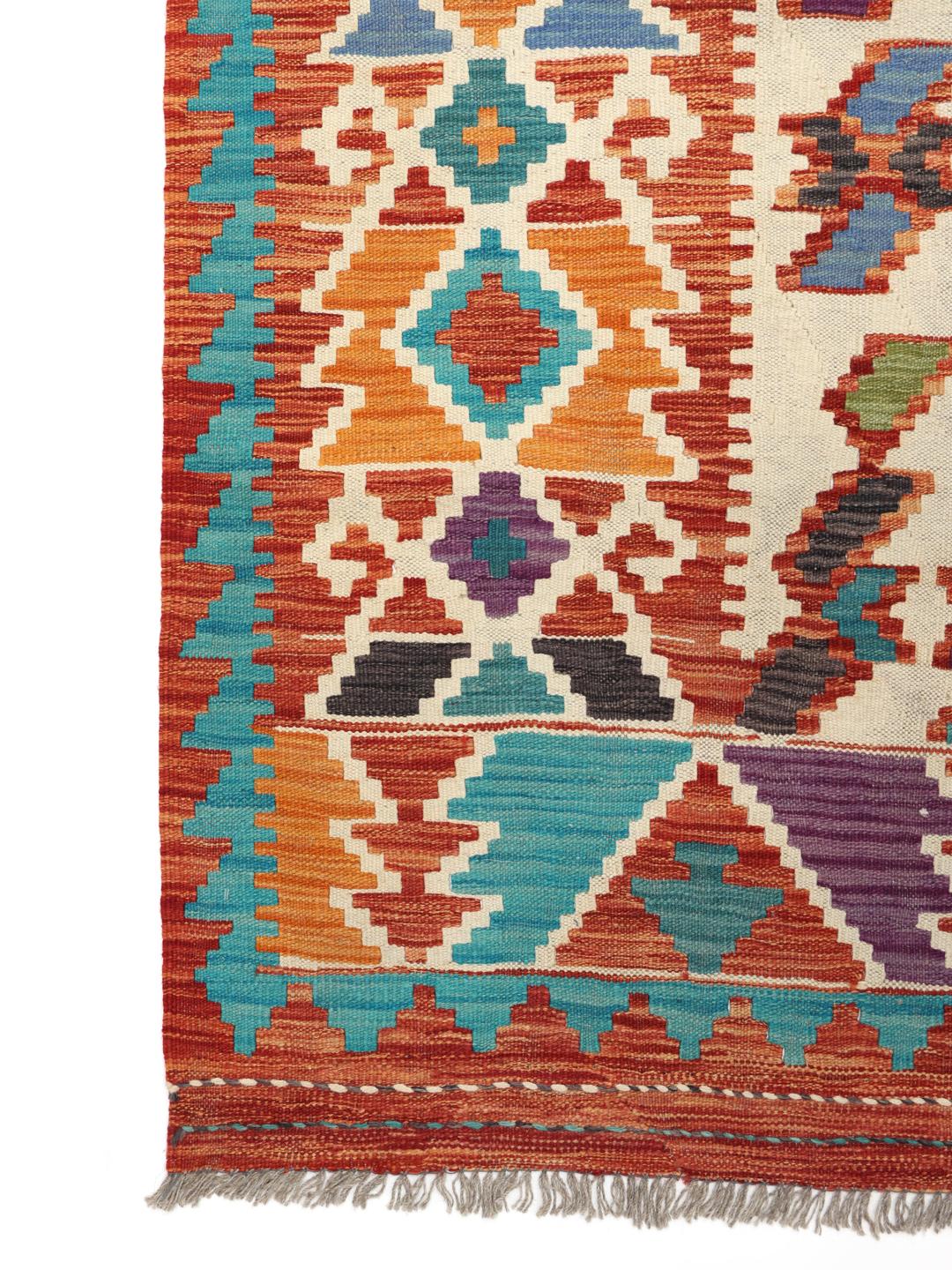
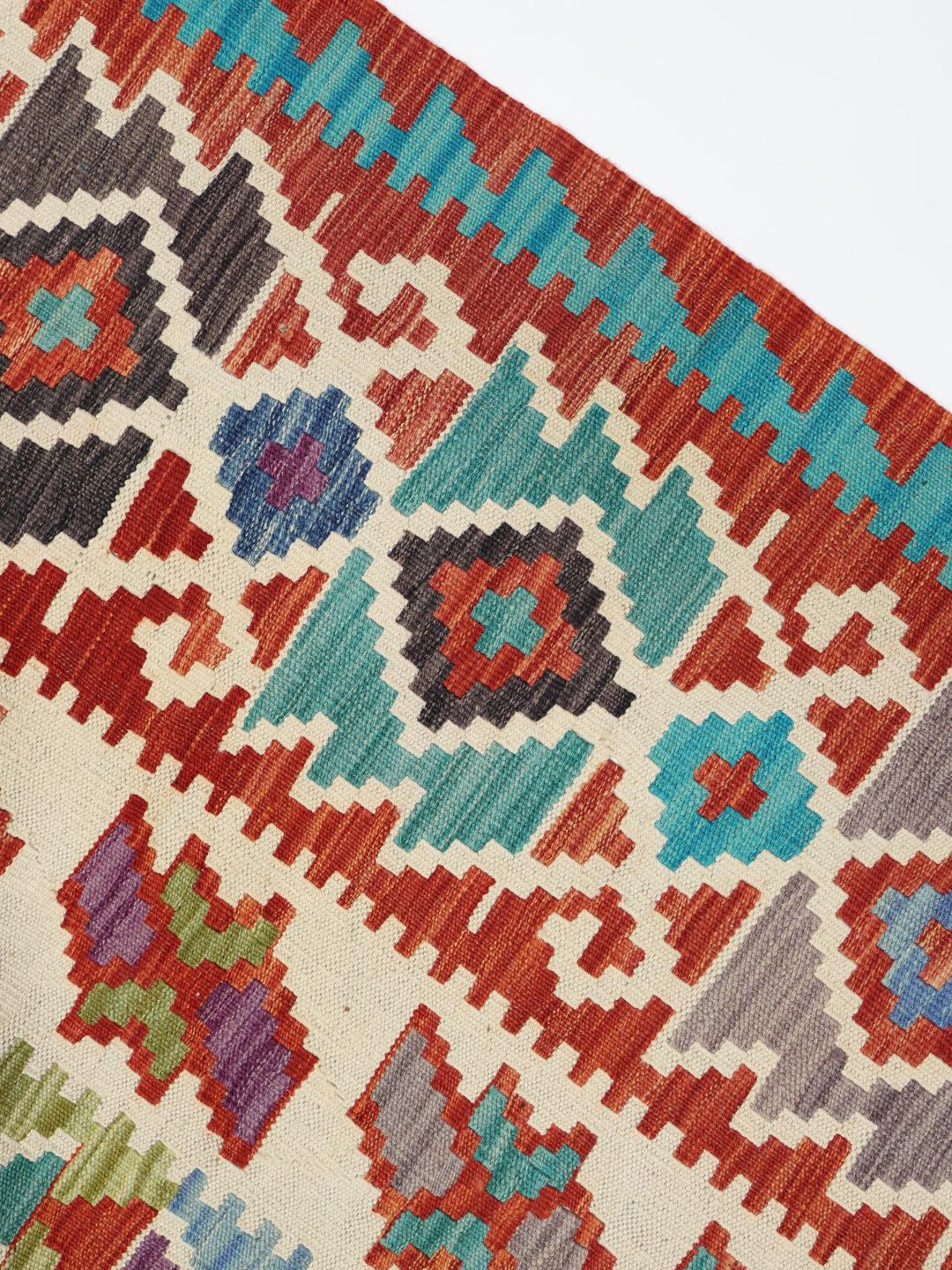
The visual language of this rug is defined by the iconic geometric diamond motif. These shapes, often arranged in repeating patterns, are traditional symbols of protection and fertility within the region's weaving culture. The use of vibrant, contrasting colours is characteristic of Afghan artisans who use natural dyes to create bold, enduring designs that have defined their craft for centuries.
Collecting a Kelim is an investment in cultural continuity. These rugs are highly valued for their authenticity and the way they bridge the gap between ancient tradition and modern home decor. Owning this piece means holding a fragment of the rich, storied history of Central Asian craftsmanship, ensuring that the legacy of the weaver remains a part of your daily life.