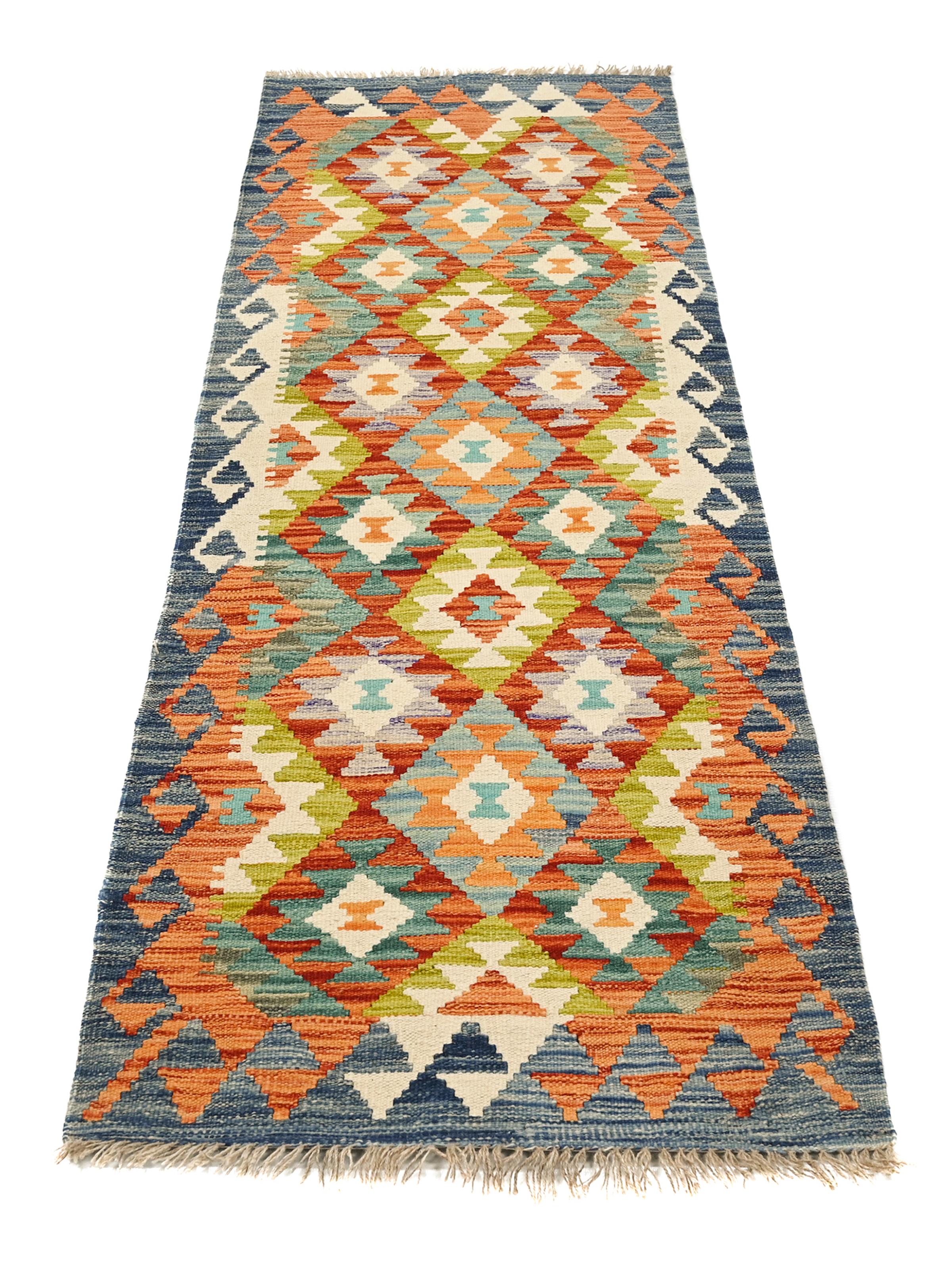
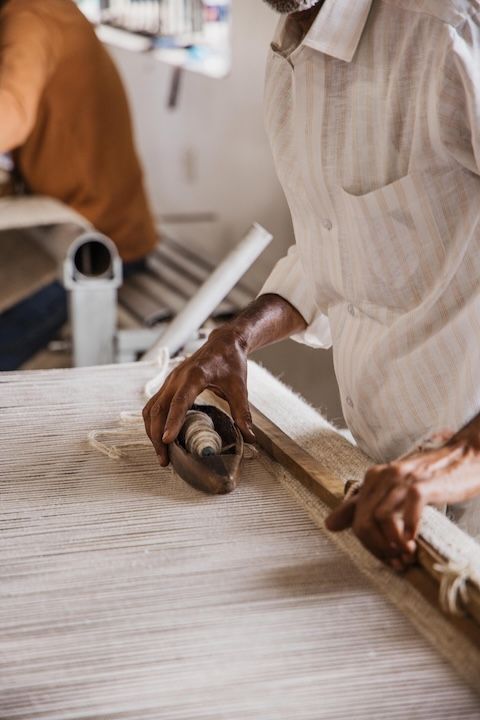
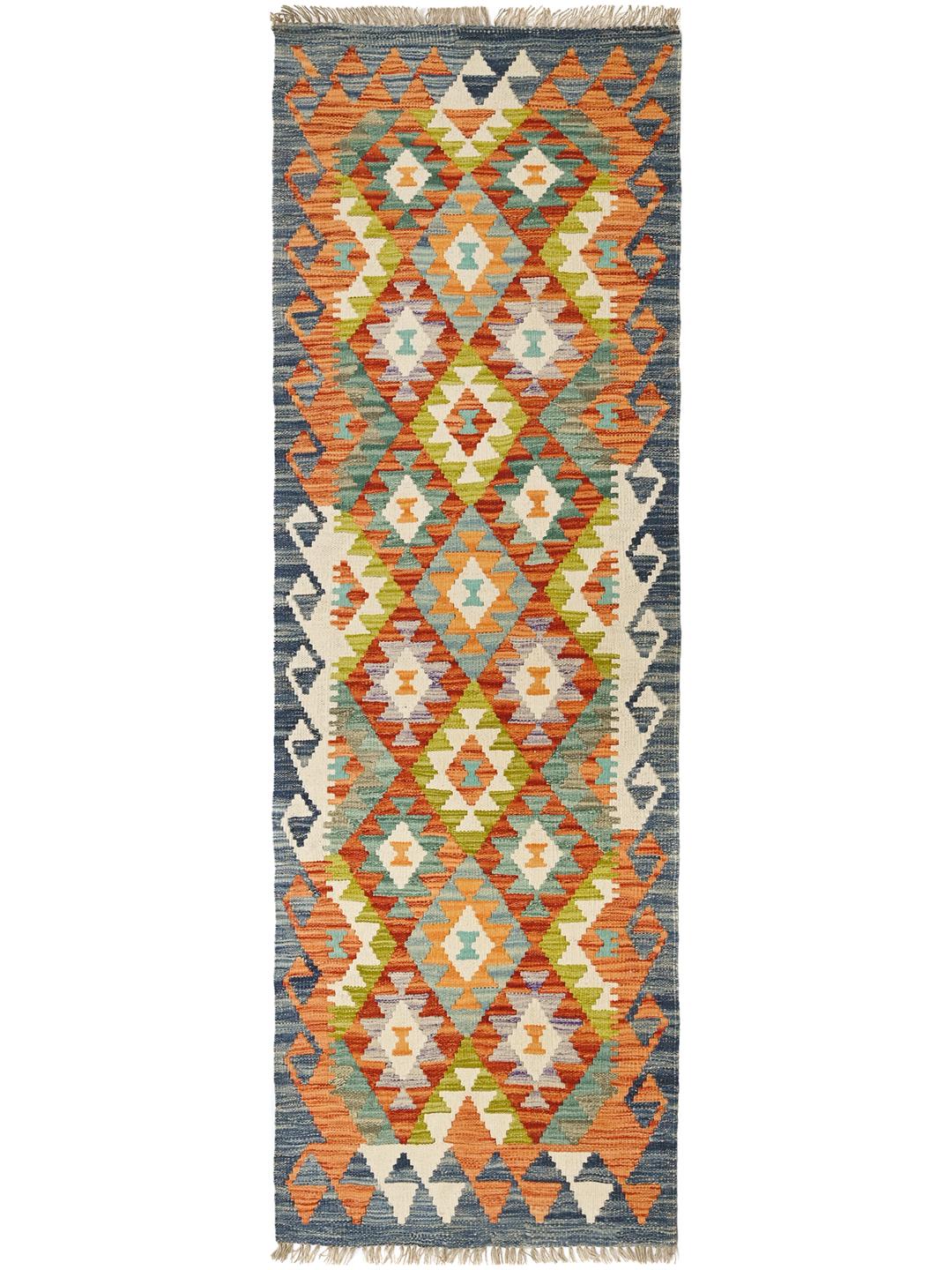
The tradition of Afghan weaving is deeply rooted in the nomadic and village cultures of the region, where rugs served as essential, multipurpose items for daily life. These pieces were historically crafted to provide insulation, comfort, and beauty, often reflecting the specific environment and social identity of the weaving community. Over centuries, these designs have evolved, incorporating influences from across the Middle East while maintaining a distinct, bold aesthetic that is instantly recognisable.
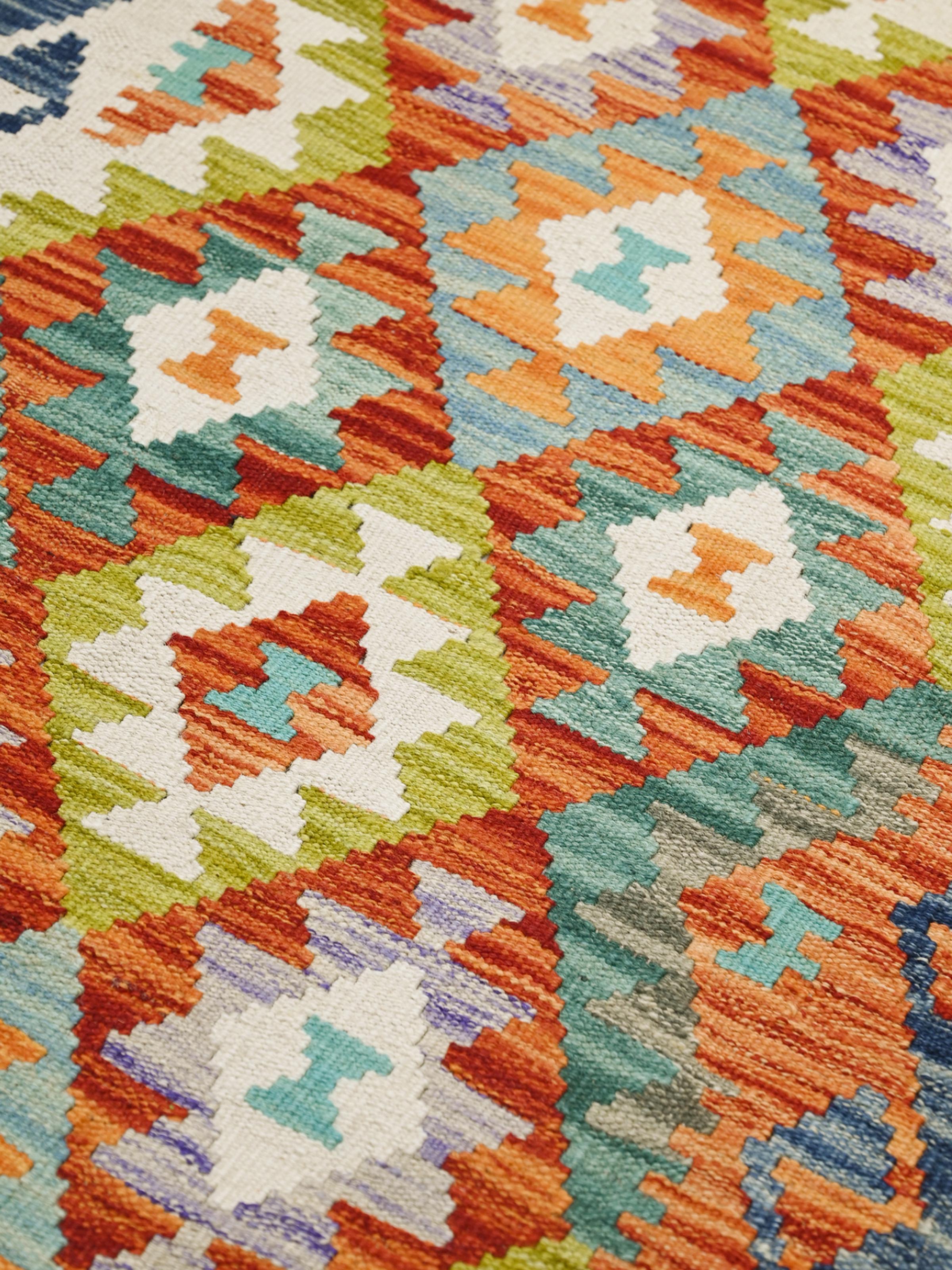
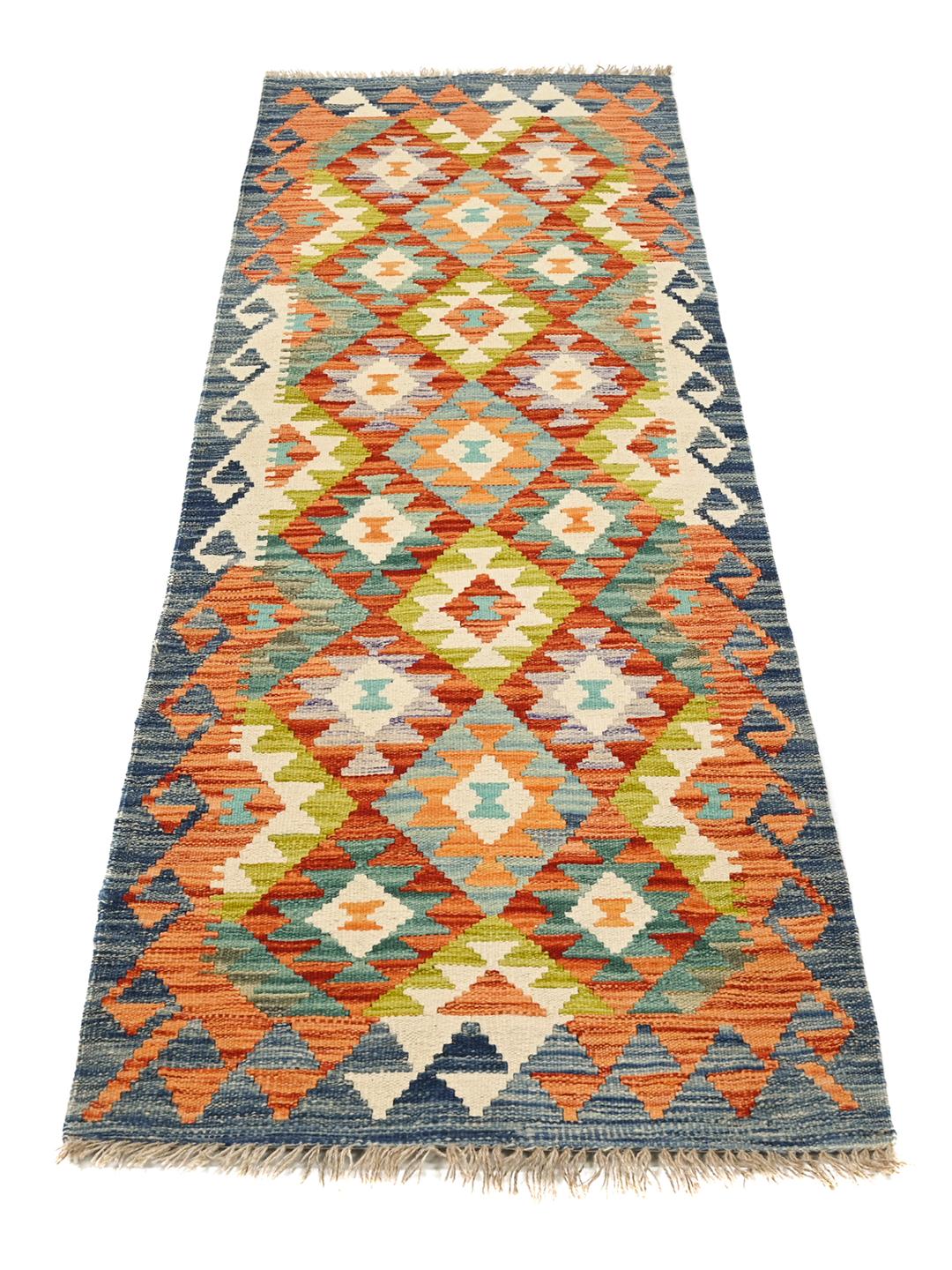
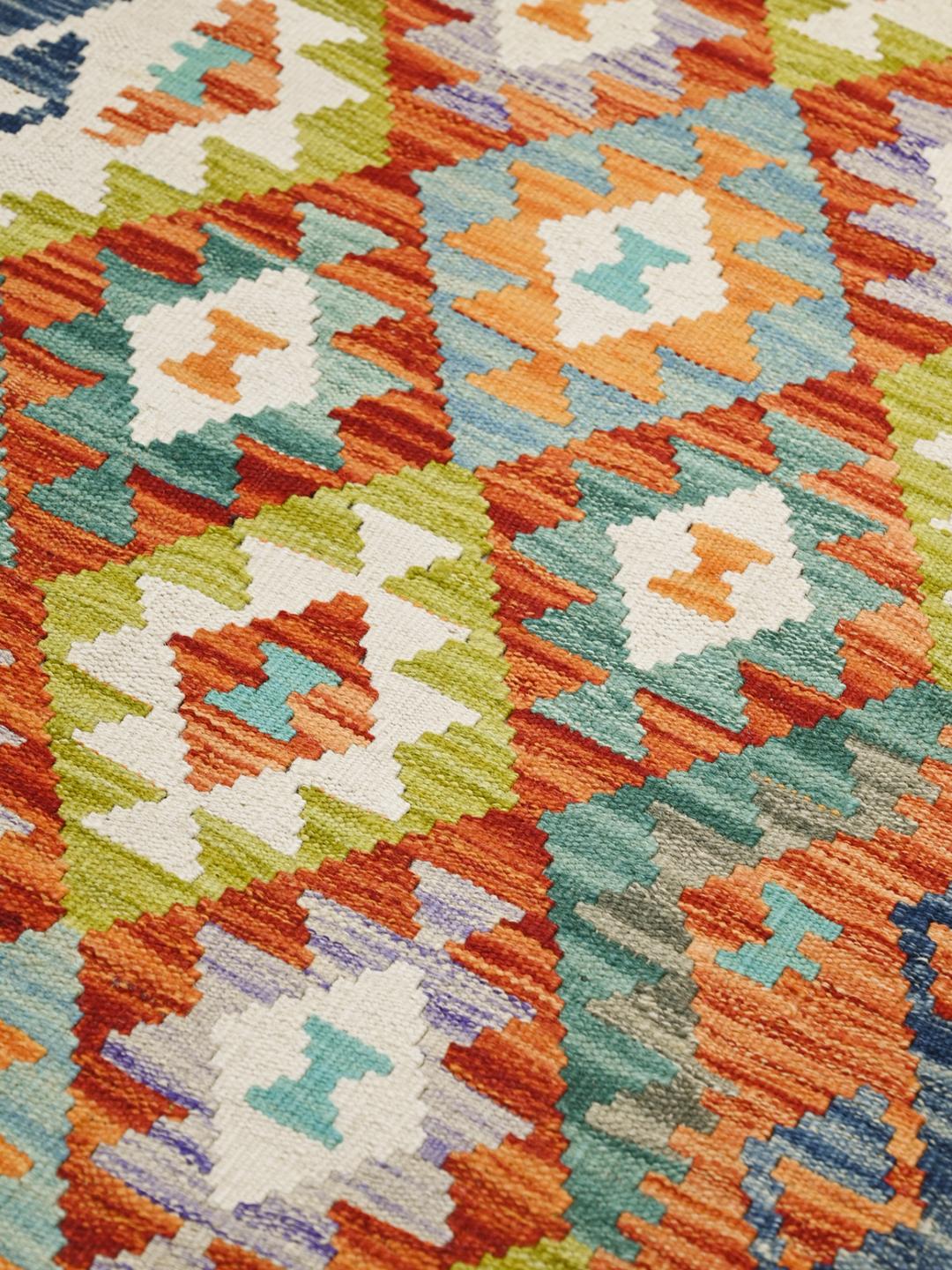
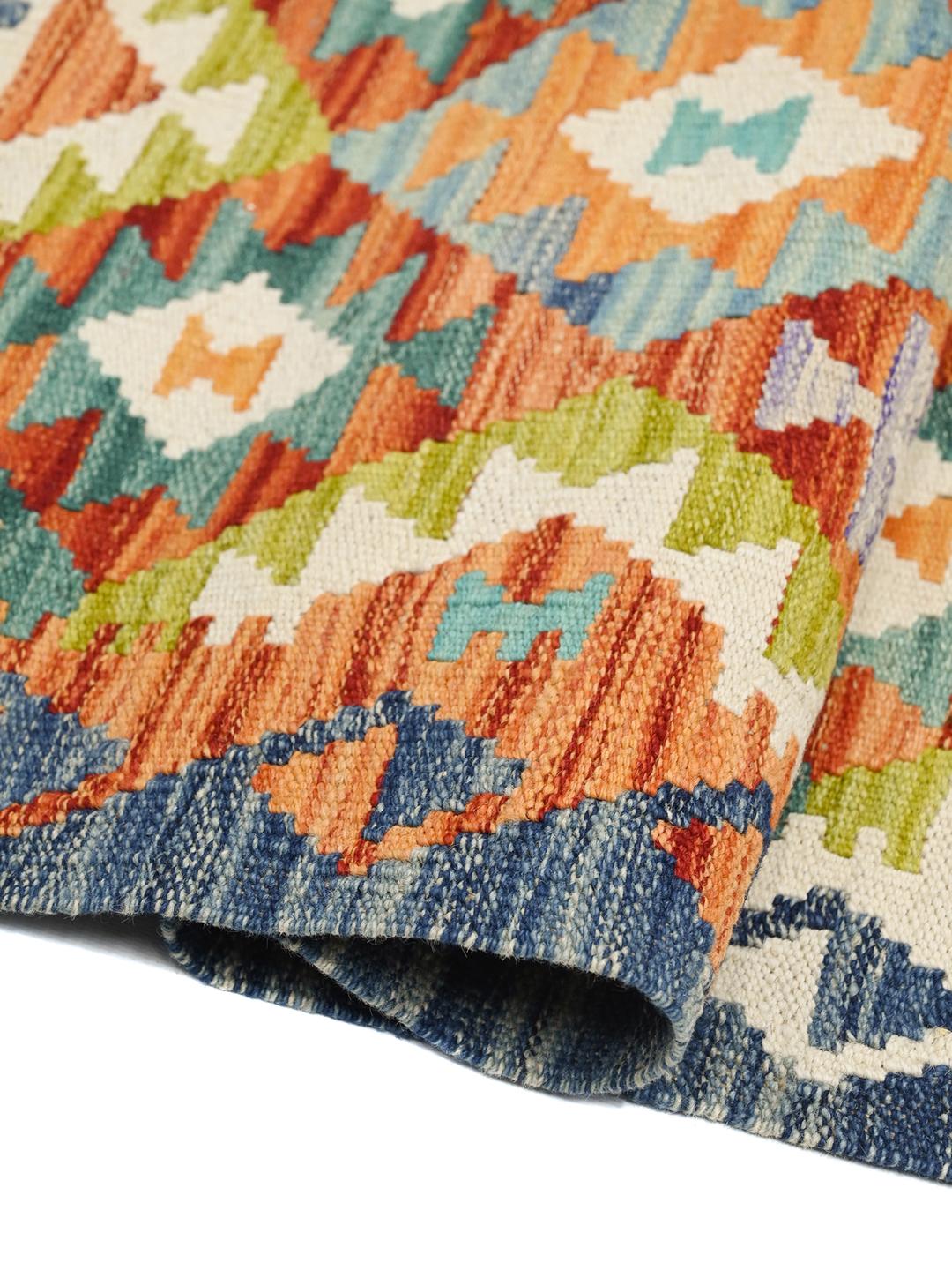
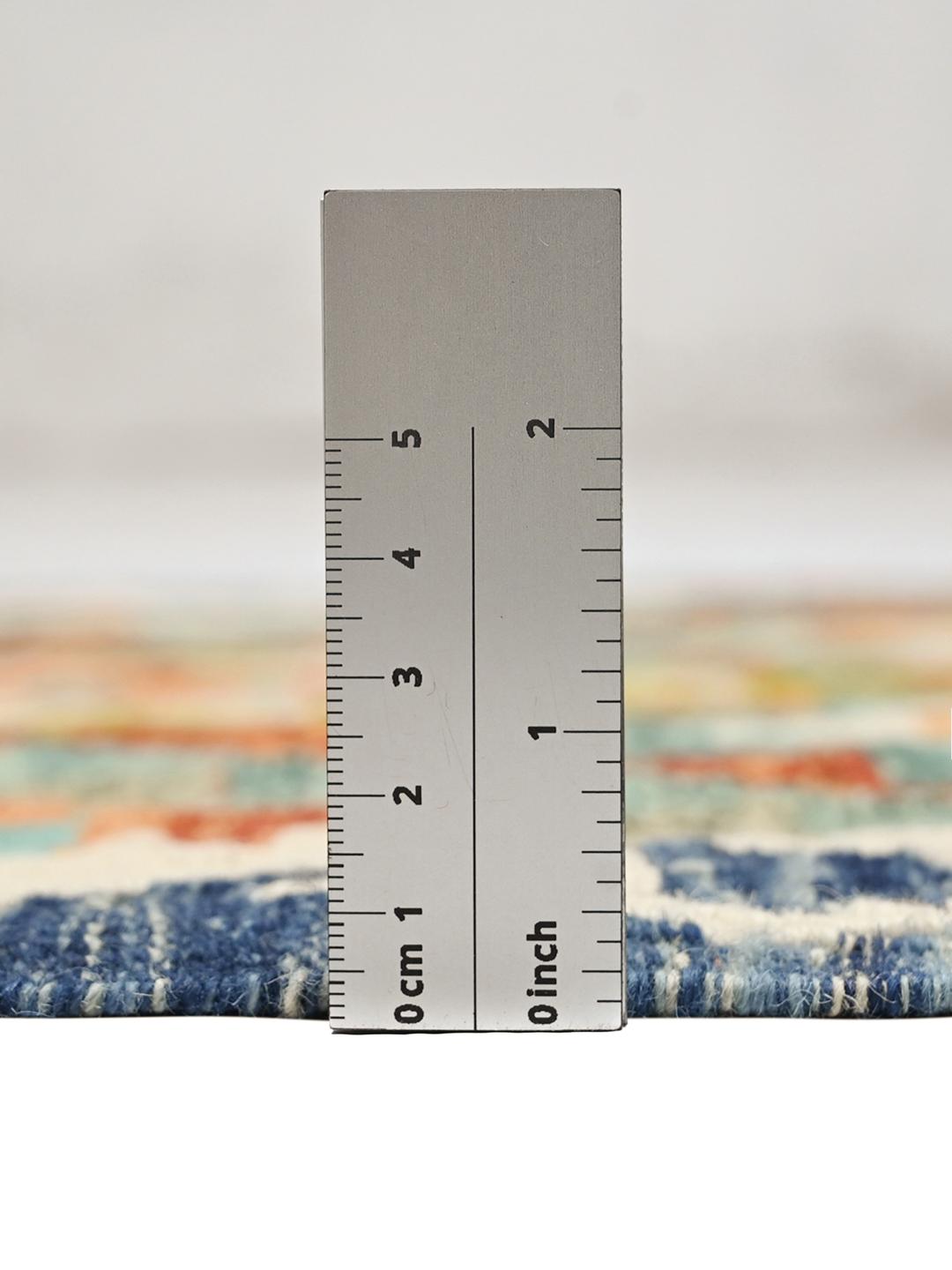
The term 'Kelim' refers to a flat-woven technique, meaning there is no pile. This style is achieved by interweaving the warp and weft strands to create a smooth, durable surface that is prized for its versatility and clear, sharp patterns. Because the design is woven directly into the structure of the rug rather than knotted on top, the resulting patterns are often crisp, geometric, and reversible, showcasing the weaver's mastery of symmetry and colour balance.
Signature design elements of this tradition include repeating geometric motifs, such as diamonds, triangles, and stylized floral shapes, often enclosed within intricate, multi-layered borders. The colour palettes traditionally derived from natural dyes are known for their earthy richness, though modern interpretations often feature more vivid, contemporary tones. The interplay of these shapes creates a sense of movement and rhythm, making each runner a dynamic piece that draws the eye and anchors the room.
Collecting rugs from this tradition is a way to preserve a living history of human skill and cultural identity. Each runner is not merely a floor covering but a narrative of the region, reflecting the values of durability, community, and artistic expression. By bringing such a piece into your home, you are supporting a craft tradition that has been passed down through generations, ensuring that these stories continue to be told in modern homes worldwide.