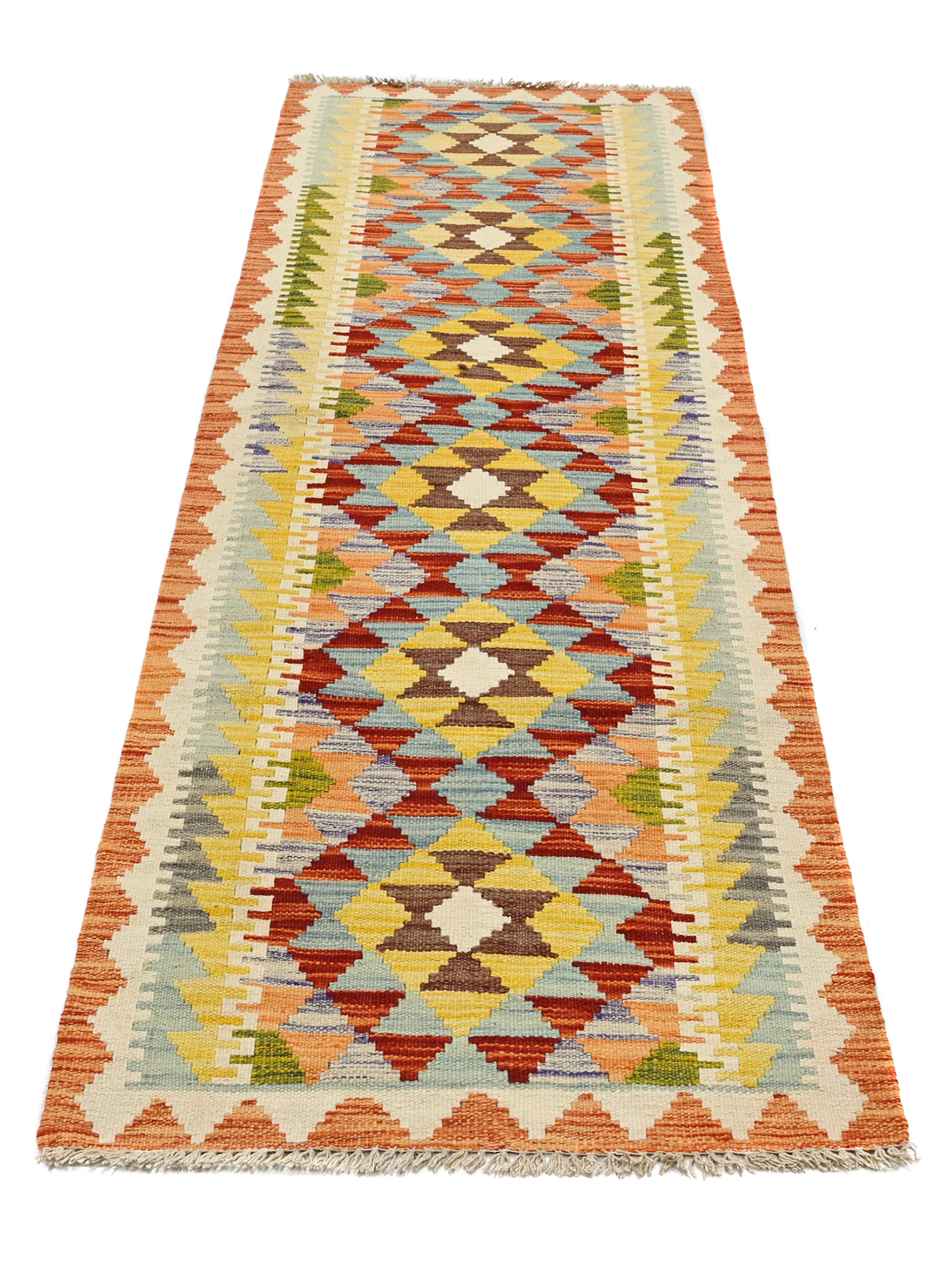
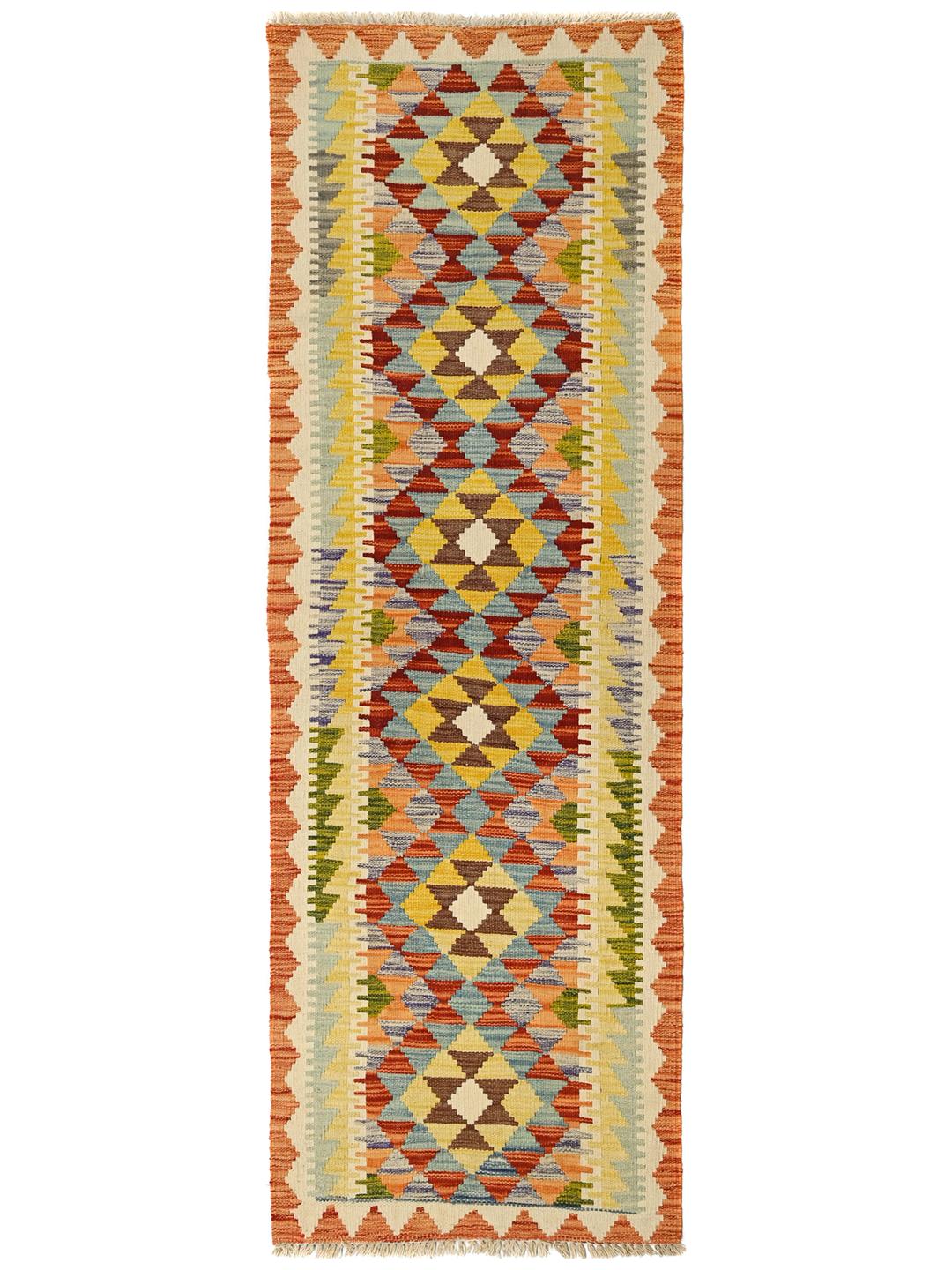
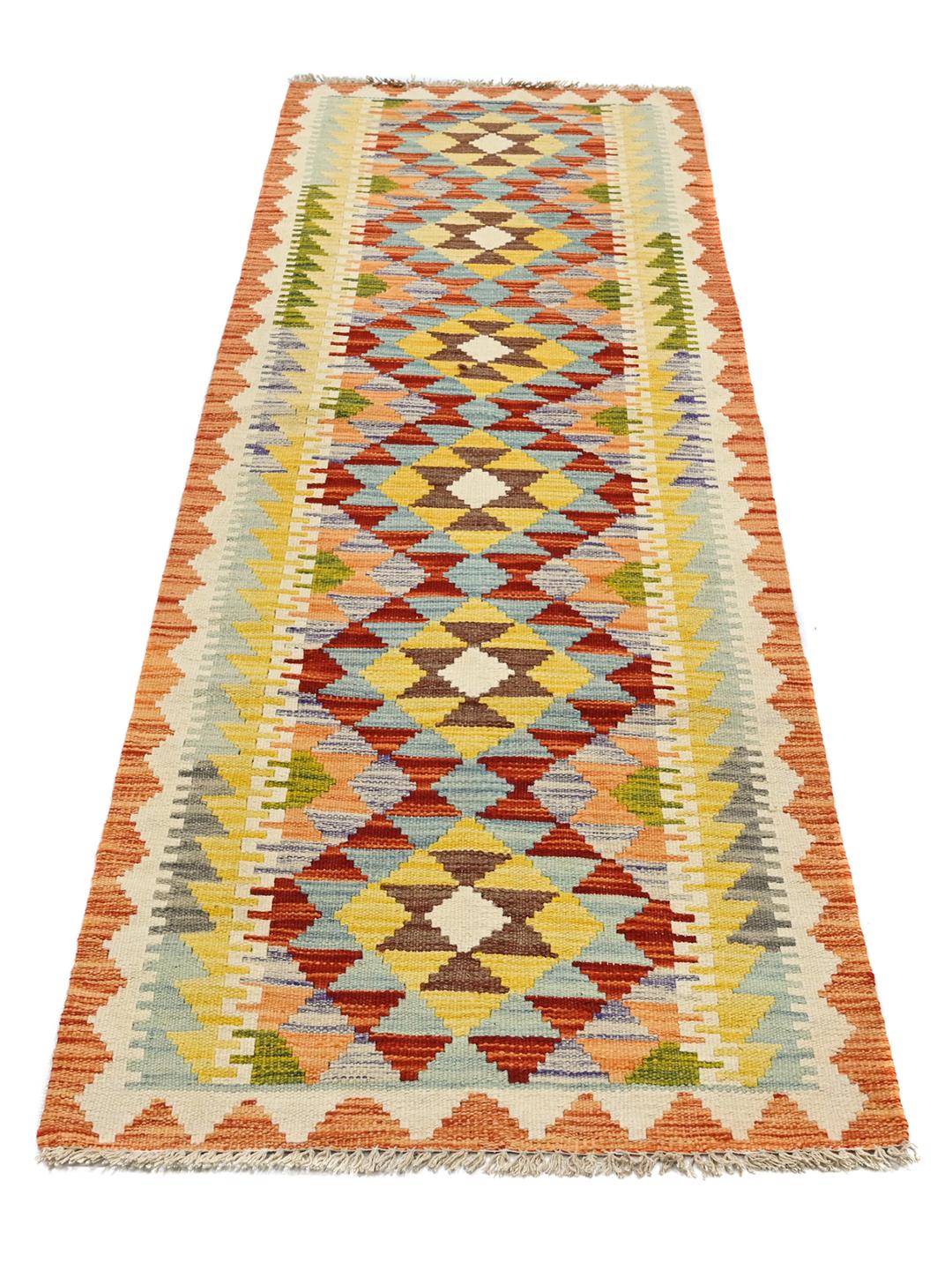
The Kelim Afghan Old Style tradition finds its roots in the nomadic cultures of the Middle East, where flat-woven rugs were essential for their portability and versatility. Historically, these pieces were used as floor coverings, wall hangings, and even as storage bags, serving as a canvas for weavers to express tribal identity through symbolic motifs.
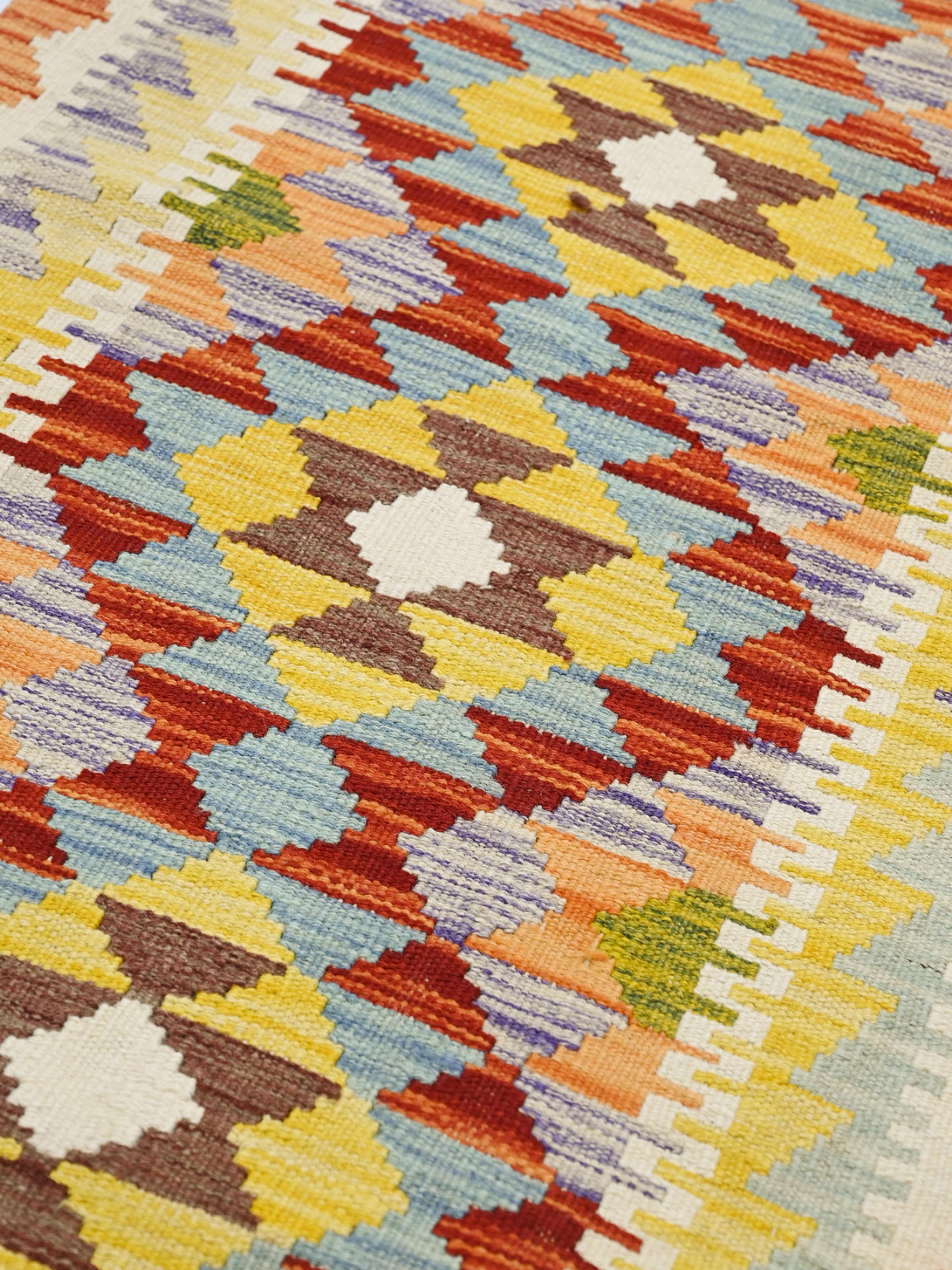
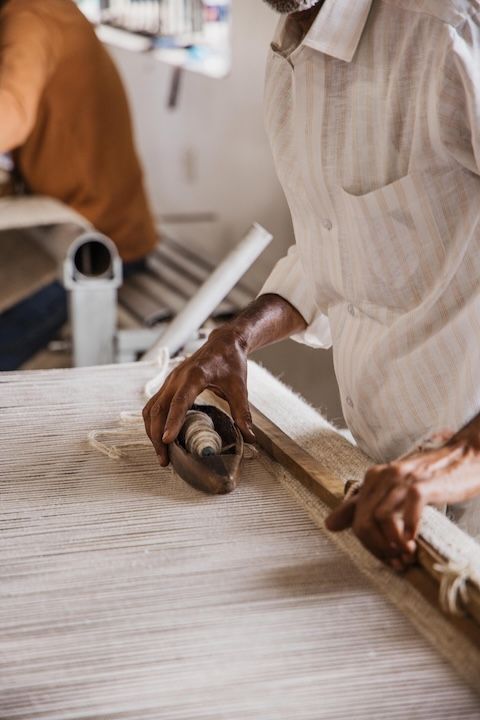
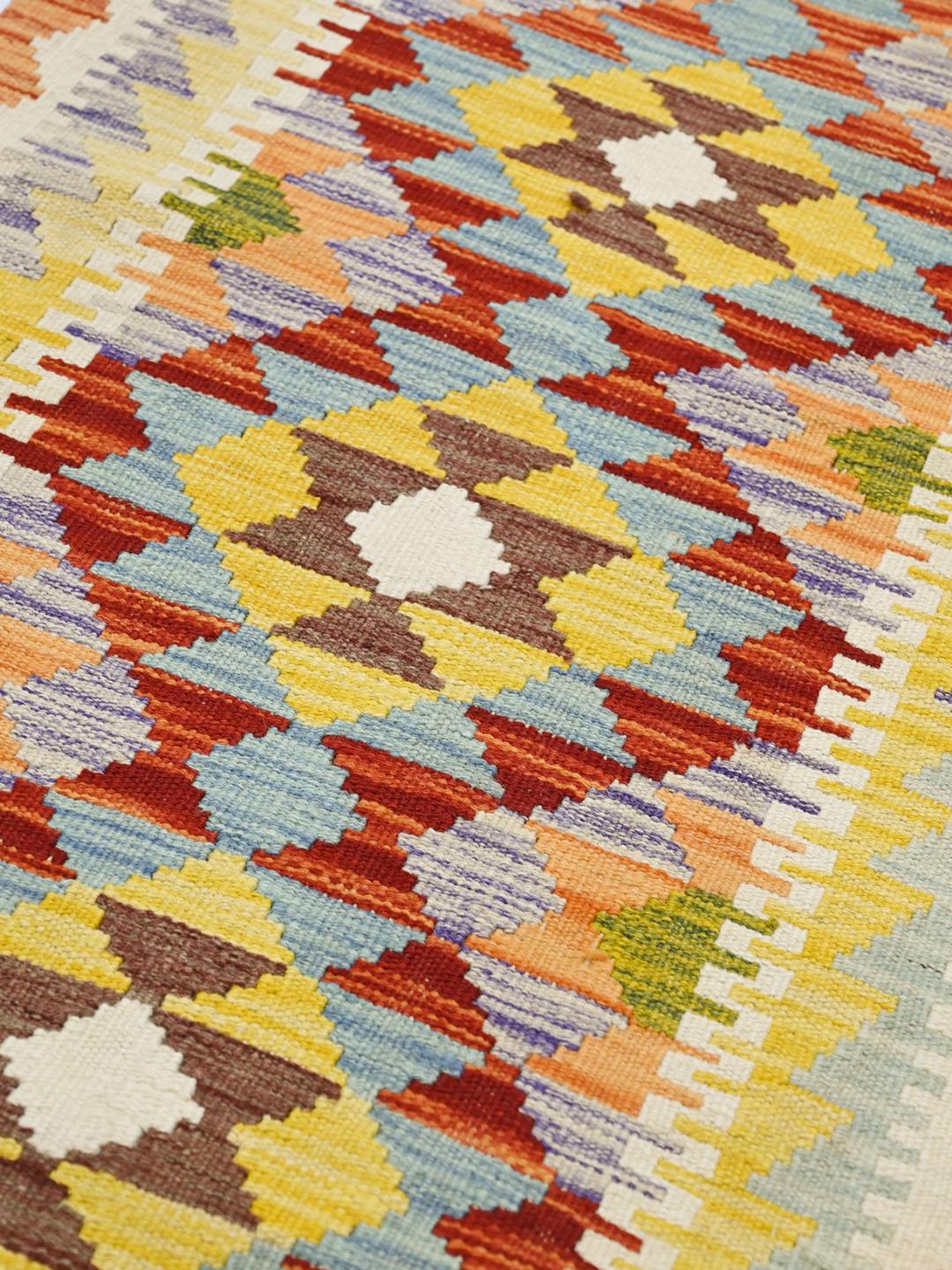
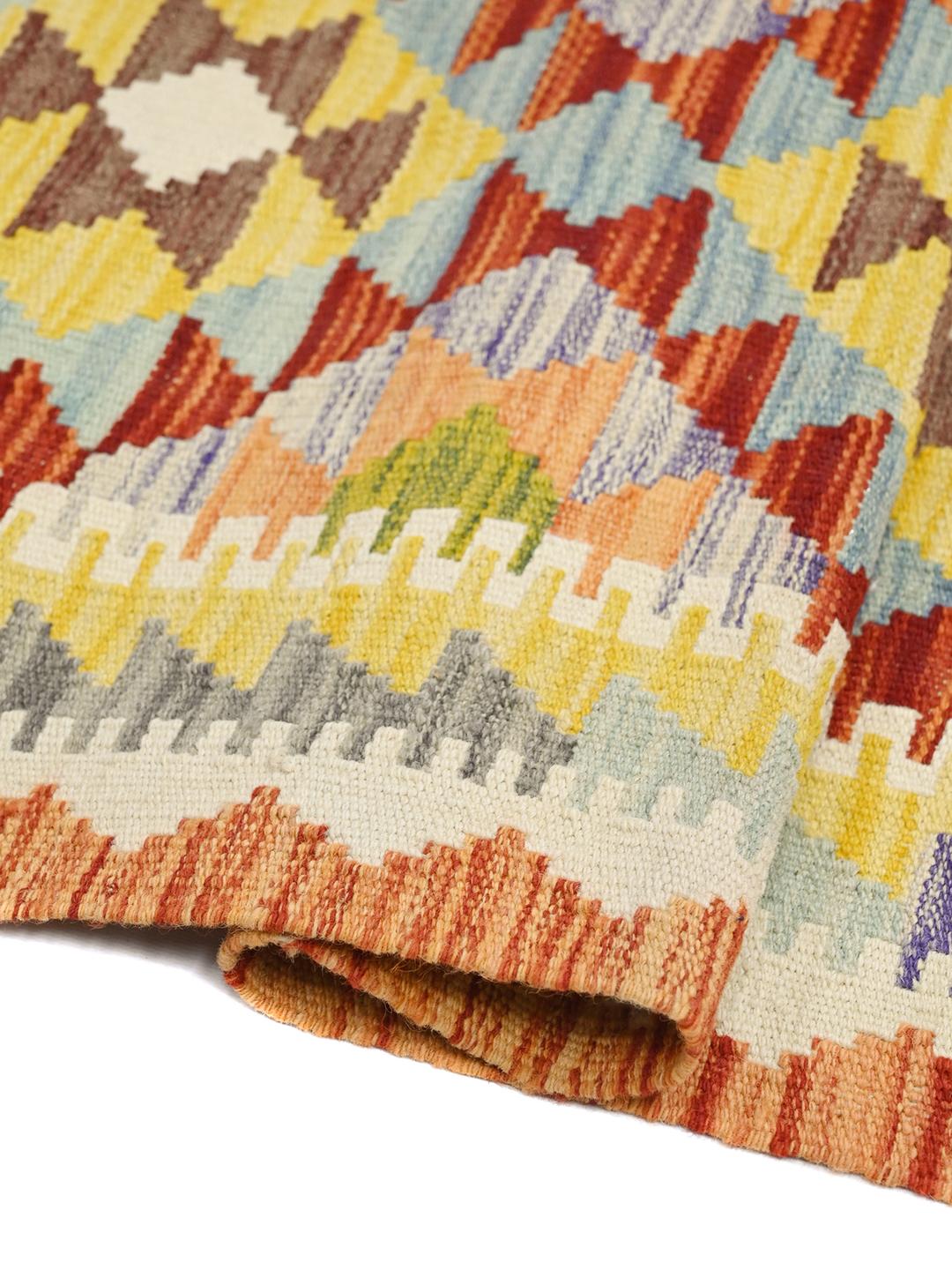
The term 'Kelim' refers to the specific slit-weave technique used to create these rugs. By alternating the coloured weft threads to create patterns, the weaver leaves small vertical slits where the colours meet, resulting in a lightweight, reversible rug that is highly valued for its clean lines and graphic appeal.
Signature design elements in this style often include repeating geometric shapes, such as diamonds and triangles, which are believed to carry protective meanings. The borders are typically framed with serrated edges or simple linear patterns that provide a strong sense of symmetry and balance to the overall composition.
Collecting these rugs is an investment in cultural heritage, as they represent a bridge between ancient craftsmanship and contemporary living. Each piece is a testament to the skill passed down through generations, offering collectors a chance to own a functional relic that carries the history and spirit of its region.