The Kelim tradition is one of the most storied in the Middle East, with roots that stretch back centuries across the nomadic cultures of Central Asia. These rugs are historically significant for their portability and utility, serving as essential items for travelling families who used them as floor coverings, blankets, and storage sacks.
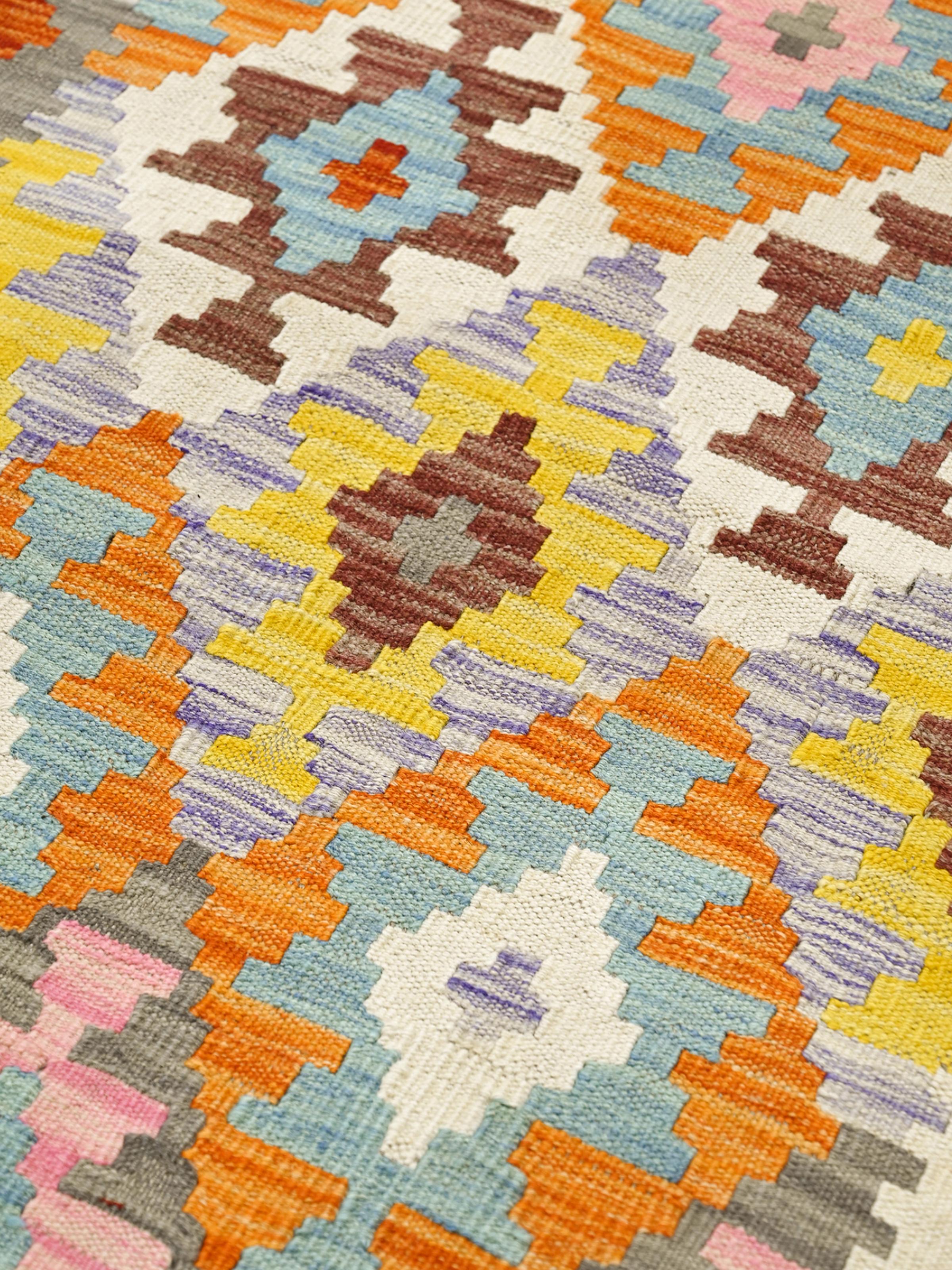
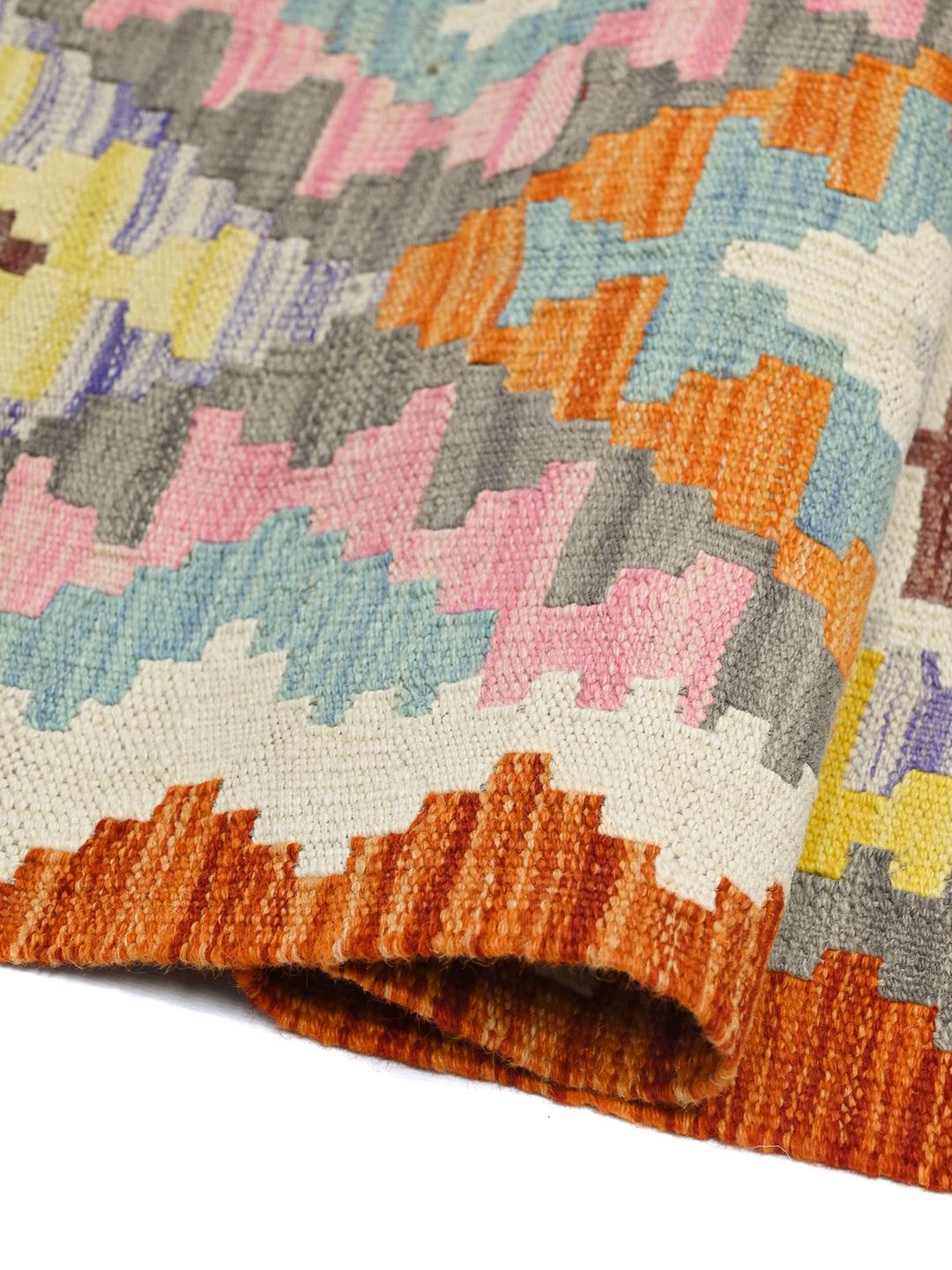
The term 'Kelim' refers to the flat-weaving technique where the design is created by interweaving the coloured weft strands with the warp. This method results in a reversible rug with a smooth, firm texture that is distinct from pile rugs. This construction is highly valued for its ability to produce crisp, clean lines that define the complex geometric motifs characteristic of the region.
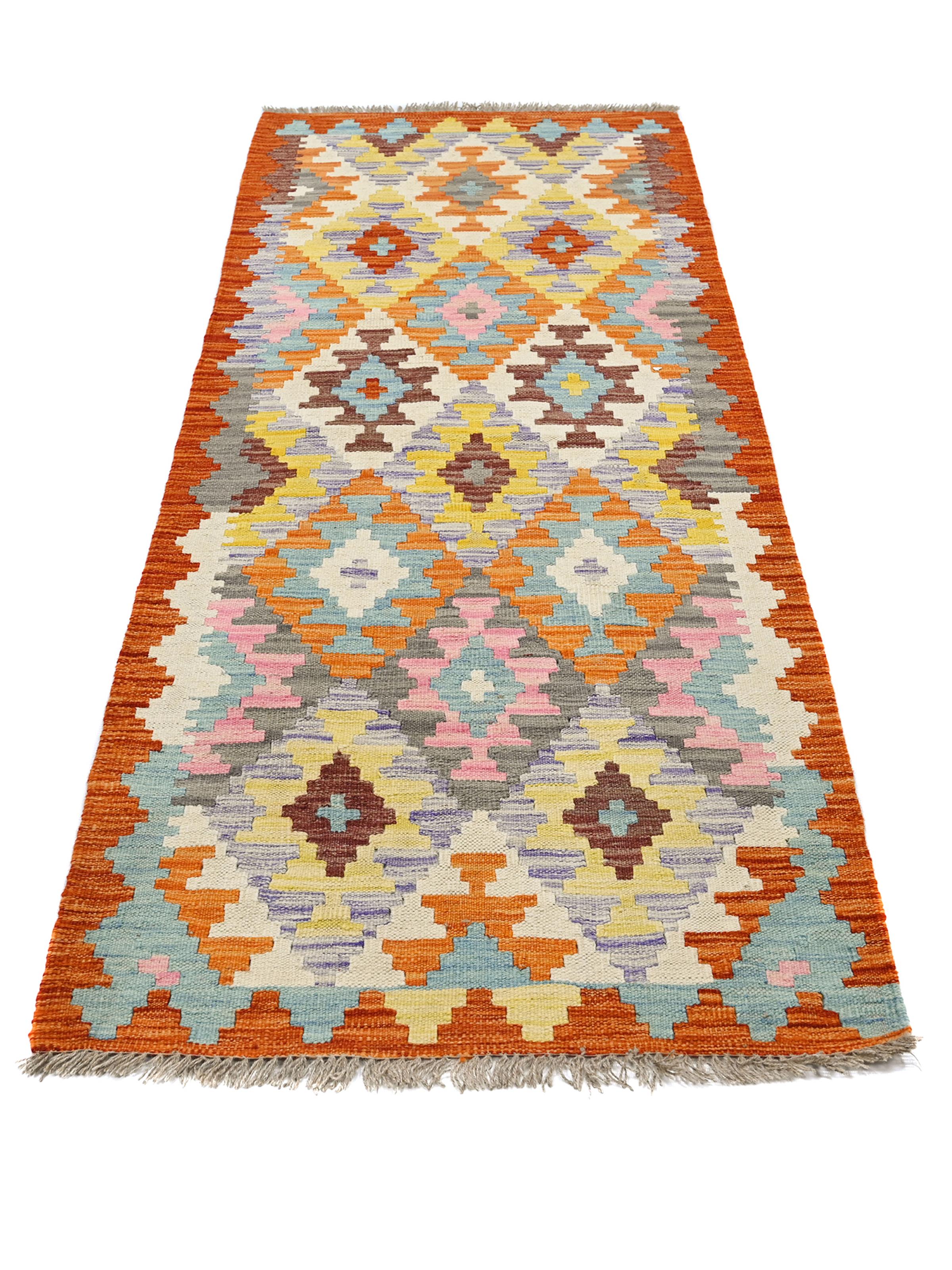
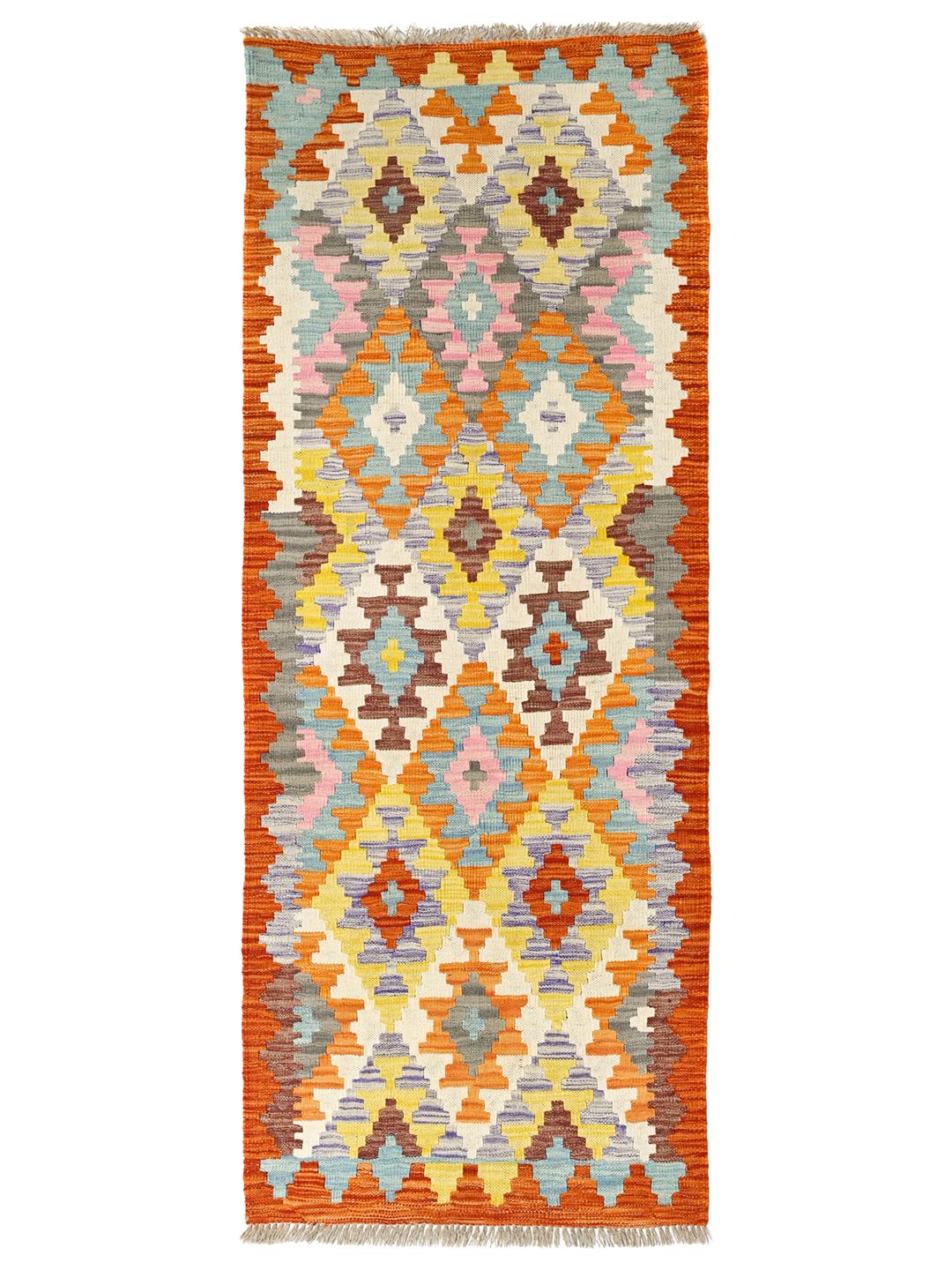
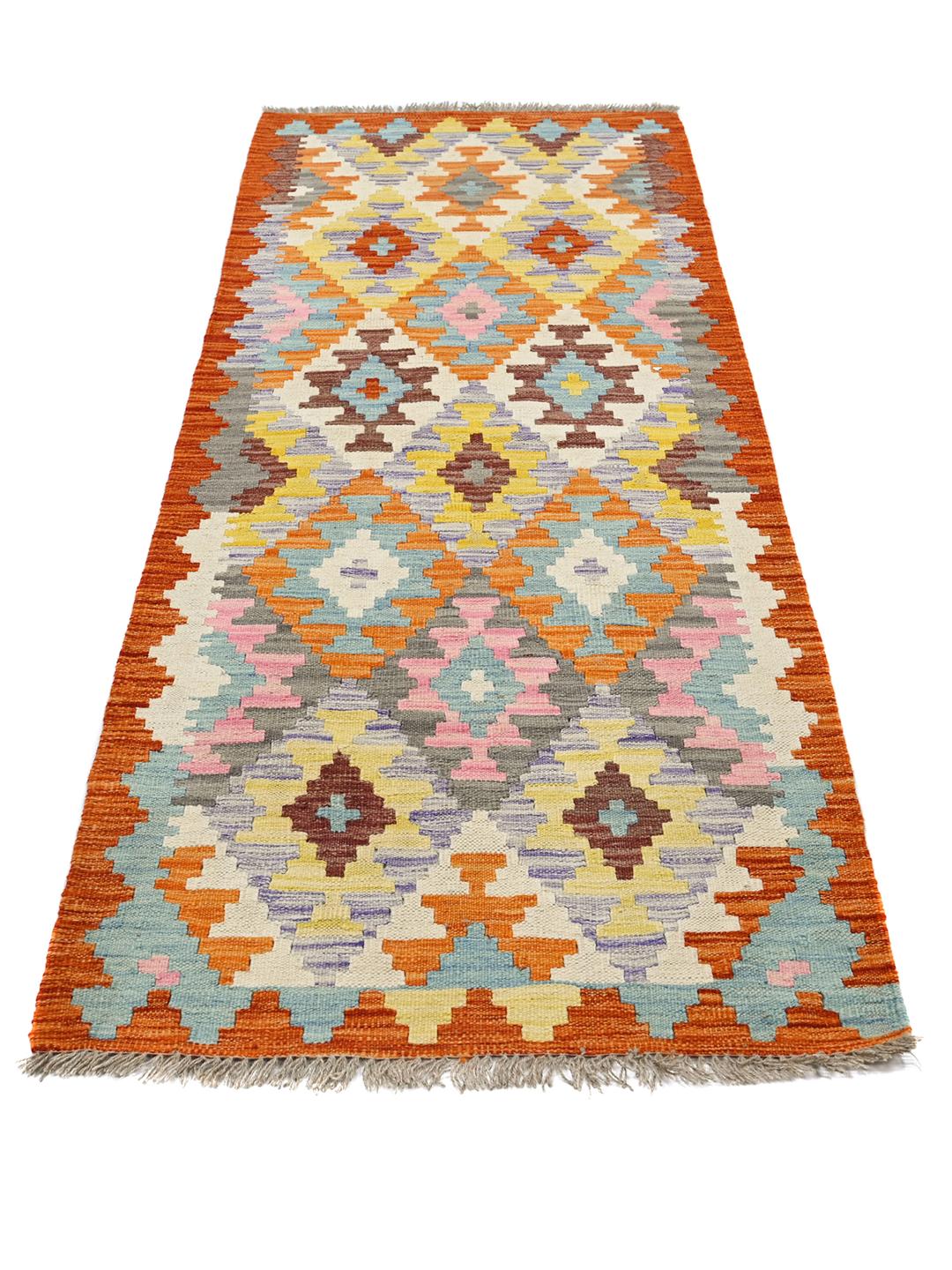
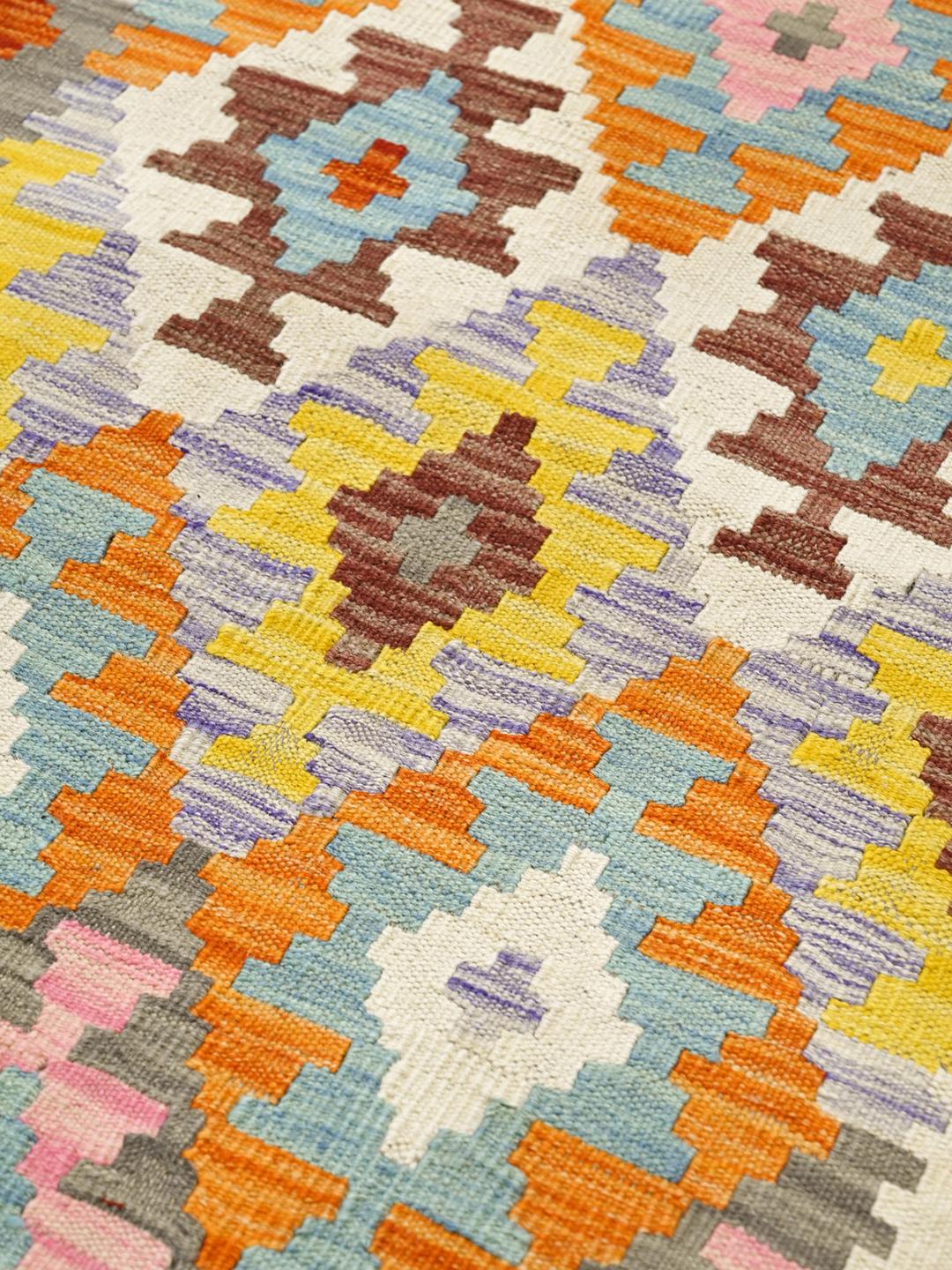
Visually, these rugs are defined by their bold, repeating geometric patterns and symbolic motifs that often hold cultural meaning. The use of vibrant, natural dyes and complex arrangements of diamonds and triangles is a hallmark of the Afghan style. This specific piece reflects these traditions, showcasing a sophisticated balance of colour and form that has been refined by generations of weavers.
Collecting these rugs is a way to honour the skill and artistic heritage of the Middle Eastern weaving communities. Each piece acts as a historical document, reflecting the specific techniques and design sensibilities of its time and place. Owning such a rug is not just about home decor, but about participating in a legacy of craft that continues to inspire and endure.