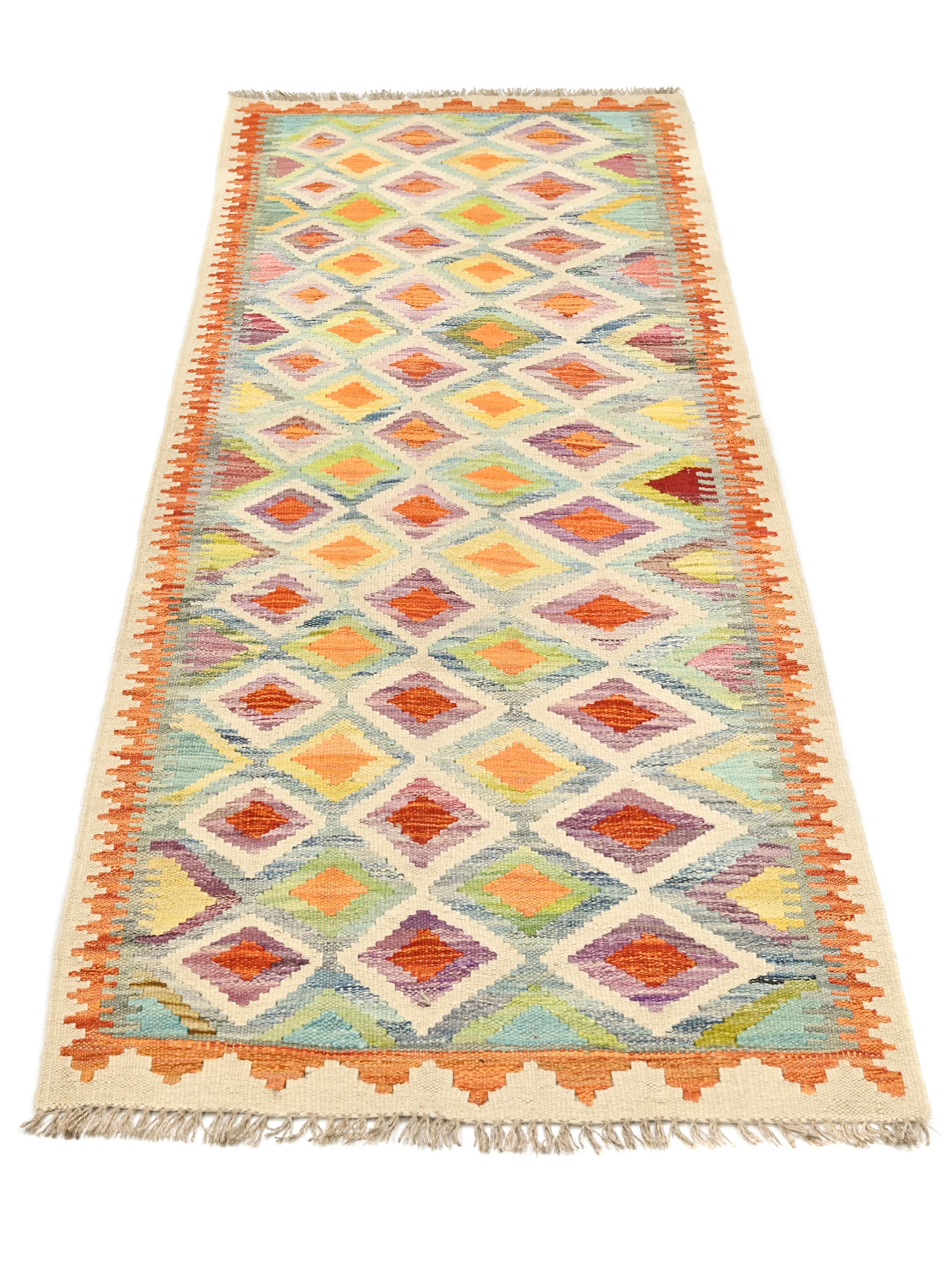
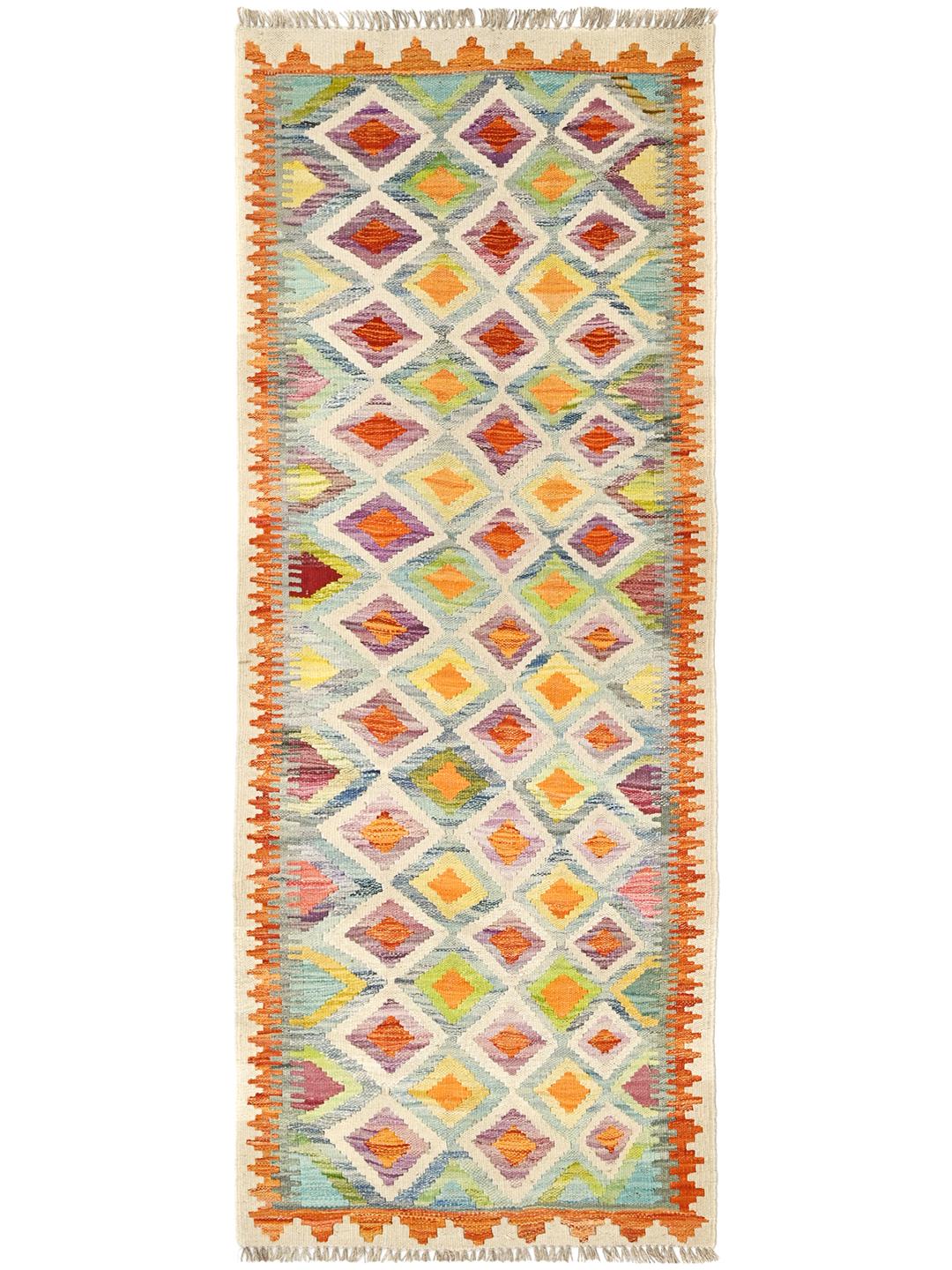
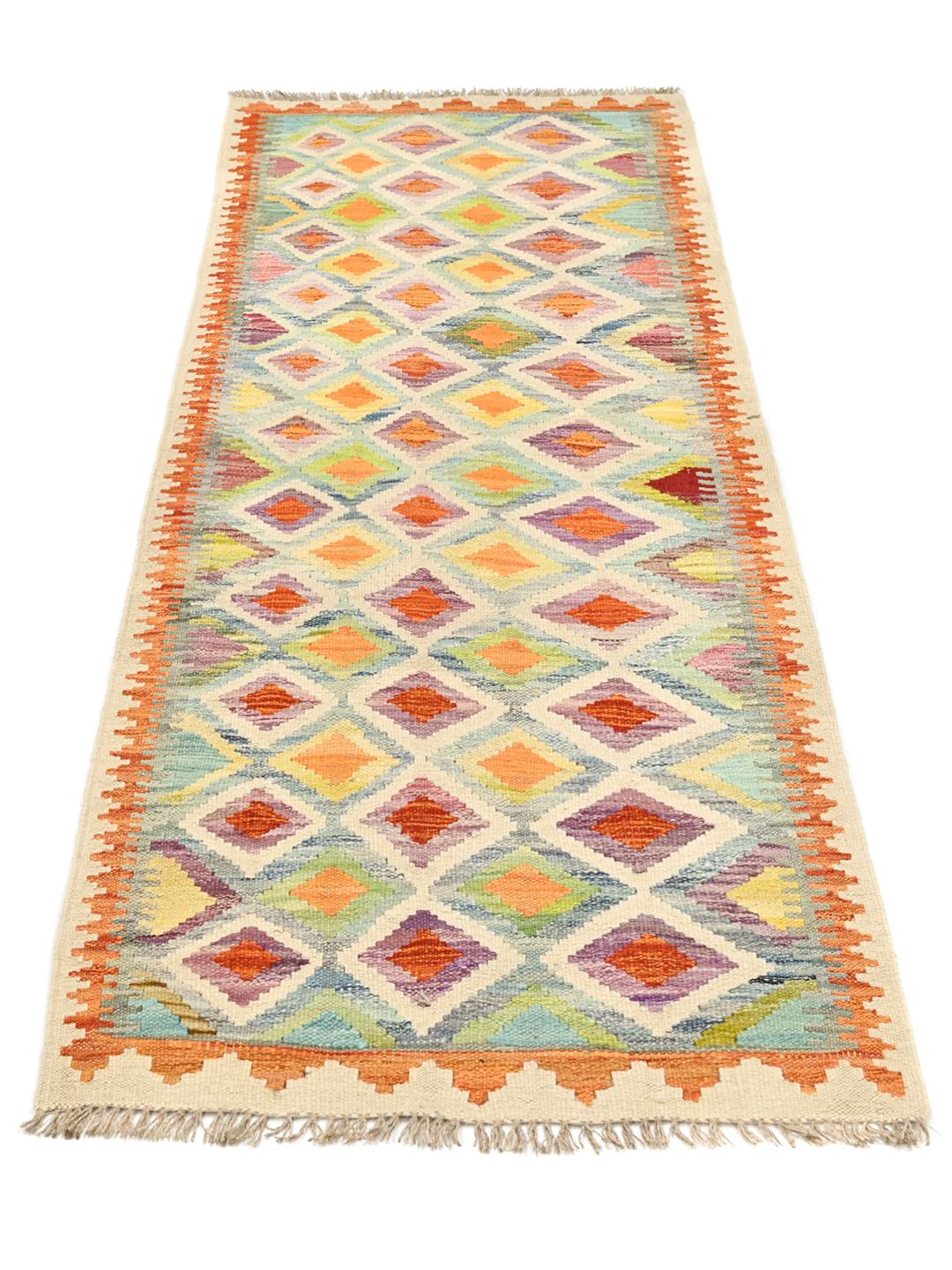
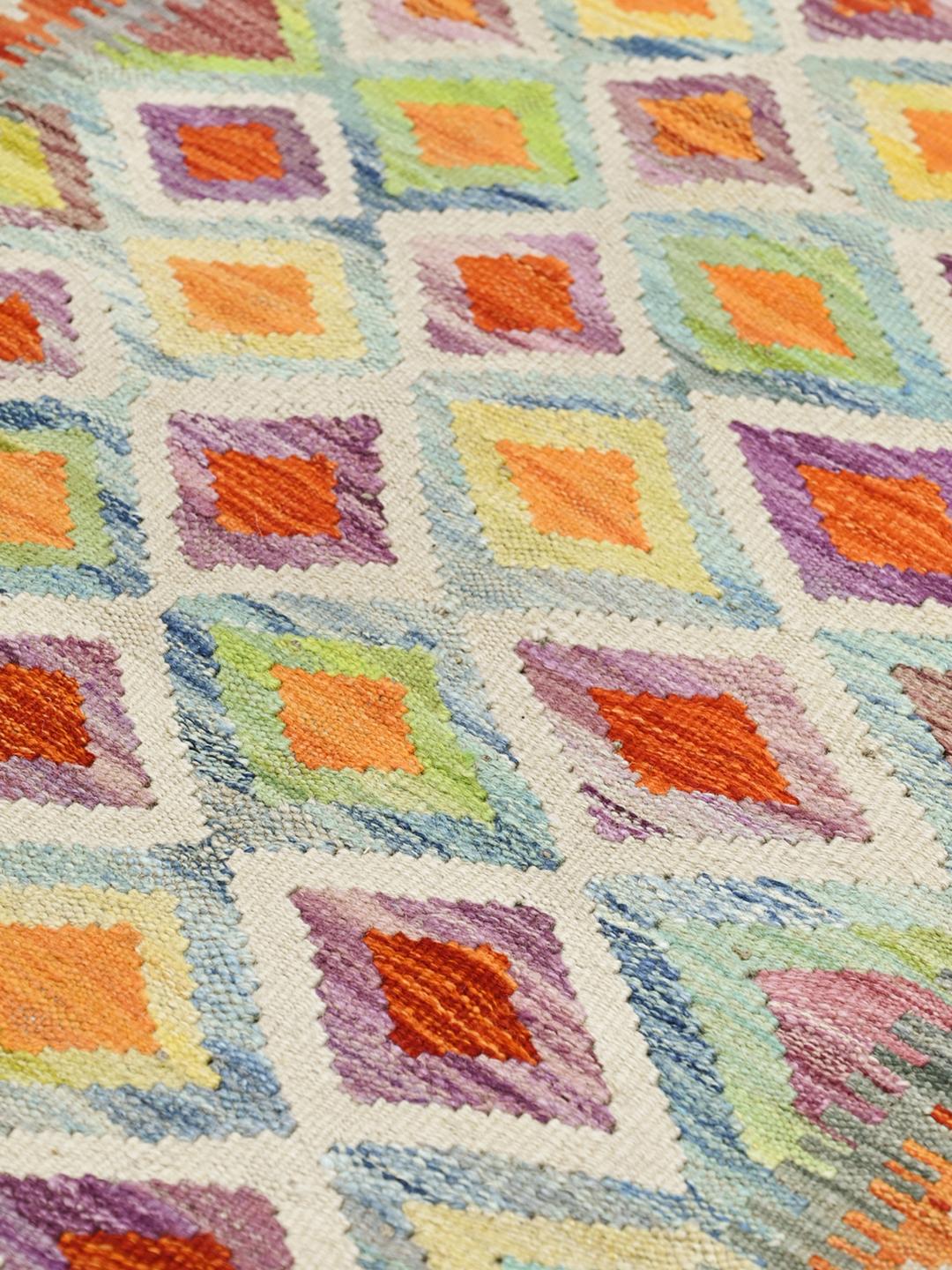
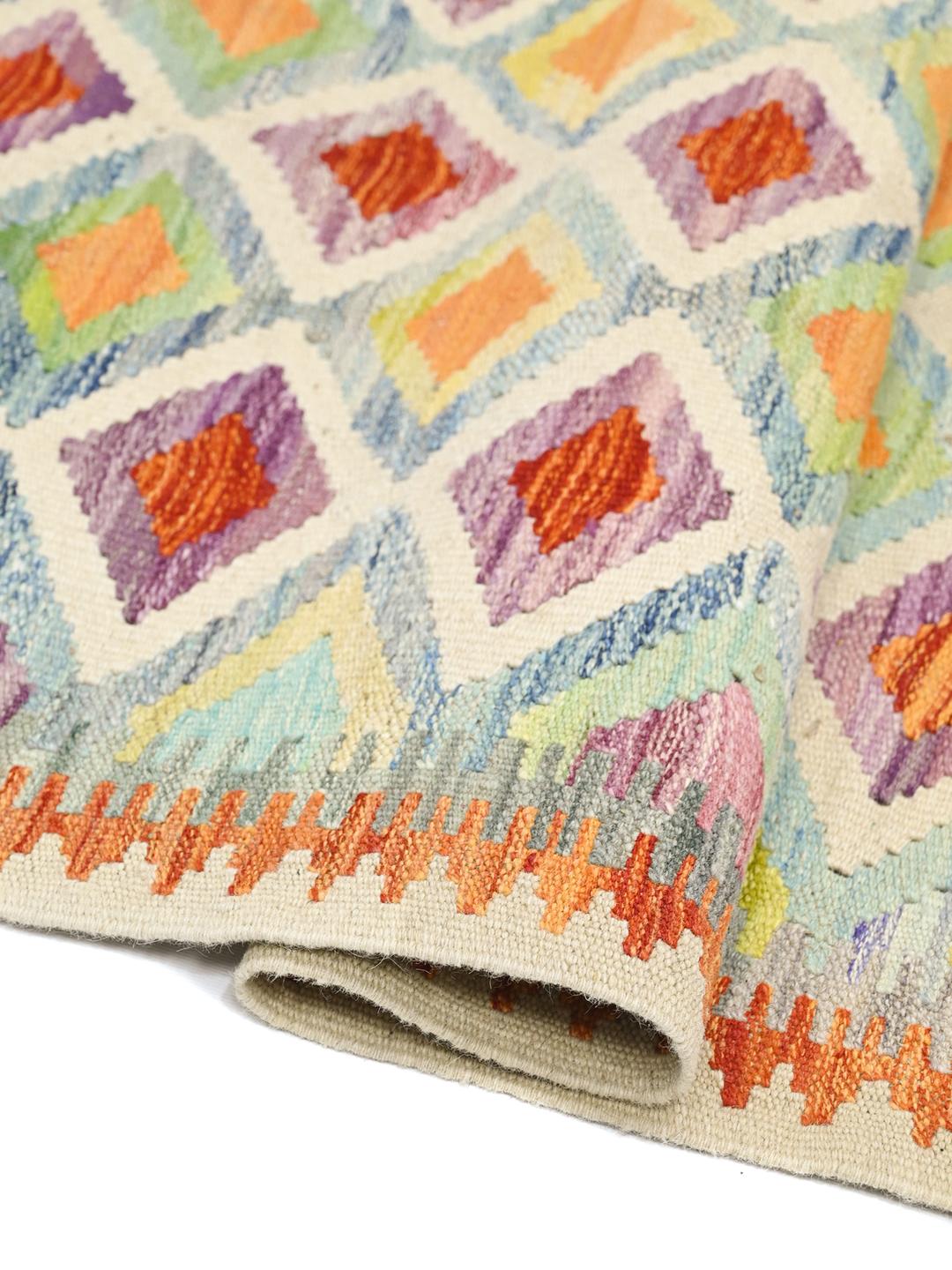
The Kelim rugs of Afghanistan are celebrated for their raw, honest beauty and their deep roots in nomadic traditions. These flat-woven textiles have been a staple of Middle Eastern households for generations, serving as everything from floor coverings and blankets to storage sacks for travelling families.
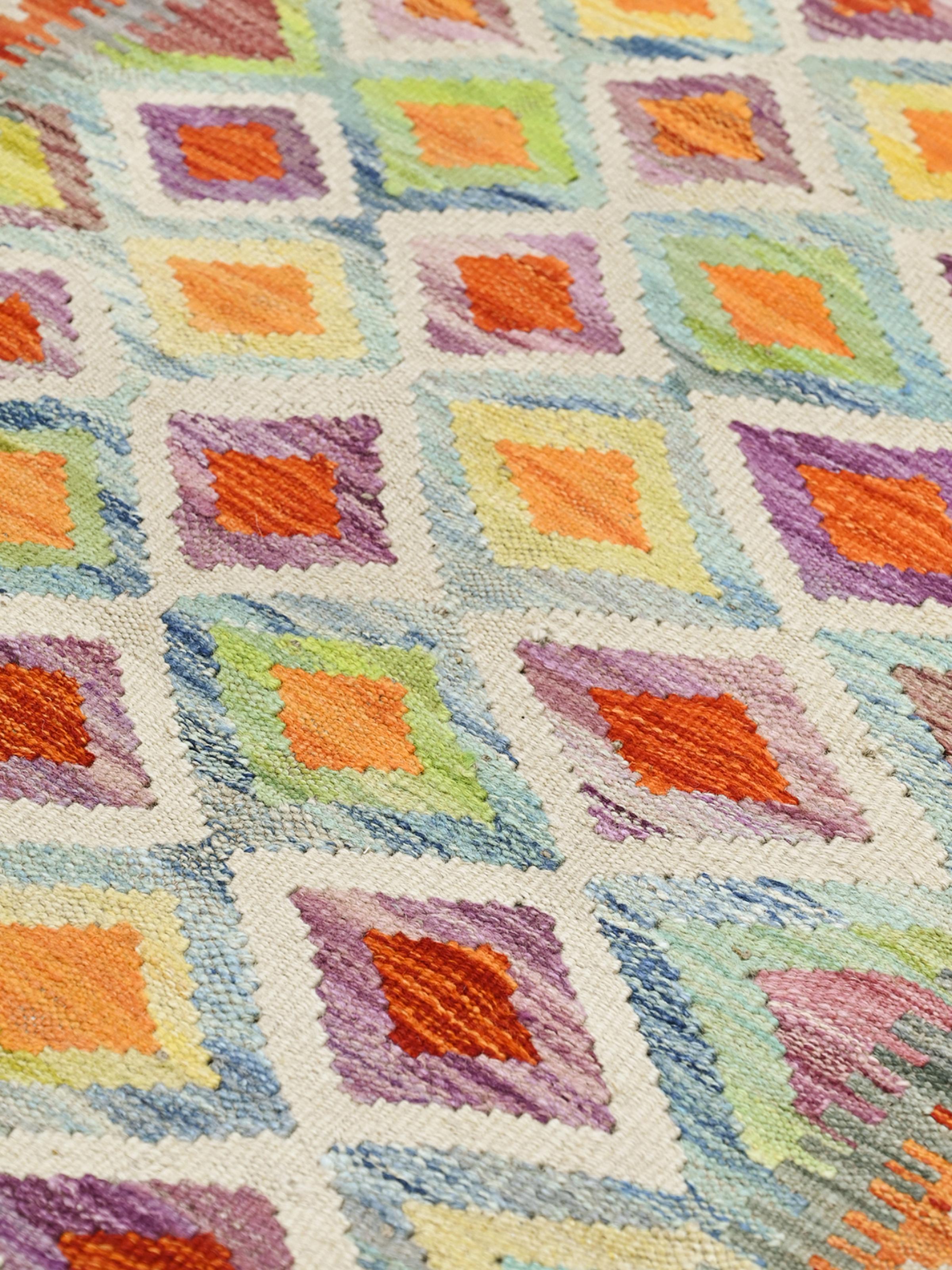
The term Kelim refers to the specific flat-weave technique where the warp and weft threads are interlaced to create a smooth, pileless surface. This method is highly valued for its durability and the way it allows for sharp, clear geometric patterns, as the design is created directly by the weave rather than by knotting individual tufts.
Signature elements of these rugs include bold geometric motifs, often featuring diamonds, triangles, and stripes that carry symbolic meaning passed down through centuries. The use of vibrant, contrasting colours is a hallmark of the Afghan style, often achieved through natural dyes that have mellowed beautifully over time.
Collectors and enthusiasts value these rugs for their authenticity and the way they bridge the gap between ancient craft and modern living. Owning a Kelim is an investment in cultural heritage, representing a level of skill and tradition that is increasingly rare in our modern, automated world.