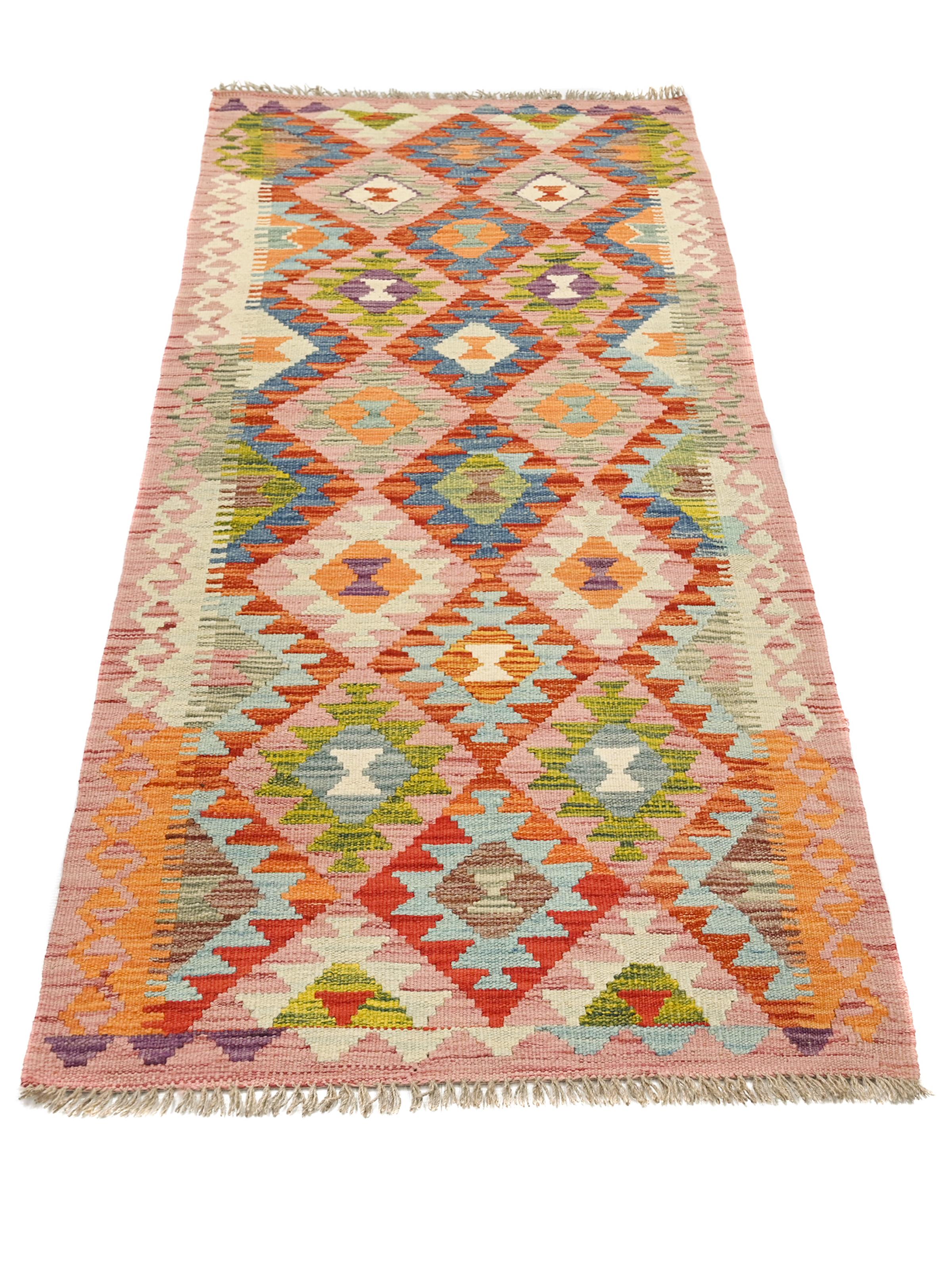
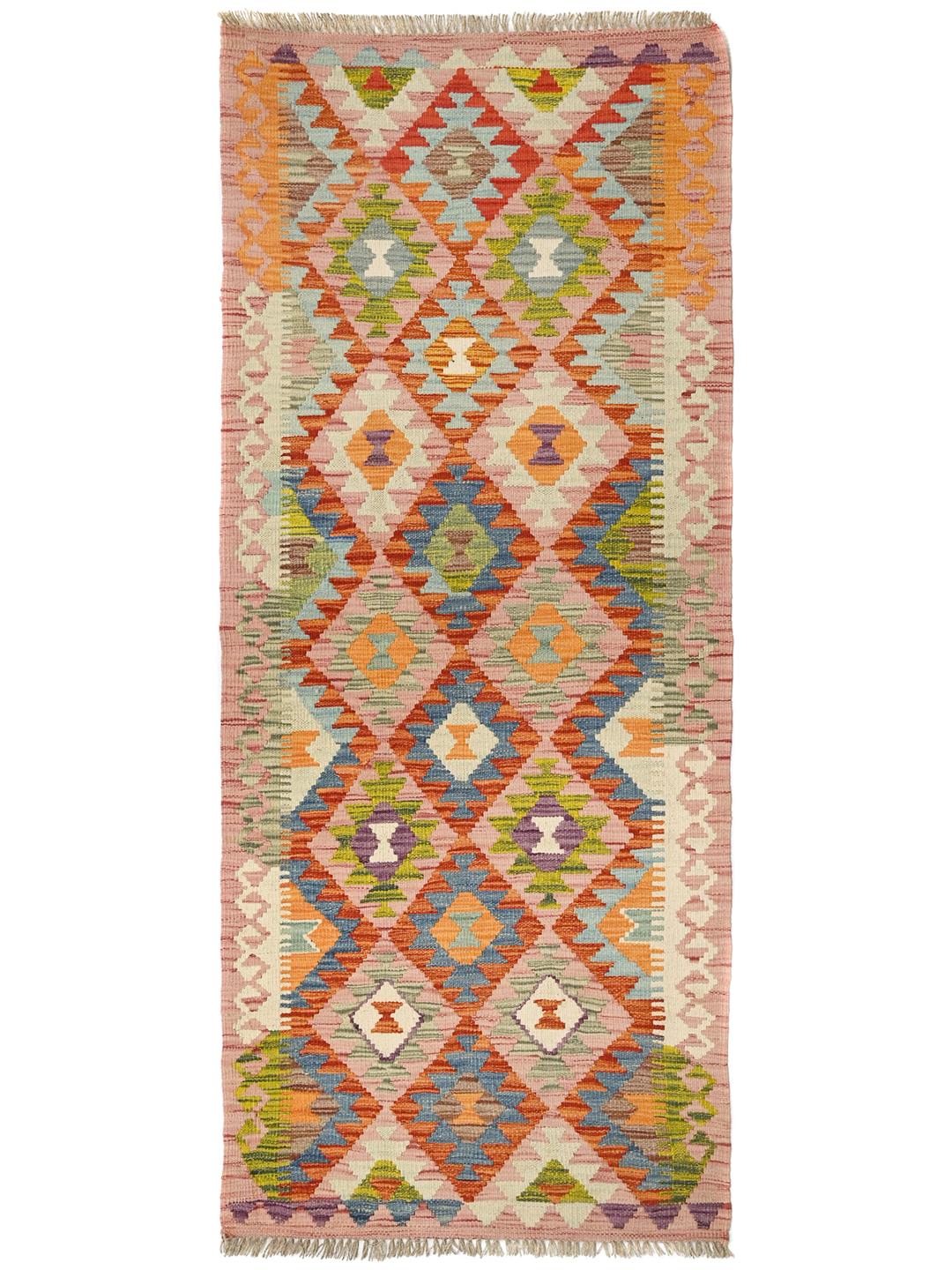
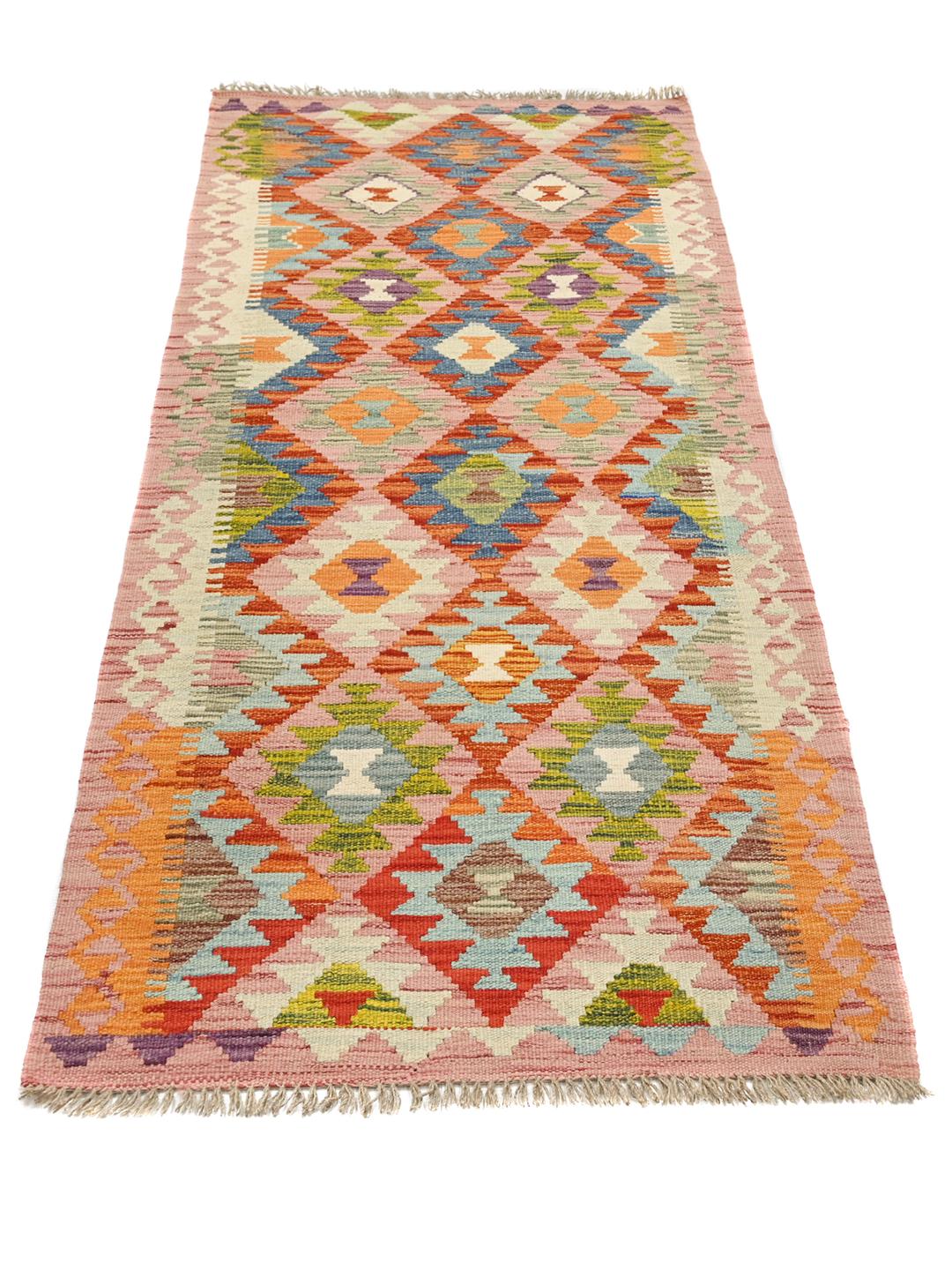
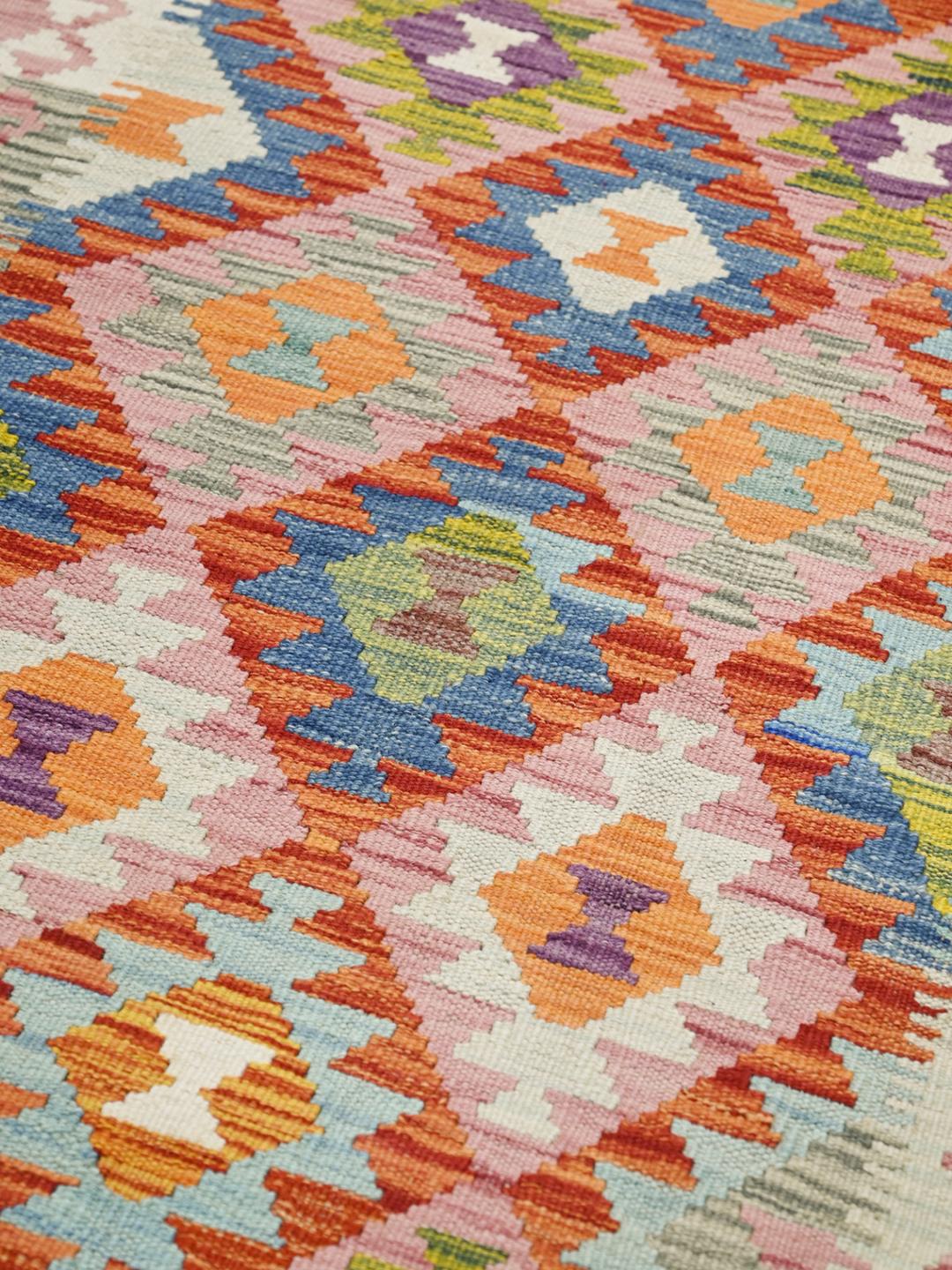
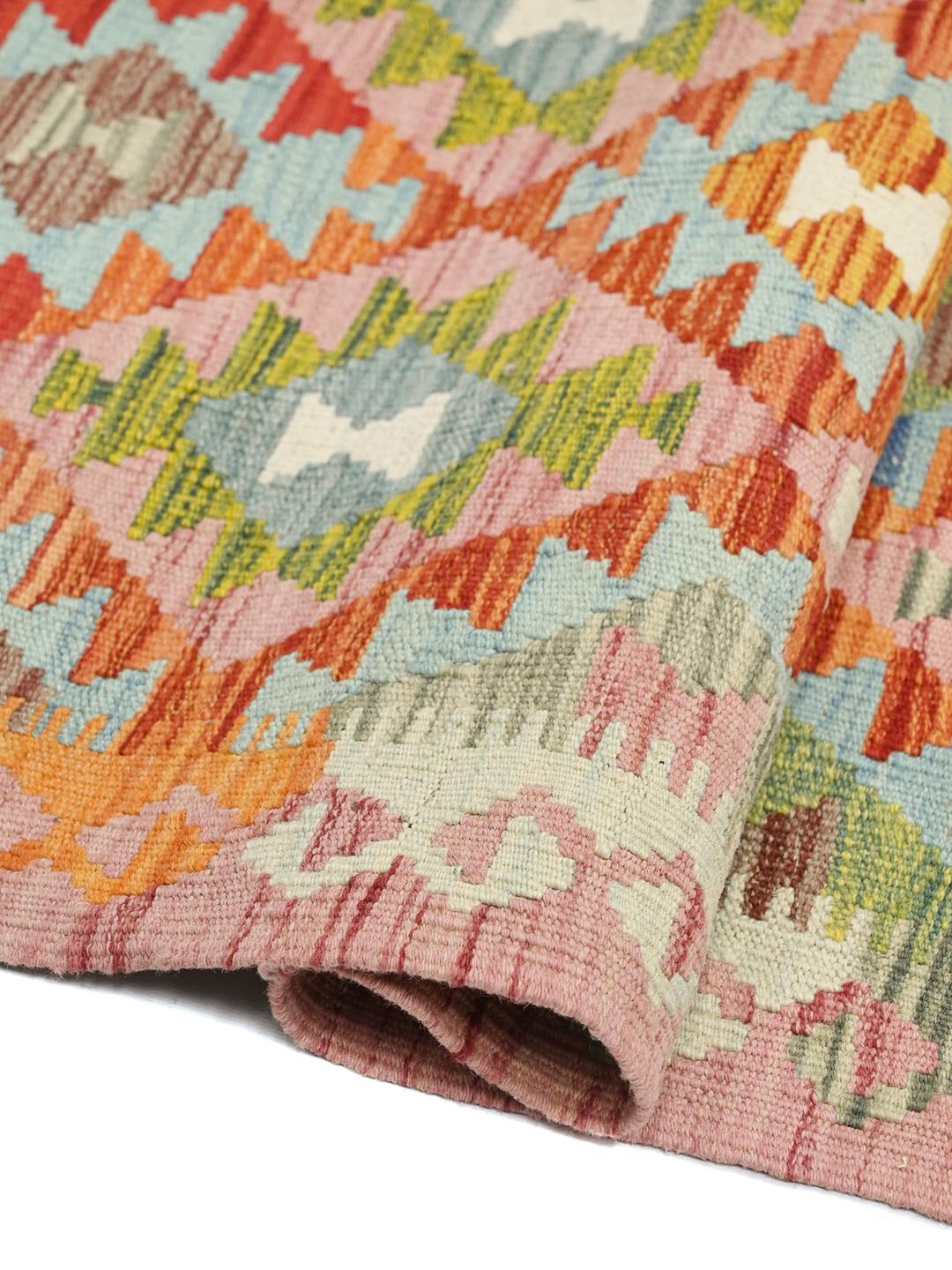
The Kelim tradition in Afghanistan is deeply rooted in the nomadic lifestyle of the region, where these flat-woven rugs were historically used as versatile floor coverings, wall hangings, and functional storage bags. These pieces are more than just decor; they are historical artifacts of the Silk Road, carrying the cultural narratives and geometric visual language of the tribes that have called this rugged landscape home for centuries.
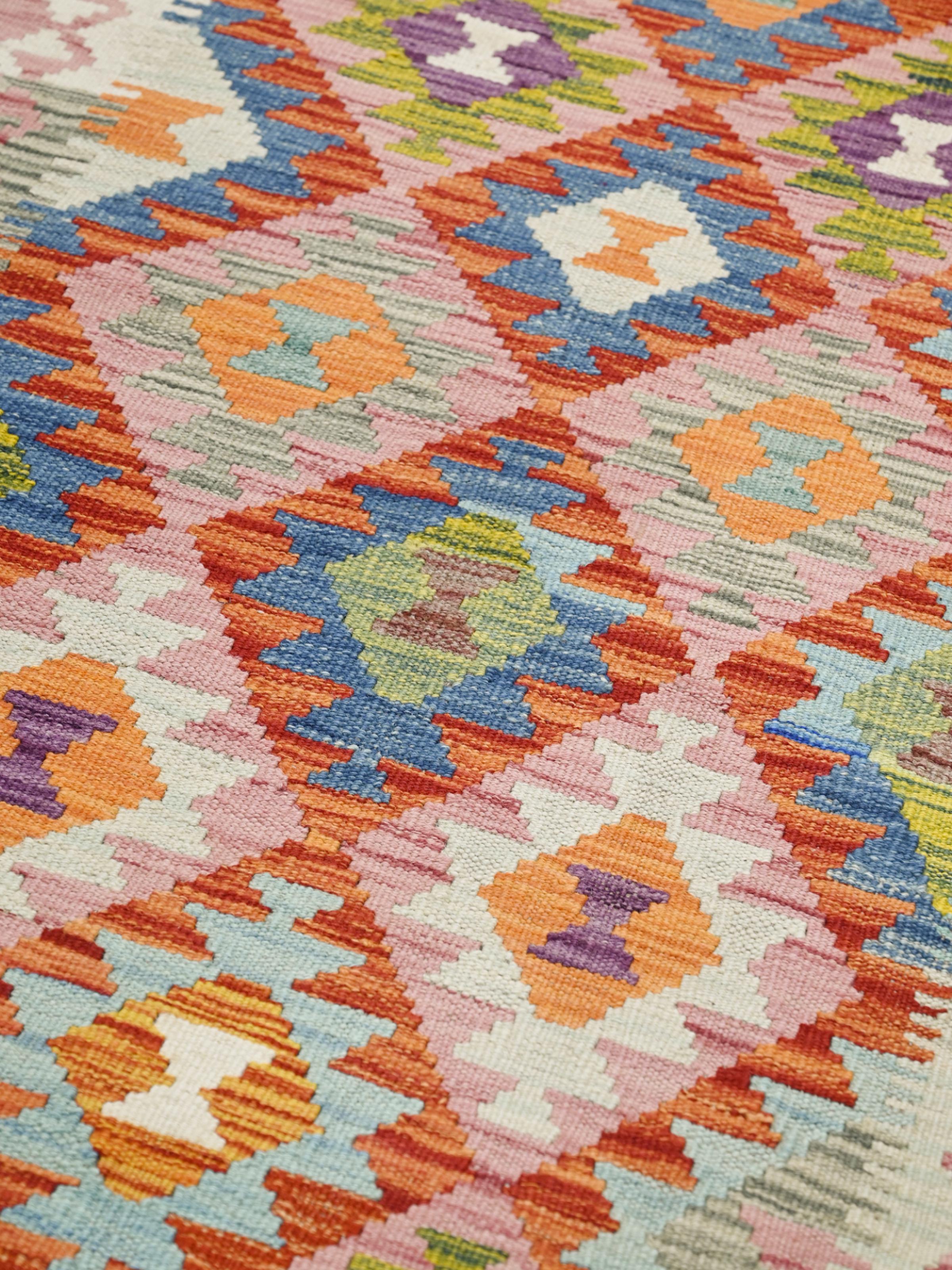
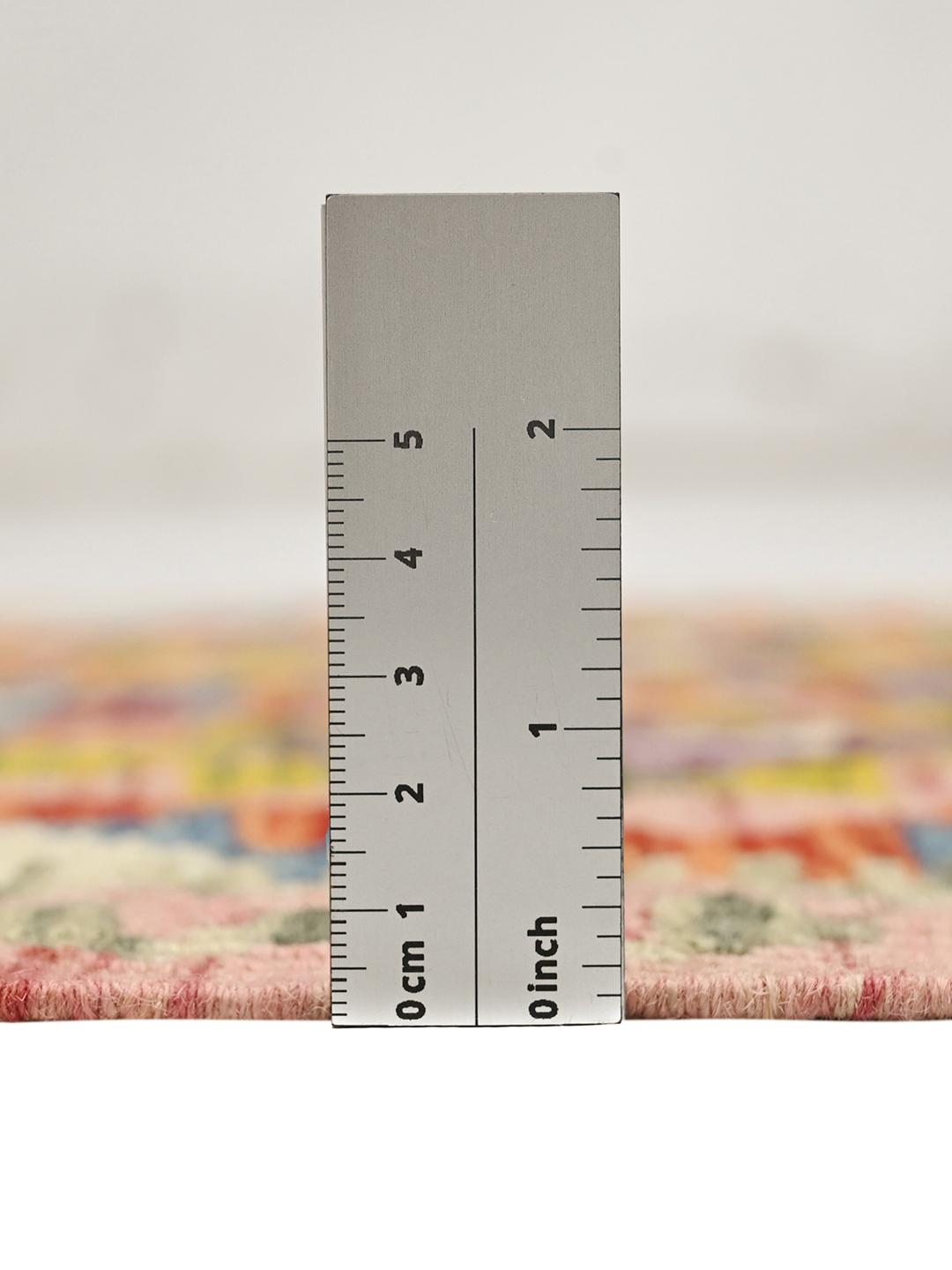
The term 'Kelim' refers specifically to the flat-weaving technique that distinguishes these rugs from thicker, knotted pile carpets. By omitting the pile, the weaver creates a reversible, lightweight fabric that is known for its incredible strength and durability. This method allows for sharp, clear geometric designs that have been passed down through generations of families, preserving the aesthetic identity of specific weaving communities.
Signature motifs often include intricate geometric shapes like diamonds, triangles, and stylized floral elements, all arranged in rhythmic, symmetrical patterns. The use of vibrant, natural-inspired colours is a hallmark of the Afghan style, often reflecting the mineral-rich mountains and vast, sun-drenched plains of the region. Each rug acts as a canvas for the weaver to interpret these traditional symbols in their own unique way.
Collectors value these pieces for their authenticity and the sheer skill required to master the flat-weave loom. Owning a Kelim is an invitation to engage with a living history that prioritizes functionality and artistic expression. These rugs are cherished not only for their ability to withstand the test of time but for the cultural heritage they represent within the modern home.