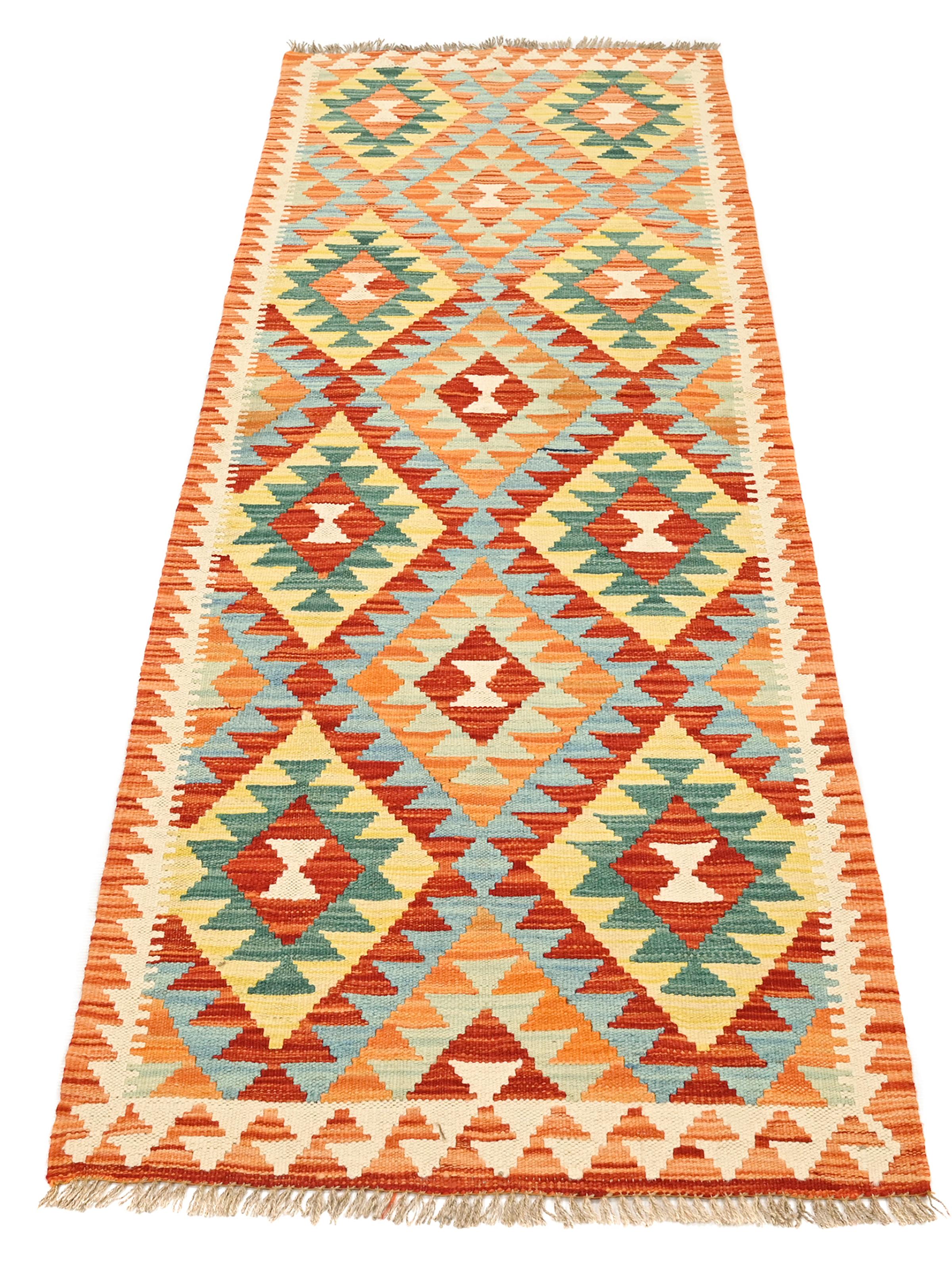
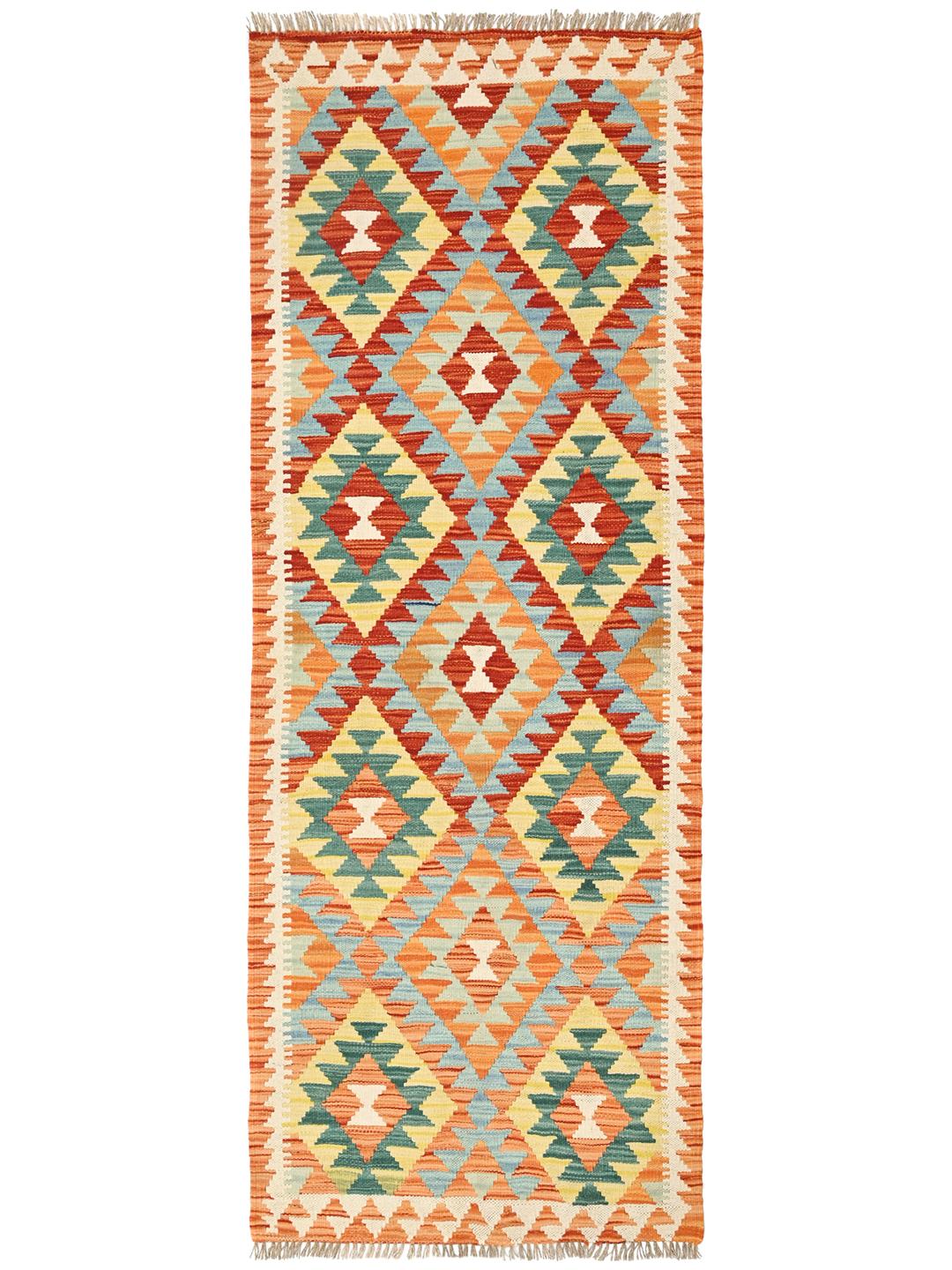
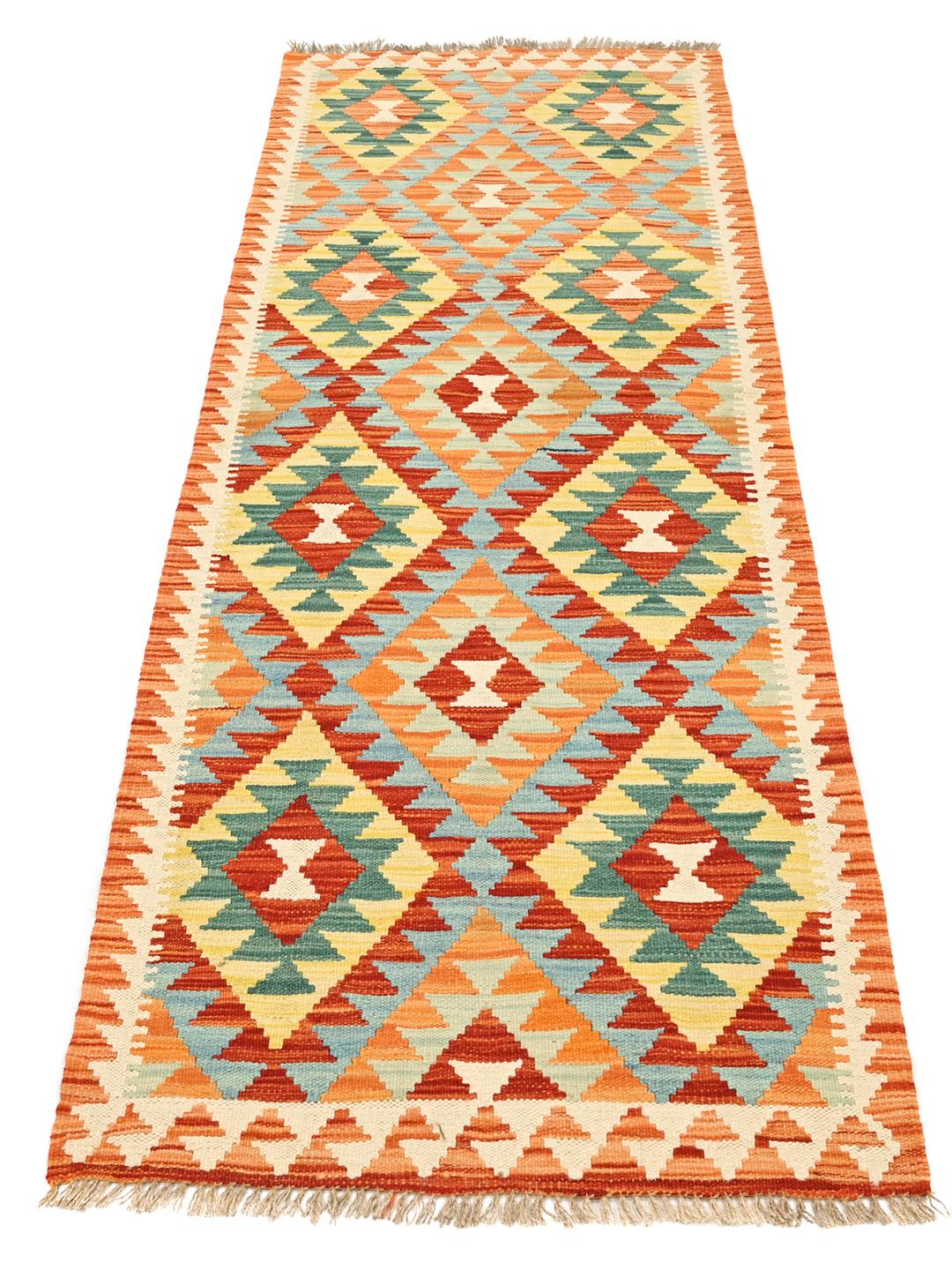
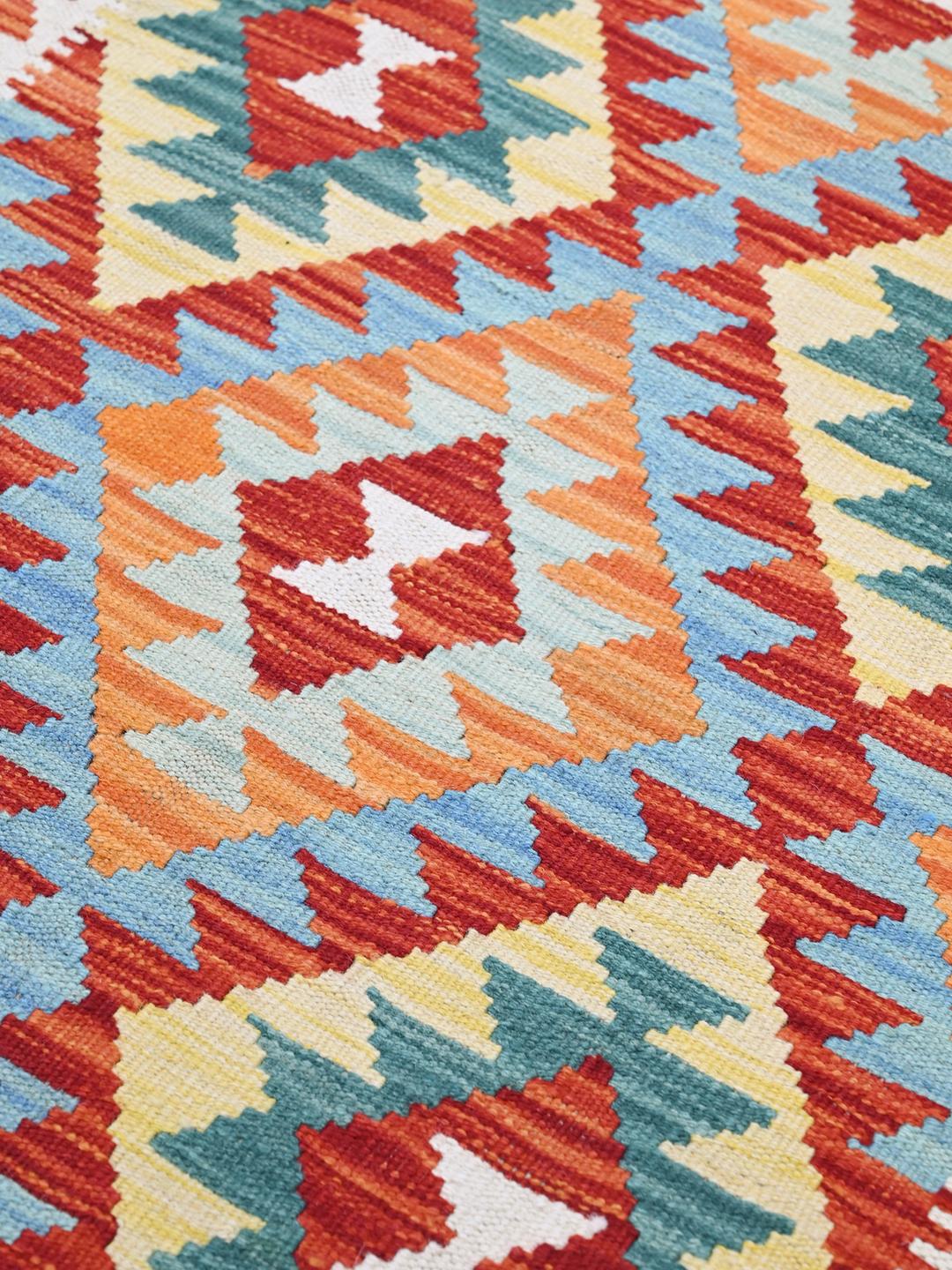
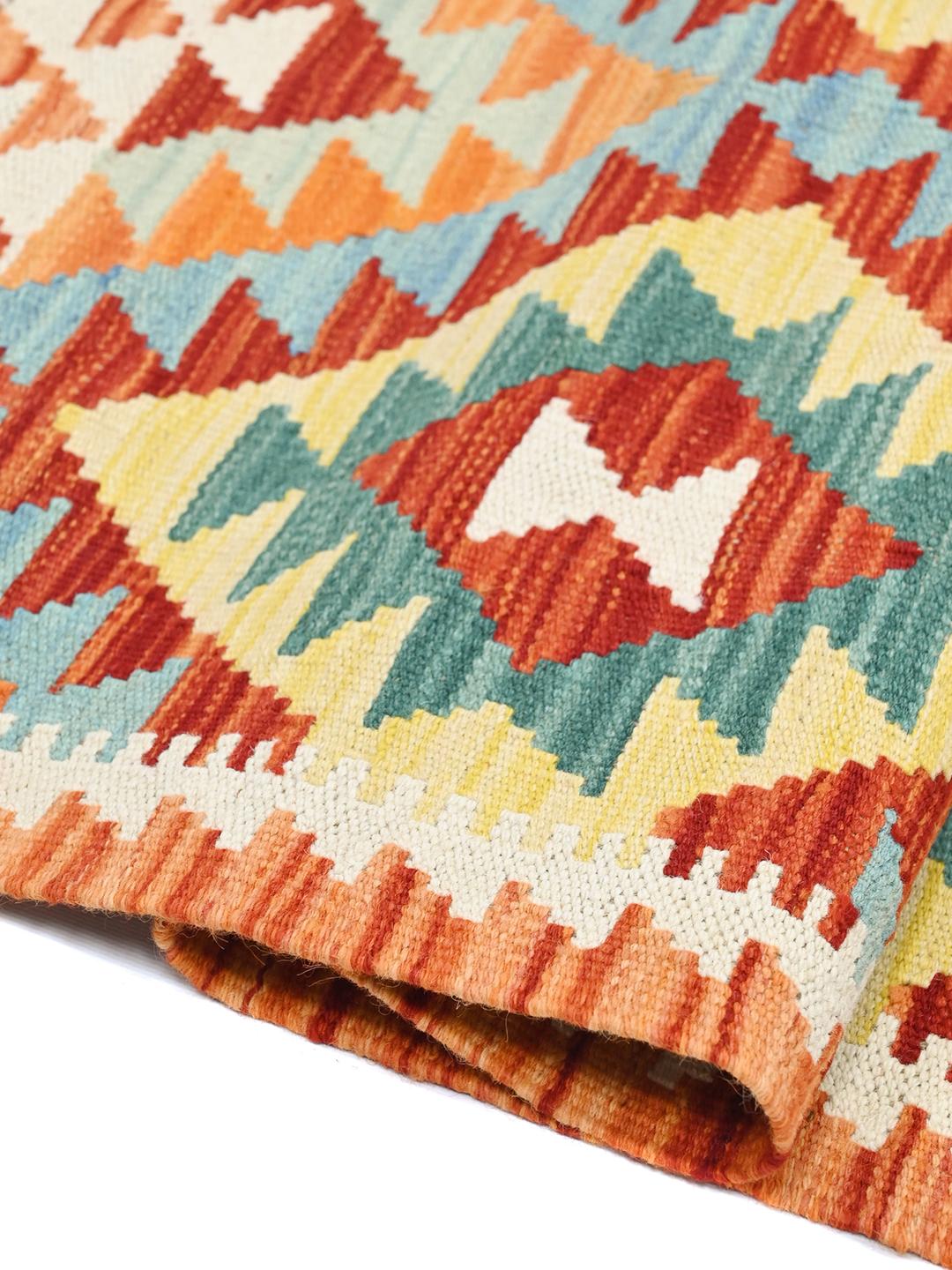
The Kelim Afghan tradition is deeply rooted in the nomadic history of the region, where flat-woven rugs served as essential, portable furnishings for families on the move. These rugs have evolved over centuries, blending ancient tribal motifs with a sophisticated understanding of colour that reflects the rugged beauty of the Afghan landscape.
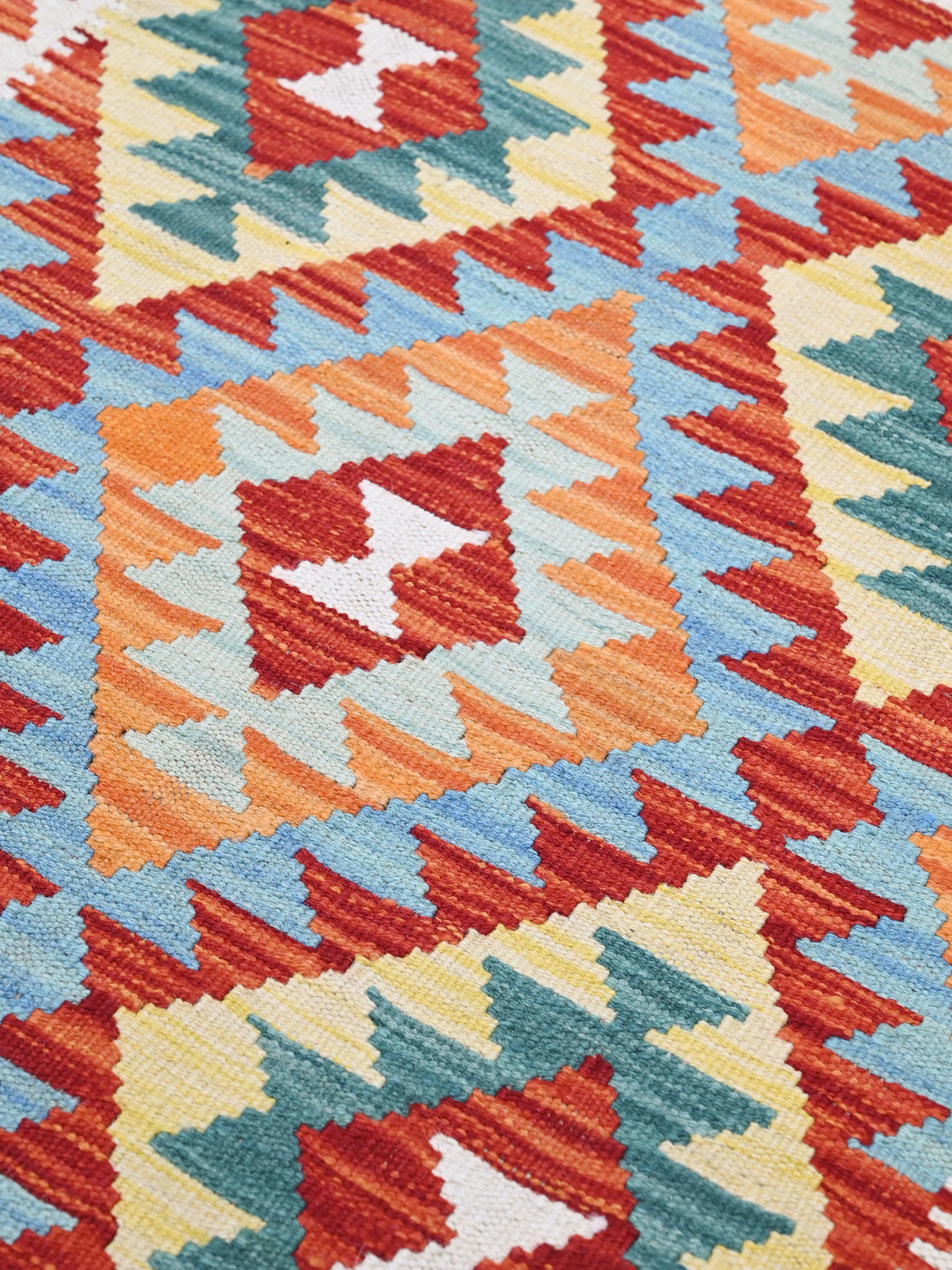
The term 'Kelim' refers to the specific flat-weaving technique used, where the weft and warp are interlaced to produce a smooth, pileless surface. This method is highly valued for its versatility and strength, allowing weavers to create intricate geometric patterns that are visible on both sides of the rug, making them as functional as they are decorative.
Signature elements of these rugs include the prominent use of geometric shapes, such as the diamond or 'gul' motifs seen here, which are often arranged in a repeating sequence. These patterns are not merely aesthetic; they are part of a visual language passed down through generations, often incorporating earthy, vibrant dyes that have become synonymous with the Afghan style.
Collecting these pieces is an investment in cultural heritage, as each rug captures the specific technical skill and artistic vision of the individual weaver. By choosing an authentic hand-woven runner, you are participating in a long-standing tradition of craftsmanship that prioritises quality, durability, and a distinct aesthetic that mass-produced alternatives cannot match.