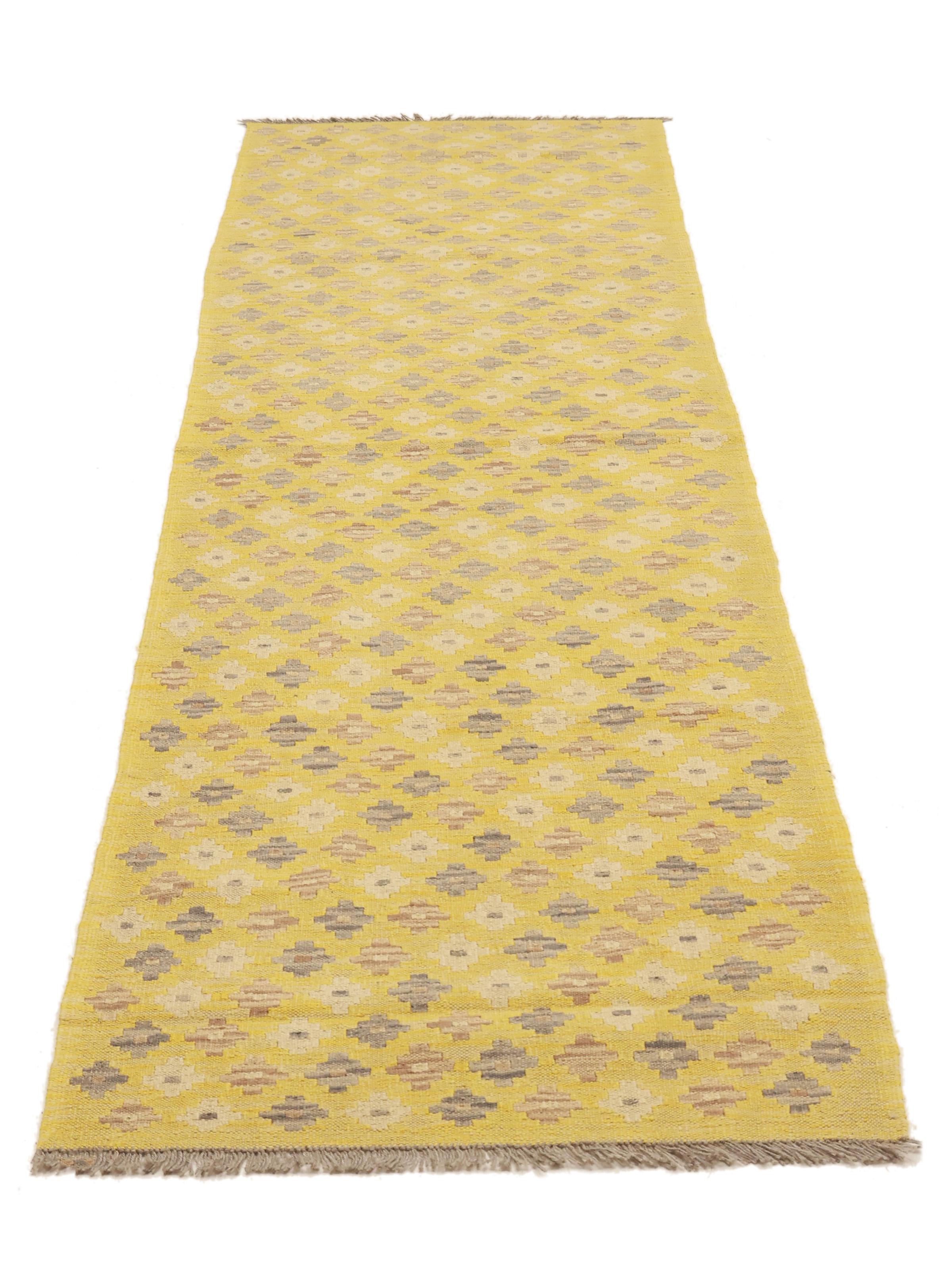
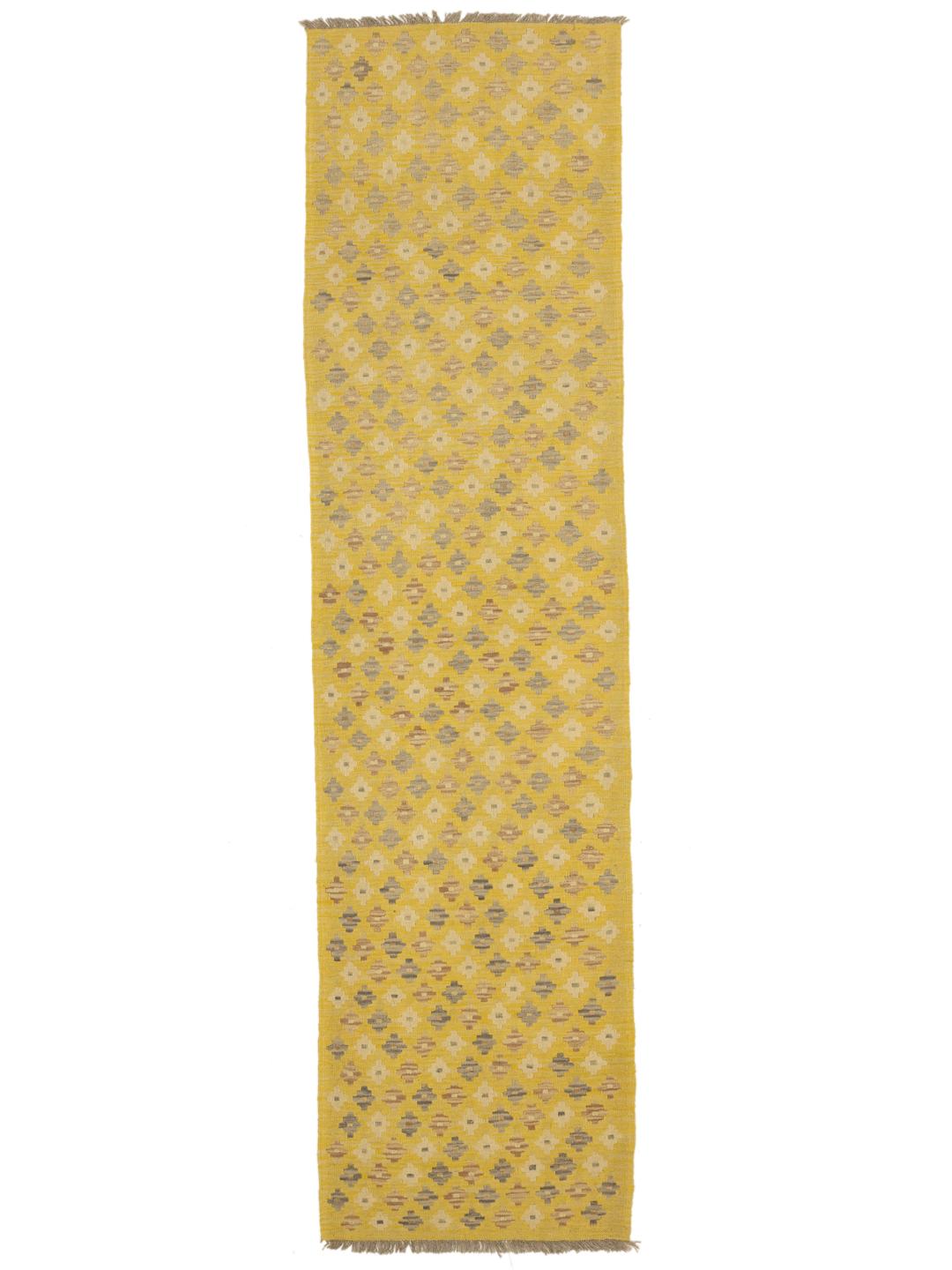
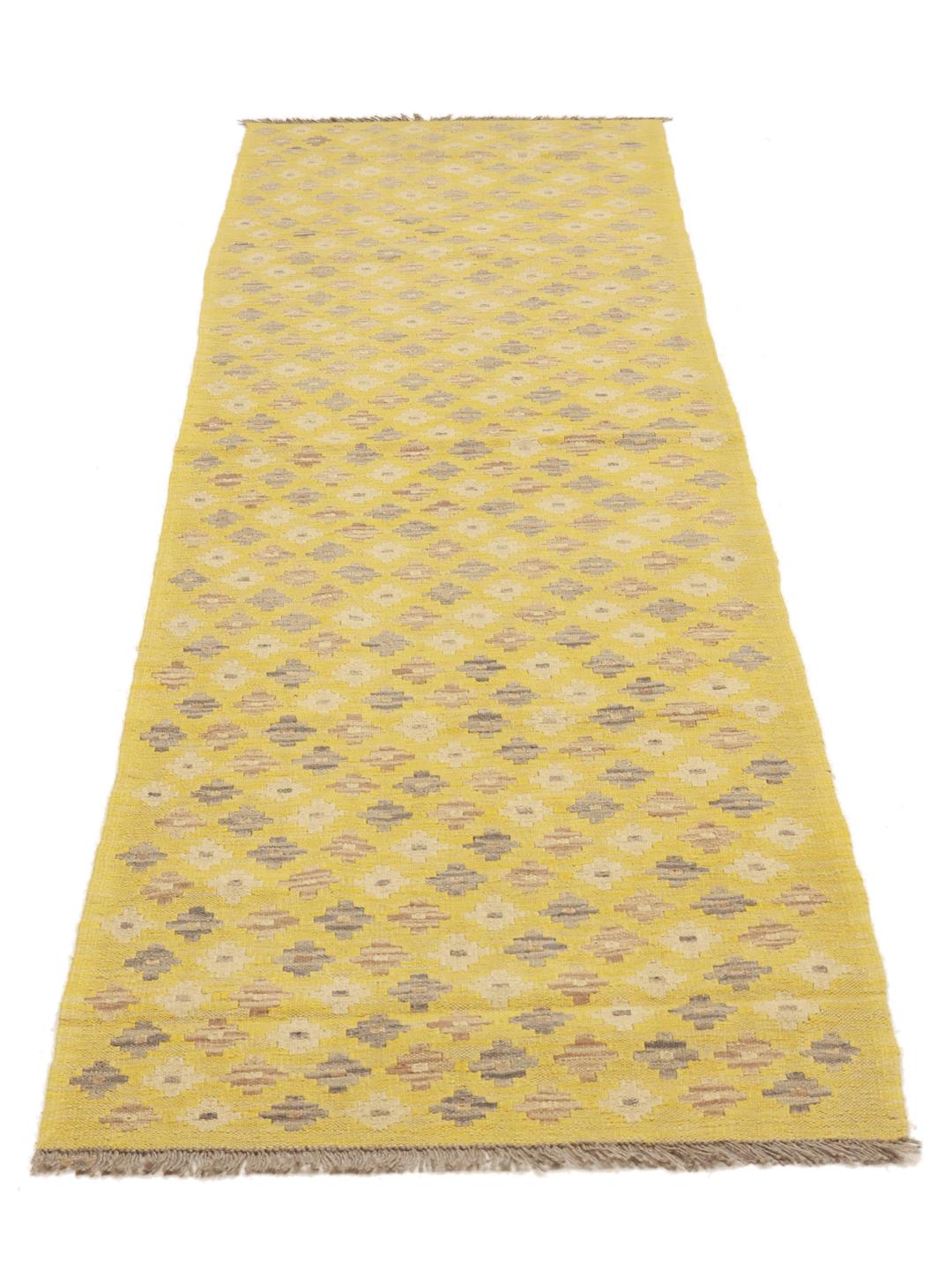
The Kelim Afghan Old Style traces its roots to the nomadic and semi-nomadic tribes of Afghanistan, where flat-weave textiles have been produced for centuries. These rugs were traditionally made for functional use in tents and homes, serving as floor coverings, blankets, or wall hangings, and were essential to the mobile lifestyle of these populations.
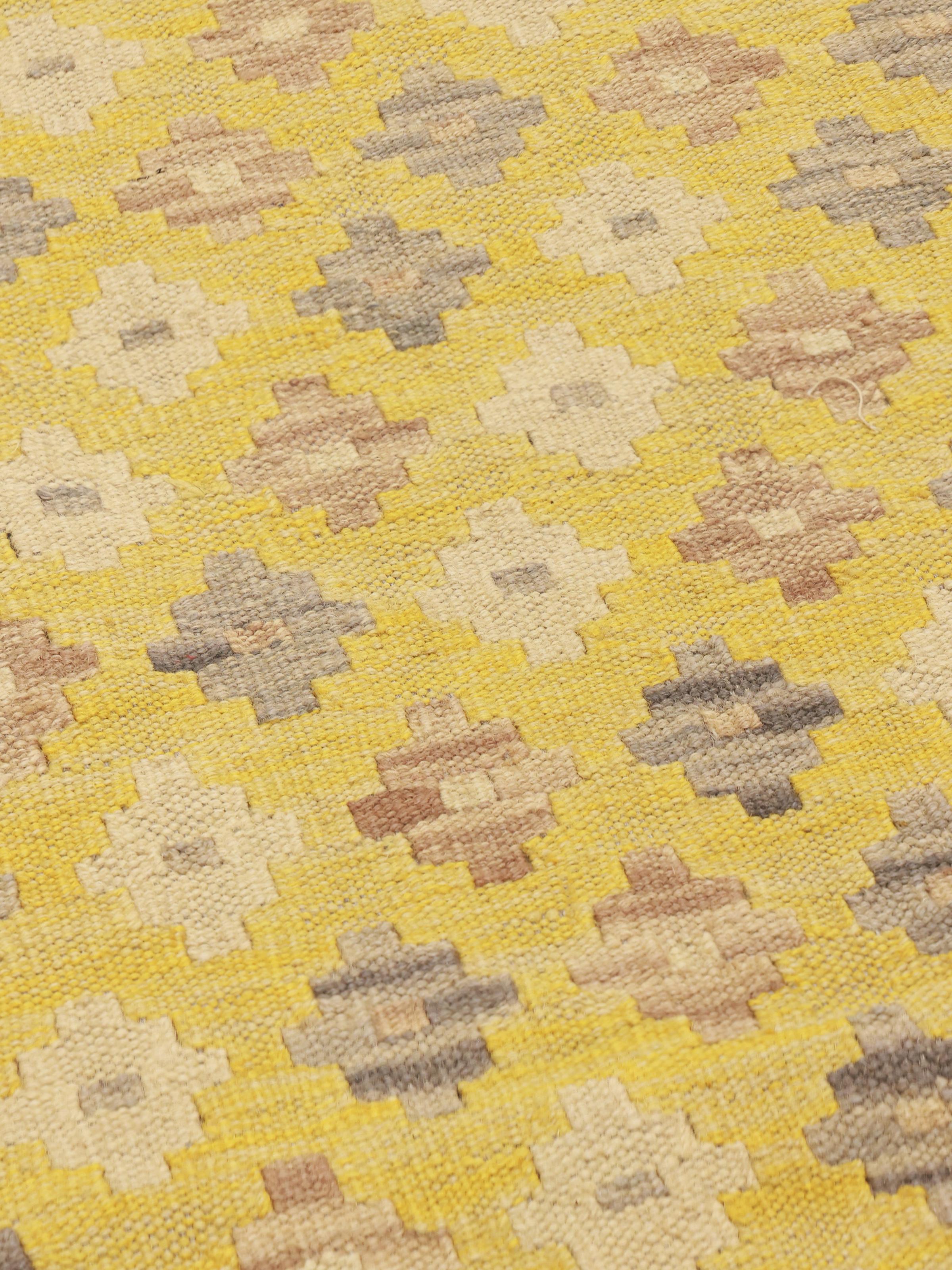
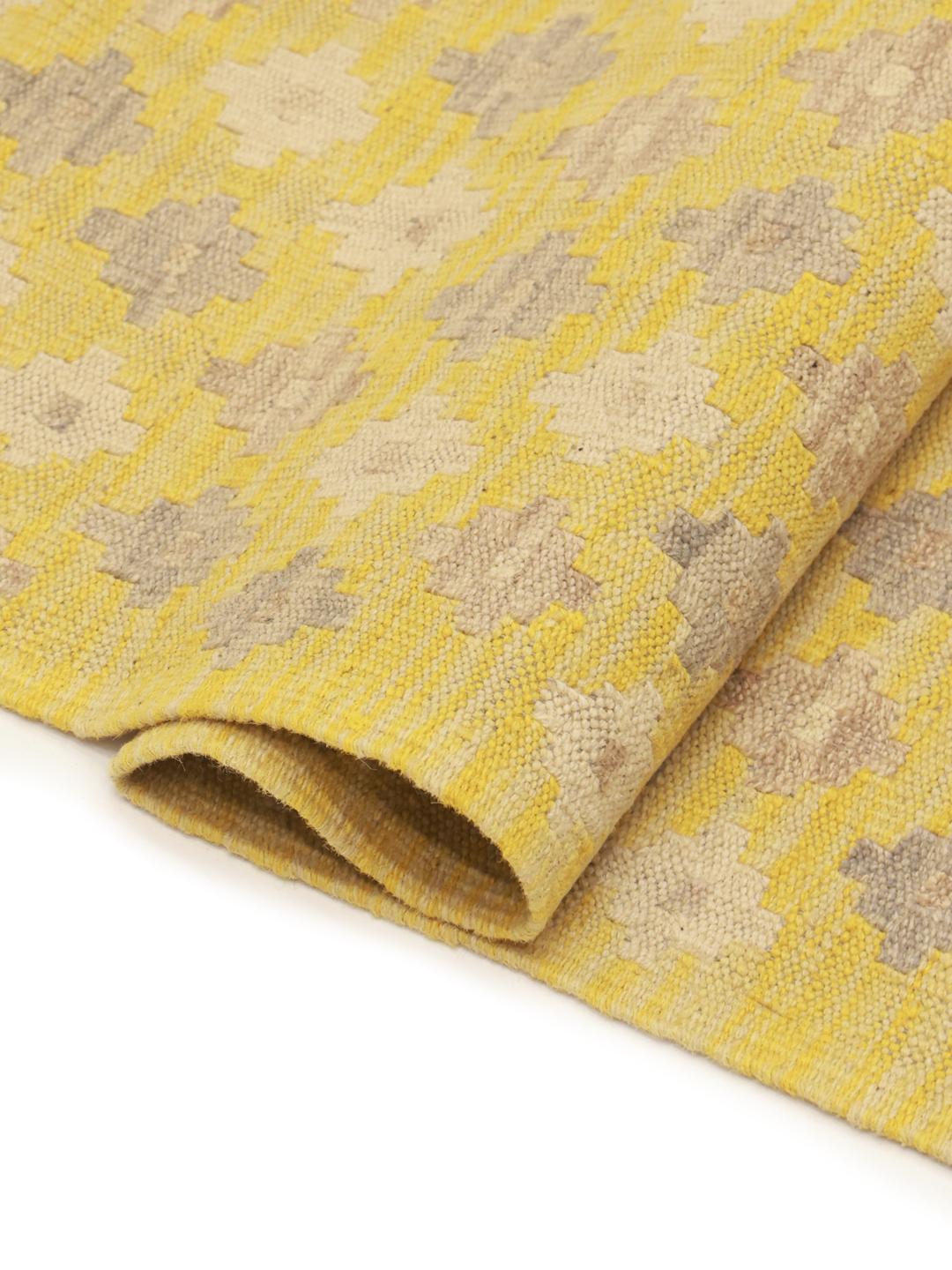
The term 'Kelim' refers to the specific flat-weaving technique where the warp and weft threads are woven together to create a smooth, tapestry-like surface. This method is distinct from knotted rugs, as it requires the weaver to carefully manage the tension and colour transitions manually, resulting in a lightweight yet incredibly durable textile that is easy to move and maintain.
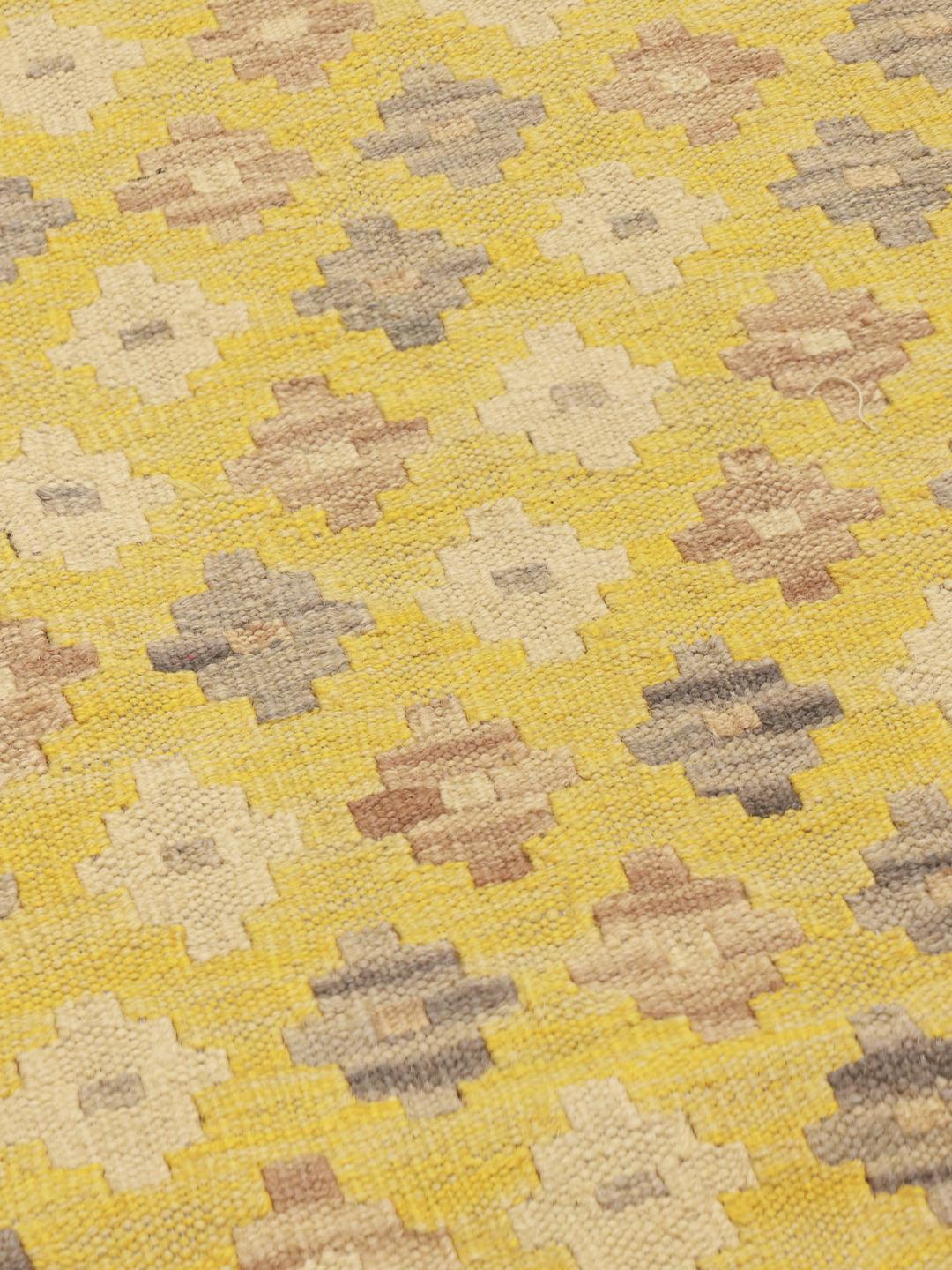
Visually, these runners are defined by their geometric language. They often feature repeating motifs that are passed down through generations, with each pattern carrying cultural significance. In this specific piece, the clear, structured geometry is highlighted by a sunny yellow hue, a colour choice that elevates the traditional aesthetic and makes it a striking feature in contemporary interiors.
Owning a piece from this tradition is an act of preserving a heritage of skill. Collectors and homeowners value these rugs for their authenticity and the human story behind every thread. By choosing a hand-woven piece, you are not just selecting a floor covering, but supporting a craft tradition that has survived and evolved through changing times, remaining a testament to the patience and expertise of its makers.