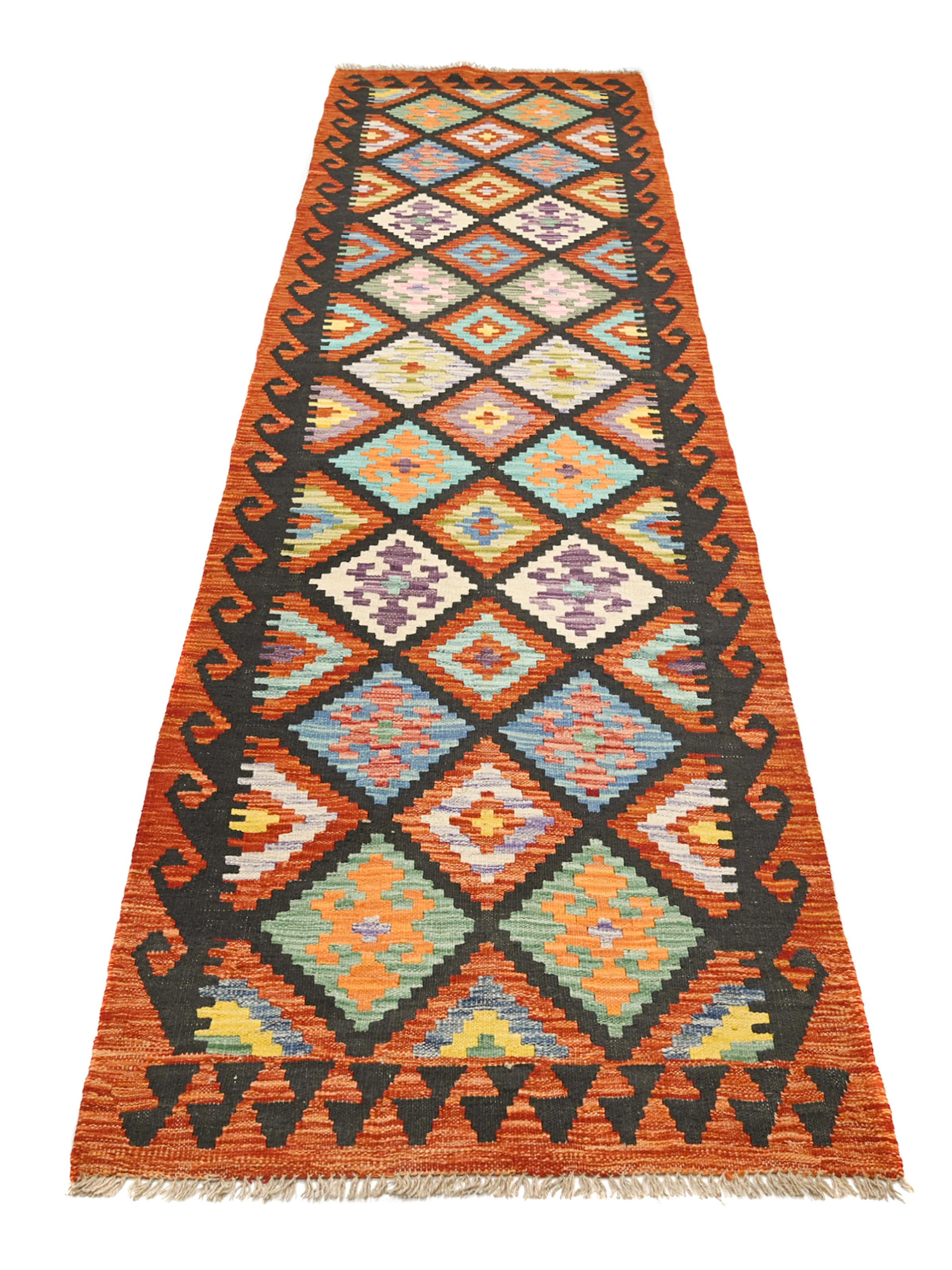
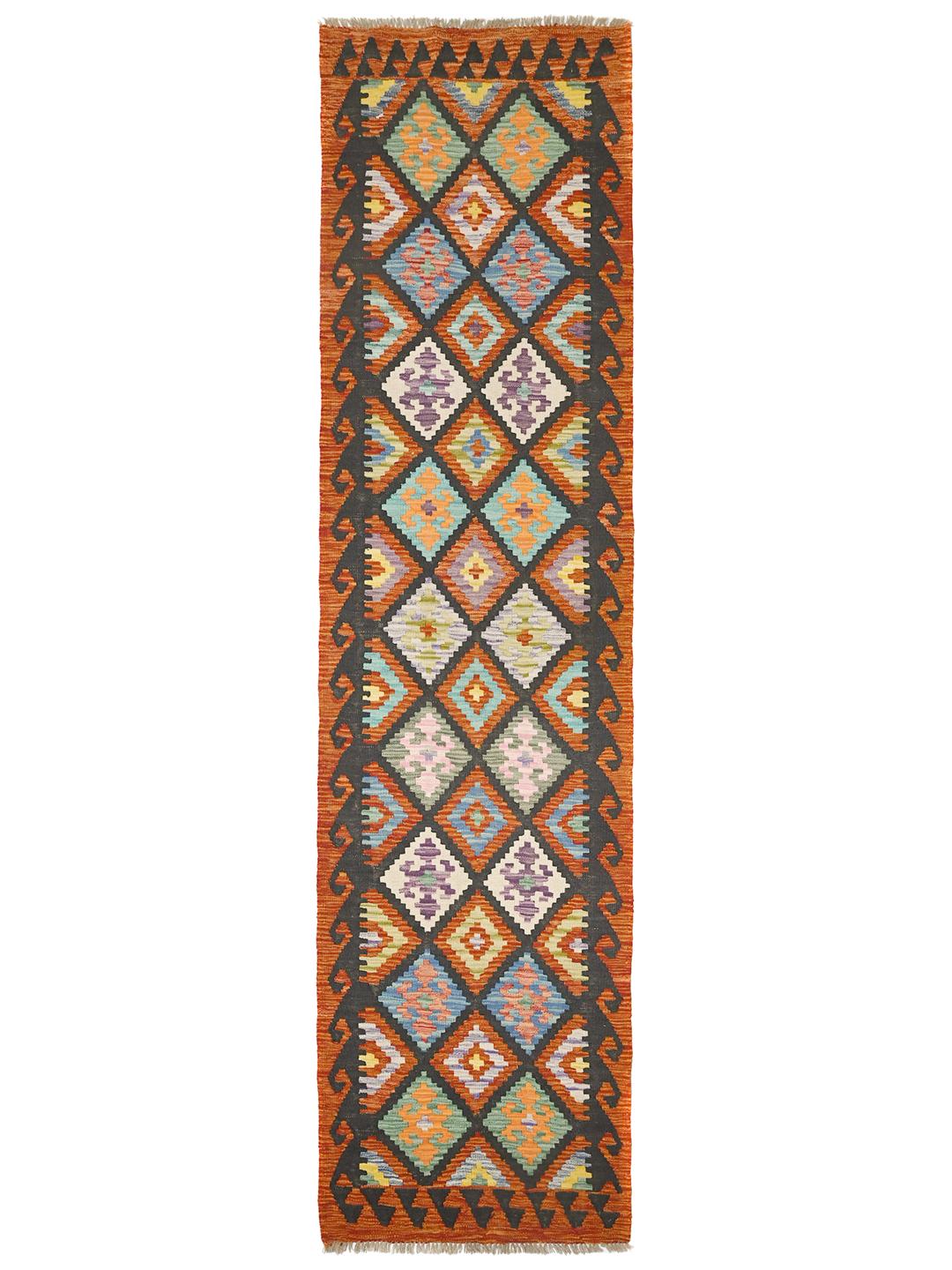
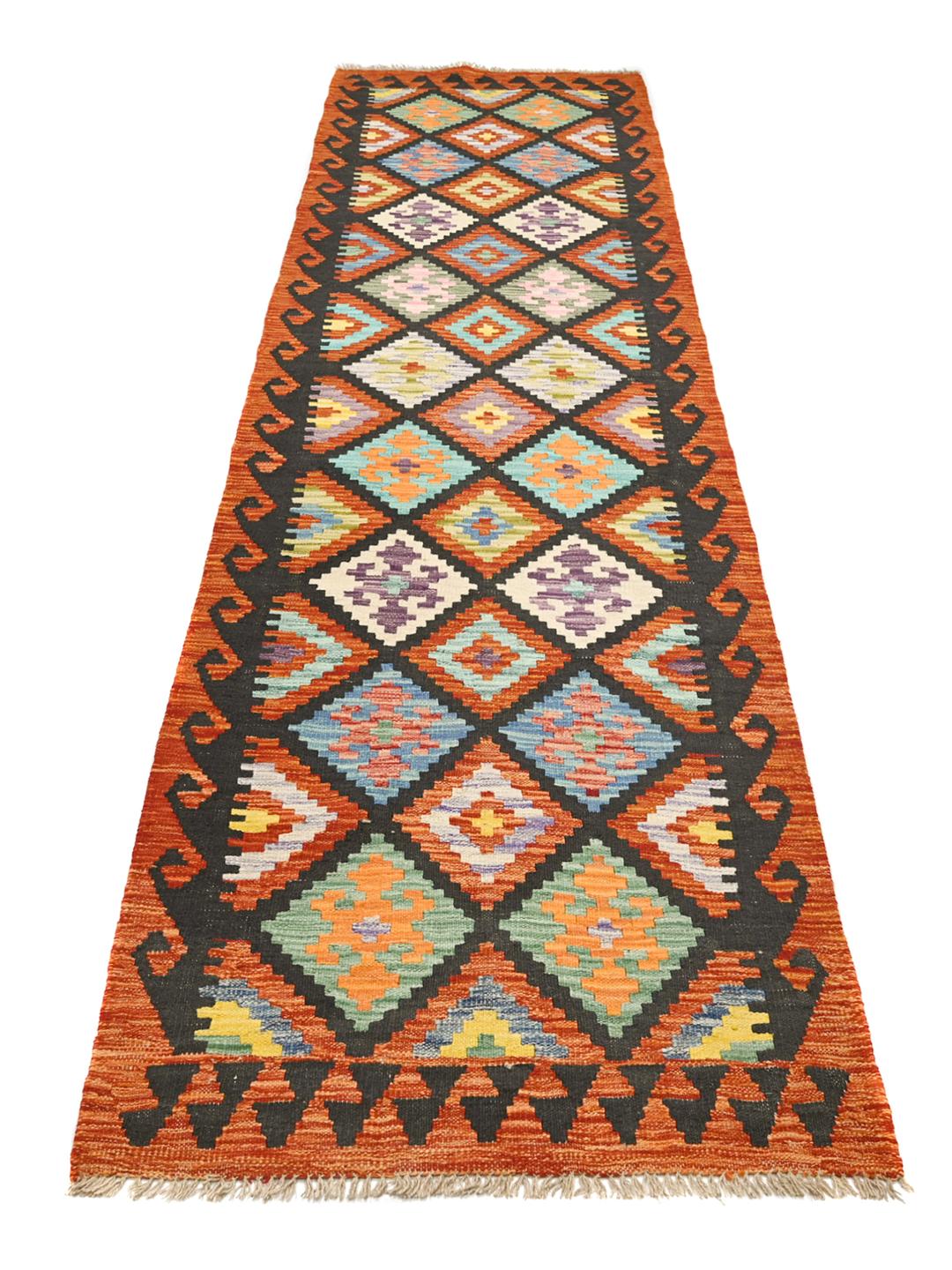
The Kelim tradition in Afghanistan is deeply rooted in the nomadic lifestyle of the region, where flat-woven rugs served as essential, portable furnishings. These pieces were historically crafted to be versatile, functioning as floor coverings, wall hangings, or even saddlebags, reflecting a culture that valued both utility and artistic expression.
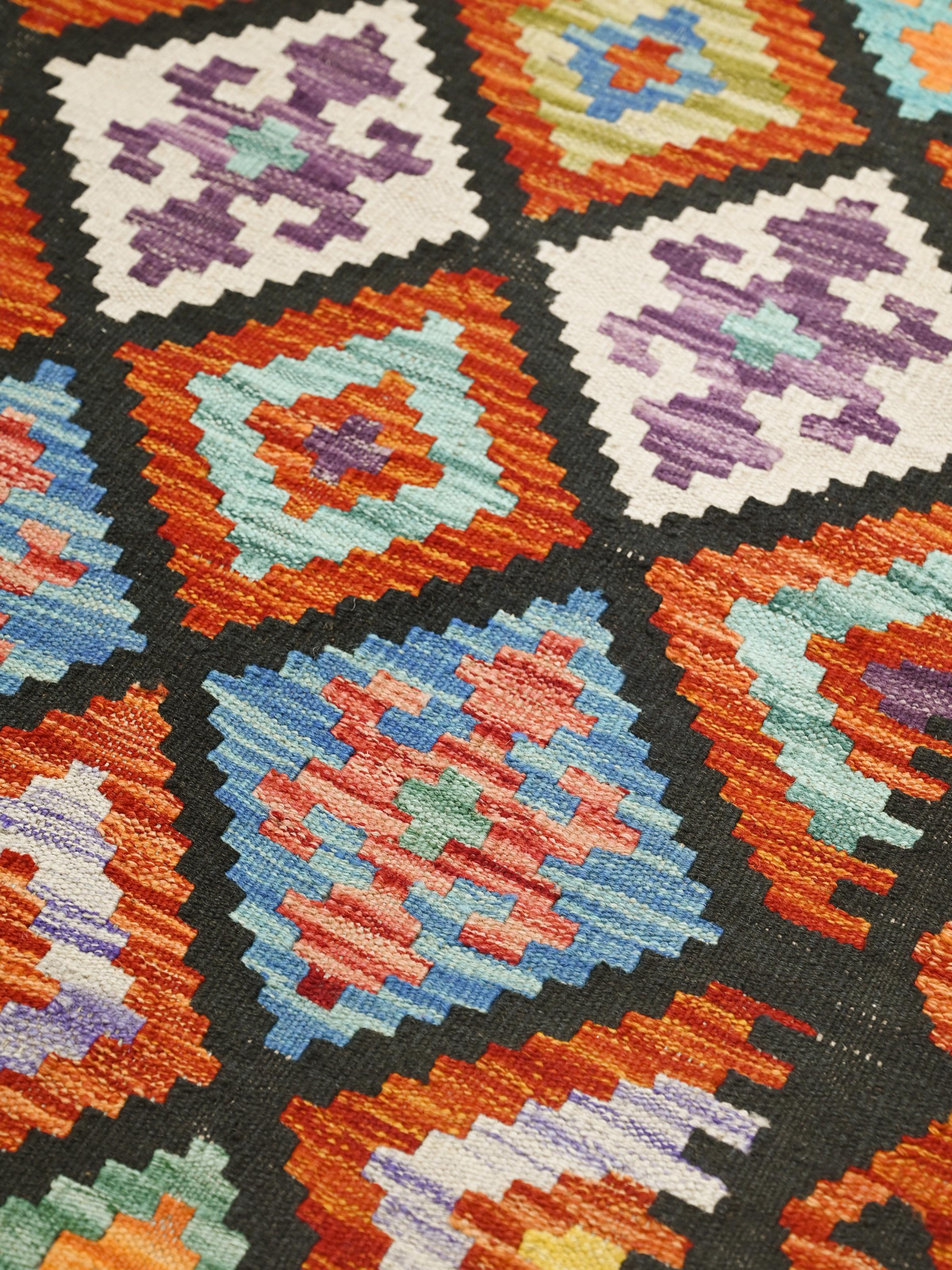
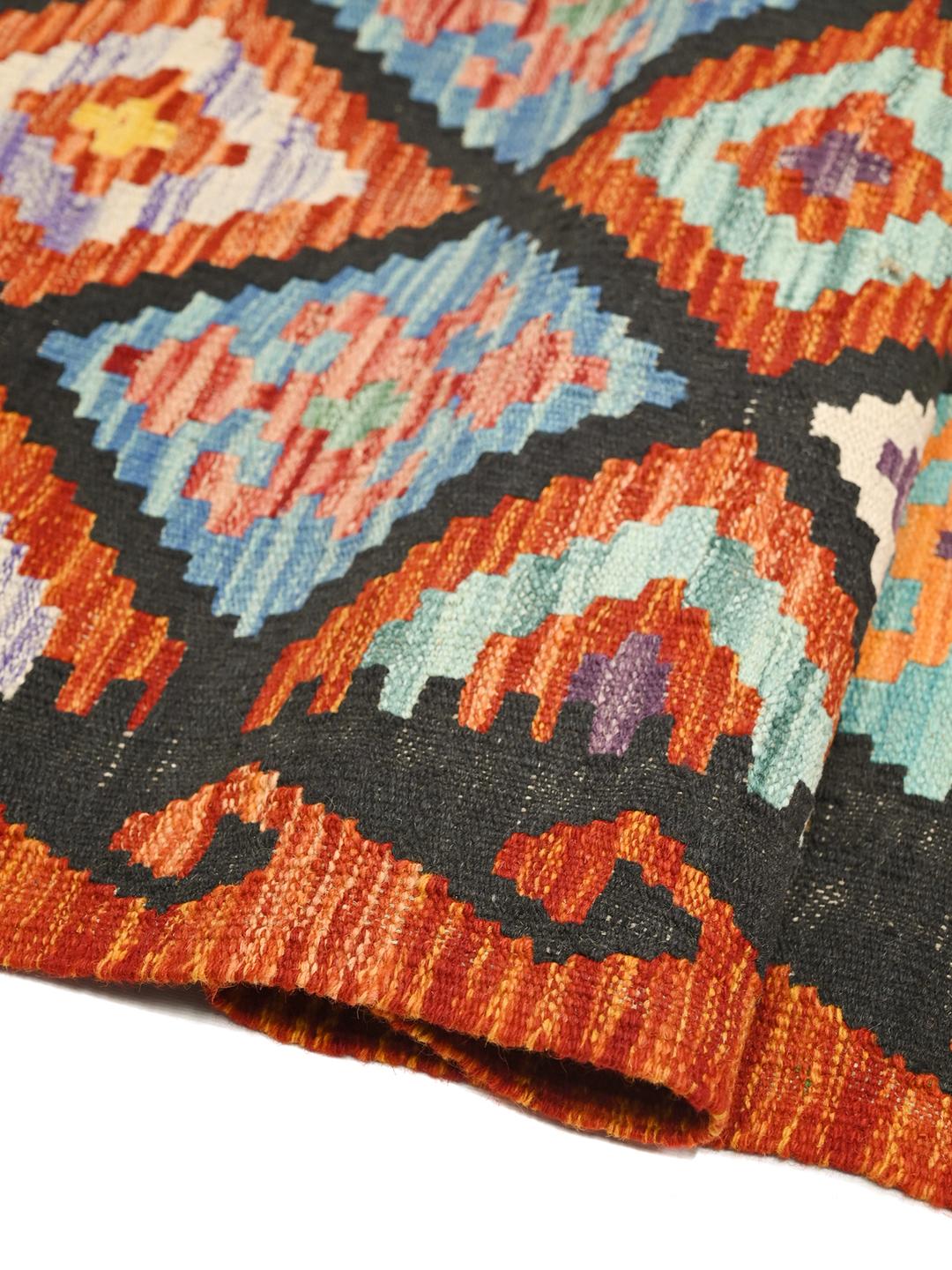
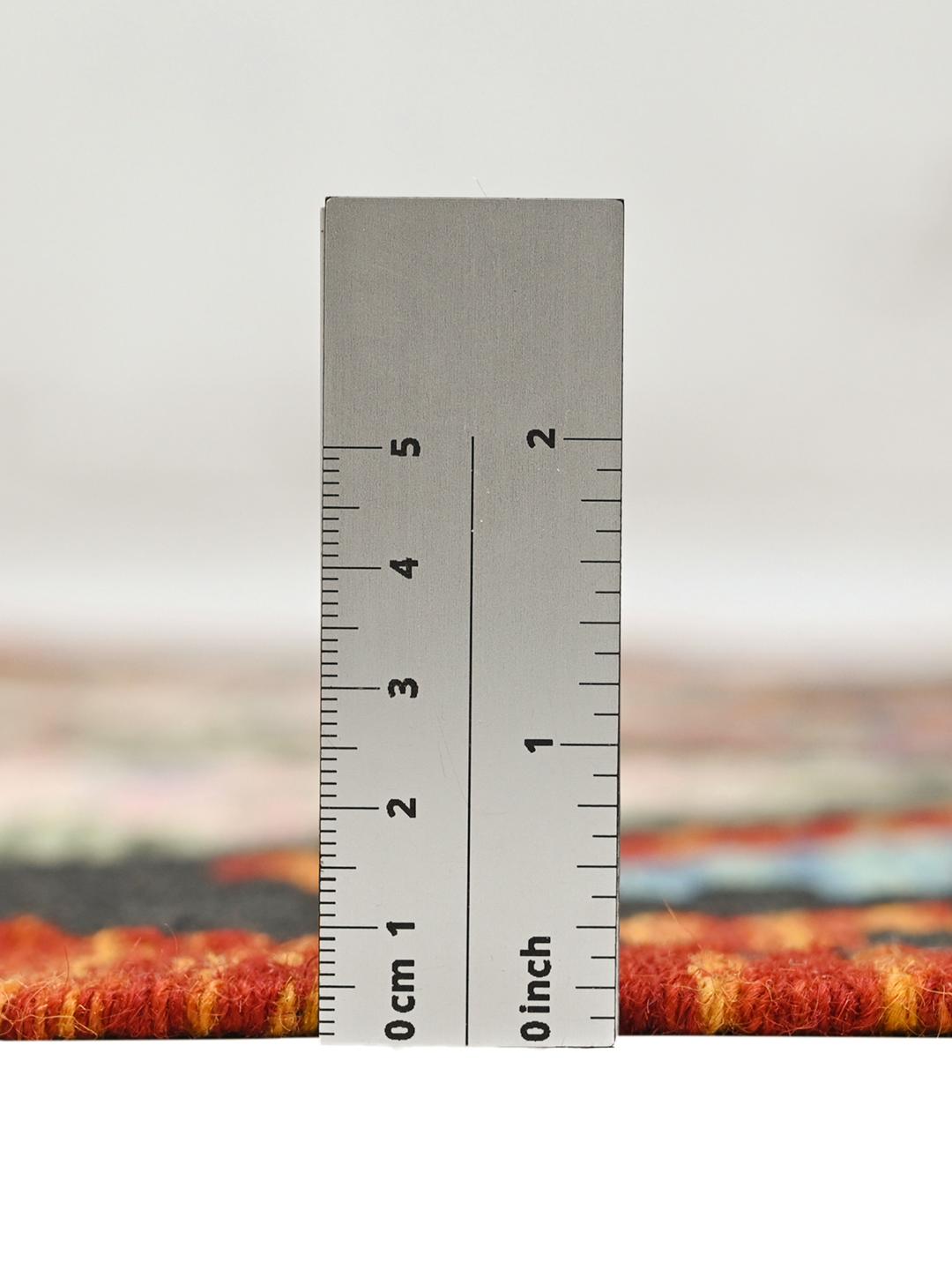
A Kelim is defined by its flat-weave construction, meaning it is created by interweaving the coloured weft strands through the warp threads rather than knotting pile into a foundation. This technique produces a reversible rug that is lightweight yet remarkably strong, showcasing the mastery of the weavers who produce such intricate designs without the use of a pile.
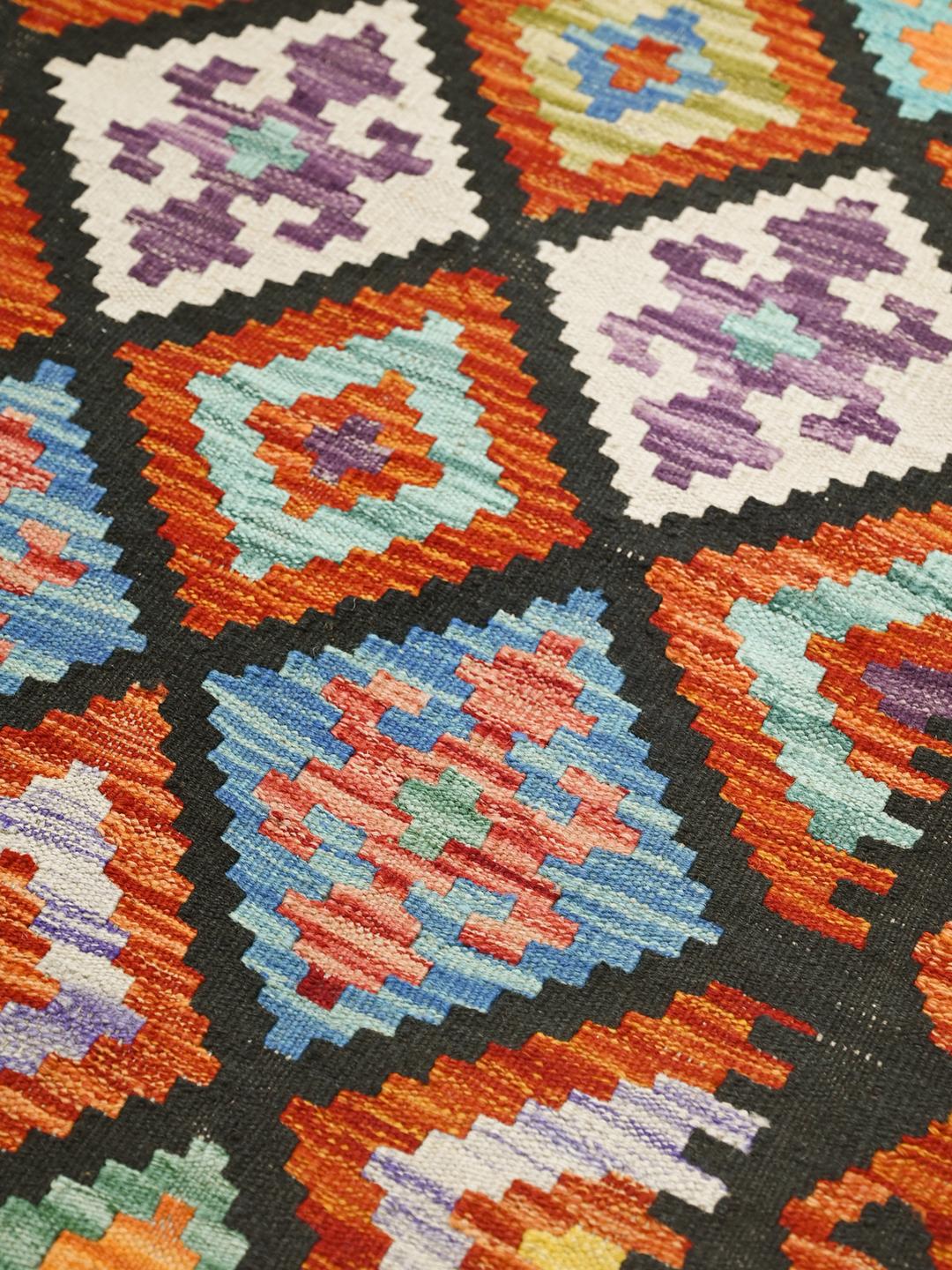
The signature design elements often include bold geometric shapes, such as the diamond motifs seen here, which are frequently inspired by tribal symbols and natural surroundings. The use of vibrant, contrasting colours is a hallmark of the Afghan style, often achieved through traditional dyeing methods that result in the rich, earthy tones that define these rugs.
Owning a piece from this tradition connects you to a rich history of craftsmanship that has been passed down through generations. These rugs are highly valued by collectors for their authentic character and the way they bridge the gap between ancient nomadic traditions and modern interior design, offering a timeless aesthetic that brings cultural depth to any home.