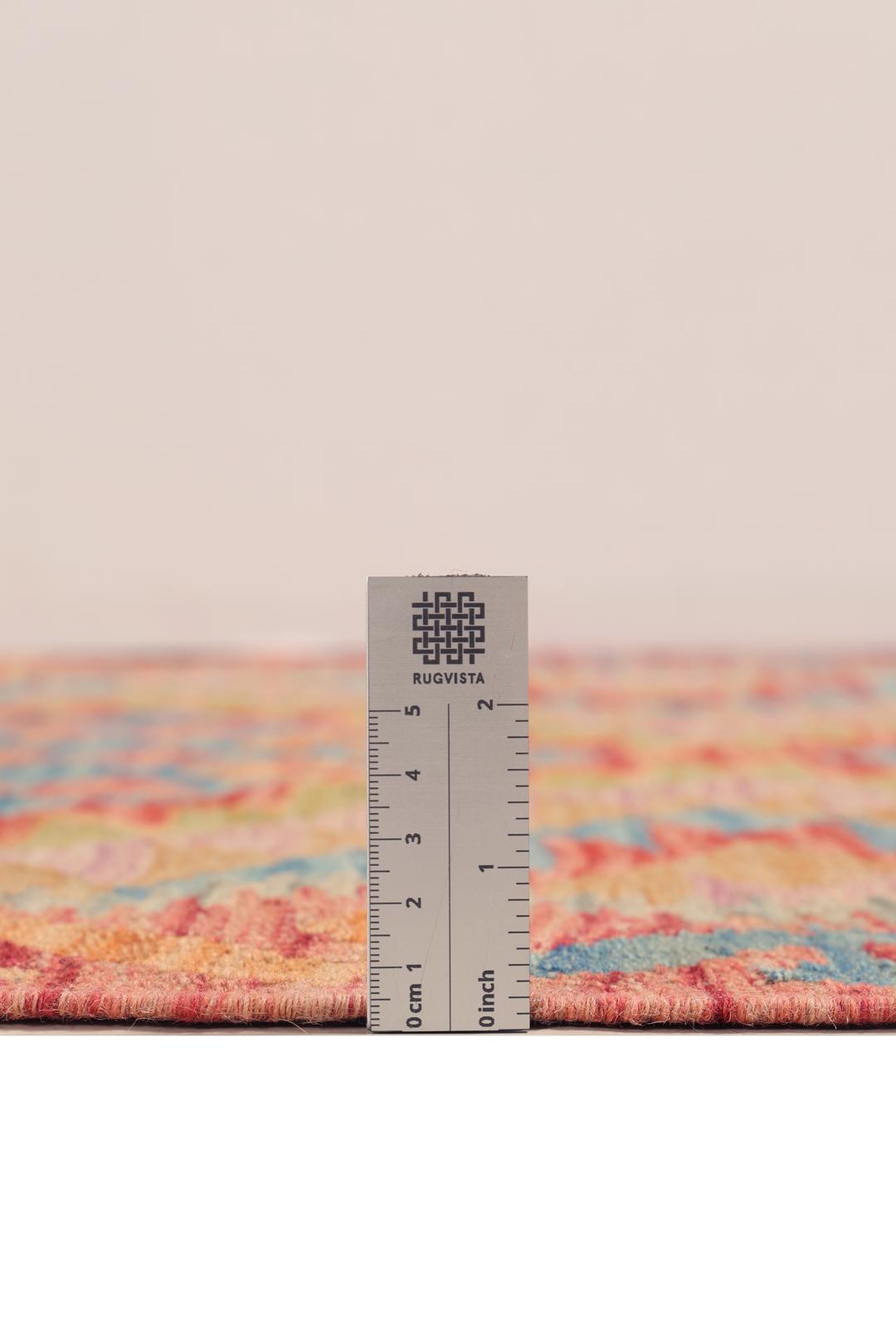
Kelim rugs from Afghanistan are deeply rooted in the long-standing nomadic traditions of the region. These flat-woven textiles were historically created by tribal peoples to serve as versatile, lightweight, and durable floor coverings, wall hangings, or storage bags. The migration of these techniques across the Middle East has evolved the craft into what we recognise today as a sophisticated expression of cultural identity.
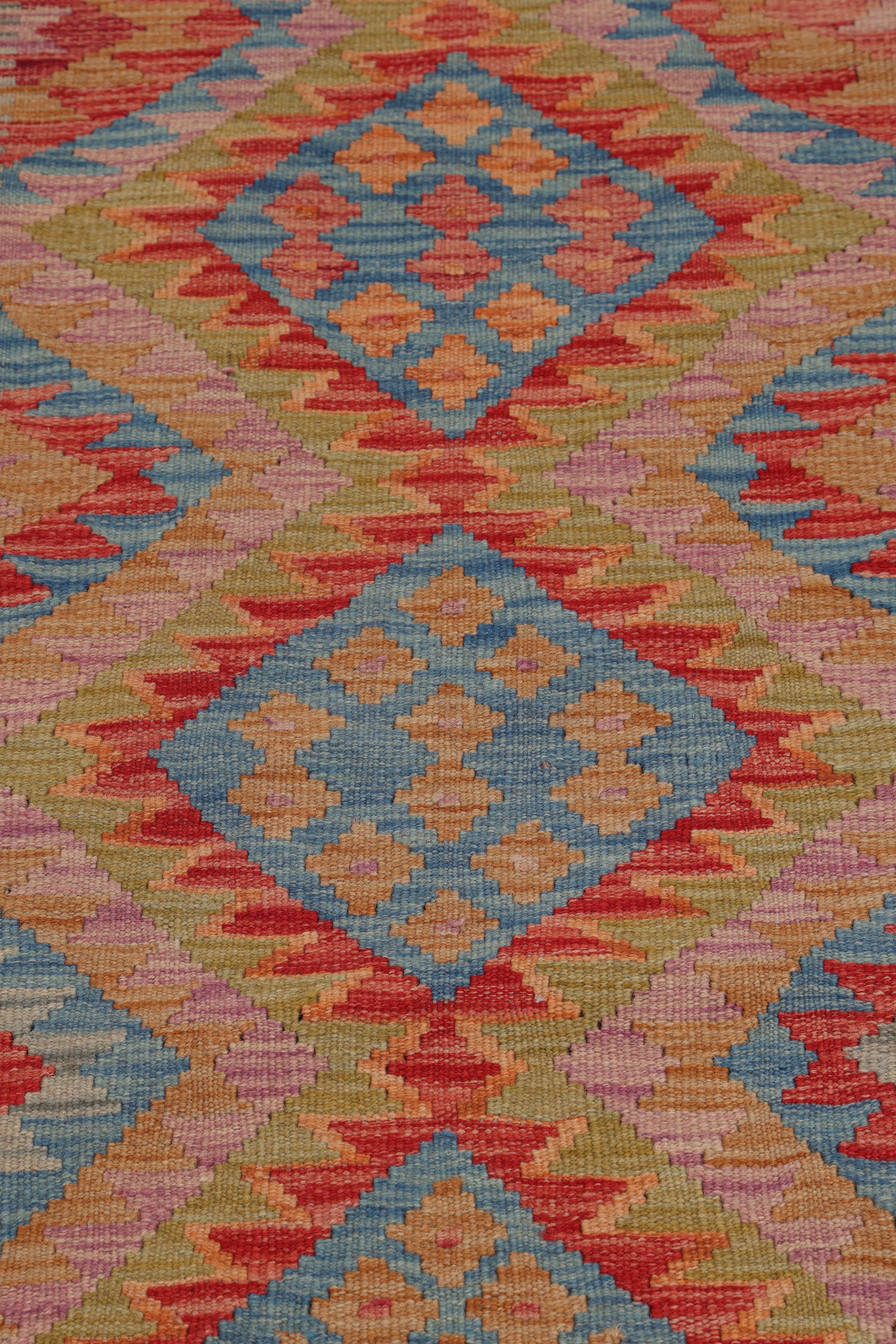
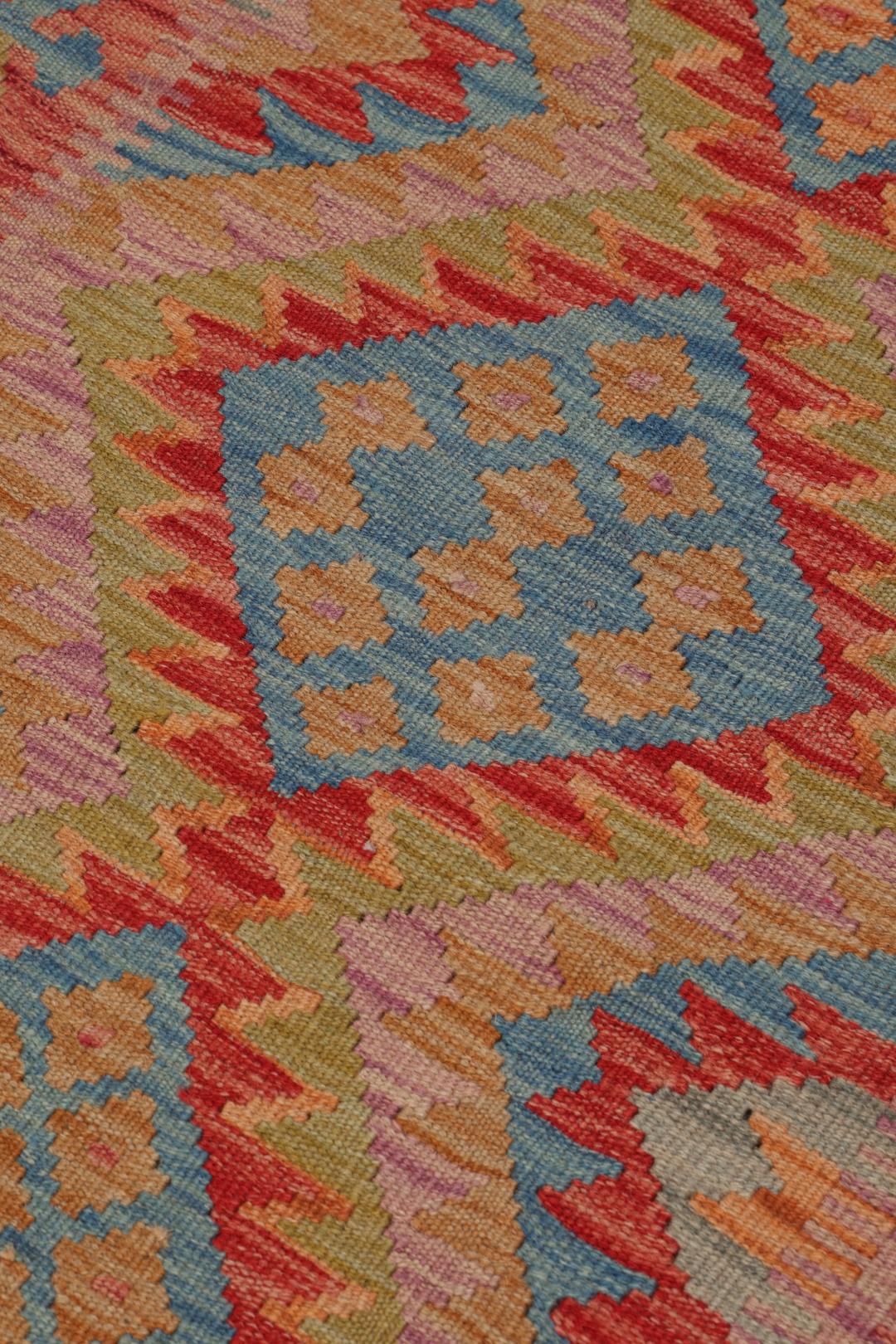
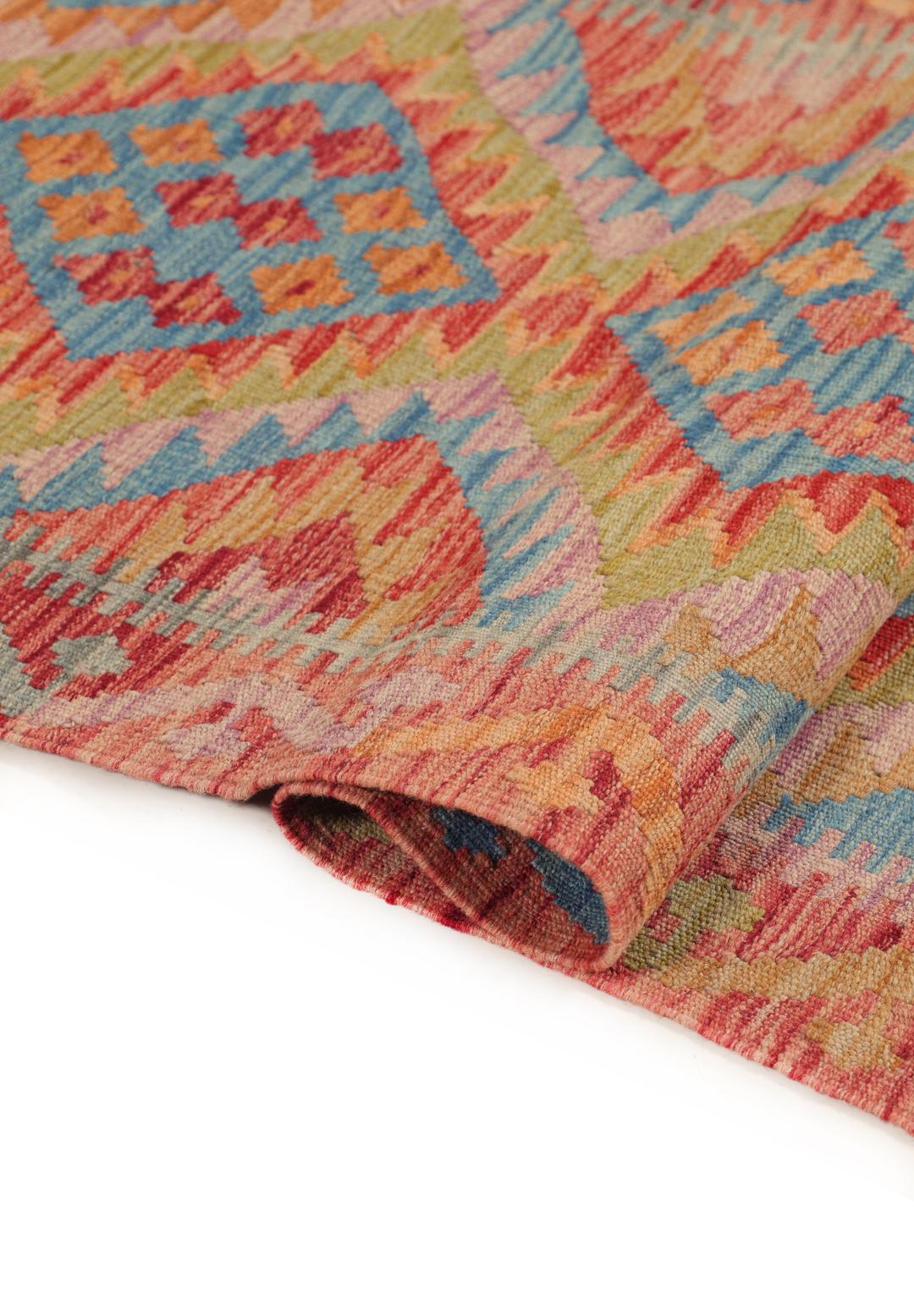
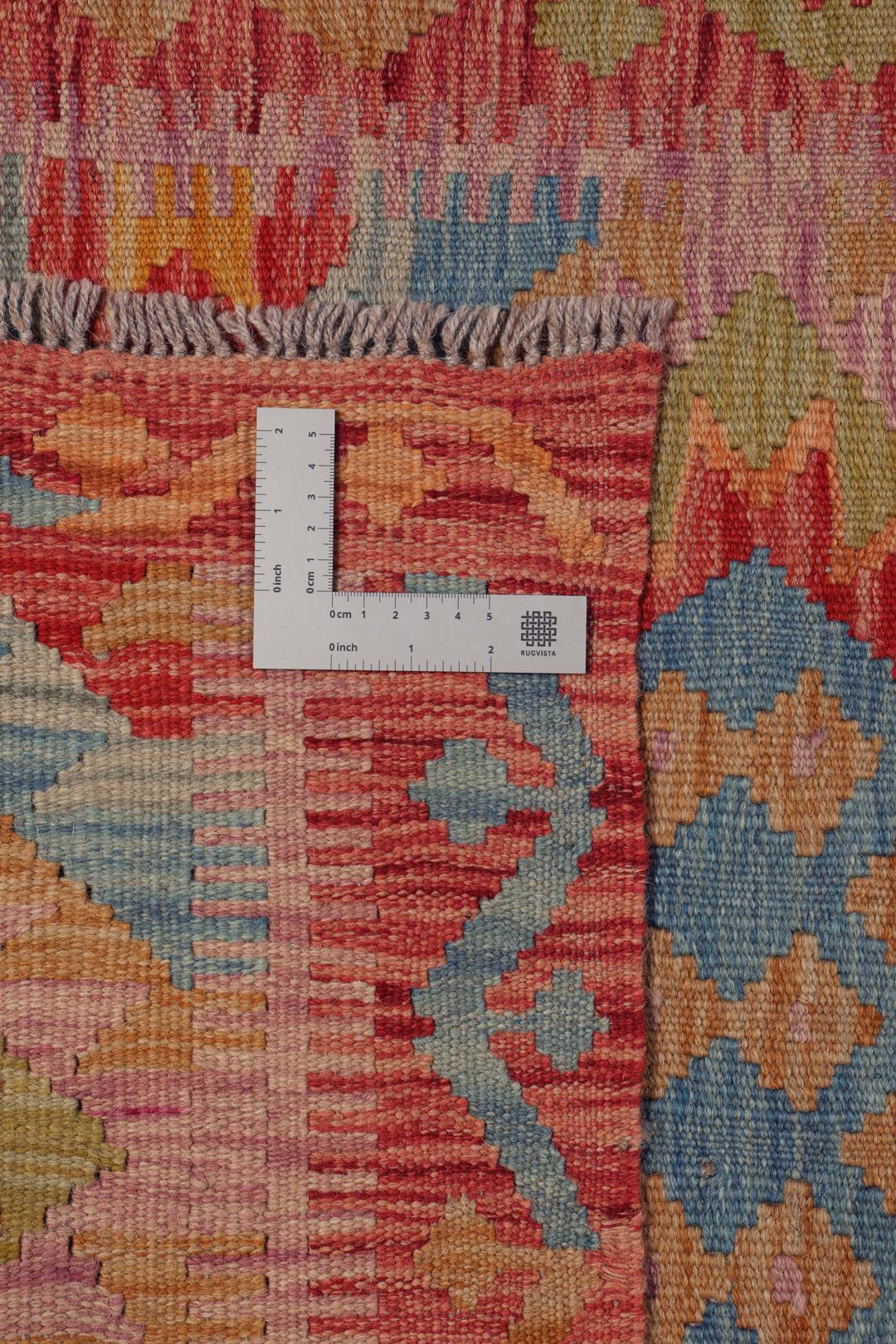
The term 'Kelim' refers specifically to the flat-weaving technique where the weft threads are pulled tightly over the warp threads, completely obscuring the foundation. This method creates a reversible rug with no pile, which is why they are so prized for their longevity and ease of care. This construction style relies on the precision of the weaver to create sharp, clear patterns without the use of knots, showcasing a mastery of loom work.
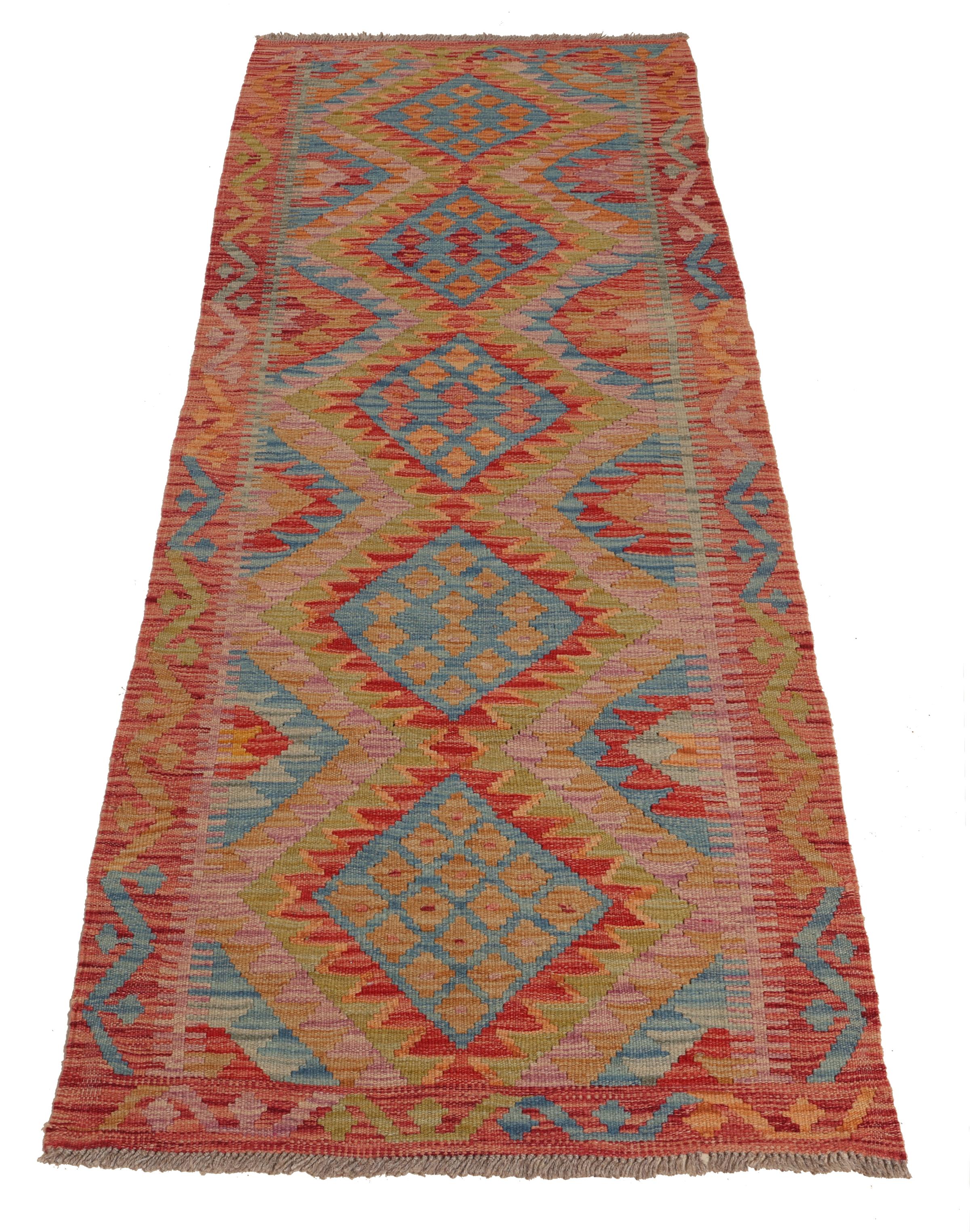
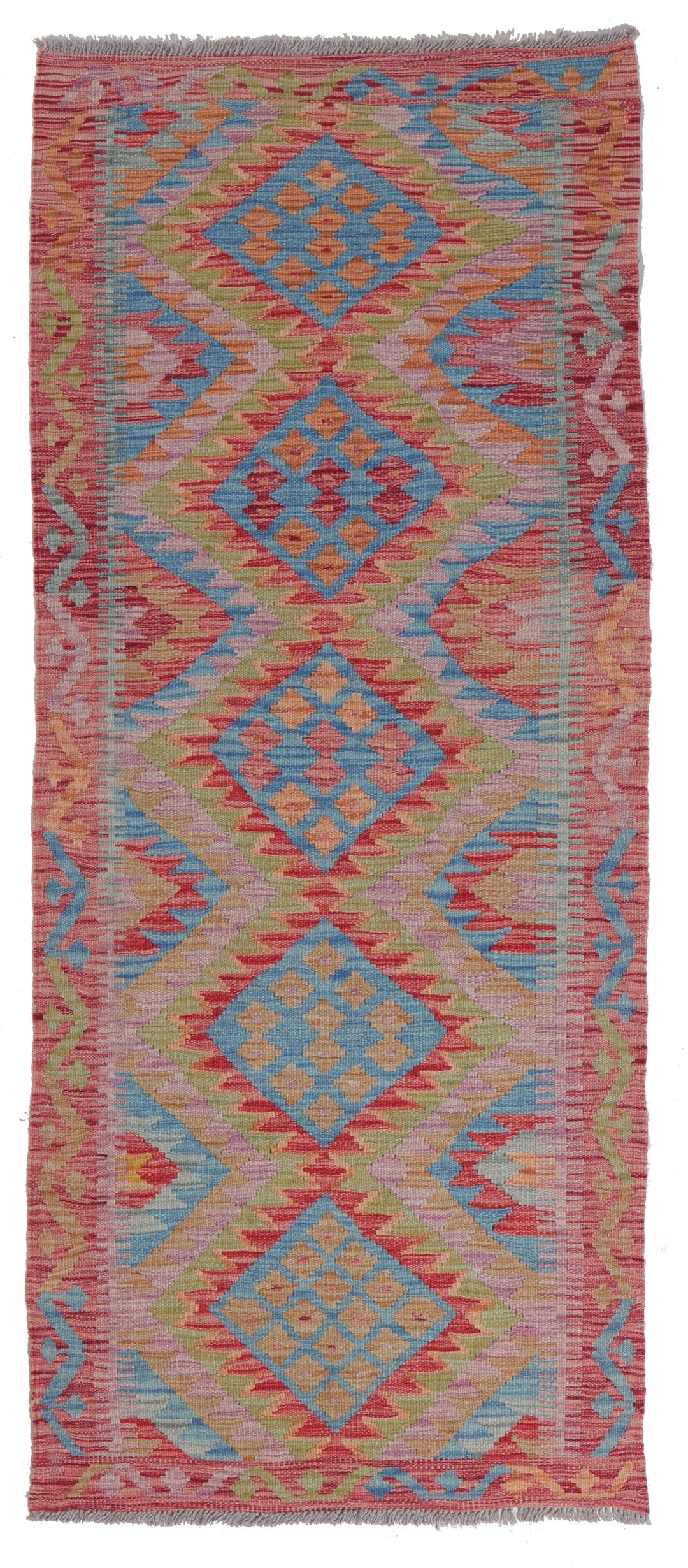
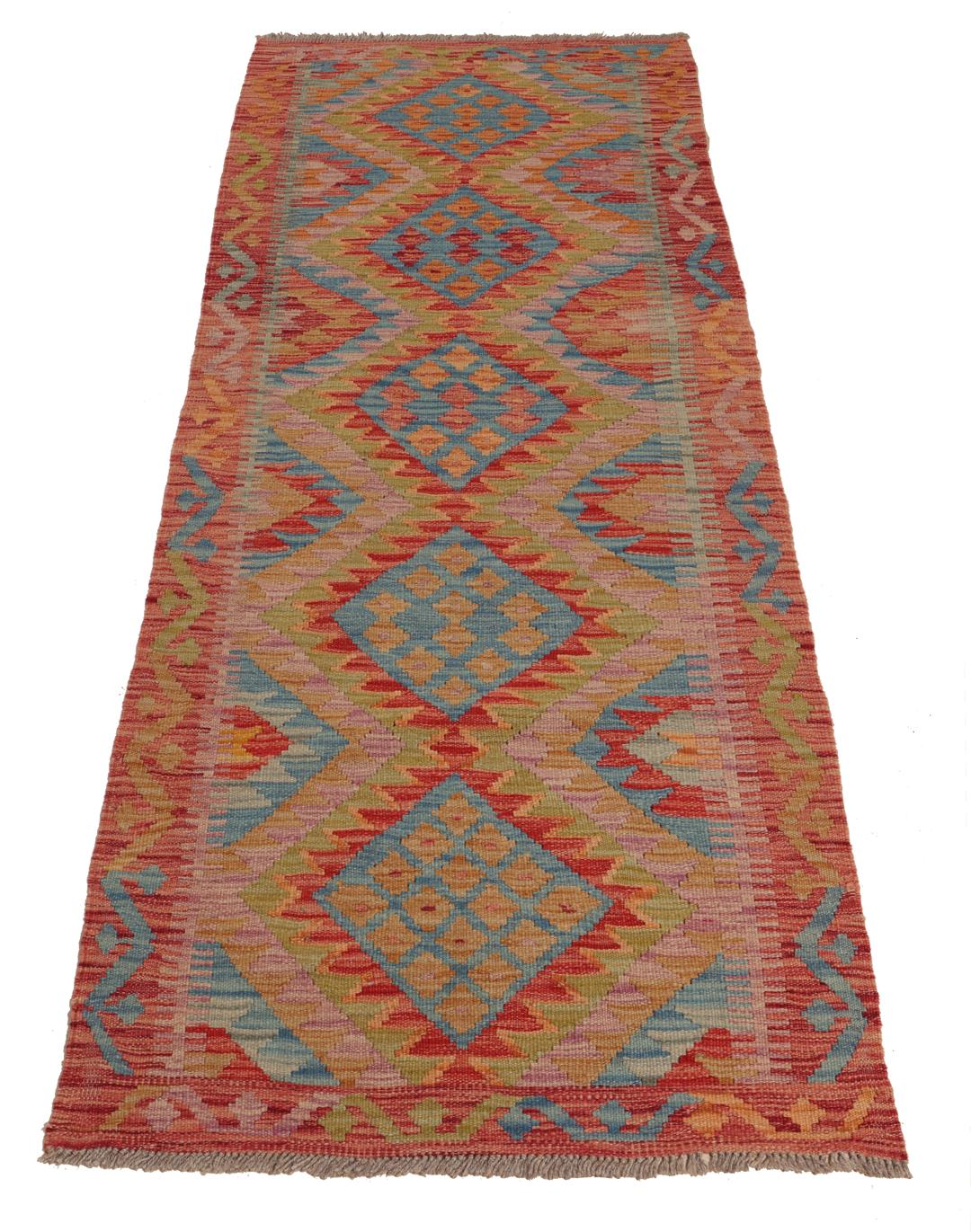
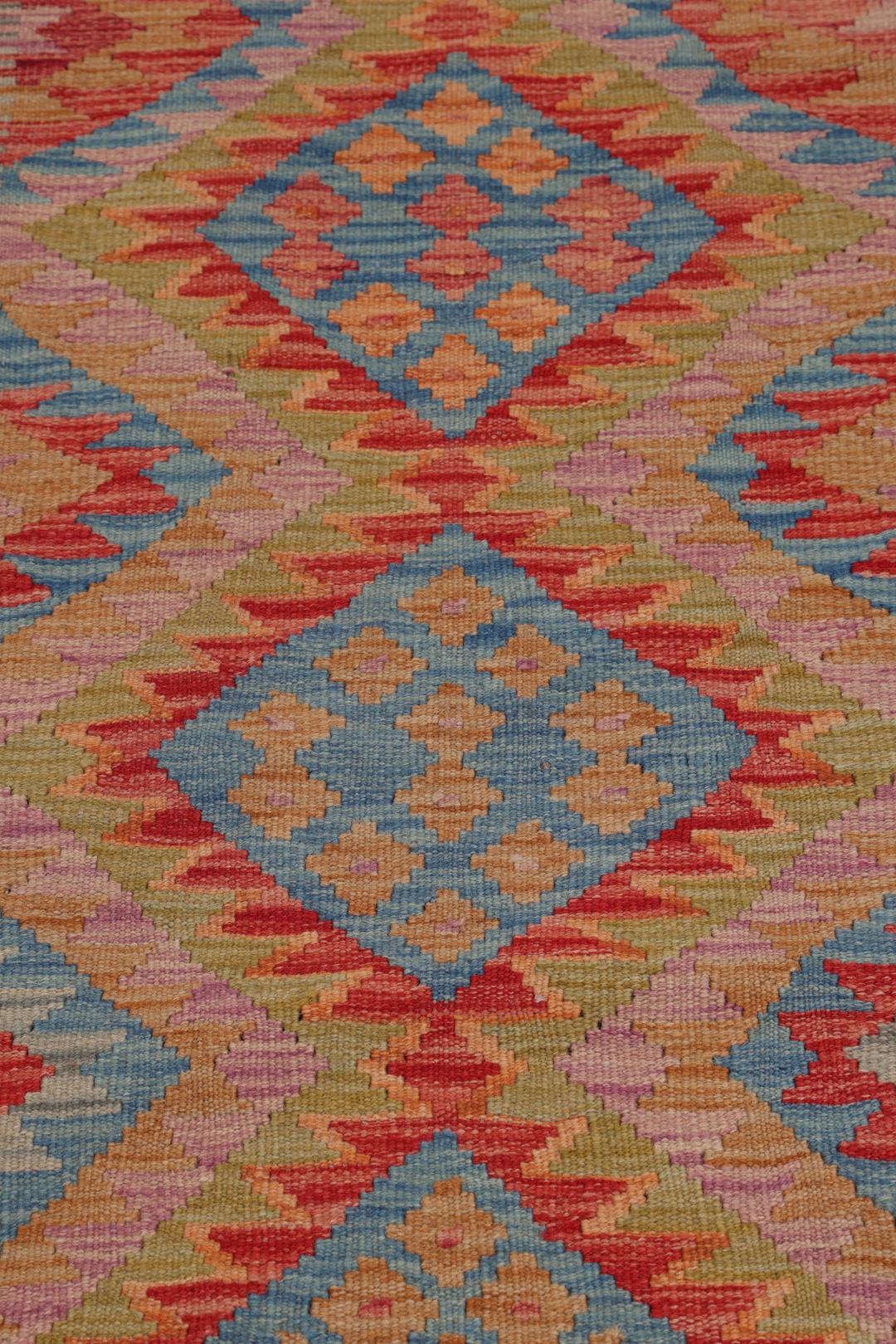
Design-wise, these rugs are defined by their bold geometric language. Diamond motifs, as seen in this piece, are classic symbols often used to represent protection or prosperity. The vibrant colour palette is achieved through traditional dyeing methods, creating a visual rhythm that is both orderly and expressive. The decorative borders serve to frame the central field, providing a sense of balance and completeness to the composition.
Collecting these rugs is an opportunity to own a piece of living heritage. They are valued not only for their aesthetic beauty but for the immense skill required to produce them without the aid of modern technology. By bringing an Afghan Kelim into your home, you are participating in a tradition of storytelling through textile, ensuring that these ancient skills continue to be appreciated and preserved.