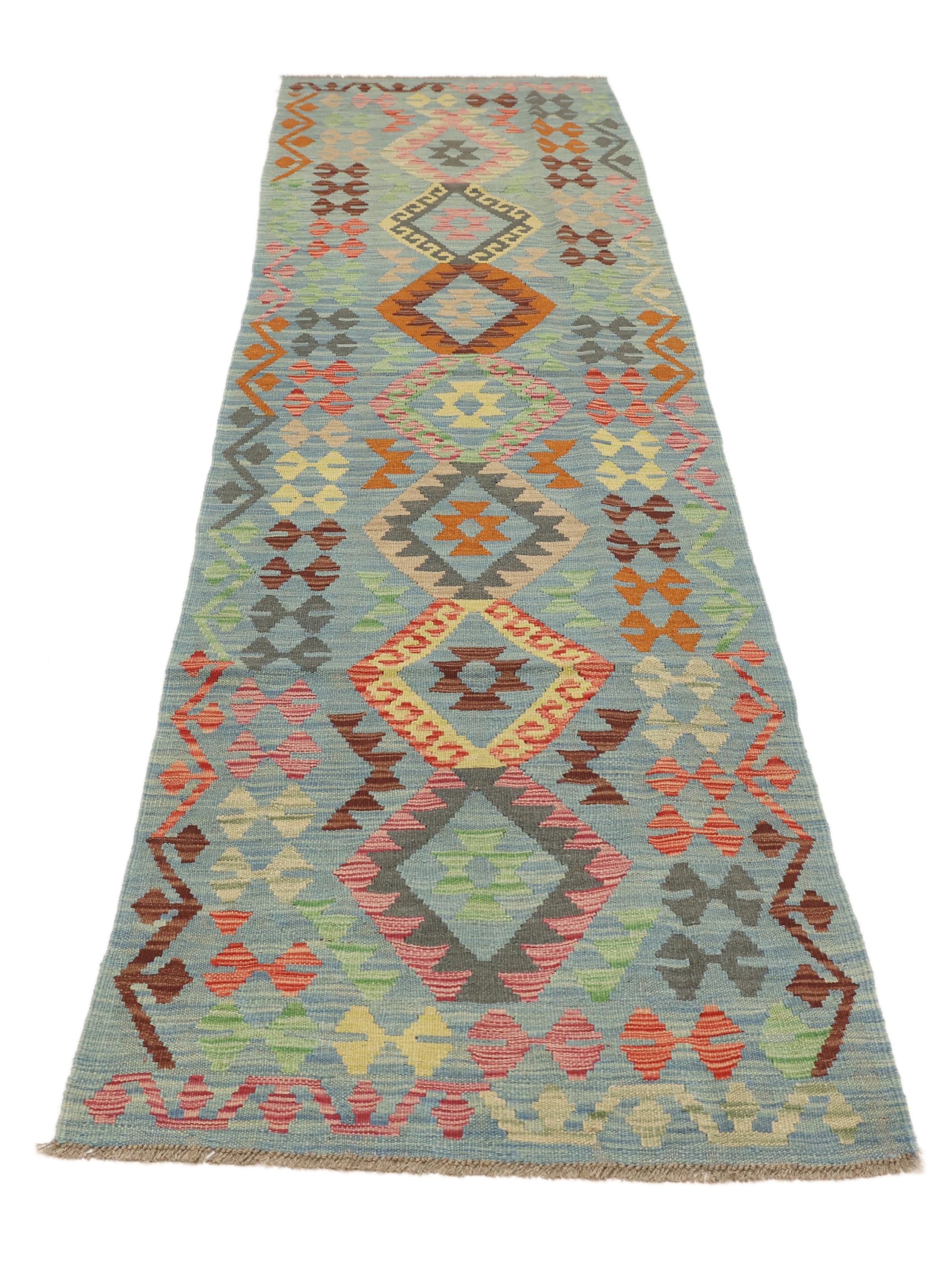
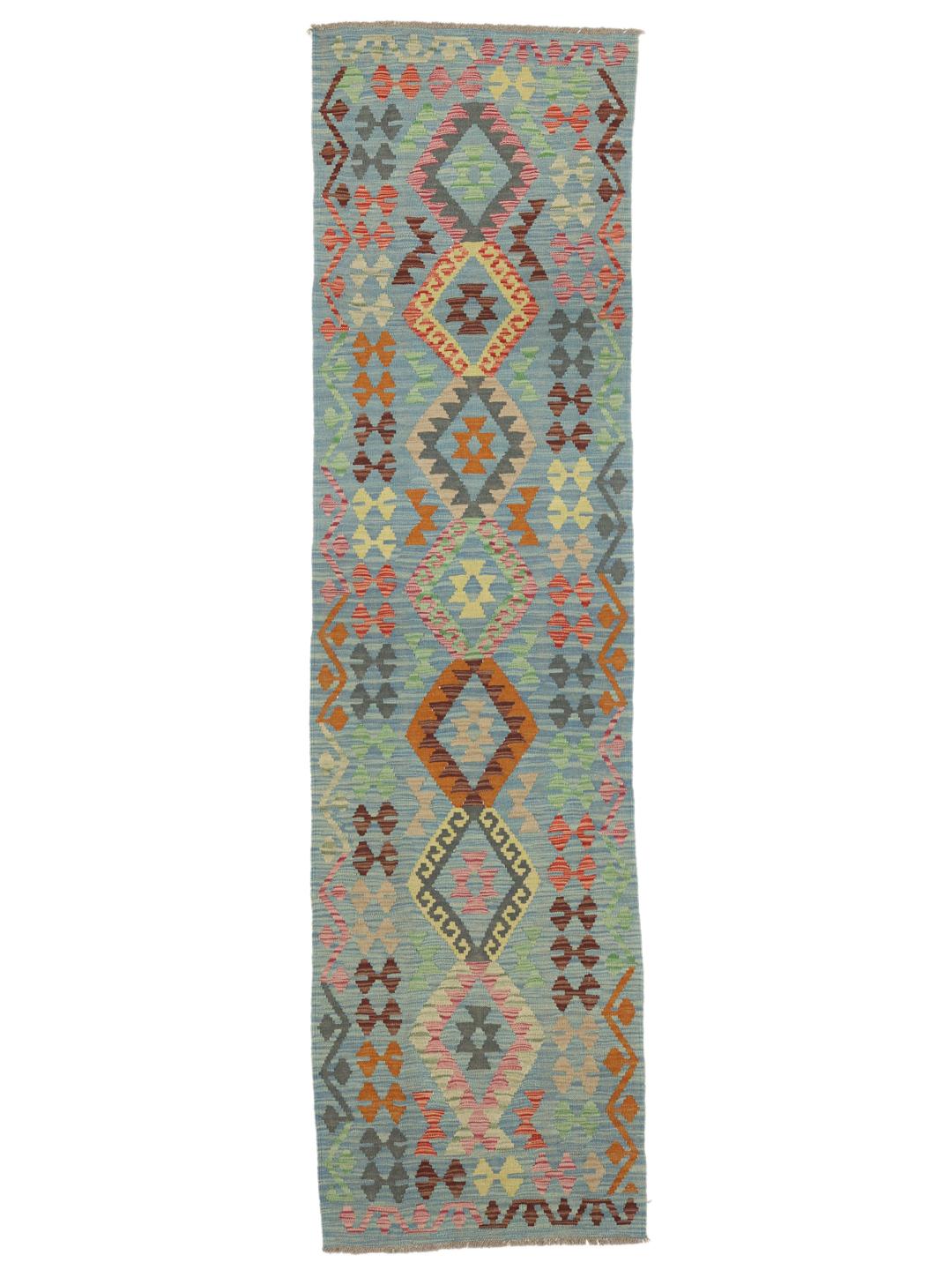
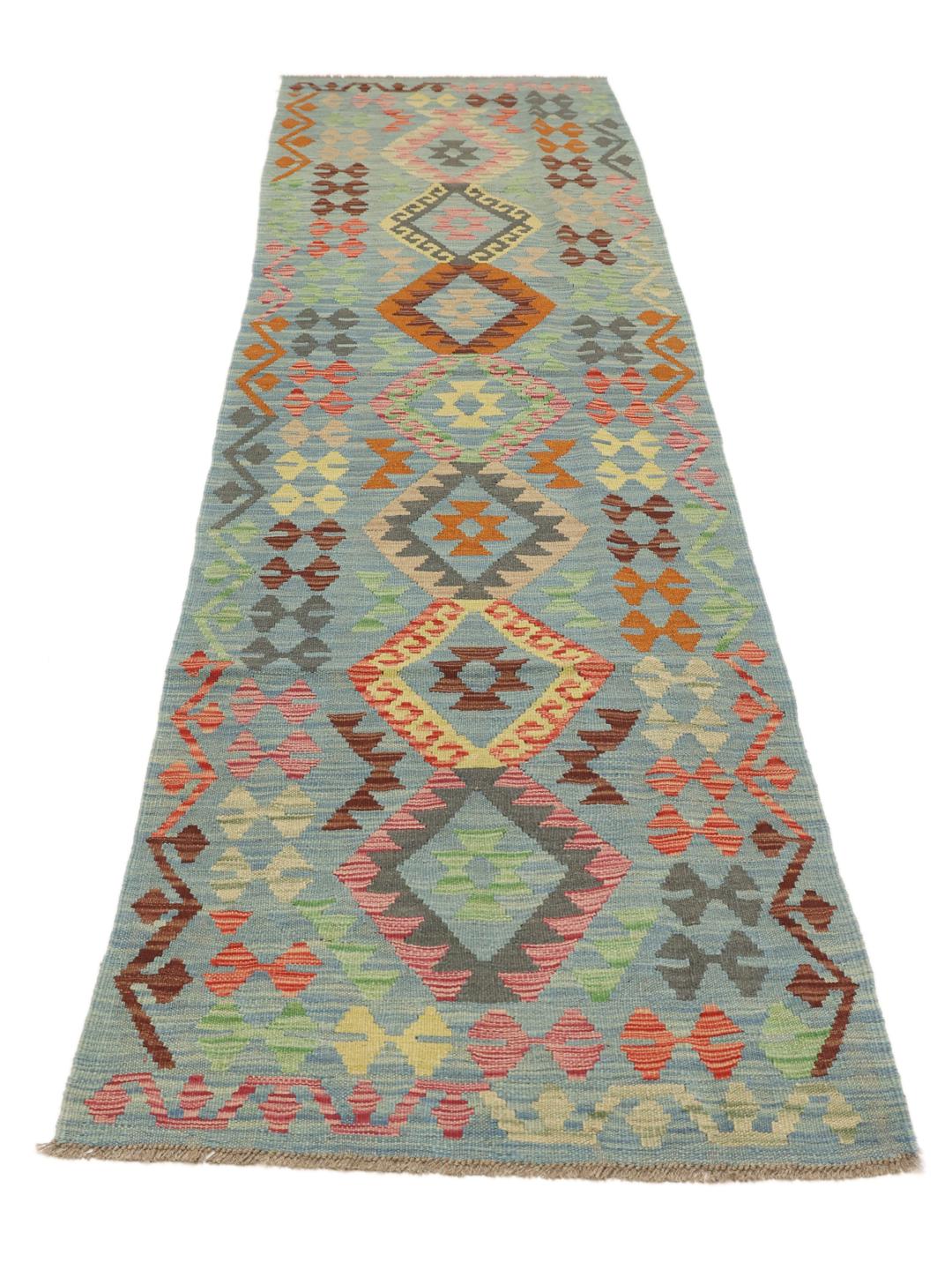
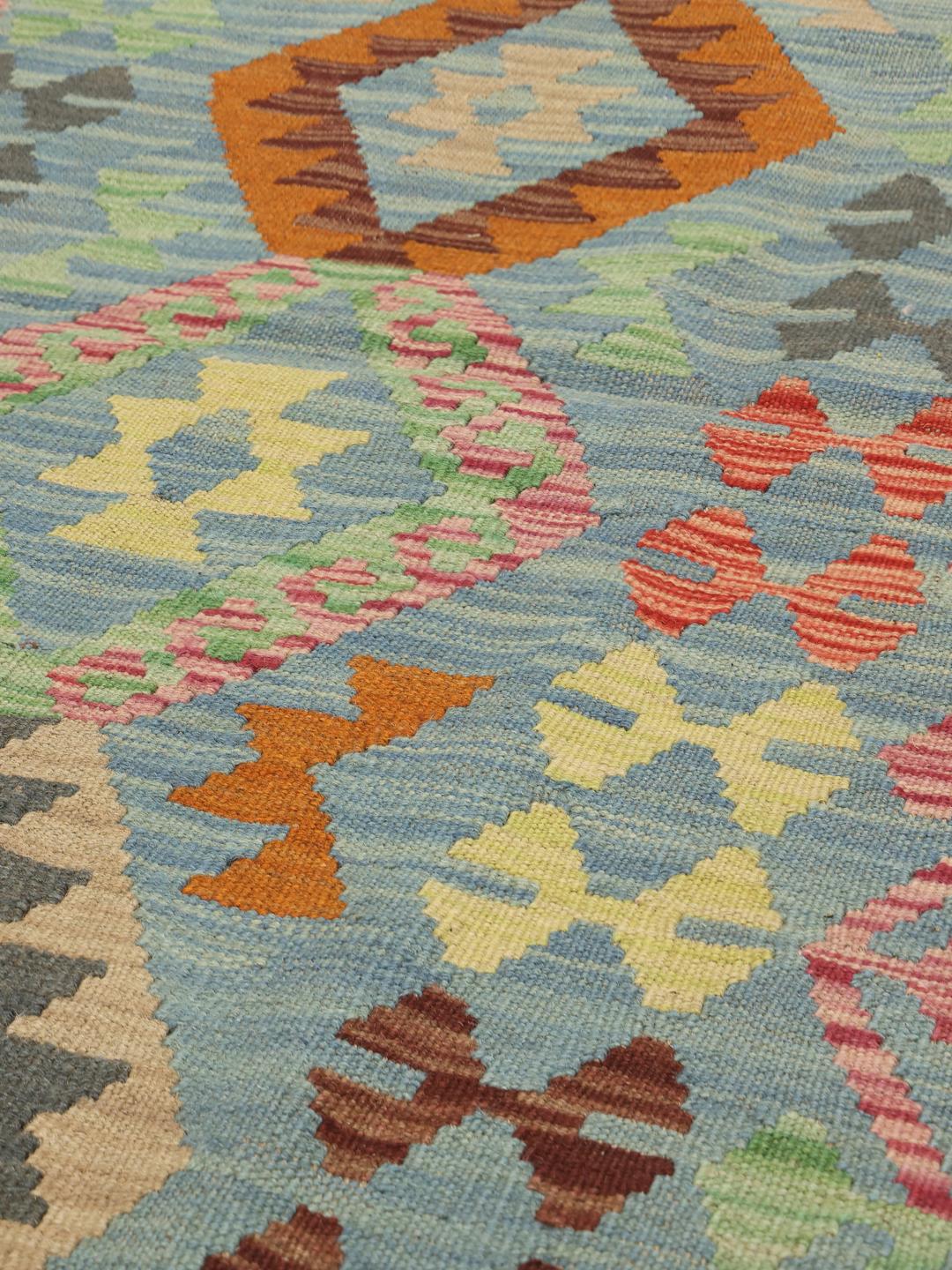
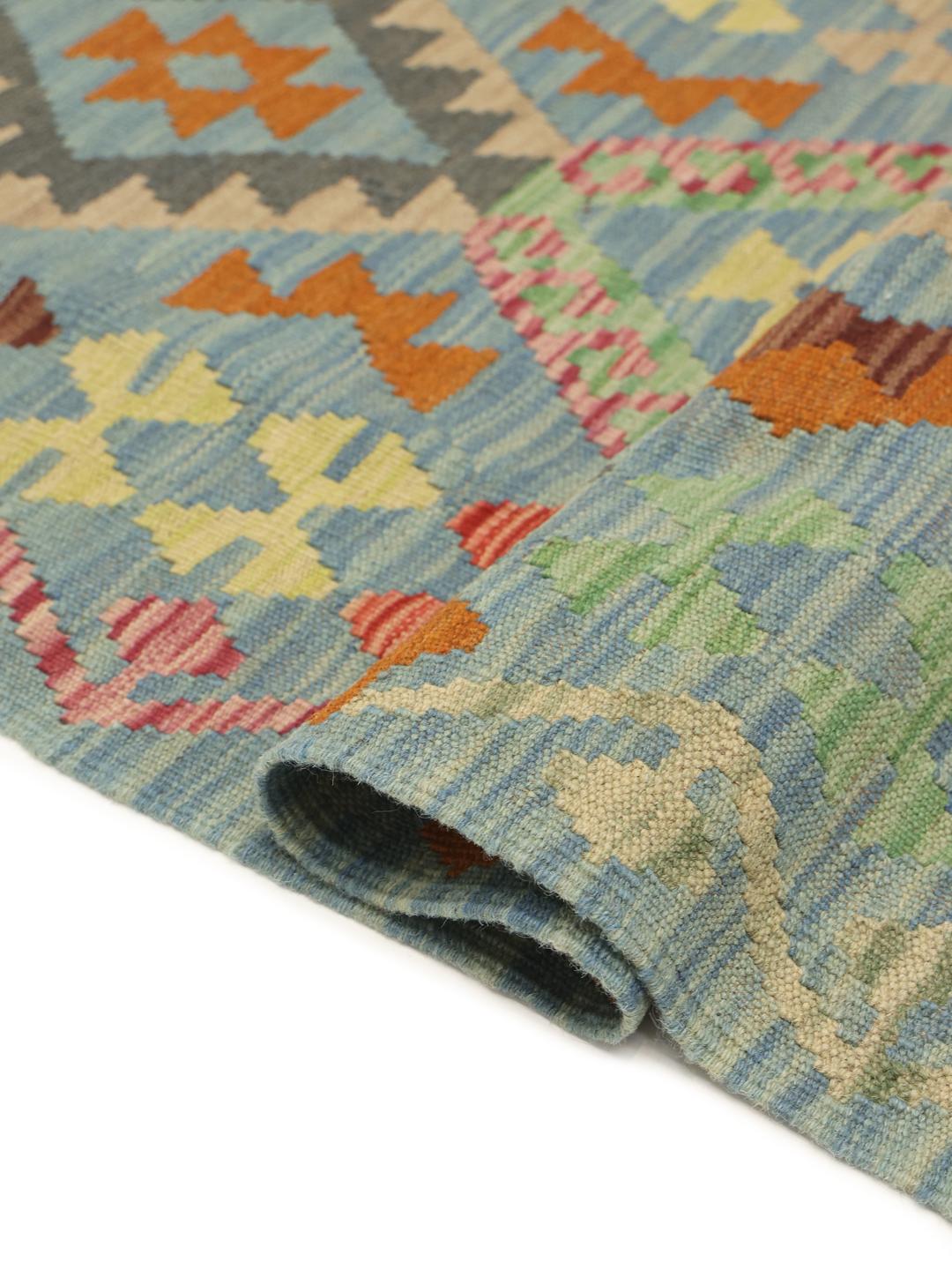
The Kelim tradition in Afghanistan is deeply rooted in the nomadic and semi-nomadic lifestyles of the region. These flat-woven rugs were historically created by tribal communities for practical use in tents, serving as floor coverings, wall hangings, or storage bags, with designs often reflecting the specific heritage and environment of the weavers.
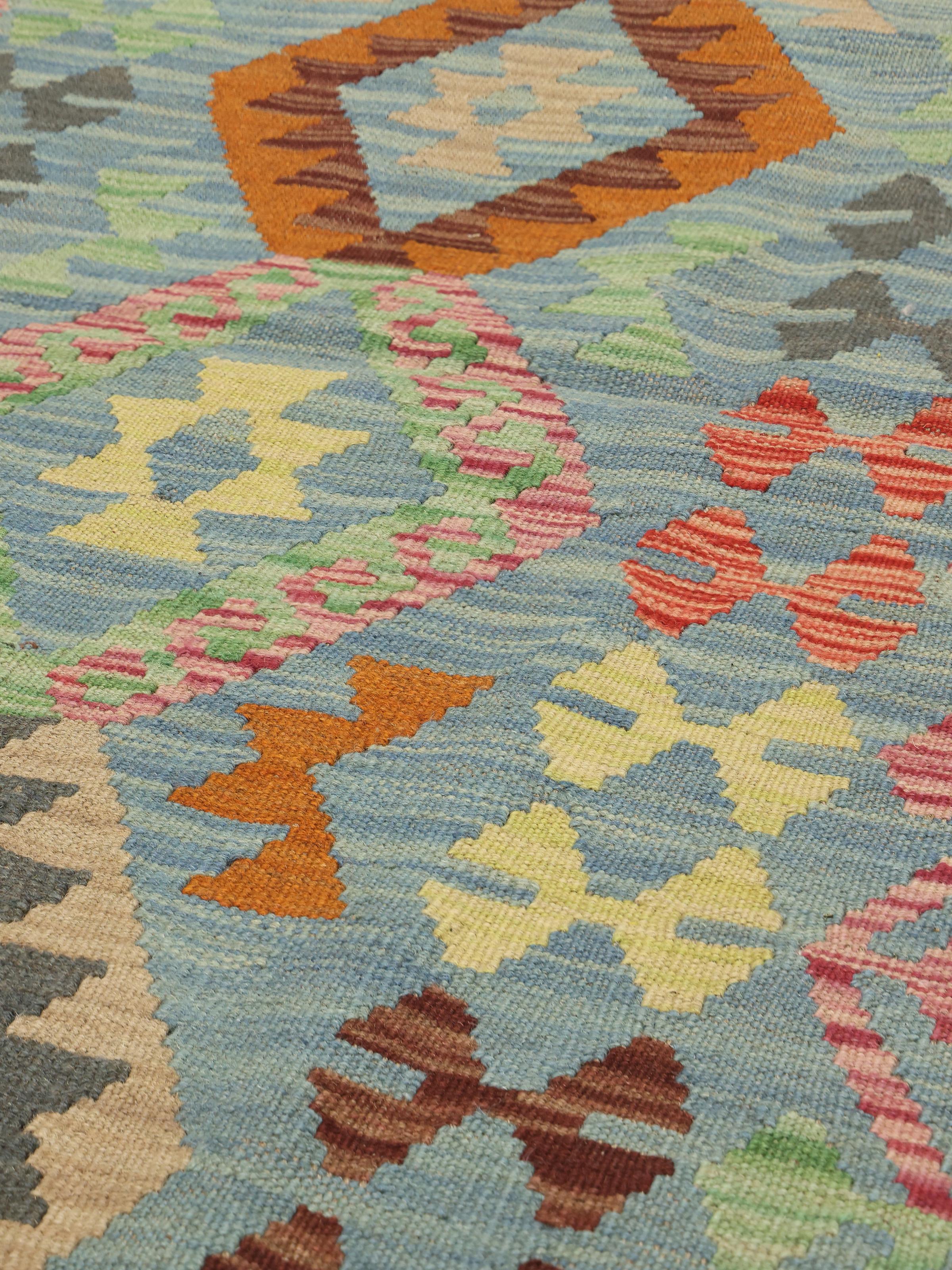
The term Kelim refers to the specific flat-weaving technique used, where the warp and weft are interlocked to create a design without a pile. This method is highly valued for its ability to produce lightweight yet incredibly durable rugs, making them ideal for the mobile lifestyles that originally gave rise to the craft.
The visual language of these rugs is defined by bold geometric motifs and symbolic patterns. Often, these designs are passed down through generations, with each shape carrying meaning or representing local folklore. The use of vibrant, contrasting colours is a hallmark of the style, intended to bring brightness and energy to traditional living spaces.
Collectors value these rugs for their cultural authenticity and the individual expression found in each piece. Choosing a hand-woven Afghan runner is an investment in a living tradition, connecting your modern home to a rich history of artistry and skill that remains preserved in every thread.