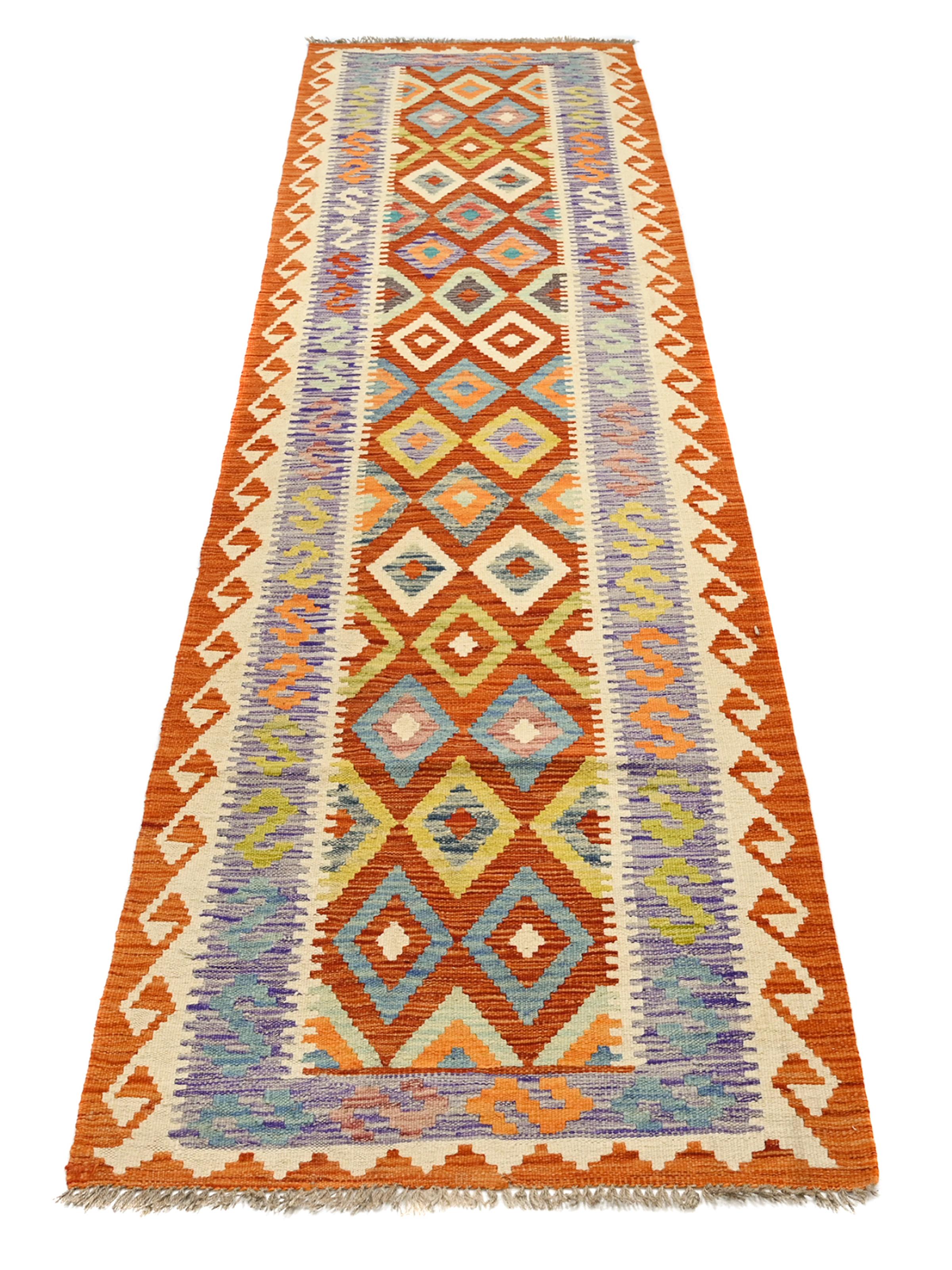
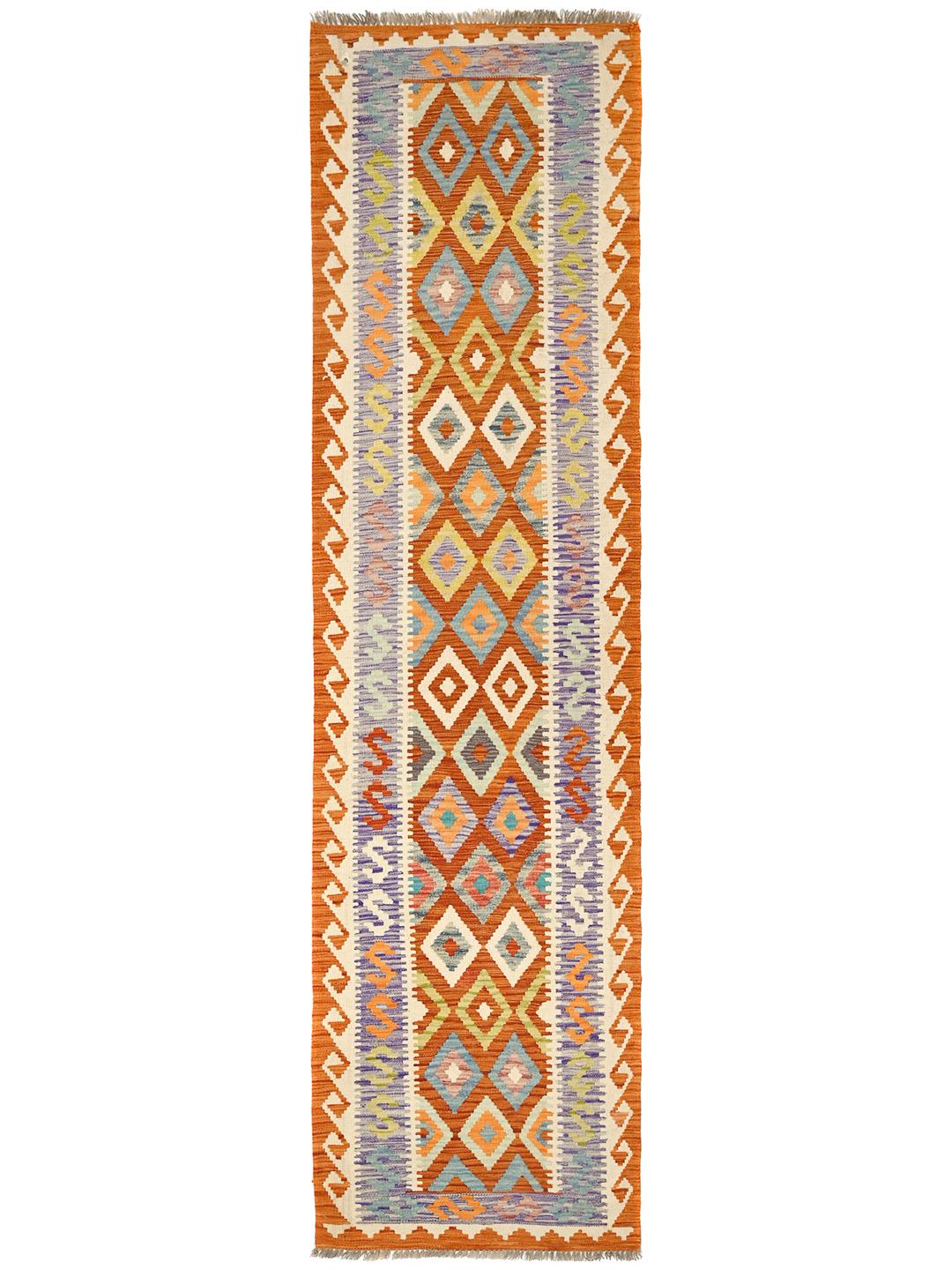
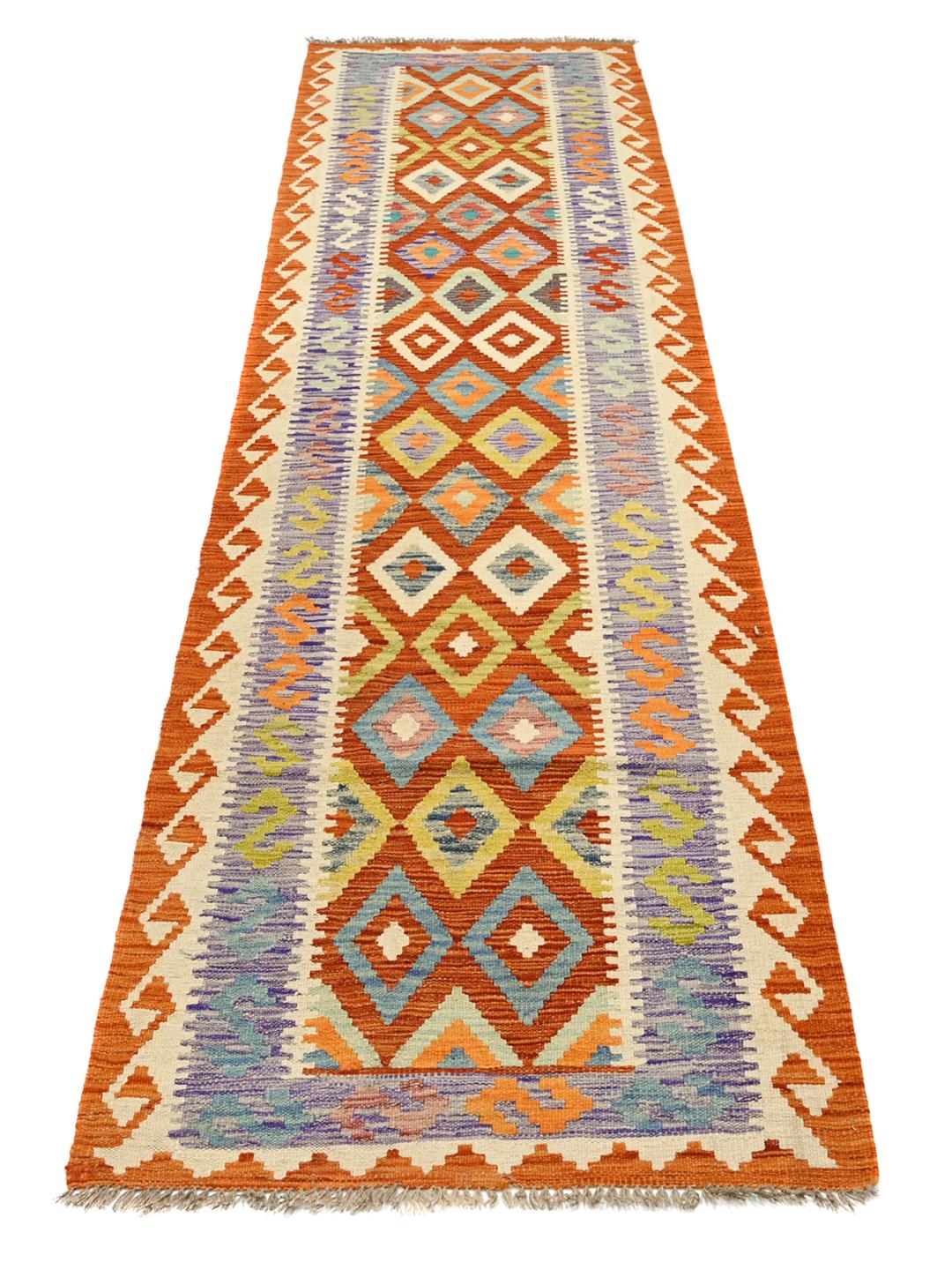
The Kelim tradition in the Middle East is a testament to the enduring ingenuity of nomadic and village cultures across the region. Historically, these flat-woven rugs were created as versatile, portable items for daily life, serving as floor coverings, blankets, or even storage sacks. Over generations, the craft has evolved into the sophisticated, highly sought-after decorative pieces we see today, maintaining the same commitment to natural materials and ancestral techniques.
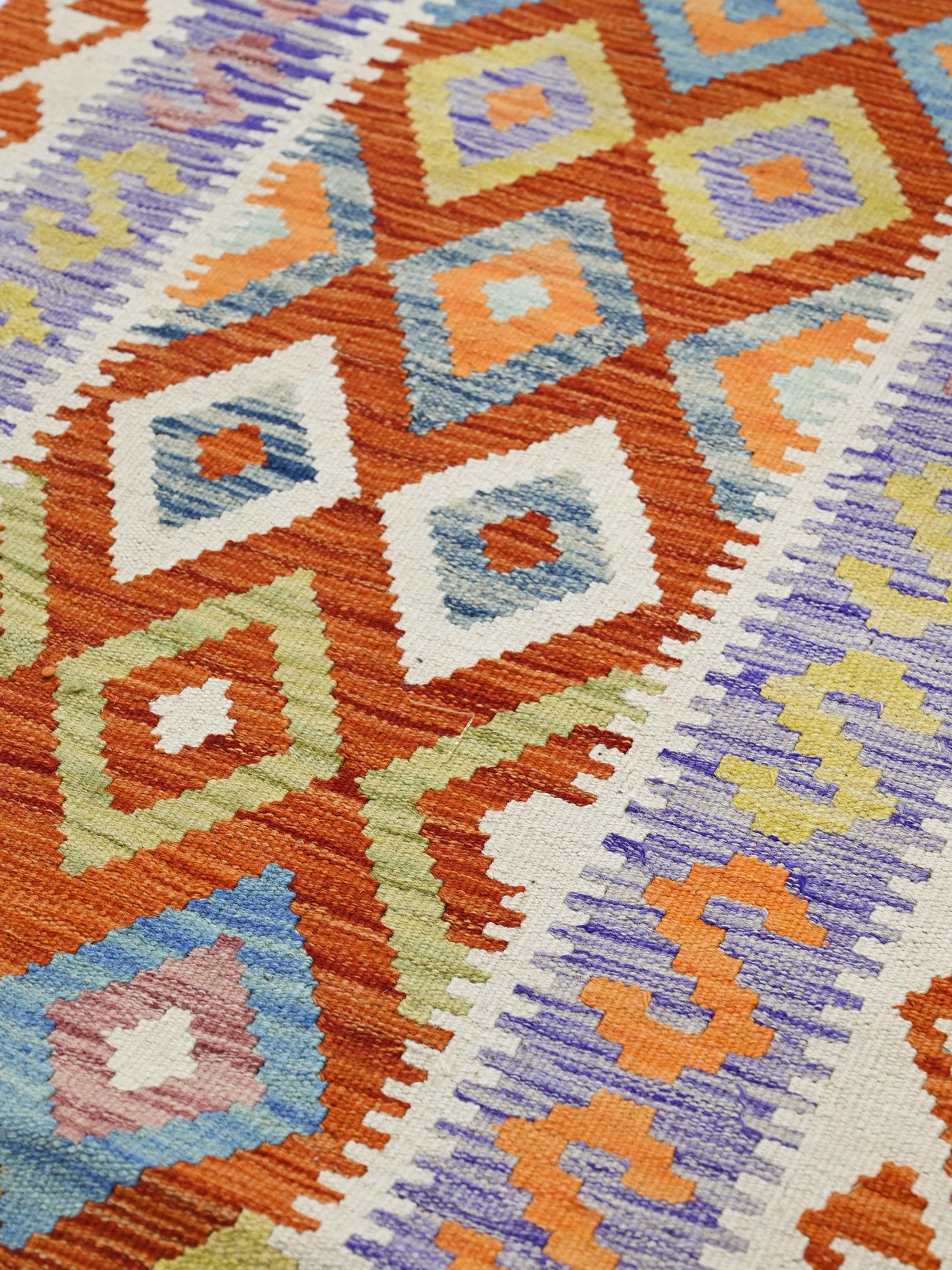
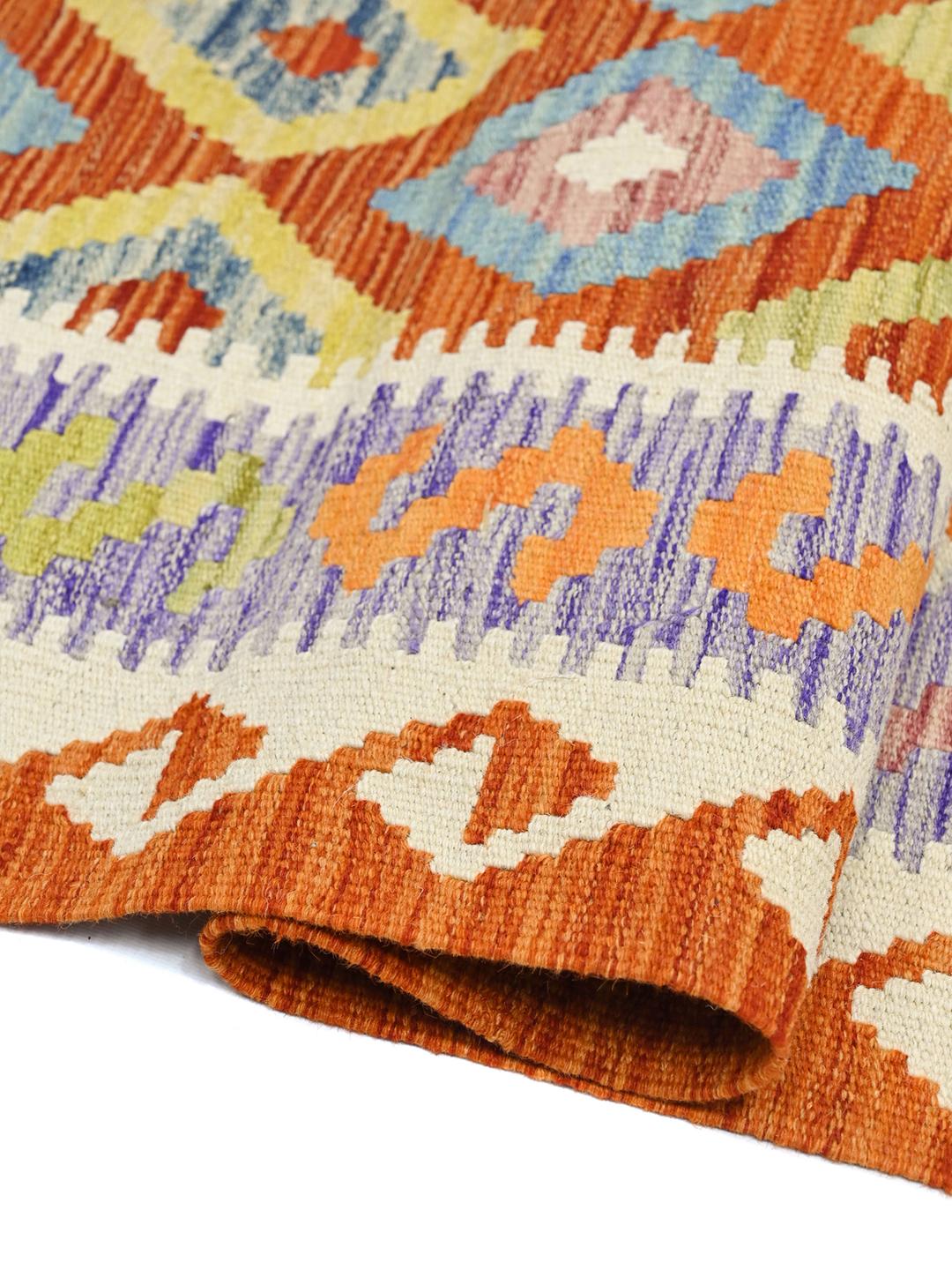
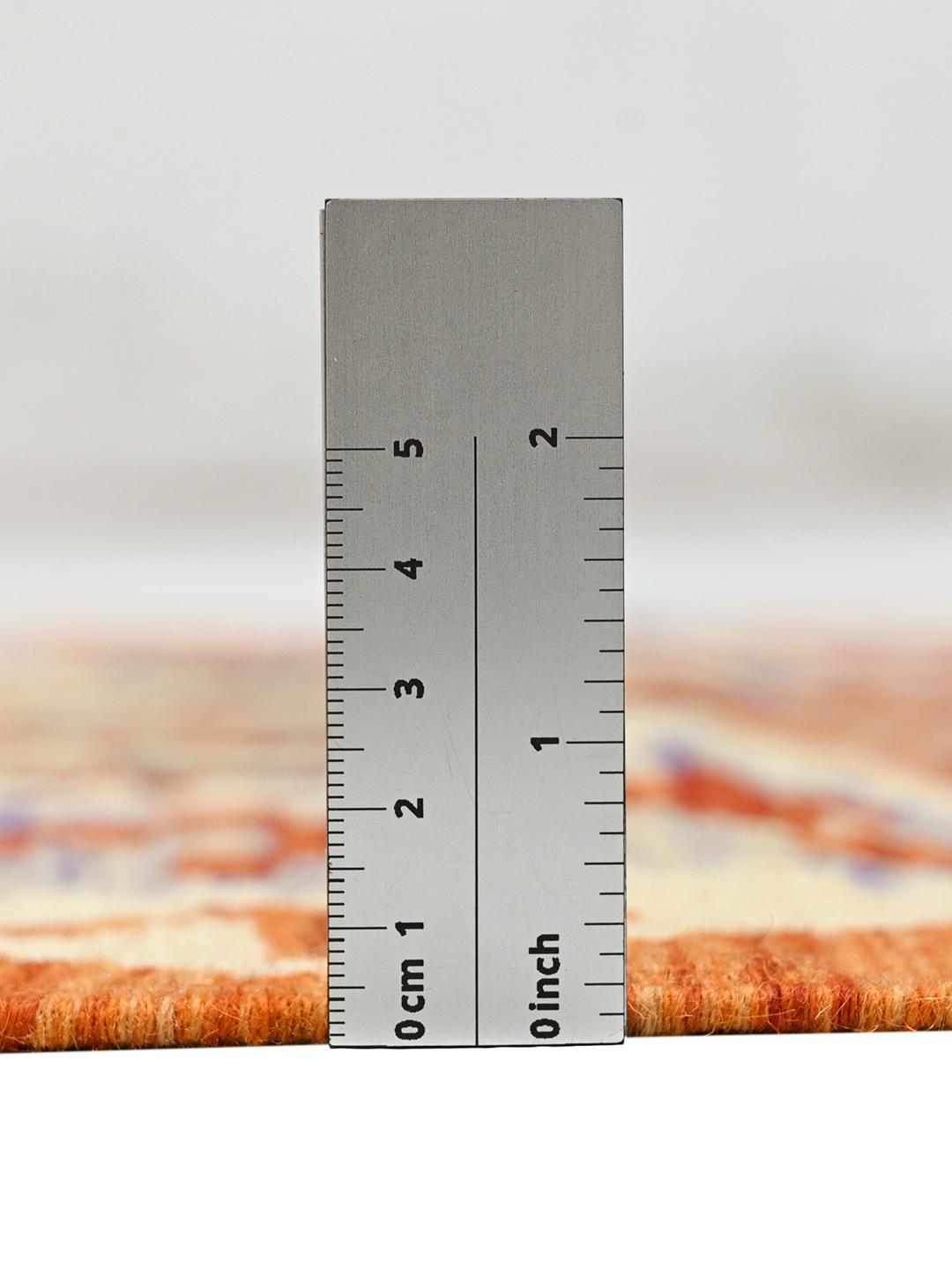
The term Kelim refers to the flat-weaving technique where the weft threads are pulled tightly over the warp, resulting in a rug without a pile. This construction is what gives these rugs their distinctive, clean look and makes them incredibly practical for various home settings. The lack of pile also highlights the precision of the weaver, as the pattern is created entirely through the interlacing of the dyed Wool threads rather than through surface shearing.
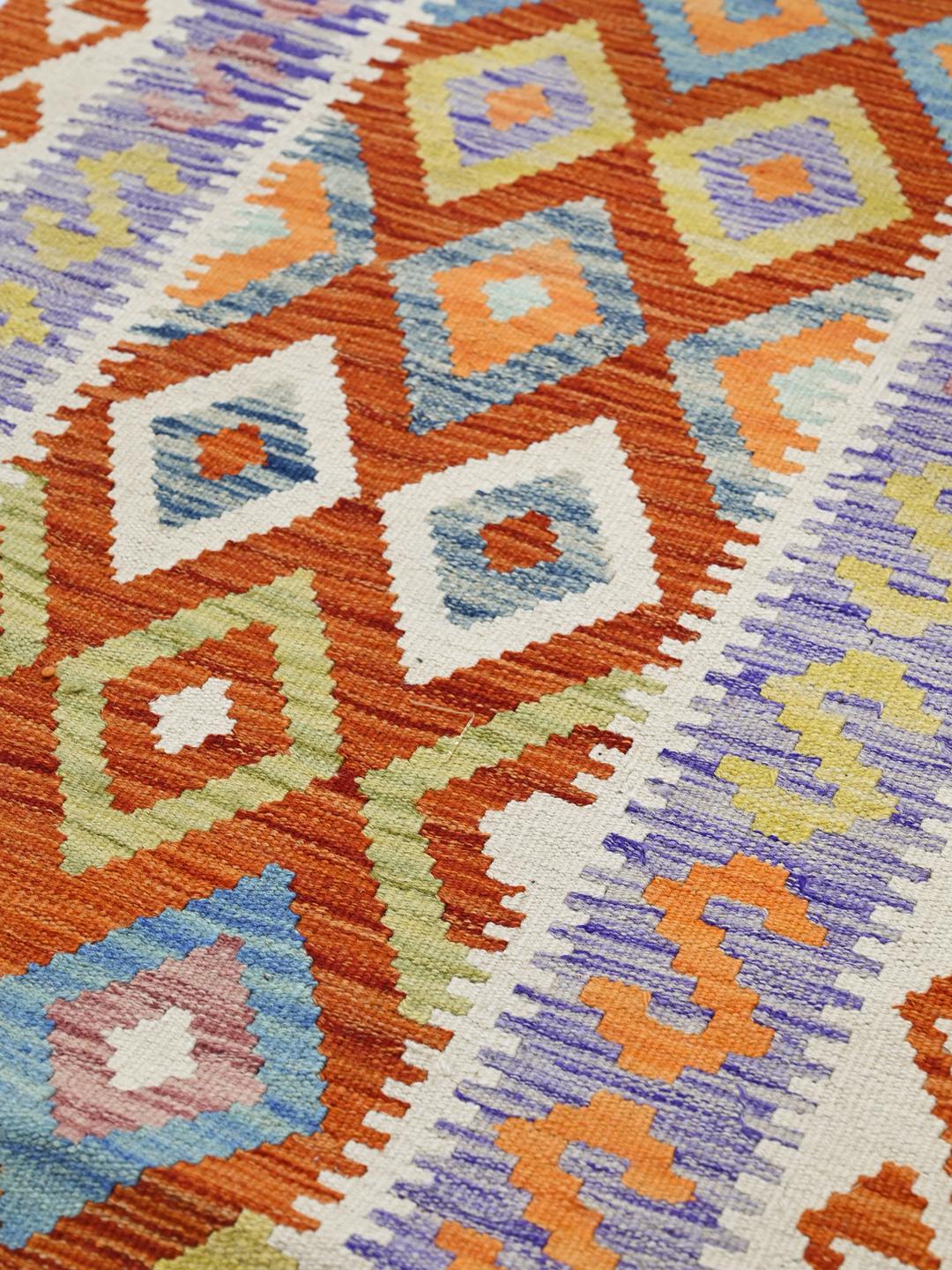
Design-wise, these rugs are defined by their bold geometric language. The recurring diamond motifs found here are classic elements of the tradition, often representing protection, fertility, or the natural landscape. The borders are similarly structured, acting as a frame for the central field. The use of vibrant, natural-looking colours is a hallmark of the Afghan style, often achieved through traditional dyeing methods that result in rich, complex shades that age gracefully.
Collecting a Kelim from this region is a way to honour a heritage of skilled artistry that has survived for centuries. These rugs are valued not just for their utility, but for the human story embedded in every row of weaving. By bringing one into your home, you are preserving a craft tradition that prioritises longevity and individual expression, ensuring that the rug remains a meaningful part of your home for many years to come.