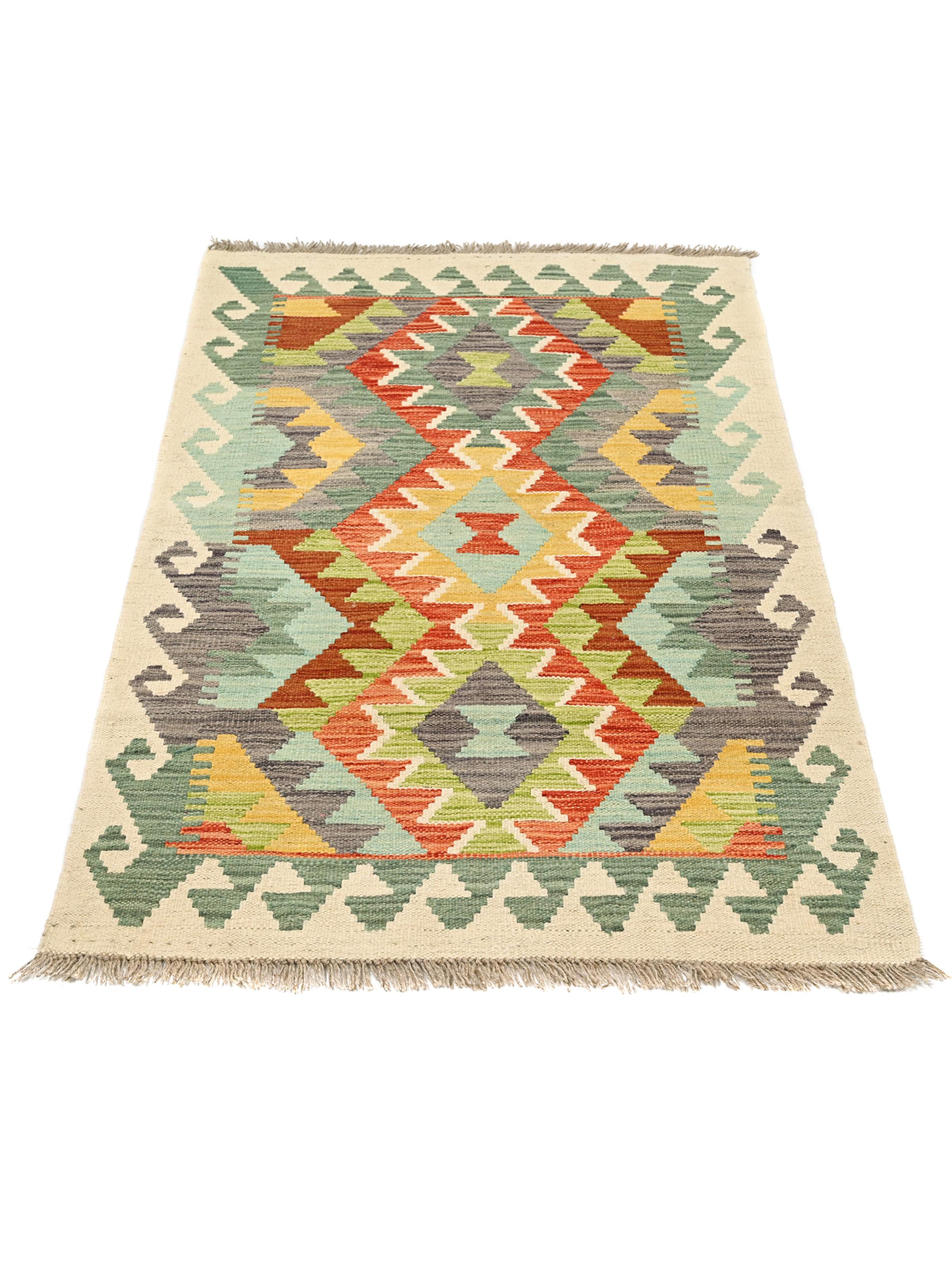
Kelim rugs from Afghanistan have a long and storied history, rooted in the nomadic and semi-nomadic traditions of the region. Originally woven for practical use in tents and homes, these flatweaves served as protective covers, bags, and blankets, developed to withstand the demands of travel.
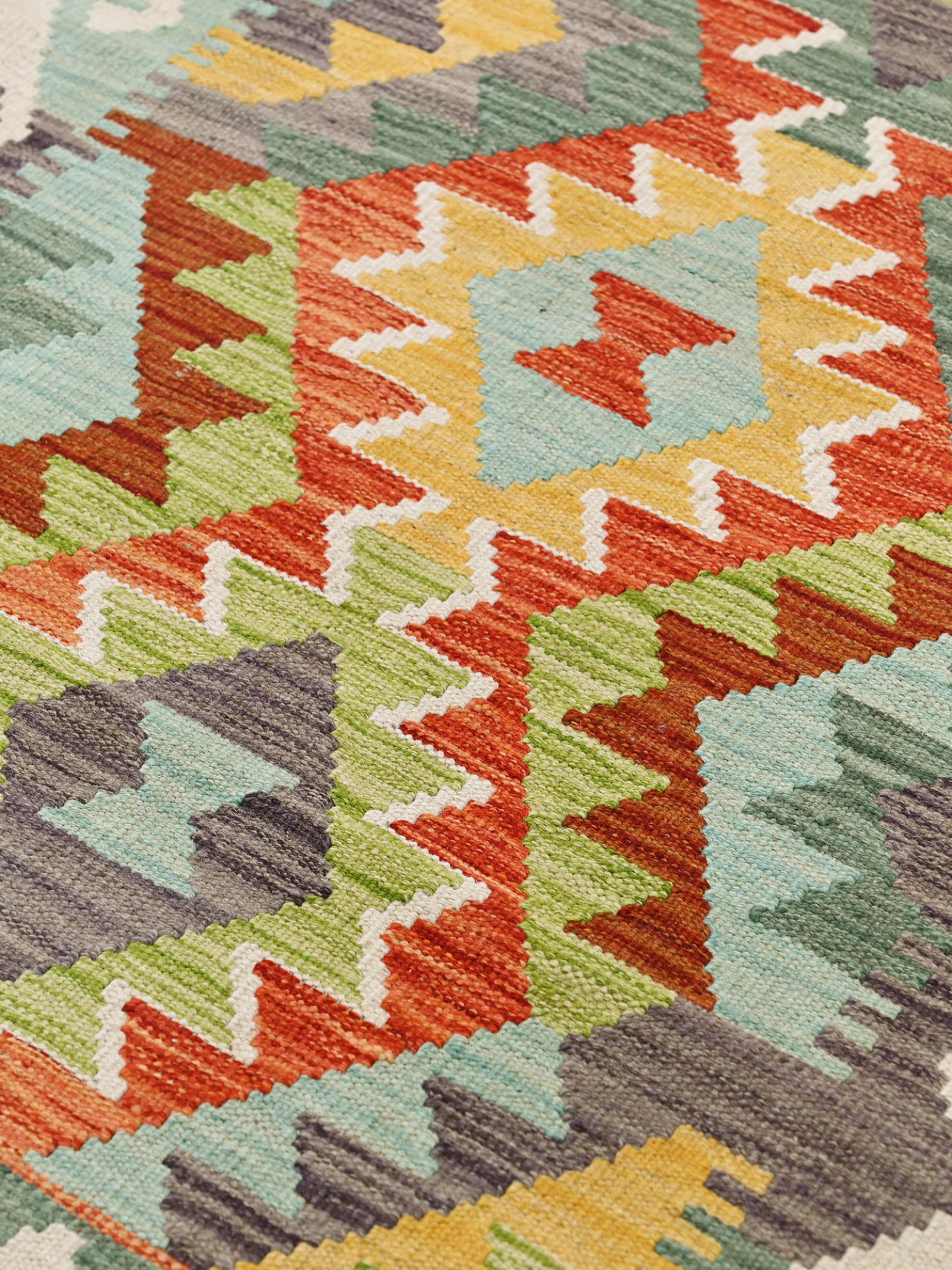
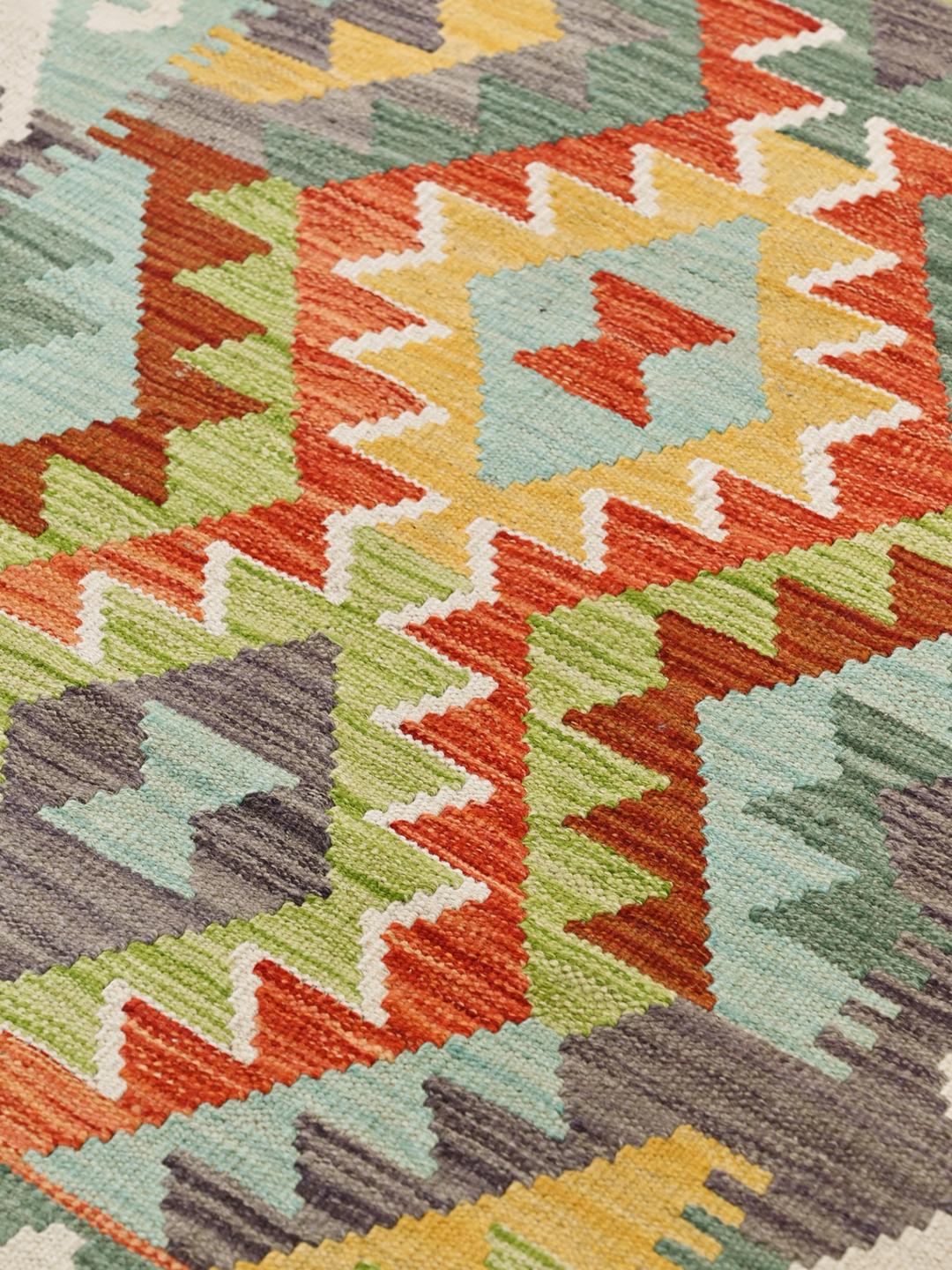
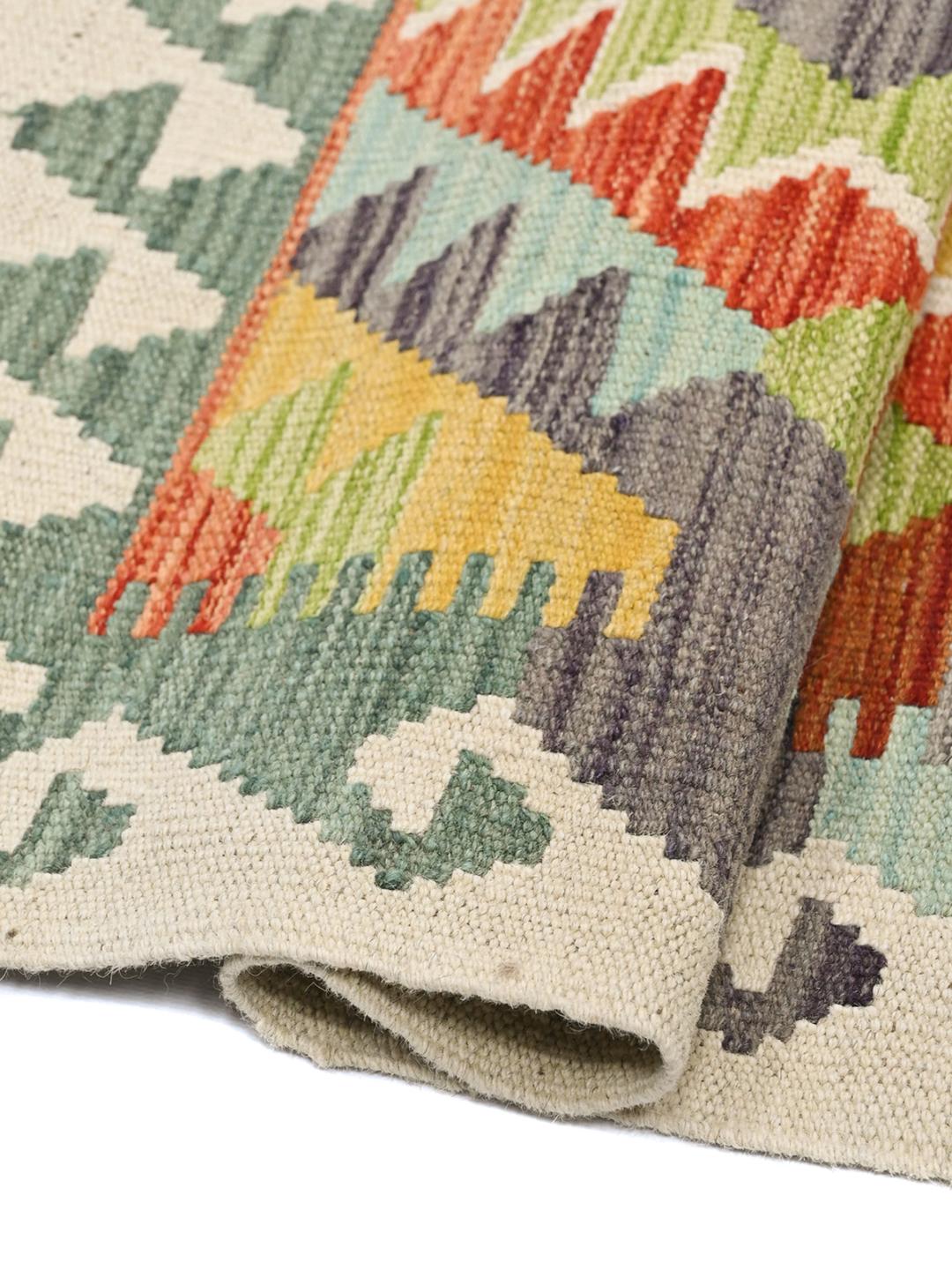
The term Kelim refers to a flatwoven textile created by tightly interweaving the warp and weft strands. This technique produces a pileless surface with a distinct ribbed texture, making the rug lighter, highly durable, and reversible, which has contributed to its enduring popularity over centuries.
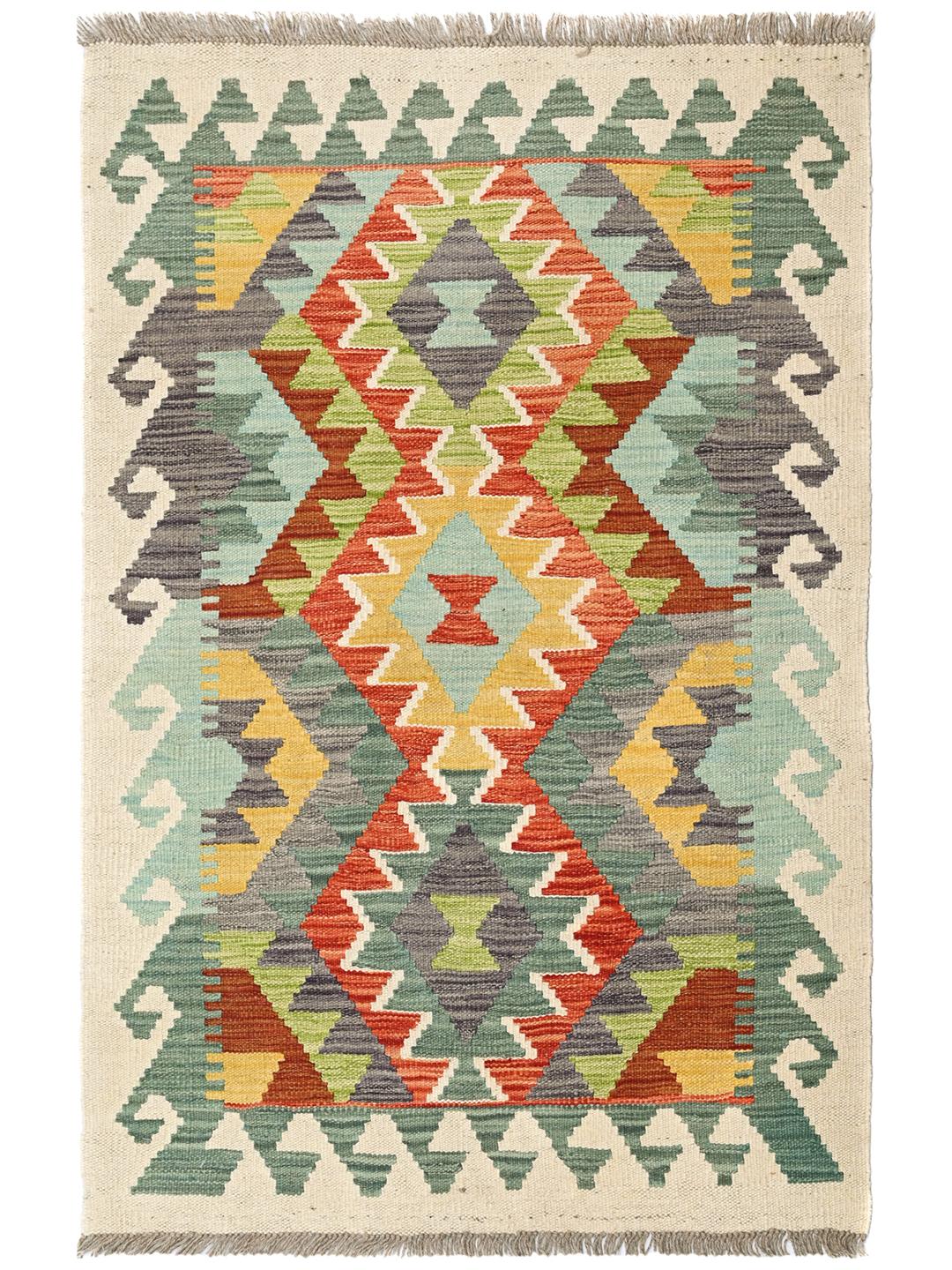
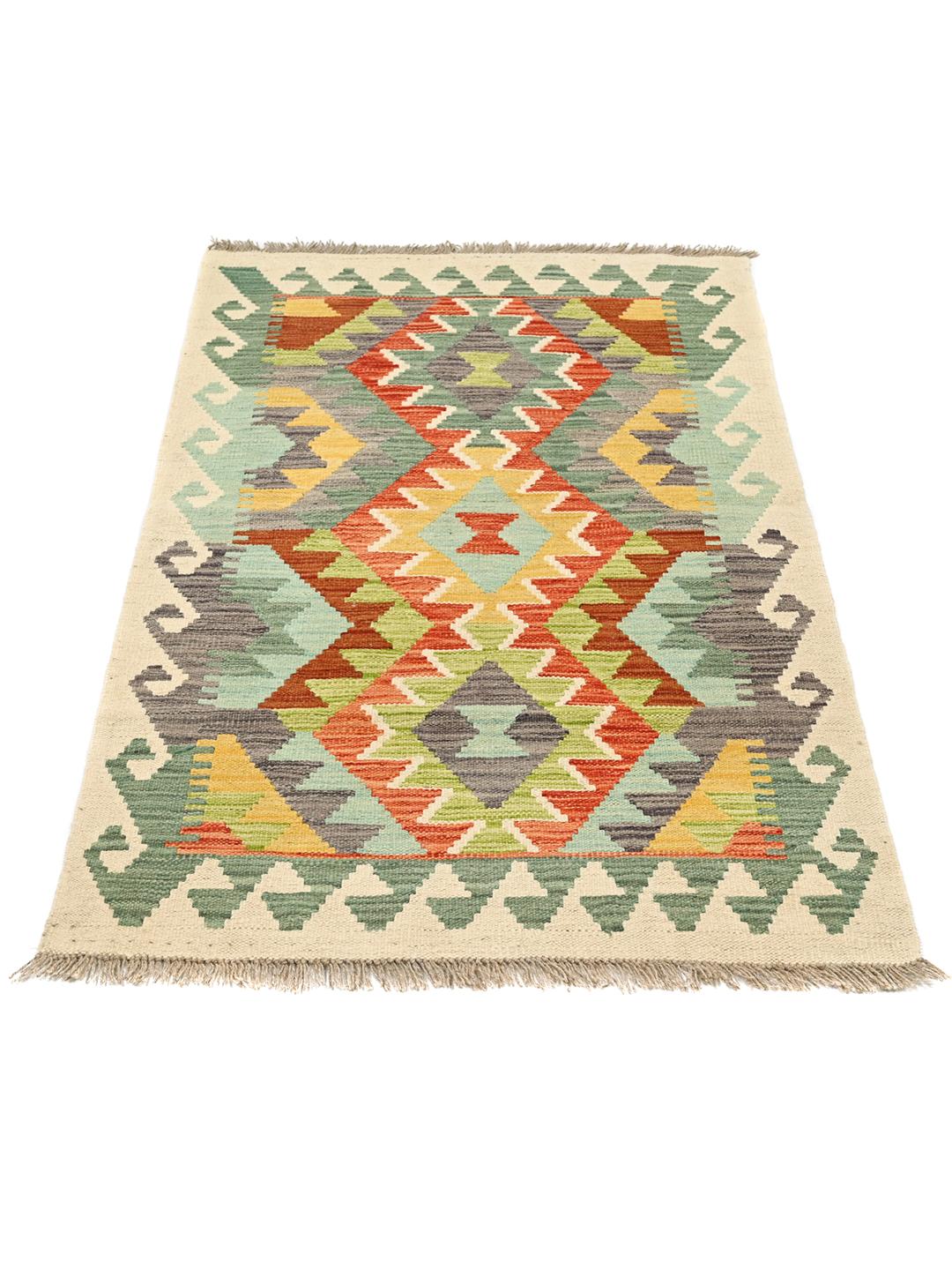
The visual language of this rug is characterized by geometric motifs, particularly diamonds and stepped borders, which are deeply embedded in Afghan tribal culture. These patterns often carry symbolic meanings, representing protection, family, and the natural landscape of the weavers.
Today, these contemporary Afghan Kelims are highly valued for their ability to bridge traditional craftsmanship with modern interiors. Owning one means preserving a piece of living history, supporting a craft heritage that has been passed down through generations of skilled weavers.