The Kelim rugs of Afghanistan are celebrated for their rich, earthy roots and the enduring legacy of nomadic weaving traditions. These rugs have evolved over centuries, drawing inspiration from the diverse cultures that have traversed the region, including the ancient Silk Road. Today, they represent a vital part of Afghan craft heritage, where the art of flat-weaving is passed down through generations.
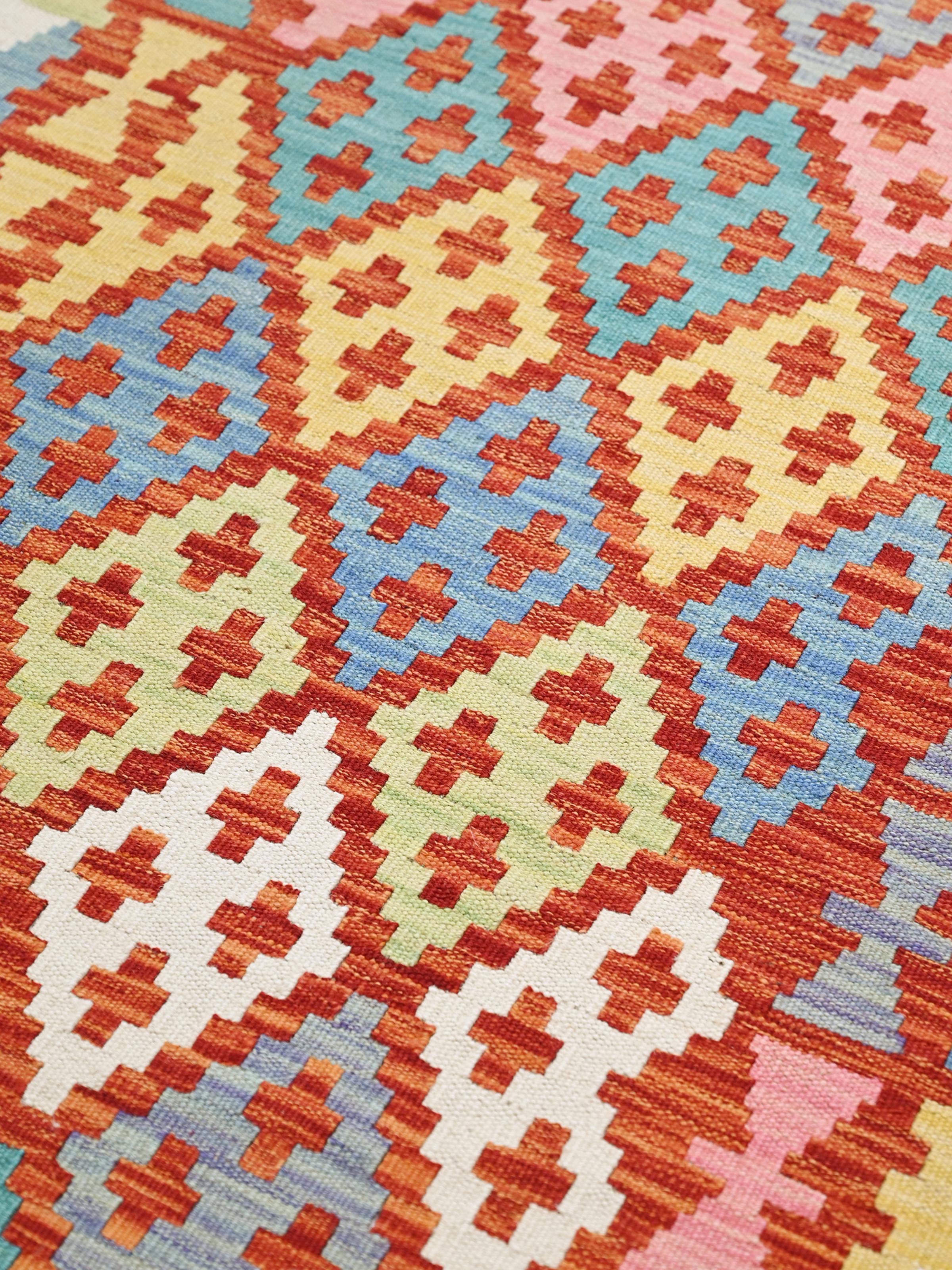
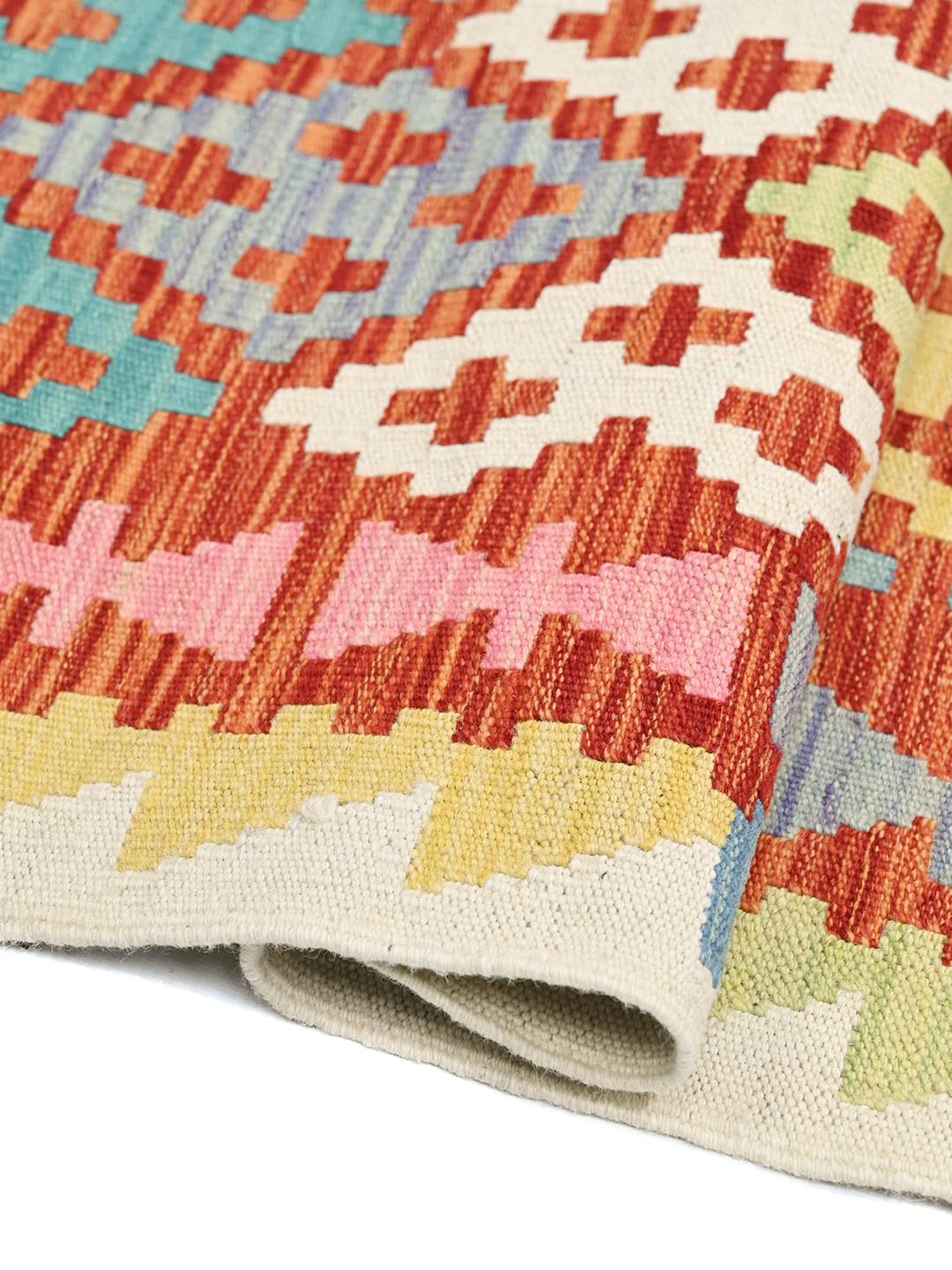
The term 'Kelim' refers to a specific flat-weaving technique where there is no pile. Instead, the design is created by interweaving the coloured weft threads with the warp threads. This method produces a thin, durable, and reversible rug that is lightweight yet incredibly strong. The quality of a Kelim is determined by the tightness of this weave, which allows for intricate patterns and a smooth surface that is resistant to shedding.
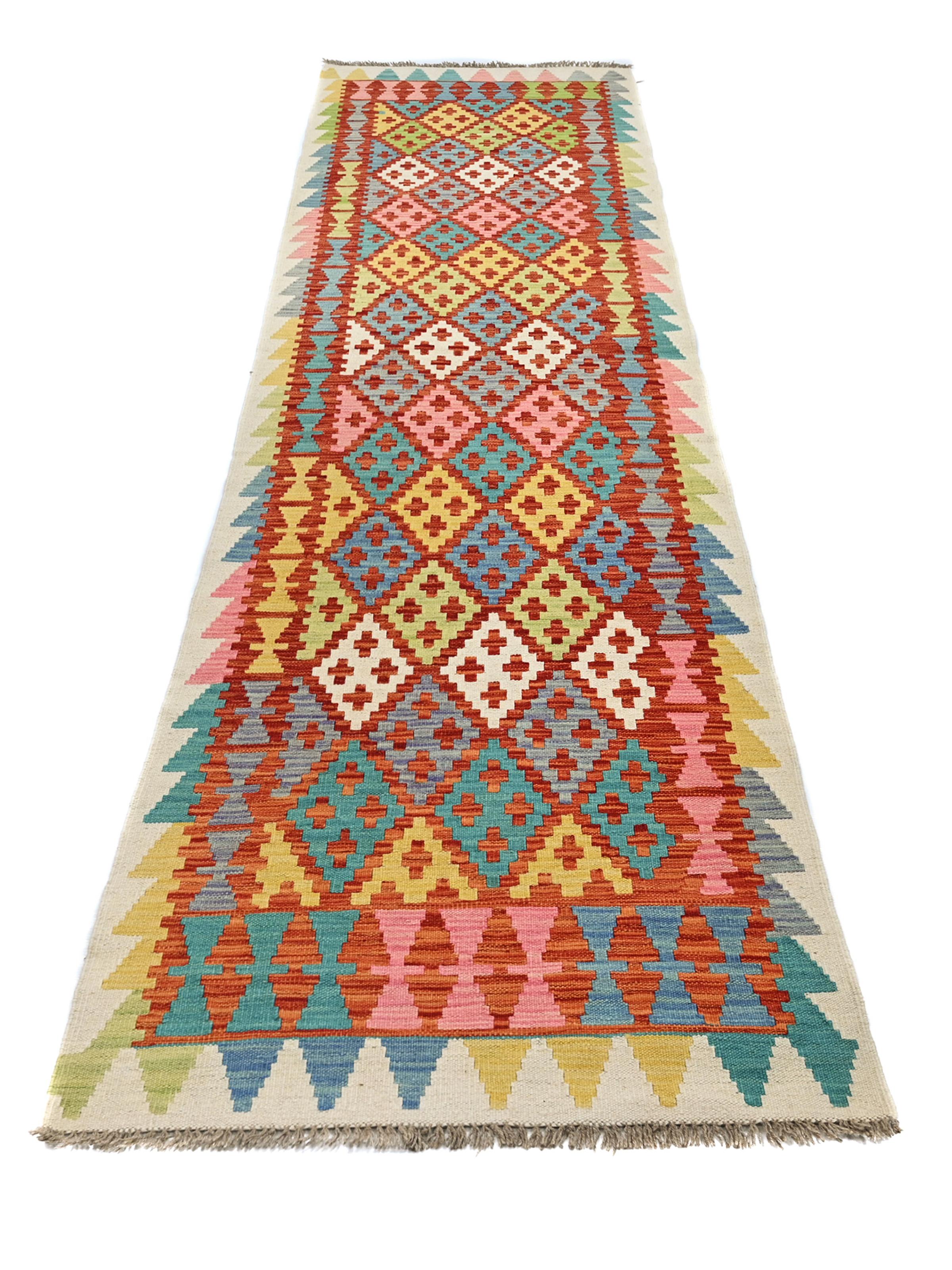
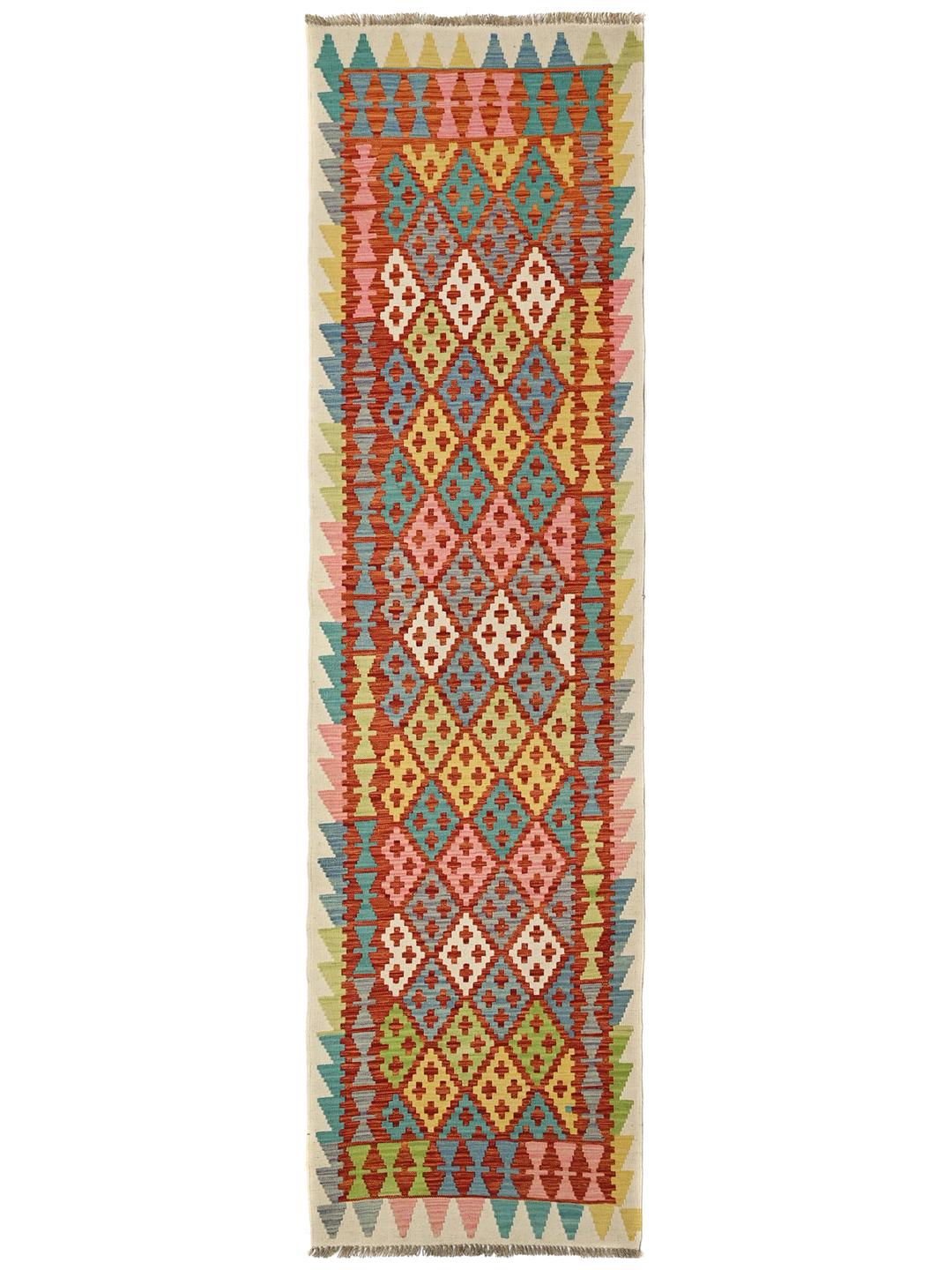
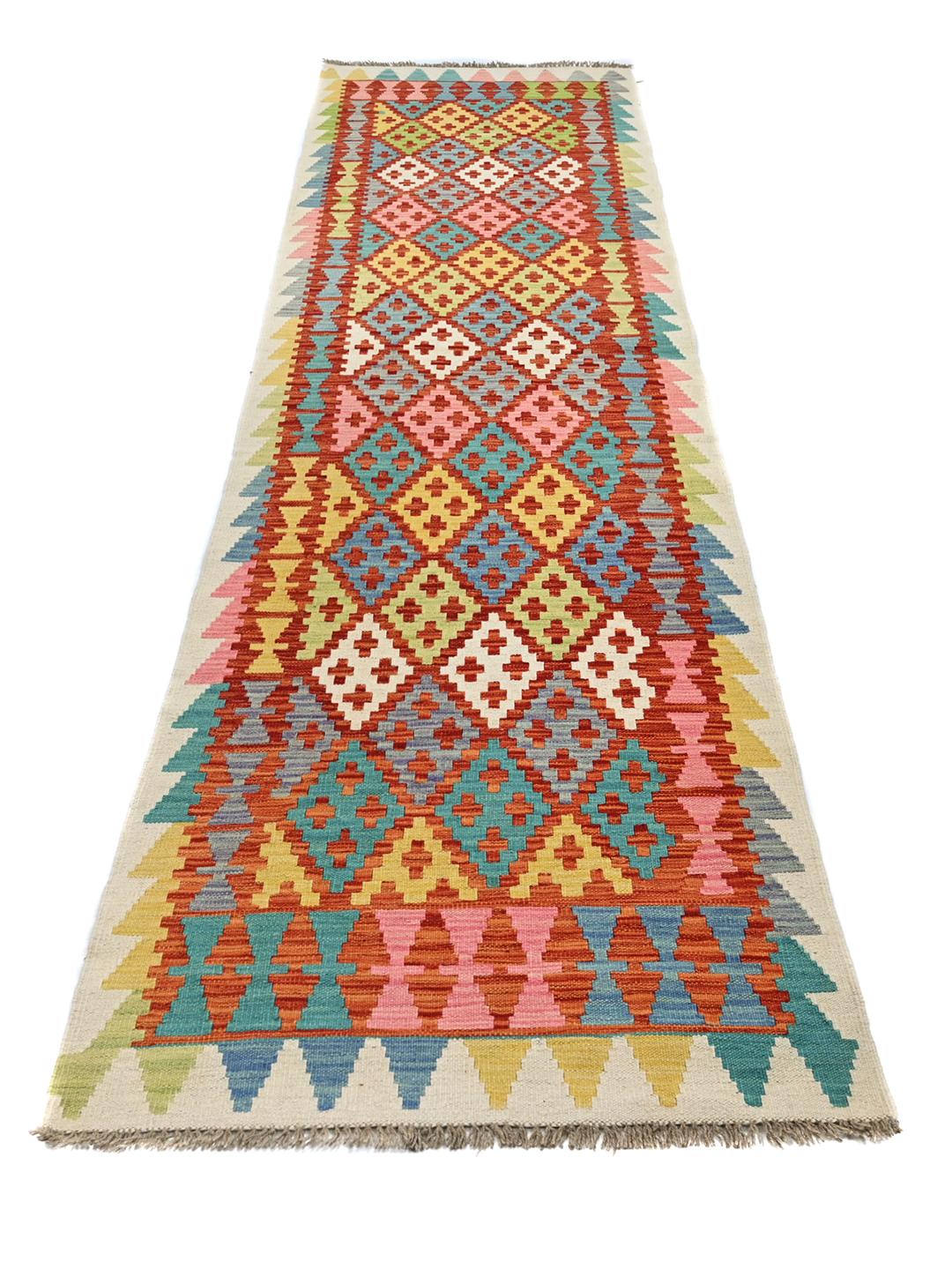
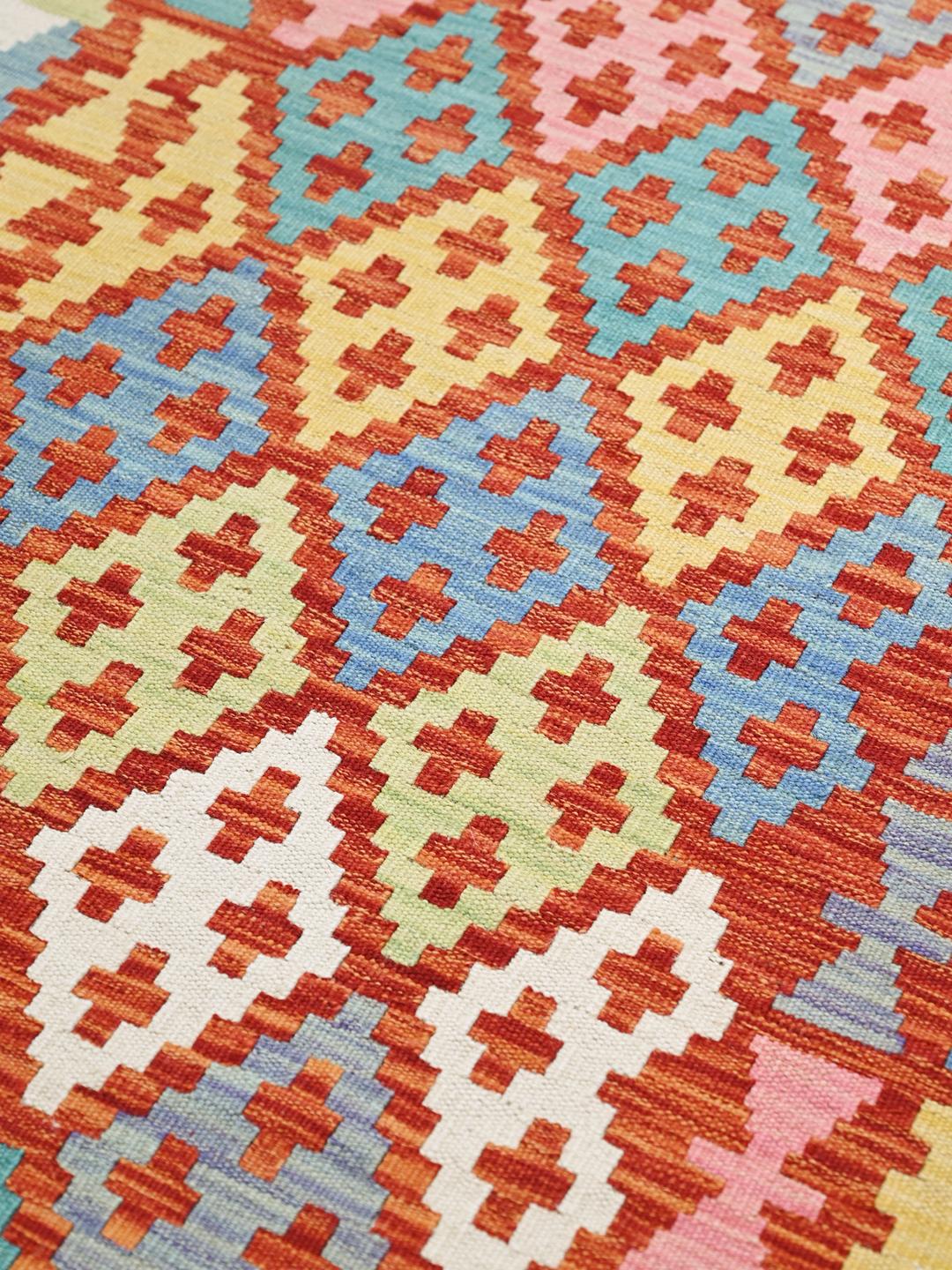
Visually, these rugs are defined by their bold geometric motifs, often featuring diamonds, triangles, and intricate borders. The colours are traditionally derived from natural dyes, reflecting the landscape and cultural vibrancy of the Middle East. This specific piece features a particularly dynamic use of colour, where traditional shapes are brought to life through a balanced, multi-hued palette that creates a sense of movement across the runner.
Collectors value these rugs not only for their beauty but for the skill required to produce them without the aid of modern technology. Owning a Kelim from this tradition is an act of supporting a craft that values human touch over industrial efficiency. It serves as a reminder of the history embedded in every thread, providing your home with a piece that carries cultural weight and lasting aesthetic value.