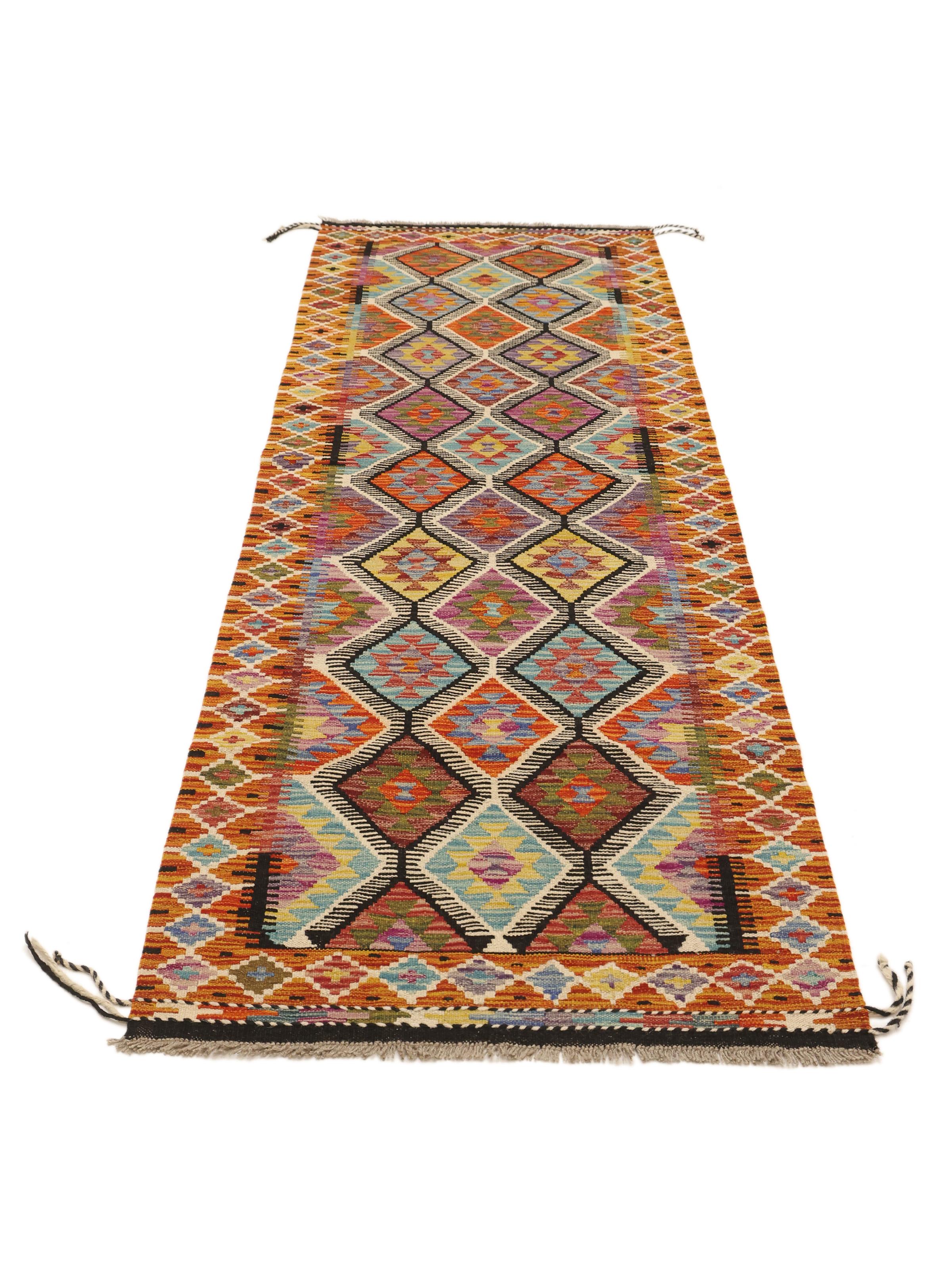
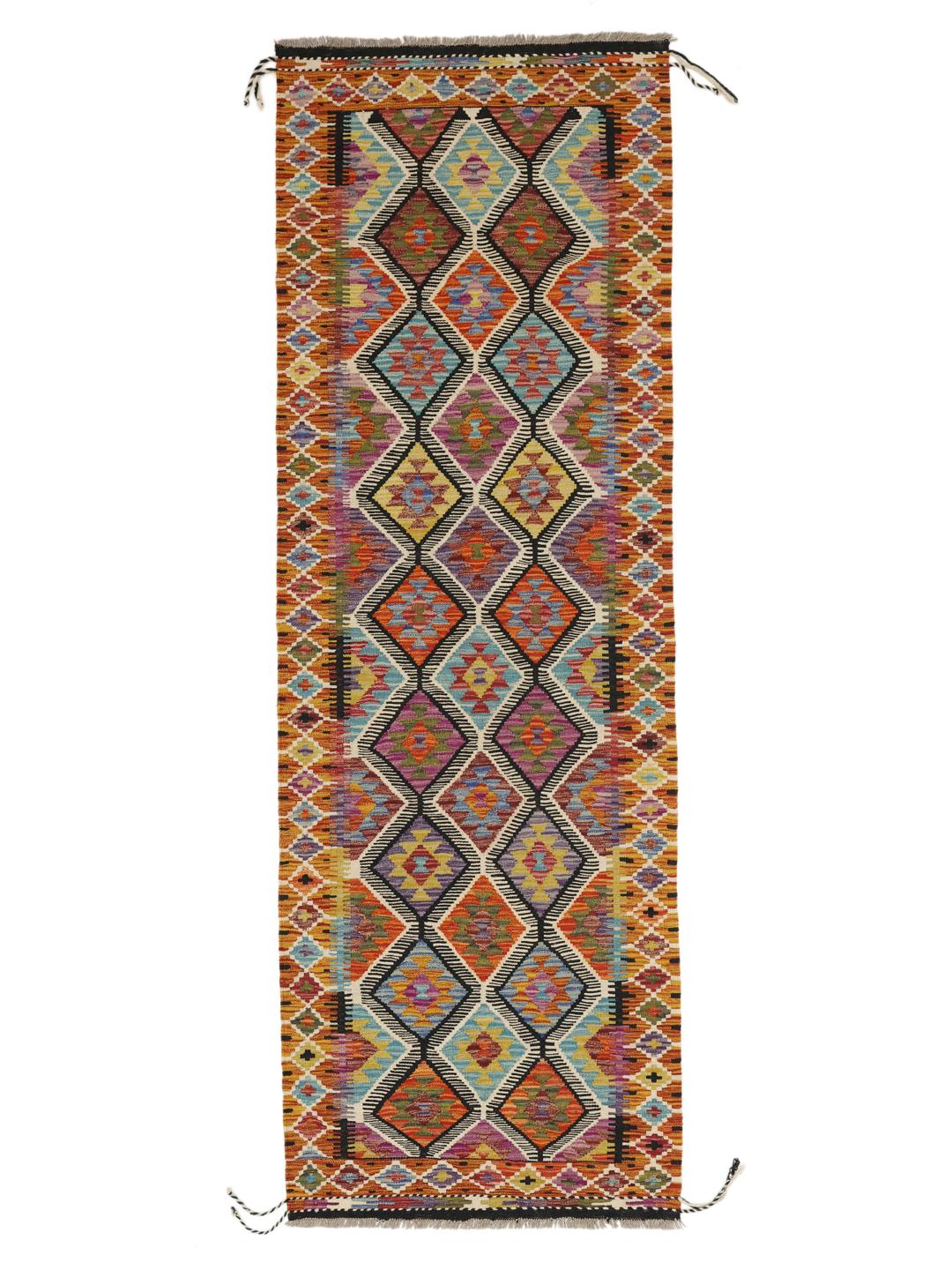
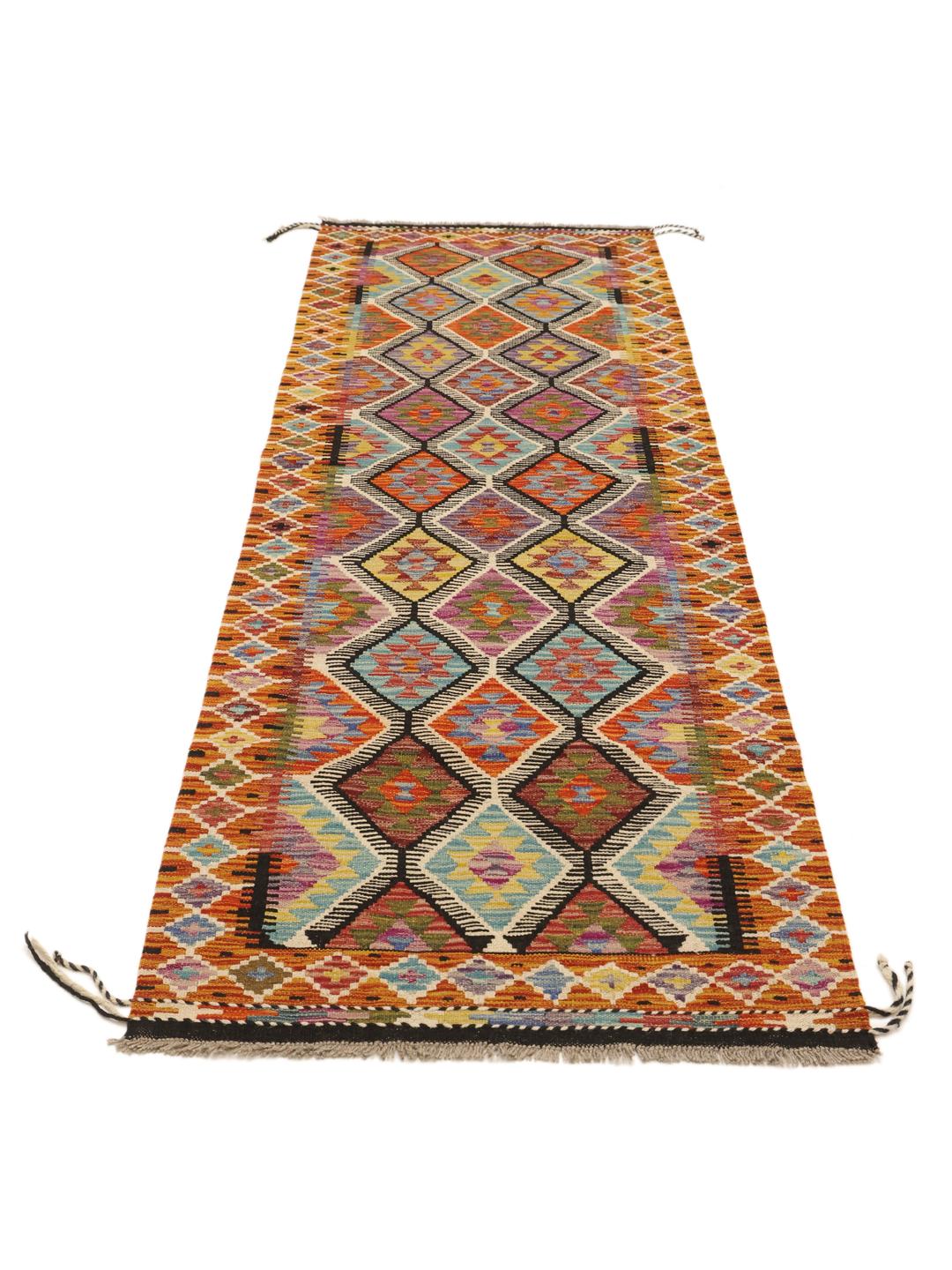
The tradition of kilim weaving in Afghanistan is deeply rooted in the nomadic history of the Middle East. For centuries, these flat-woven rugs have been created by tribal artisans as functional items for tents and homes, serving as floor coverings, blankets, and storage bags. The knowledge of these patterns and weaving techniques has been passed down through generations, preserving a rich cultural heritage.
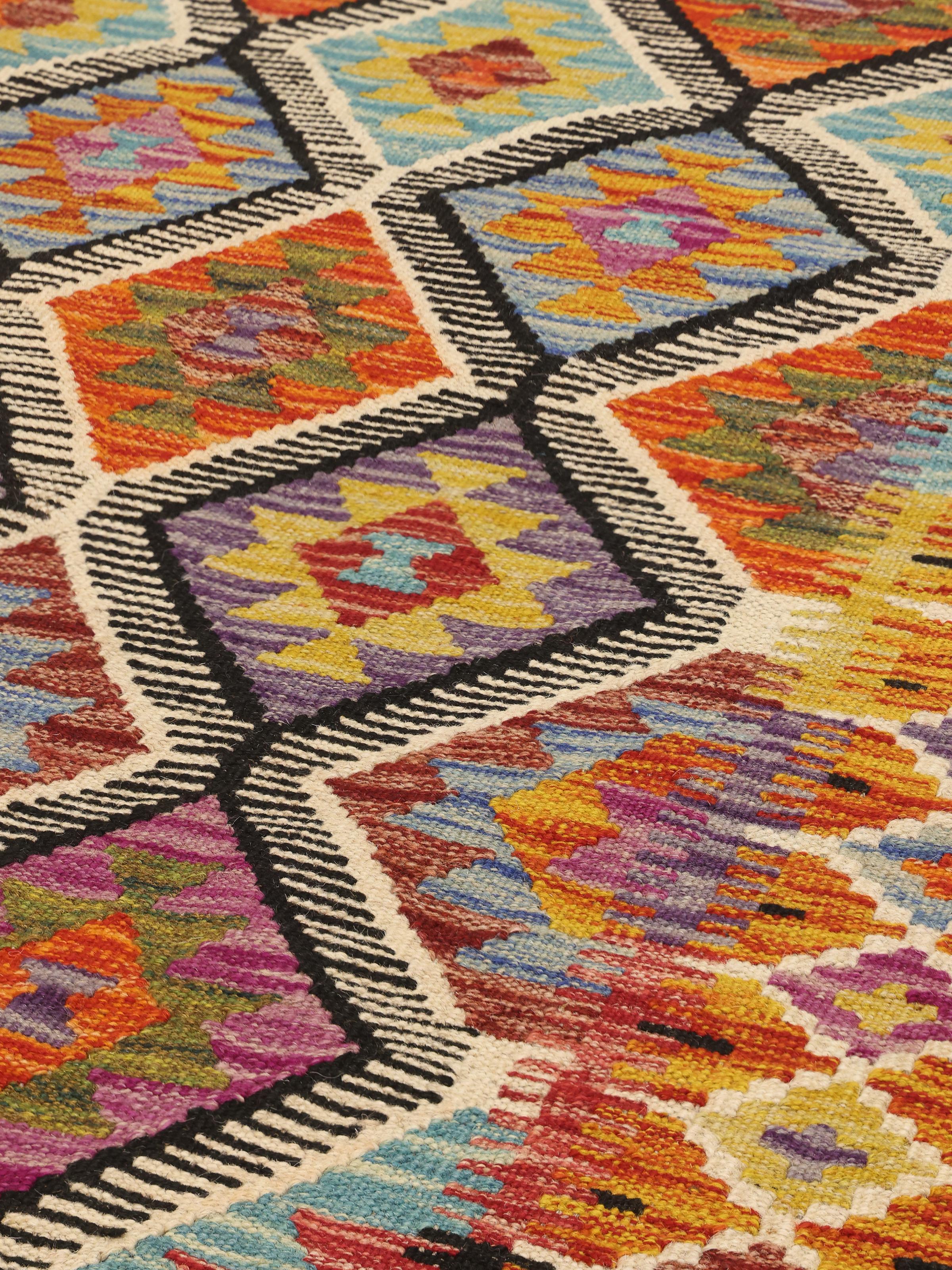
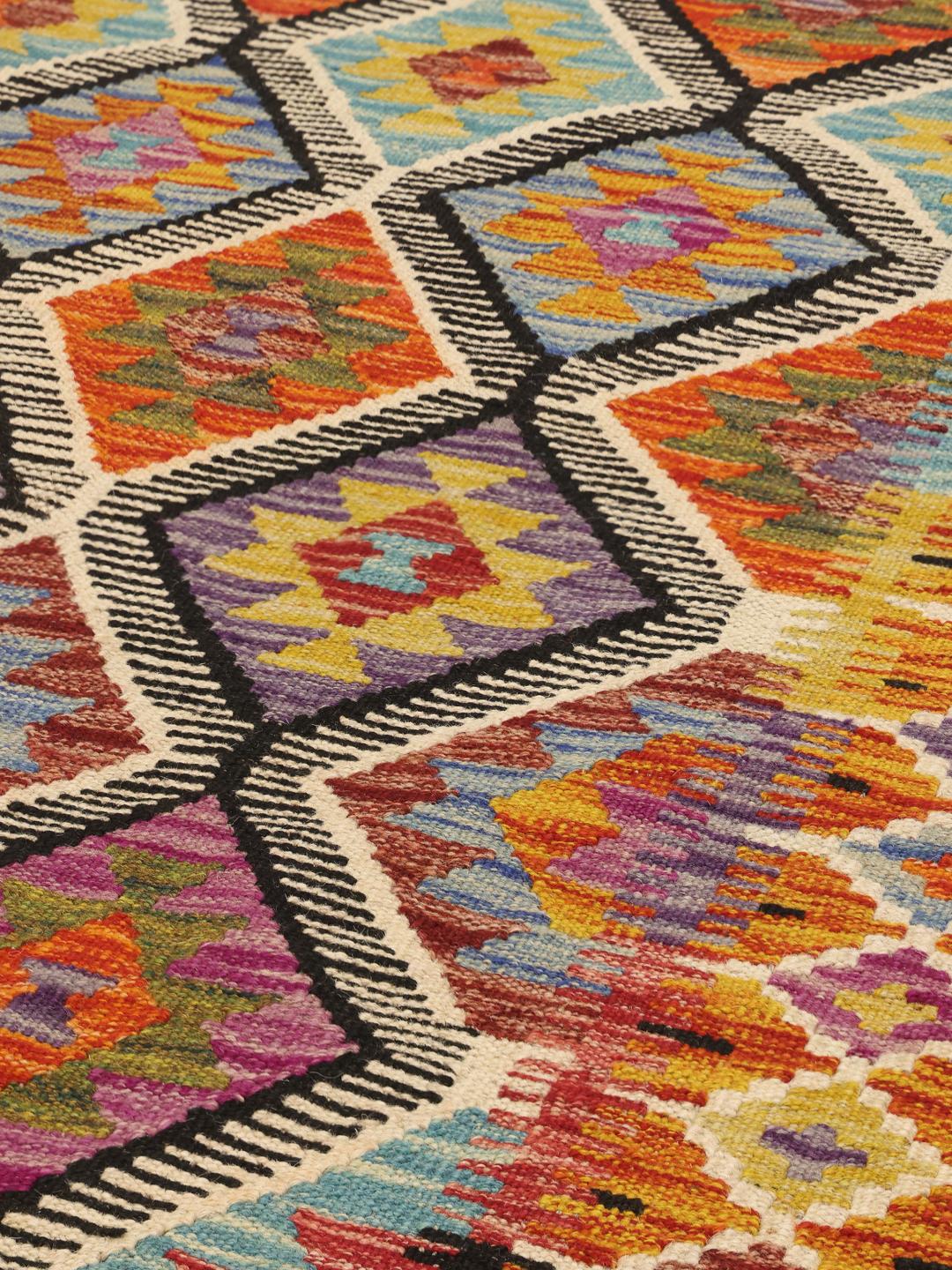
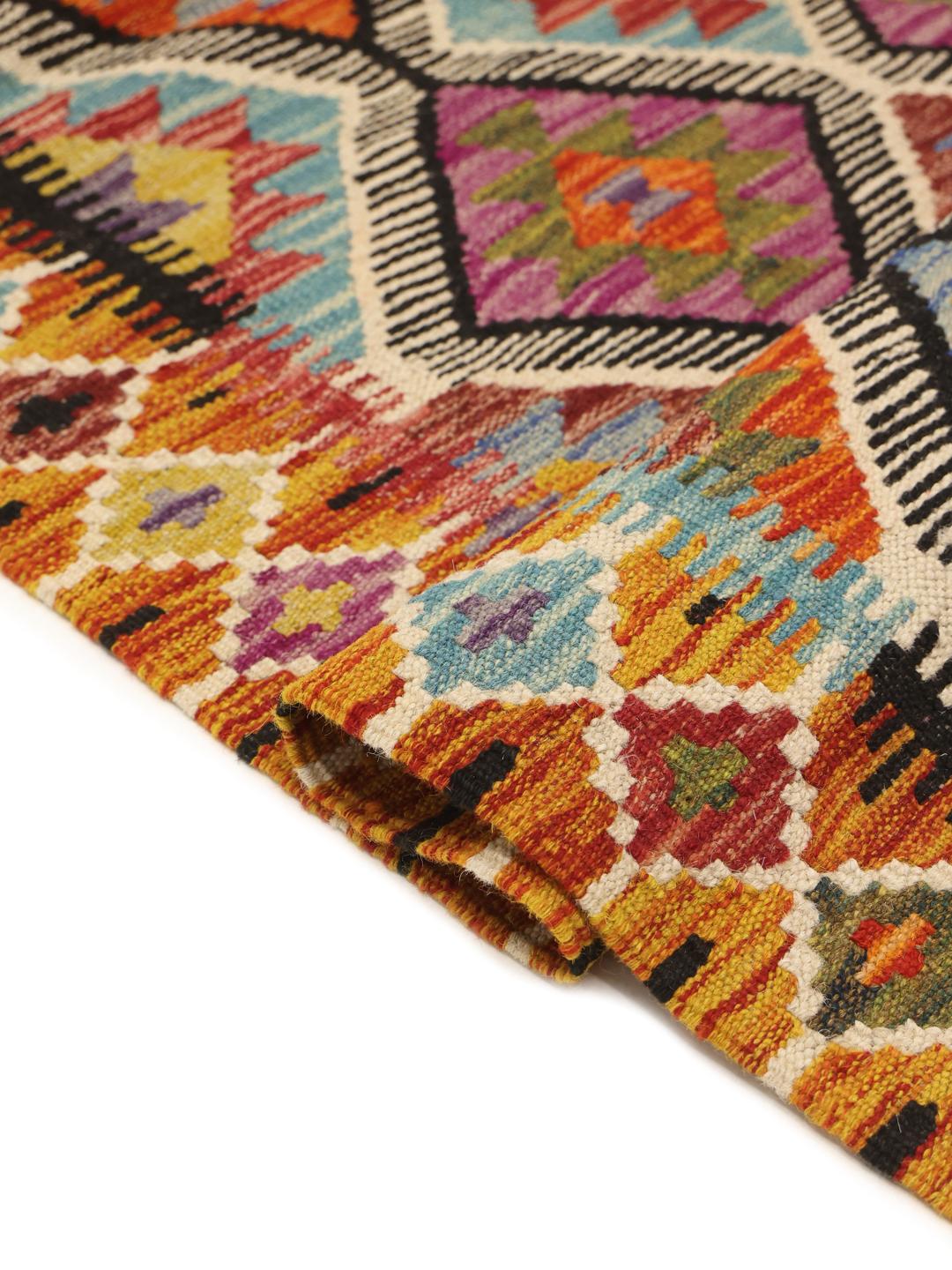
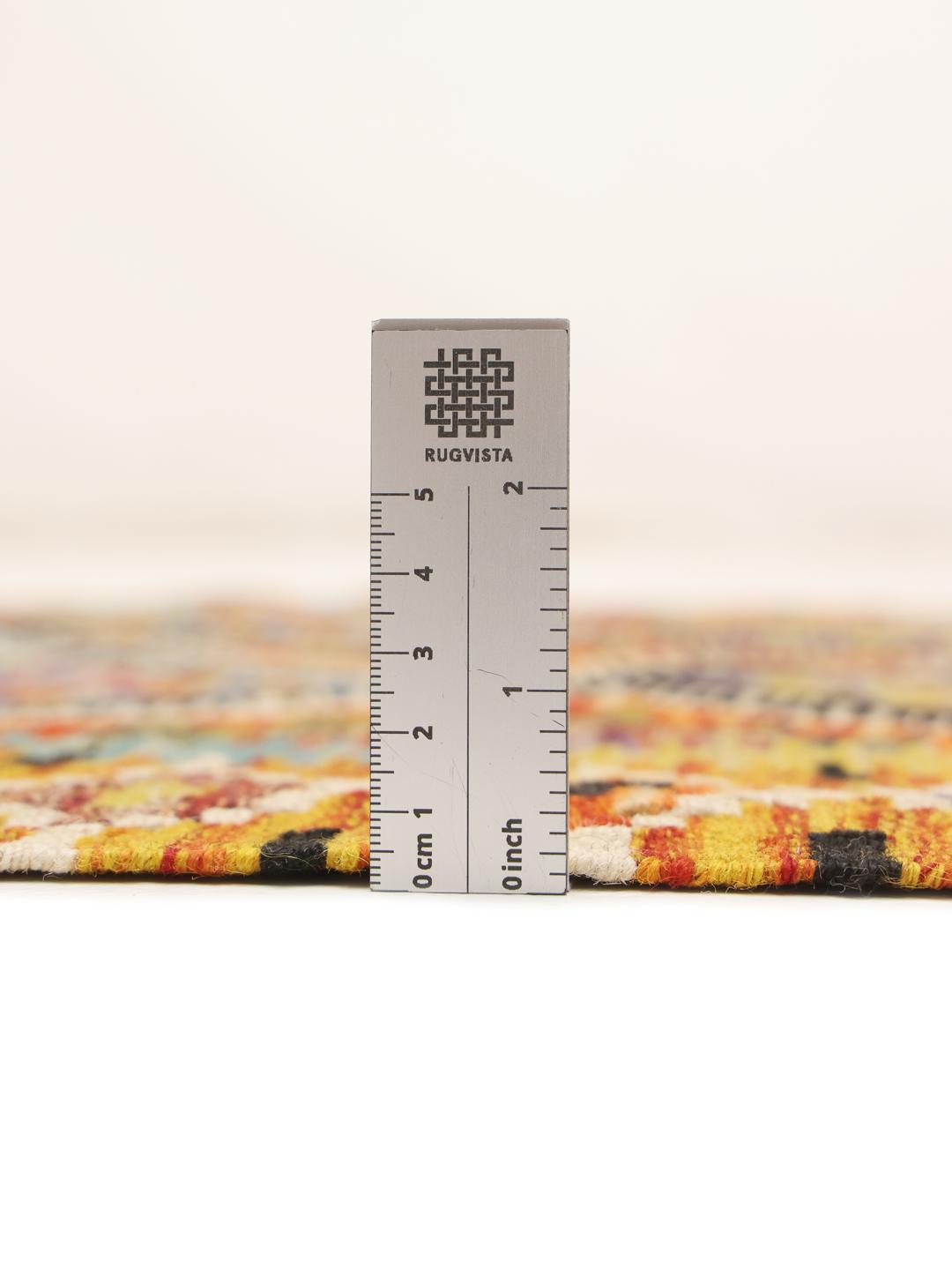
A kilim is defined by its flat-weave construction, where the horizontal weft threads are pulled tightly over the vertical warp threads to create a durable, pileless surface. This technique allows for the creation of intricate, sharp-edged patterns that are distinct from knotted rugs. The absence of pile makes these rugs lightweight and versatile, yet remarkably robust.
Signature design elements of the Afghan kilim often include bold, geometric motifs such as diamonds, triangles, and stylized floral forms. These patterns are typically arranged in repetitive sequences, framed by decorative borders that anchor the design. The use of vibrant, natural-toned dyes gives these rugs their characteristic warmth and depth, reflecting the landscapes and cultural symbols of the region.
Collectors value these pieces for their authenticity and the human story behind every thread. Owning a kilim is an investment in a living tradition, where every rug represents a unique blend of historical motifs and the individual expression of the weaver. These rugs are cherished for their ability to bring a sense of history and artisan skill into modern interiors.