The Kelim, or Kilim, tradition is deeply rooted in the nomadic and village cultures of the Middle East and Central Asia. These flat-woven rugs were historically essential for daily life, serving as floor coverings, wall hangings, and functional storage bags for travelling tribes. Over centuries, these textiles evolved from purely utilitarian items into highly regarded expressions of regional identity and artistic skill.
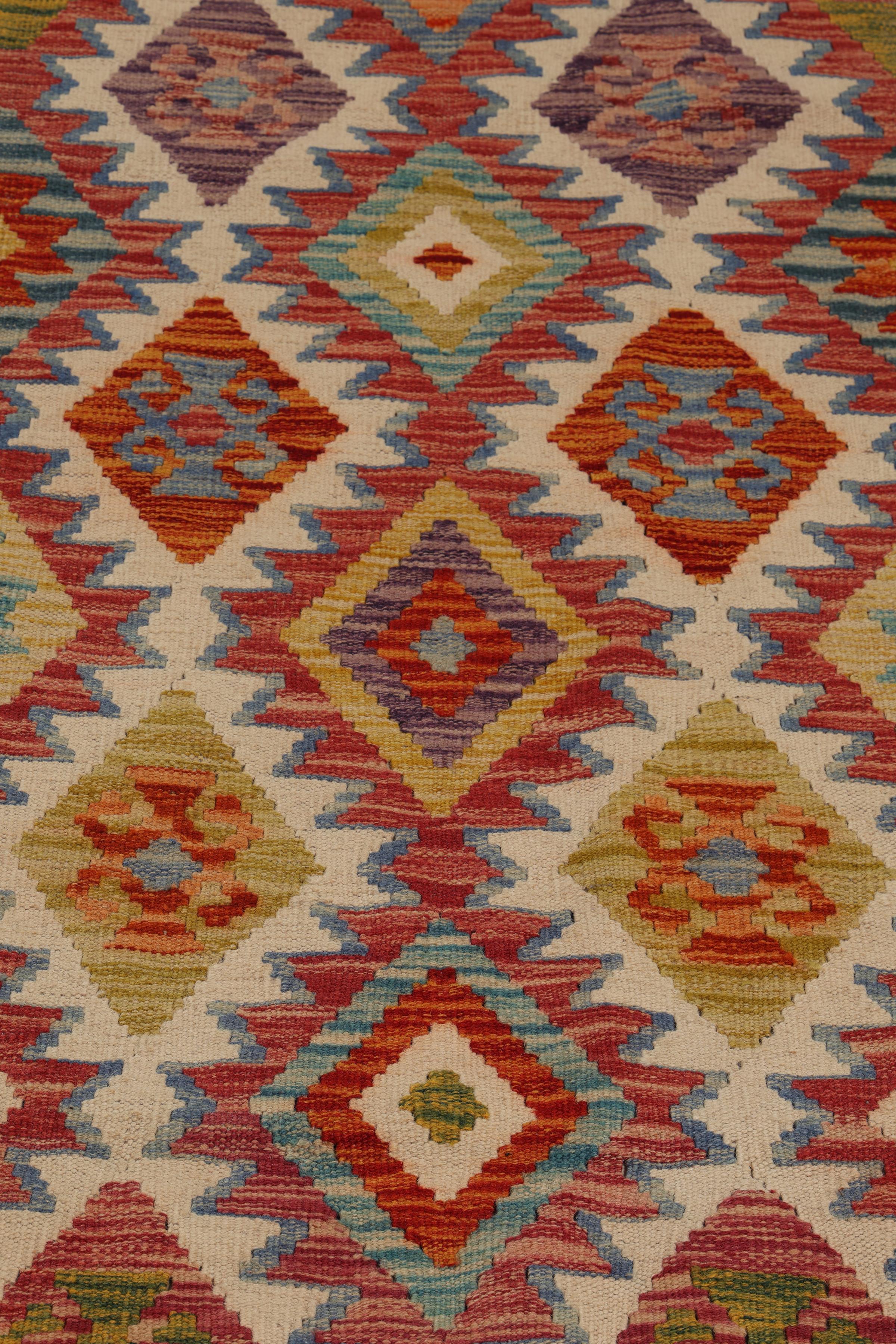
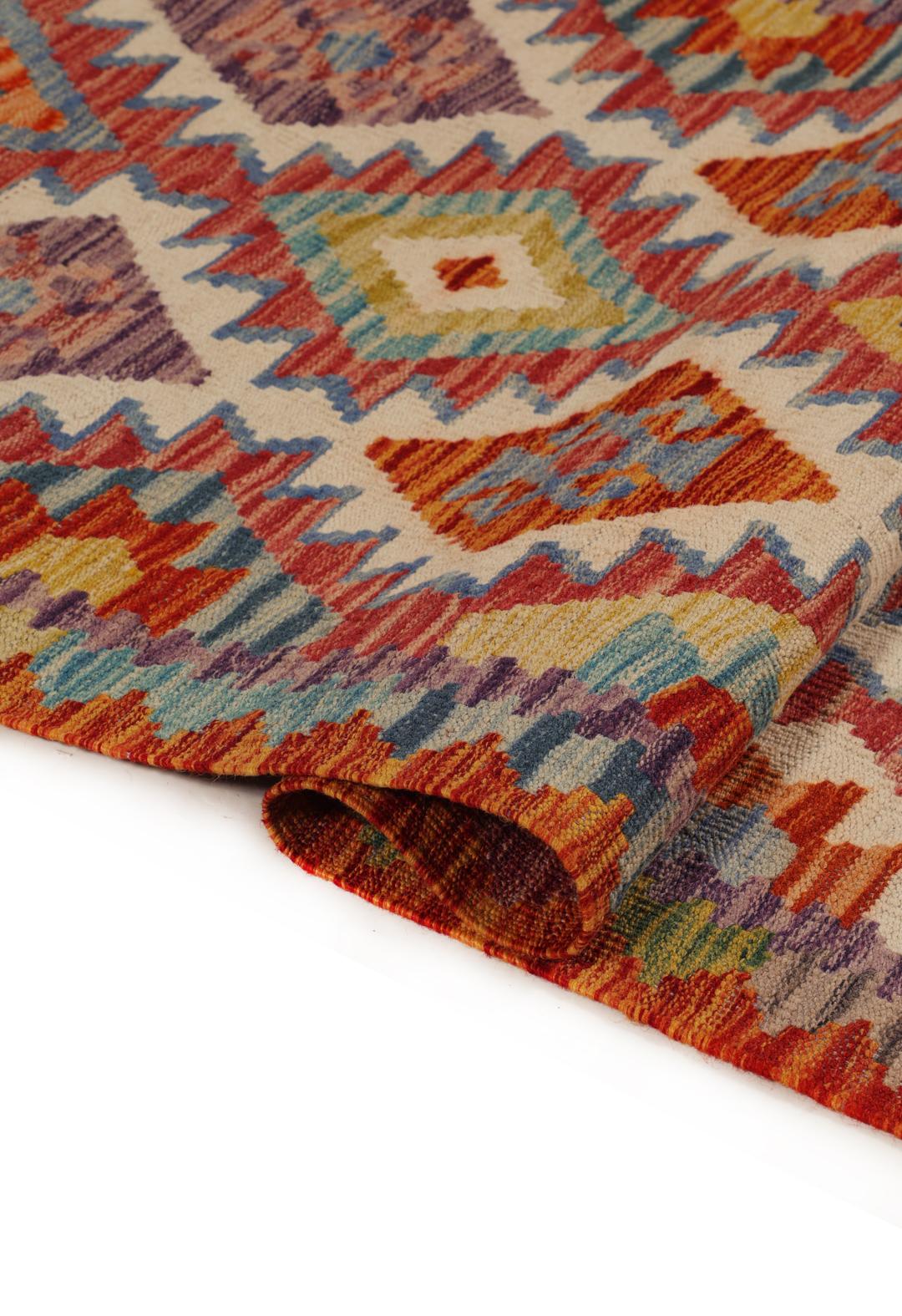
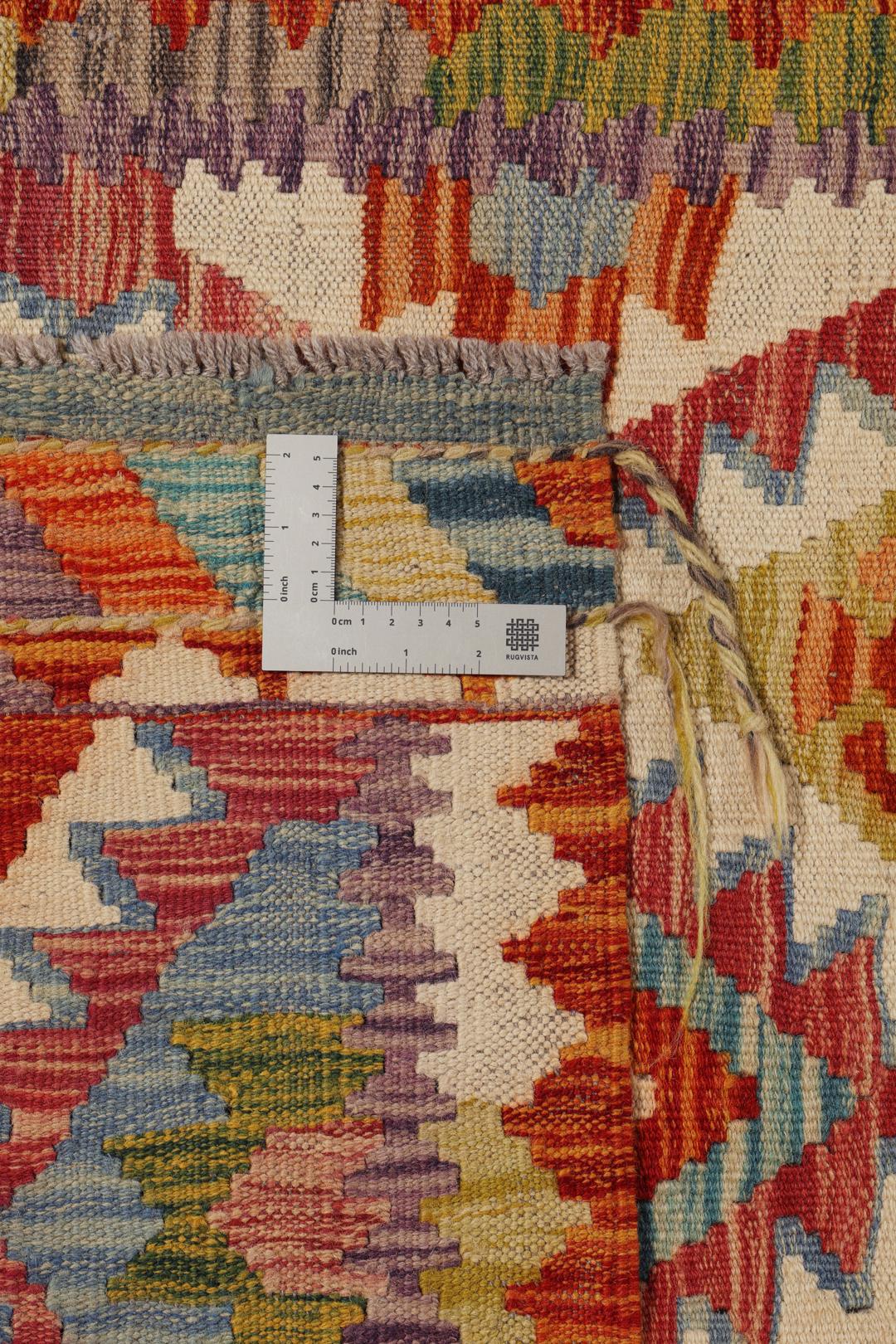
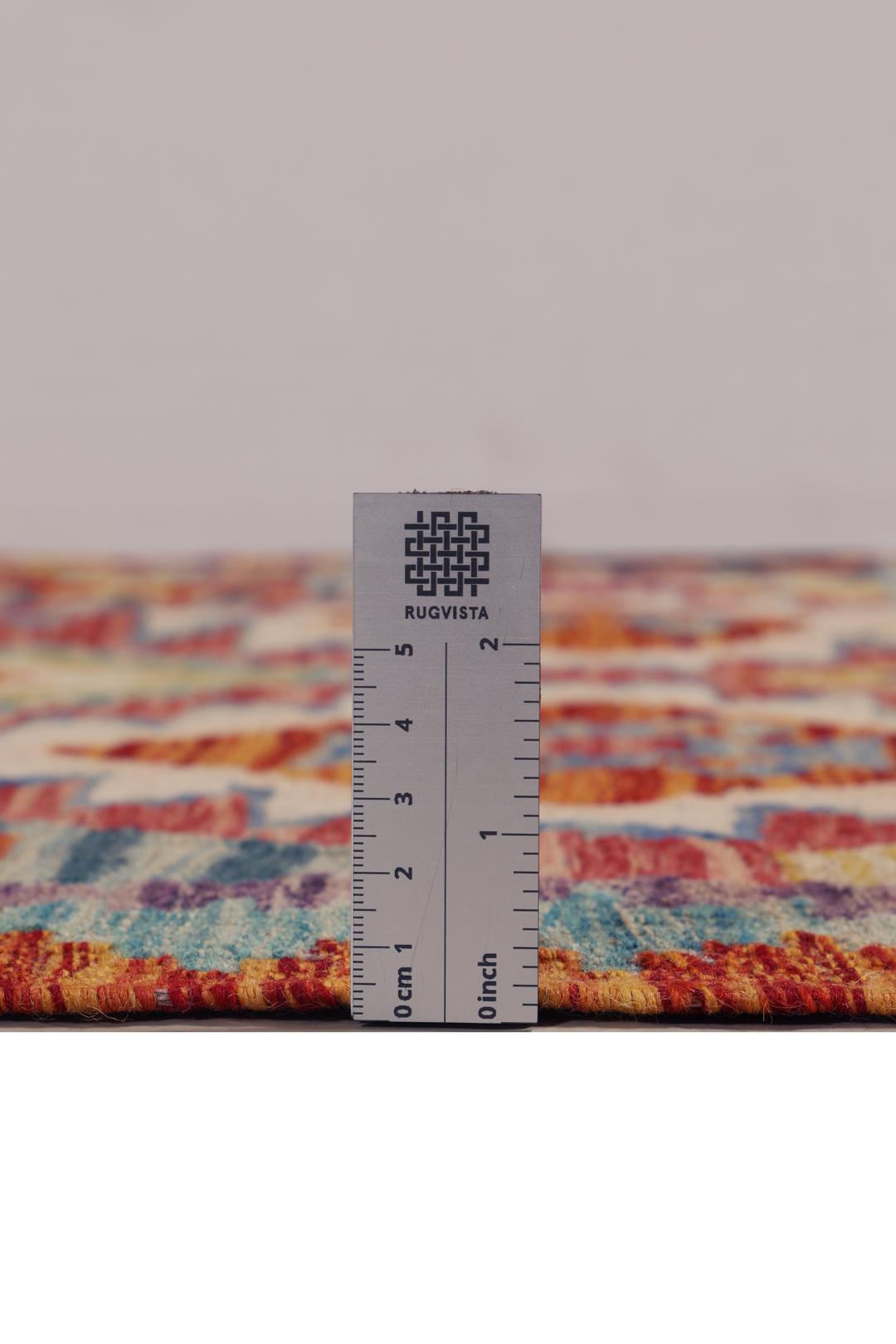
Technically, a Kelim is defined by its slit-weave construction. Unlike pile rugs where yarn is knotted onto a foundation, the design in a Kelim is created by interlocking the coloured weft threads with the warp. This process creates a thin, reversible rug that is lightweight yet remarkably sturdy. The absence of a deep pile allows for a sharp, graphic presentation of patterns that would be difficult to achieve through other methods.
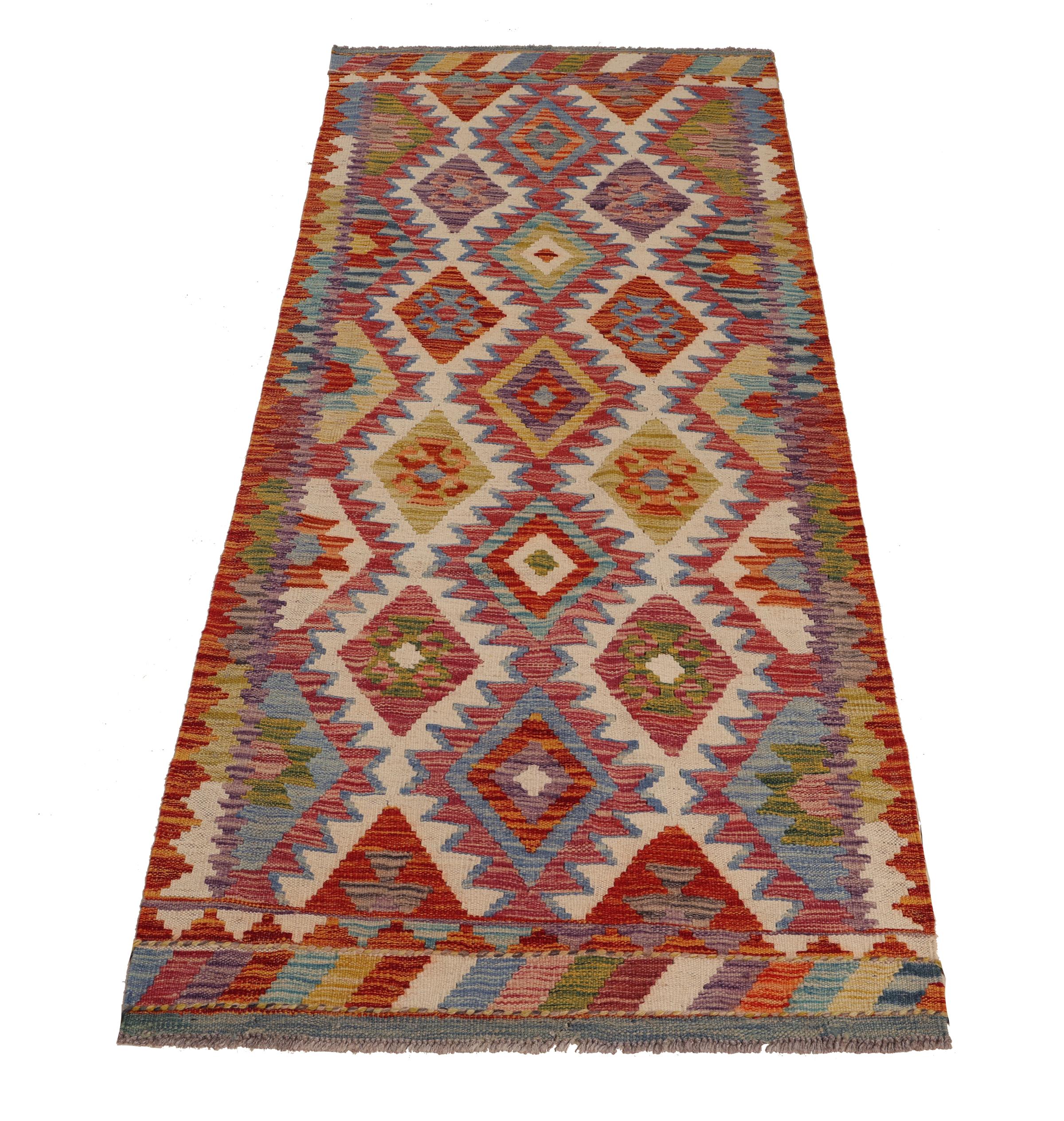
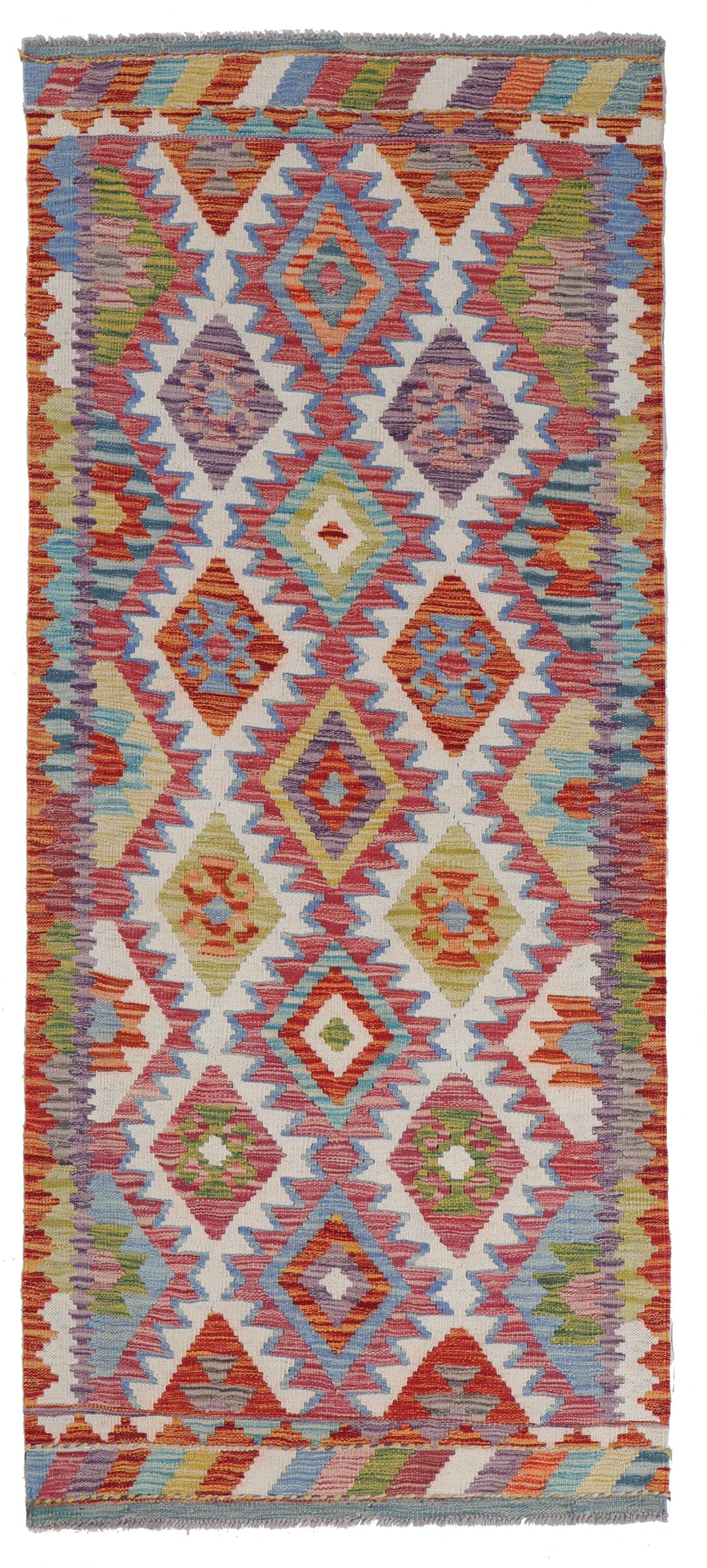
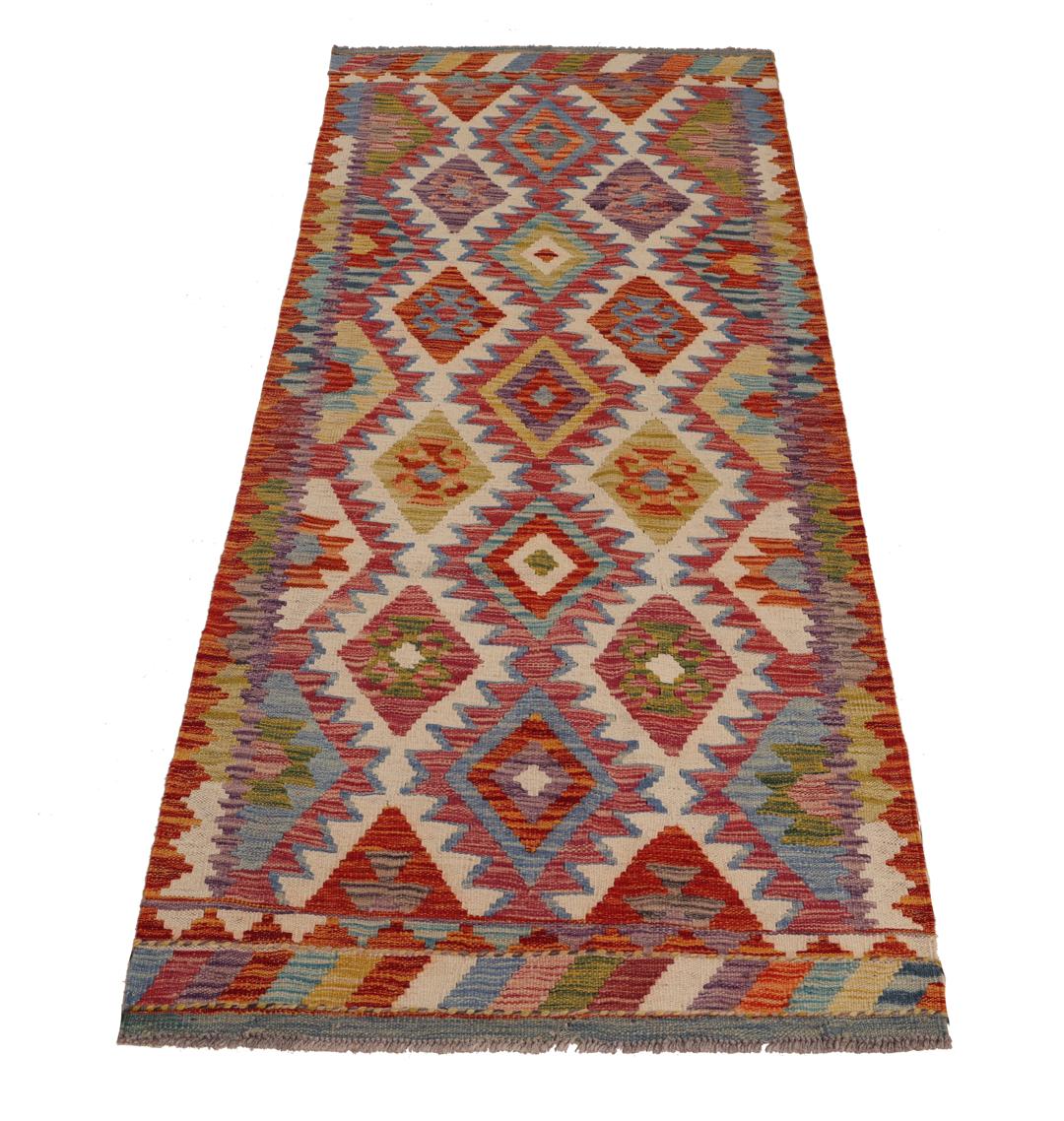
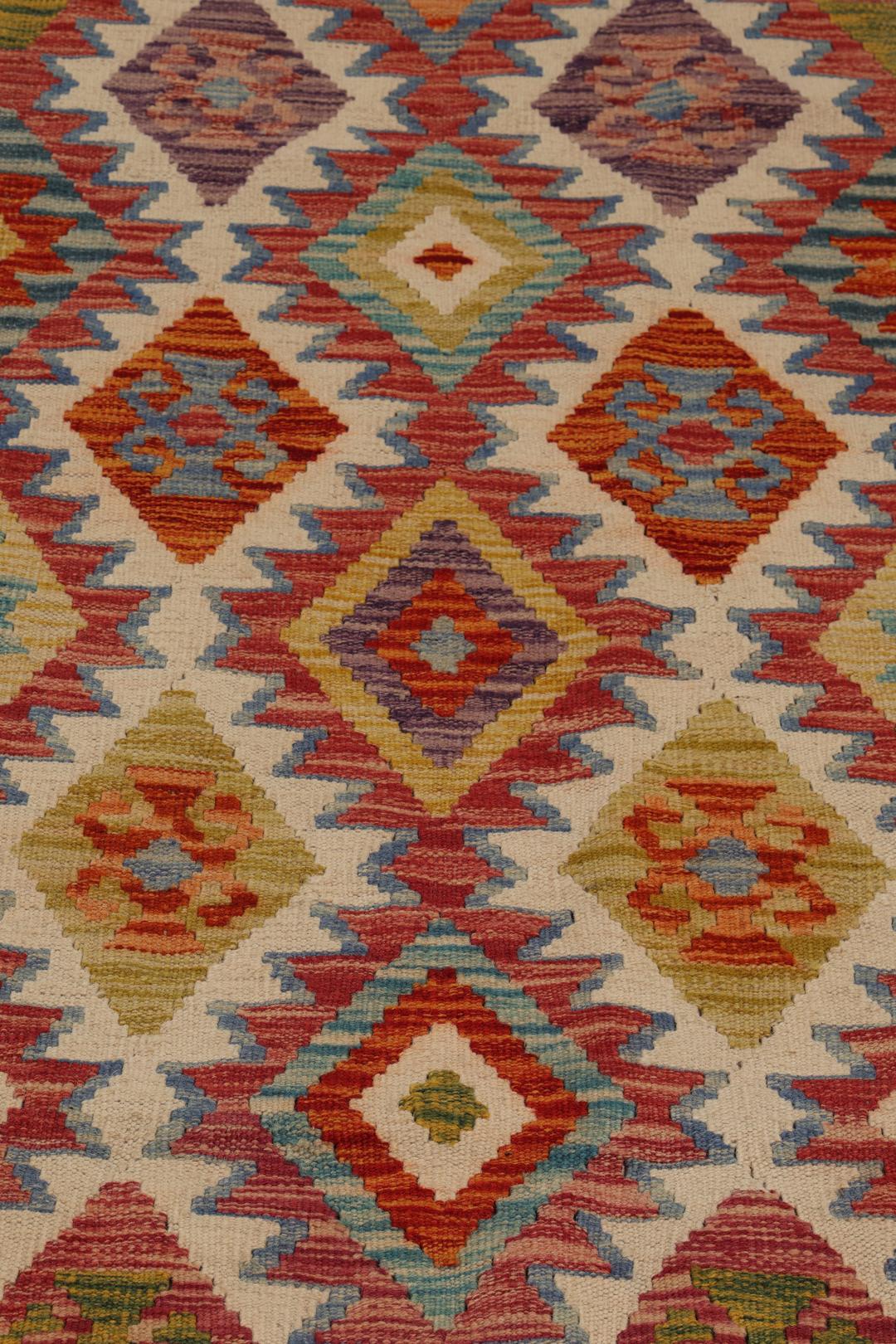
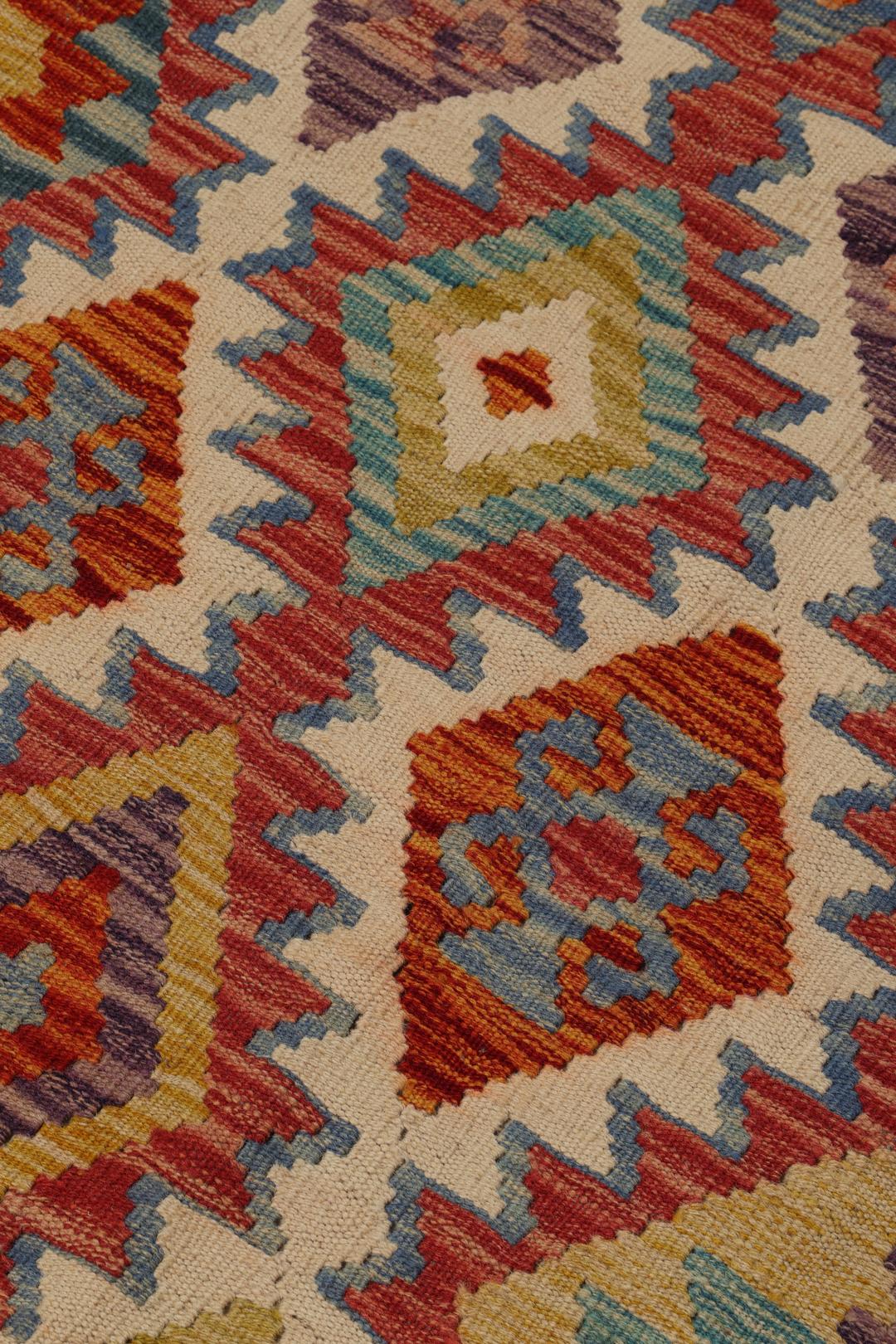
The visual language of this rug is dominated by the diamond motif, a symbol often associated with protection and fertility in traditional weaving circles. The vibrant, contrasting colours are achieved using natural dyes, reflecting the specific aesthetic preferences of the Afghan region. The formal border framing the central field is a hallmark of the Old Style tradition, providing a structured balance to the intricate, repeating geometric shapes within.
Collecting these rugs is an investment in human heritage. Each piece represents a narrative told through colour and form, preserving techniques that have remained largely unchanged for generations. By bringing such a piece into your home, you are not just adding a decorative element but are also participating in a long-standing tradition of craft that values individual expression and the enduring quality of natural wool.