Kelim flatweave rugs trace their roots back to the nomadic and village communities of Central Asia and the Middle East, where portable textiles were essential for daily life. These flat-surfaced rugs were originally crafted by tribal weavers as floor coverings, blankets, and storage bags, reflecting a lifestyle deeply connected to the natural landscape. Over centuries, the craft evolved into a revered artistic tradition, with families passing down specific weaving secrets and design motifs from one generation to the next.
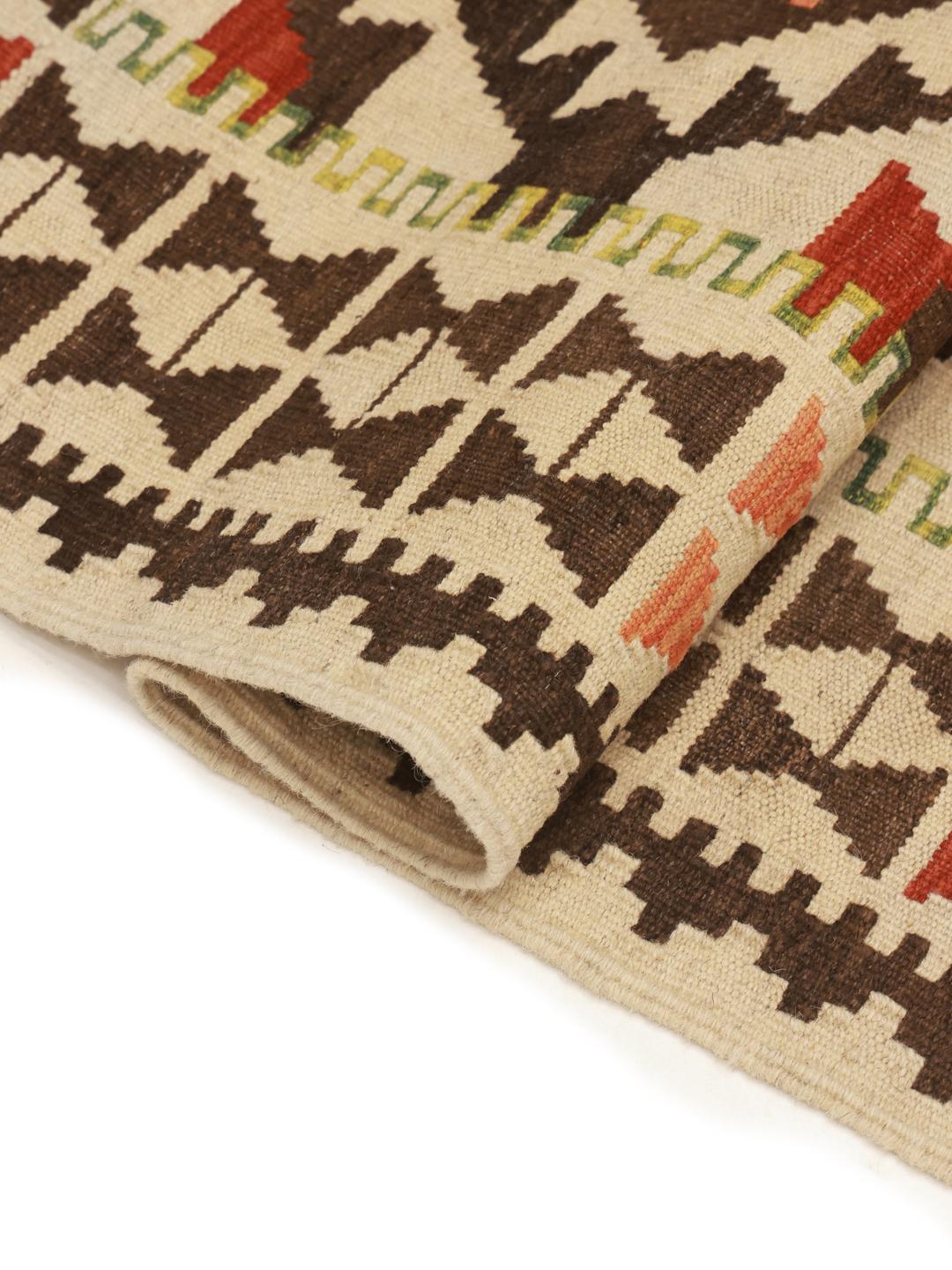
The term kelim refers to a flat-woven textile produced by tightly interweaving the warp and weft strands without creating a pile. This ancient technique requires exceptional tension control and manual dexterity, as the artisan must build up both the pattern and the structural fabric simultaneously. Because there are no pile yarns to hide the foundation, the weave itself must be exceptionally precise, resulting in a durable and lightweight rug that can withstand daily use.
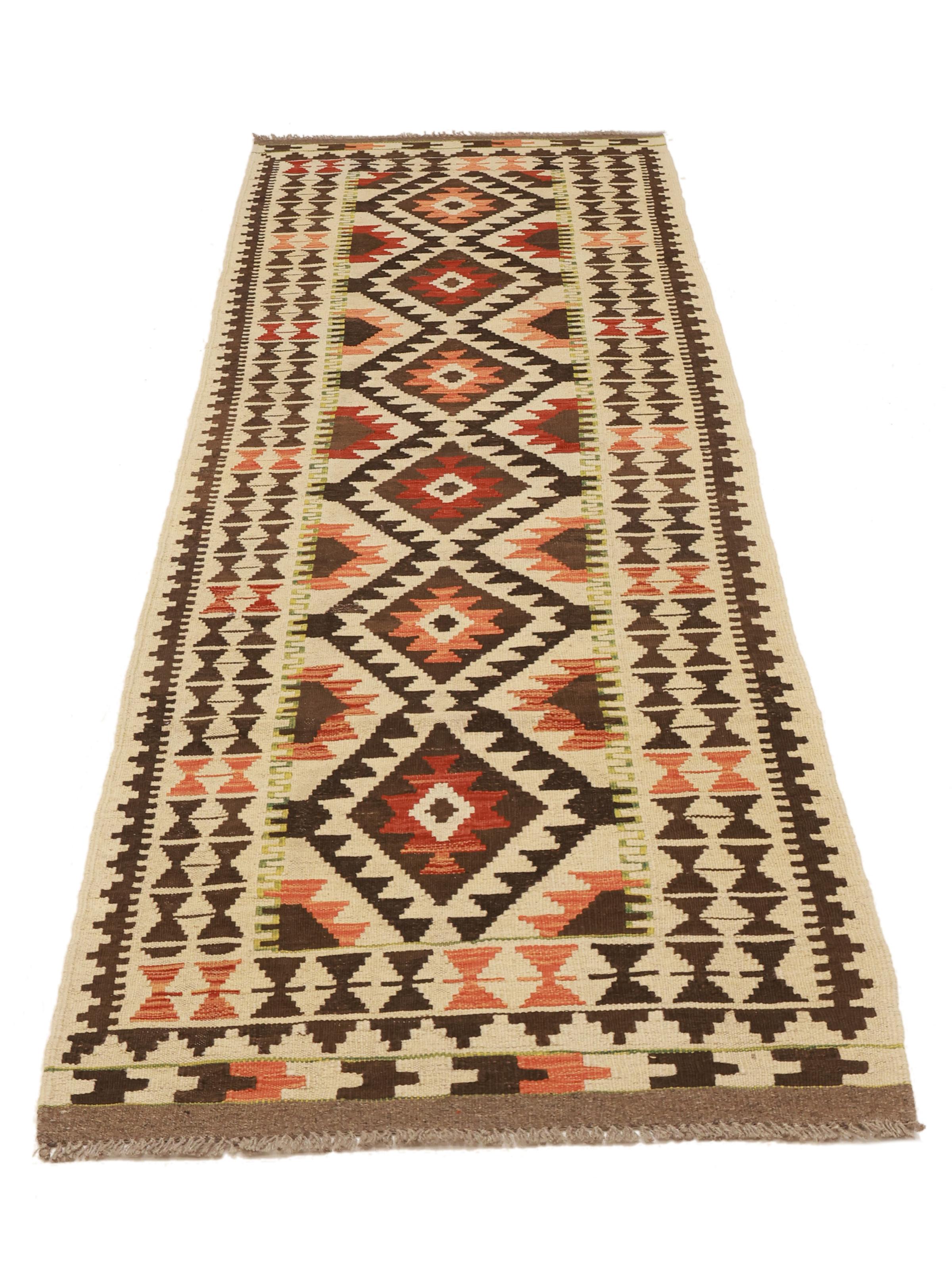
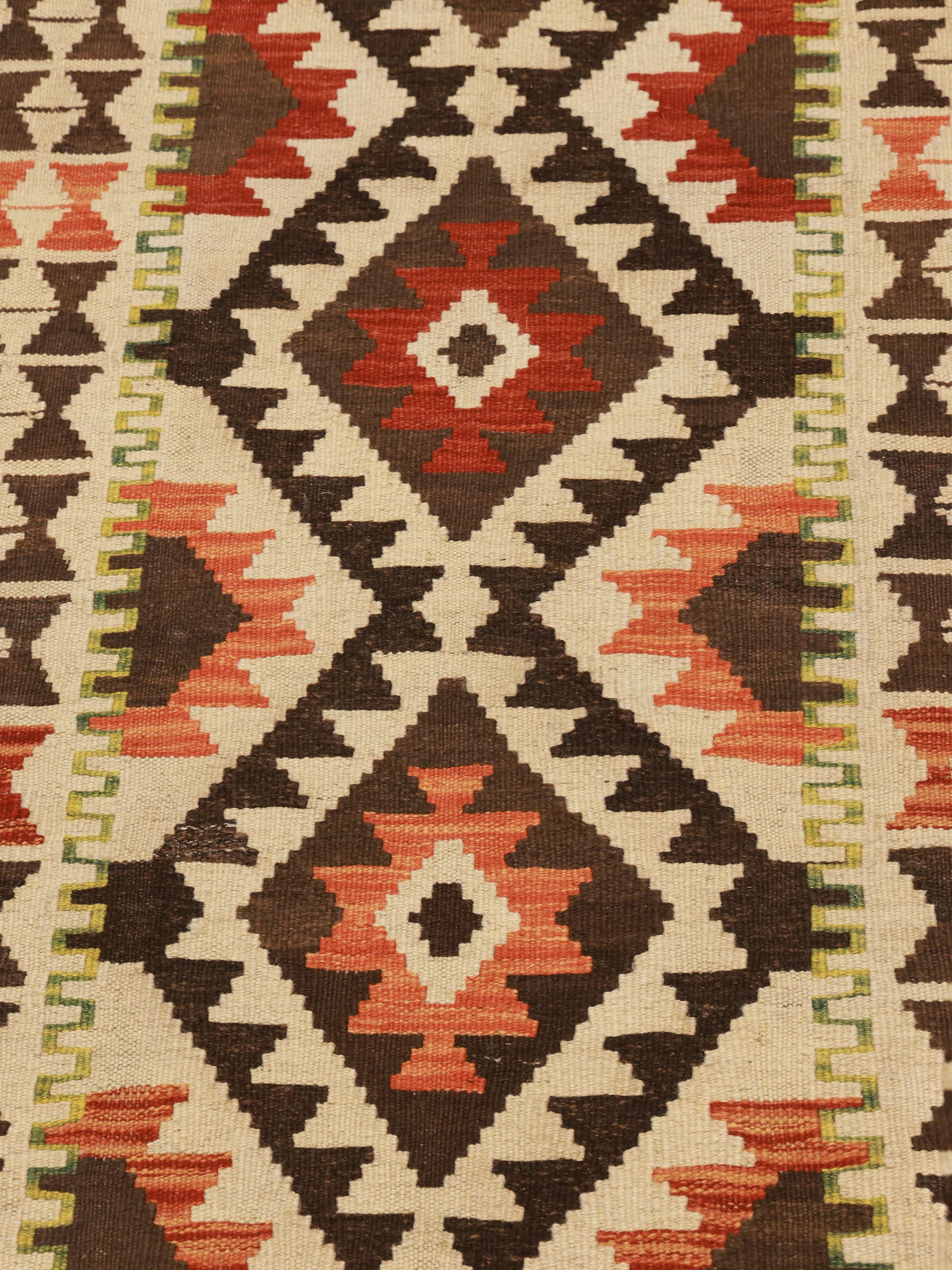
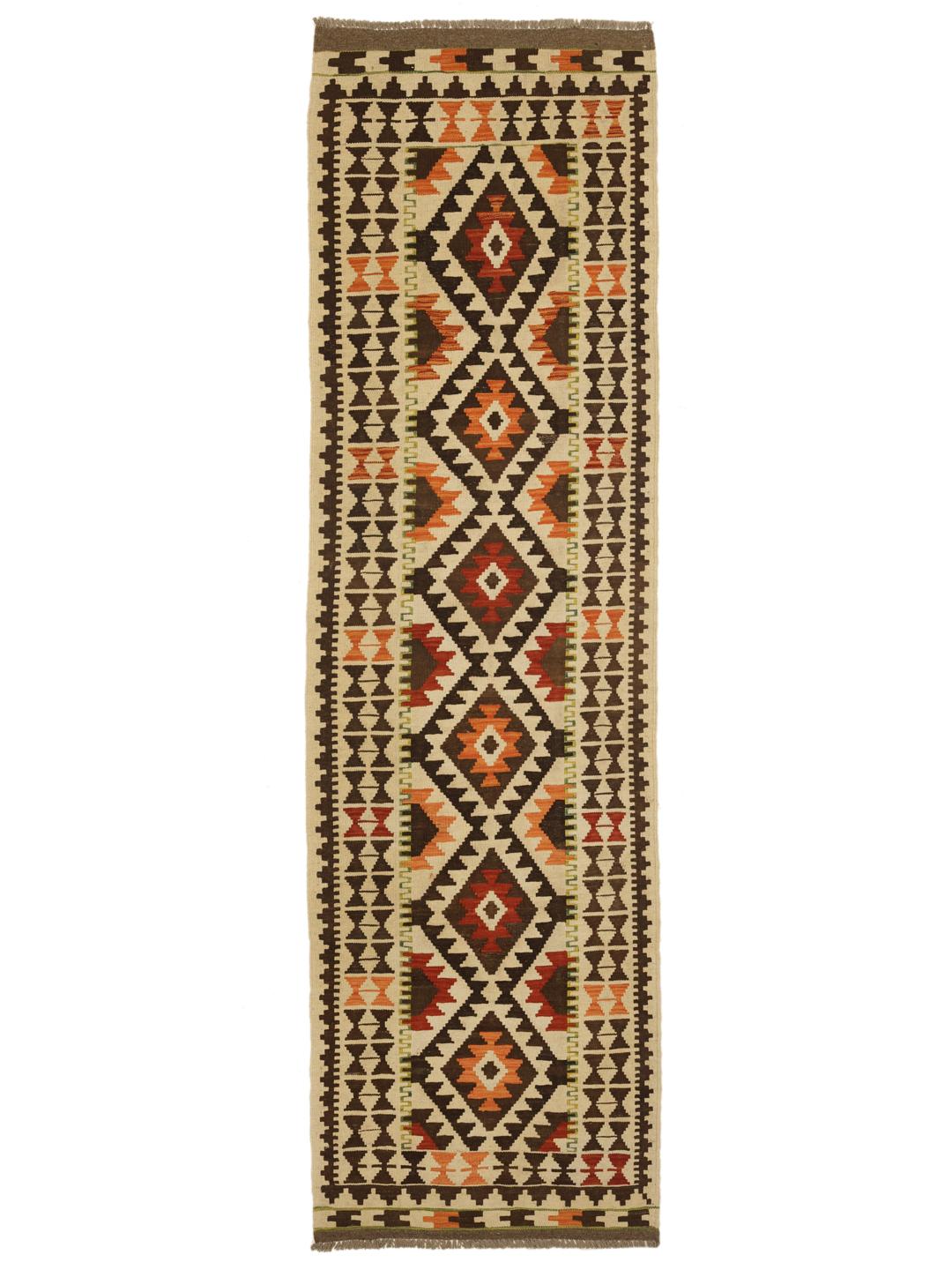
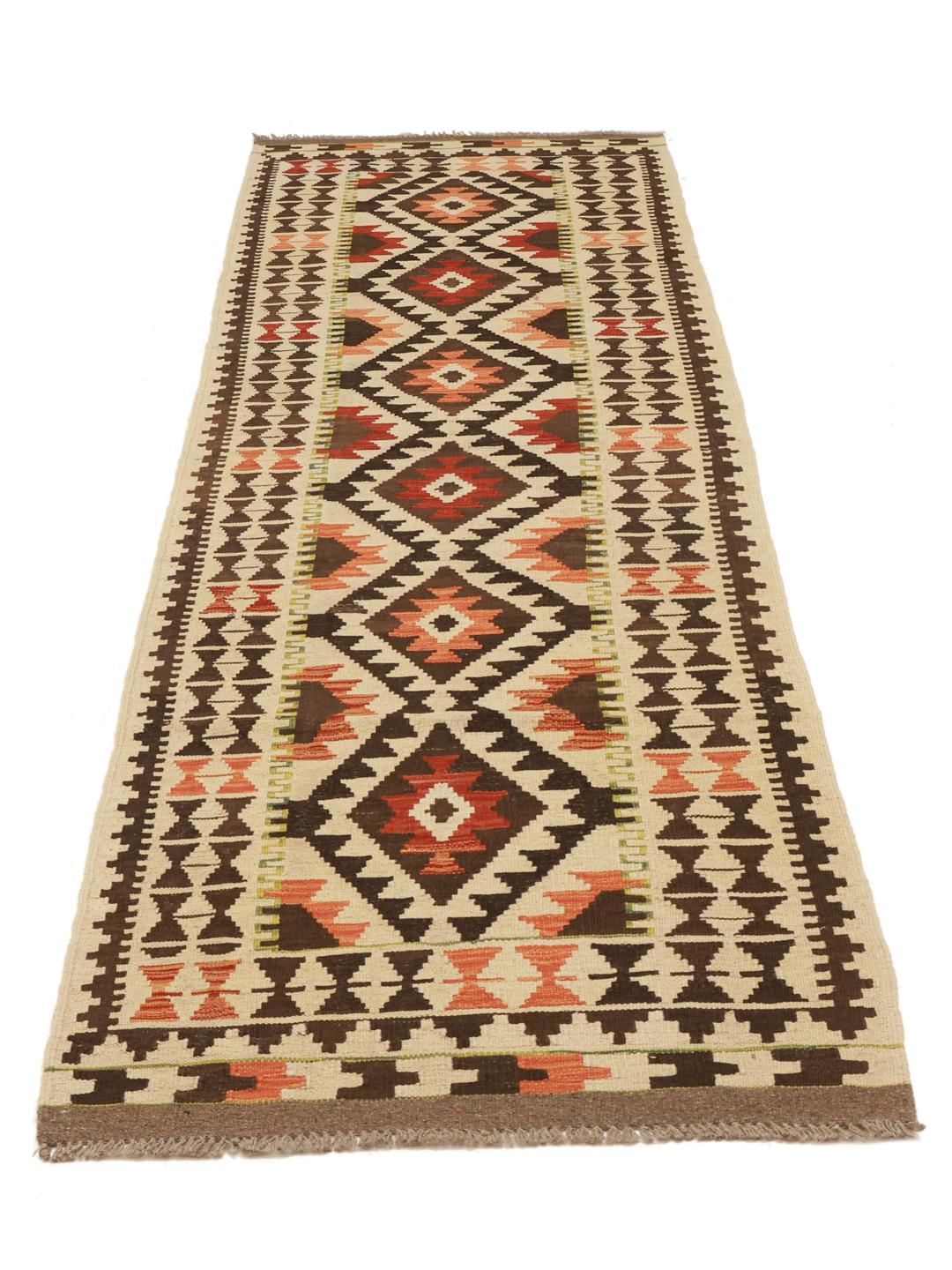
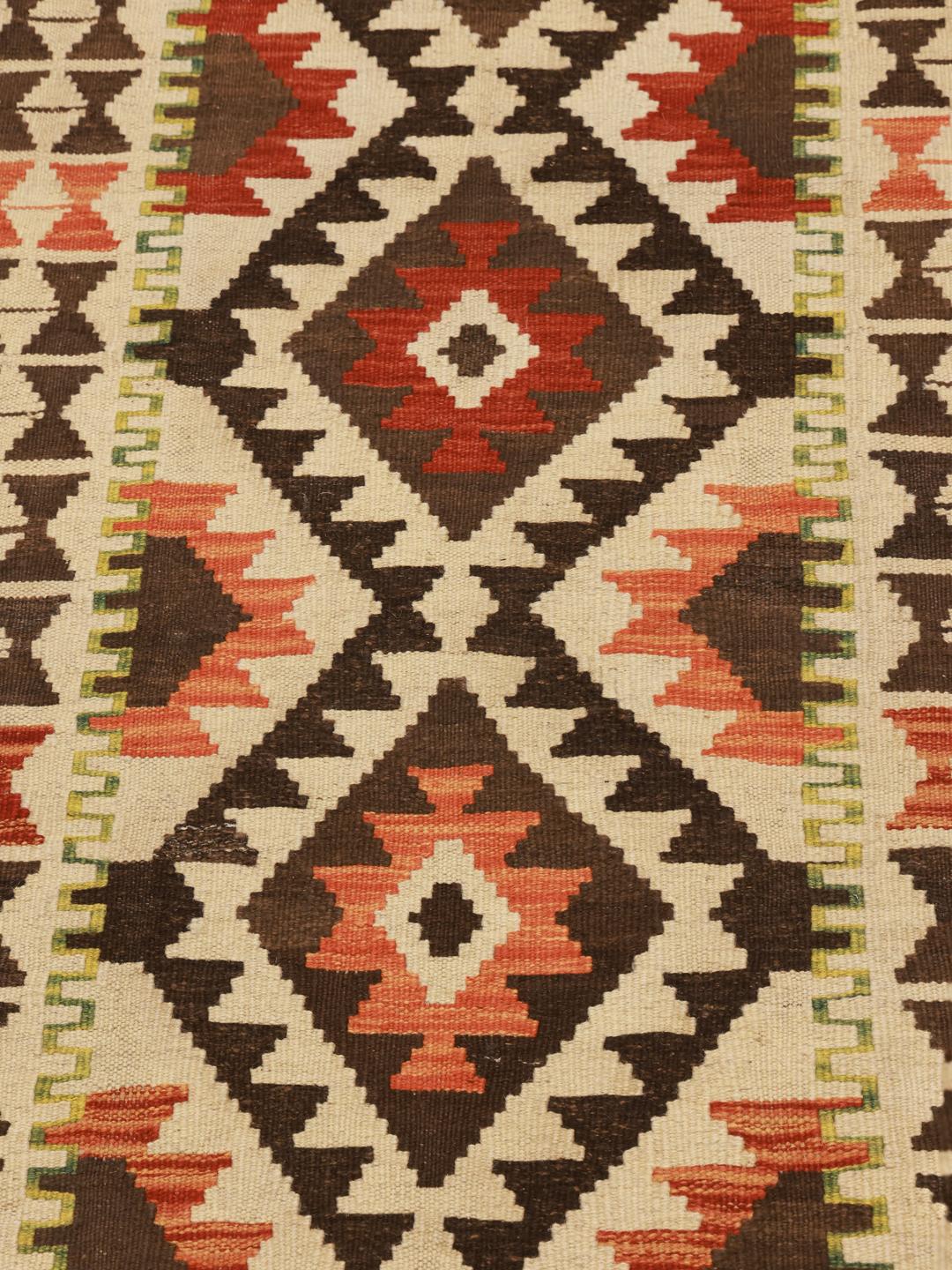
Afghan kelims are celebrated for their bold geometric vocabulary, featuring repeating diamonds, triangles, and tribal motifs that hold symbolic meaning for the weavers. The rich colour palette, traditionally derived from local plants, roots, and minerals, gives these textiles their signature earthy warmth. This particular rug captures that heritage with its balanced arrangement of motifs, framed by carefully considered borders that highlight the artisan's eye for symmetry and design.
Collecting vintage and old-style kelims has become a way to preserve a disappearing craft tradition in an increasingly mechanised world. Owning a piece like this connects your home to the enduring heritage of Afghan textile artistry, celebrating the human time and skill required to bring natural wool threads into a cohesive visual story. It is a meaningful addition for anyone who values authenticity, cultural depth, and lasting quality in their home.