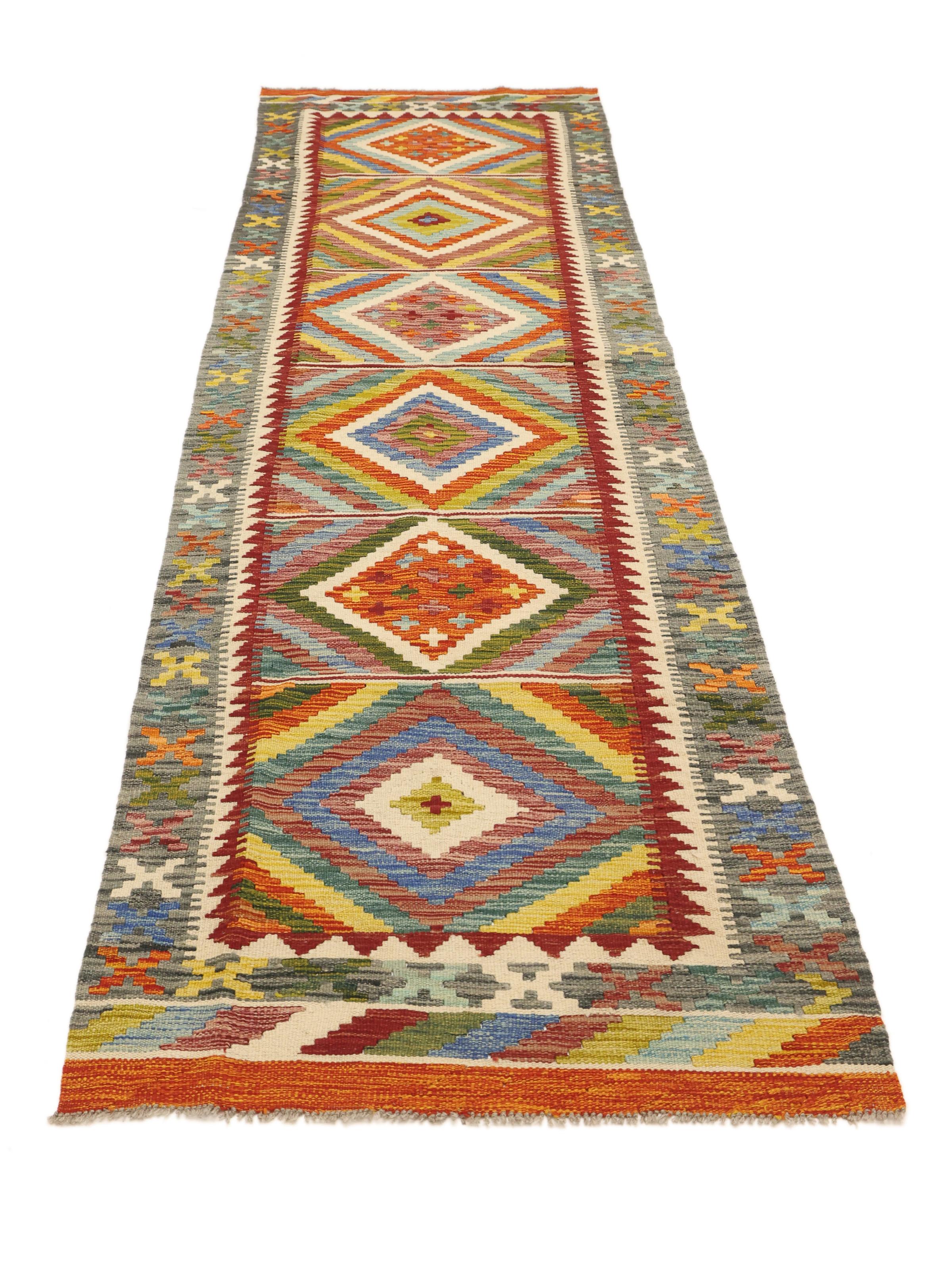
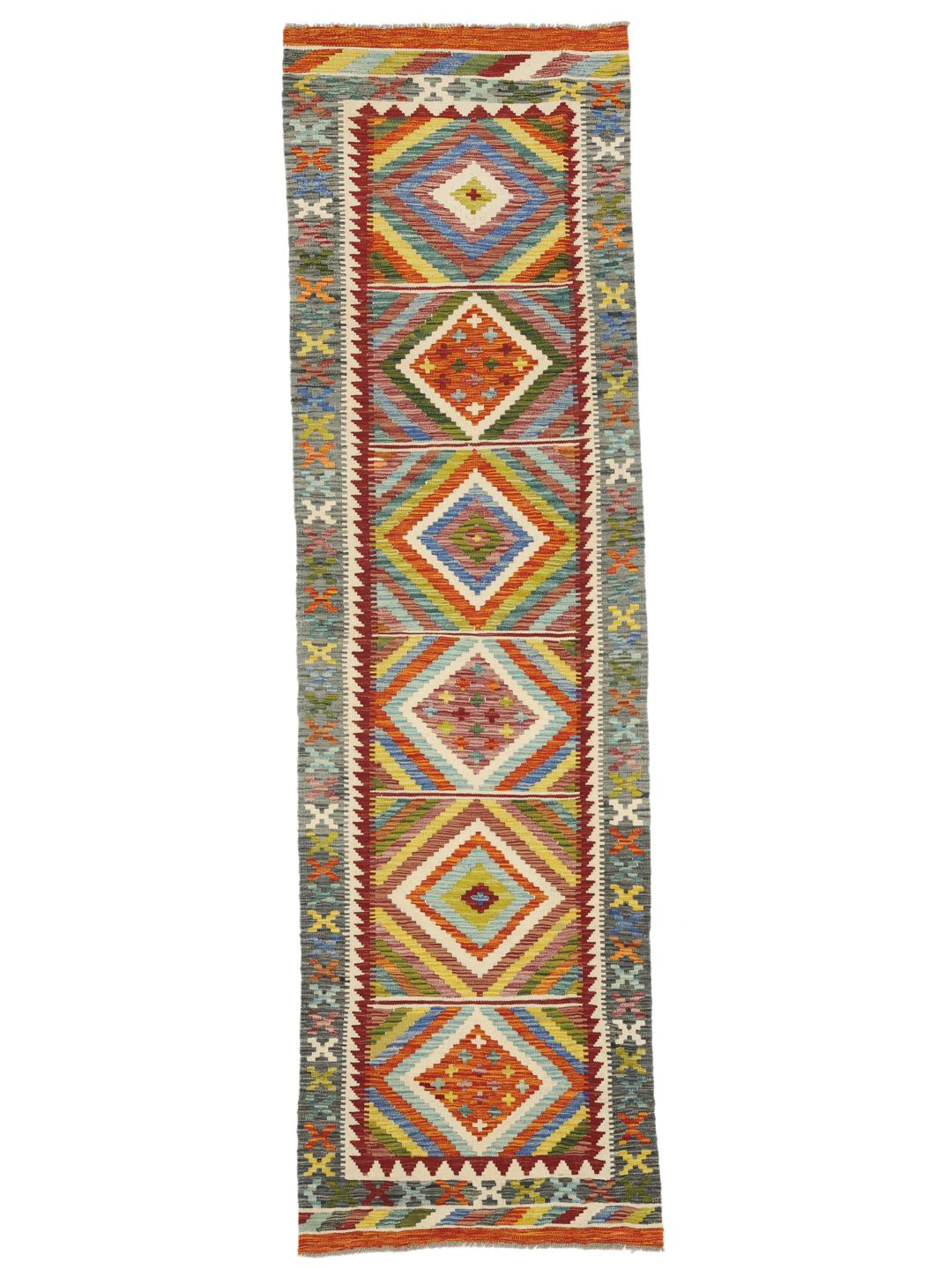
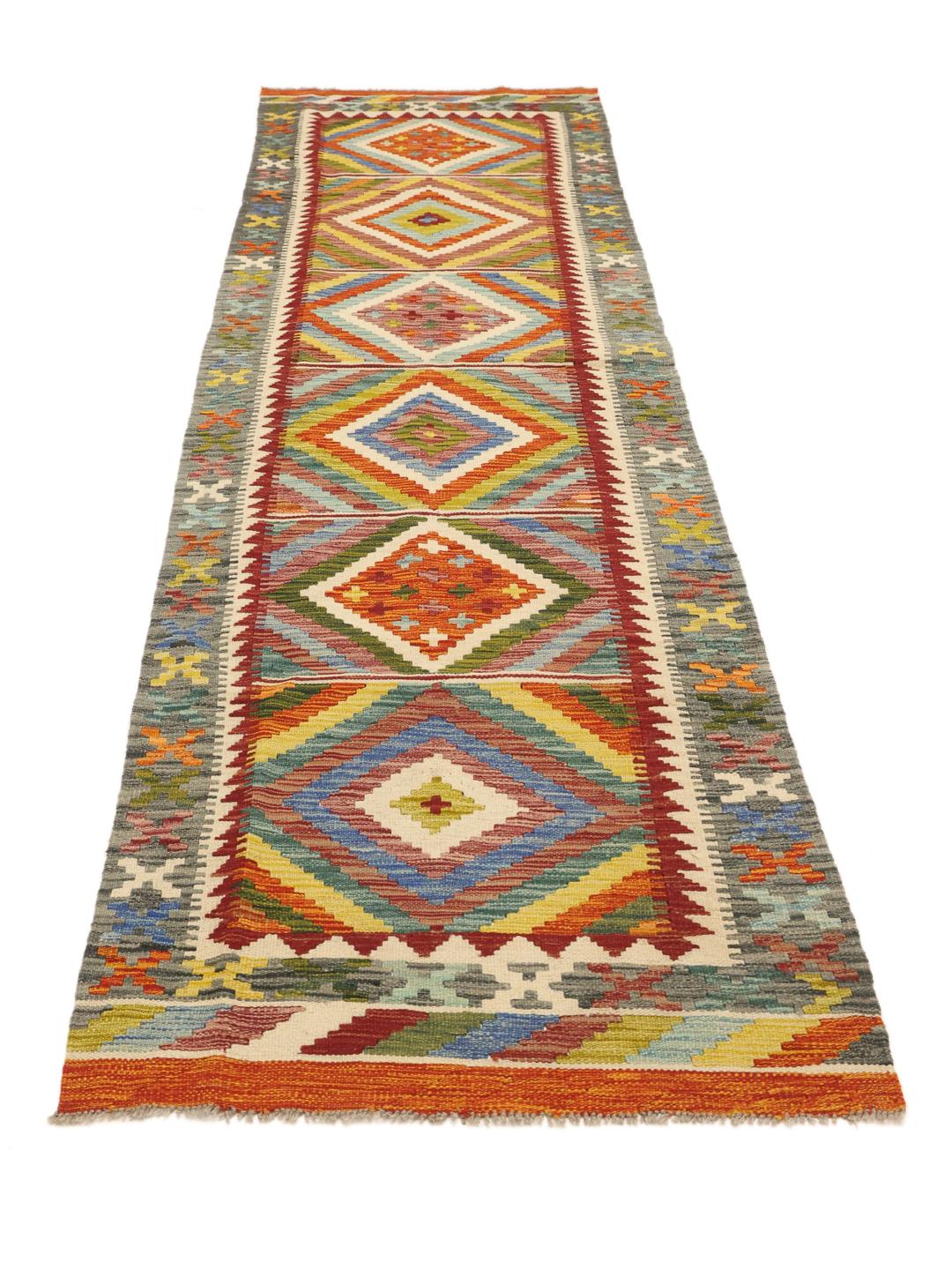
The Kelim Afghan Old Style tradition is deeply rooted in the rugged, mountainous landscapes of Afghanistan, where nomadic and village weaving communities have perfected the art of flat-weaving for centuries. These rugs are not merely floor coverings but are essential components of household life, historically used as tent dividers, storage bags, and blankets. The migration of these weaving techniques across the region has allowed for a unique blend of tribal aesthetics and functional design that continues to influence rug making today.
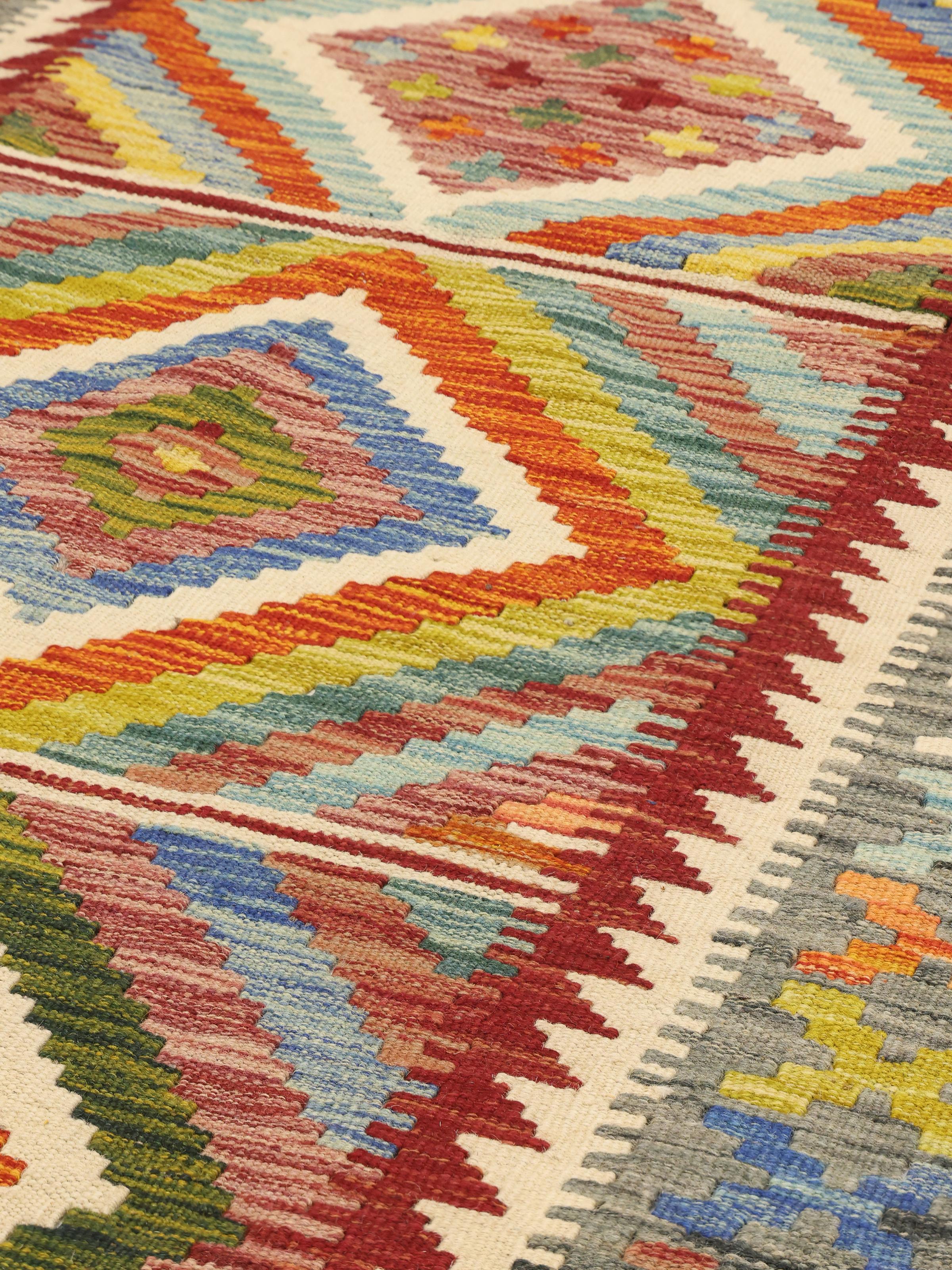
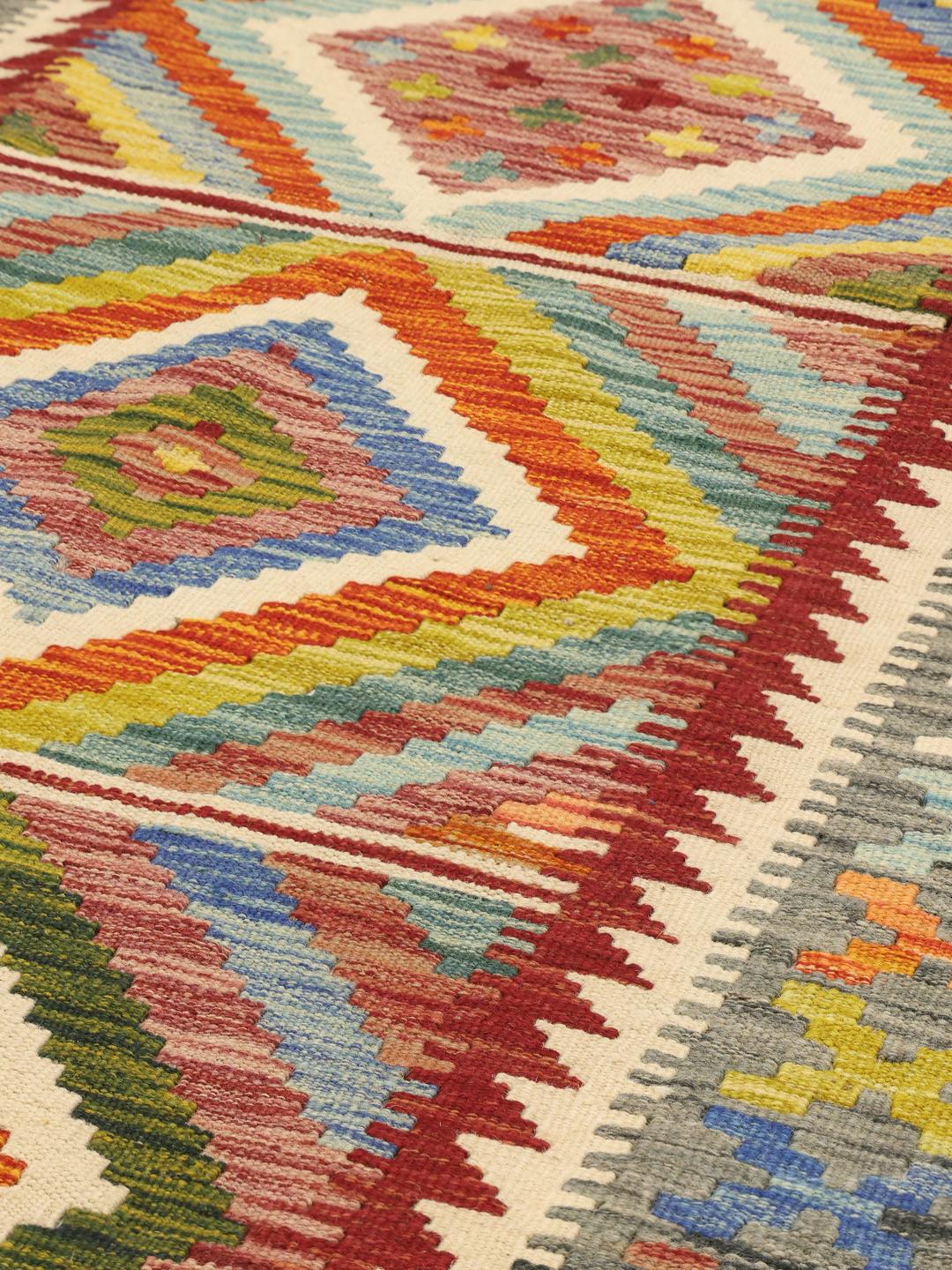
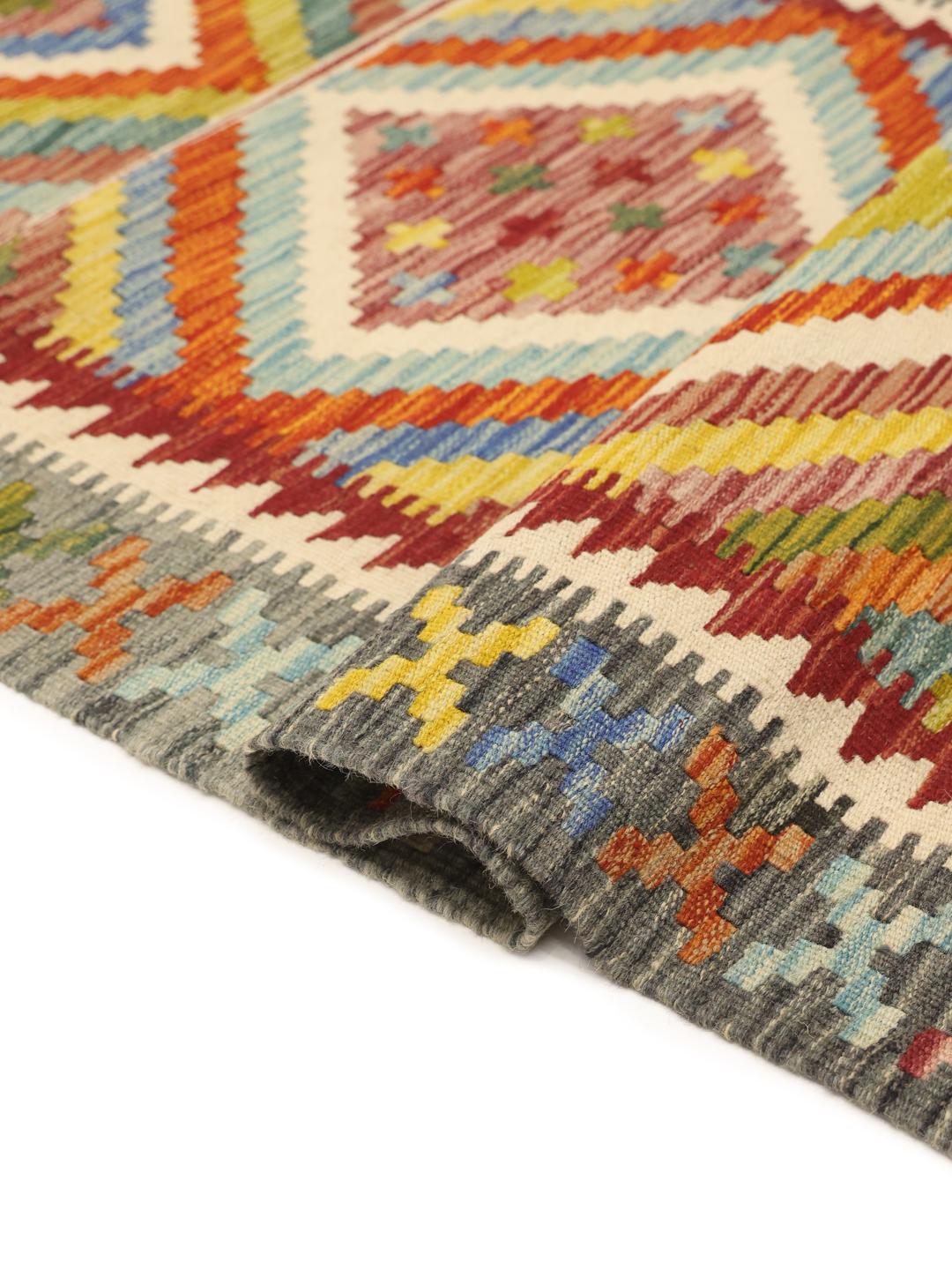
The term 'kelim' refers to the specific flat-weaving technique where there is no pile. Instead, the weft strands are pulled tightly over and under the warp strands, creating a smooth, durable, and reversible surface. This method demands a high level of precision, as the weaver must manage the tension and colour transitions simultaneously without the hidden support of a pile base. This resulting construction is highly prized for its ability to withstand heavy use while maintaining its crisp, intricate design details.
Signature design elements of these rugs often include bold geometric motifs such as diamonds, triangles, and stylized floral or animal forms, all arranged in rhythmic, repetitive sequences. The use of vibrant, natural-inspired dyes—often sourced from local plants and minerals—gives these pieces their characteristic warmth and depth. The borders are typically just as detailed as the field, often featuring complex geometric bands that frame the central motifs and provide visual closure to the overall composition.
Collectors value these rugs for their authentic connection to a long-standing cultural tradition and the immense skill required to produce them without the aid of modern equipment. Owning a Kelim Afghan is an opportunity to appreciate the heritage of a craft that prioritises human intuition and cultural narrative over mass-produced uniformity. These pieces are considered enduring works of art, representing a history of resilience and creativity that adds significant cultural weight to any modern living space.