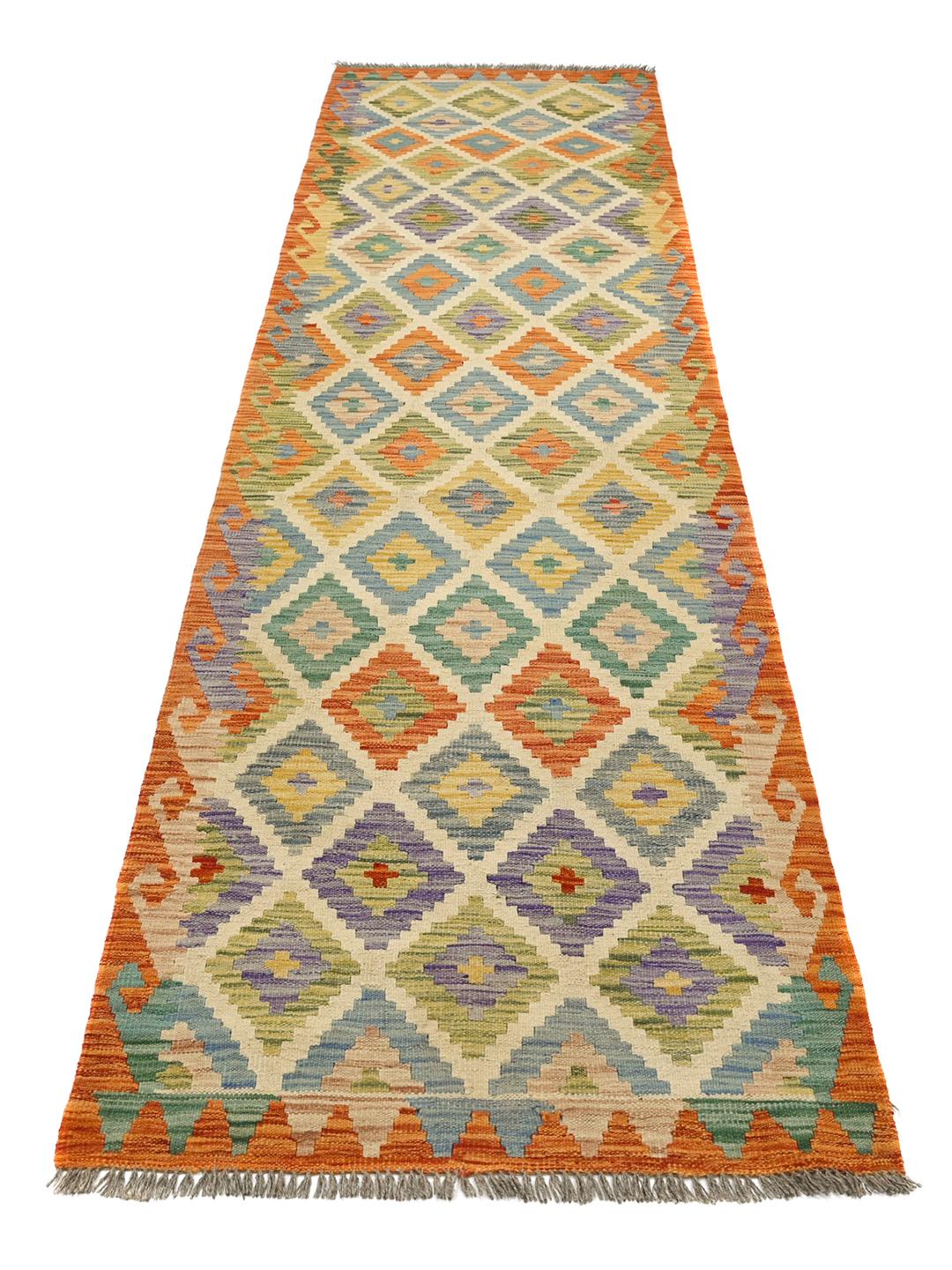
The Kelim tradition in Afghanistan is deeply rooted in the nomadic and semi-nomadic history of the region. These rugs serve as a bridge between ancient craftsmanship and contemporary living, with designs often passed down through generations of weaving families. The practice of flat-weaving, or Kelim, has been essential to the cultural identity of the region for centuries, providing both utility and artistic expression in the home.
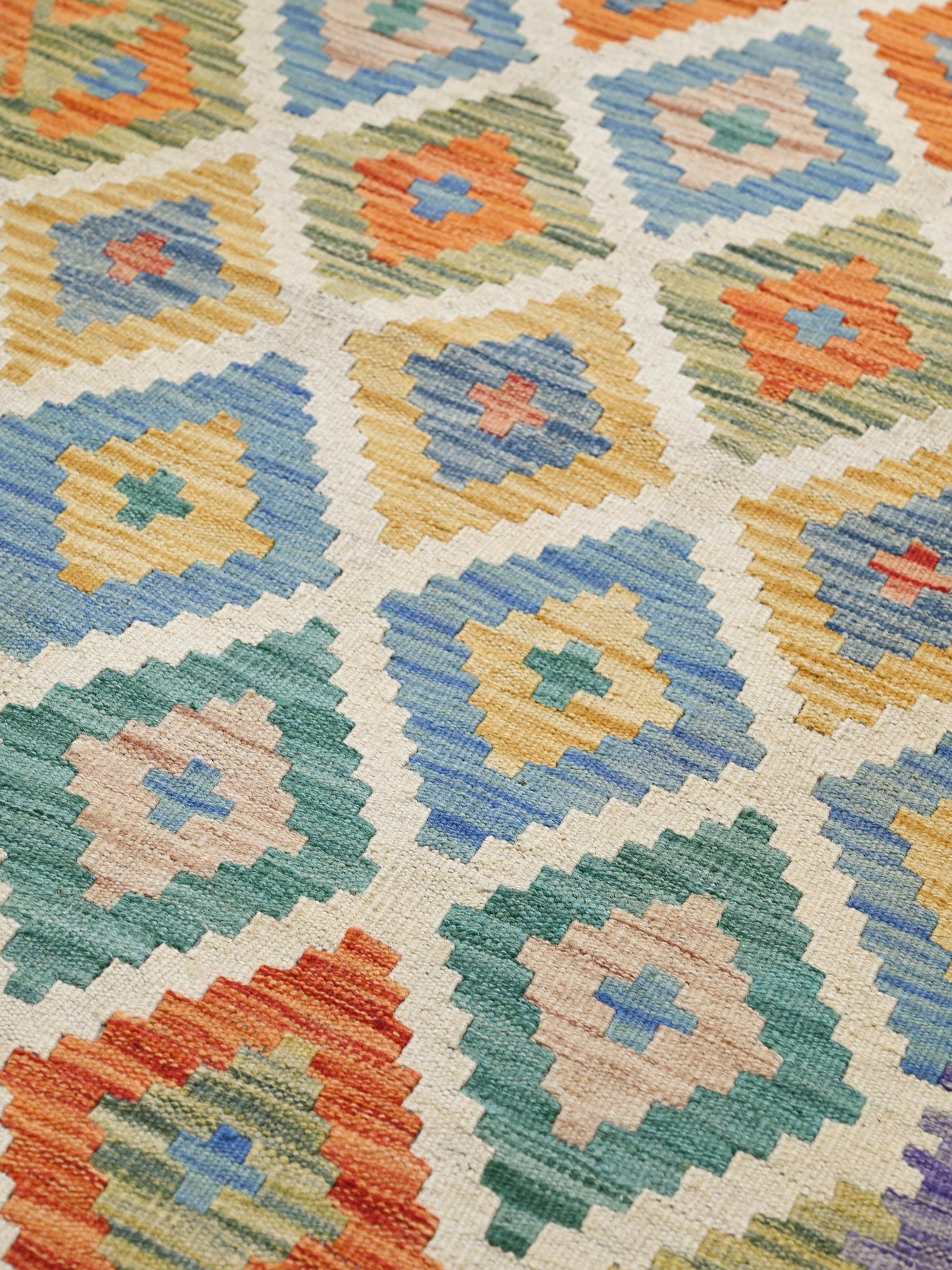
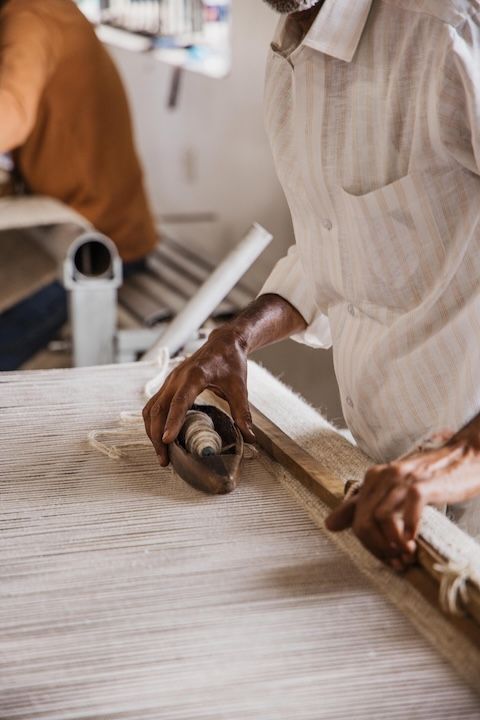
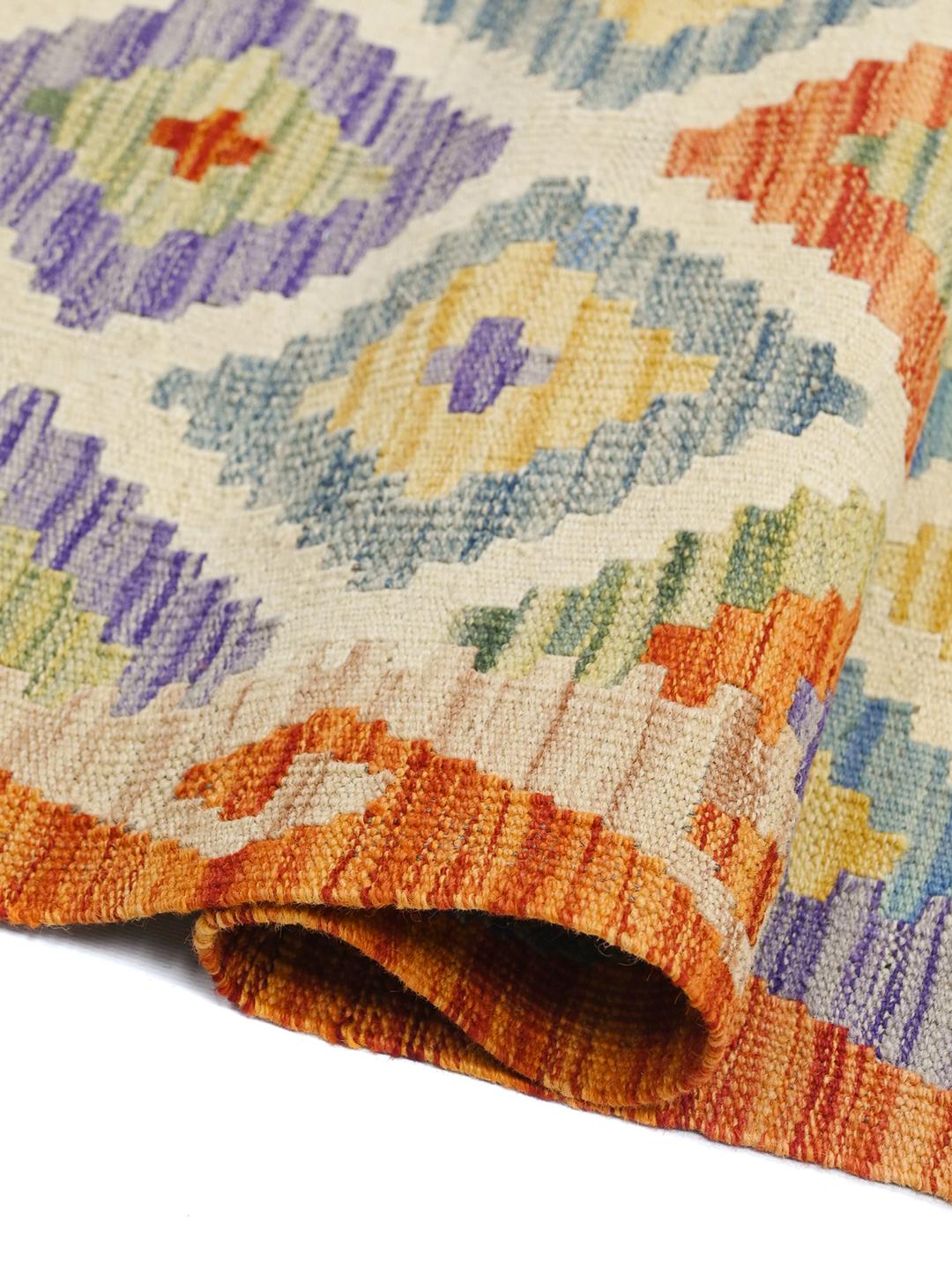
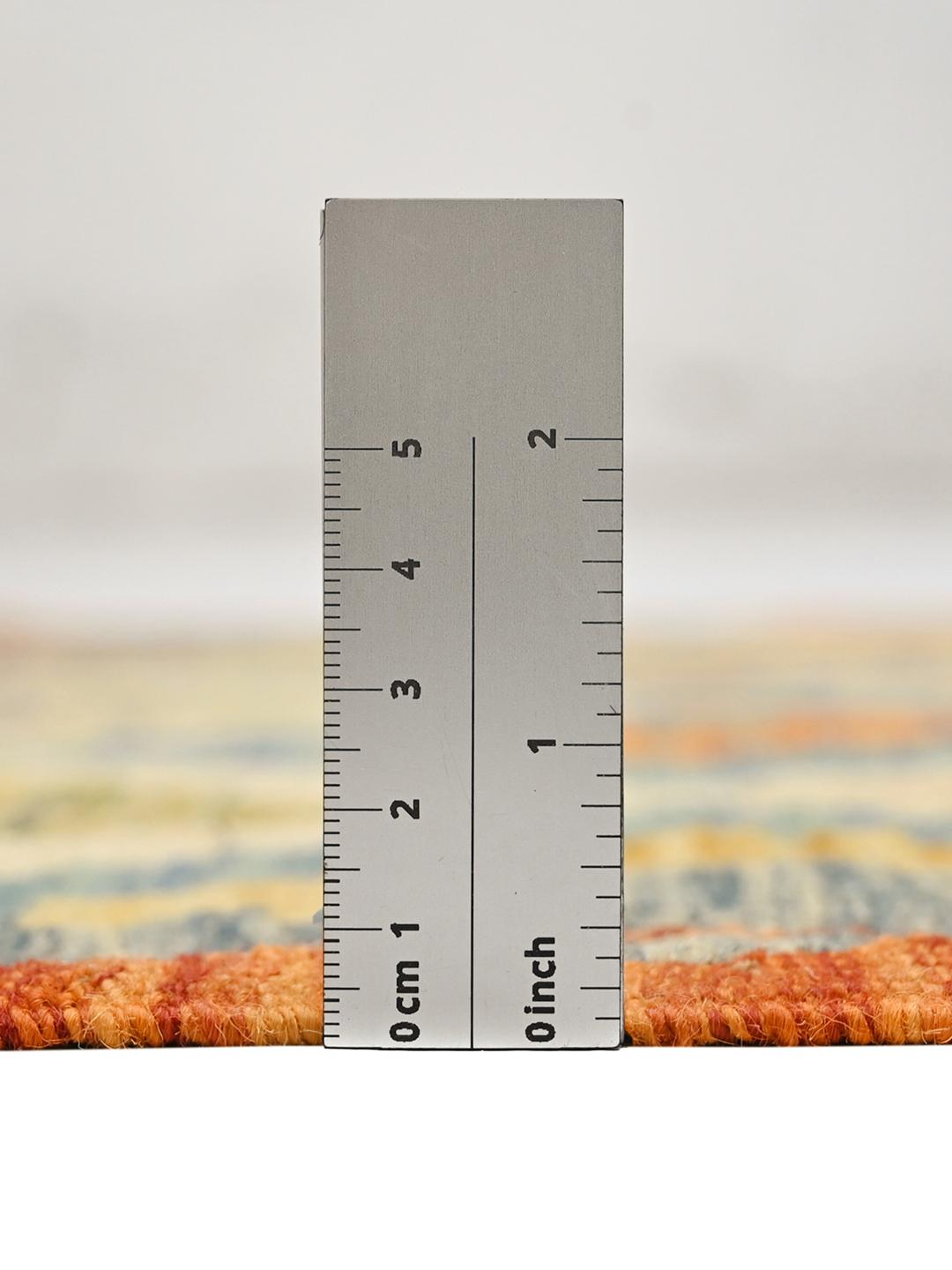
The term 'Kelim' refers to the specific flat-weave technique where no pile is created, resulting in a lightweight yet incredibly durable textile. This construction is a hallmark of regional expertise, requiring the weaver to manage complex colour changes and tension across the entire width of the rug. This technical mastery is what allows these pieces to remain thin while offering remarkable structural integrity.
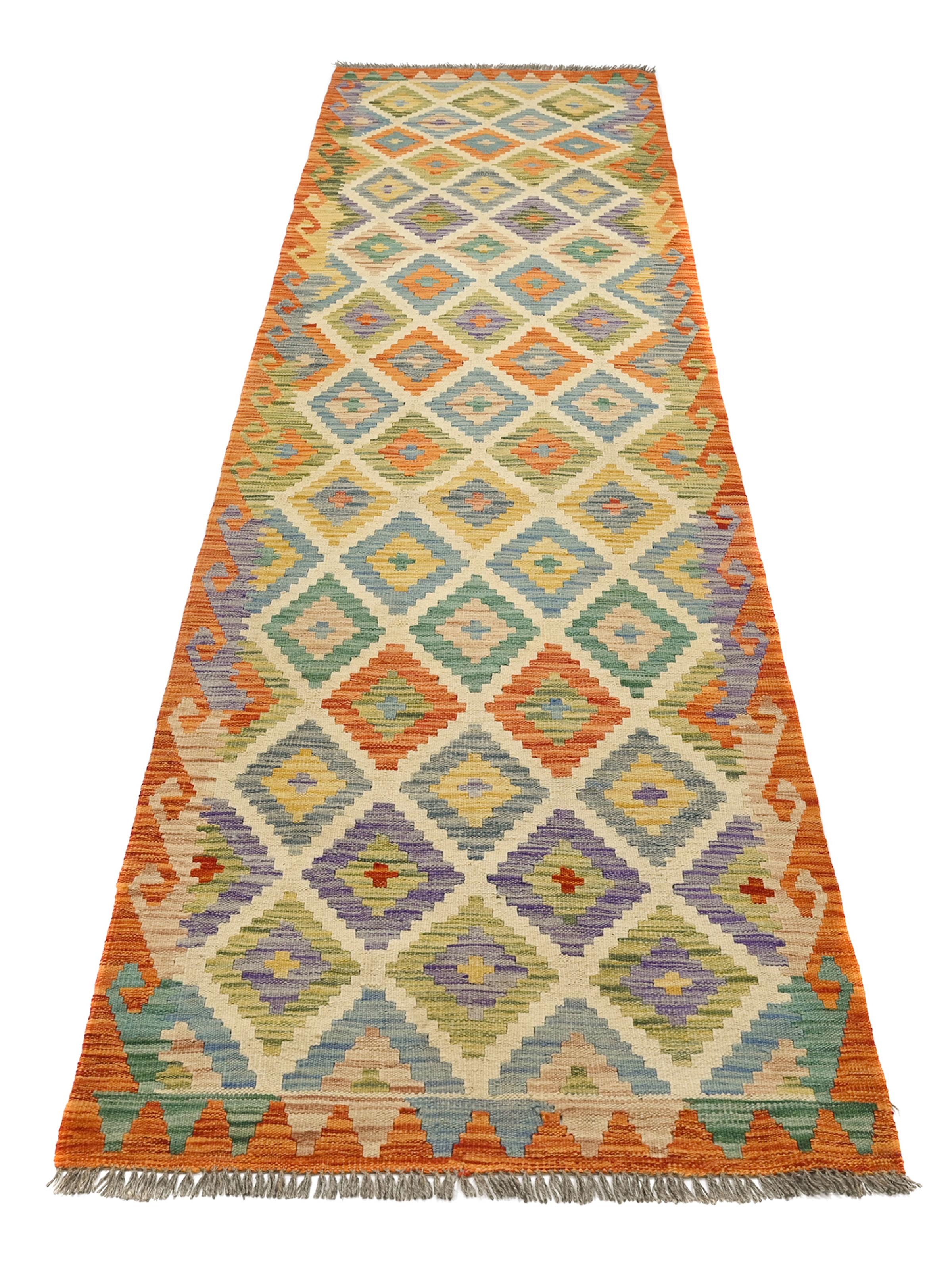
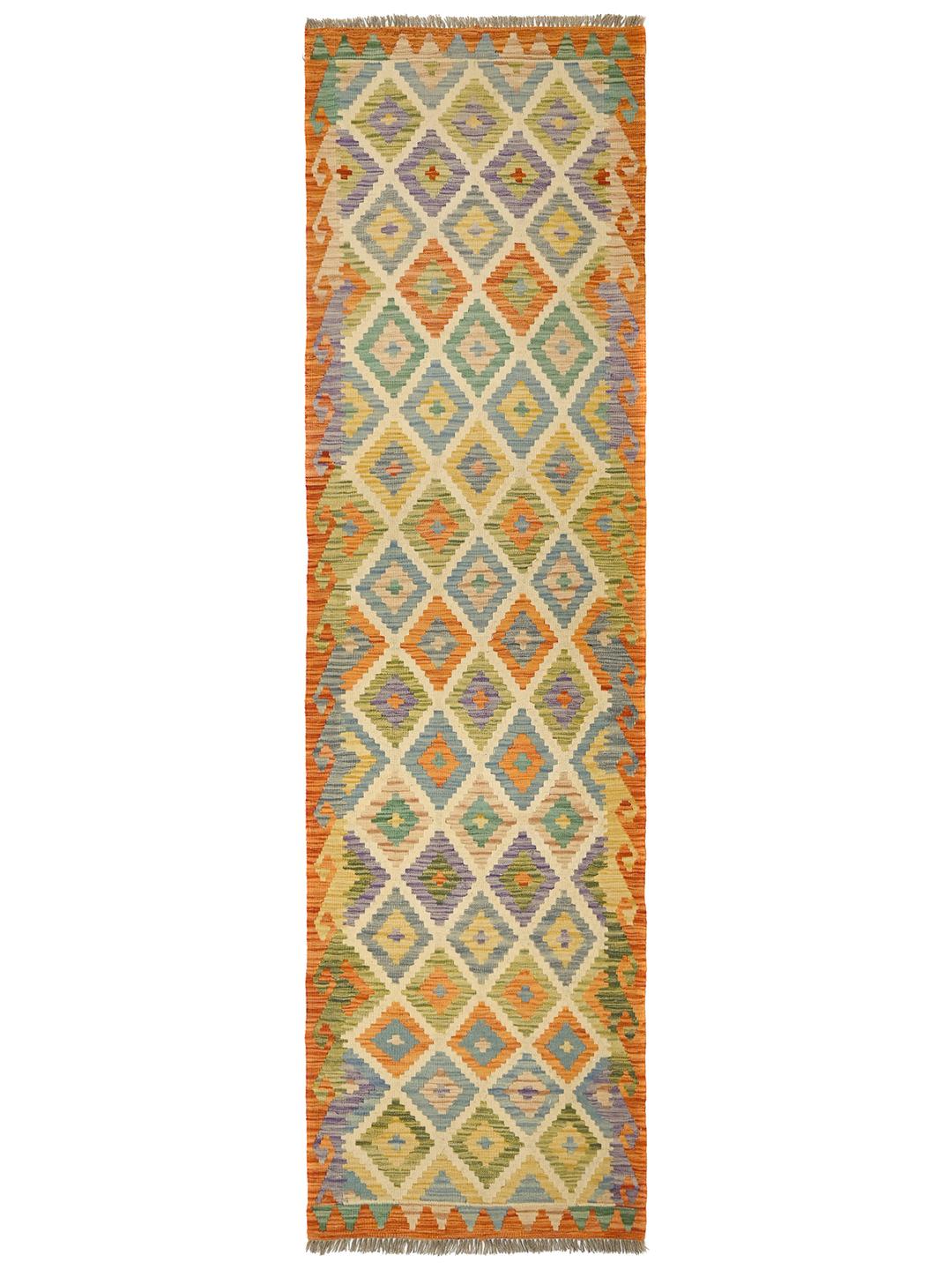
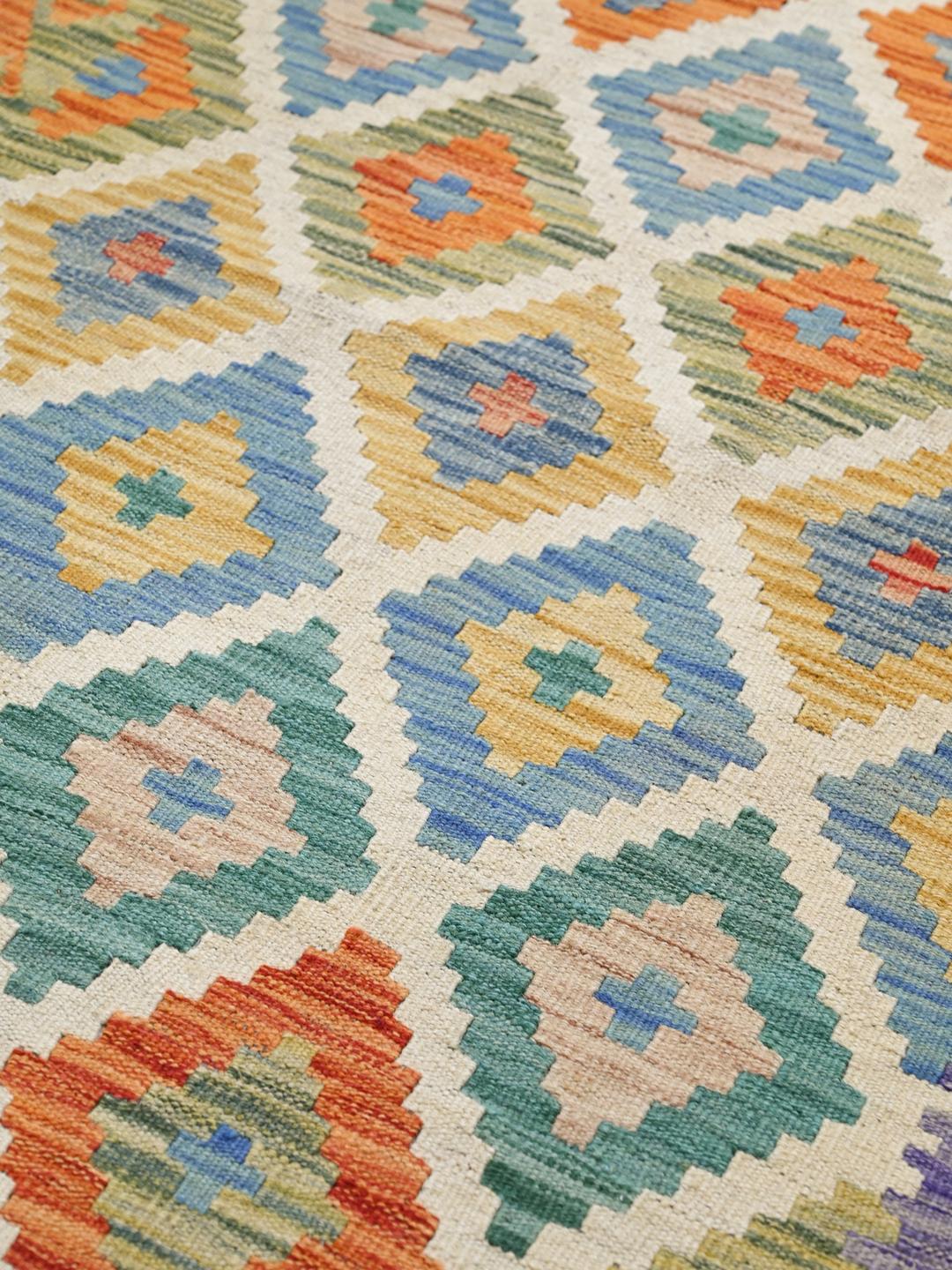
Visually, these runners are defined by their use of geometric motifs, with the diamond being one of the most significant and recurring symbols. The repeating nature of the pattern creates a rhythm that is both orderly and organic. The use of vibrant, earthy tones reflects the natural dyes traditionally available in the region, which have been refined over time to produce the rich, varied palette seen in this specific piece.
Owning an Afghan Kelim is an investment in cultural heritage. Collectors value these pieces not only for their aesthetic appeal but for the human story embedded in every thread. Each rug is a testament to the skill of the weaver and the endurance of a tradition that has thrived in the face of changing times, making it a meaningful addition to any collection.