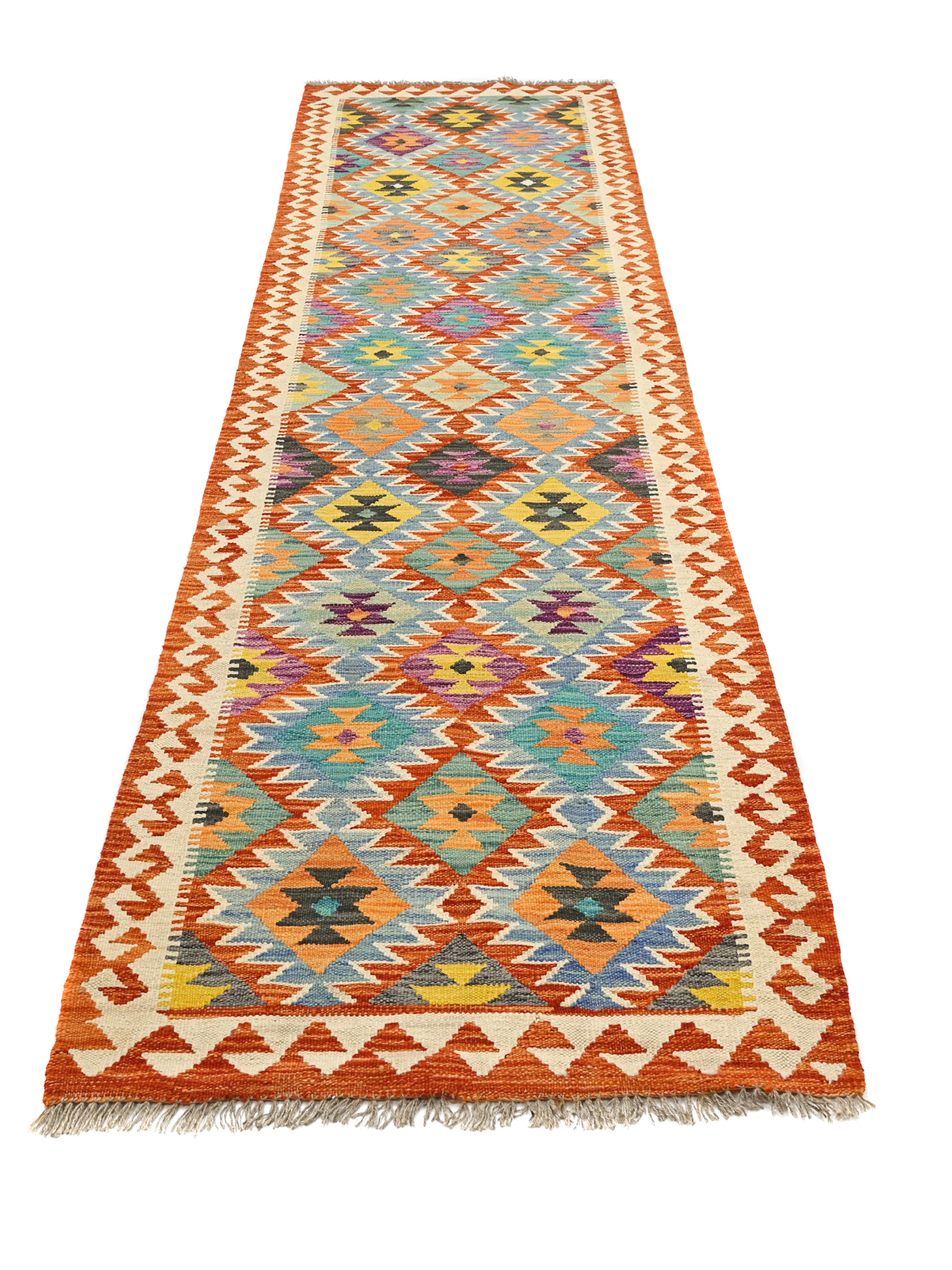
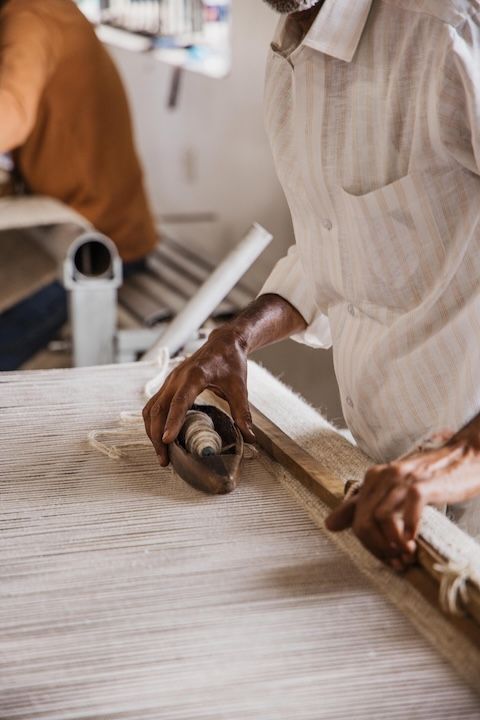
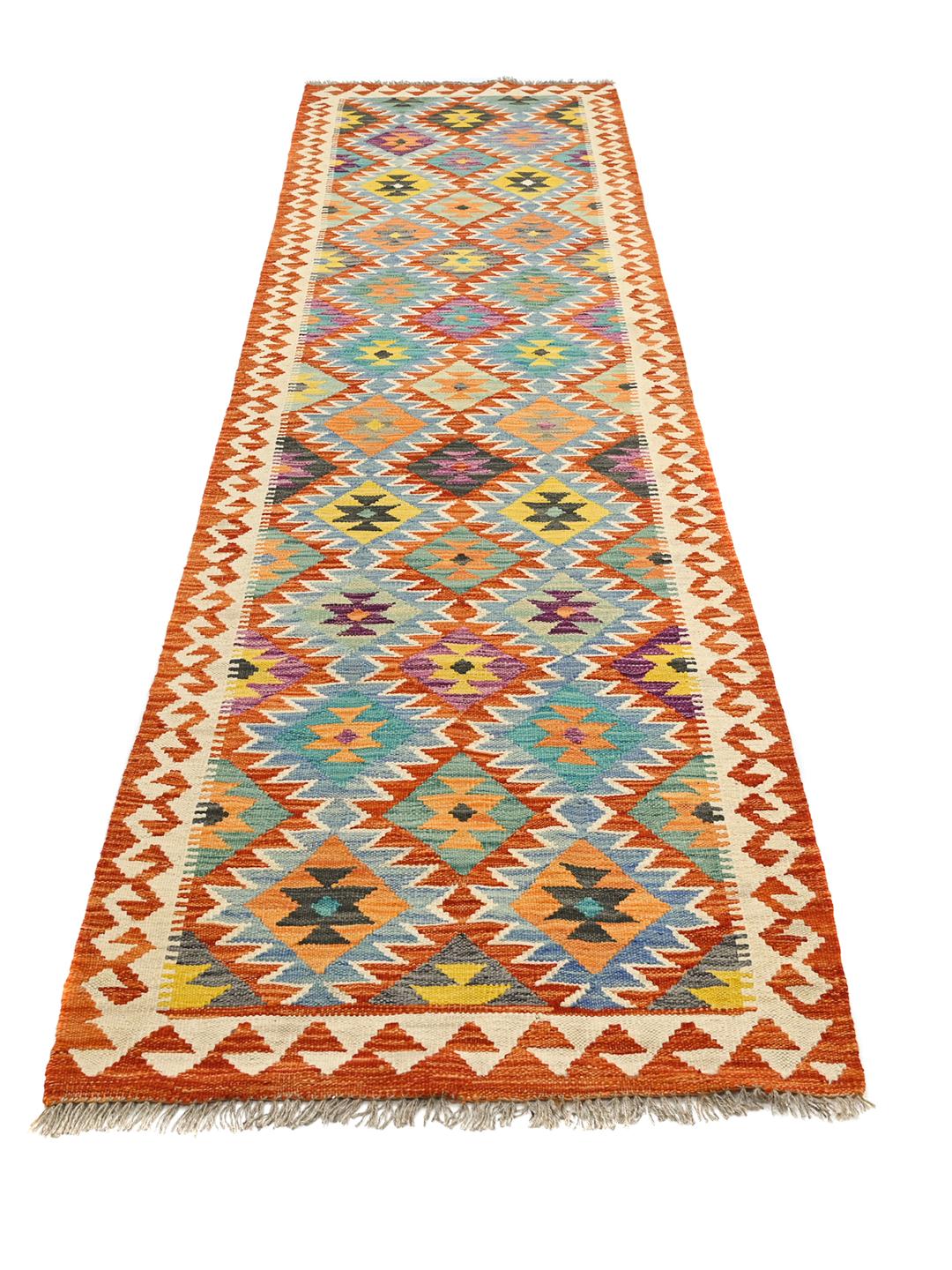
The Kelim Afghan Old Style rug finds its roots in the rich weaving traditions of Afghanistan, a region with a deep and storied history of textile production. These rugs are born from a culture that has mastered the art of flat-weaving over centuries, utilising techniques passed down through generations of families. The nomadic and semi-nomadic tribes of the region have long used these textiles not just for their beauty, but as essential, multi-purpose components of daily life.
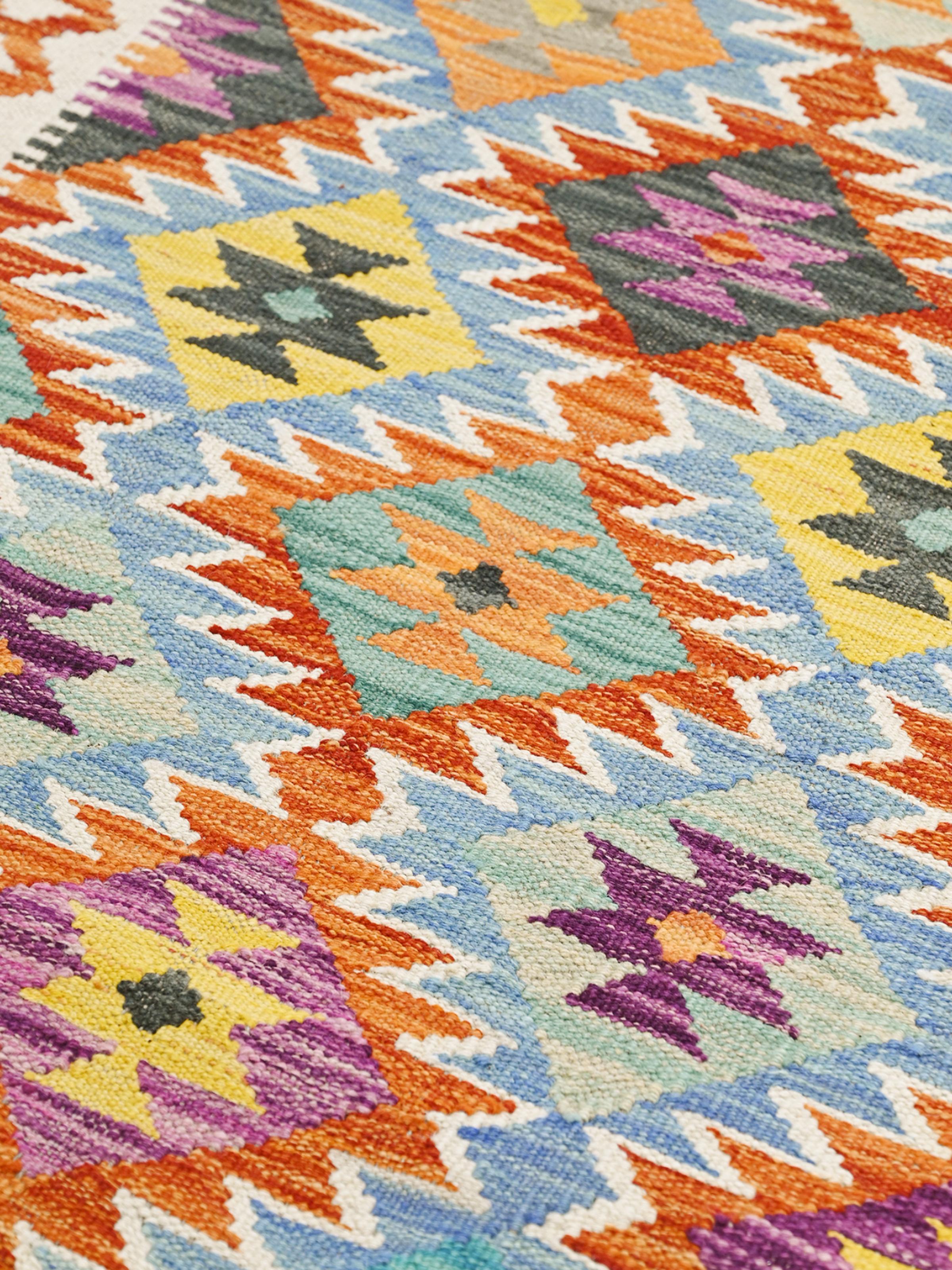
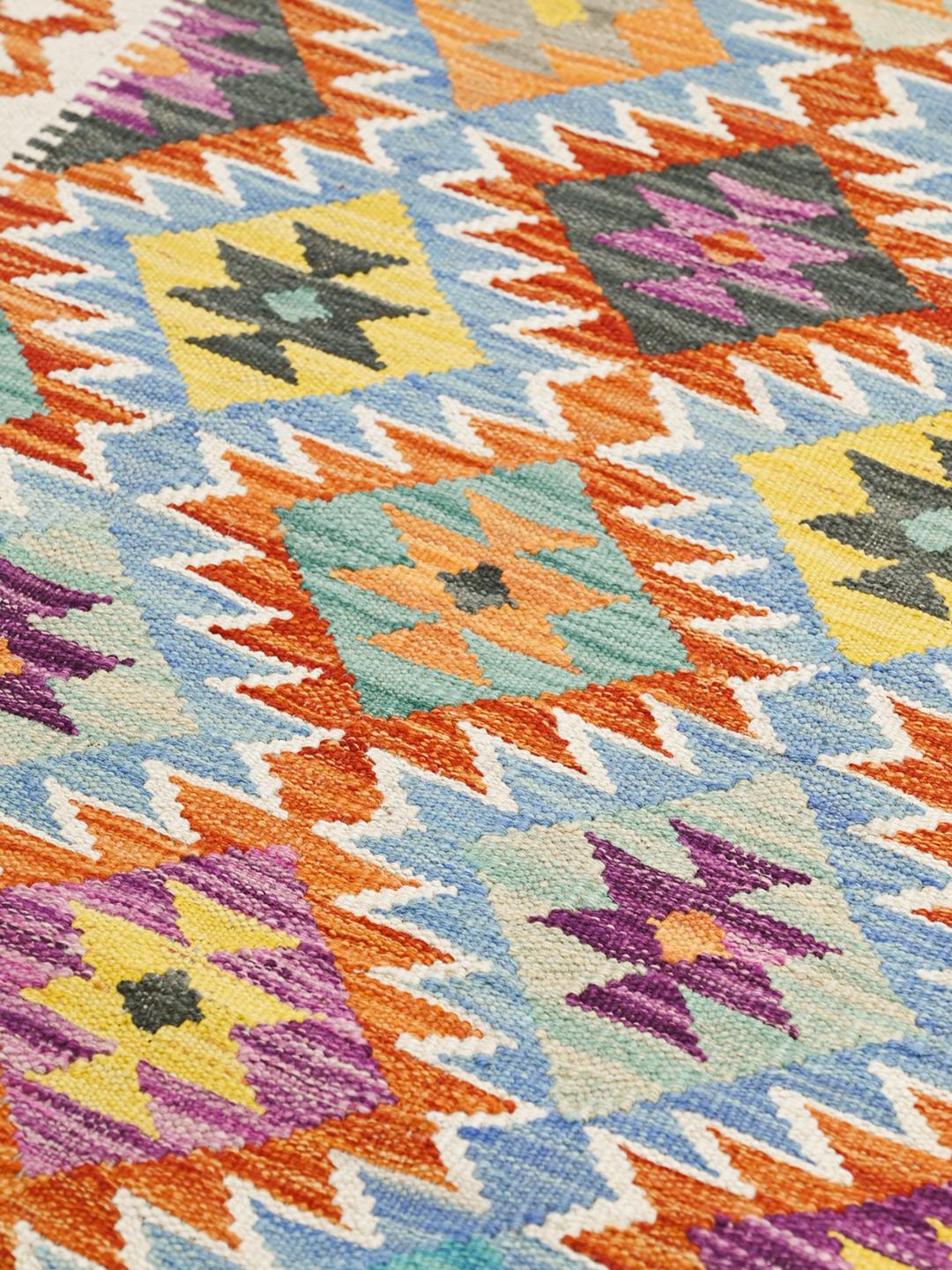
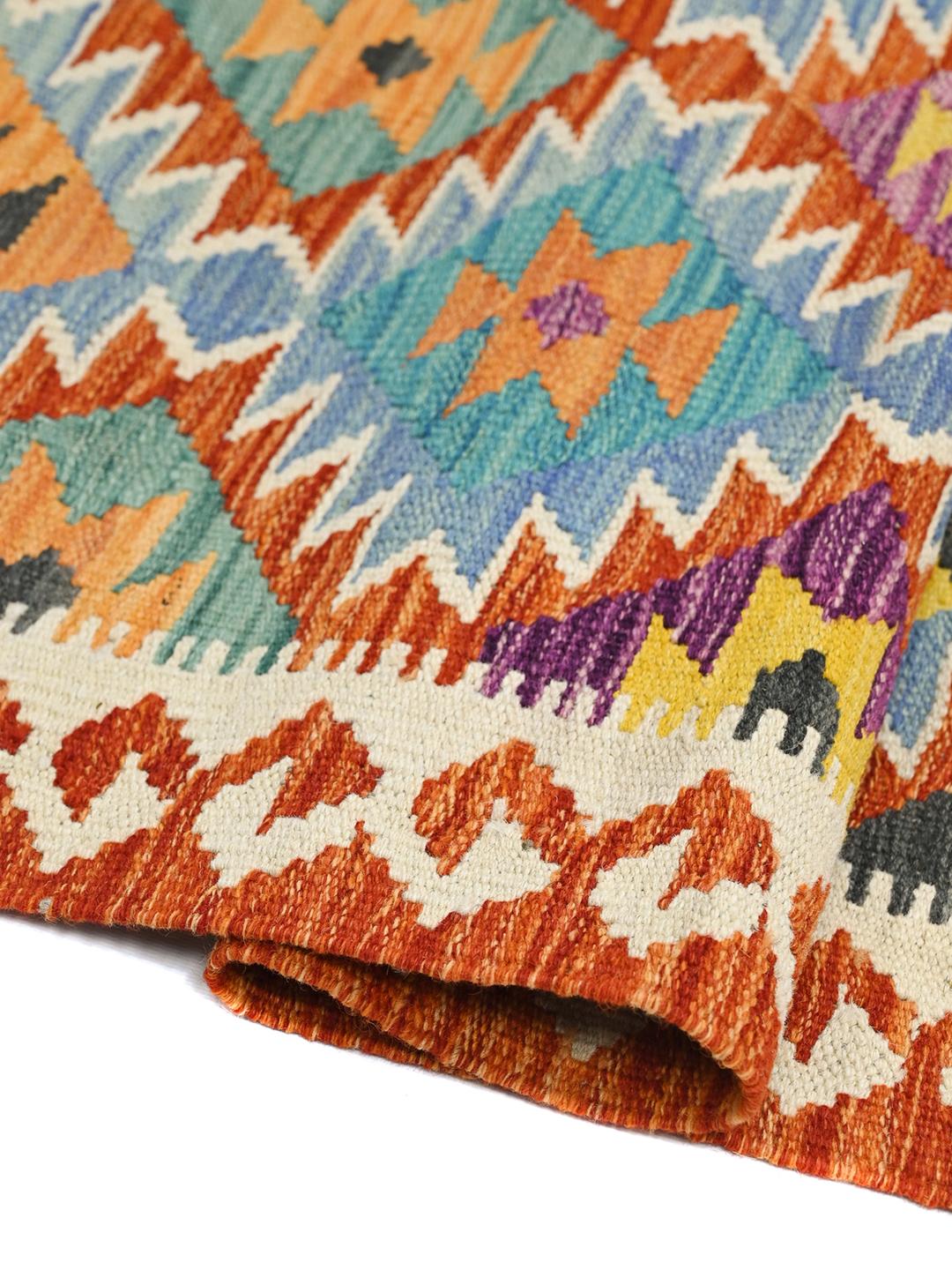
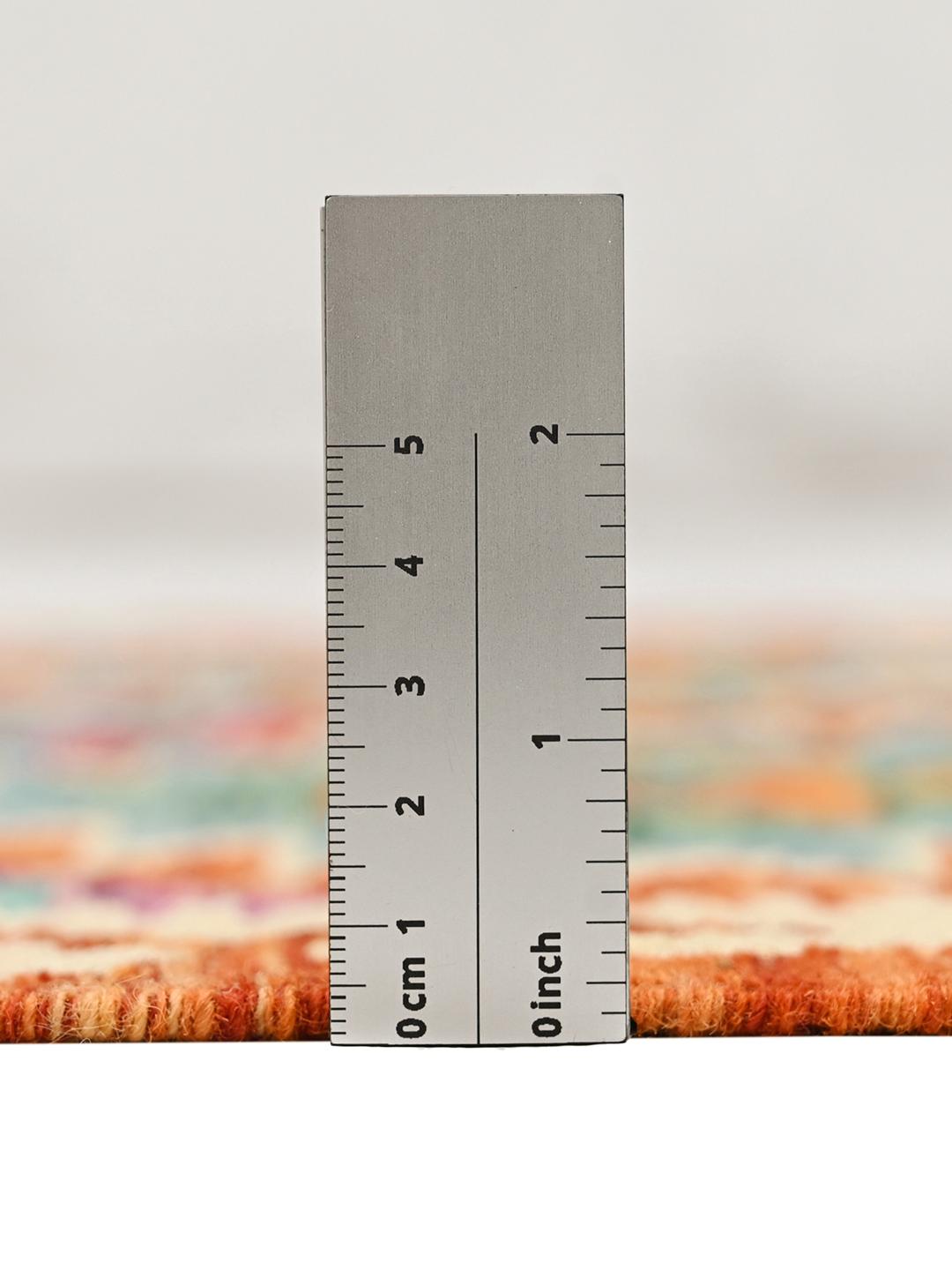
Technically, the term Kelim refers to a flat-woven rug, meaning the pile is created by interlacing the warp and weft threads without the use of knots. This results in a thinner, lighter rug that is highly versatile. The lack of pile makes these rugs exceptionally durable and easy to clean, as there are no fibres to mat down over time. This technique highlights the weaver's ability to create crisp, clear designs through the sheer precision of the weave itself.
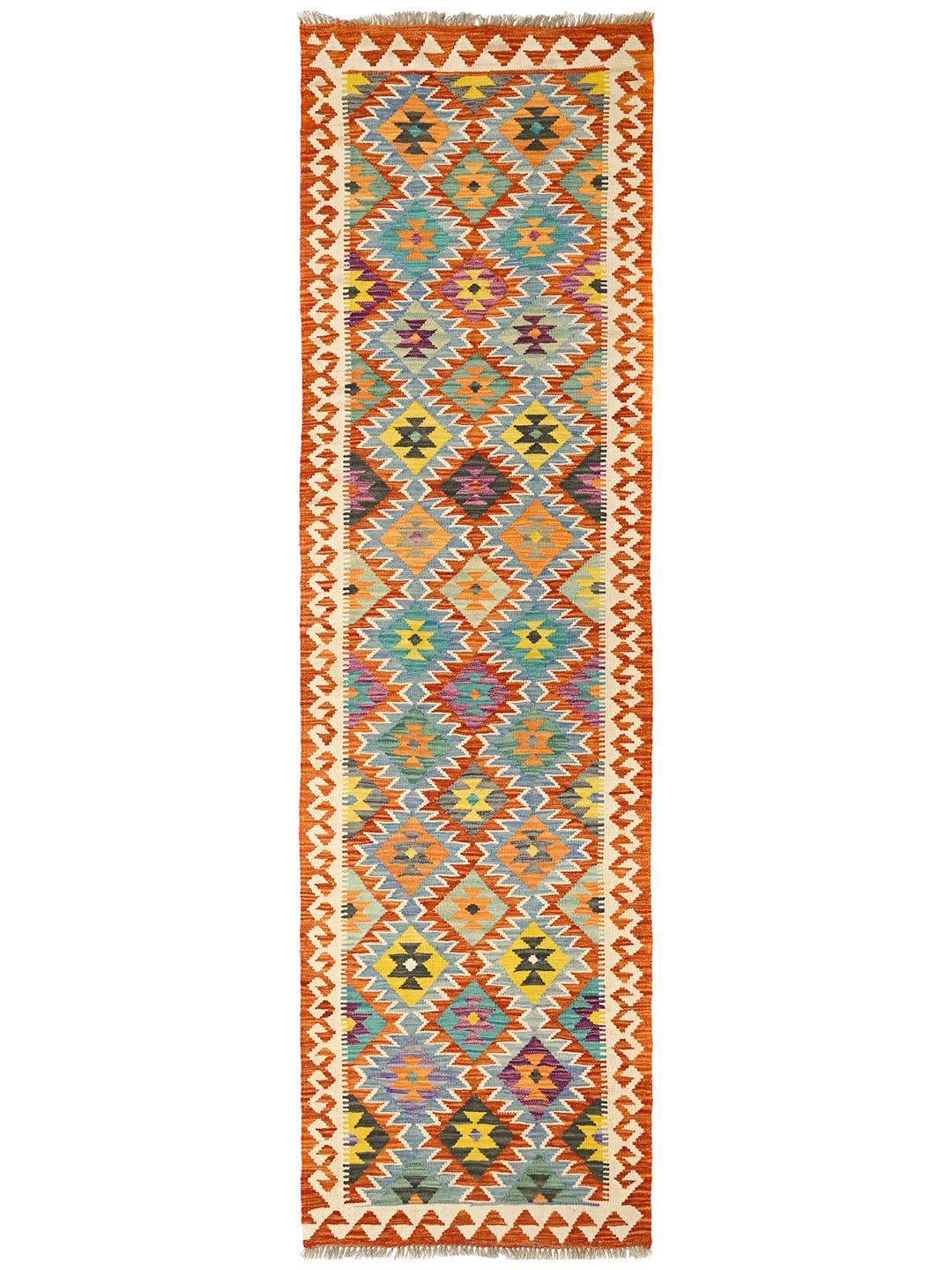
Visually, these runners are defined by their vibrant geometric language. The patterns often feature rows of diamonds and hooked motifs, which are traditional symbols of protection and good fortune in local folklore. The use of bold, contrasting colours is a hallmark of the old-style aesthetic, creating a lively surface that feels both ancient and remarkably modern in its appeal. Each rug serves as a canvas, showcasing the weaver's personal interpretation of these classic design motifs.
Collectors value these rugs for their authenticity and the tangible connection they offer to a traditional way of life. Owning one is an investment in cultural heritage, representing a level of human skill that is increasingly rare in a modern, mass-produced world. These pieces are not merely floor coverings; they are historical narratives woven in wool, cherished for their ability to bring a sense of grounded, timeless quality to any contemporary home.