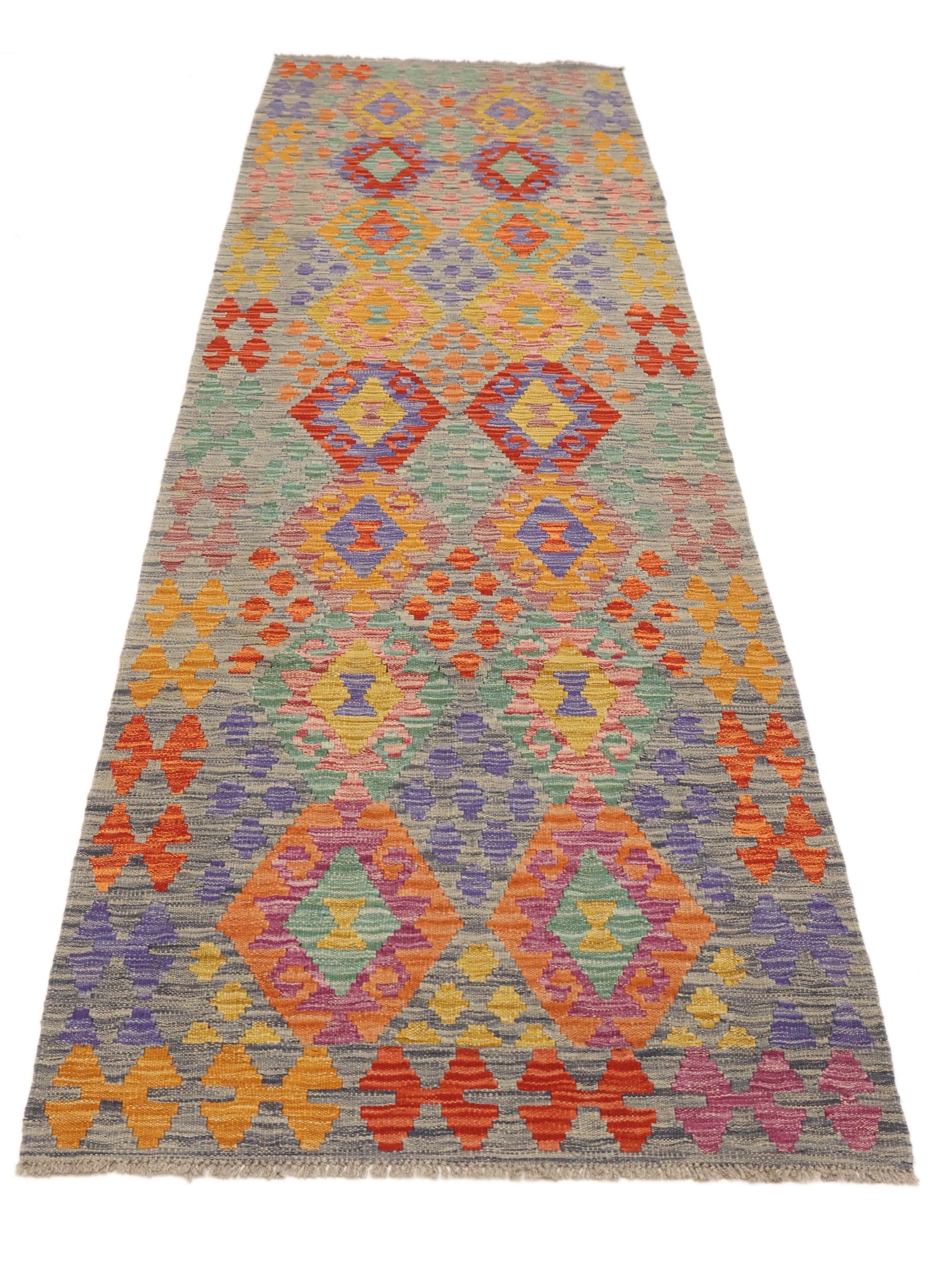
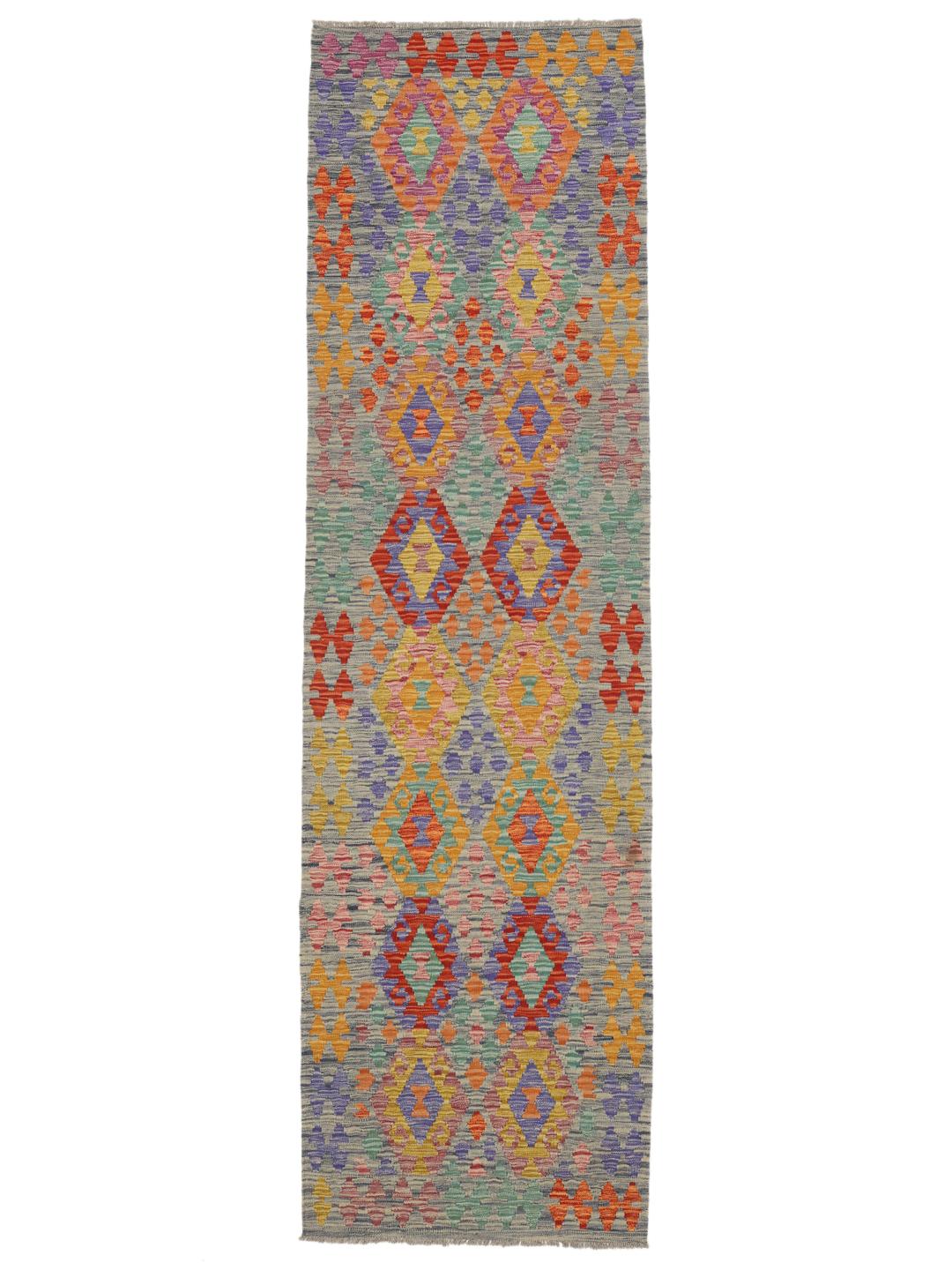
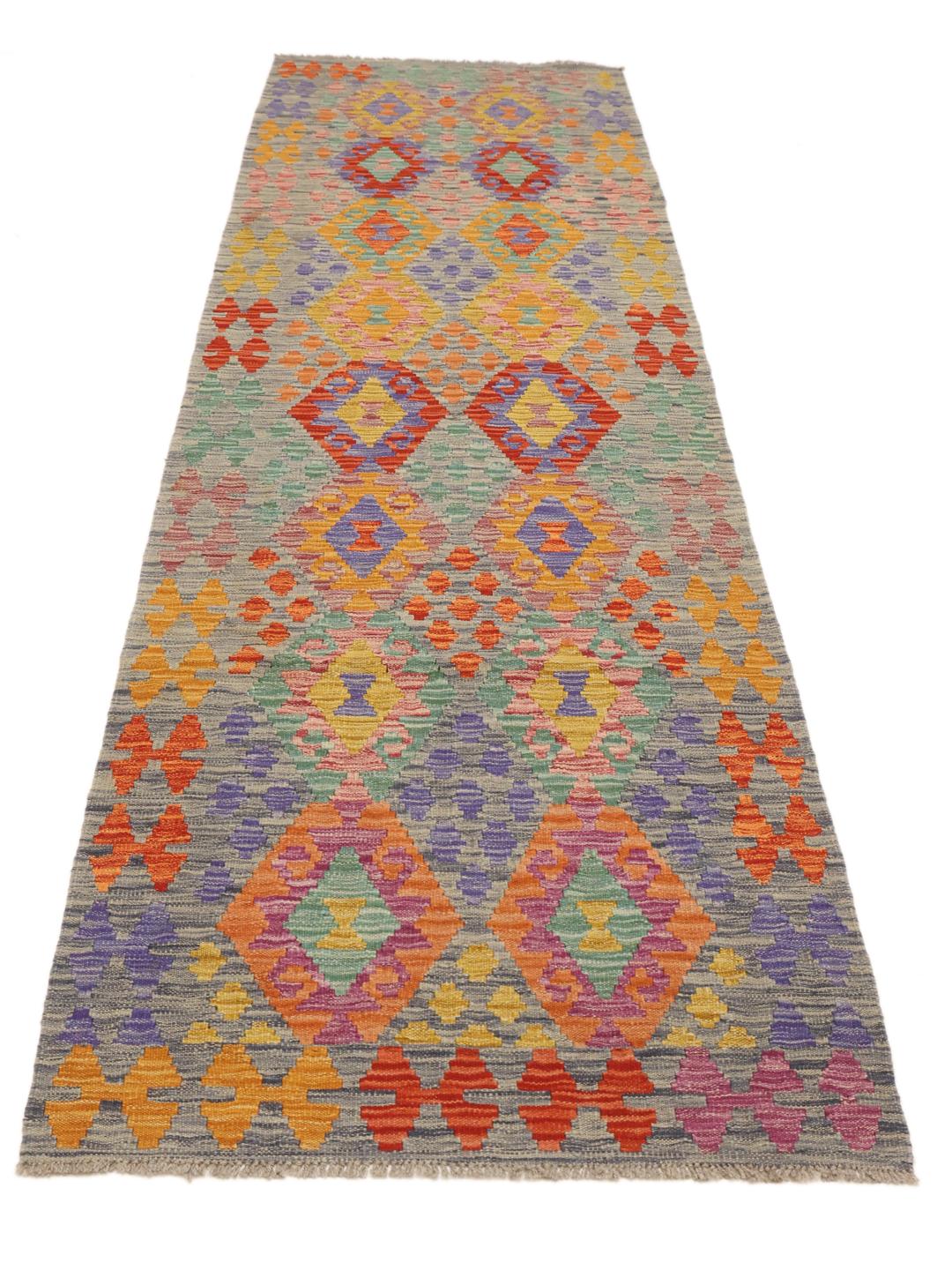
Kelim rugs have a storied history rooted in the nomadic and village traditions of the Middle East and Central Asia. Originally created by weaving tribes for practical use as floor coverings, wall hangings, and saddlebags, these flat-woven textiles were essential to daily life, providing insulation and protection in harsh climates.
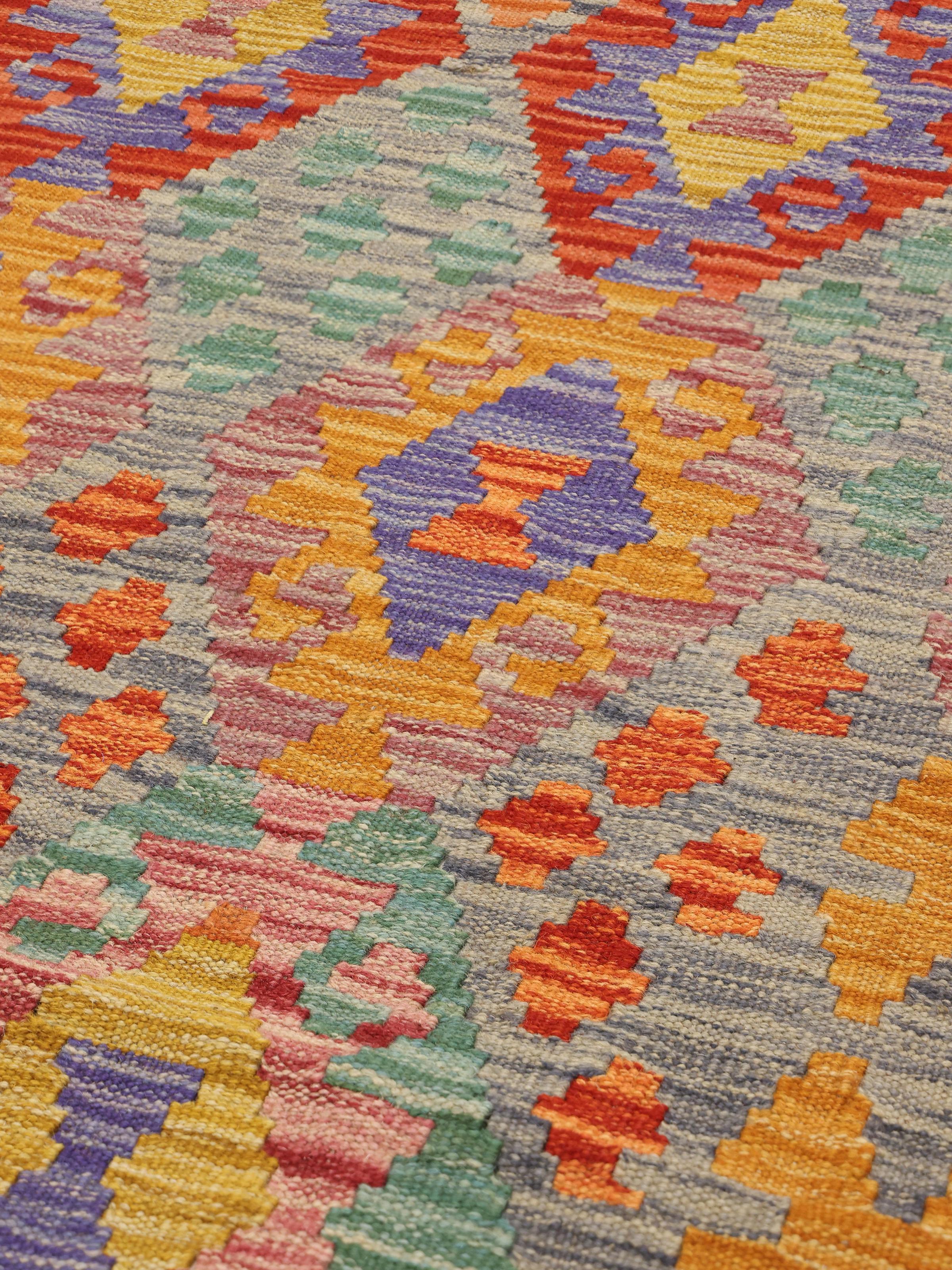
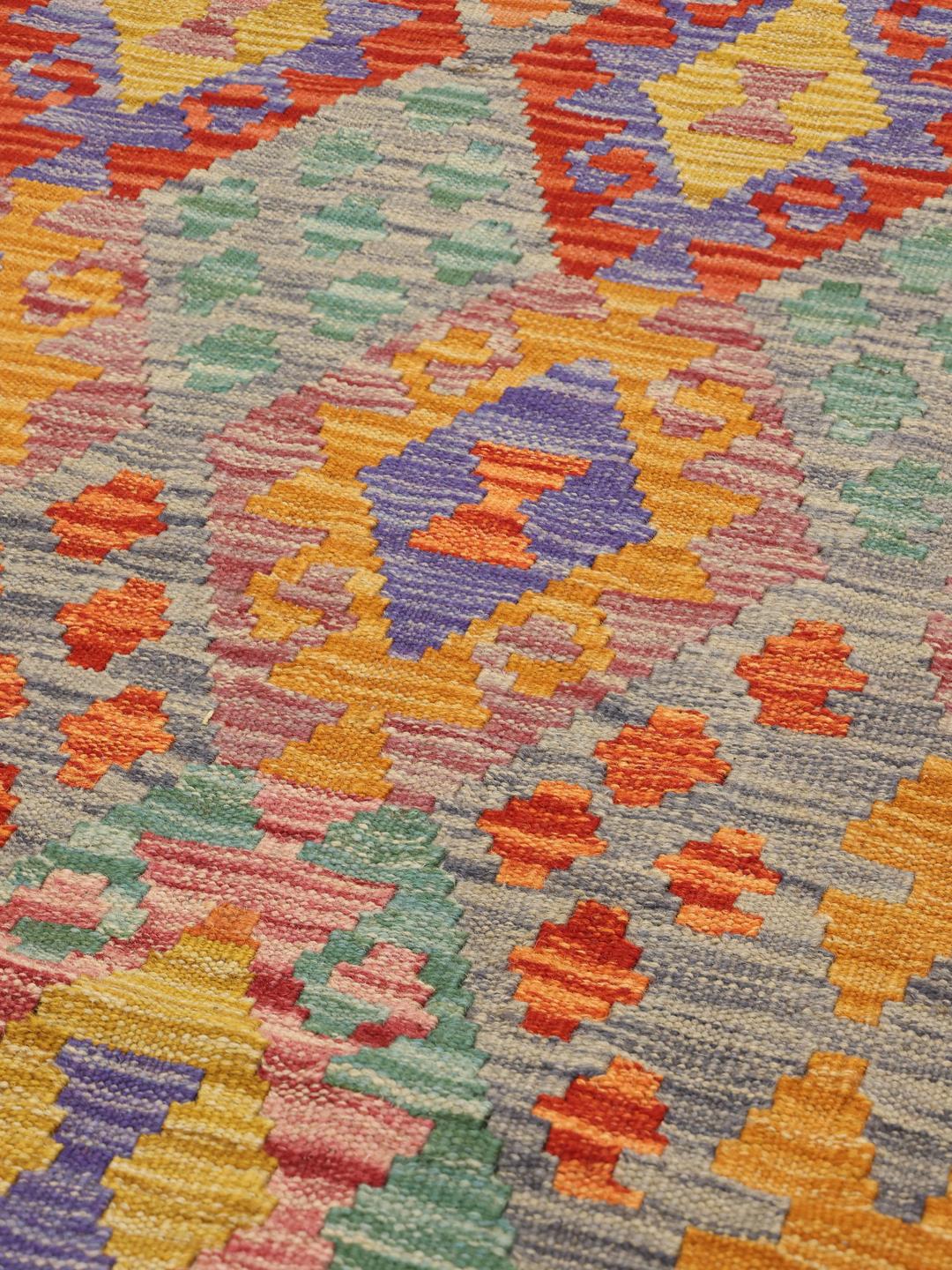
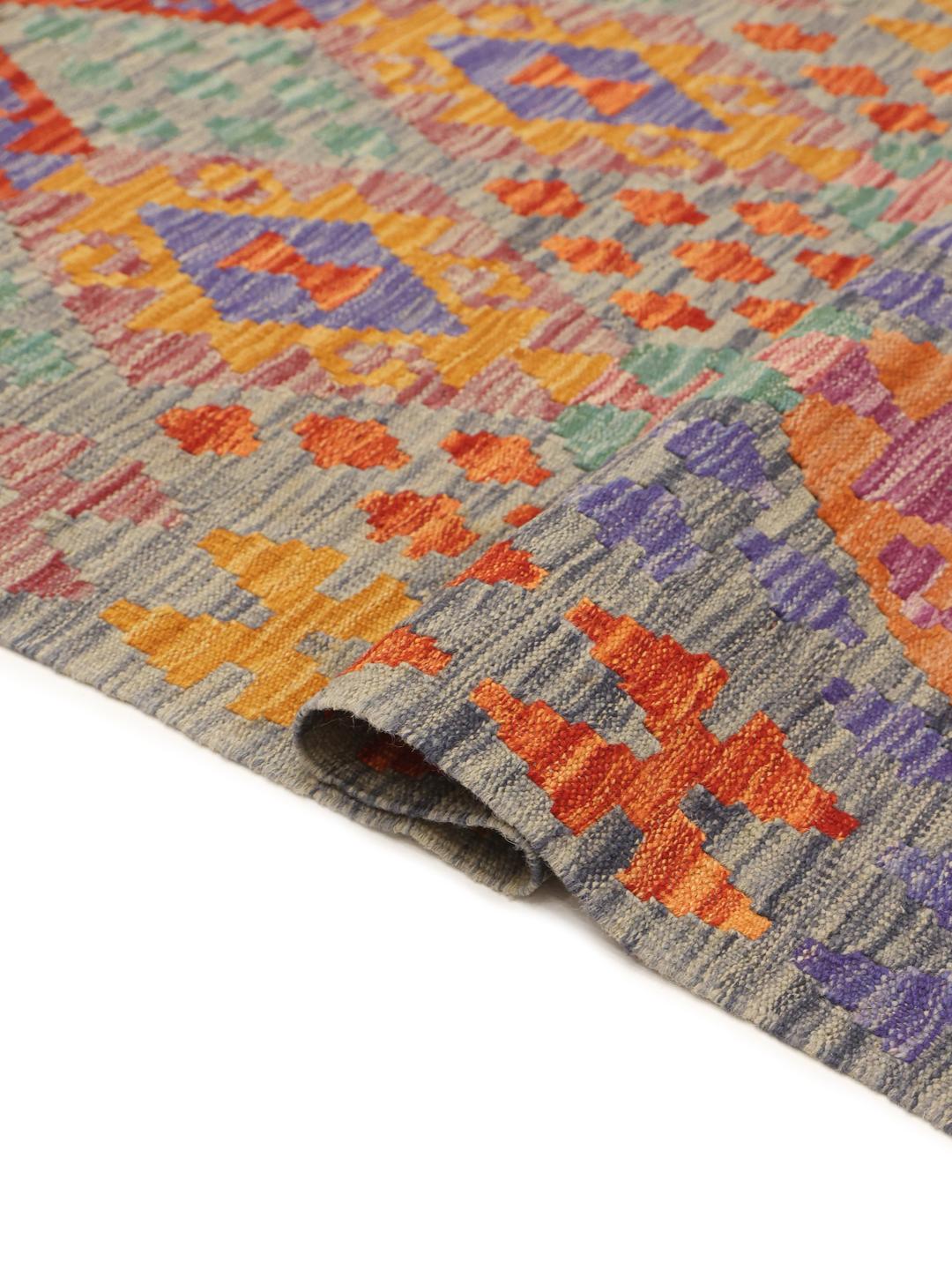
The term 'Kelim' refers to the specific technique of weaving where the weft threads are passed through the warp threads to create the pattern, resulting in a rug with no pile. This labour-intensive method requires great precision, as every colour change in the design involves a complex interlocking of threads that defines the structural integrity of the entire piece.
Visually, these rugs are defined by their bold geometric motifs and vibrant use of natural dyes. The patterns often carry symbolic meanings, reflecting the cultural heritage, local environment, and storytelling traditions of the weaving communities. This particular style honours those ancient aesthetics while adapting them for a contemporary home.
Collecting these rugs is an investment in cultural preservation. Each piece represents a bridge between generations of artisans and the modern collector, offering a tangible connection to a rich craft tradition that values skill, patience, and the artistic expression of the weaver.