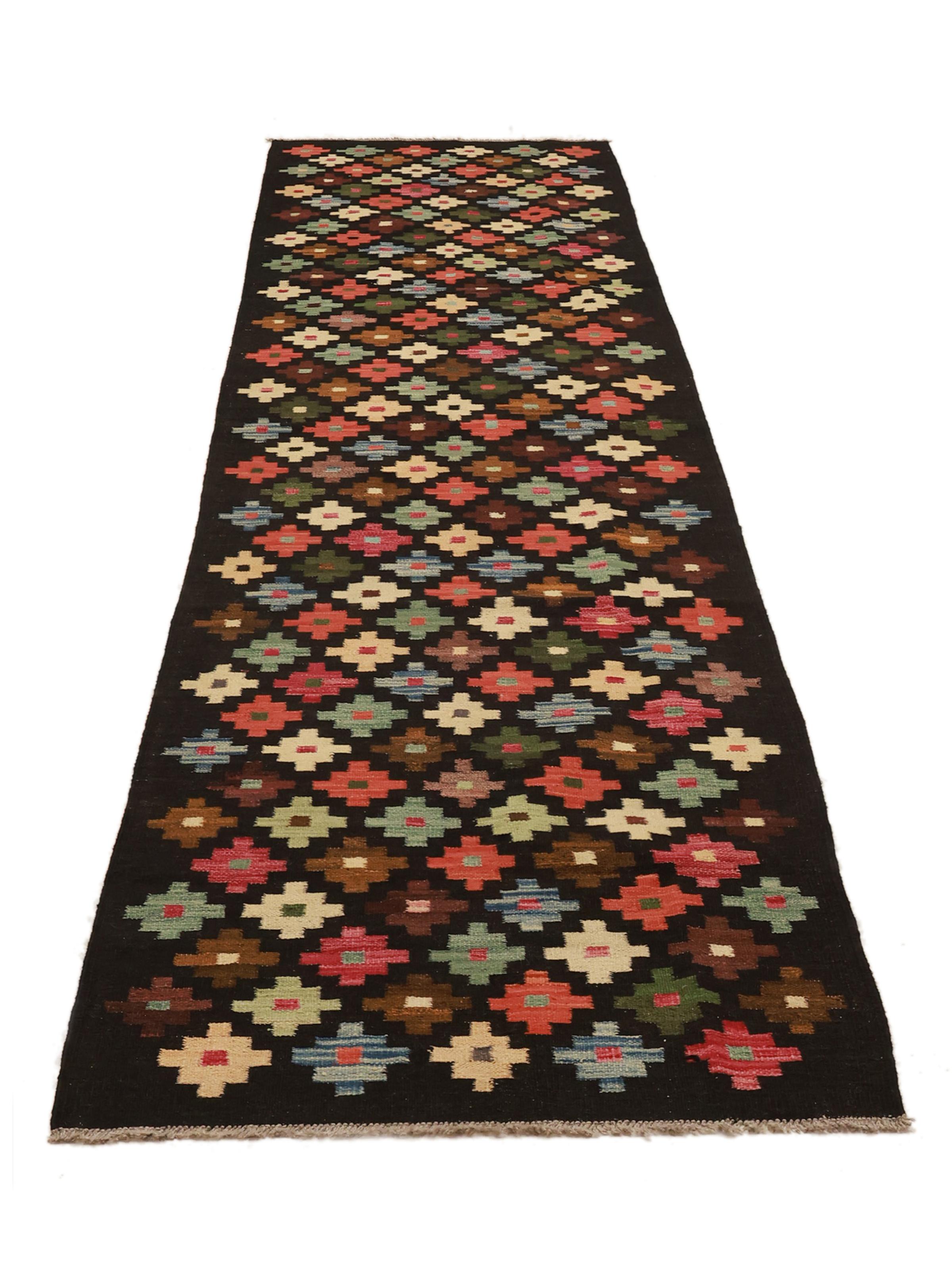
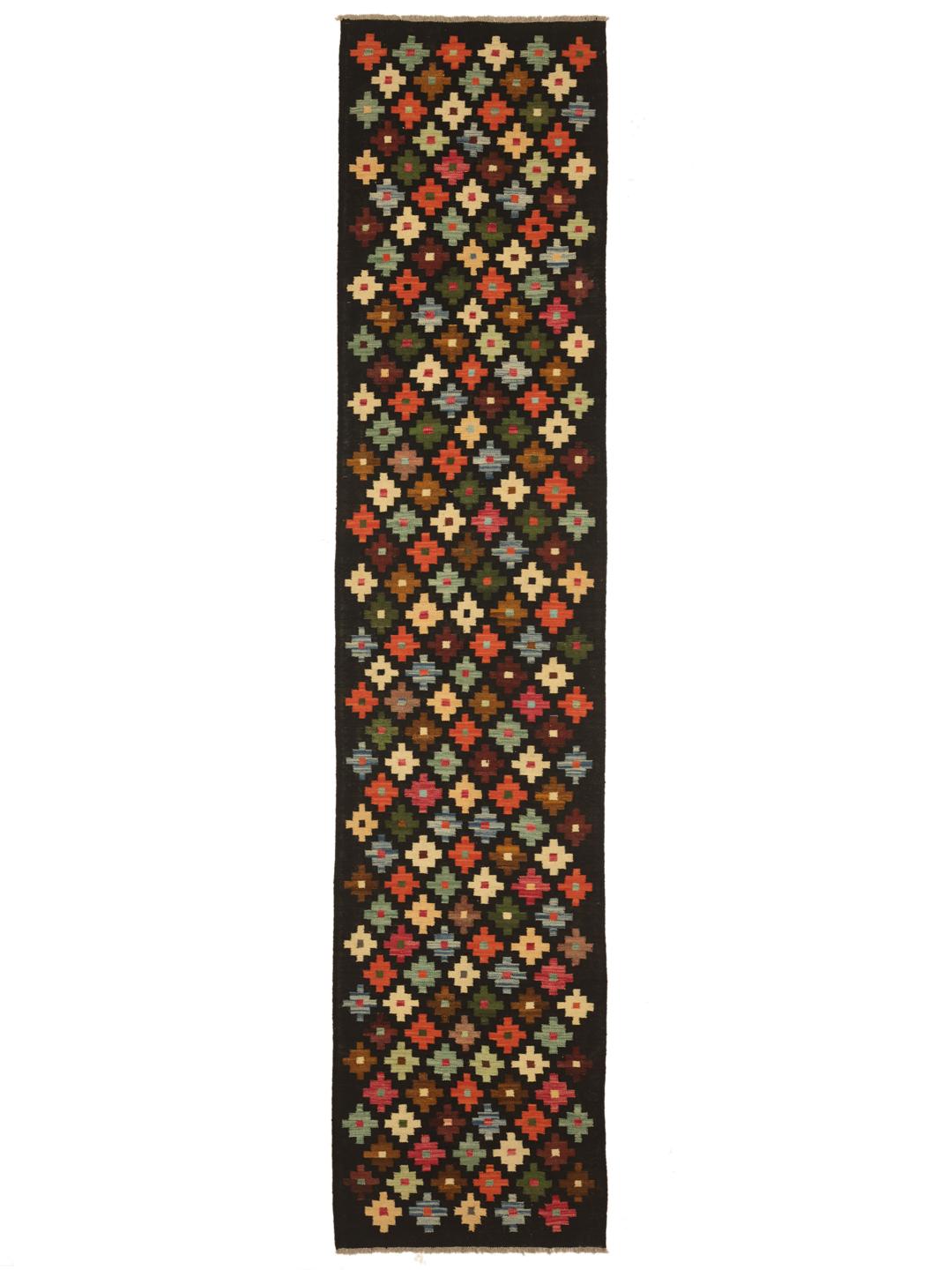
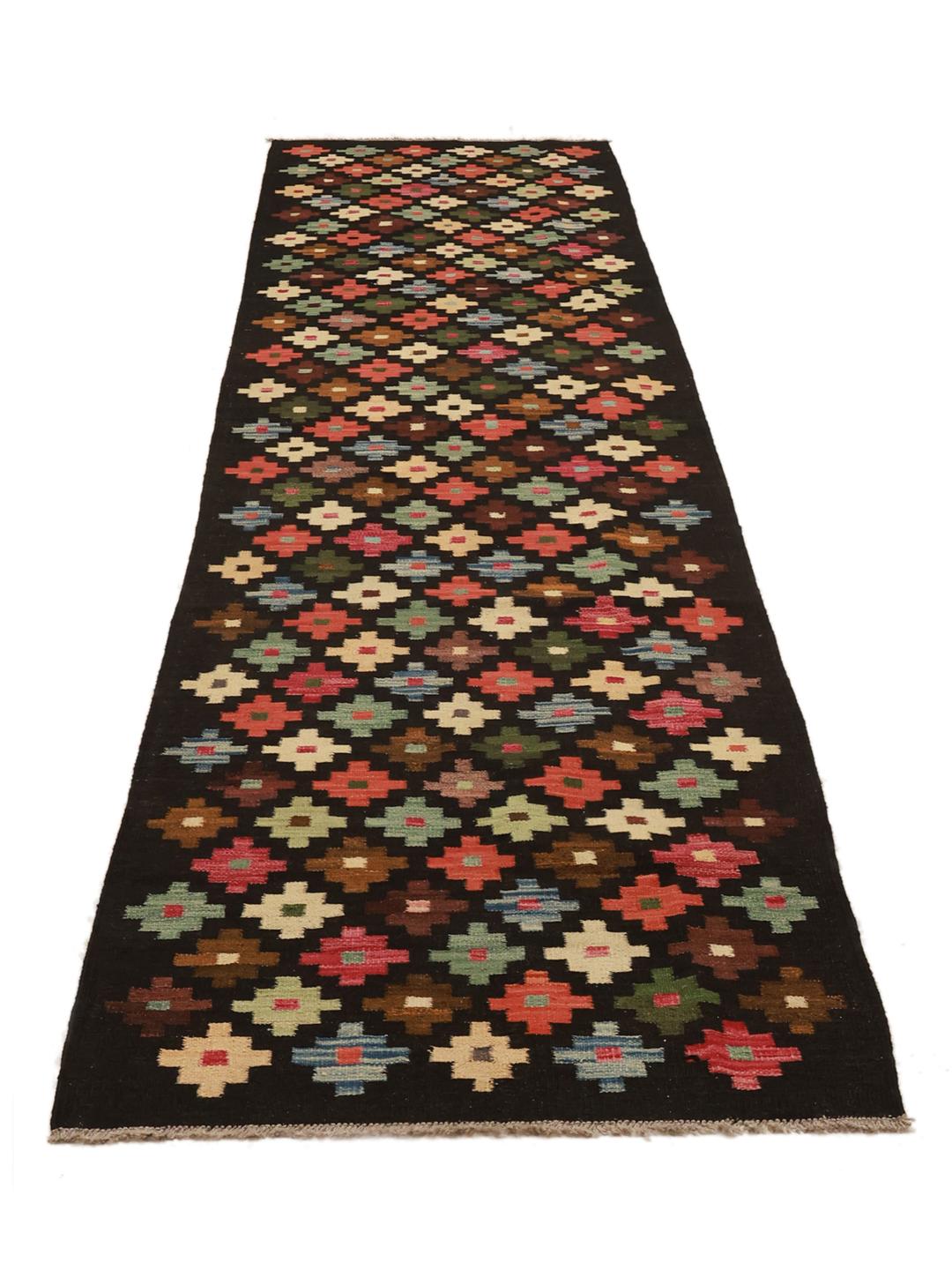
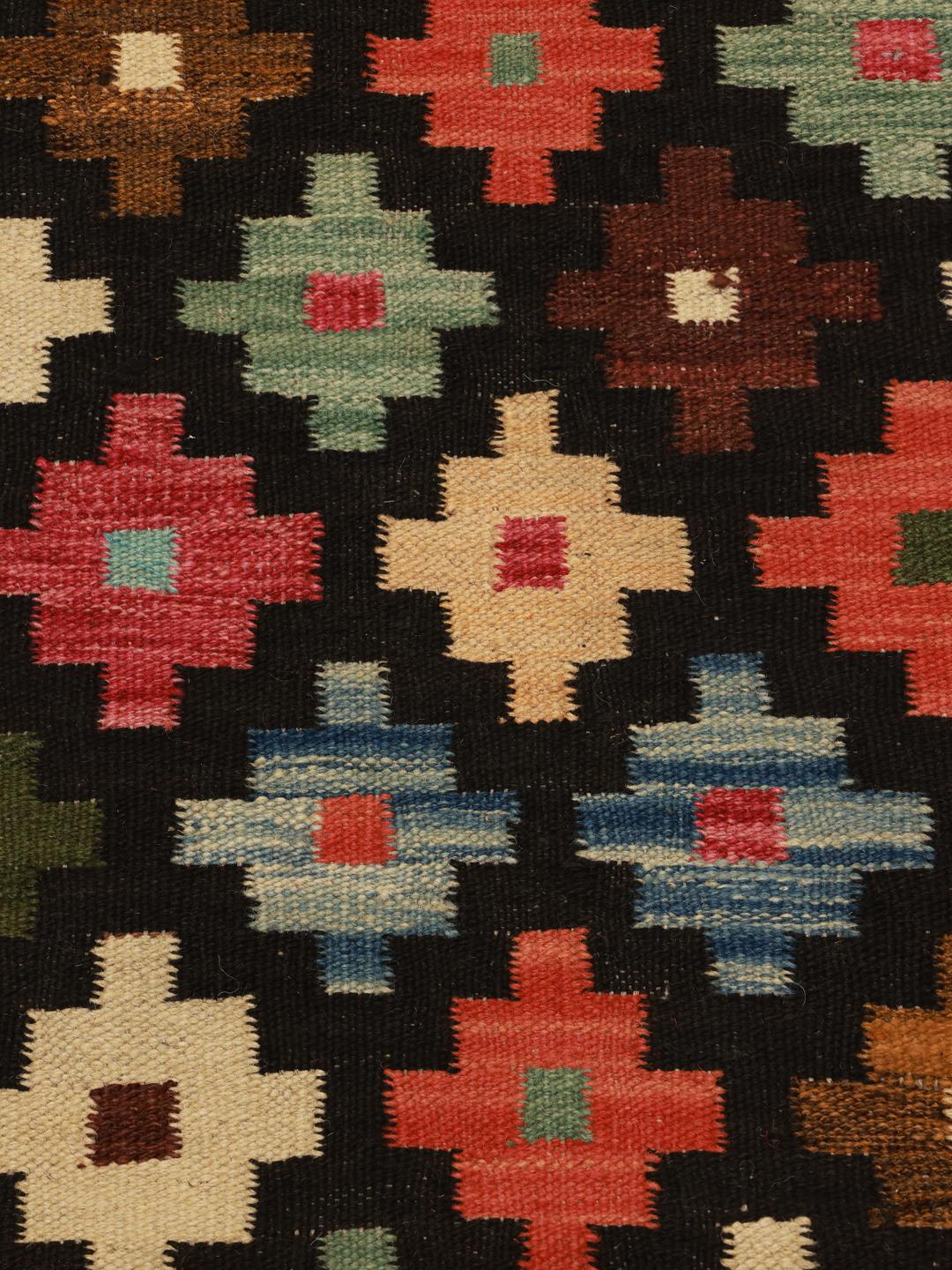
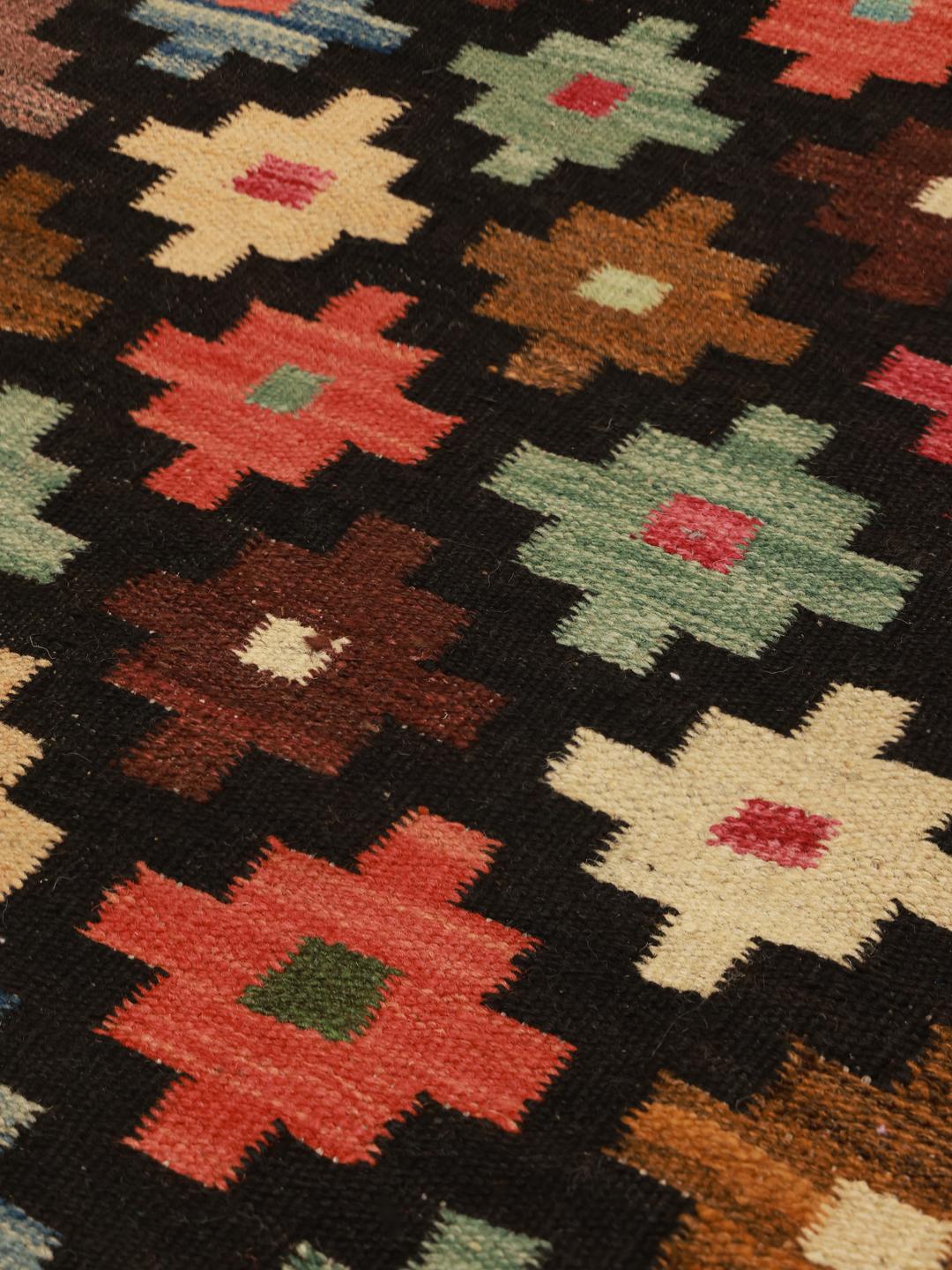
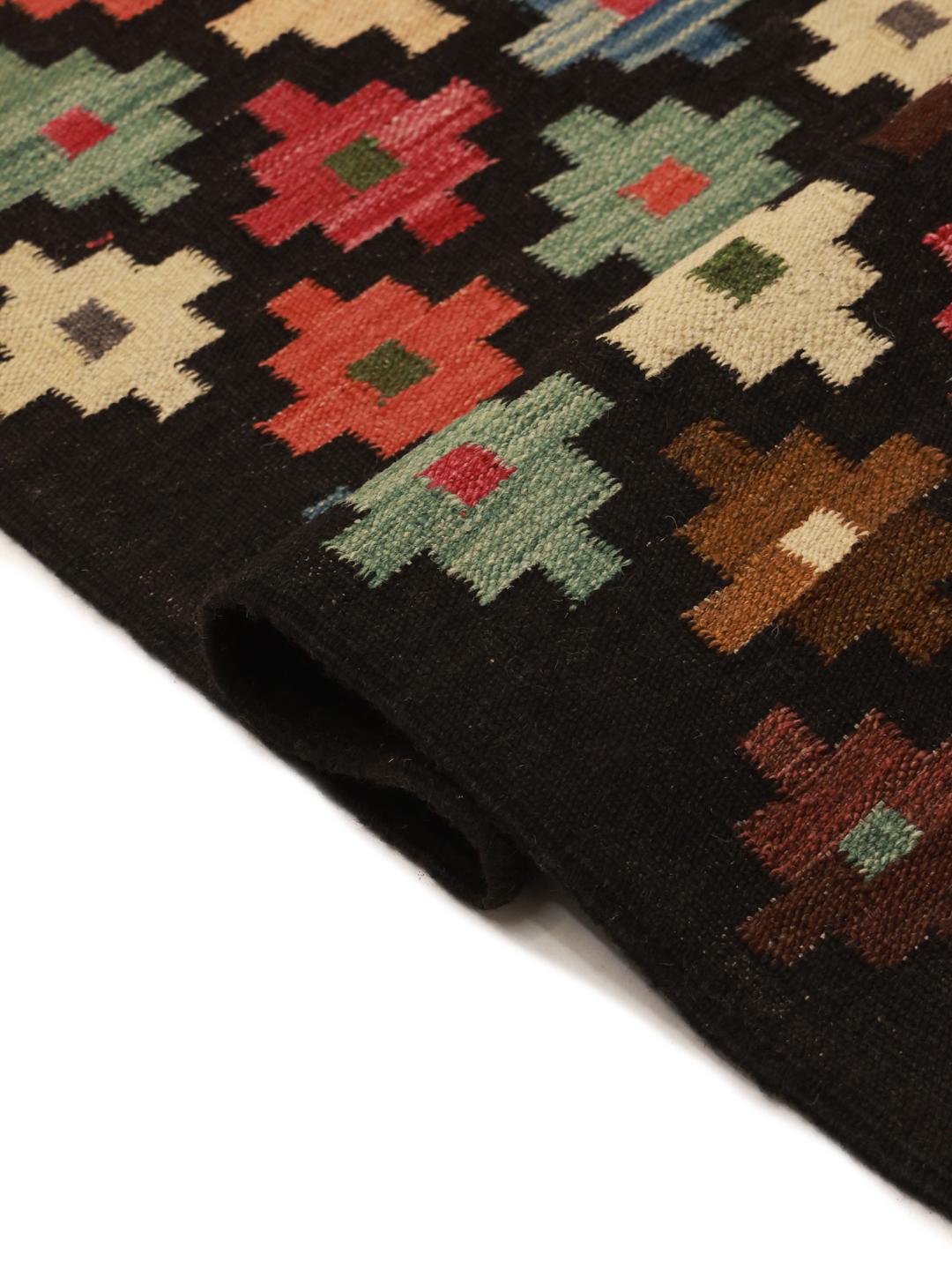
Kelim weaving in Afghanistan is an ancient art form deeply rooted in the nomadic and semi-nomadic traditions of the region. Historically, these flatwoven textiles were created not just as floor coverings, but as functional art for daily life, serving as blankets, saddlebags, and protective tent hangings.
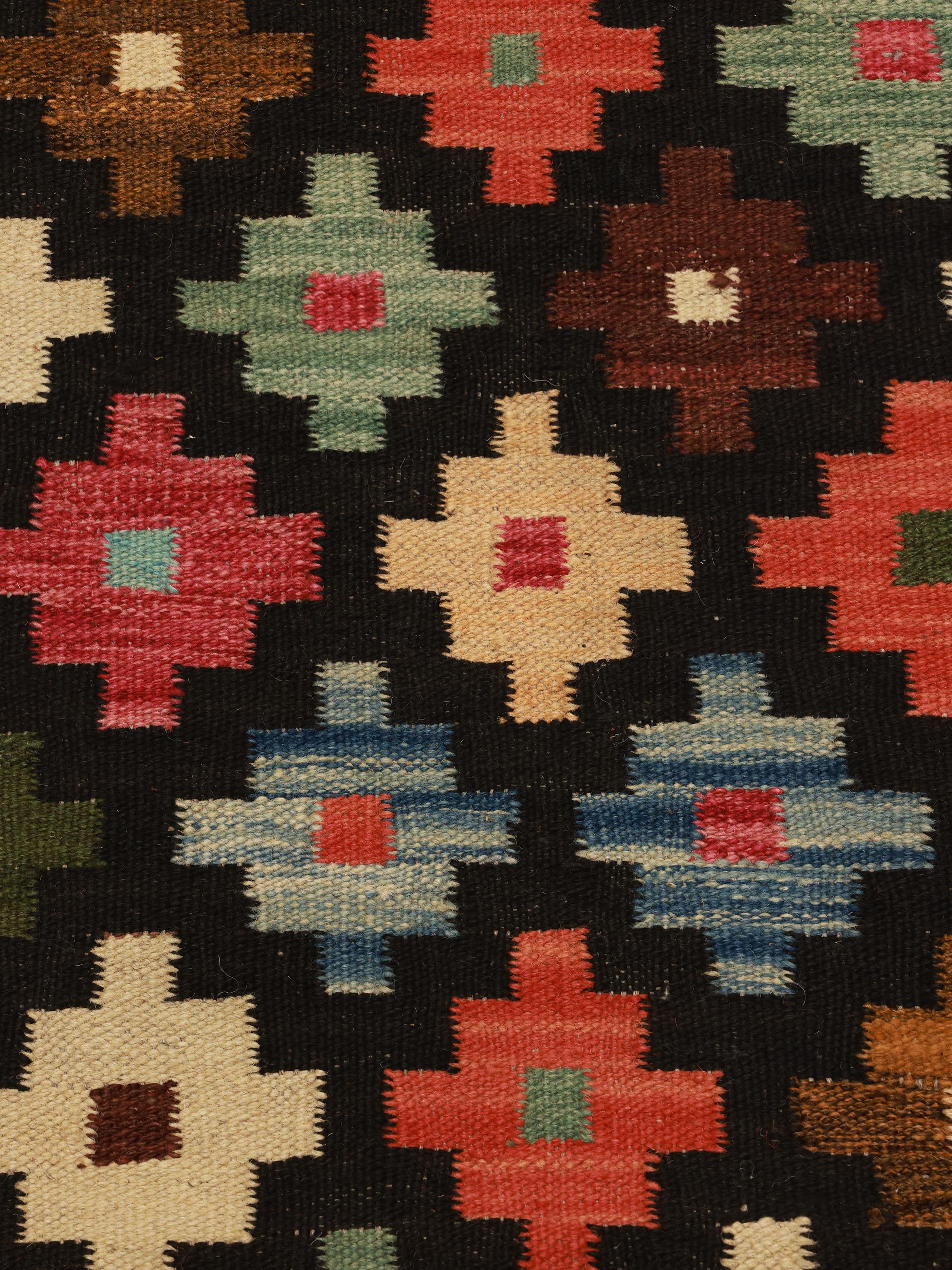
The term Kelim refers to a specific slit-weave weaving technique where the colored weft threads are woven back and forth to create distinct geometric blocks of color. This traditional method results in a reversible, lightweight textile that is exceptionally strong and celebrated for its clean, graphic appearance.
The design of this runner is inspired by traditional tribal patterns, where small geometric motifs are arranged in diagonal alignments. These symbols often carry historical meanings, representing natural elements, protection, or tribal identity, passed down through generations of weavers who memorised the patterns rather than working from drawings.
Owning an Afghan Kelim means acquiring a piece of living history. Even as a contemporary creation, it carries the cultural weight and artistic integrity of a centuries-old craft, offering a beautiful connection to the weavers of Afghanistan and their enduring relationship with natural wool and geometric design.