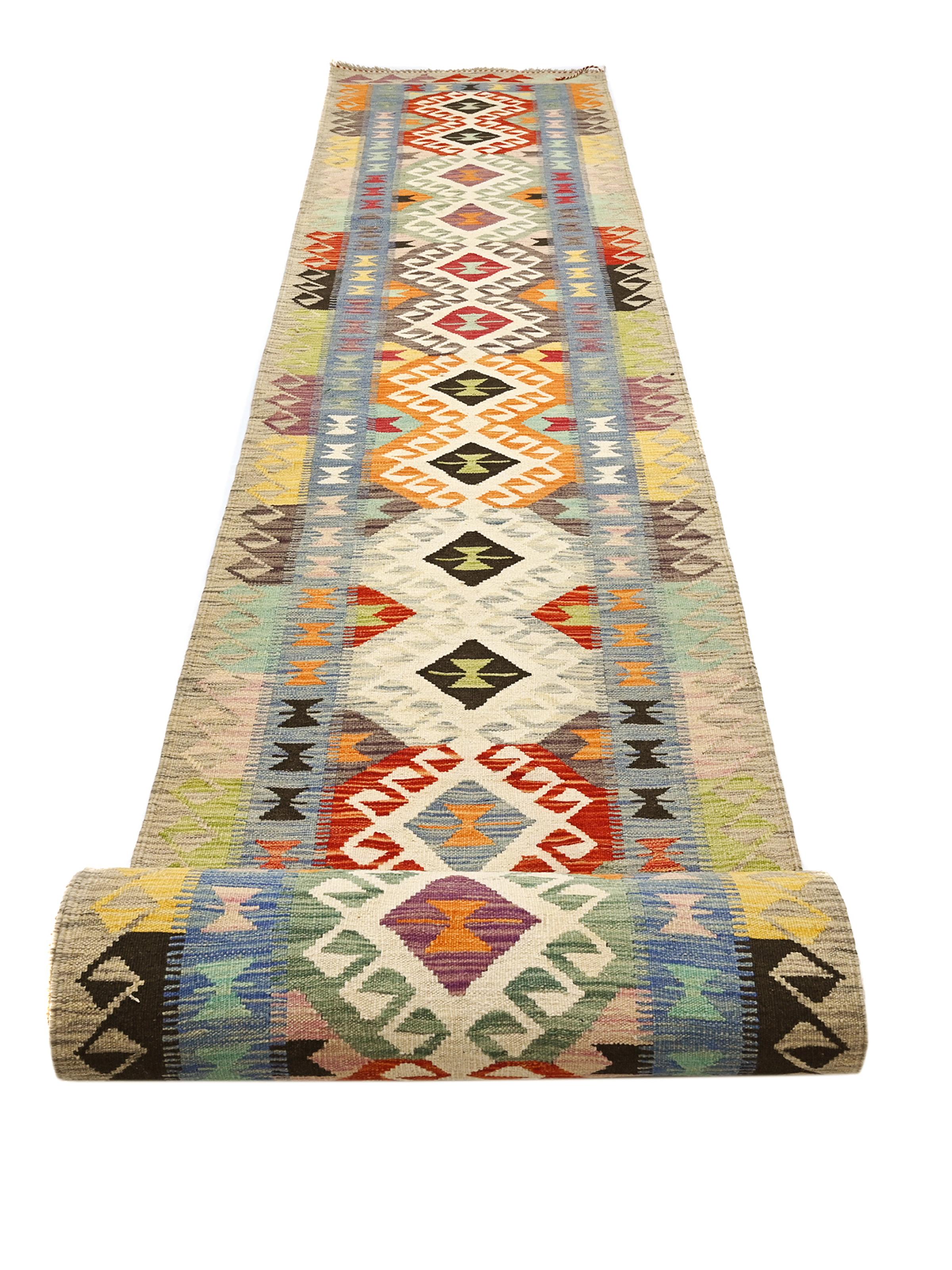
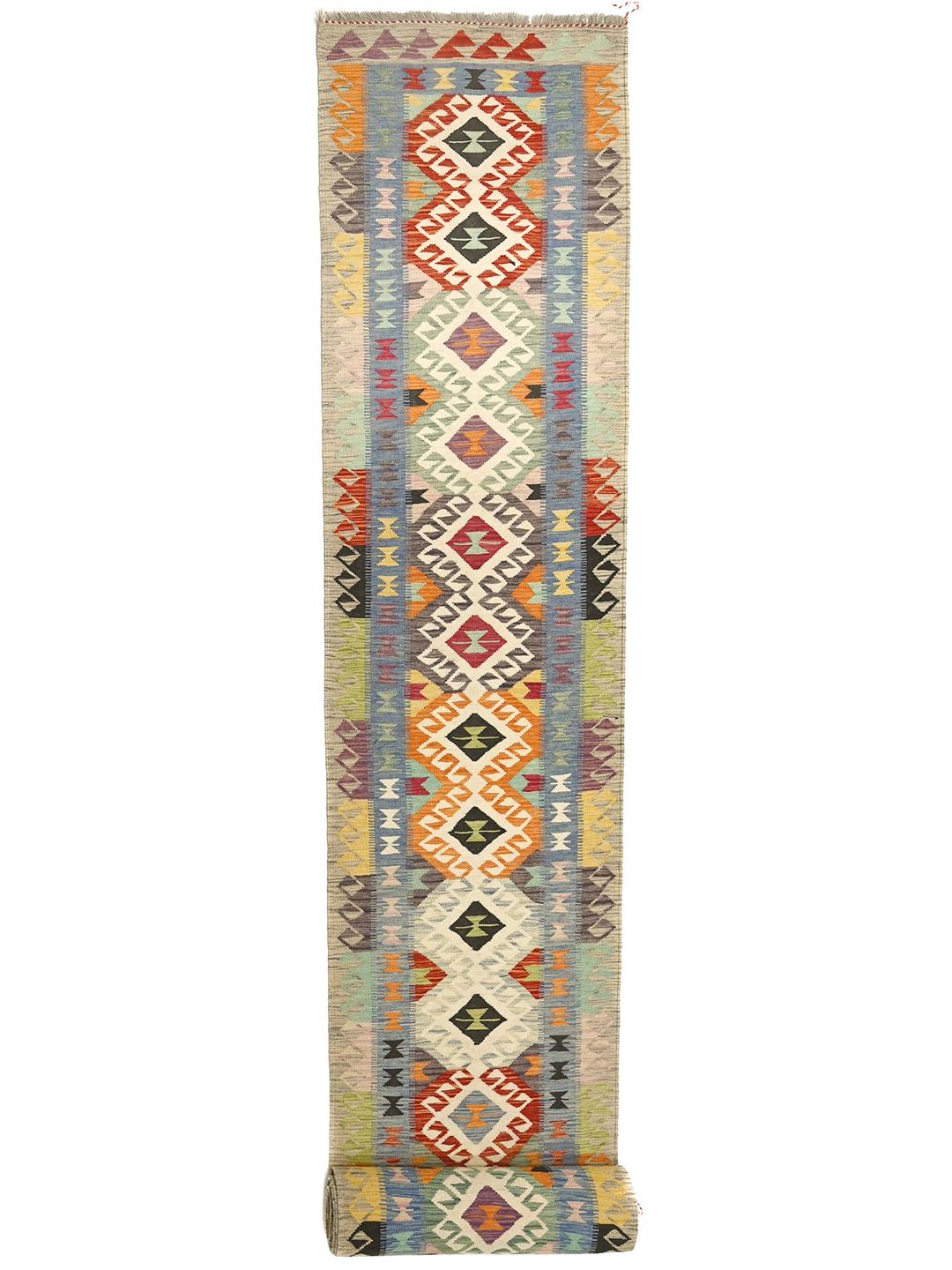
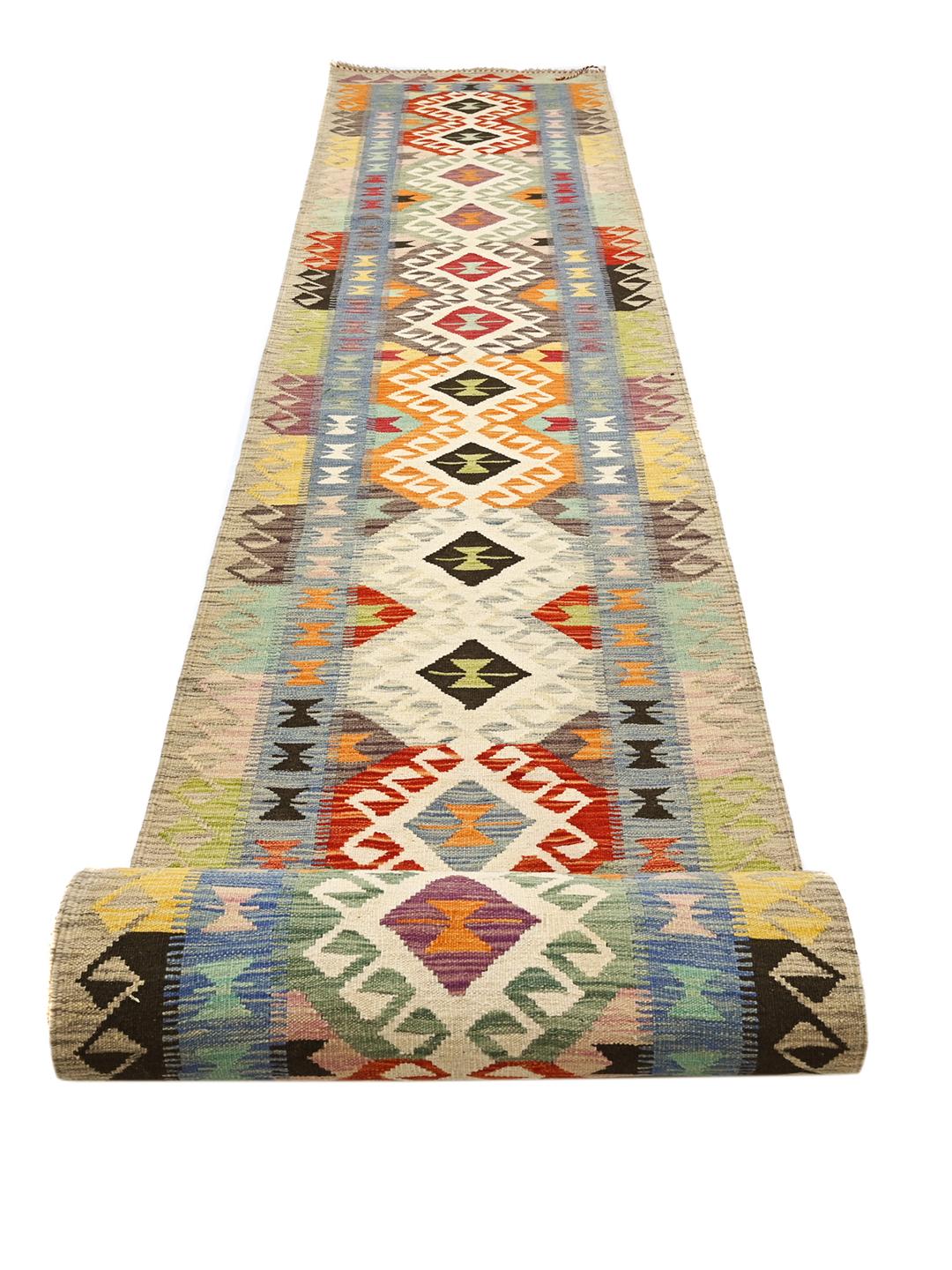
The Kelim Afghan Old Style tradition is deeply rooted in the nomadic heritage of Central Asia, where flat-woven rugs served as essential, portable furnishings for families on the move. These rugs were traditionally crafted to be versatile, serving as floor coverings, blankets, or wall hangings, and their designs often reflect the surroundings and cultural identity of the weaving communities in Afghanistan.
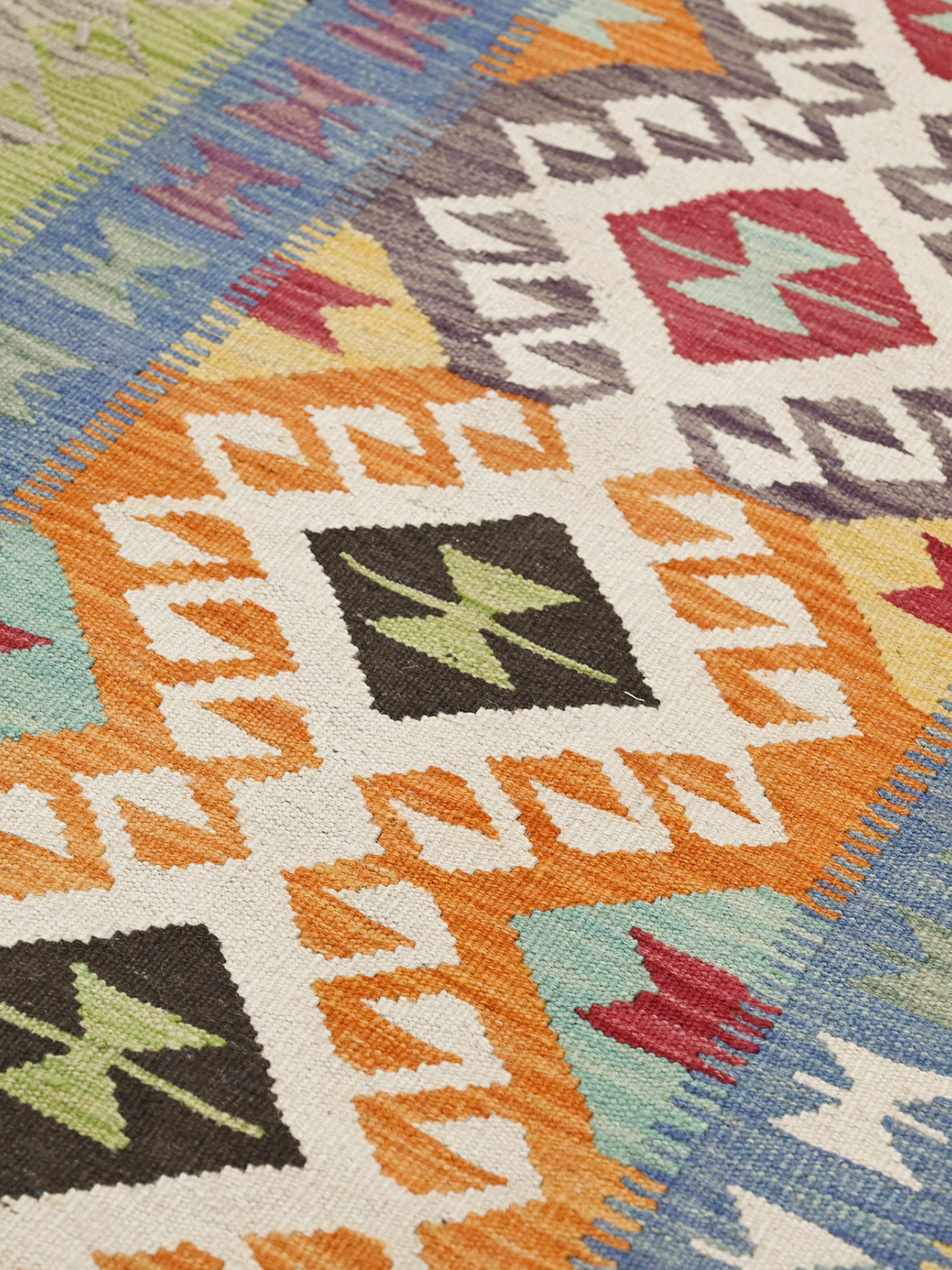
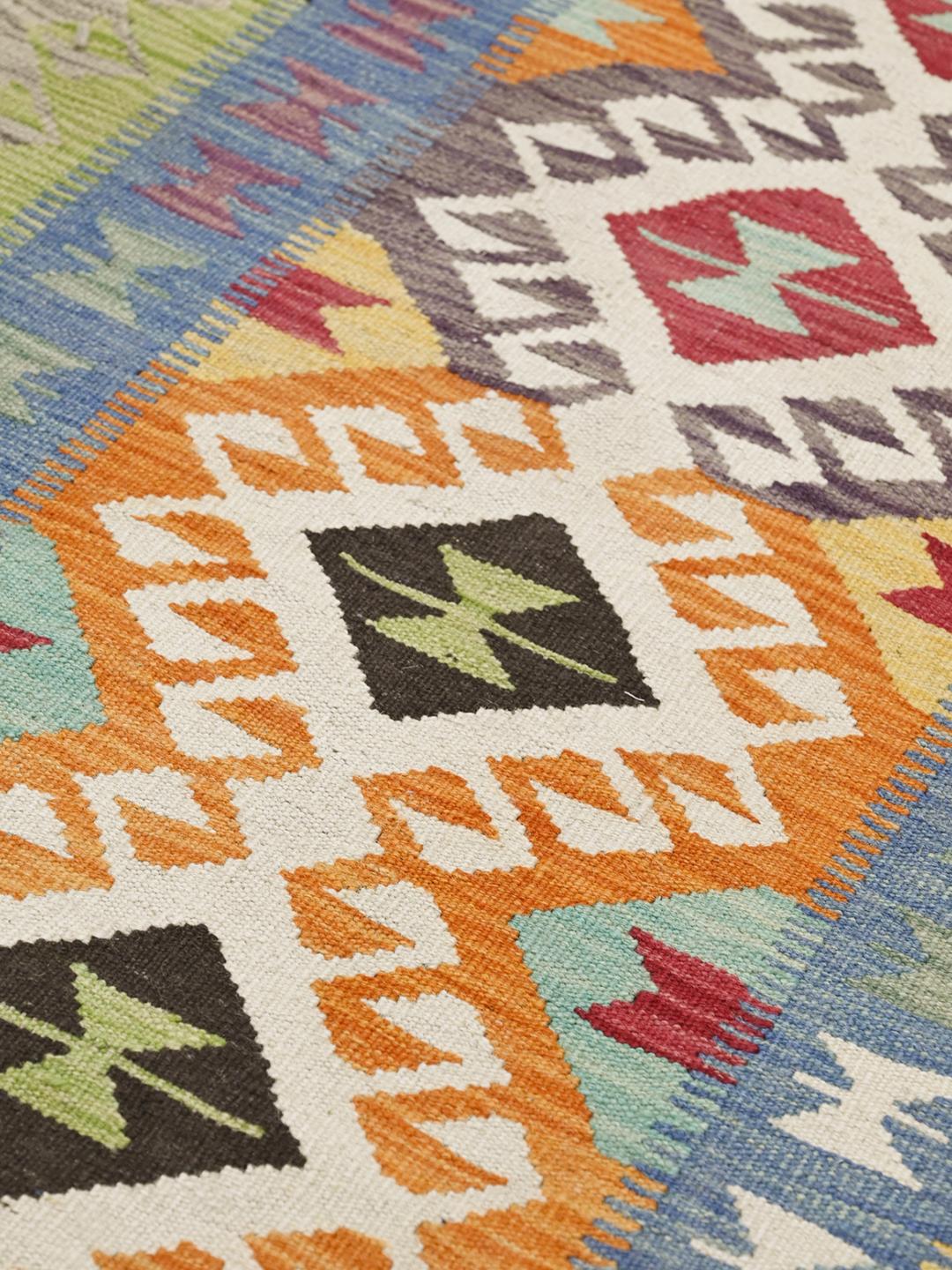
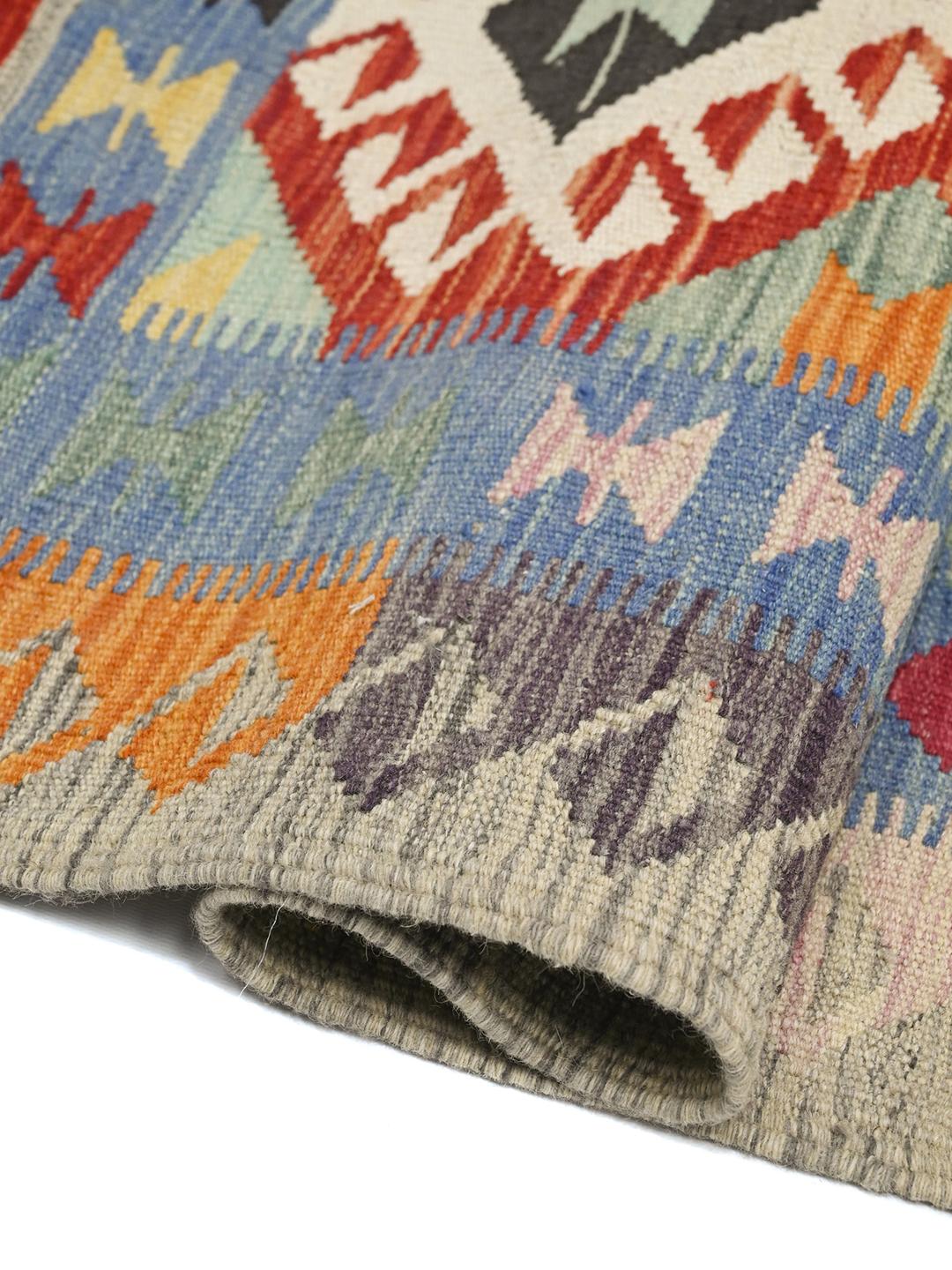
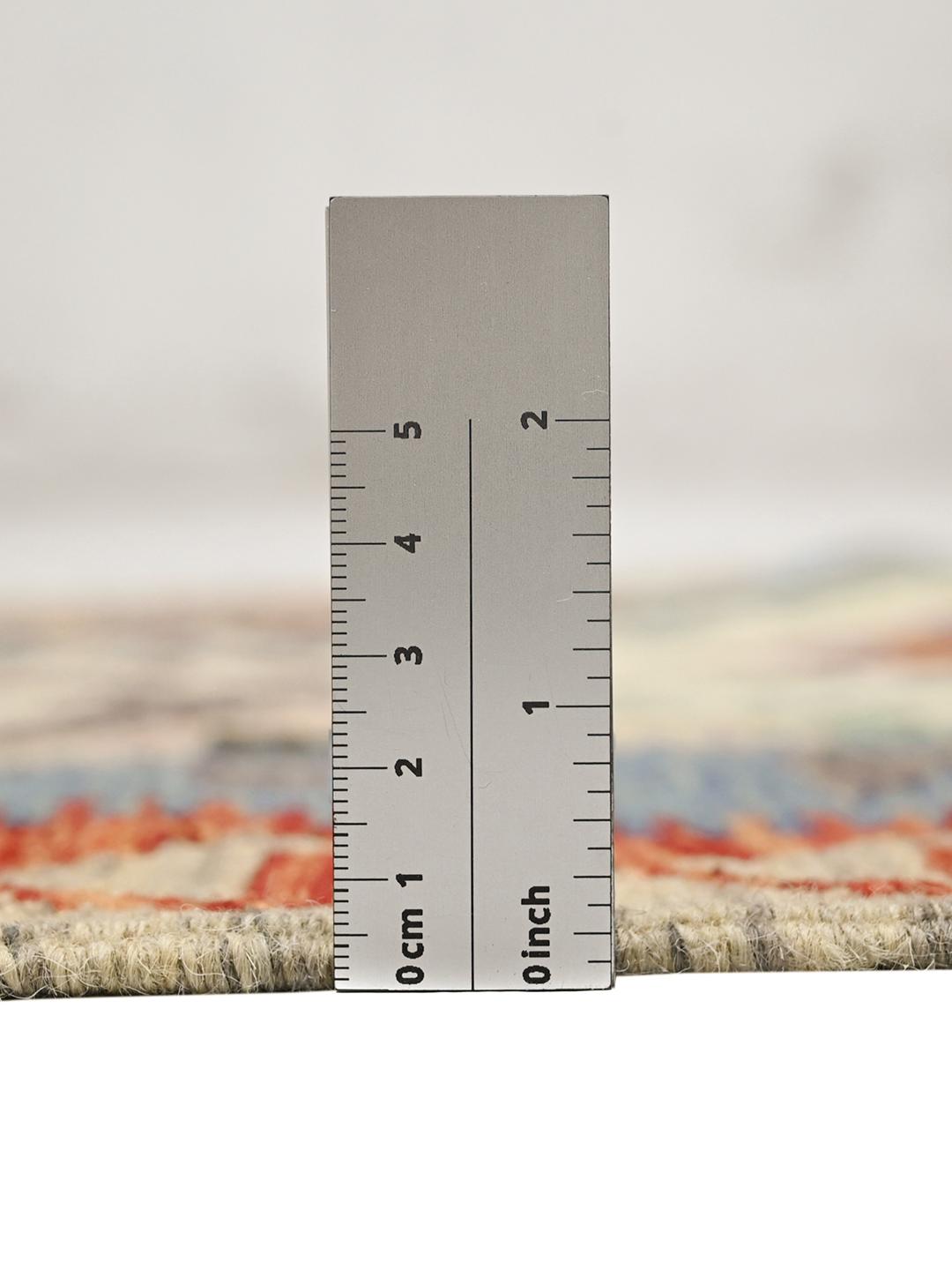
As a flat-woven textile, the Kelim is defined by its lack of a pile, which allows the intricate geometric patterns to appear sharp and clear on both sides. This technique is a hallmark of ancient weaving traditions, where the interplay of warp and weft threads creates a durable, reversible fabric that has been perfected over centuries of domestic use.
The visual language of these rugs is dominated by bold geometric motifs and symbolic shapes, often incorporating diamonds, triangles, and serrated edges that represent tribal motifs and protective charms. The vibrant colour palette is traditionally derived from natural dyes, which develop a beautiful, muted character as they age, adding to the depth and soul of each individual piece.
Owning a Kelim from this tradition is an opportunity to connect with a long-standing history of artistry. These rugs are highly valued for their authenticity and the human effort required to create them, making them prized possessions for those who appreciate the cultural weight of hand-crafted items and the enduring legacy of Middle Eastern design.