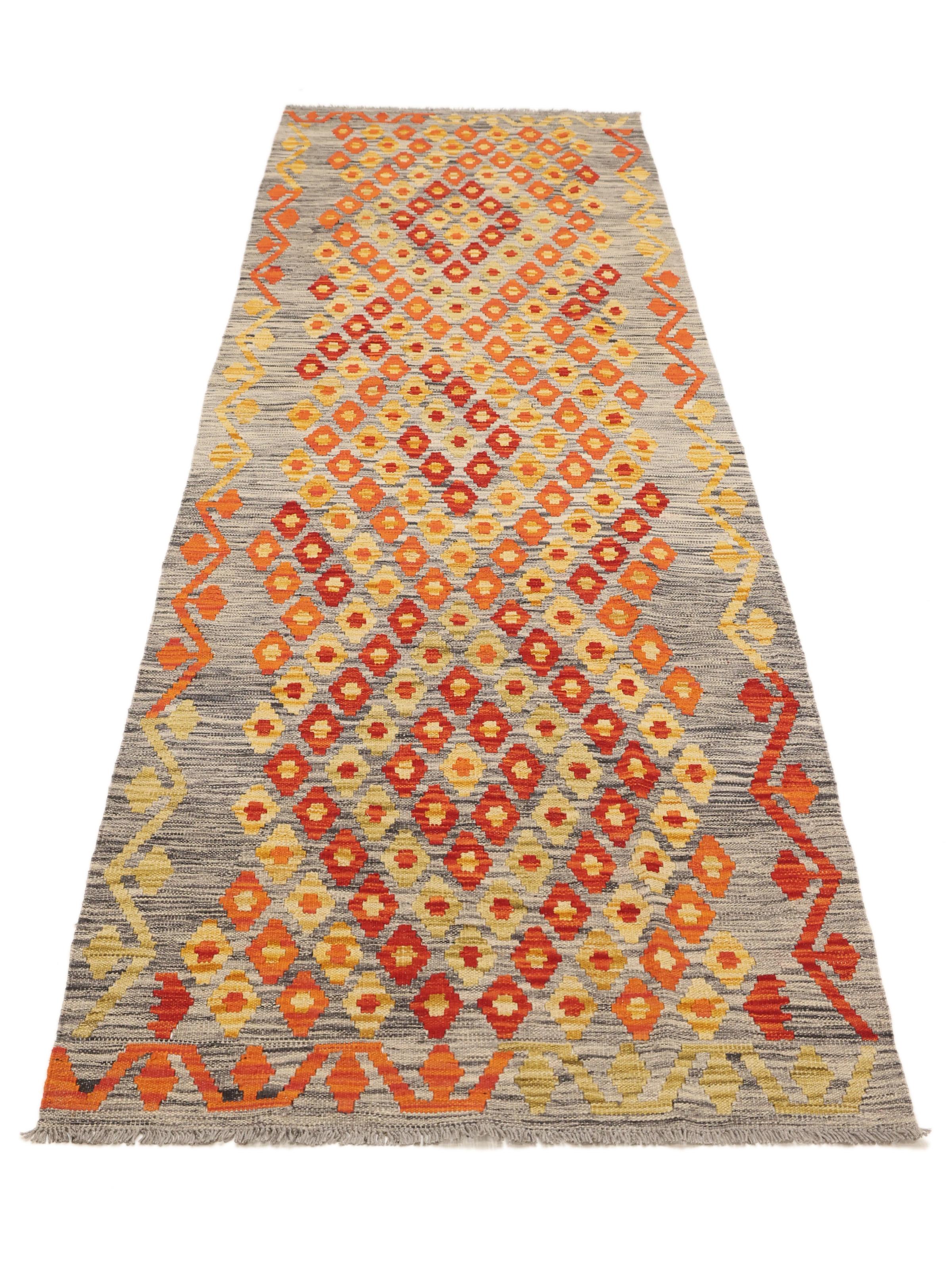
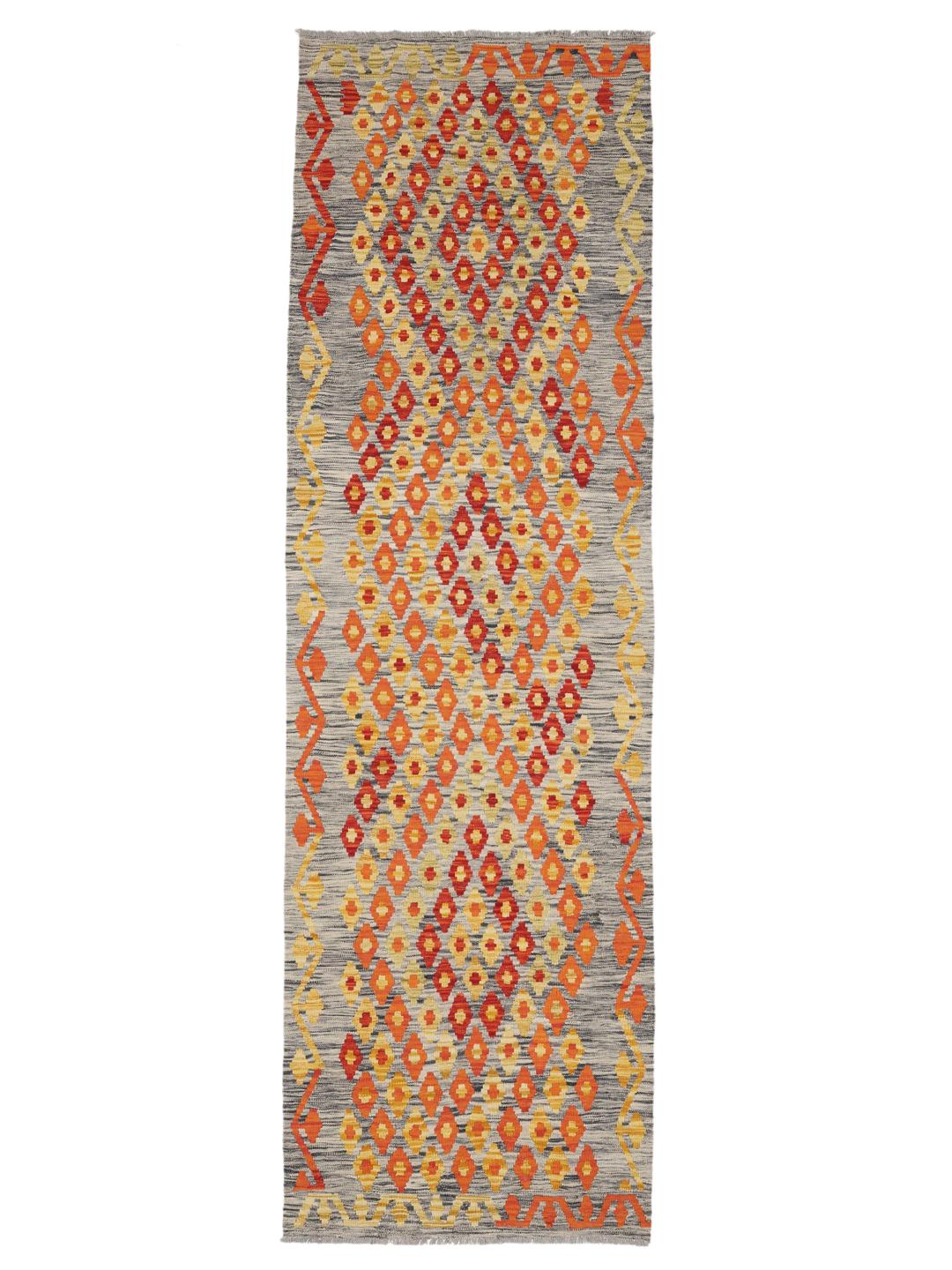
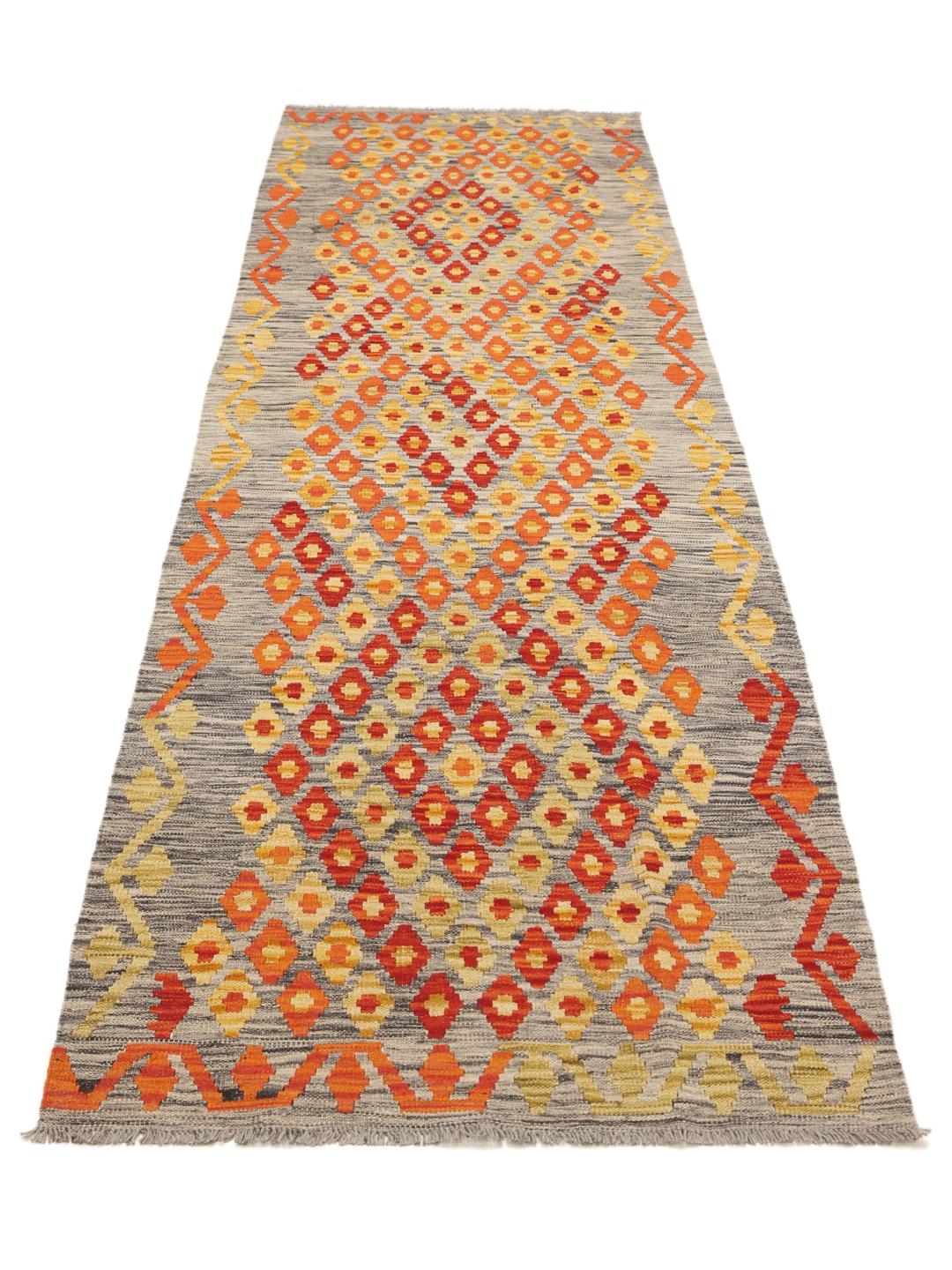
The Kelim rugs of Afghanistan are deeply rooted in the nomadic and semi-nomadic traditions of the region. These rugs were historically created by tribal weavers for practical use within the home, serving as floor coverings, wall hangings, and bags for transporting goods along the challenging terrains of Central Asia.
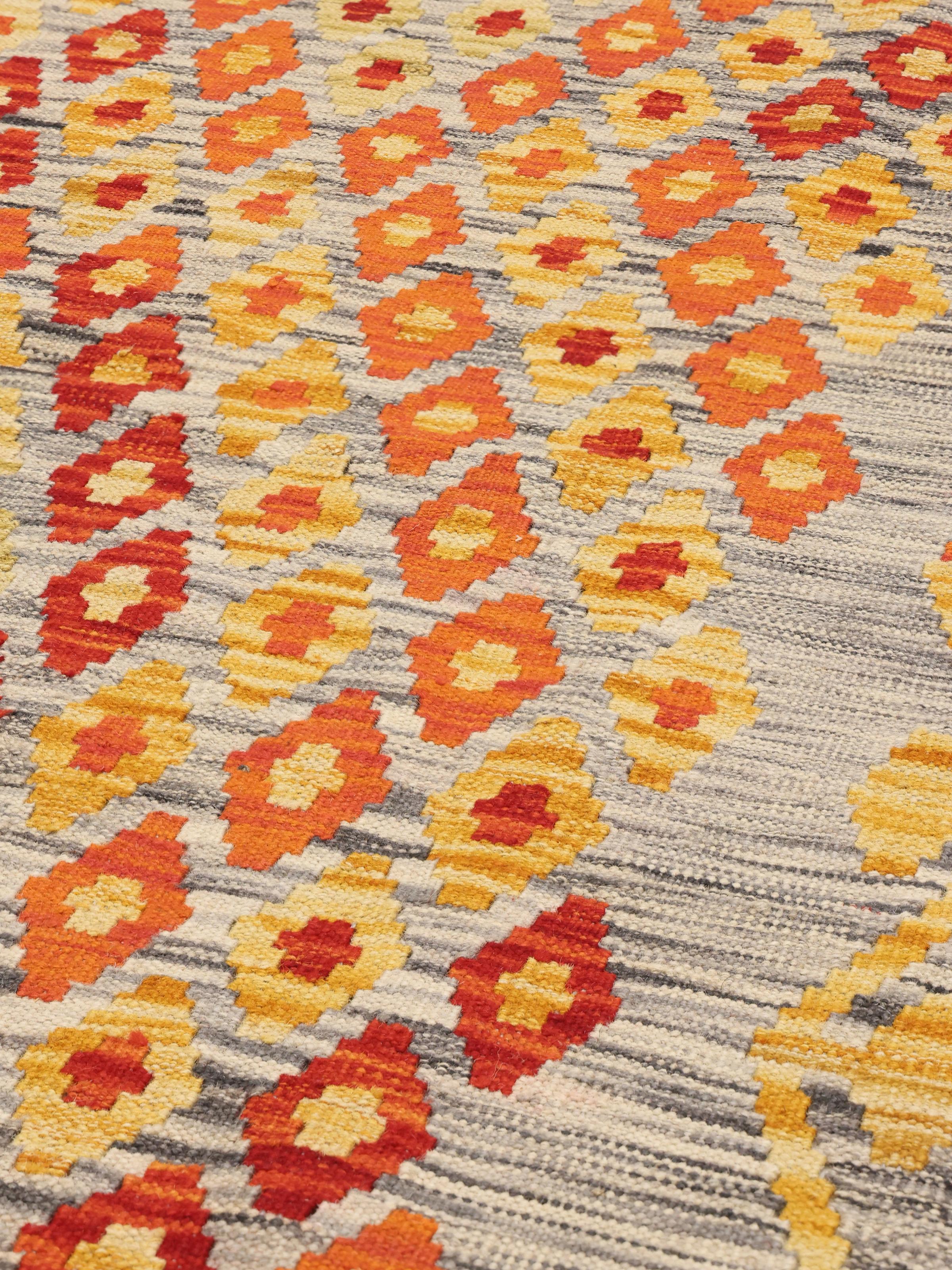
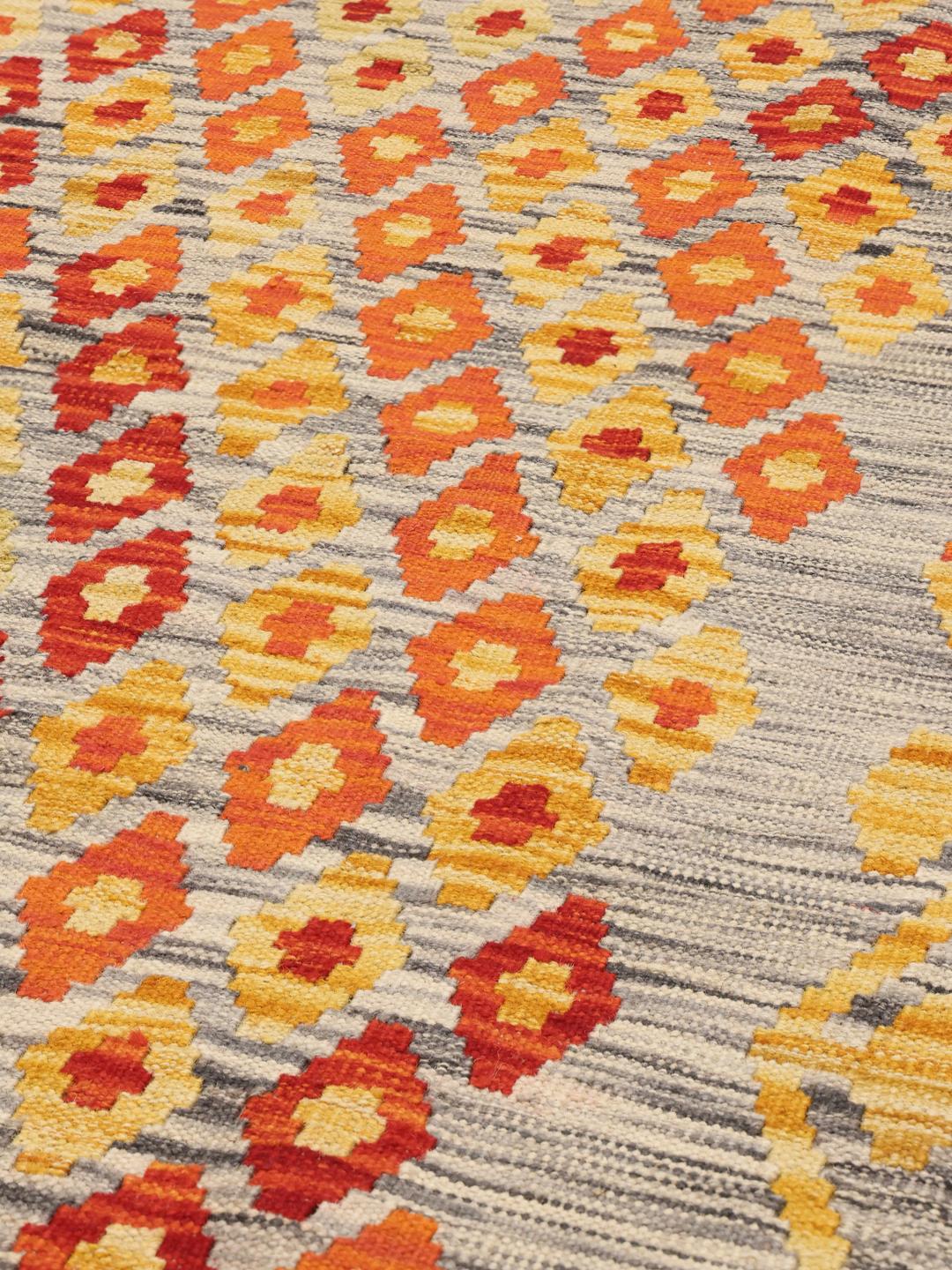
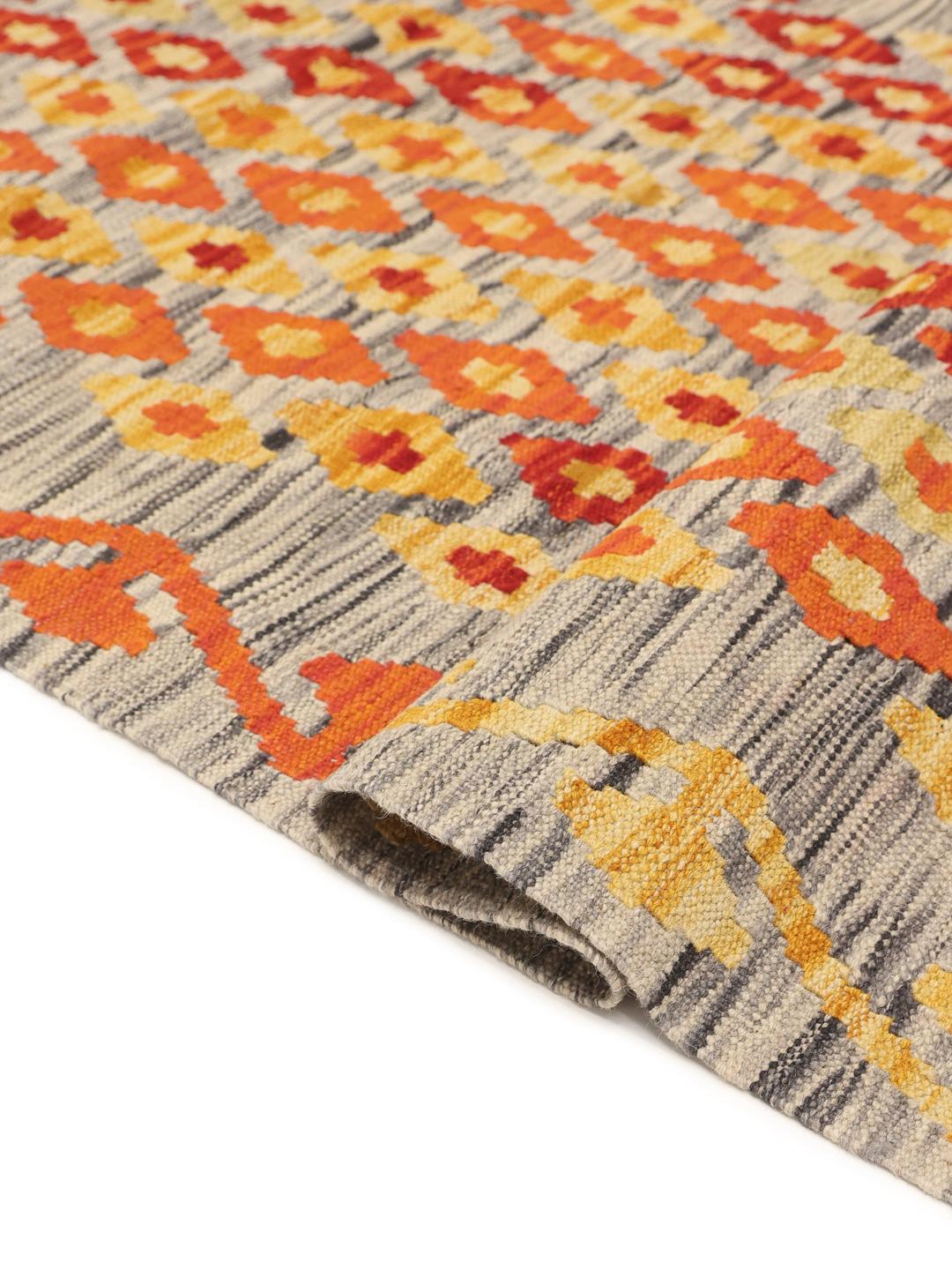
A Kelim is defined by its flat-woven construction, which does not involve a pile. Instead, the design is created by interweaving the warp and weft threads, a technique that requires immense focus and geometric precision. This method results in a durable, reversible rug that is lightweight yet incredibly strong, making it a staple of Middle Eastern textile heritage.
The design language of these rugs is dominated by bold, geometric motifs such as diamonds and triangles, often rendered in warm, earthy tones. These patterns are not merely decorative but often carry symbolic meanings related to protection and tribal identity. The specific arrangement of these motifs creates a rhythmic visual flow that is characteristic of the Afghan style.
Owning an Afghan Kelim is an invitation to appreciate the longevity and cultural depth of Middle Eastern craftsmanship. Collectors and homeowners value these pieces for their authenticity and the way they bridge the gap between ancient traditions and contemporary living spaces, offering a sense of history that is rare in modern home decor.