The tradition of weaving flatwoven rugs, or kilims, in Afghanistan is deeply rooted in the nomadic and village lifestyles of the region. Historically, these versatile textiles served multiple purposes, acting as floor coverings, blankets, and storage bags. They were designed to be lightweight and easy to transport across the rugged terrains of Central Asia.
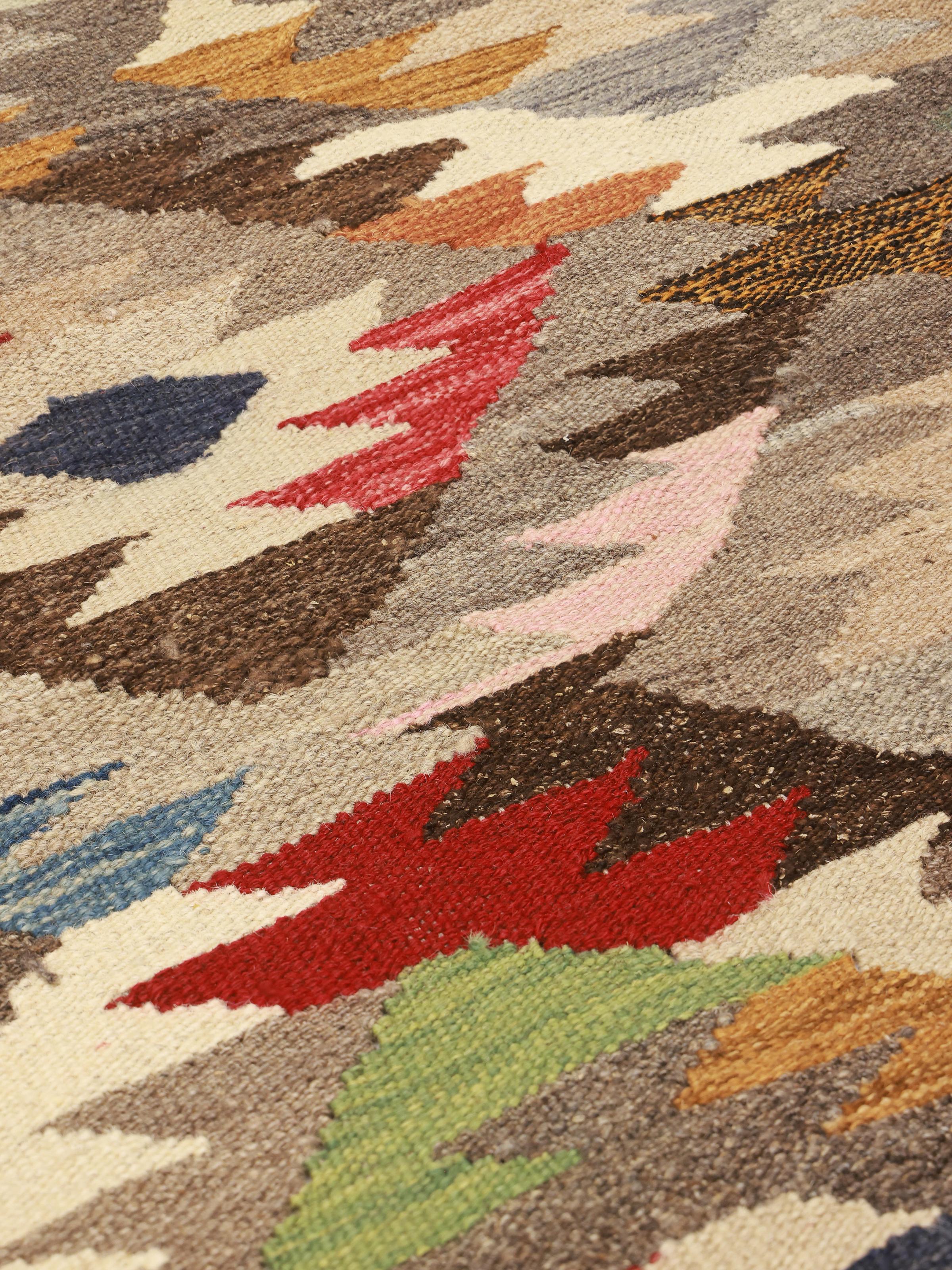
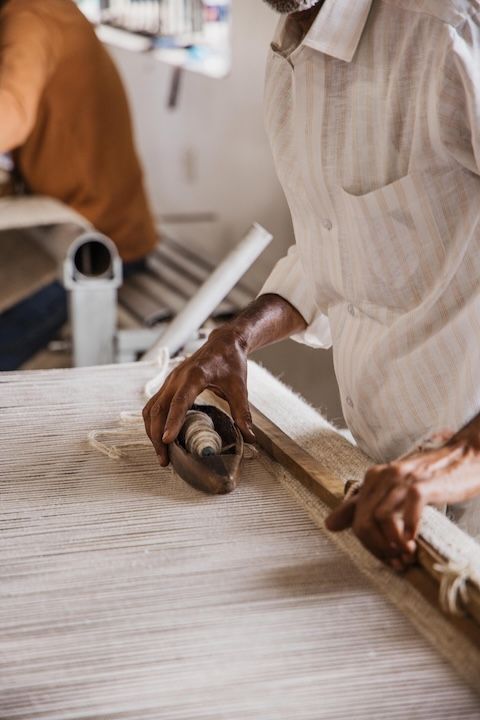
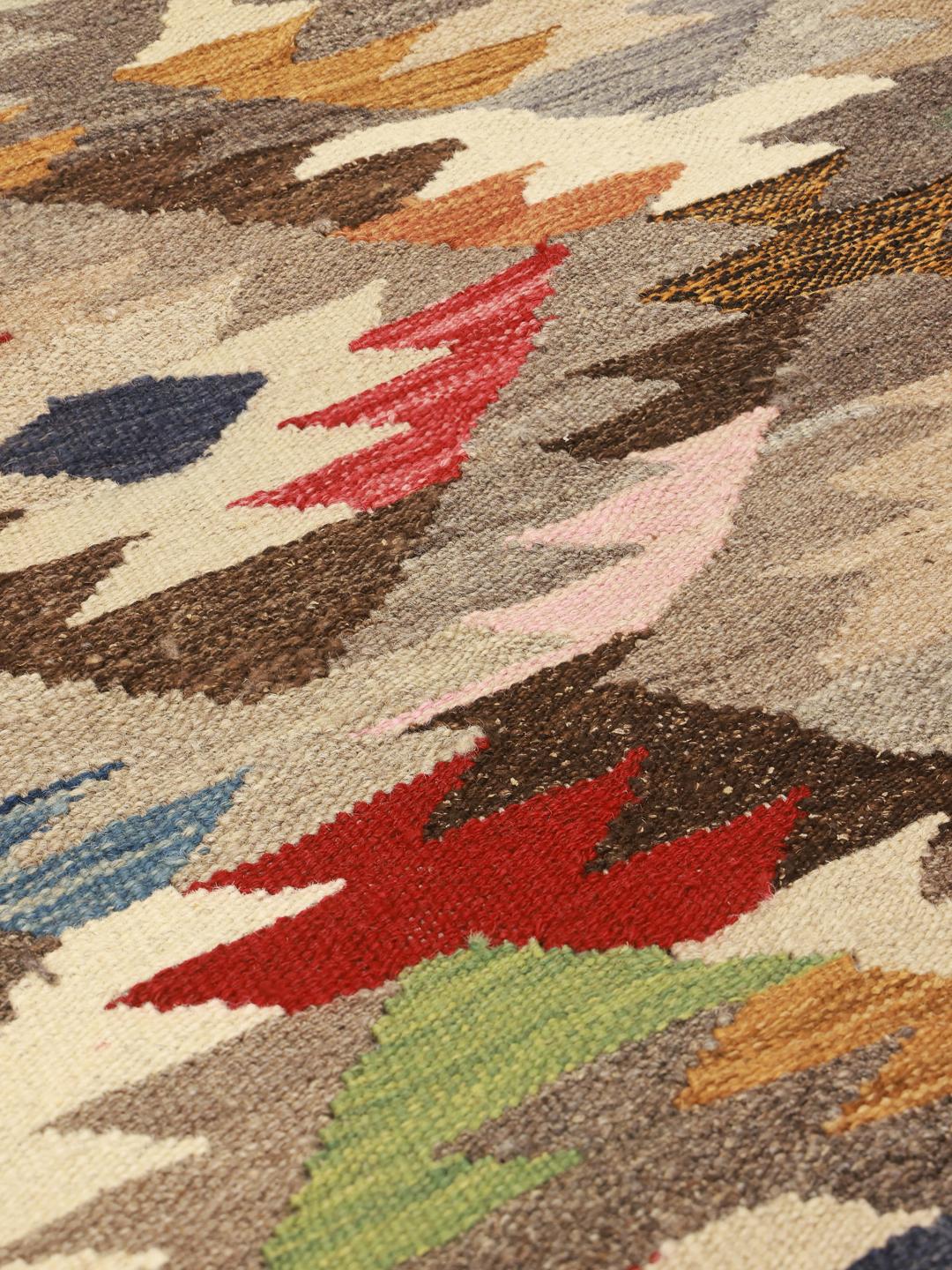
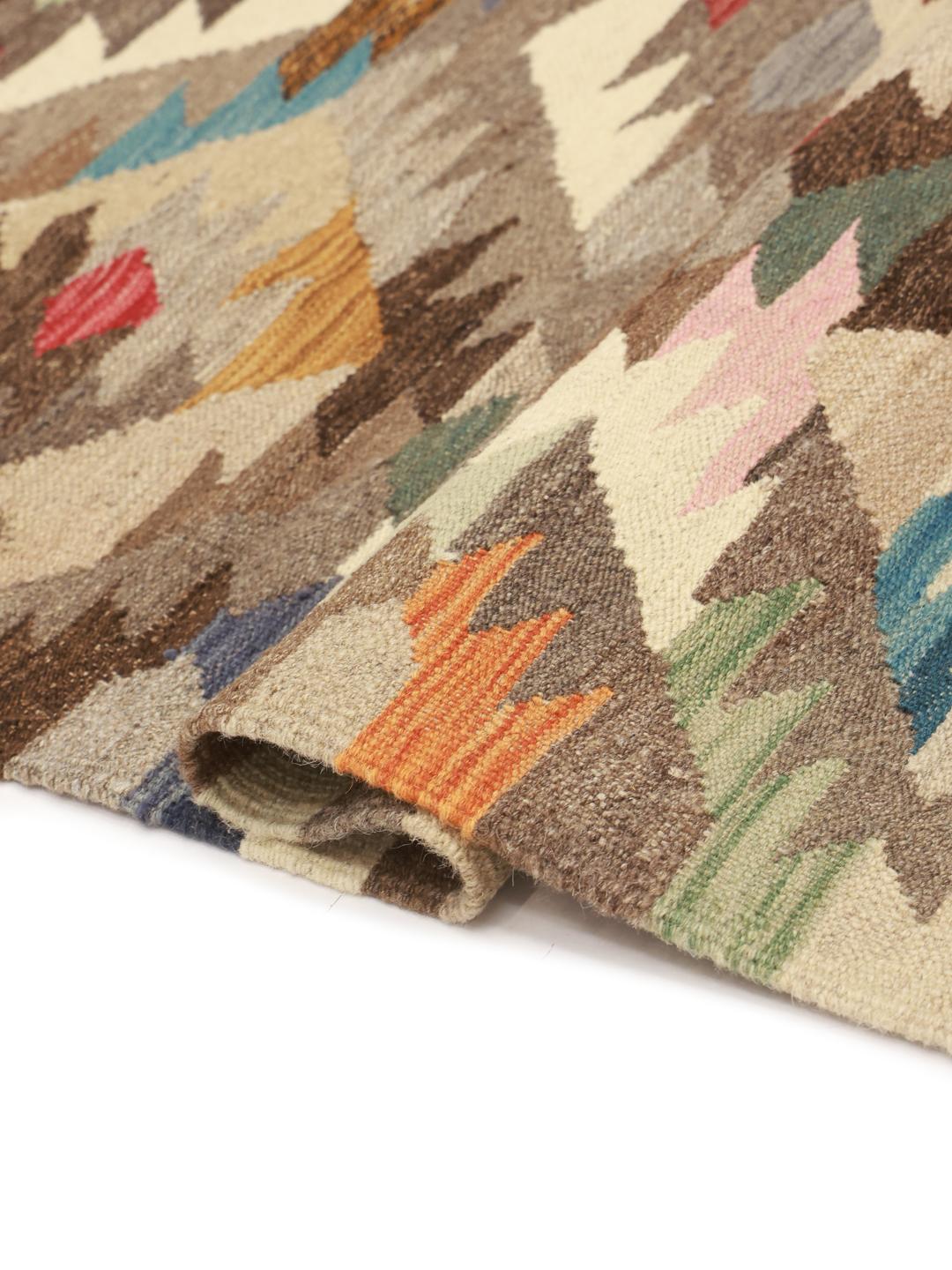
The term kilim refers to a specific flatweave technique where the weft threads are tightly interwoven with the warp, leaving no pile. This creates a durable, reversible textile with a distinctively crisp, geometric appearance. The Ariana style is particularly celebrated for adapting these ancient techniques to suit modern sensibilities, blending traditional craftsmanship with contemporary design trends.
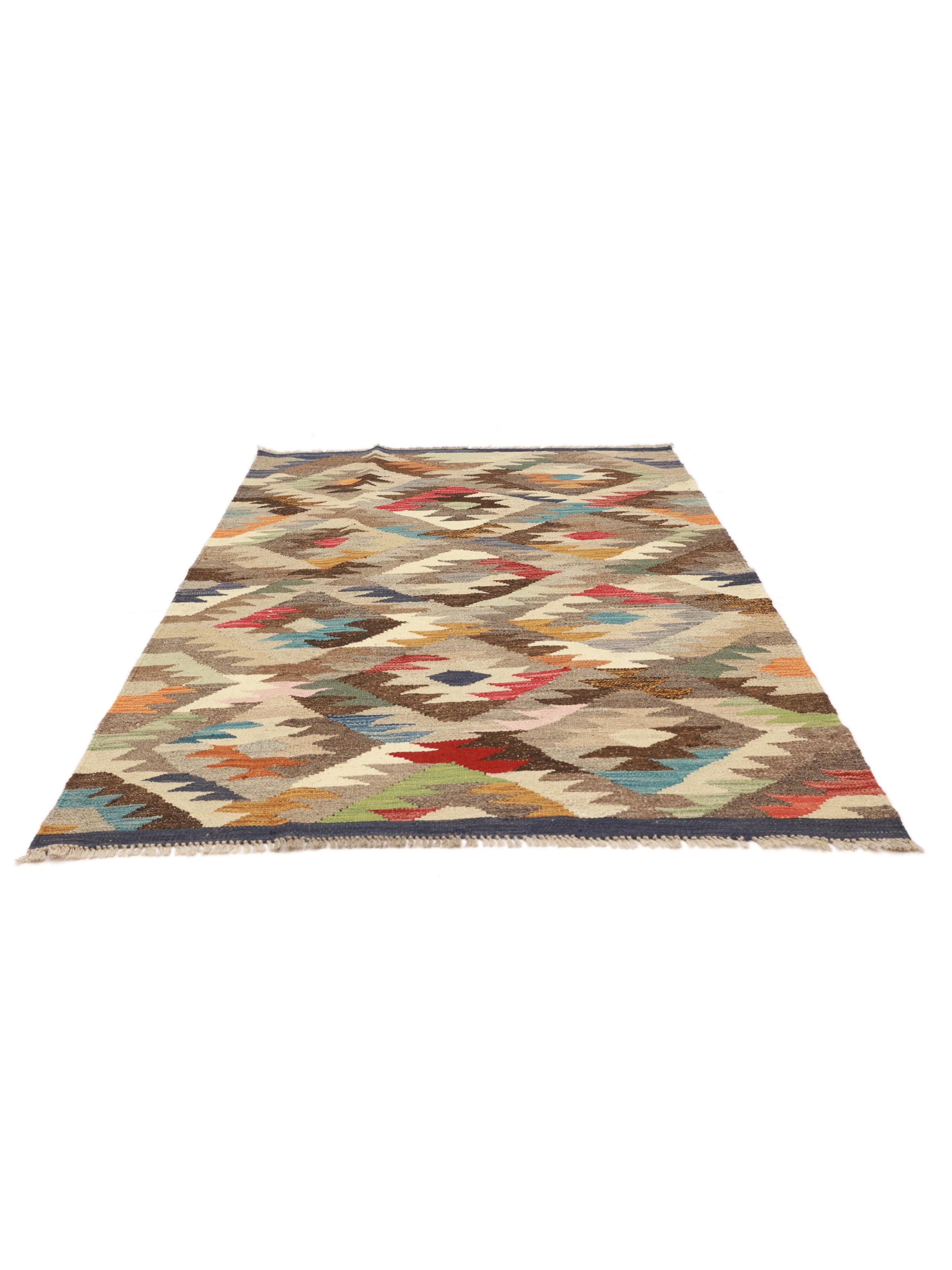
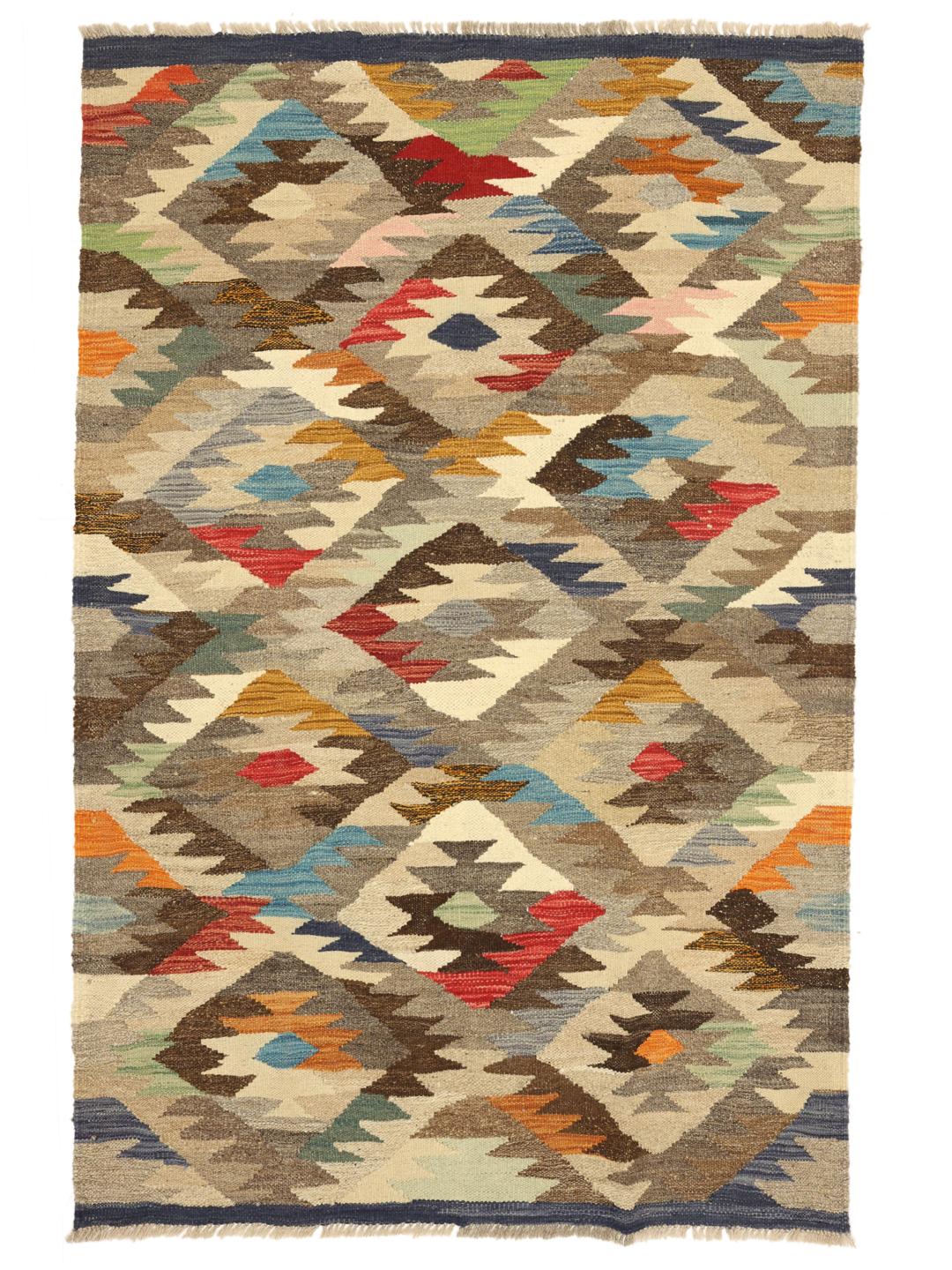
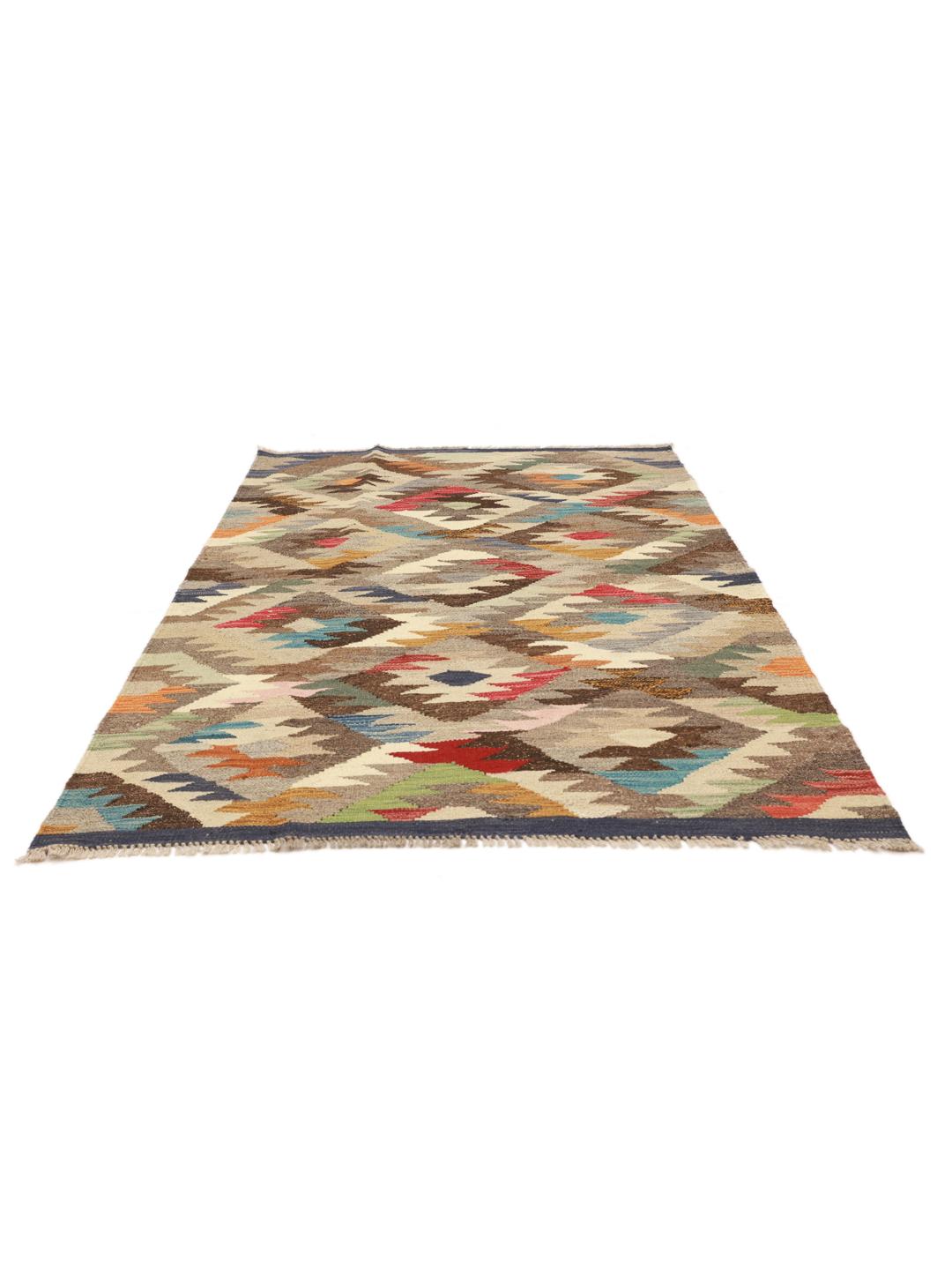
Visually, this rug is defined by its bold geometric patterns and stepped diamond motifs, which are characteristic of Afghan tribal designs. The composition uses a varied colour palette of earthy tones and vibrant accents, creating a lively yet balanced visual rhythm. Each motif carries historical meaning, often representing protection, prosperity, or the natural landscape of the weaver's homeland.
Owning an Afghan kilim is an appreciation of a living art form that has been passed down through generations. These rugs are highly valued by collectors and homeowners alike for their cultural integrity and the genuine human story woven into every thread. They bring a sense of history and global heritage into any modern living space.