The tradition of flatweaving in Afghanistan dates back centuries, developed by nomadic and semi-nomadic communities who required durable, versatile textiles for daily life. These rugs, known as kilims, were originally crafted not just as floor coverings, but as protective tent hangings, storage bags, and decorative dowry pieces. Each rug represents a living connection to these ancient tribal roots.
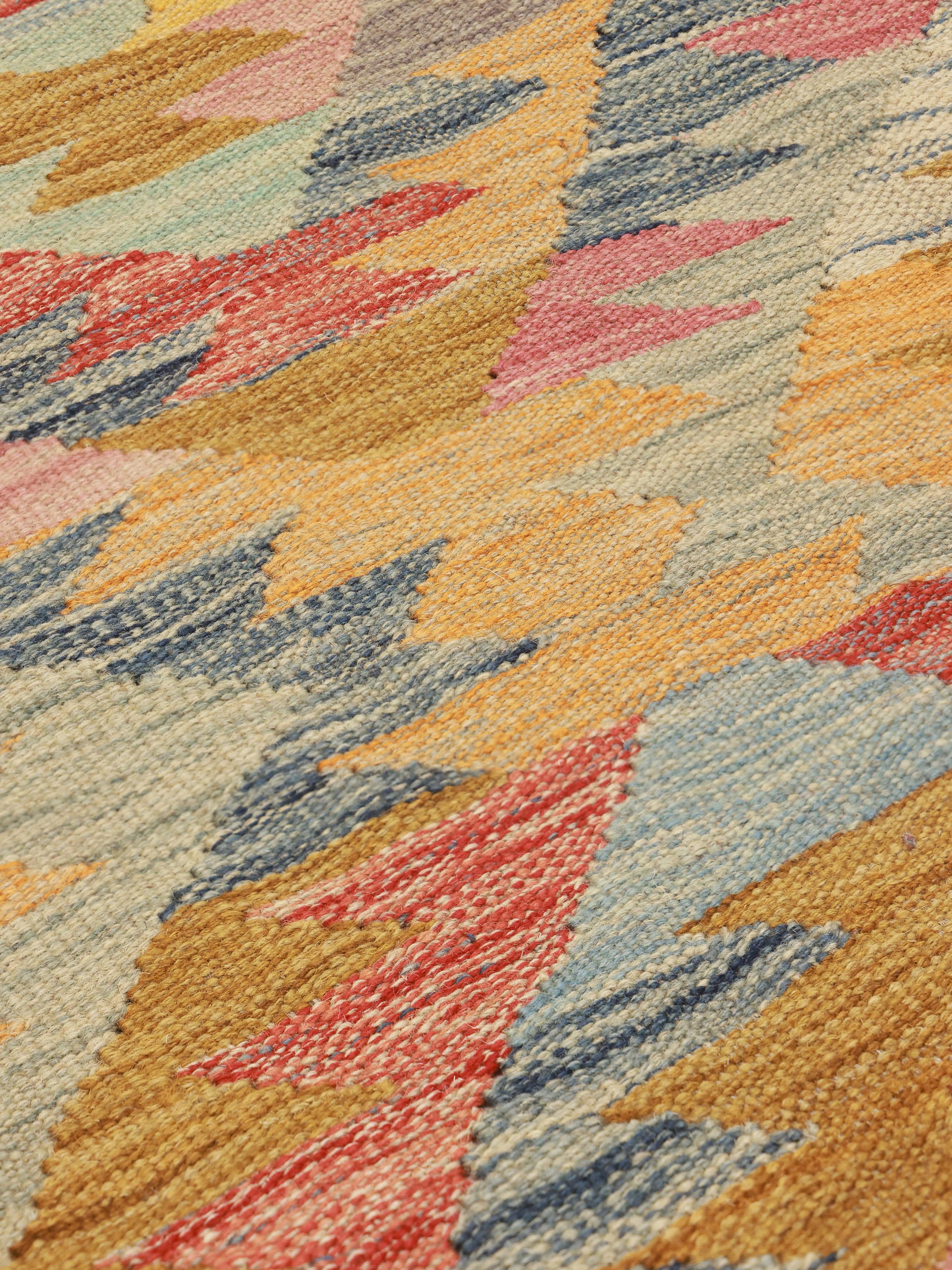
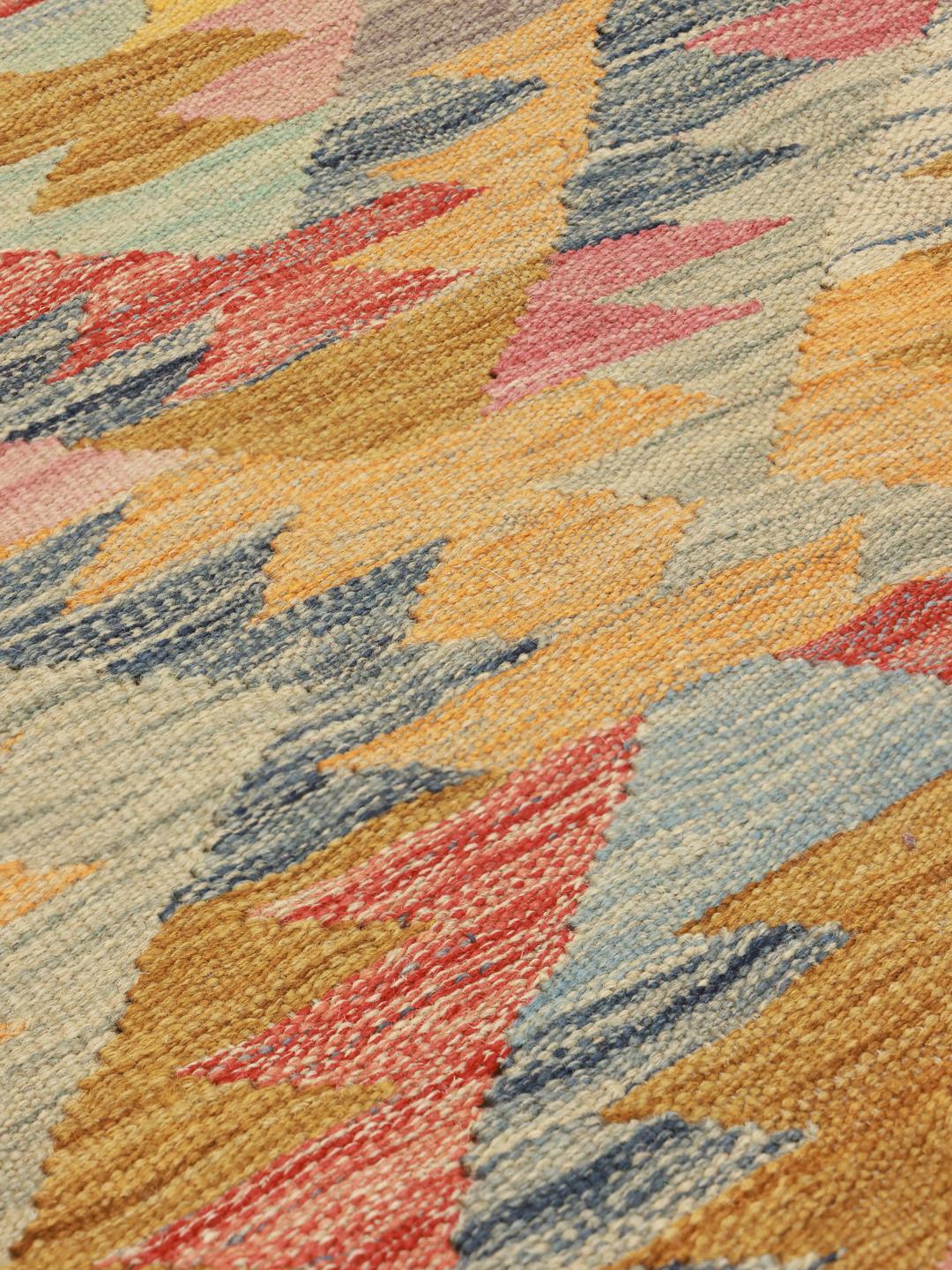
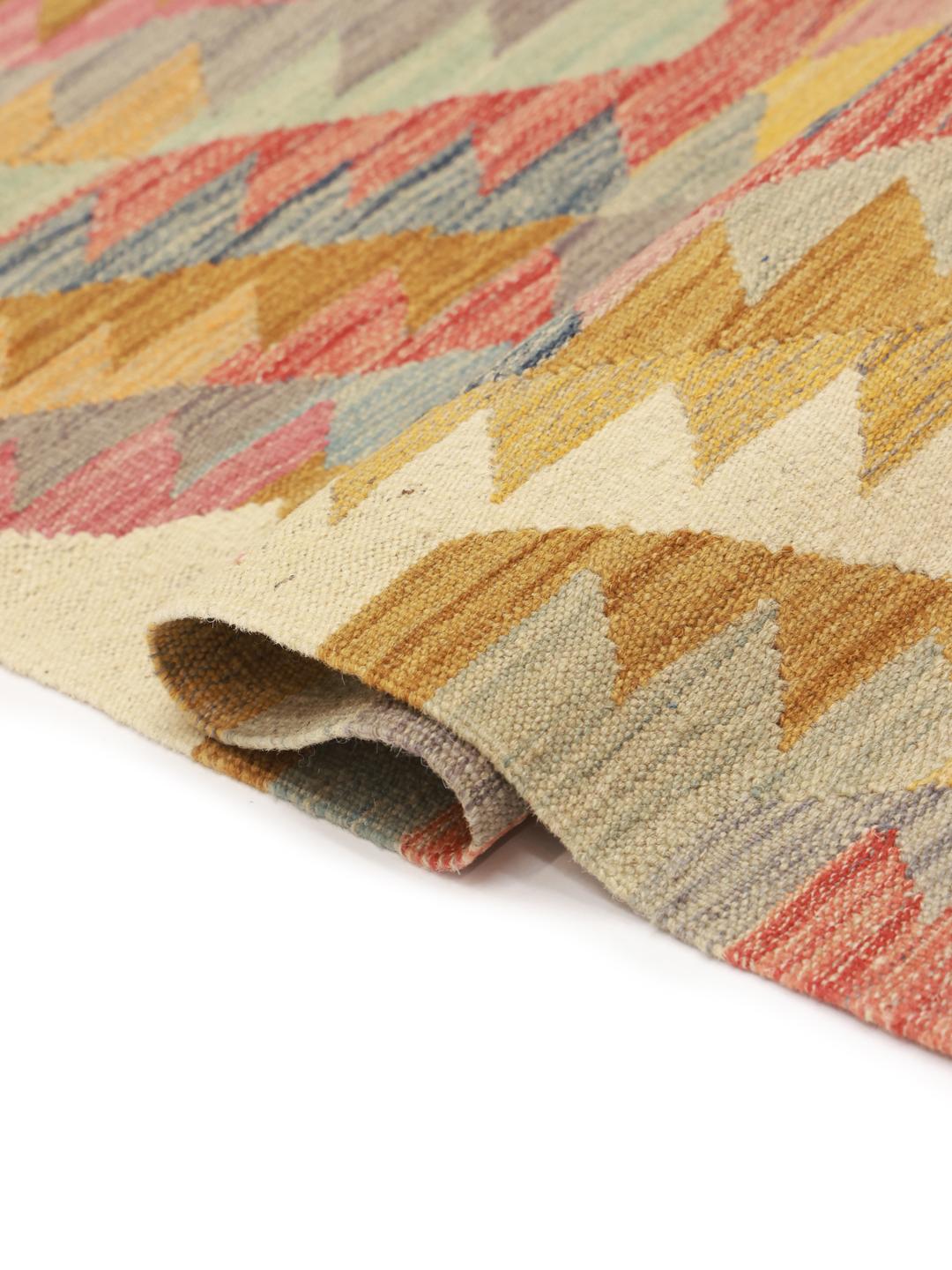
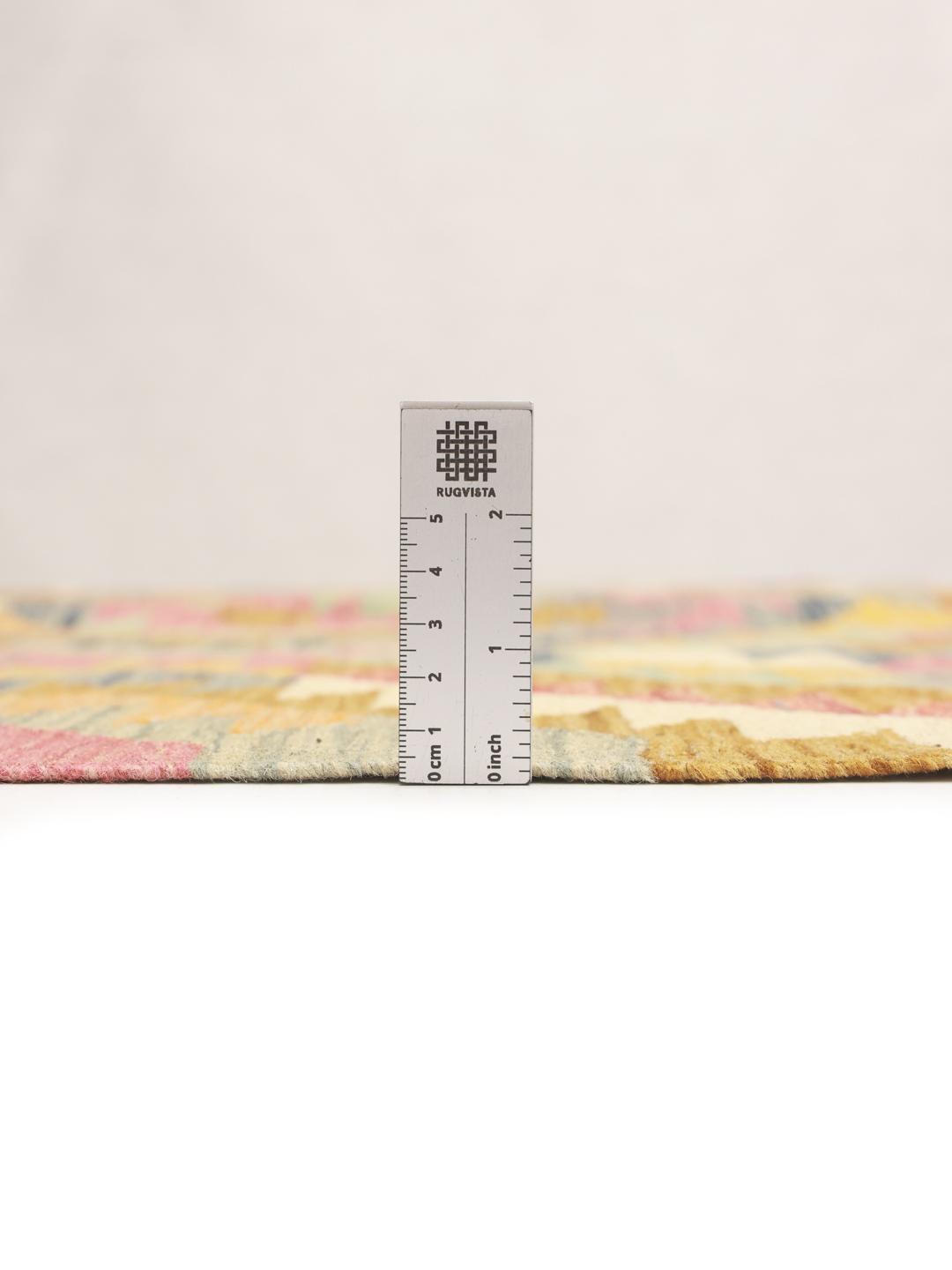
Unlike piled rugs, kilims are created using an interlocking plain weave technique where the horizontal threads are tightly woven through the vertical threads. This traditional method produces a smooth, reversible textile with no pile, celebrated for its lightweight flexibility and remarkable strength. The clean, crisp boundaries between different colour blocks are a hallmark of this skilled weaving method.
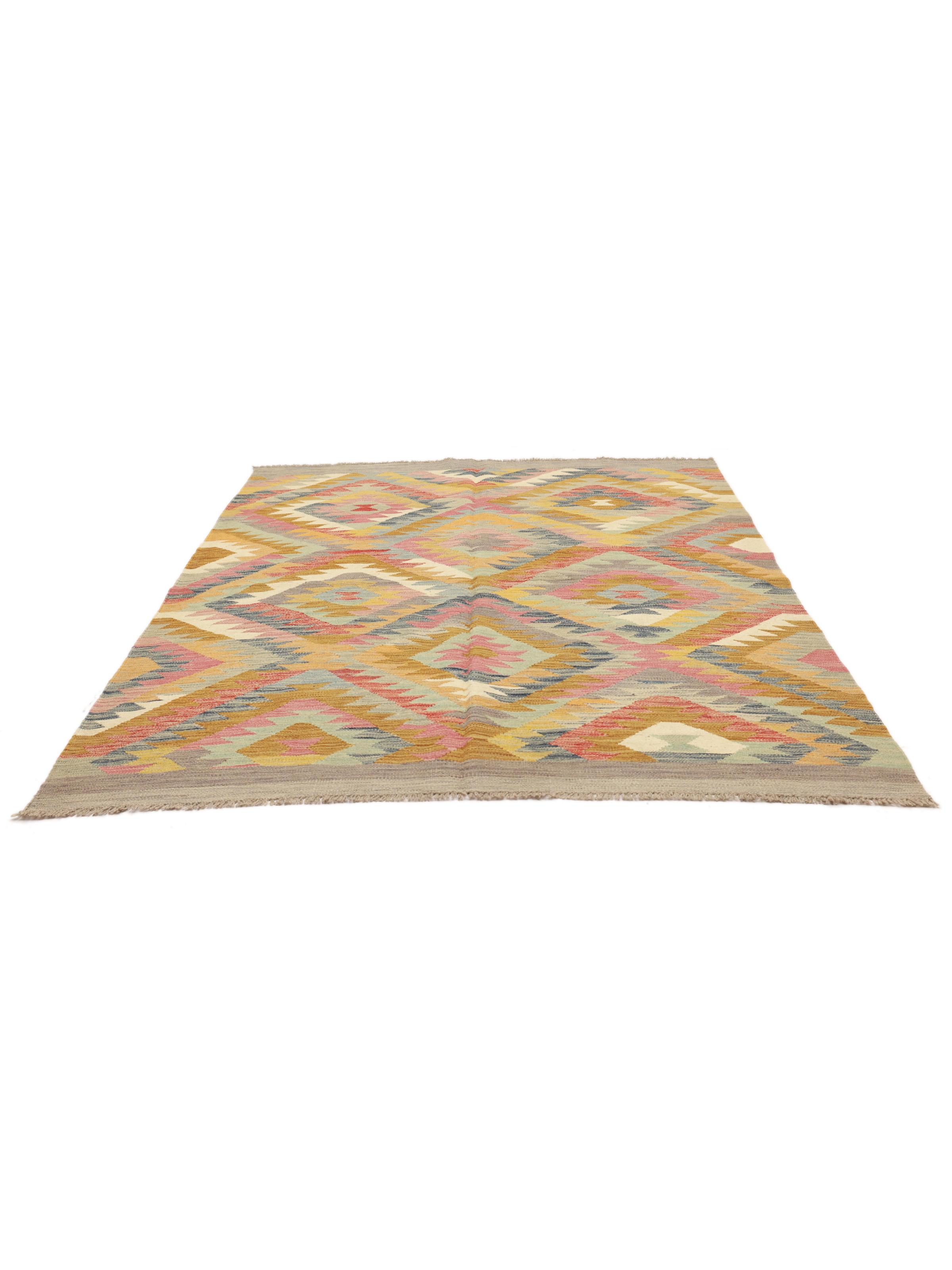
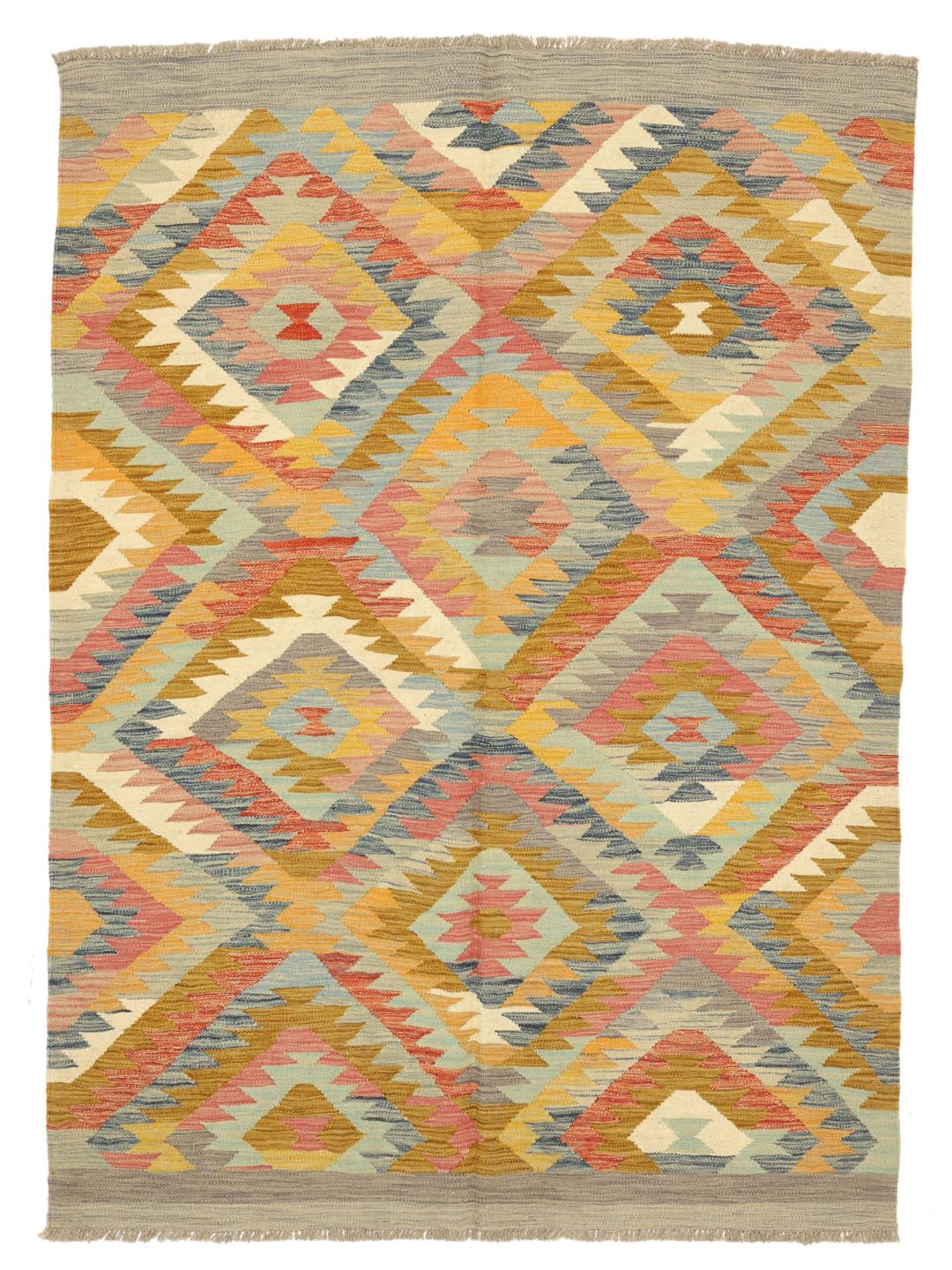
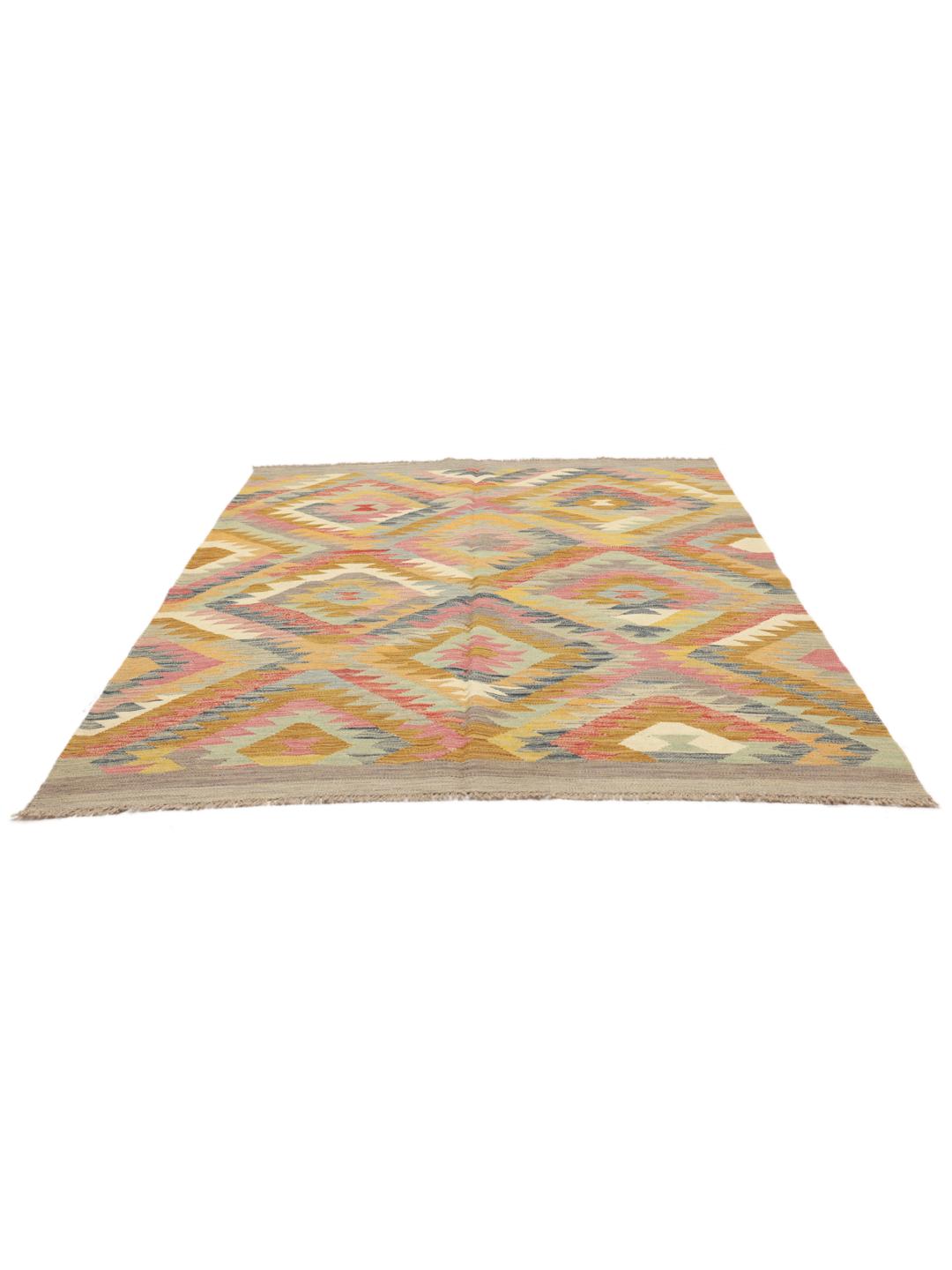
The design of the Ariana tradition is characterised by bold geometric motifs, particularly the repeating diamond and stepped medallion patterns seen here. These shapes are not merely decorative but often carry symbolic meanings related to protection, prosperity, and the natural landscape. The balanced arrangement of the patterns creates a rhythmic visual flow that draws the eye across the surface.
Today, Afghan kilims are highly valued by collectors and design enthusiasts for their graphic appeal and cultural authenticity. Owning an Ariana kilim means preserving a piece of textile history, supporting a craft tradition that has been passed down through generations of weavers who rely on memory and instinct rather than written patterns to create their designs.