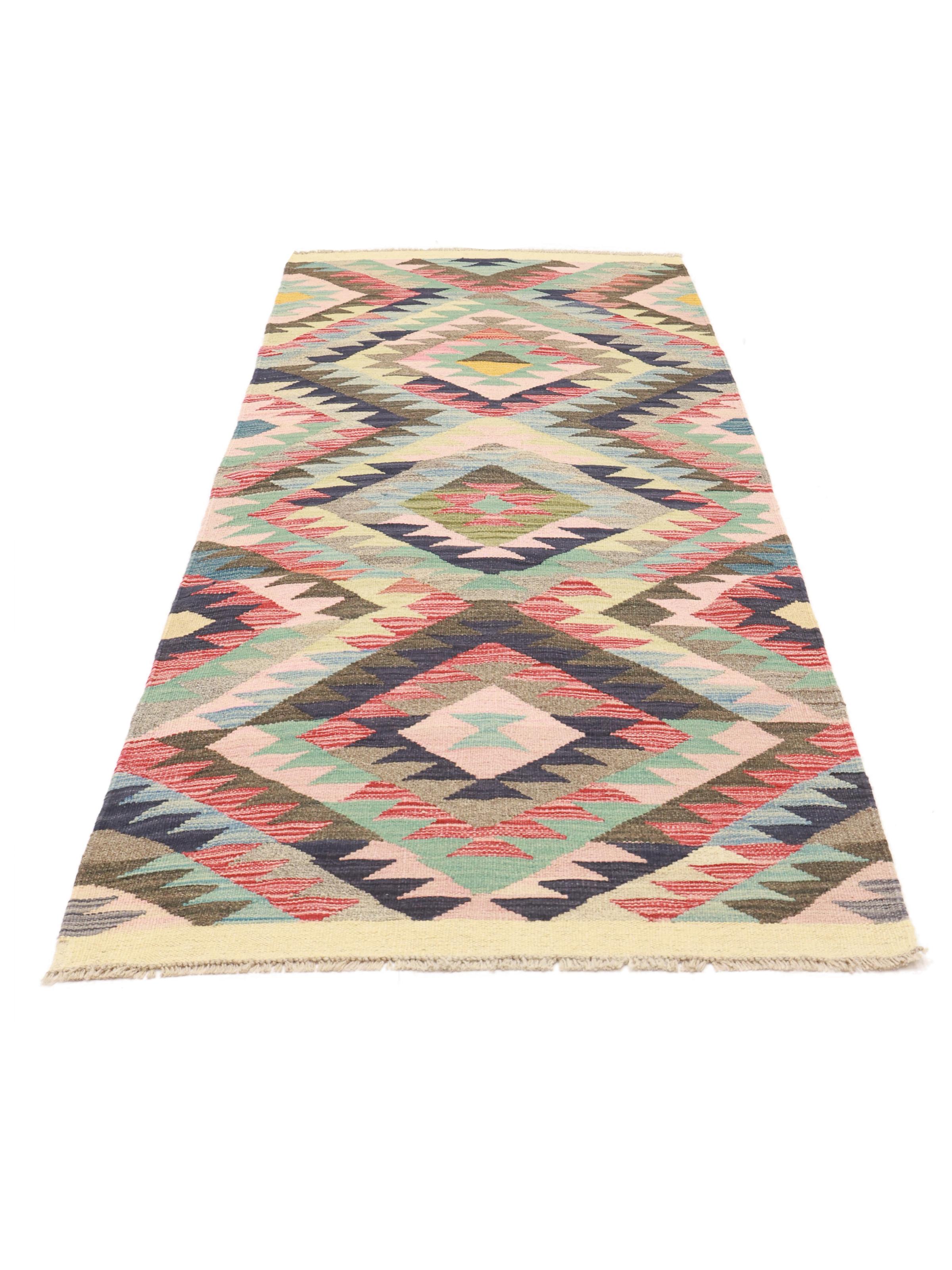
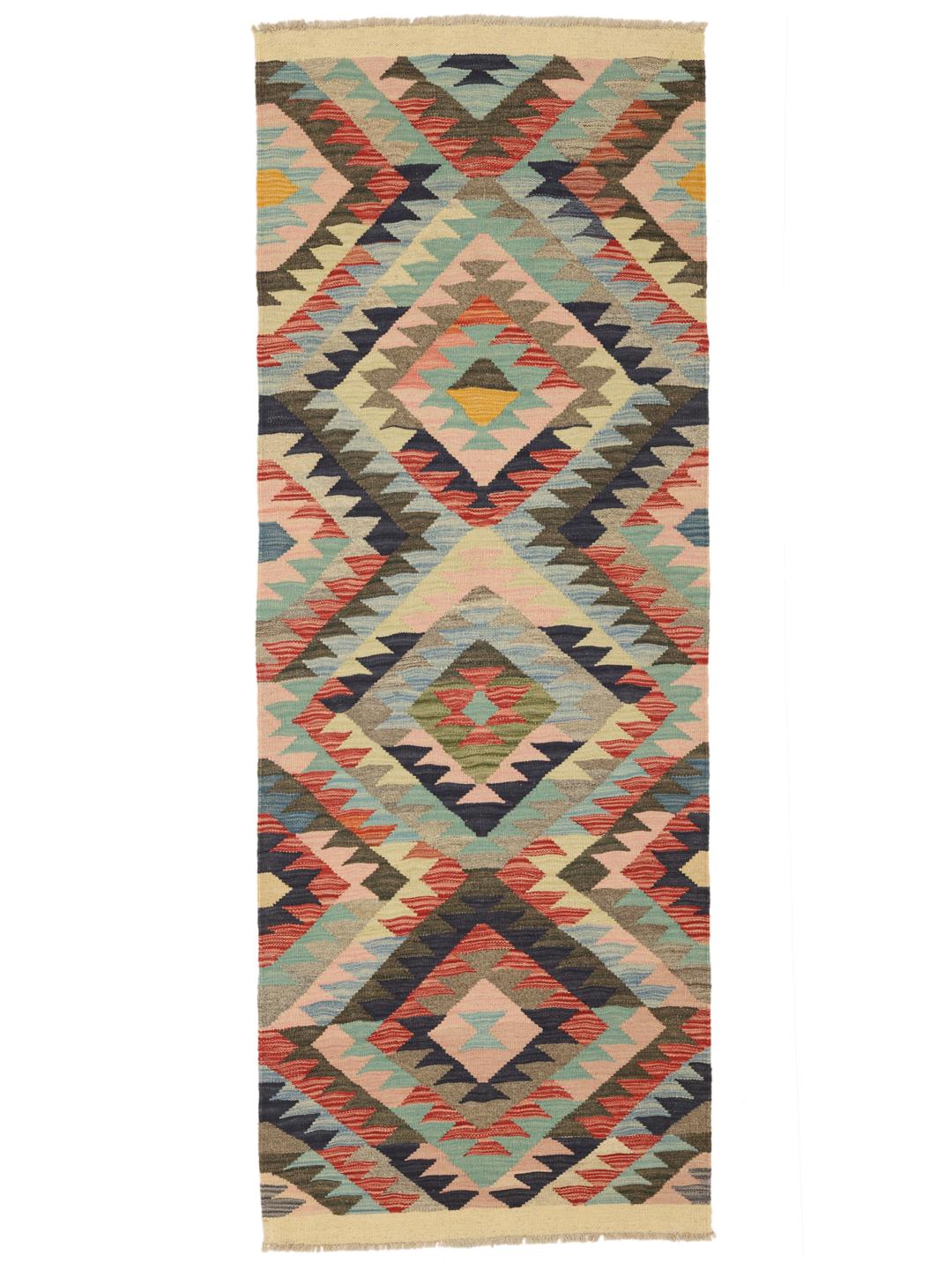
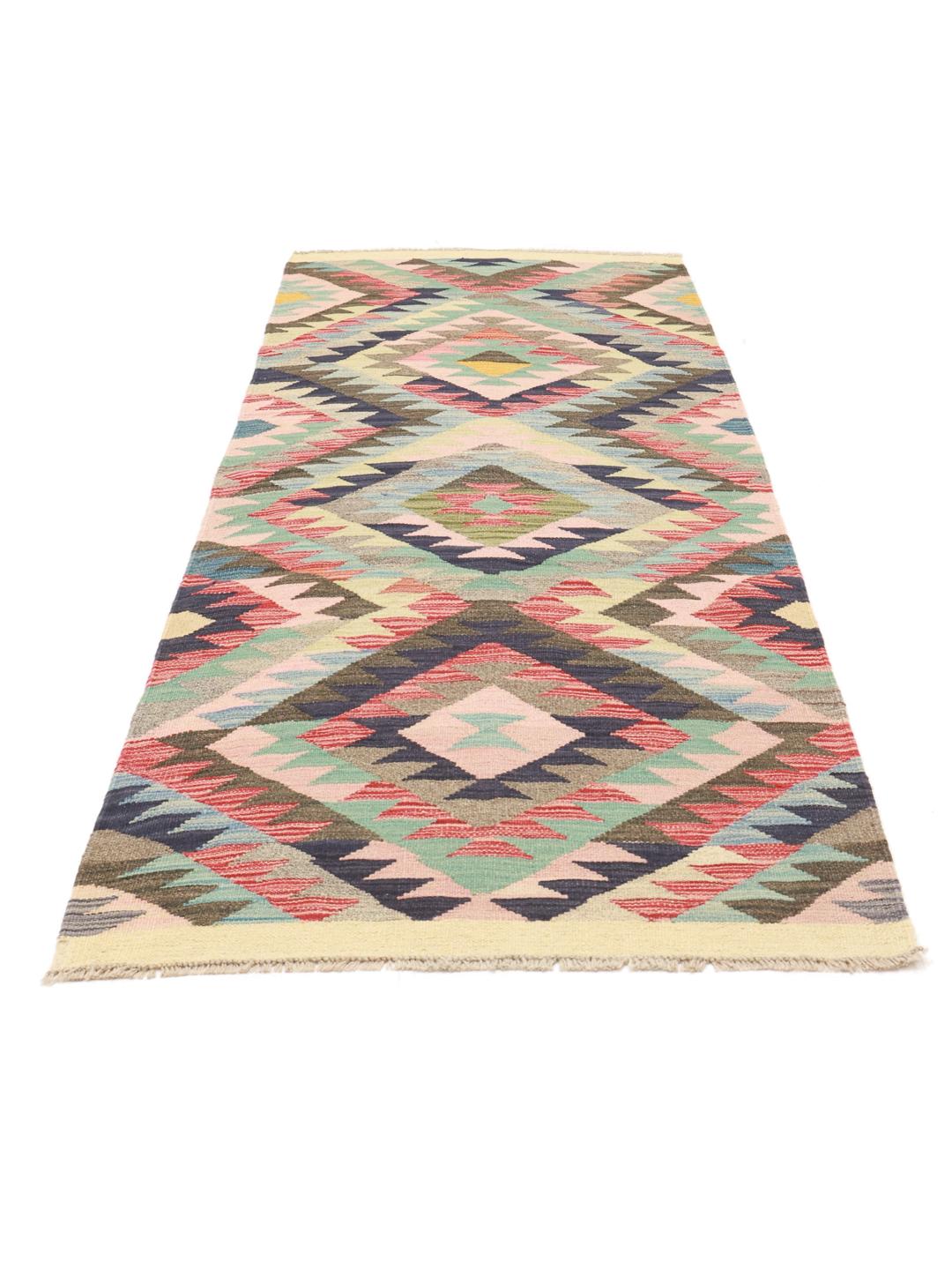
The Kelim Ariana tradition finds its roots in the storied history of Afghanistan, where weaving has served as a central pillar of cultural identity for centuries. These rugs are born from a fusion of ancient tribal motifs and a refined, modern approach to colour and composition that has evolved to meet the tastes of today's homes.
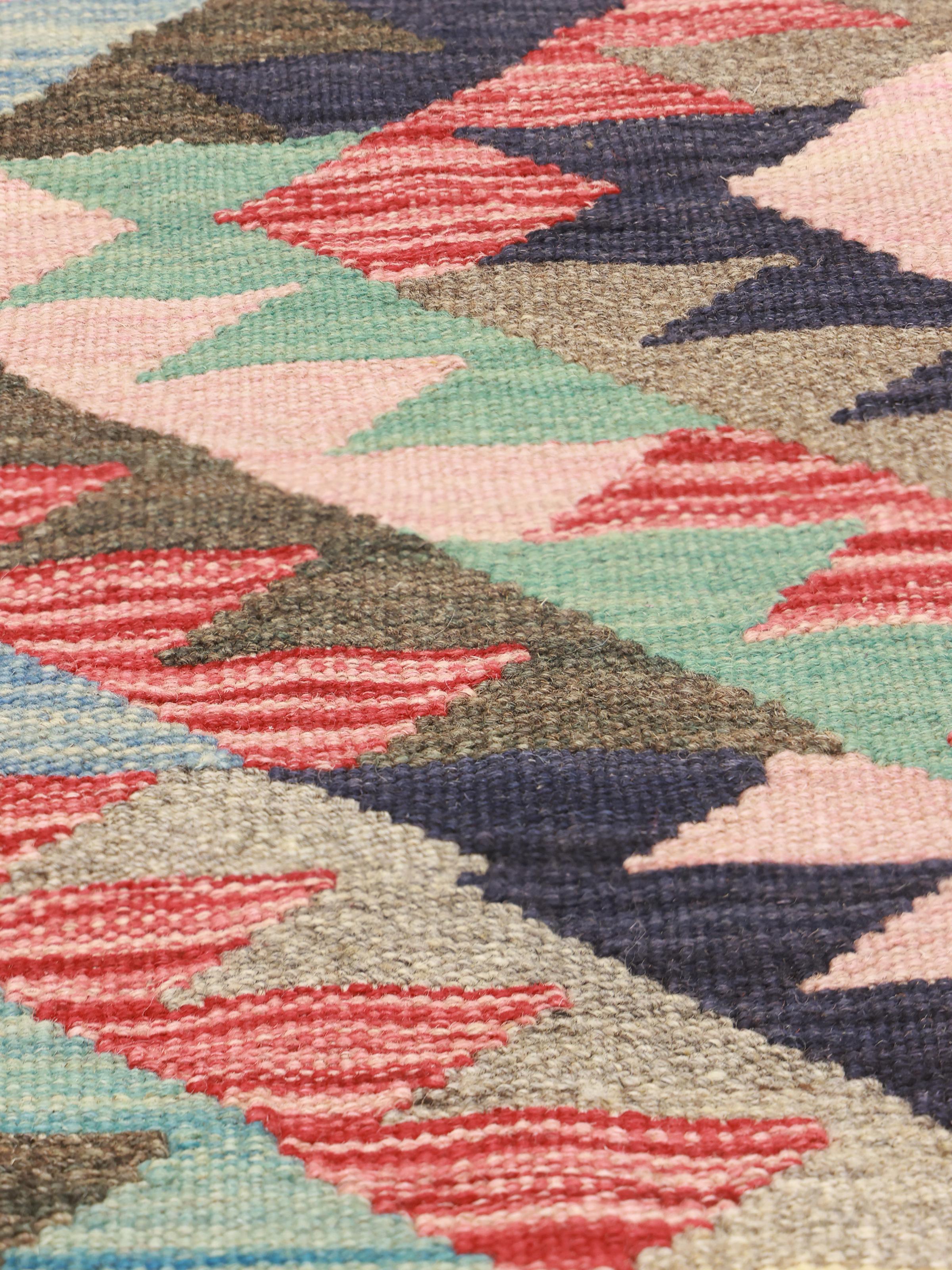
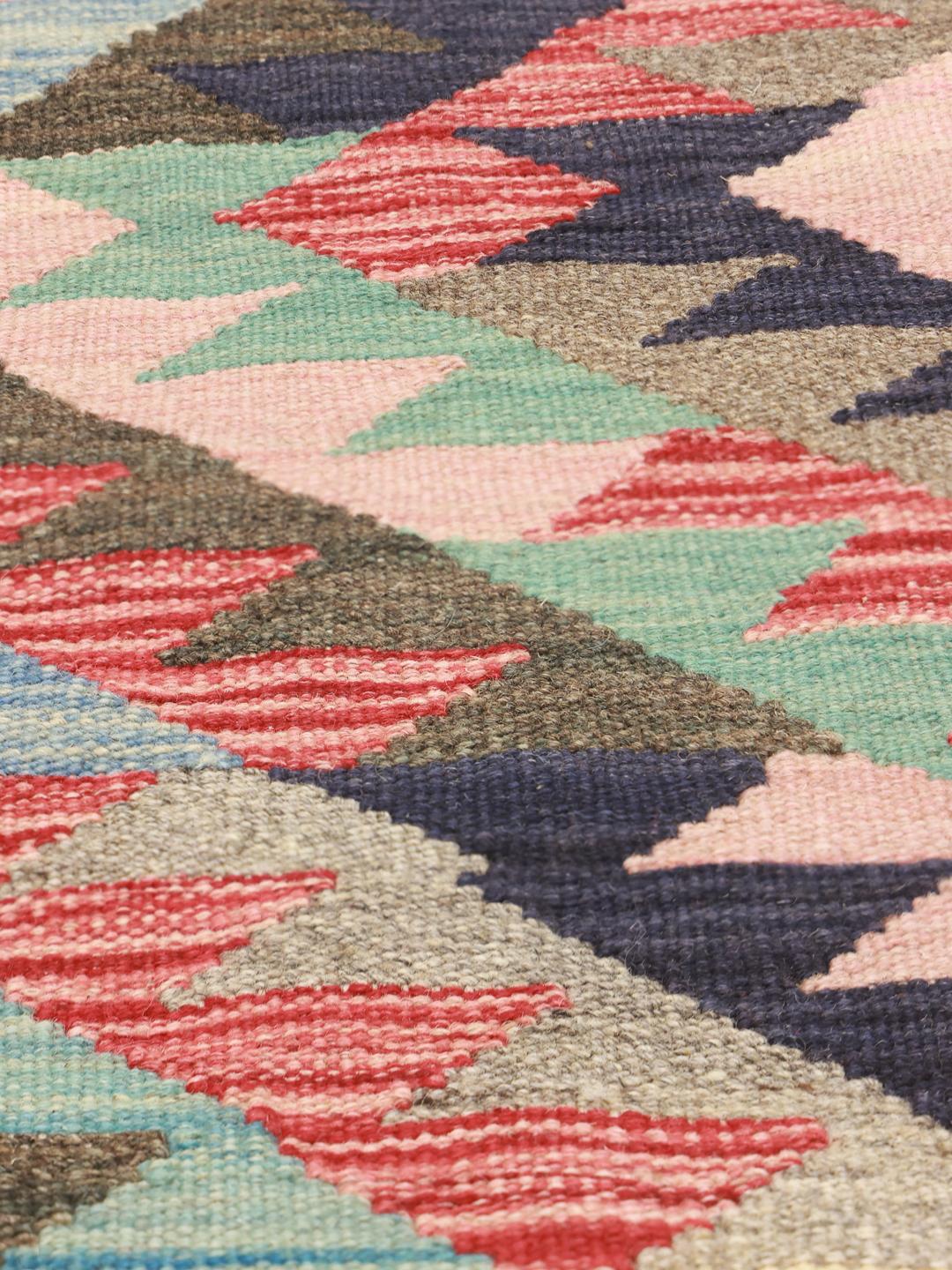
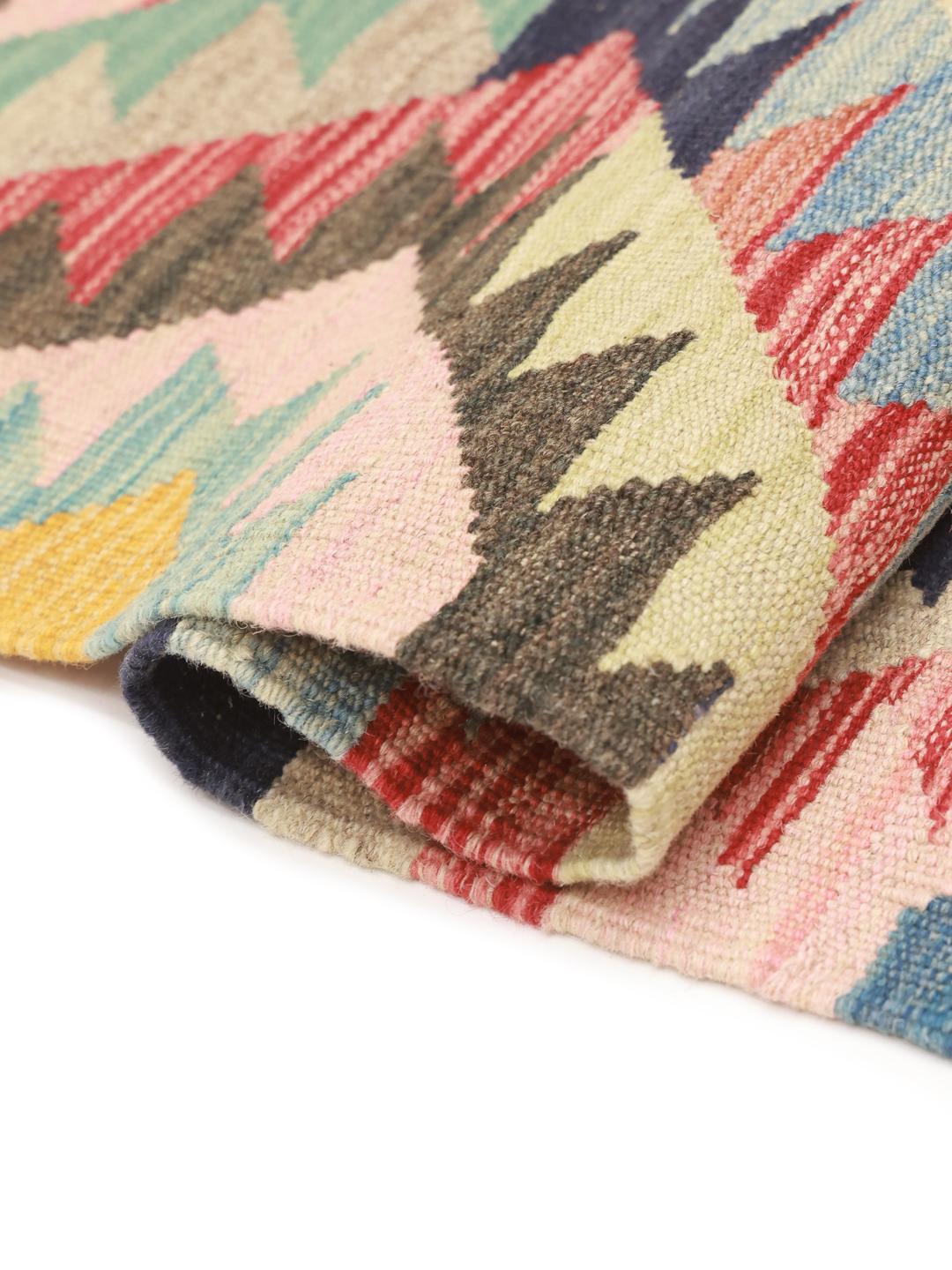
A Kilim is defined by its flat-weave construction, where no pile is created. Instead, the weaver interlaces the warp and weft threads to form the pattern directly into the fabric. This method is highly valued for its clean, graphic appearance and its ability to produce lightweight yet incredibly strong textiles that have been used for nomadic life and home decoration for generations.
The signature design of this tradition typically features repeating geometric shapes, such as the diamonds seen here, which are often framed by decorative borders. These motifs are not merely aesthetic choices but are deeply connected to the regional visual language, where each shape can represent protection, fertility, or the natural landscape of the mountains.
Collecting a piece from this tradition is an act of supporting a living craft. Because each rug is made by hand in a labour-intensive process, they carry the personal touch of the artisan, making them prized for their authenticity. Owning one allows you to participate in a long-standing heritage of skill that bridges the gap between traditional nomadic utility and modern interior design.