Kelim flatweaves originate from a rich nomadic tradition across the Middle East and Central Asia, where weavers created lightweight, durable coverings for daily living. Over generations, these utilitarian floor and tent coverings evolved into celebrated artistic expressions, with Afghan workshops refining the craft to produce some of the most sought-after flatweaves today.
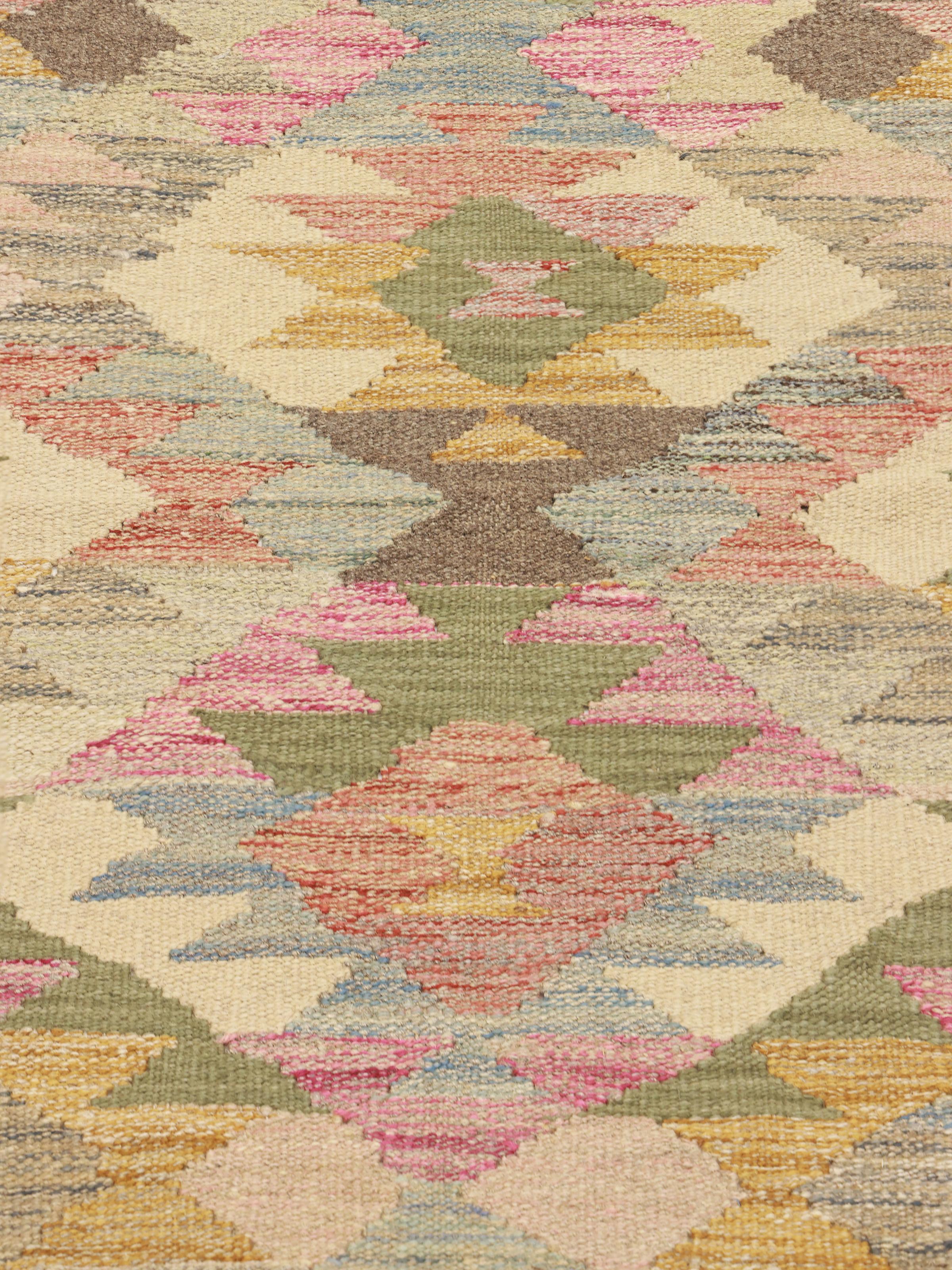
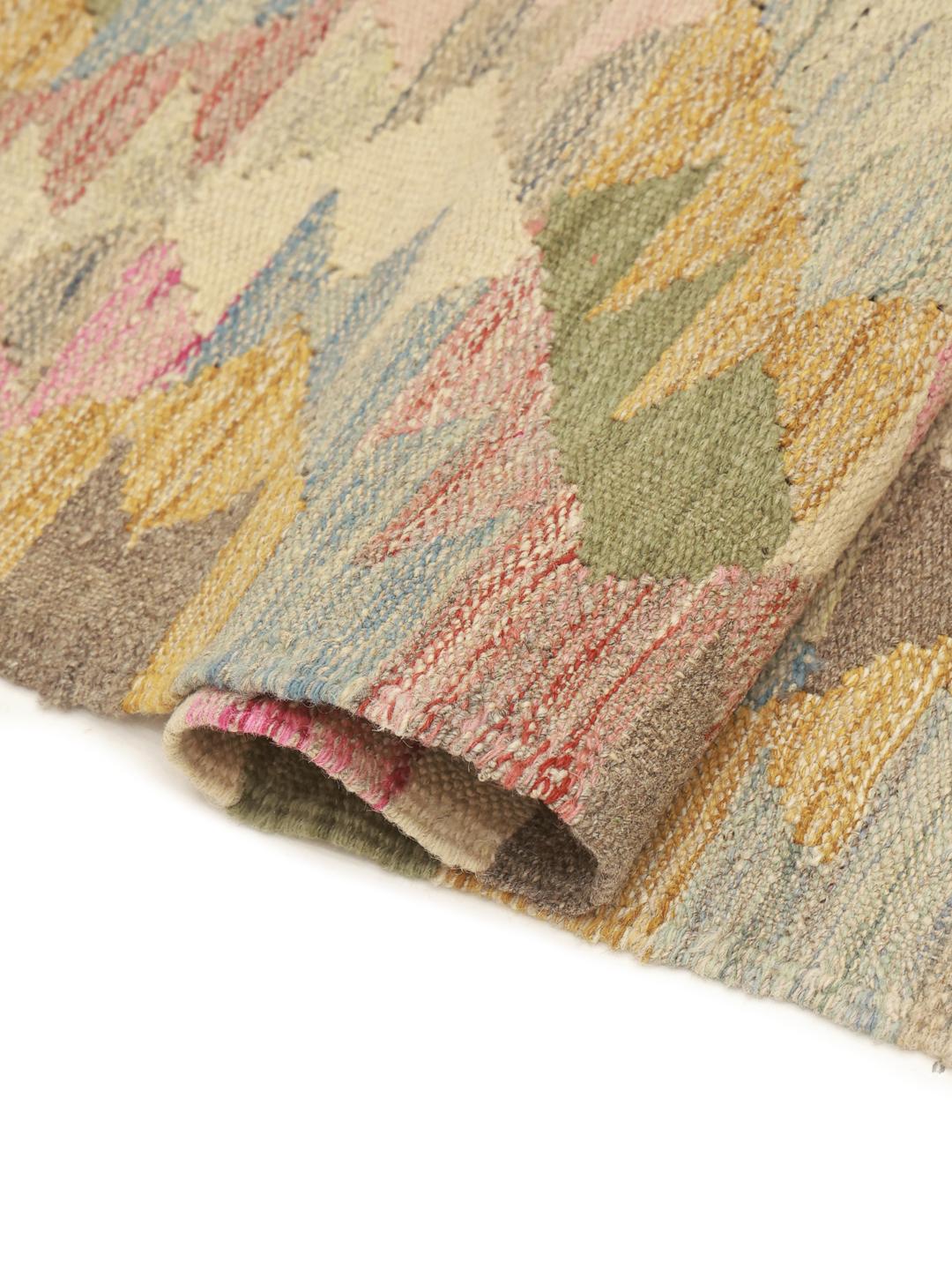
The term flatweave or kilim refers to a textile produced without a pile, where the pattern is formed by tightly interweaving the coloured weft threads through the vertical warp strings. This ancient technique requires immense spatial awareness and control from the weaver, as the pattern must be calculated directly into the structural grid of the rug.
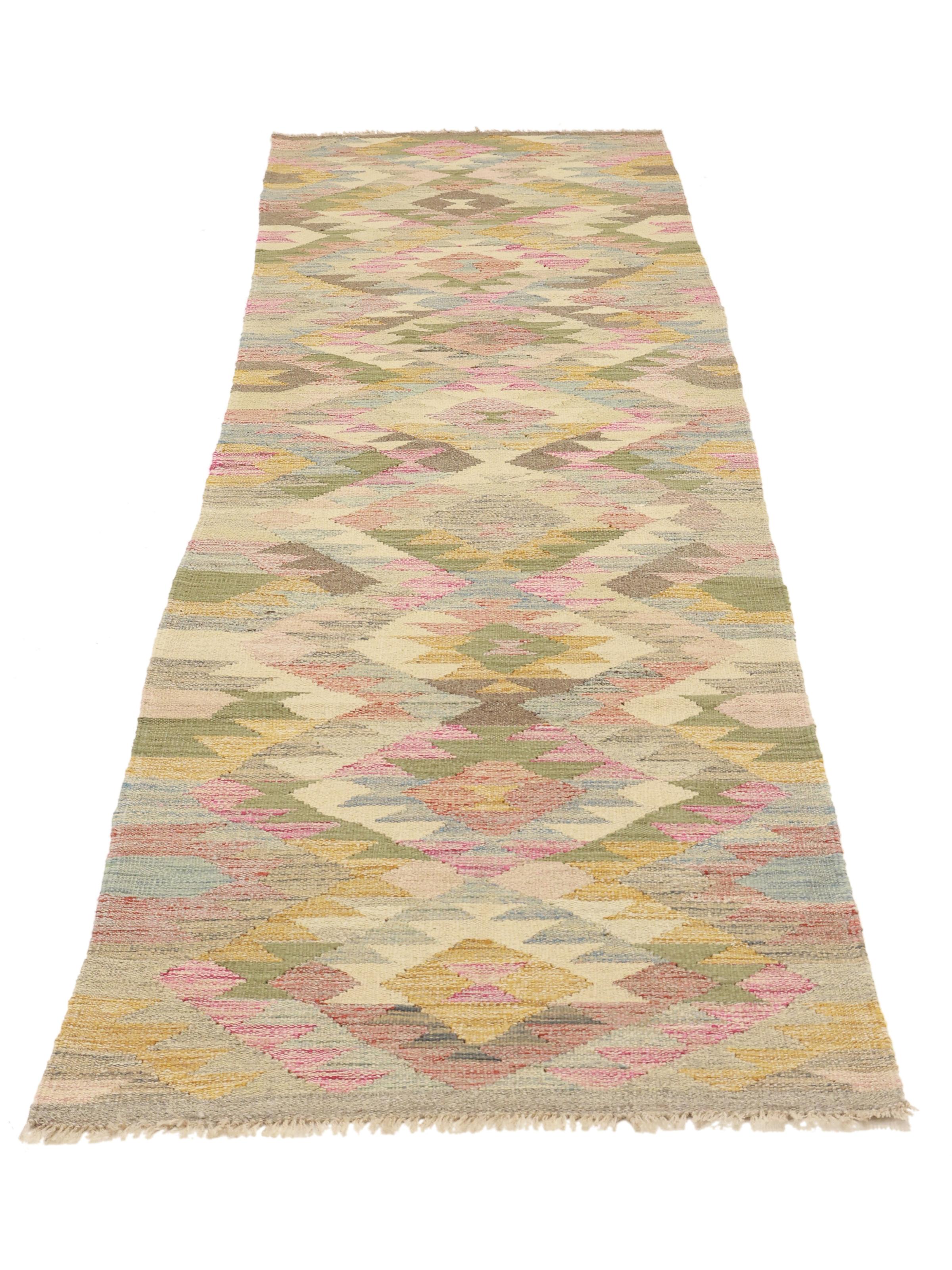
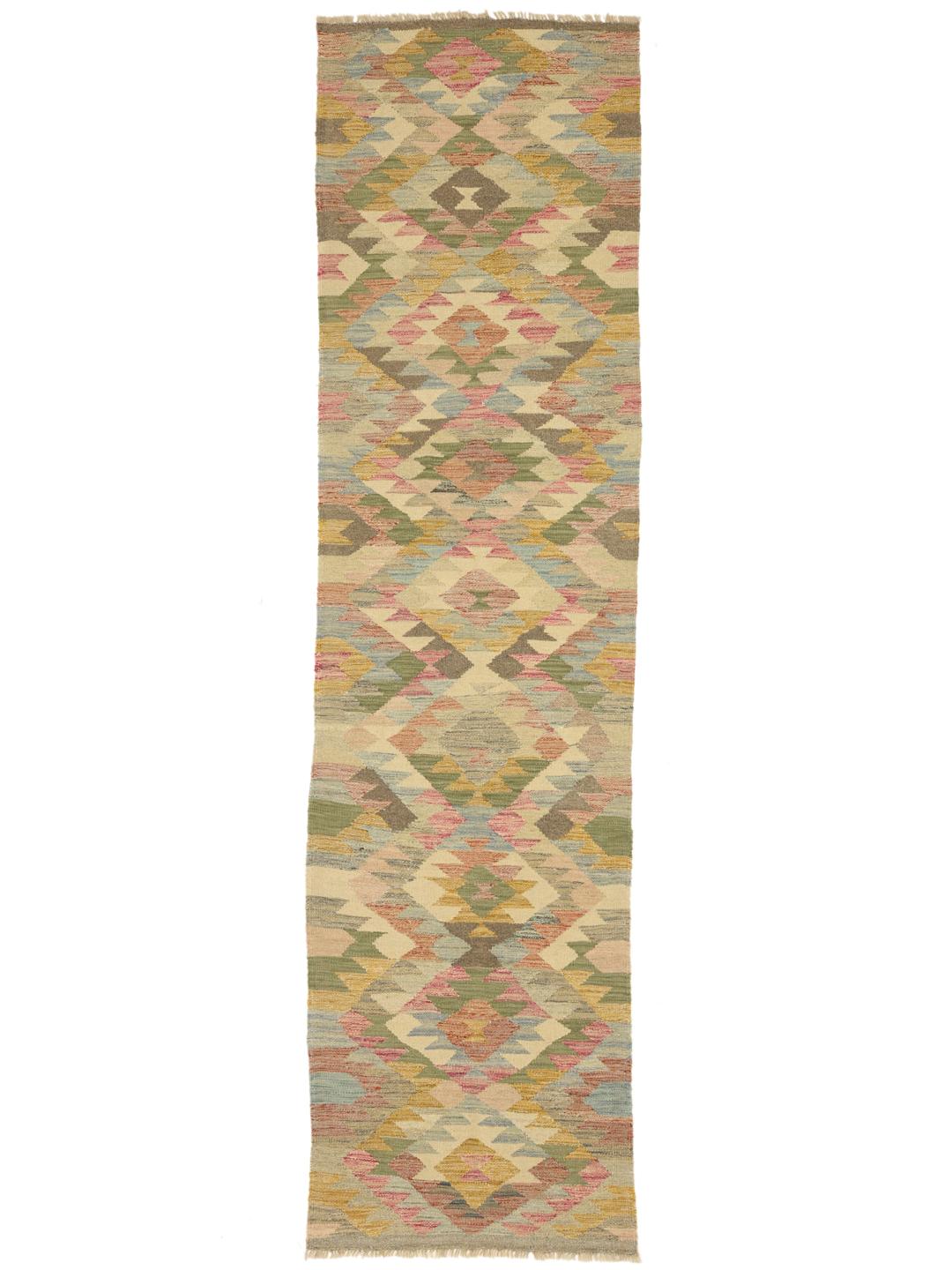
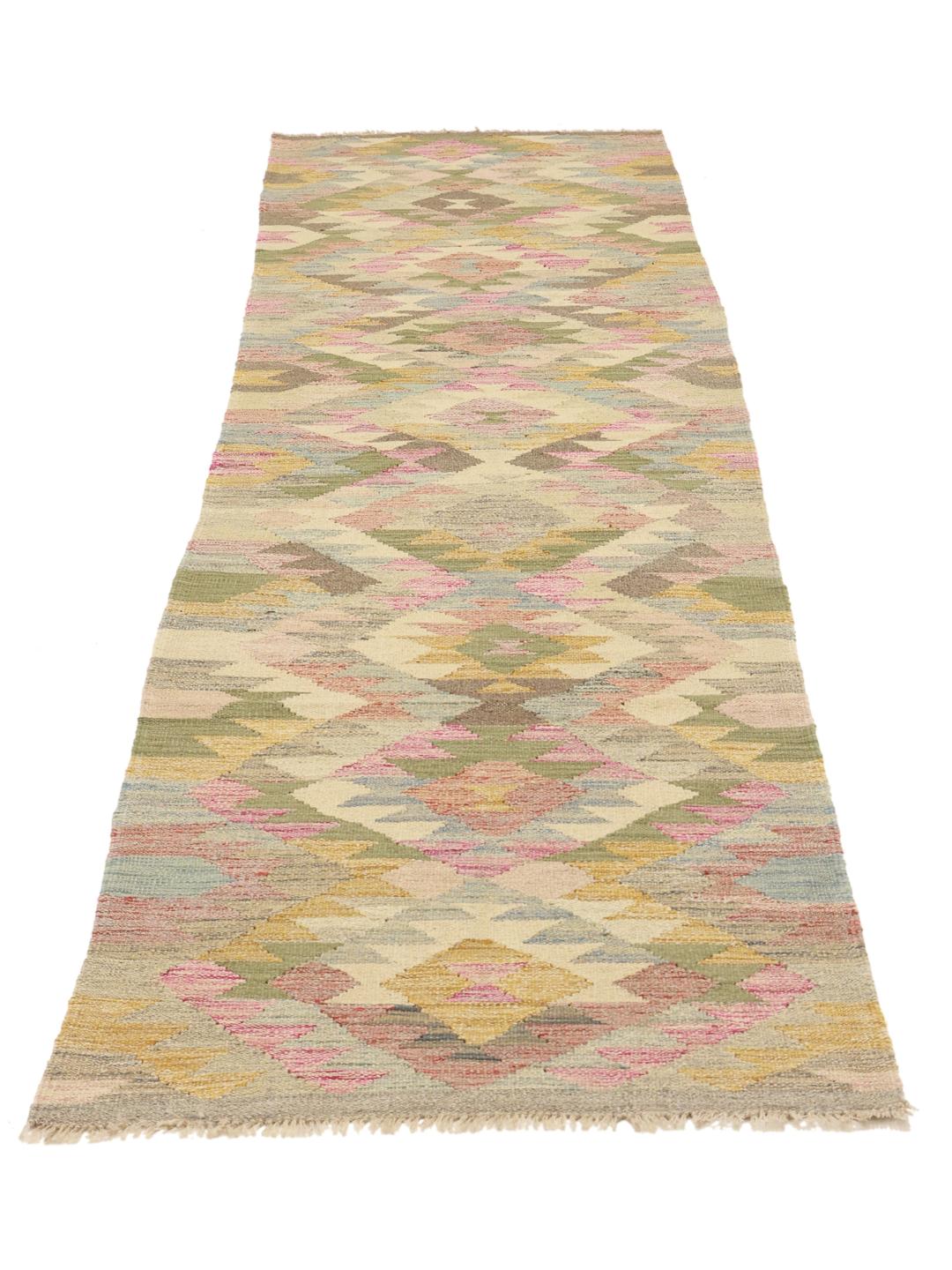
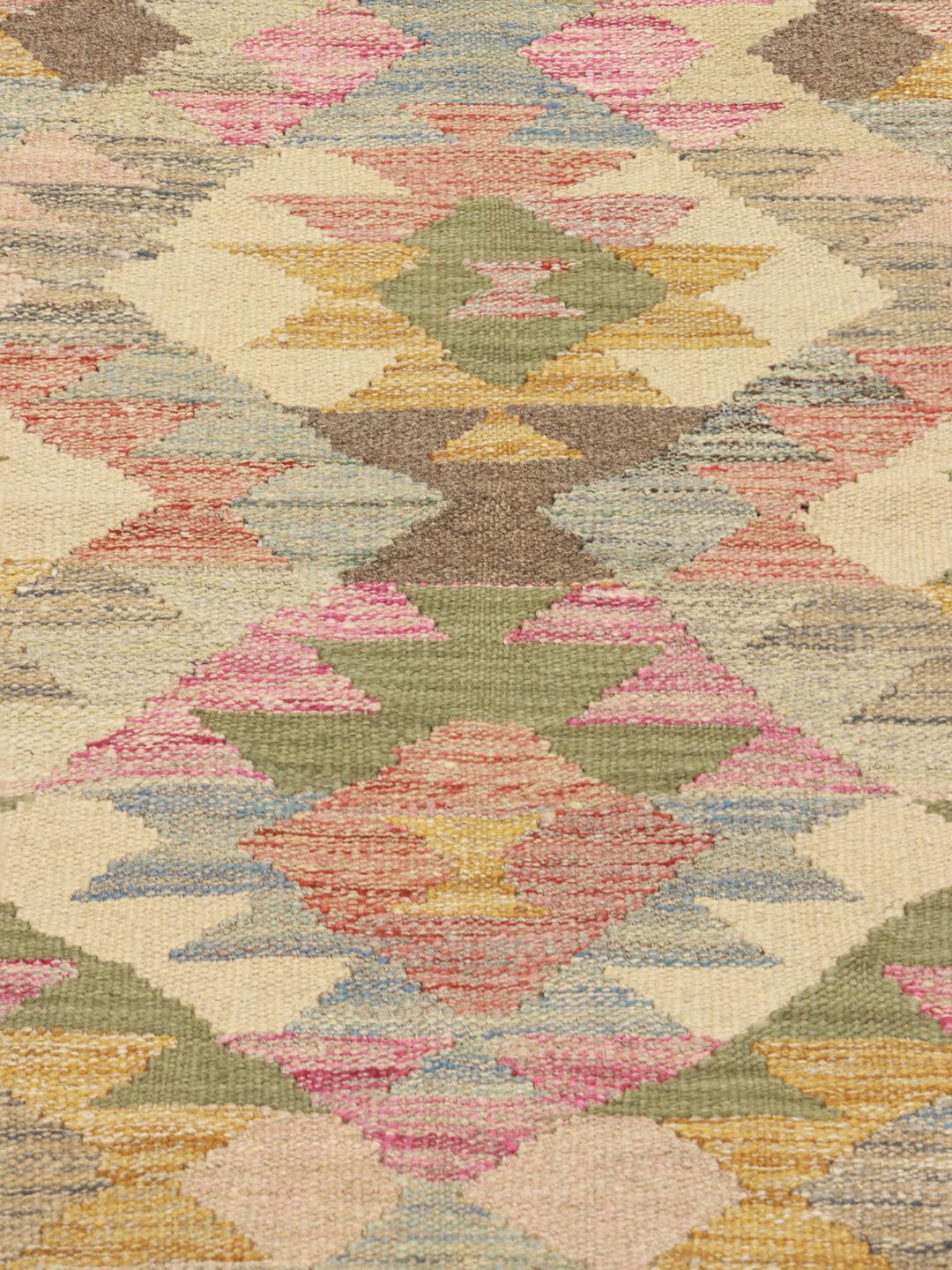
The visual language of this tradition relies heavily on geometric motifs, diamond symbols, and earthy colour palettes drawn from natural dyes. In this particular runner, soft pastel tones blend with traditional geometric arrangements, creating a balanced dialogue between classic motifs and contemporary interior preferences.
Collecting a vintage or modern flatweave connects your home to a lineage of skilled makers who preserved these techniques through political and social shifts. Owning such a piece means preserving a tangible piece of cultural heritage that values human time, resourcefulness, and artistic storytelling above mass production.