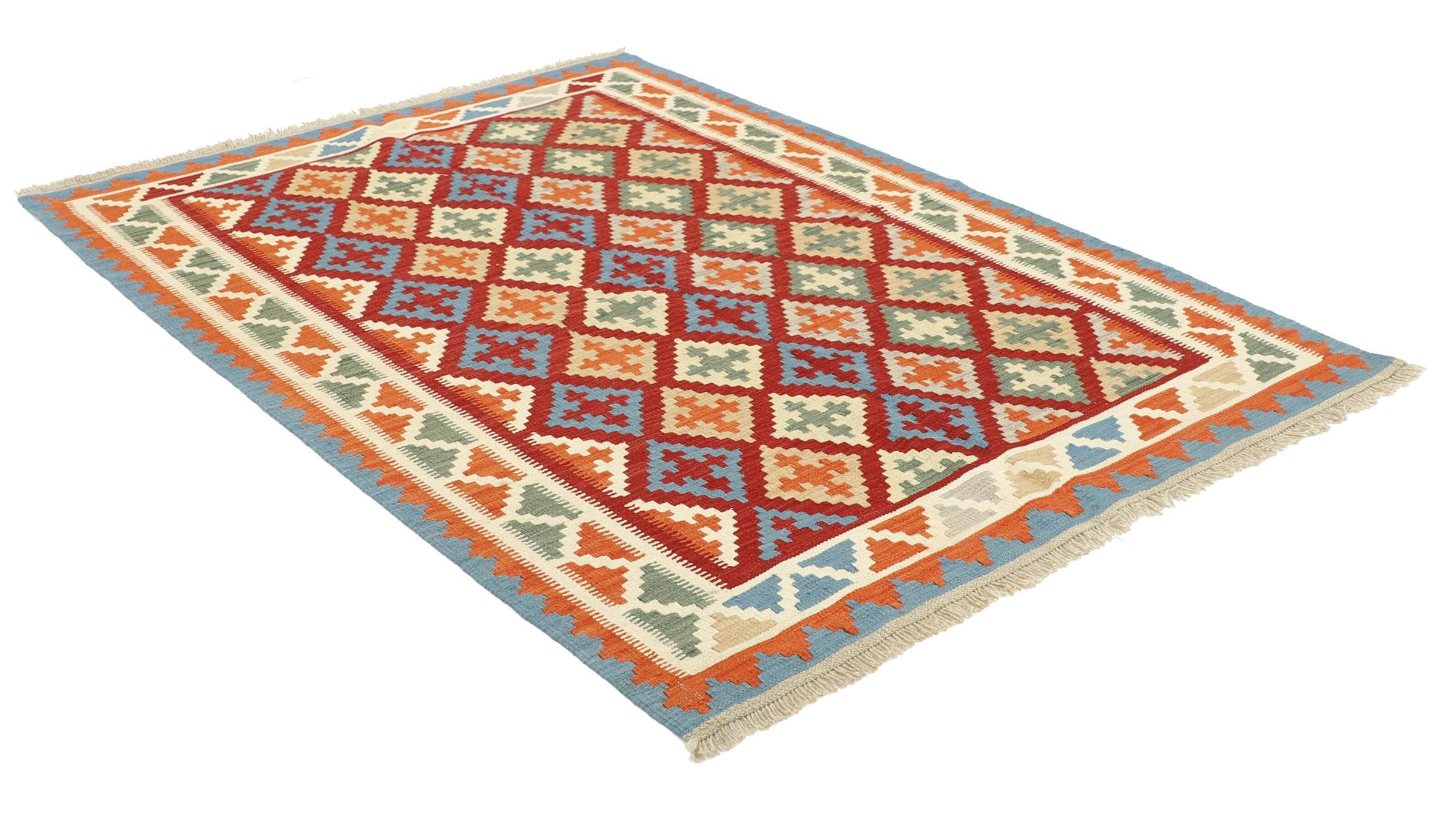
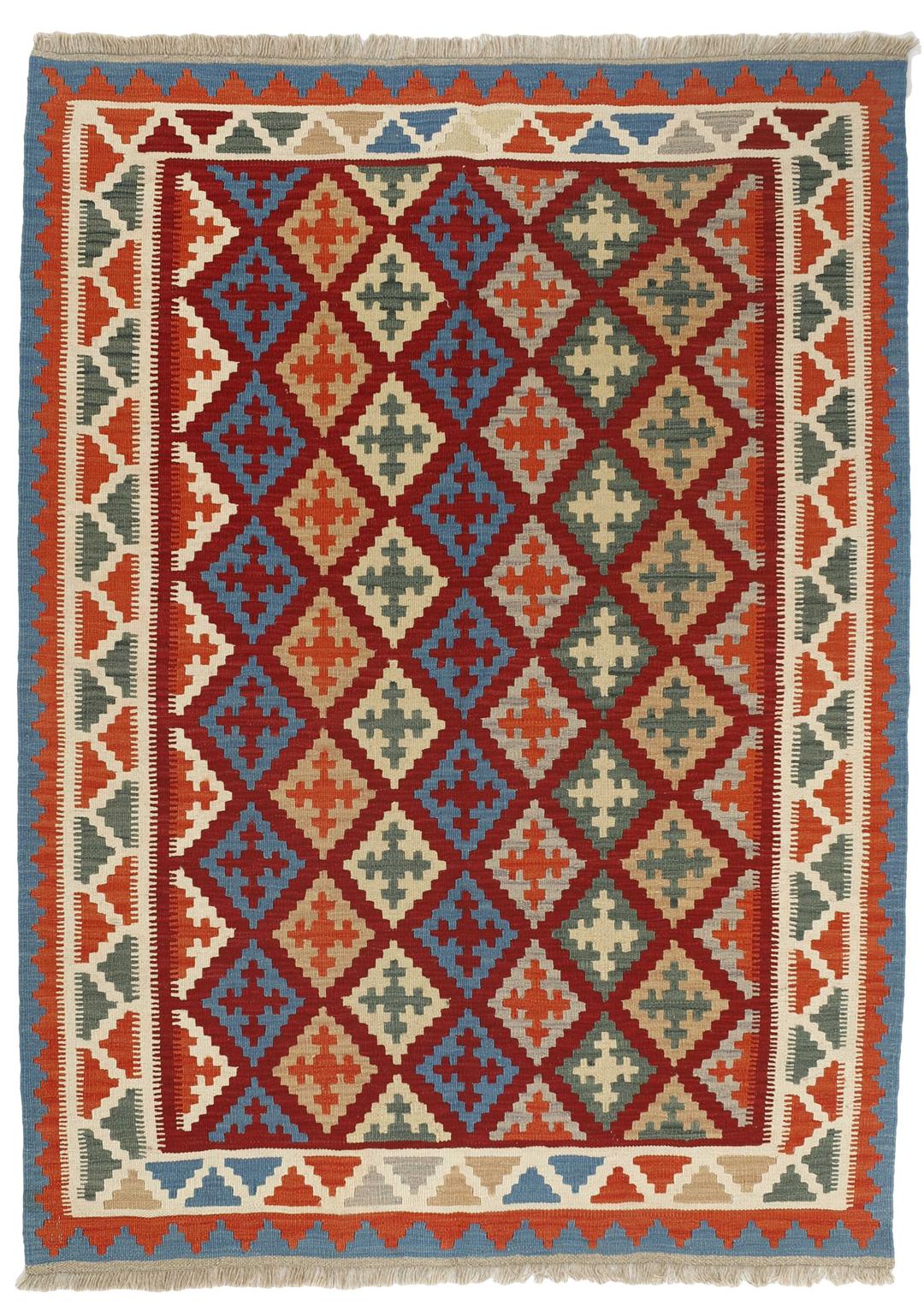
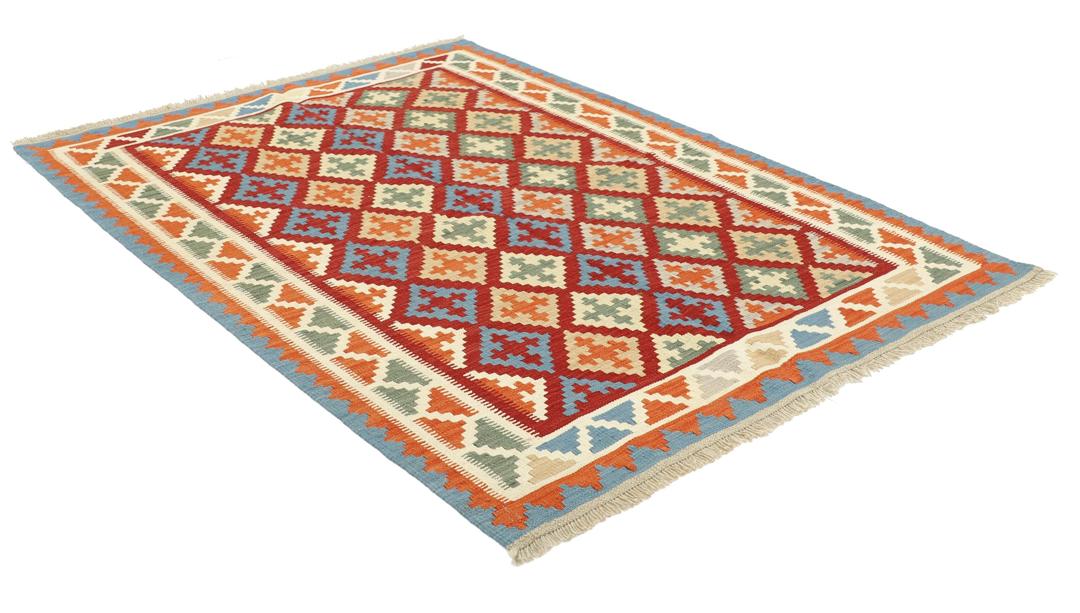
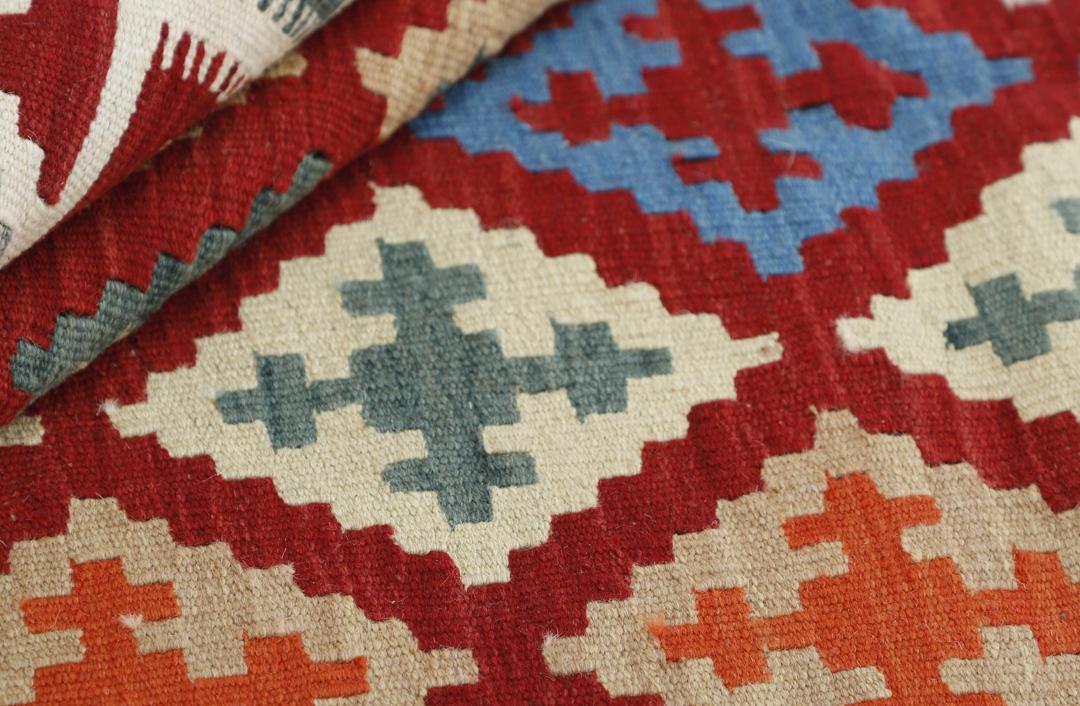
Kilim rugs are a cornerstone of Middle Eastern textile history, originating from nomadic tribes who needed functional, portable, and durable coverings for their homes. These flat-woven textiles were historically used as floor coverings, wall hangings, and storage bags, serving as a vital part of daily life while showcasing the artistic expression of the weaving communities.
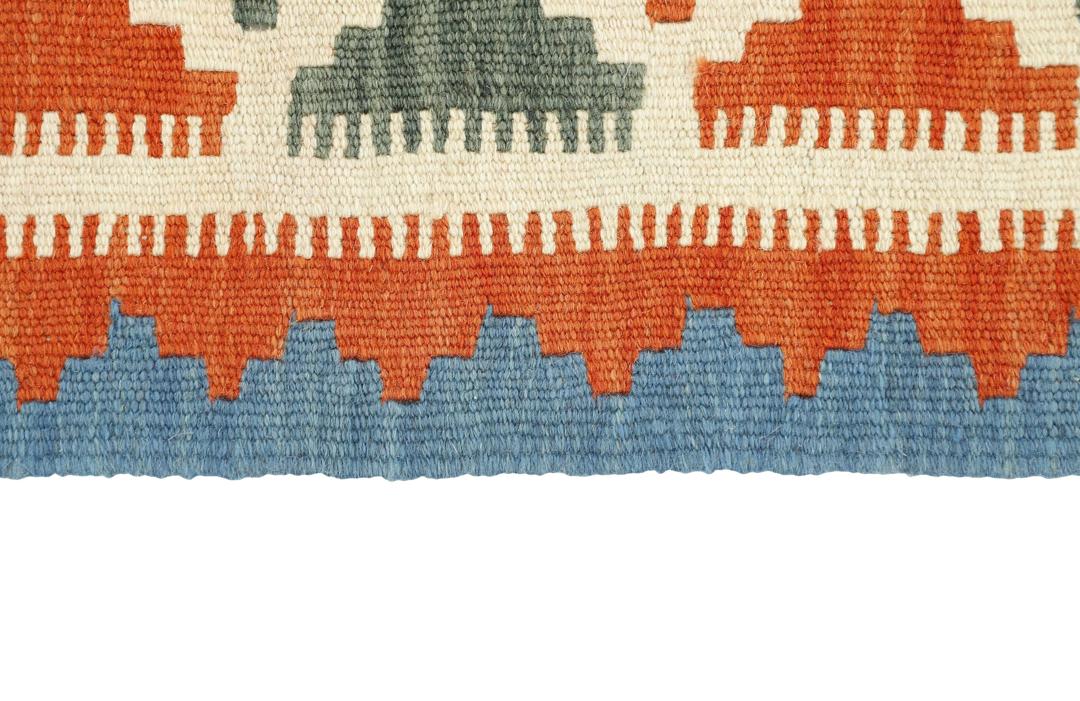
The term 'Kilim' refers to the specific technique of slit-weaving, where the weft threads are pulled tightly to hide the warp threads, creating the rug's characteristic flat surface. This technique allows for sharp, crisp edges between colours, which is essential for the precise geometric patterns that define the style and distinguish it from pile-woven carpets.
The visual language of this rug is built upon symbolic geometric motifs, often passed down through generations. These patterns, such as the diamond shapes seen here, are not merely decorative but are deeply rooted in the cultural identity of the weavers. The bold use of colour and organised repetition creates a sense of harmony that is instantly recognisable to those familiar with this storied craft.
Collecting a Kilim is an investment in human skill and cultural heritage. Each piece represents a connection to a slow, deliberate tradition that values the individual artisan's hand and eye. Owning such a rug means preserving a legacy of craft, bringing a piece of history into your living space that is as meaningful as it is beautiful.