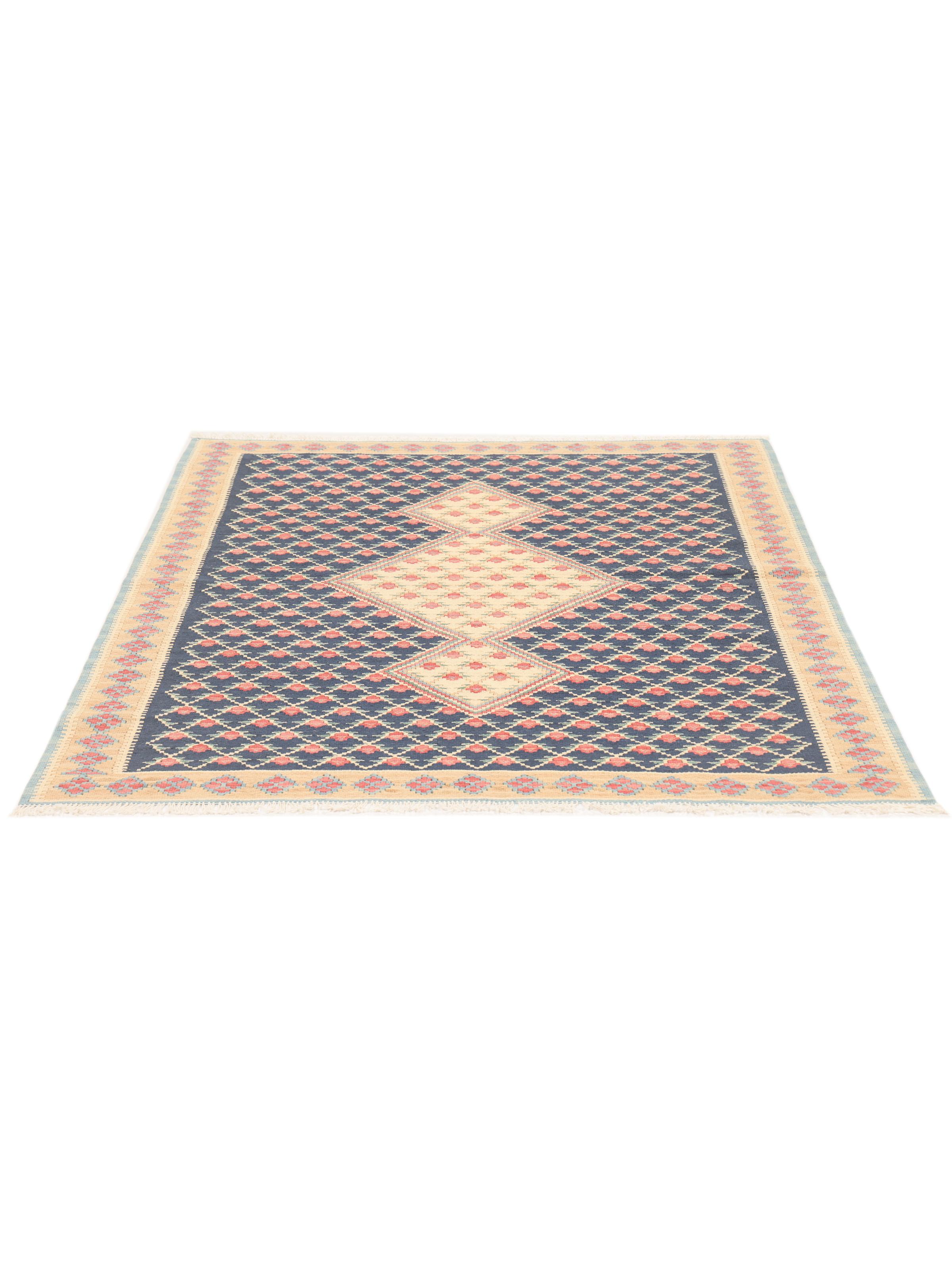
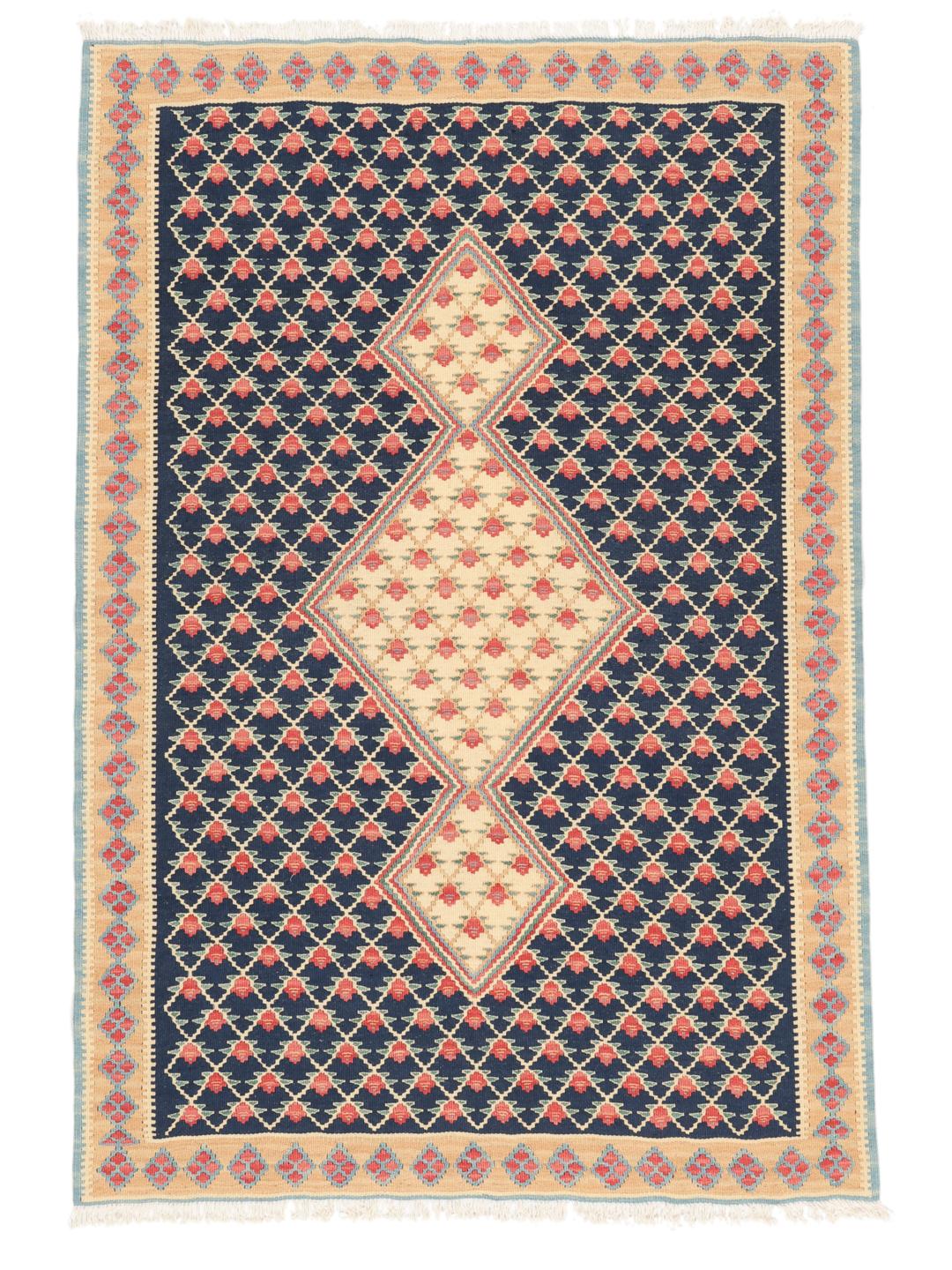
Kelim rugs have long been celebrated for their historical significance, particularly those originating from the Senneh region in the Middle East. These textiles were traditionally crafted by nomadic and village weavers who developed a highly specialised flat-weaving technique, distinct from the knotted pile rugs found in other parts of the region.
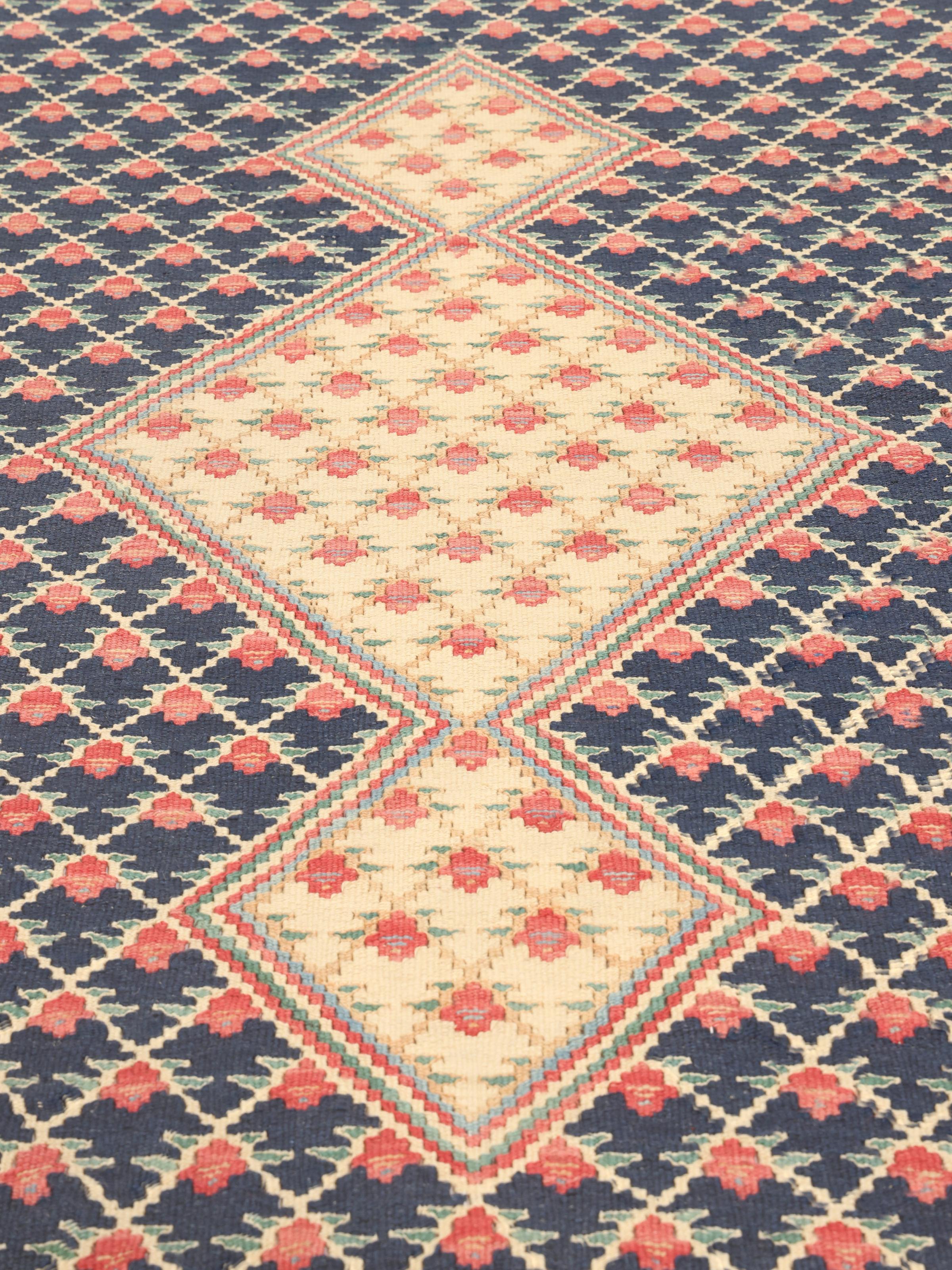
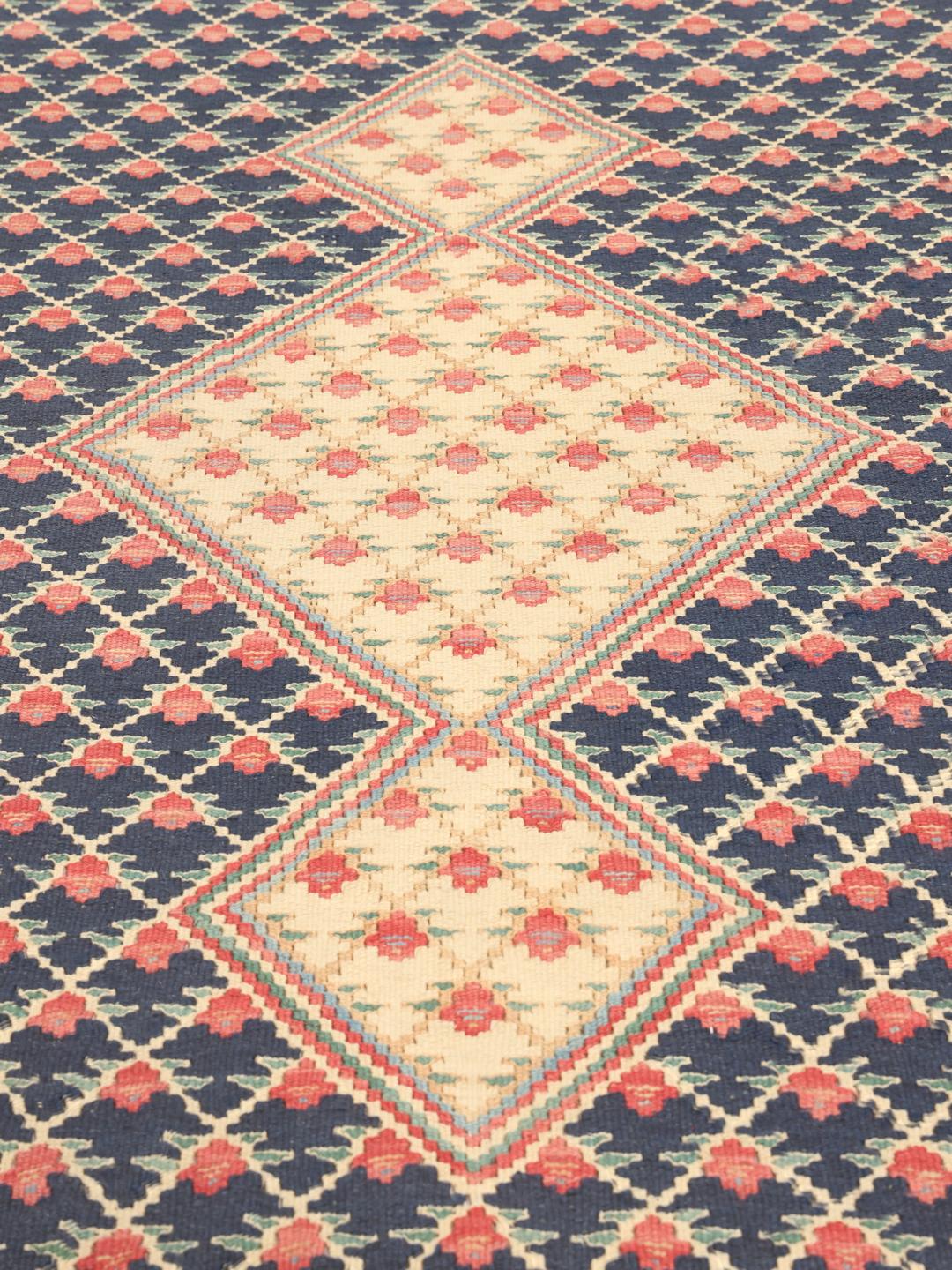
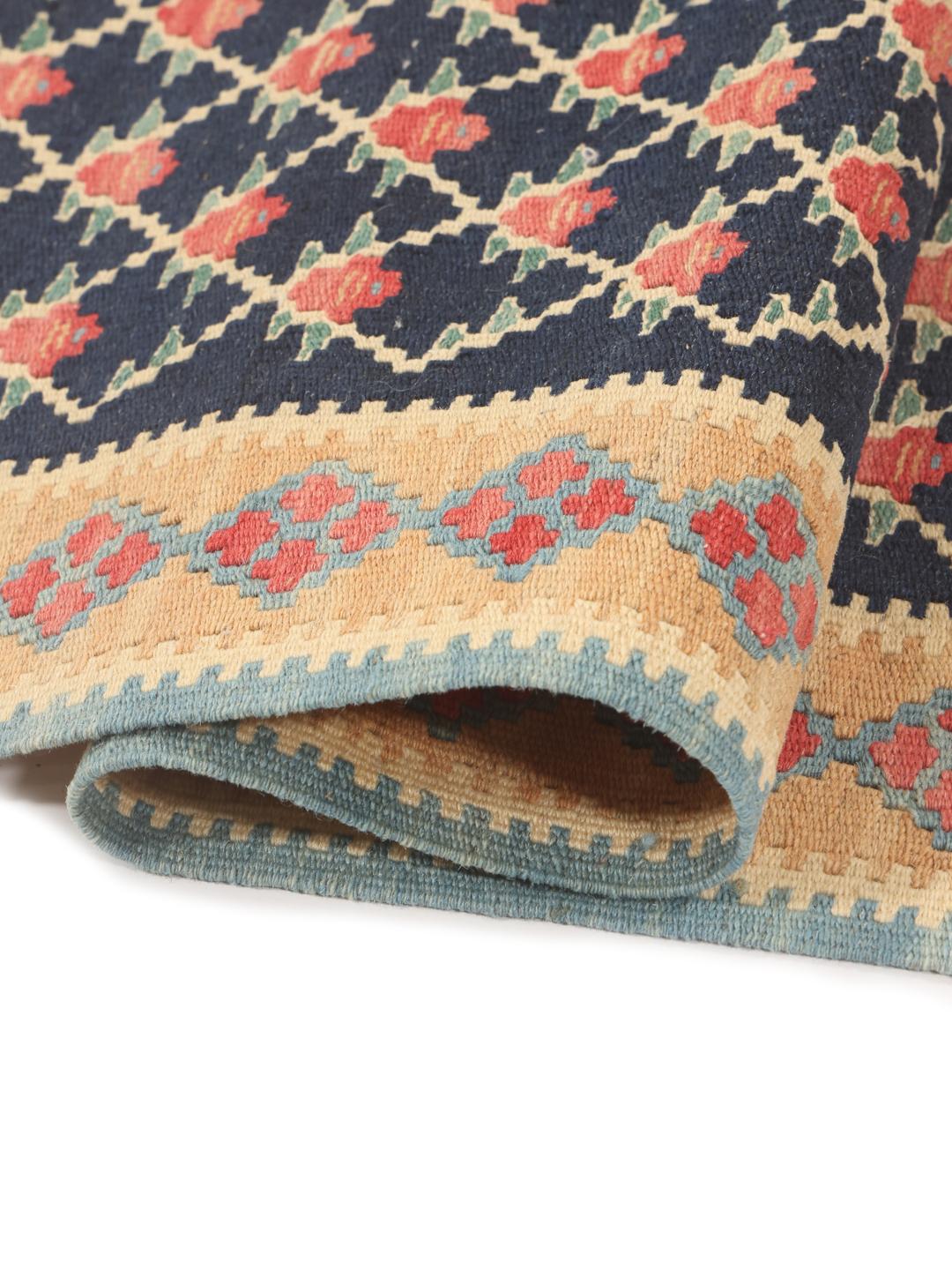
The term 'Fine' in this context refers to the exceptional density and precision of the weave. Unlike coarser kilims, the Senneh style is characterised by a high-count warp and weft, which allows for the creation of intricate, delicate geometric motifs. This technical refinement produces a thinner, more durable, and more visually sophisticated fabric that has been prized for centuries.
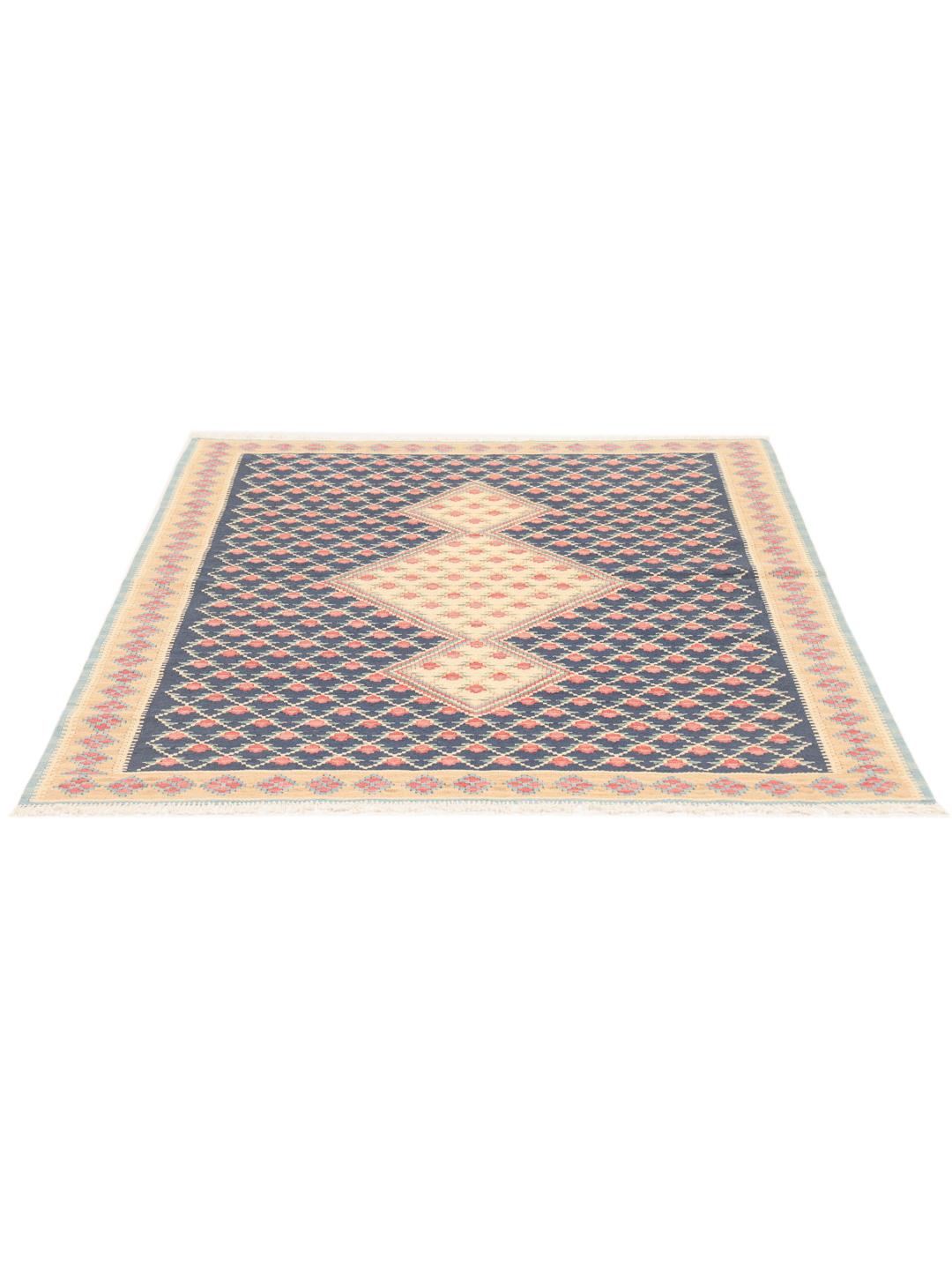
Signature design elements of these rugs often include repeating geometric shapes, such as the diamond or medallion motifs seen here. These patterns are not merely decorative but are deeply rooted in the local culture, often representing stylised floral forms or abstract symbols of protection. The use of a dark-blue field with contrasting light-toned borders is a hallmark of this tradition, creating a striking visual balance.
Today, these rugs are highly sought after by collectors and enthusiasts who value the preservation of ancient weaving techniques. Owning a Kelim Senneh Fine is an investment in cultural heritage, representing a level of skill that bridges the gap between functional household item and textile art, ensuring it remains a treasured piece for generations to come.