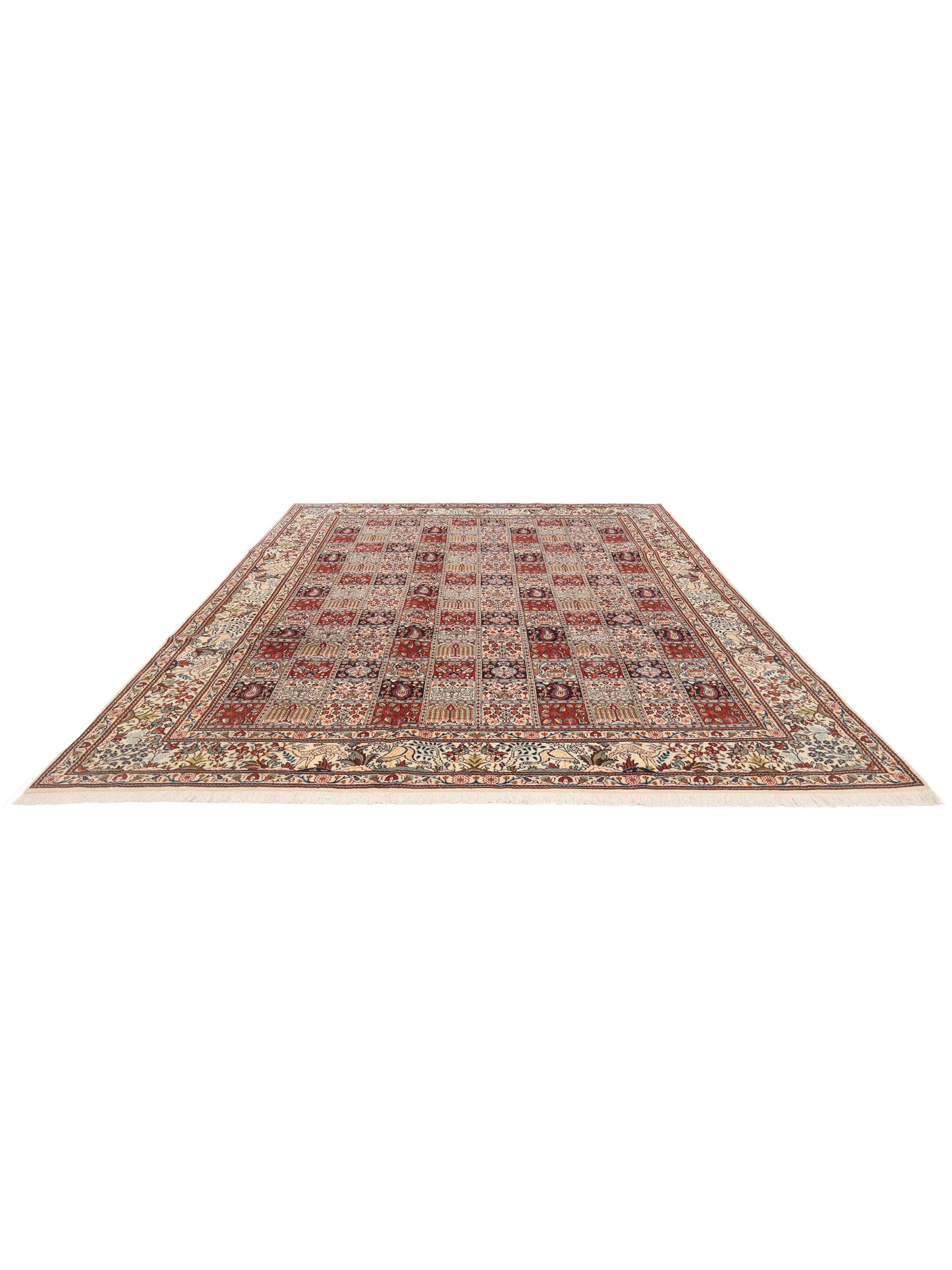
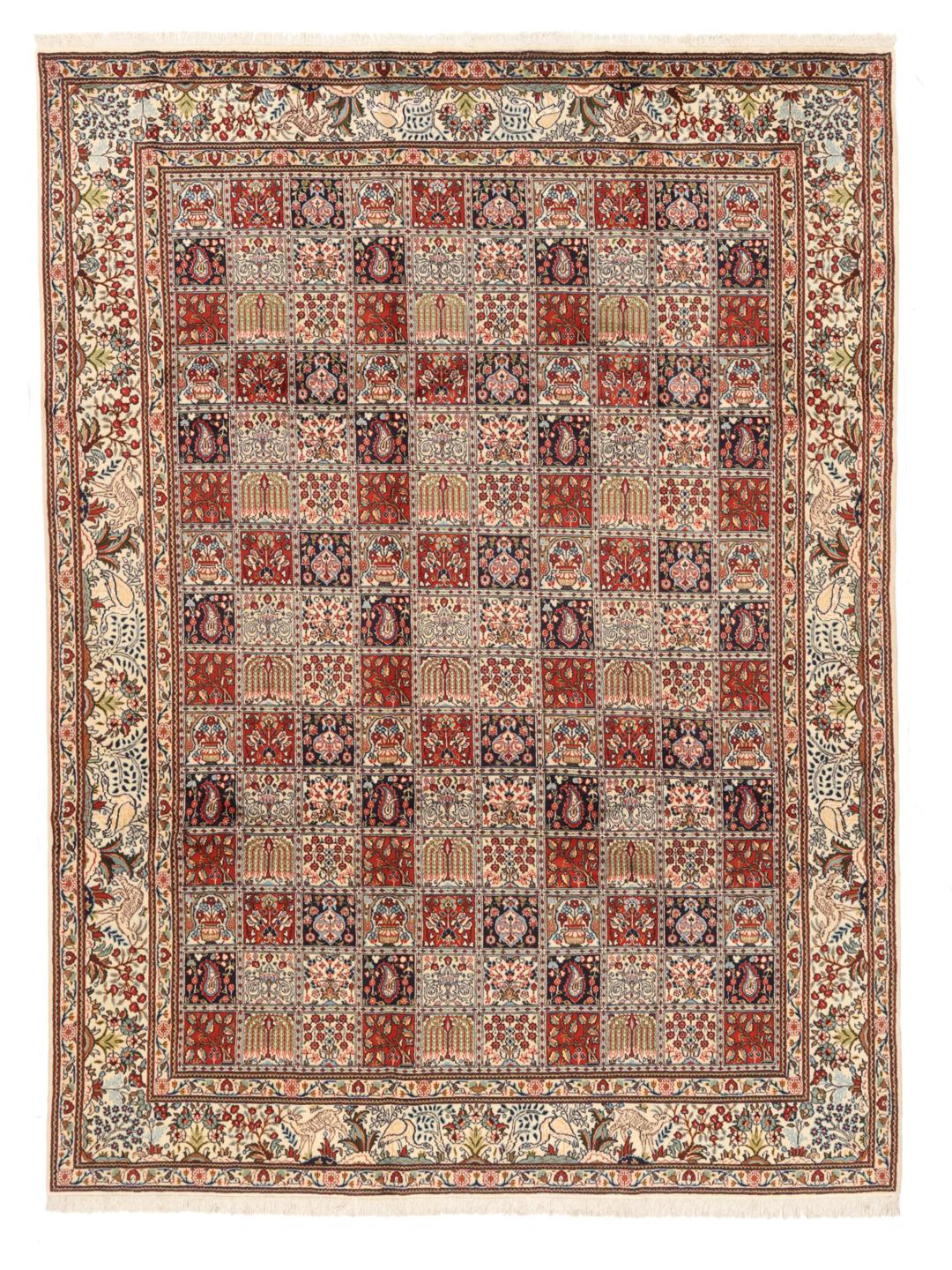
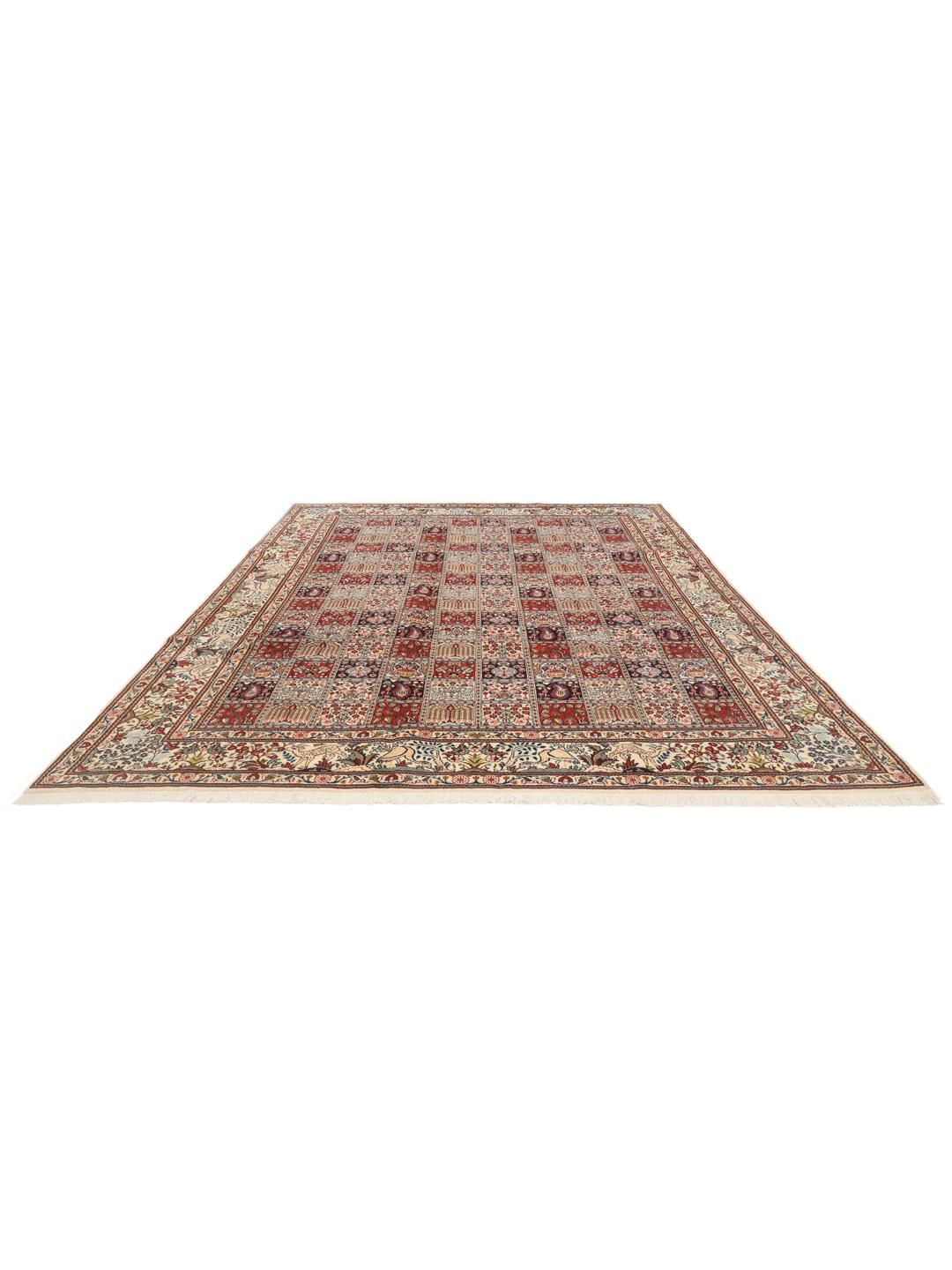
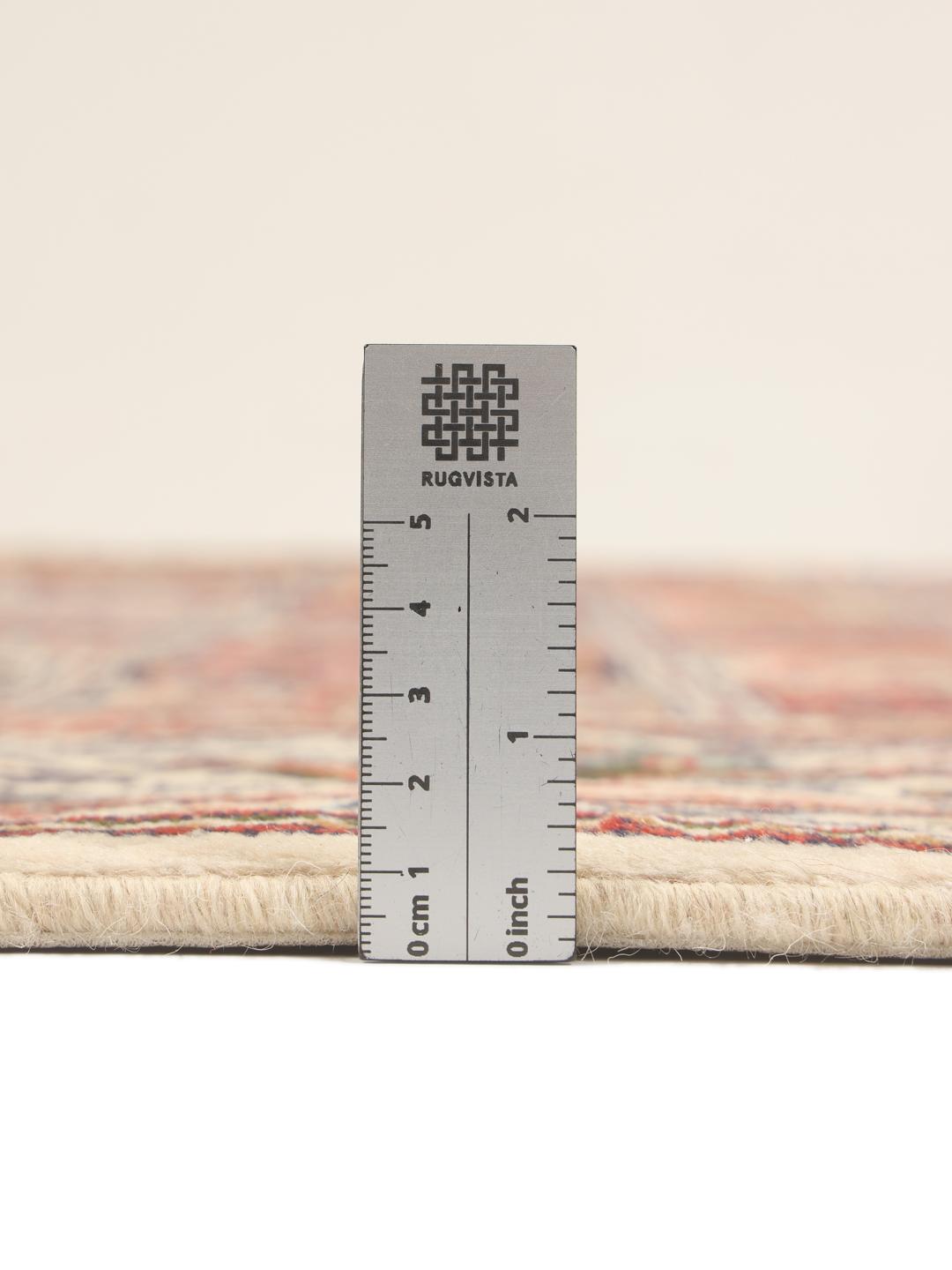
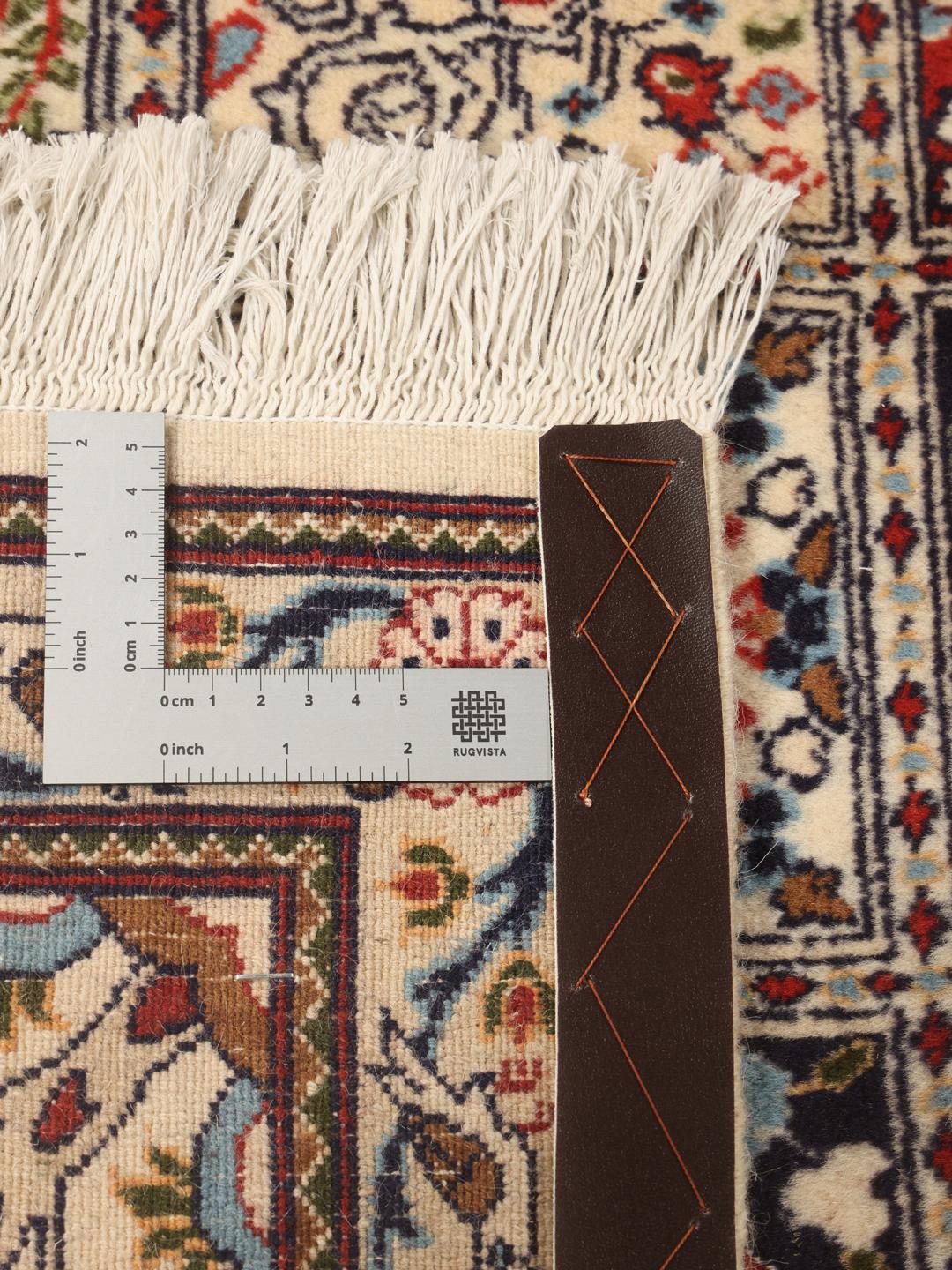
The Moud rug originates from the town of Moud in eastern Middle East, a region celebrated for its long-standing contribution to the textile arts. These rugs are deeply rooted in the local tradition of garden design, often reflecting the layout of classical paradise gardens. The weavers in this region have perfected a unique aesthetic that blends regional motifs with a formal, structured approach to composition.
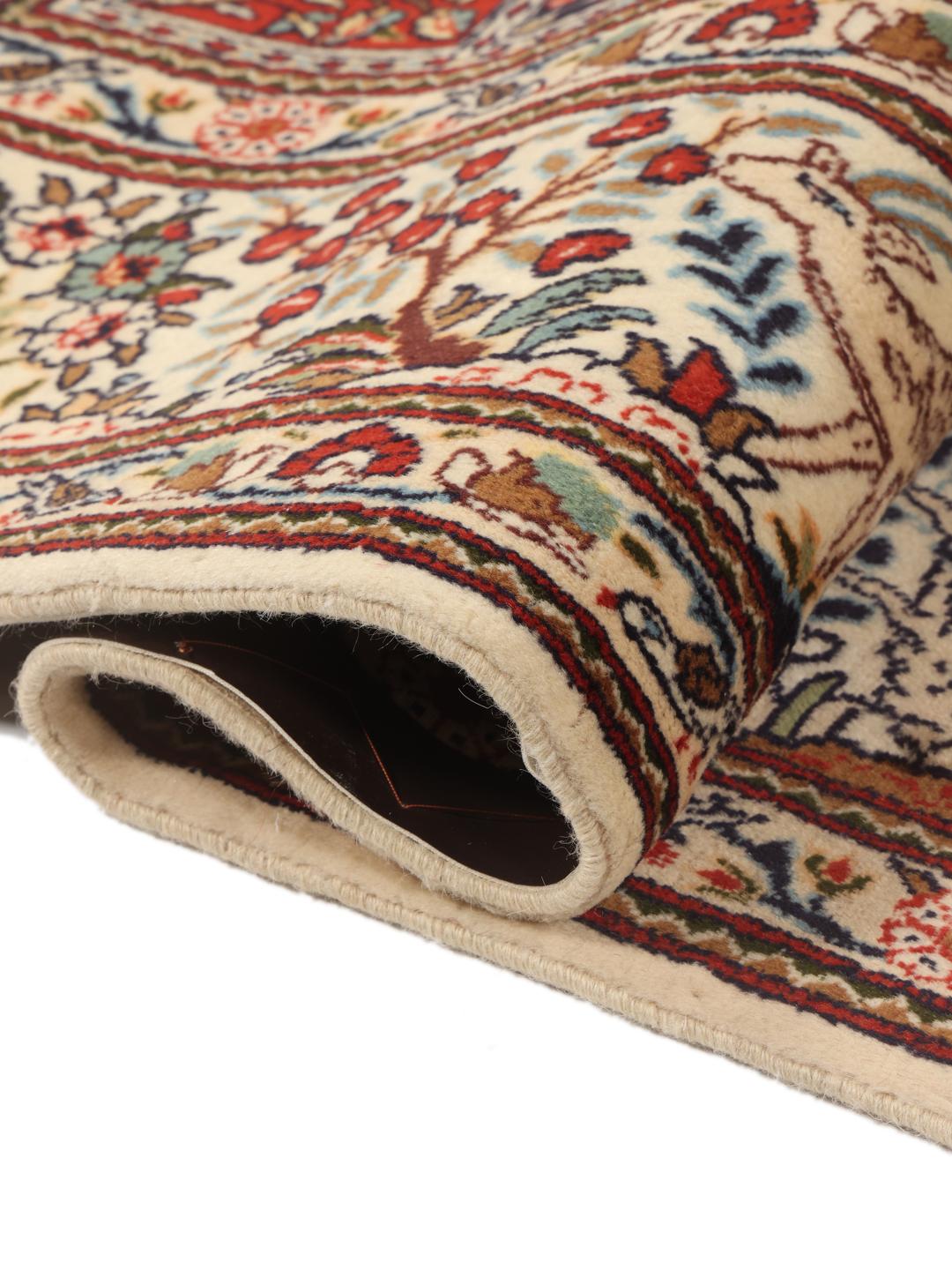
The term Moud refers to this specific regional craft, known for its emphasis on high-quality materials and dense knotting. This density is essential for the characteristic sharpness of Moud designs, allowing for the inclusion of fine details that would be lost in looser, coarser weaves. The result is a rug that is as technically sound as it is visually captivating.
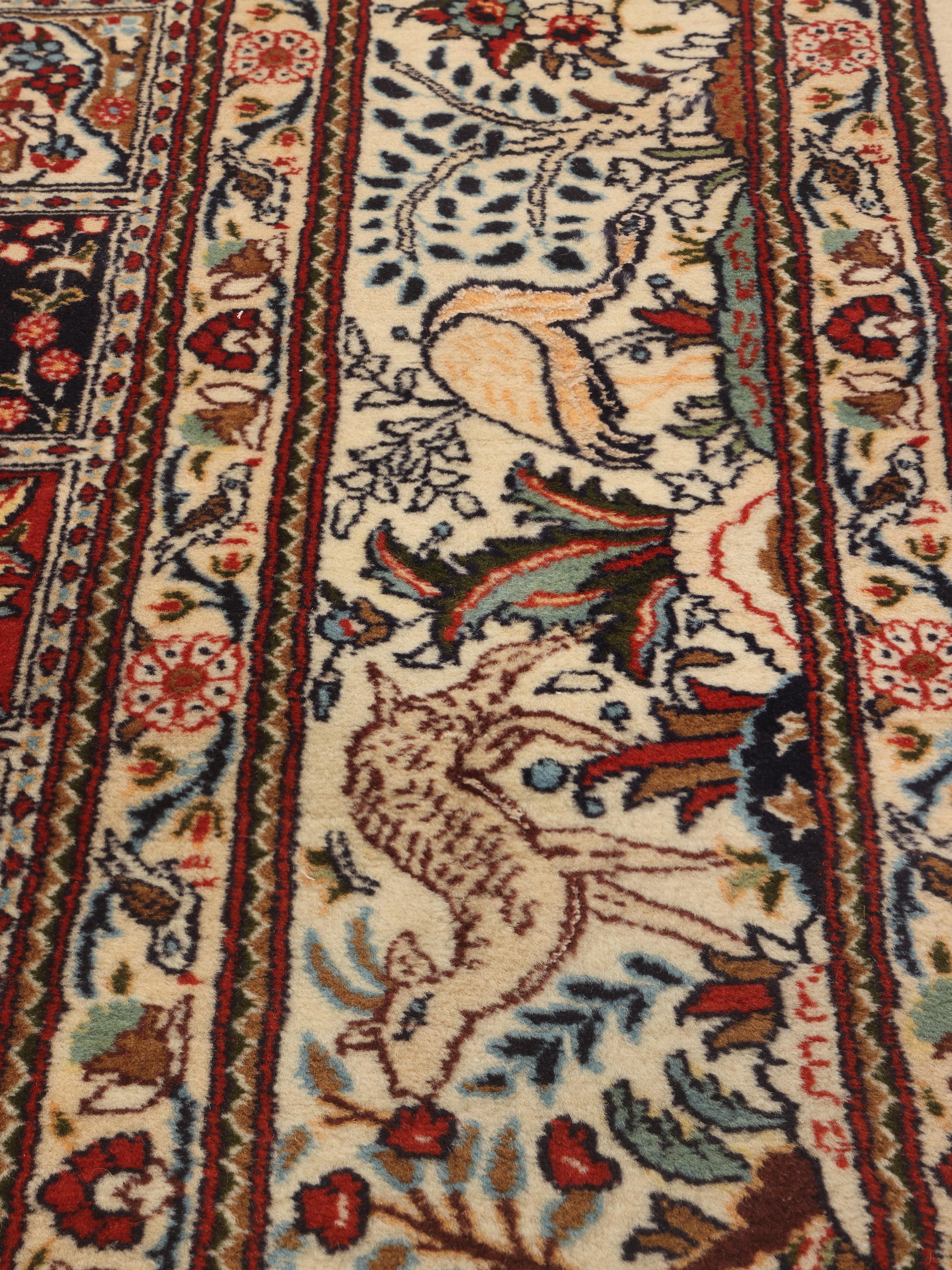
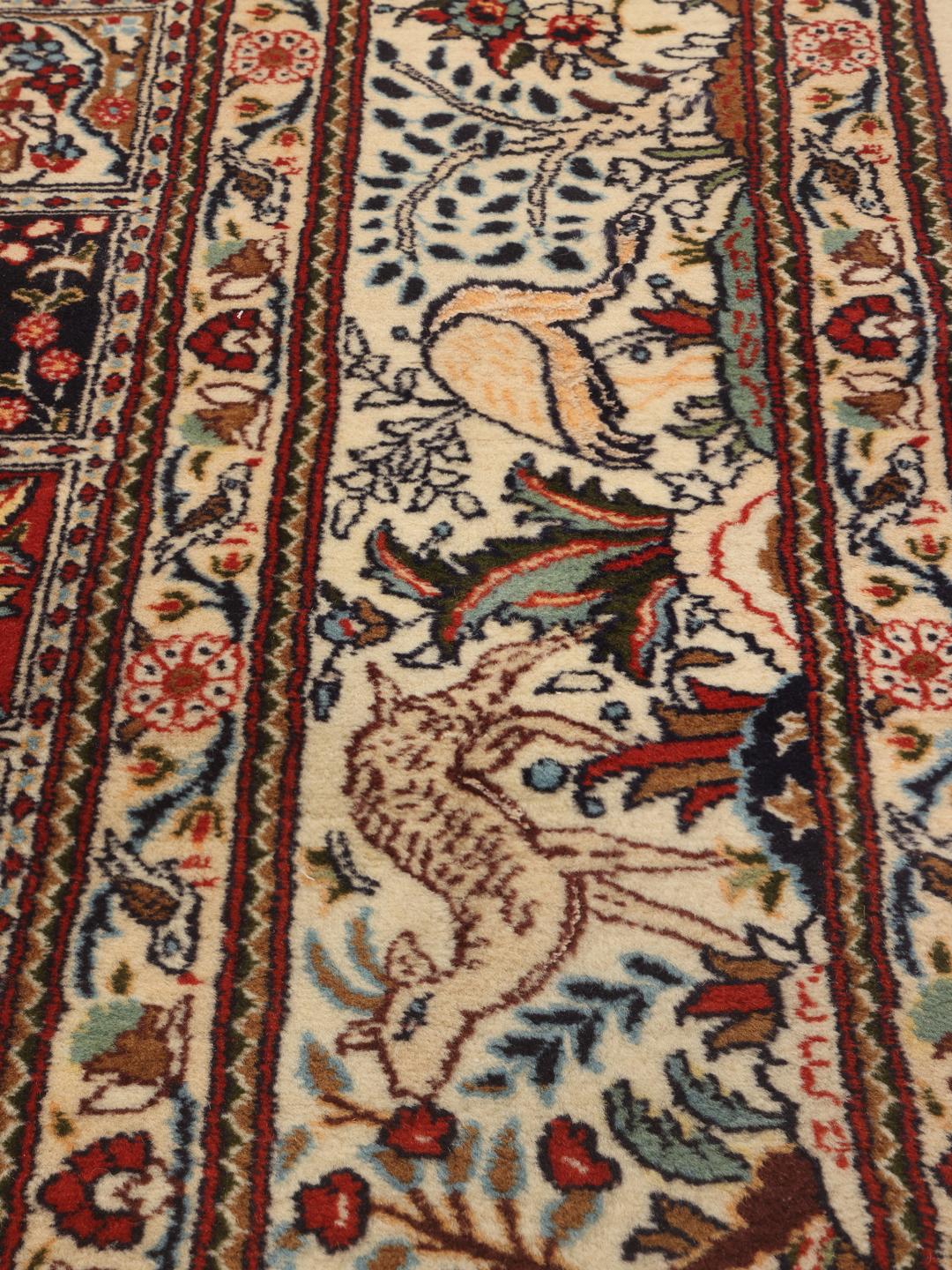
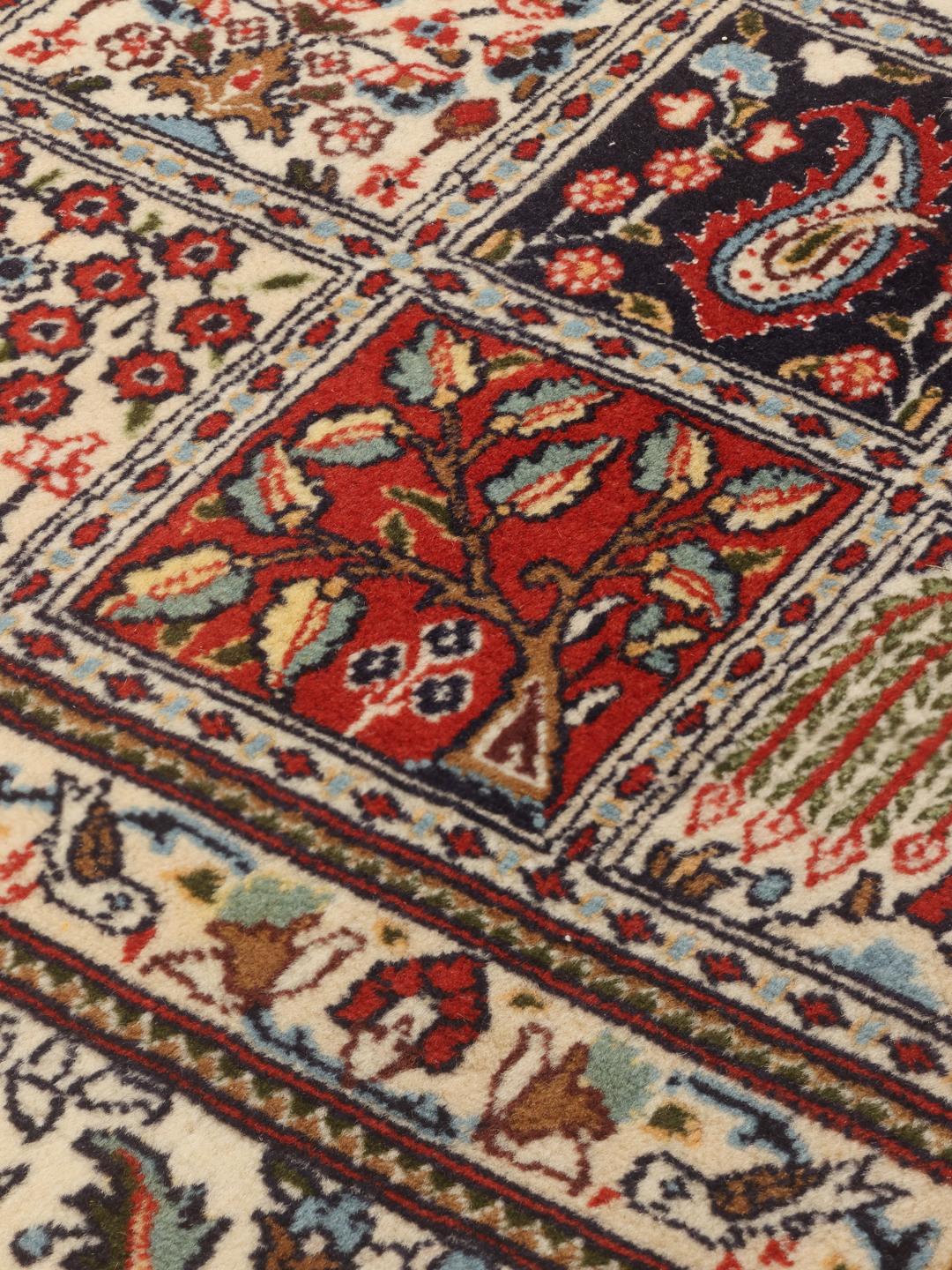
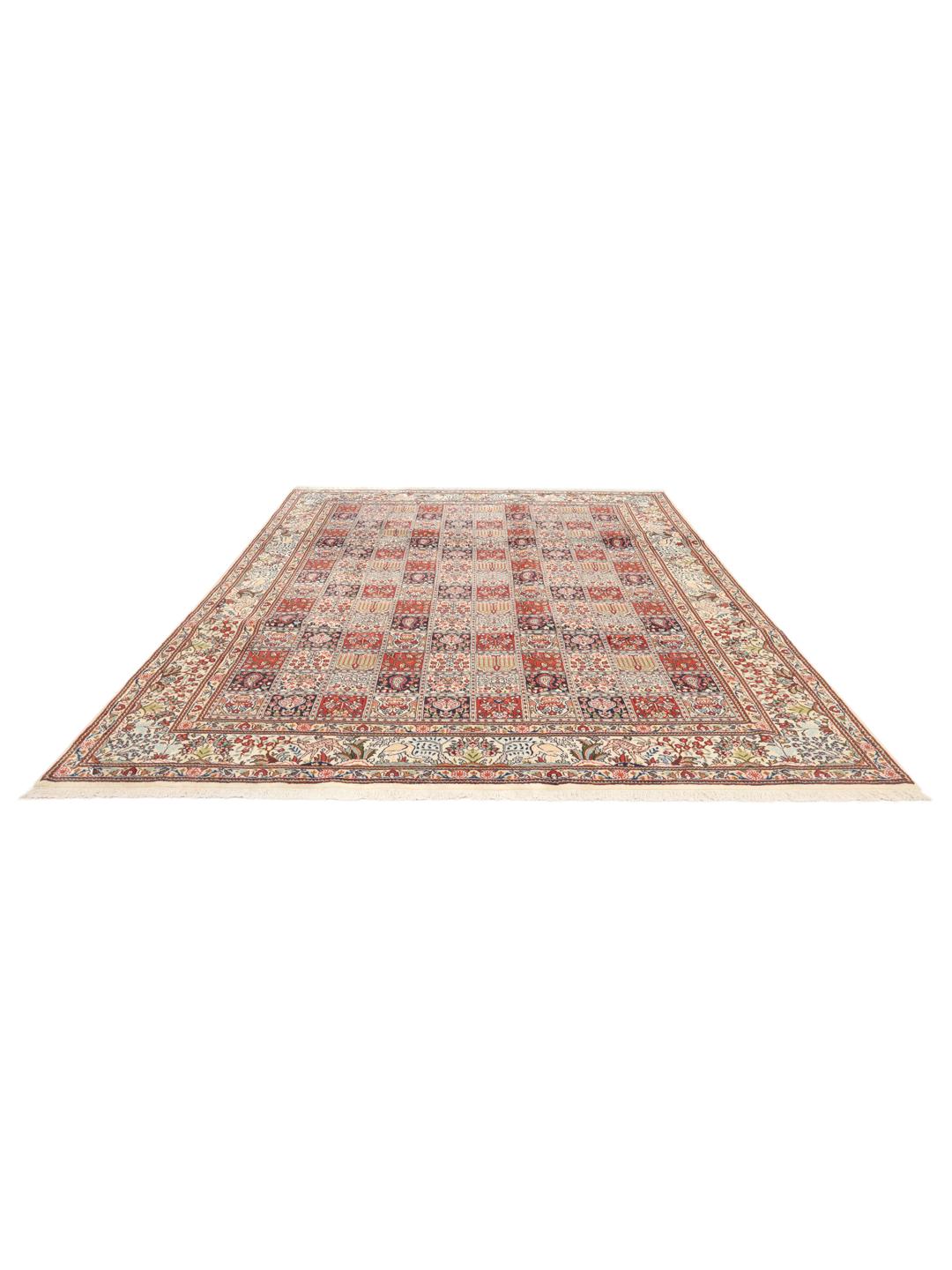
Signature design elements of the Moud tradition often include the 'Herati' pattern or, as seen here, a grid of distinct compartments known as the 'Khesti' or garden design. Each square acts as a miniature canvas for botanical themes, including vases, blooming shrubs, and stylized flowers. These are frequently enclosed by complex borders that feature animals or birds, adding a layer of narrative richness to the geometric structure.
Rugs from this tradition are highly sought after by collectors for their blend of artistic storytelling and disciplined craftsmanship. Owning a Moud rug is an opportunity to connect with a heritage of meticulous work and cultural expression. These pieces are valued not just as floor coverings, but as enduring items that carry the history and skill of the Middle Eastern weaving tradition into the modern home.