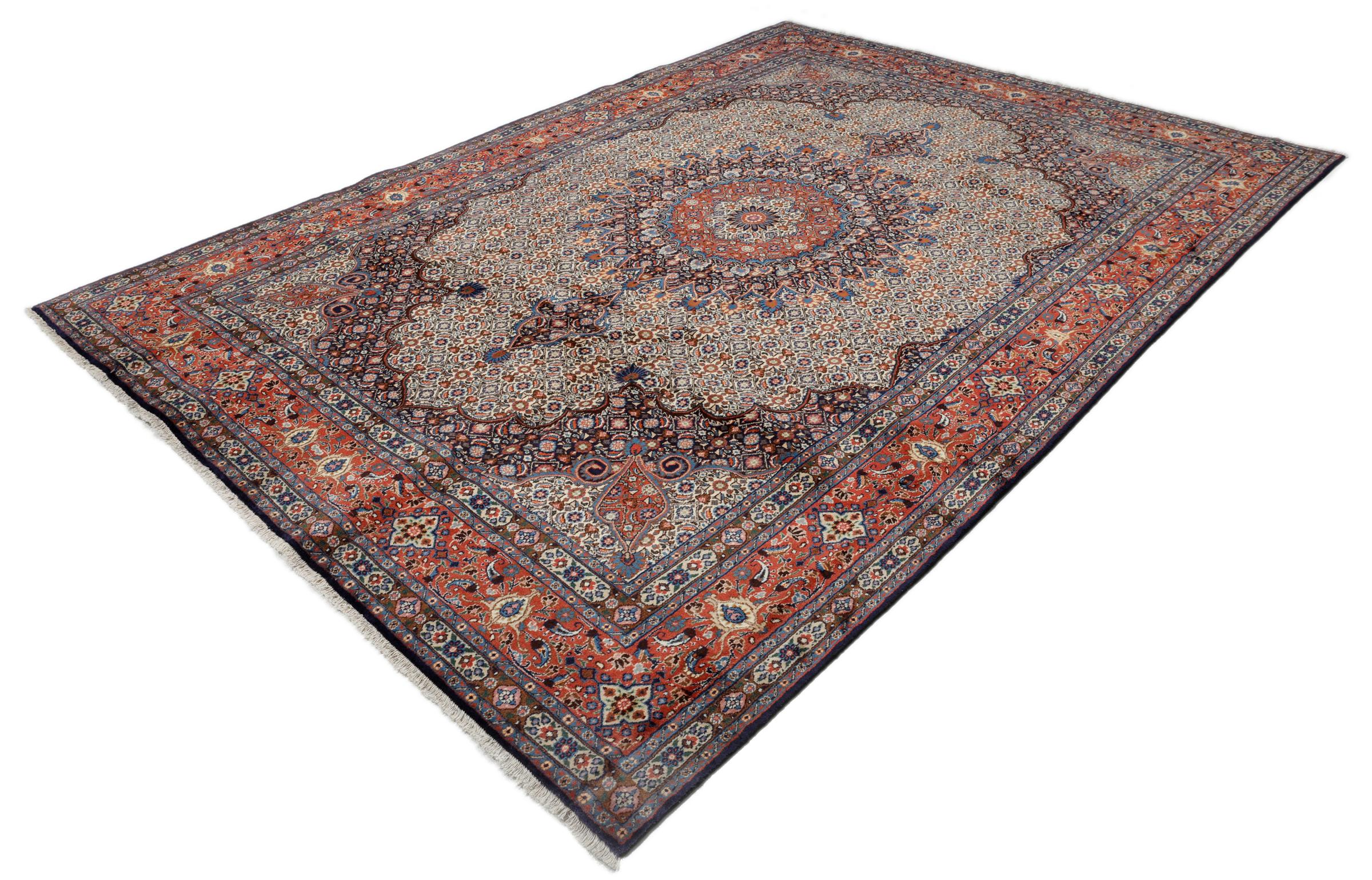
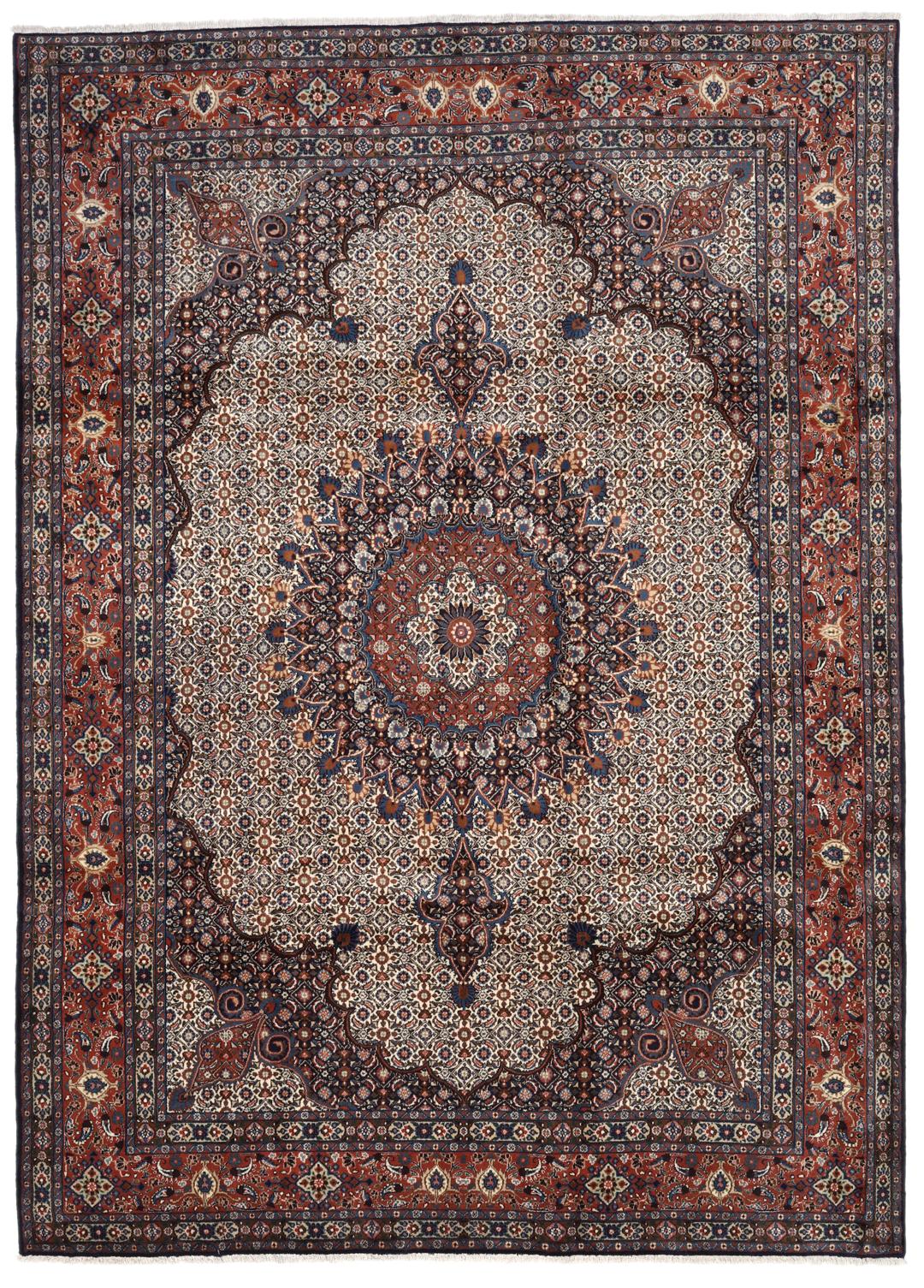
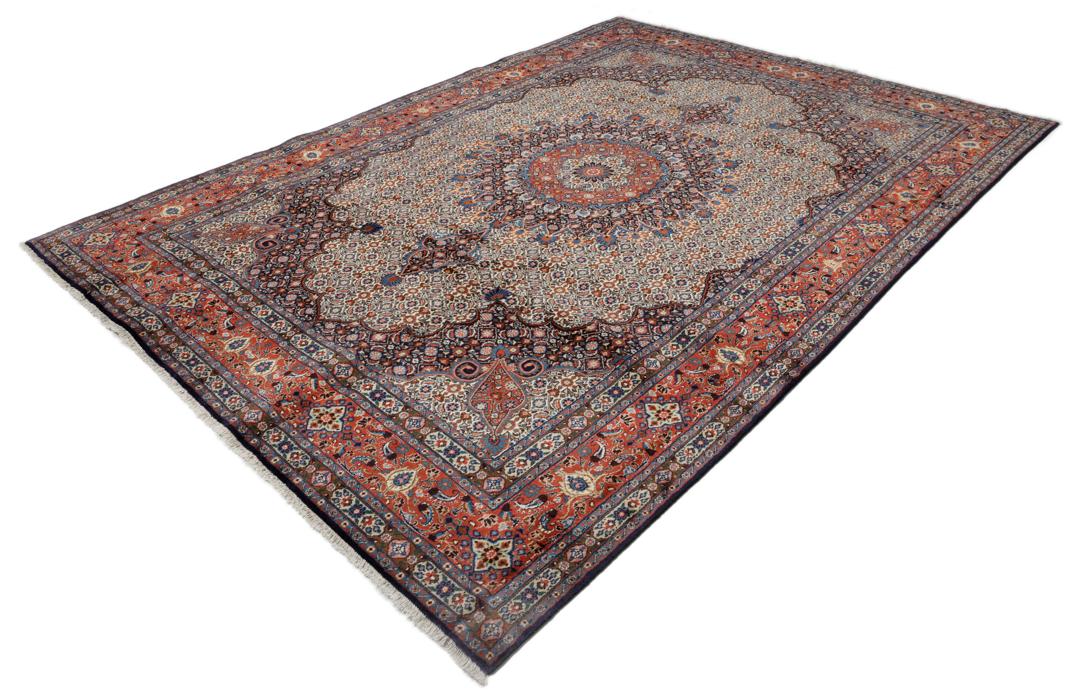
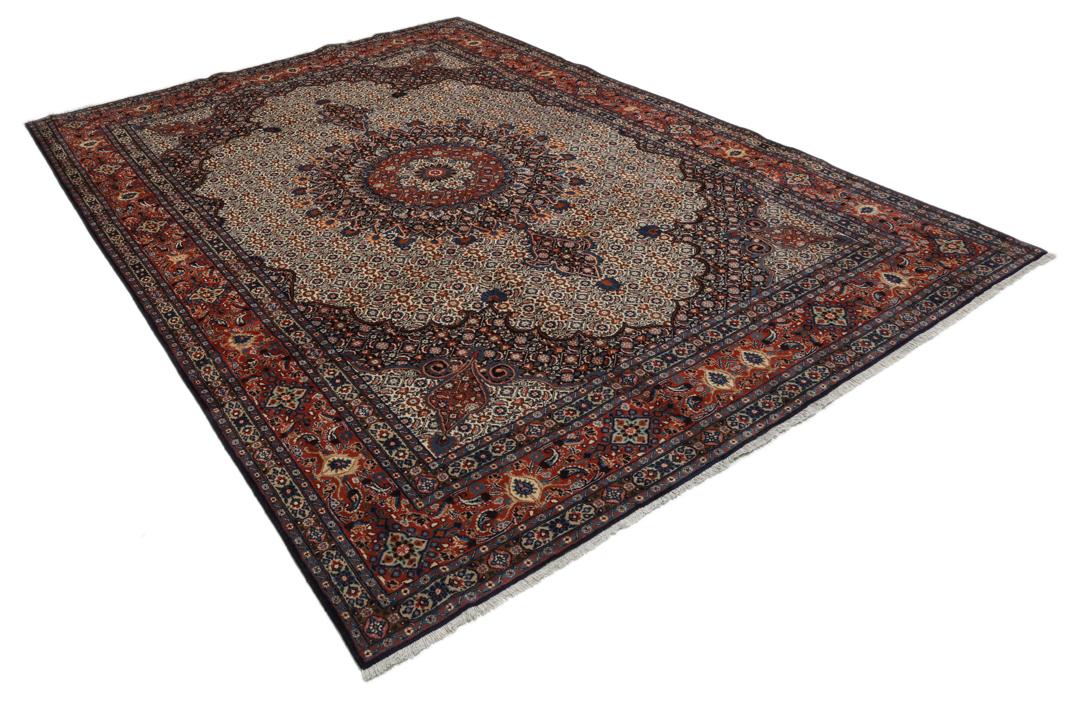
The Moud rug originates from the small town of Moud, located in the Khorasan province of the Middle East. This region has a long and storied history of textile production, known for creating rugs that bridge the gap between rural tribal influences and more refined, urban design sensibilities. The rugs from this area are celebrated for their distinctive personality and the high level of technical mastery required to execute their complex layouts.
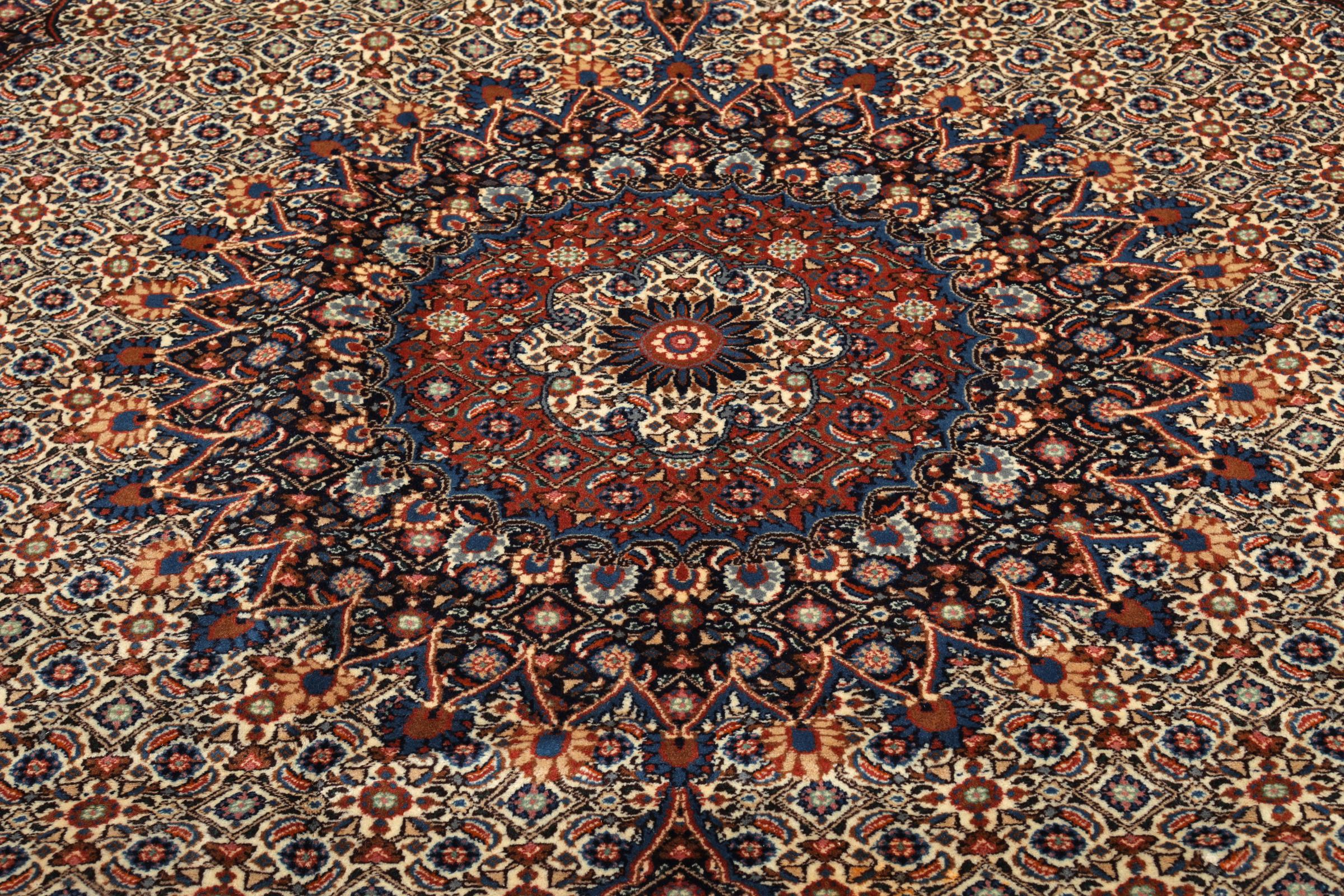
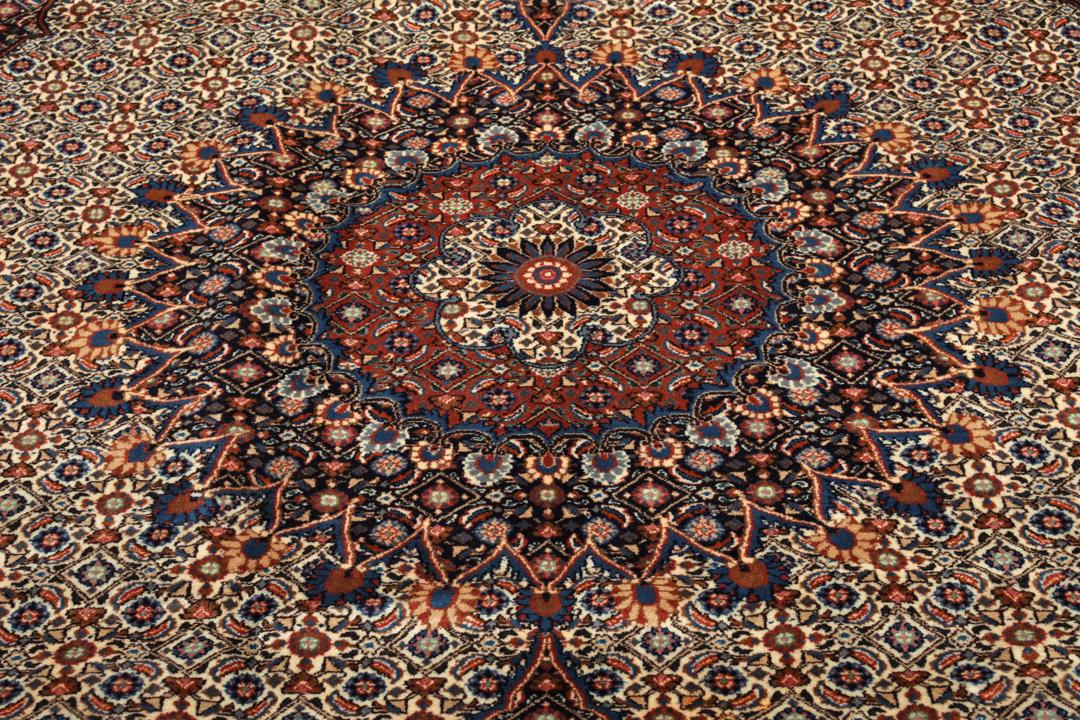
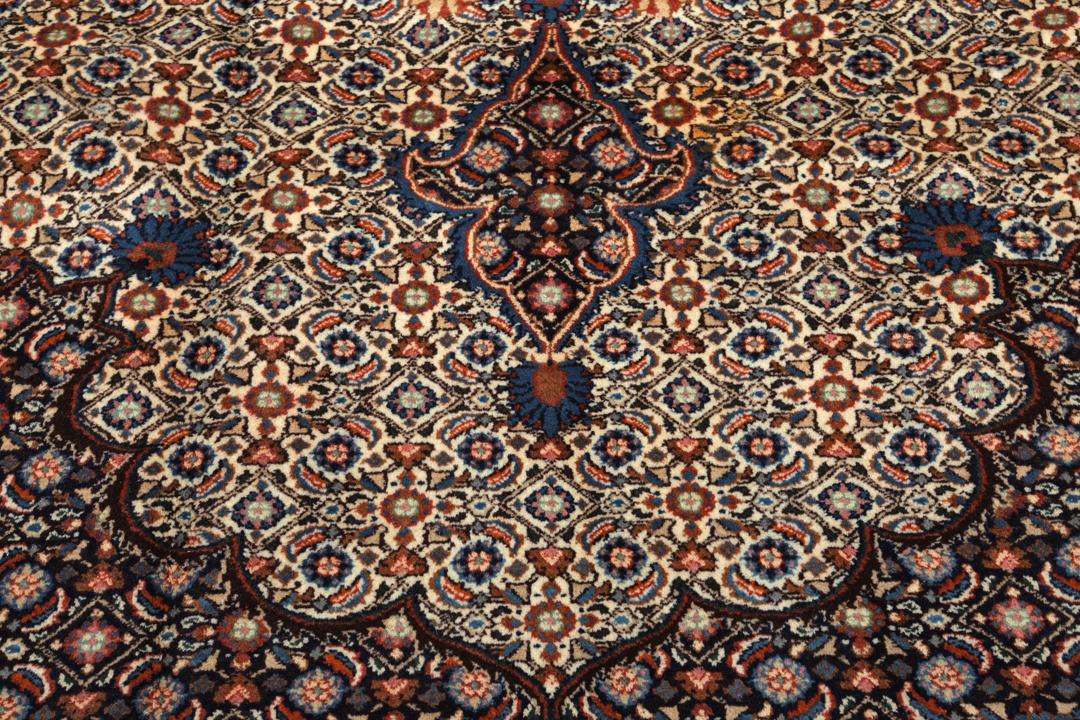
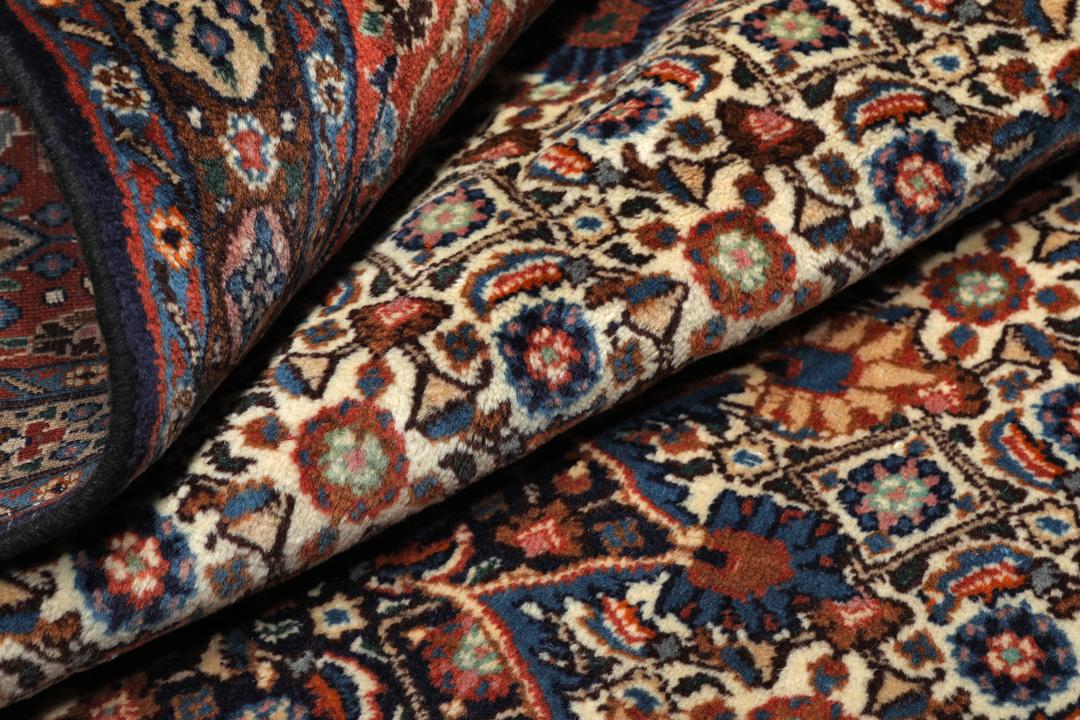
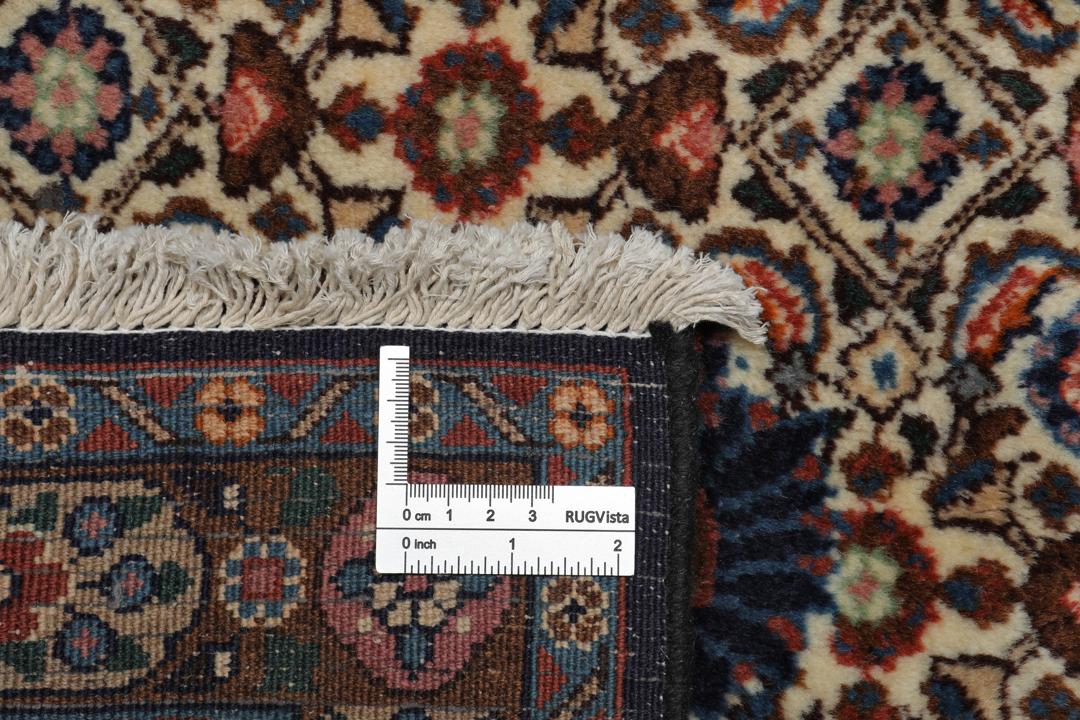
A defining technical characteristic of Moud rugs is their exceptional knot density. By using a high number of knots per square metre, weavers are able to render incredibly fine, fluid patterns that feel almost painterly. This density not only contributes to the visual sharpness of the rug but also creates a firm, heavy pile that is synonymous with quality and longevity, making these pieces highly sought after by those who appreciate the intersection of art and utility.
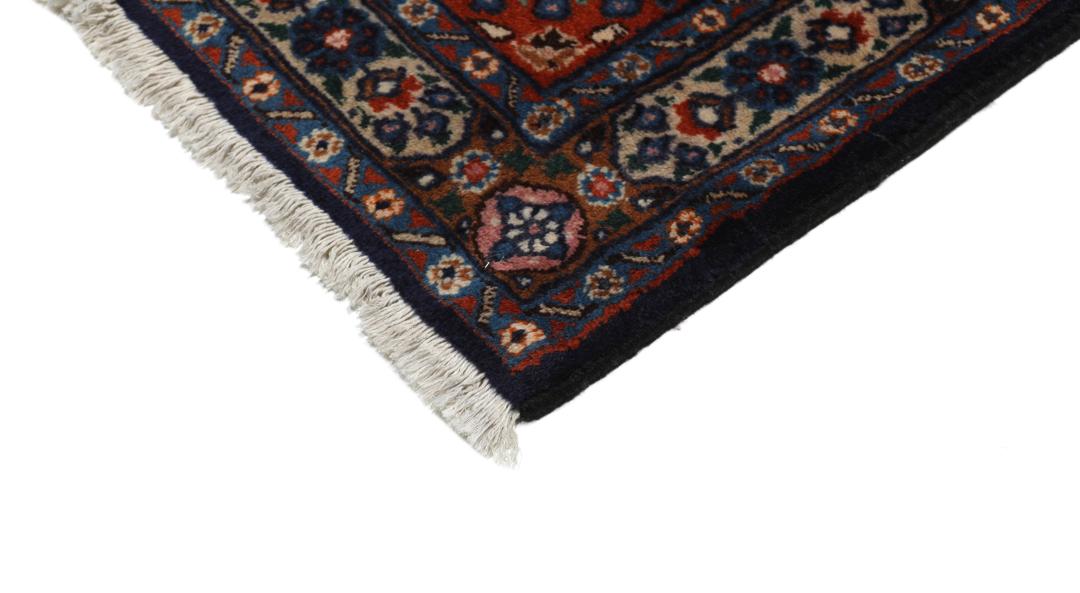
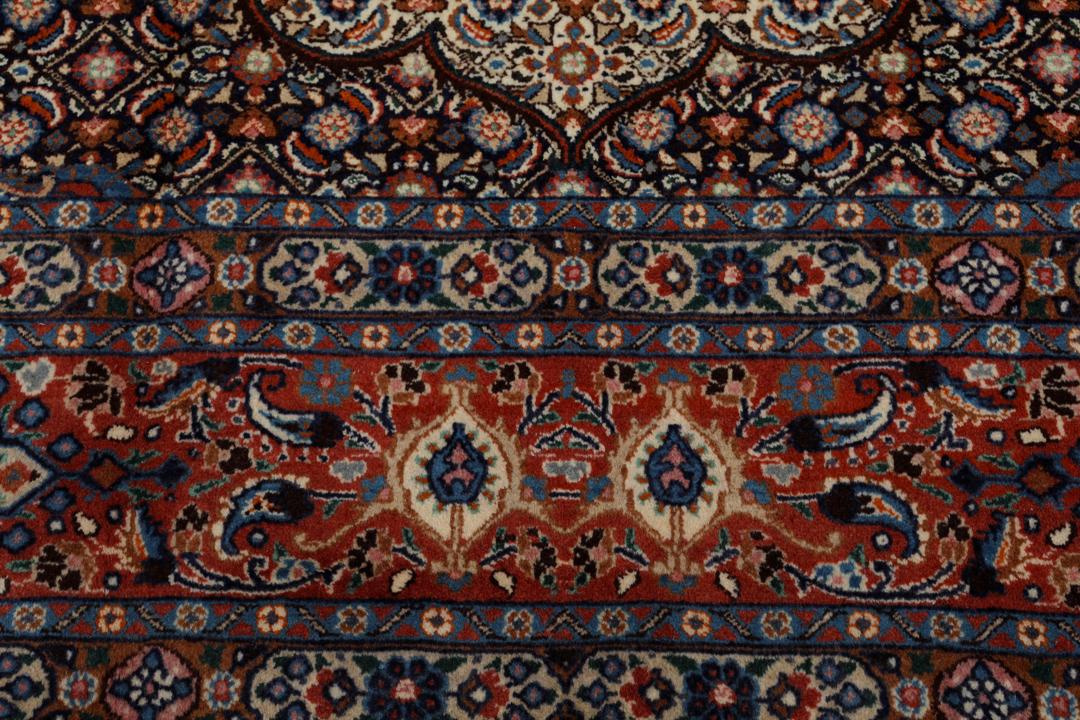
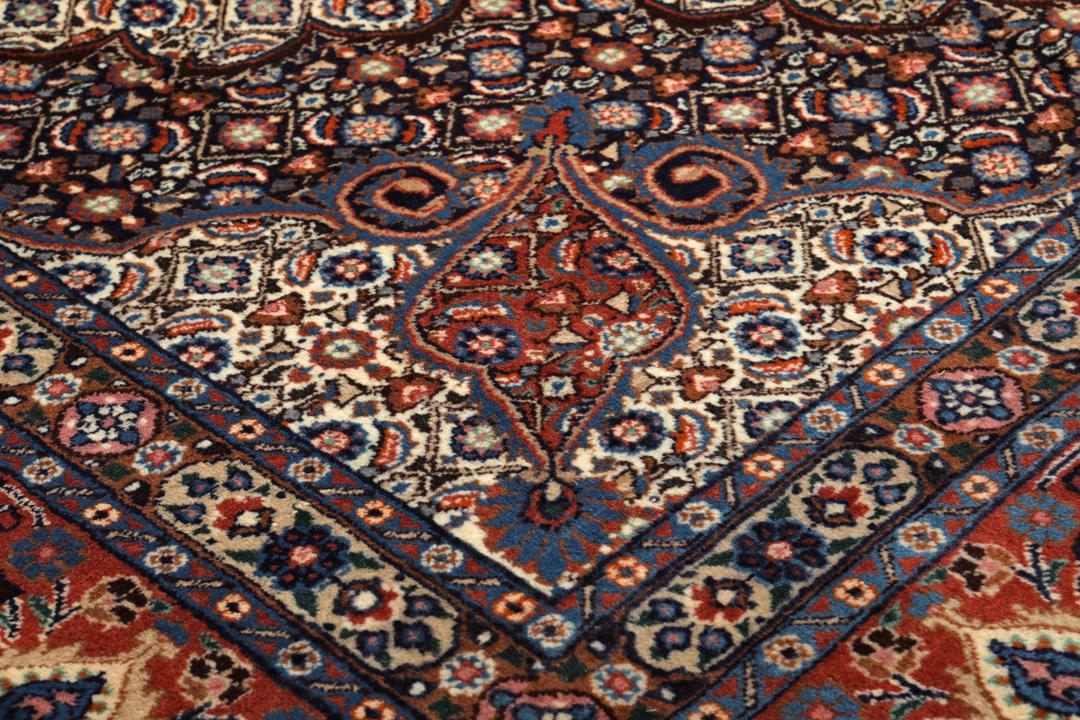
Visually, these rugs are often recognised for their 'Herati' or 'Mahi' patterns, which consist of a central medallion surrounded by a sea of delicate, repeating floral motifs. The border treatments are frequently as elaborate as the field, often featuring a 'turtle' or 'palmette' motif that frames the composition with elegance. The colour palette typically leans toward deep, warm reds, blues, and soft beiges, creating a sophisticated aesthetic that has remained popular for decades.
Collectors value Moud rugs not only for their beauty but for their cultural significance as a hallmark of Middle Eastern craft. Owning a Moud is an investment in a tradition that prizes patience, precision, and an eye for detail. These rugs are seen as a testament to the weaver's ability to maintain a historical visual language while creating a functional item that provides warmth and character to a home.