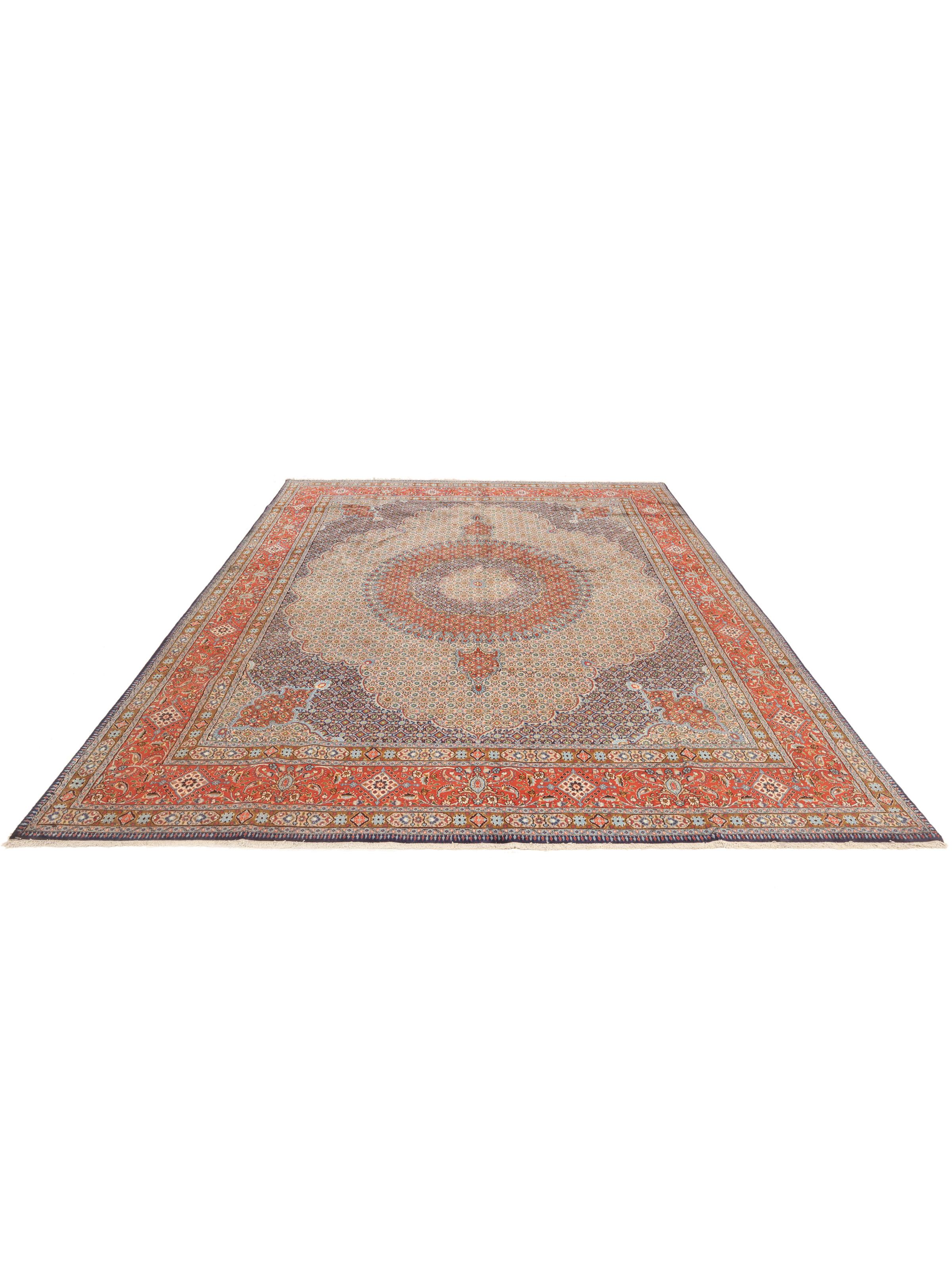
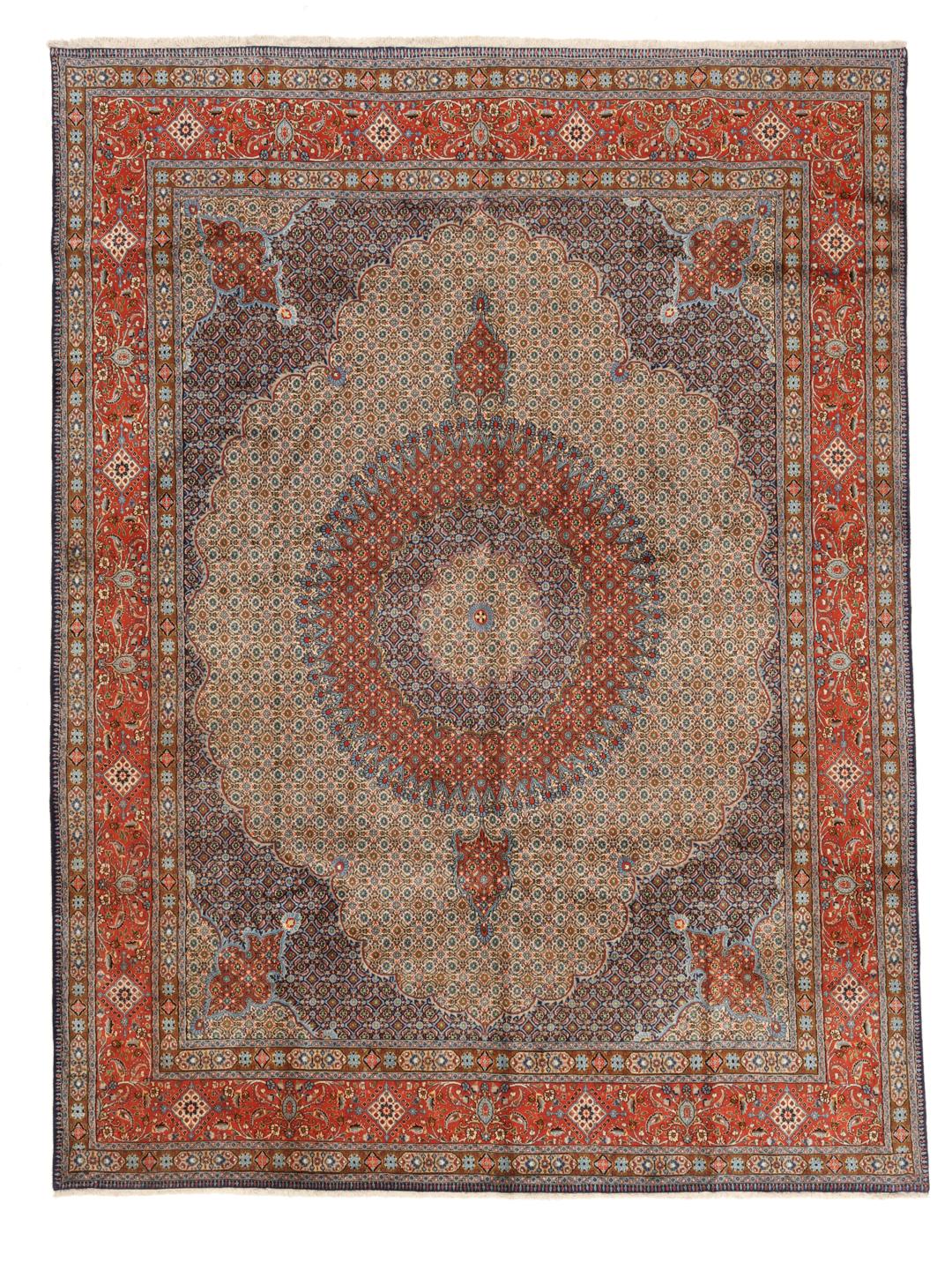
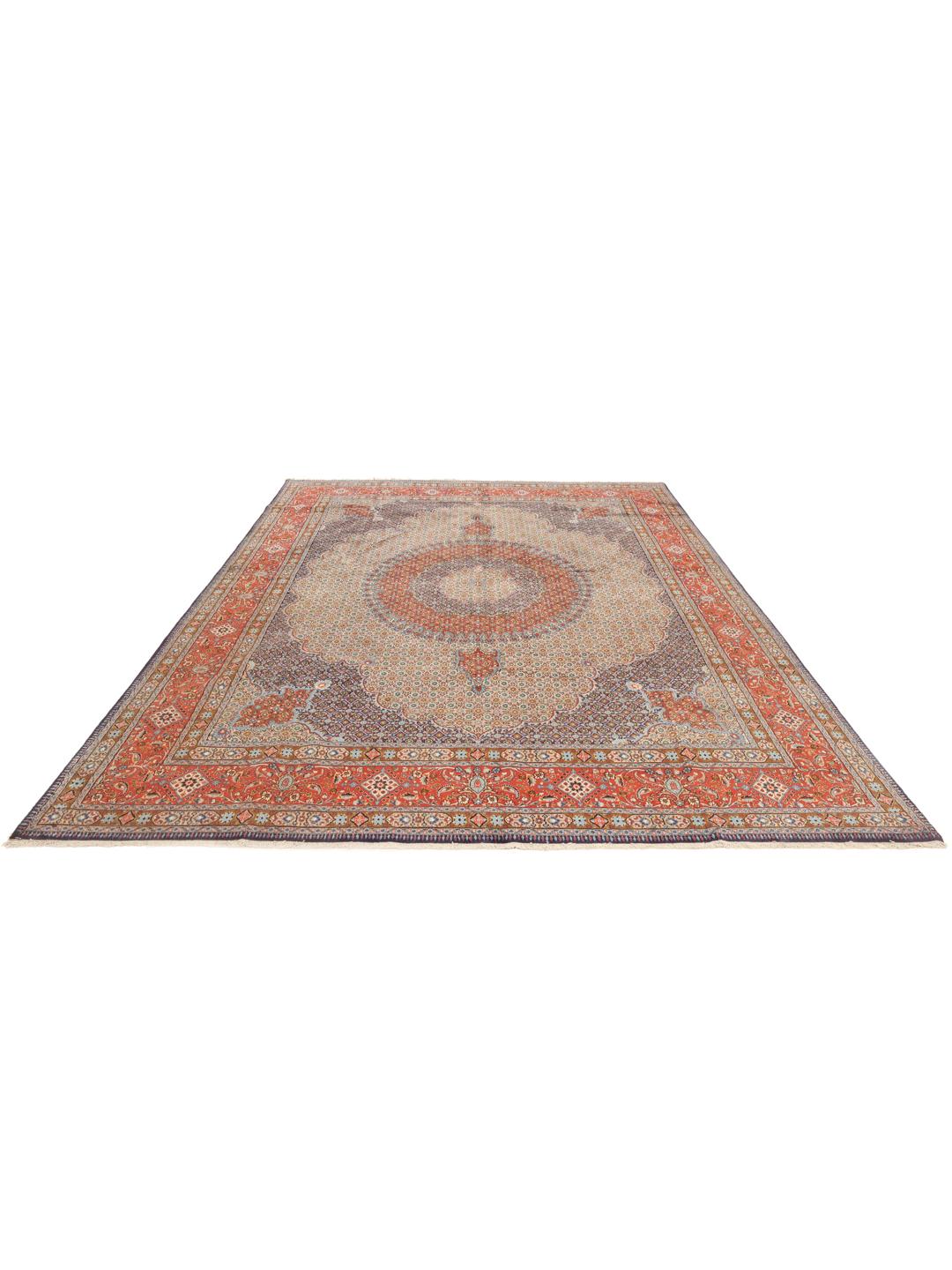
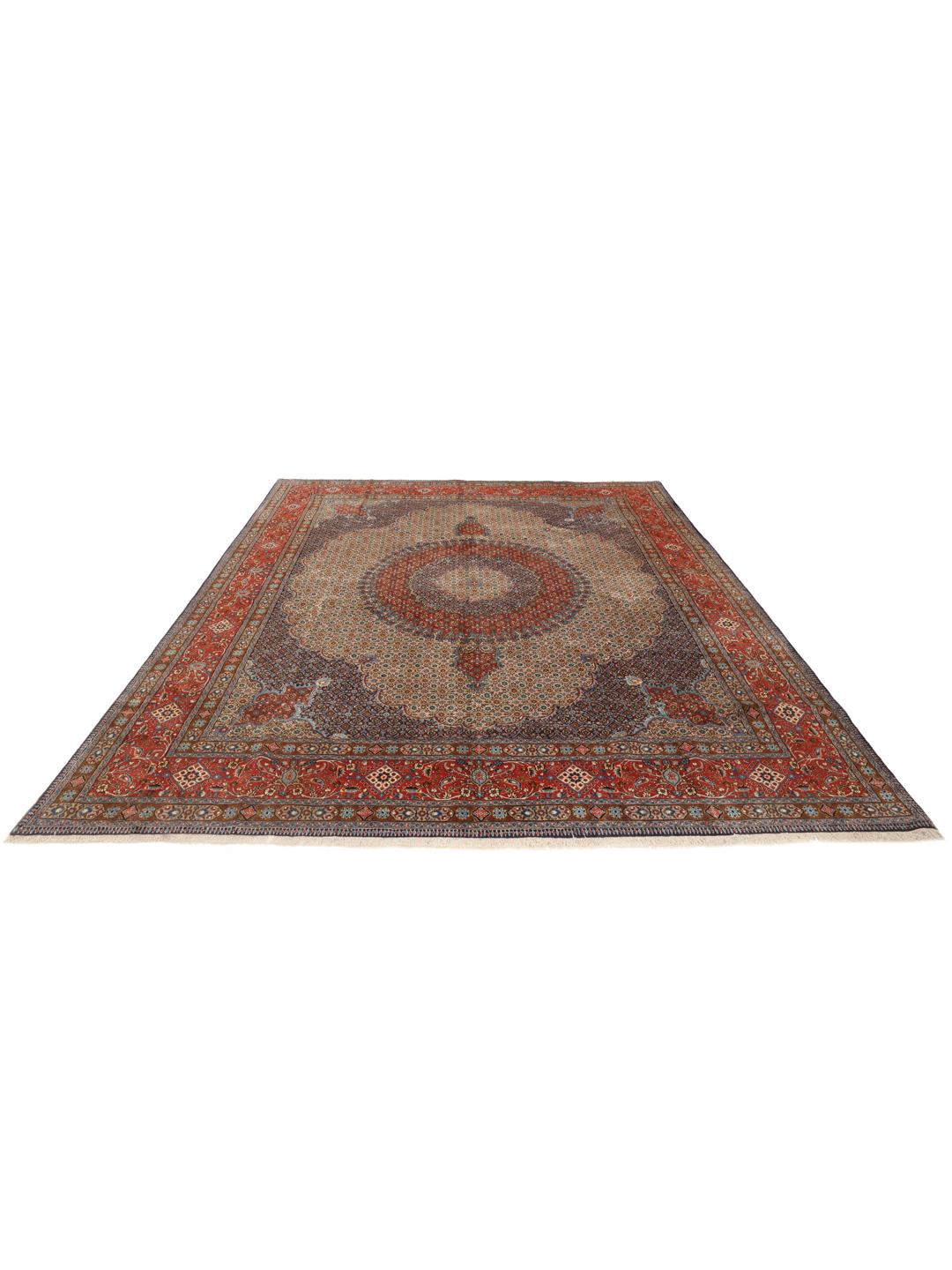
The Moud rug tradition originates from the Khorasan province in the Middle East, a region with a deep-rooted history of textile artistry. These rugs are named after the town of Moud, which has long been a centre for high-quality weaving. Over time, the designs have evolved to incorporate both traditional regional motifs and more refined, formal elements that have made them highly sought after by collectors worldwide.
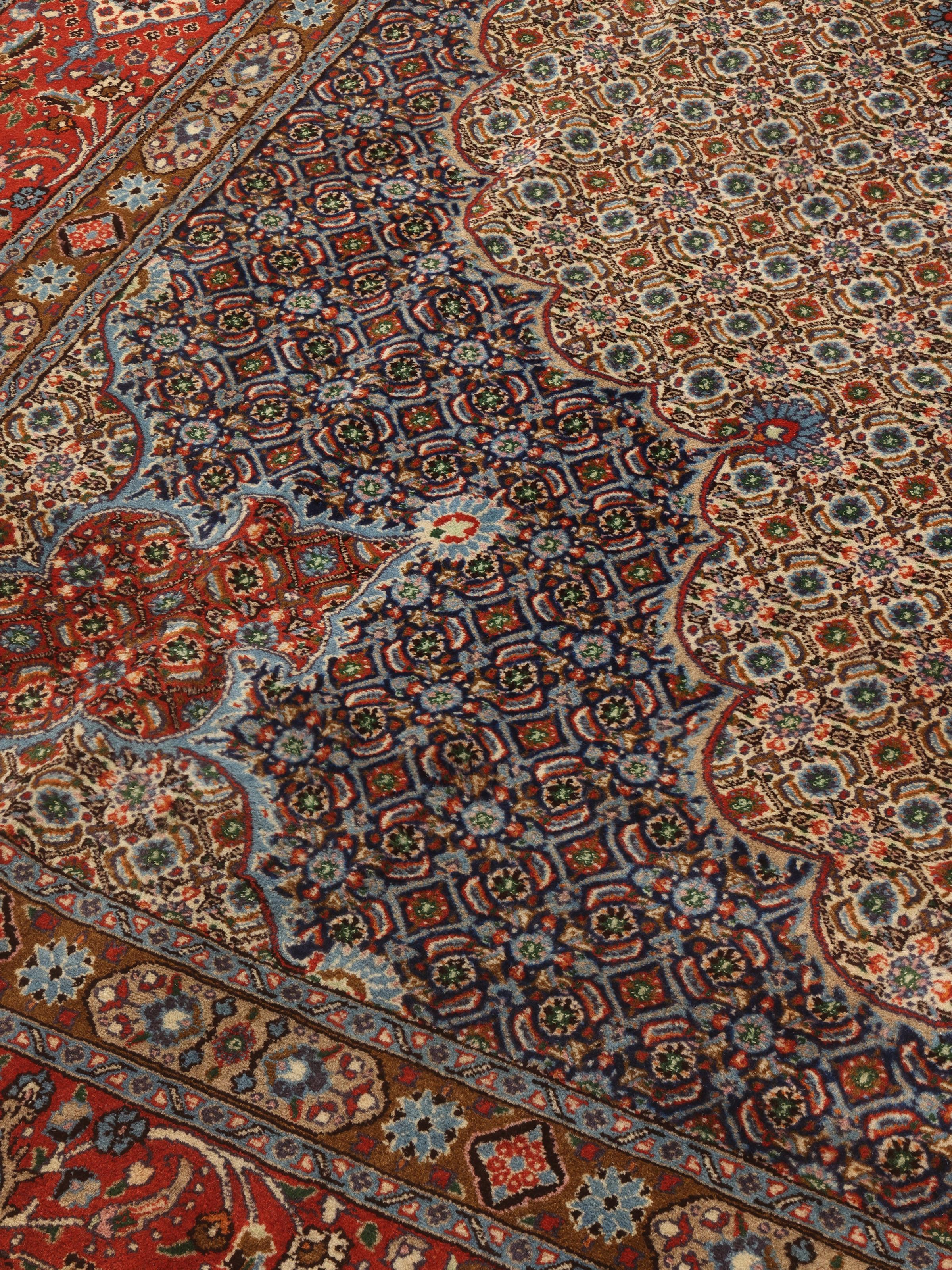
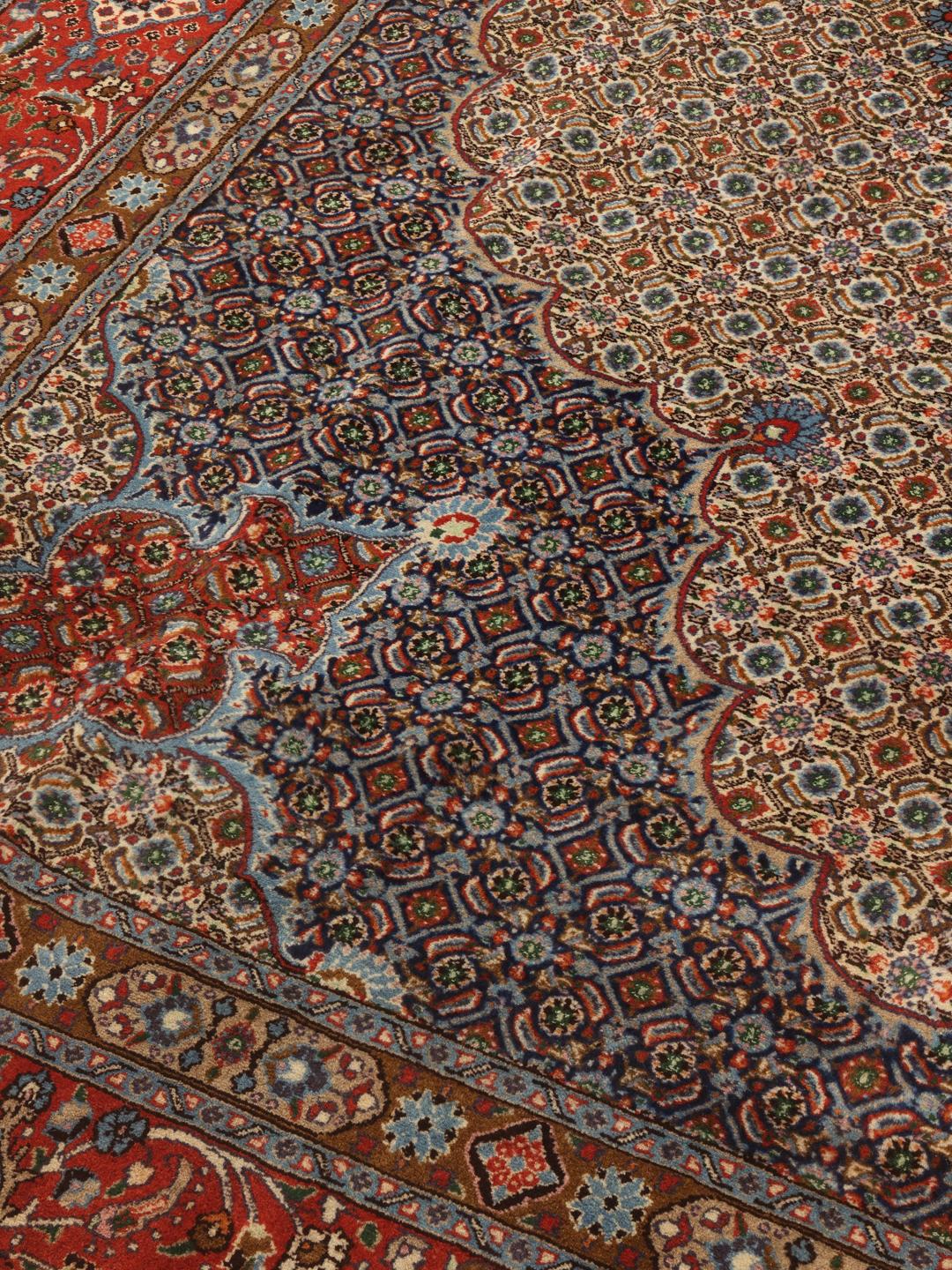
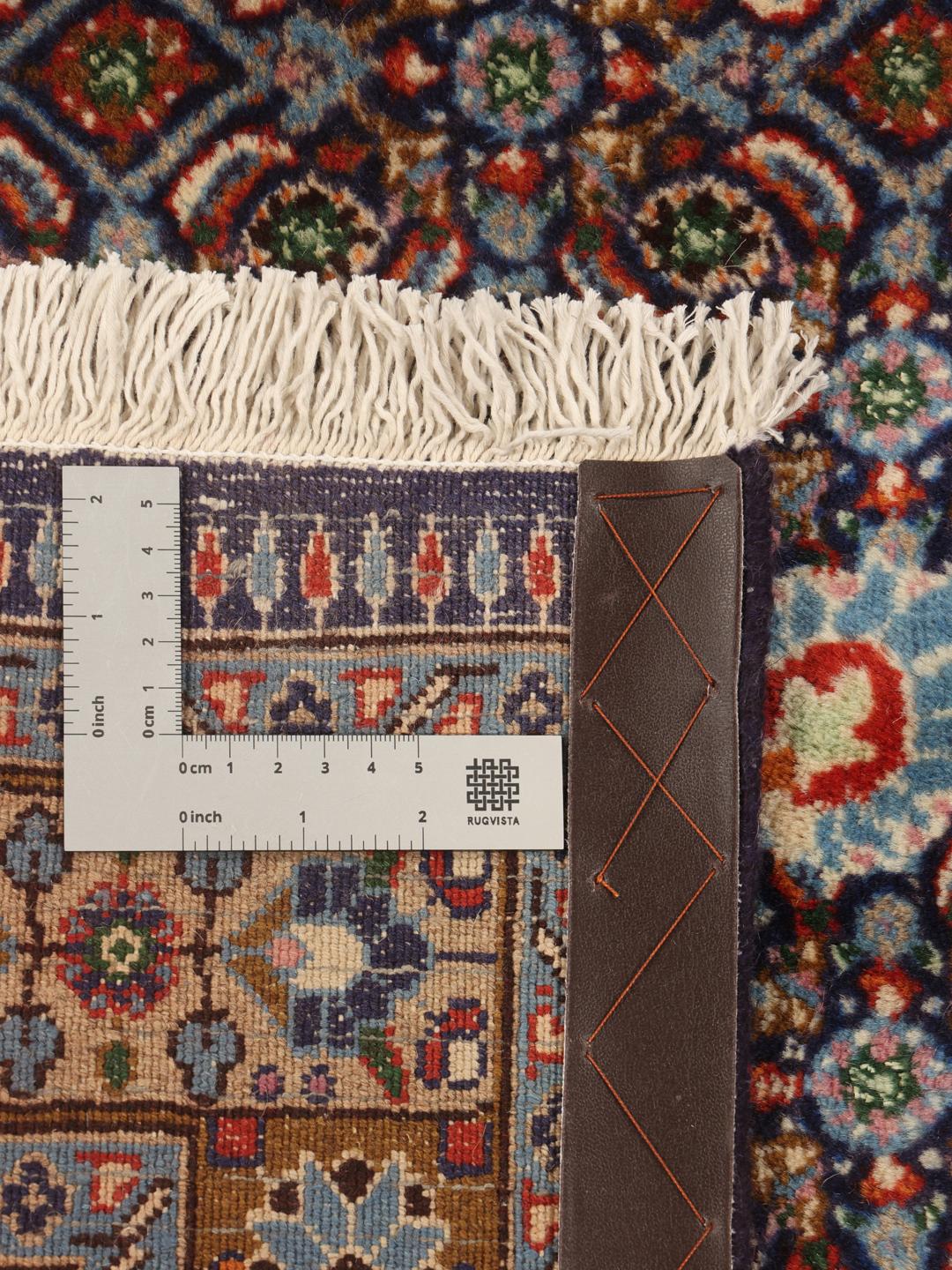
A key technical aspect of Moud rugs is their construction, often utilising a fine knotting technique that allows for intricate pattern work. This level of craftsmanship is essential to the rug's quality, as it produces a tight, durable weave that can handle the complexities of curvilinear patterns. The density of the knots is a primary indicator of the skill required to produce such a finished, professional-looking textile.
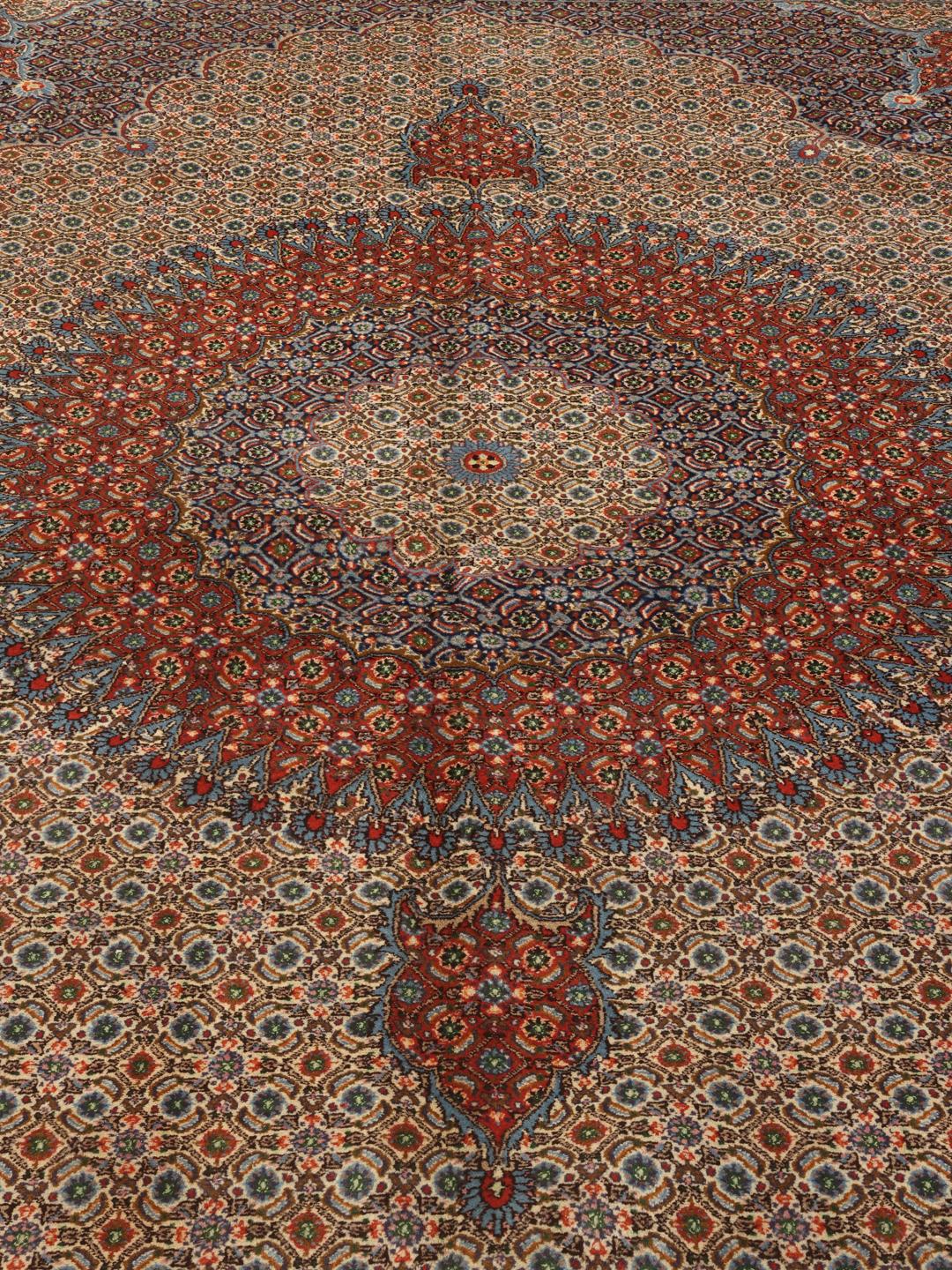
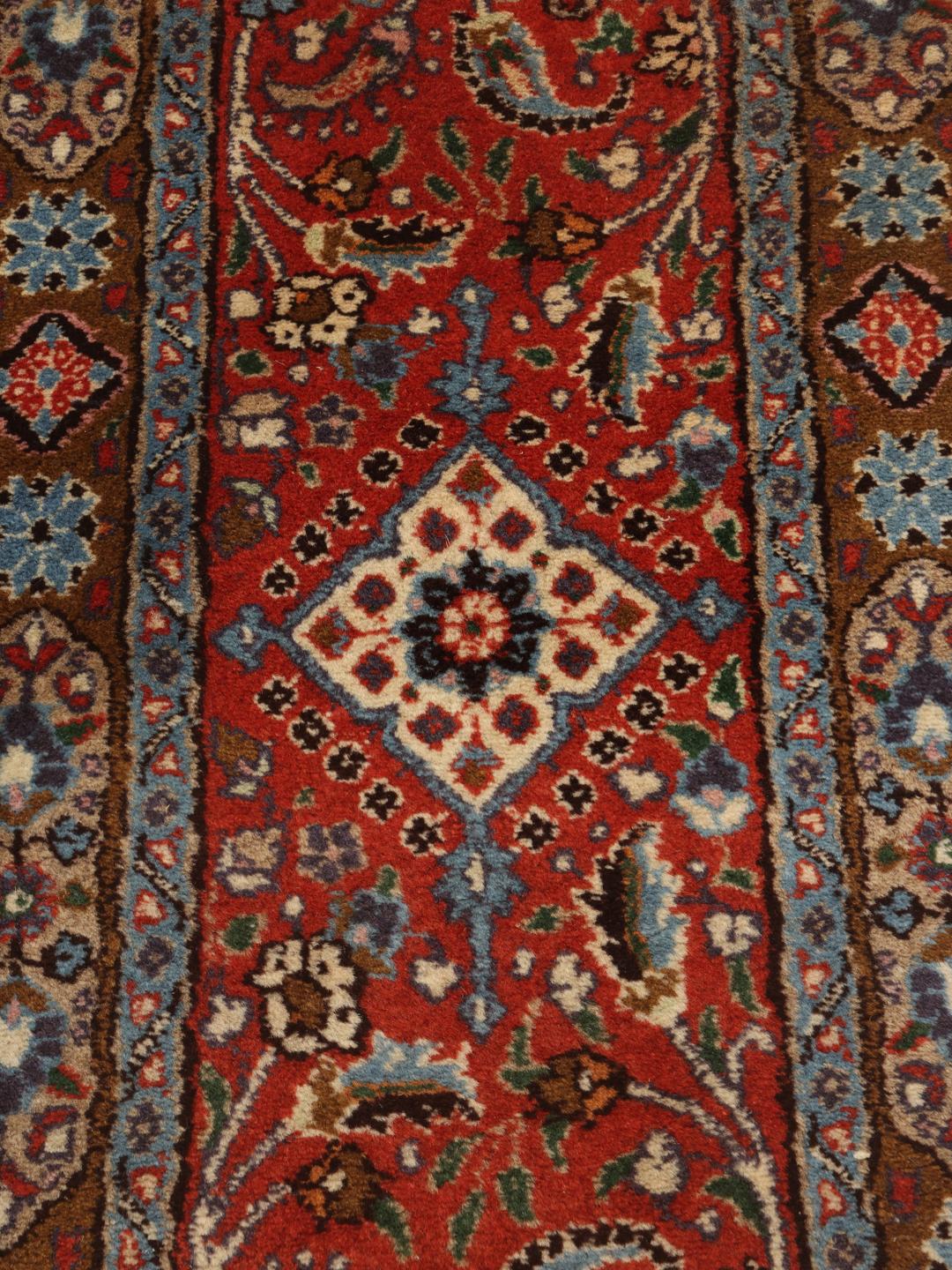
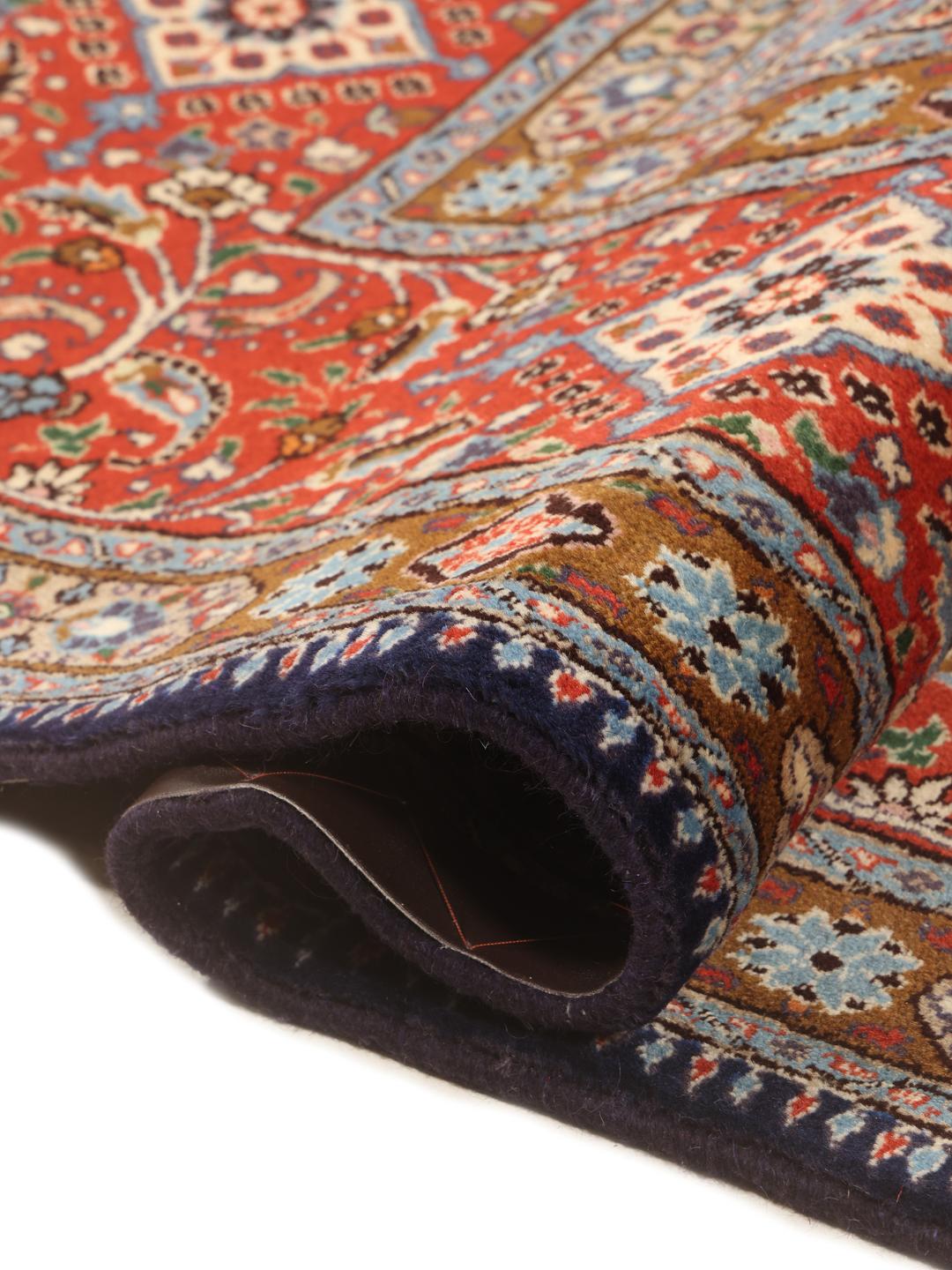
Visually, Moud rugs are often recognised for their 'Herati' or 'fish' pattern, which fills the field with a repetitive, rhythmic motif. This design is frequently centred around a prominent, scalloped medallion, creating a harmonious and balanced aesthetic. The borders are typically wide and detailed, featuring floral vines that frame the central field, providing a sense of enclosure and formal elegance.
Owning a Moud rug is an opportunity to connect with a long-standing tradition of excellence. These pieces are valued not only for their visual impact but also for the incredible amount of human effort and regional heritage they represent. For those who appreciate the intersection of art and utility, these rugs offer a lasting piece of history that continues to hold its value and beauty in modern homes.