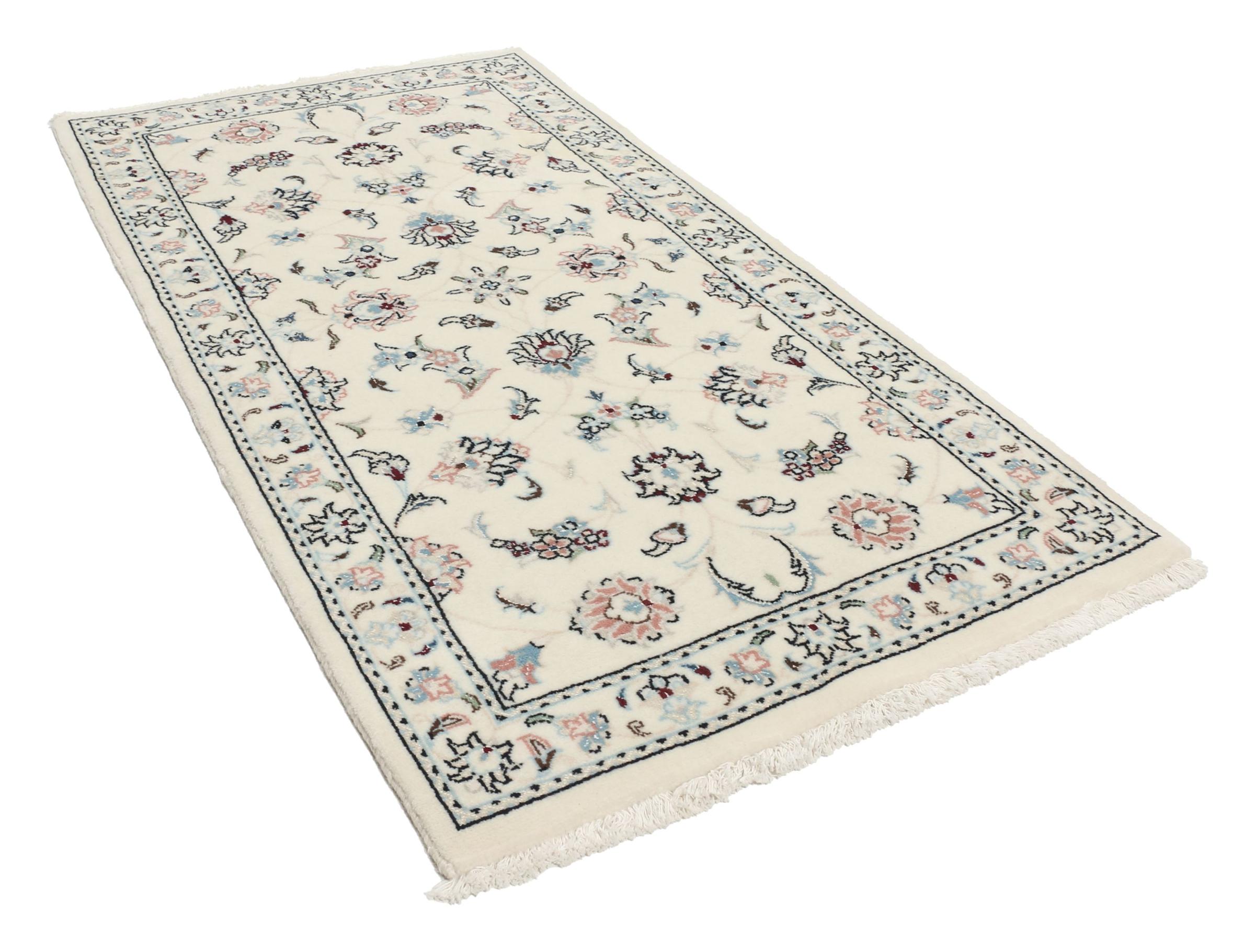
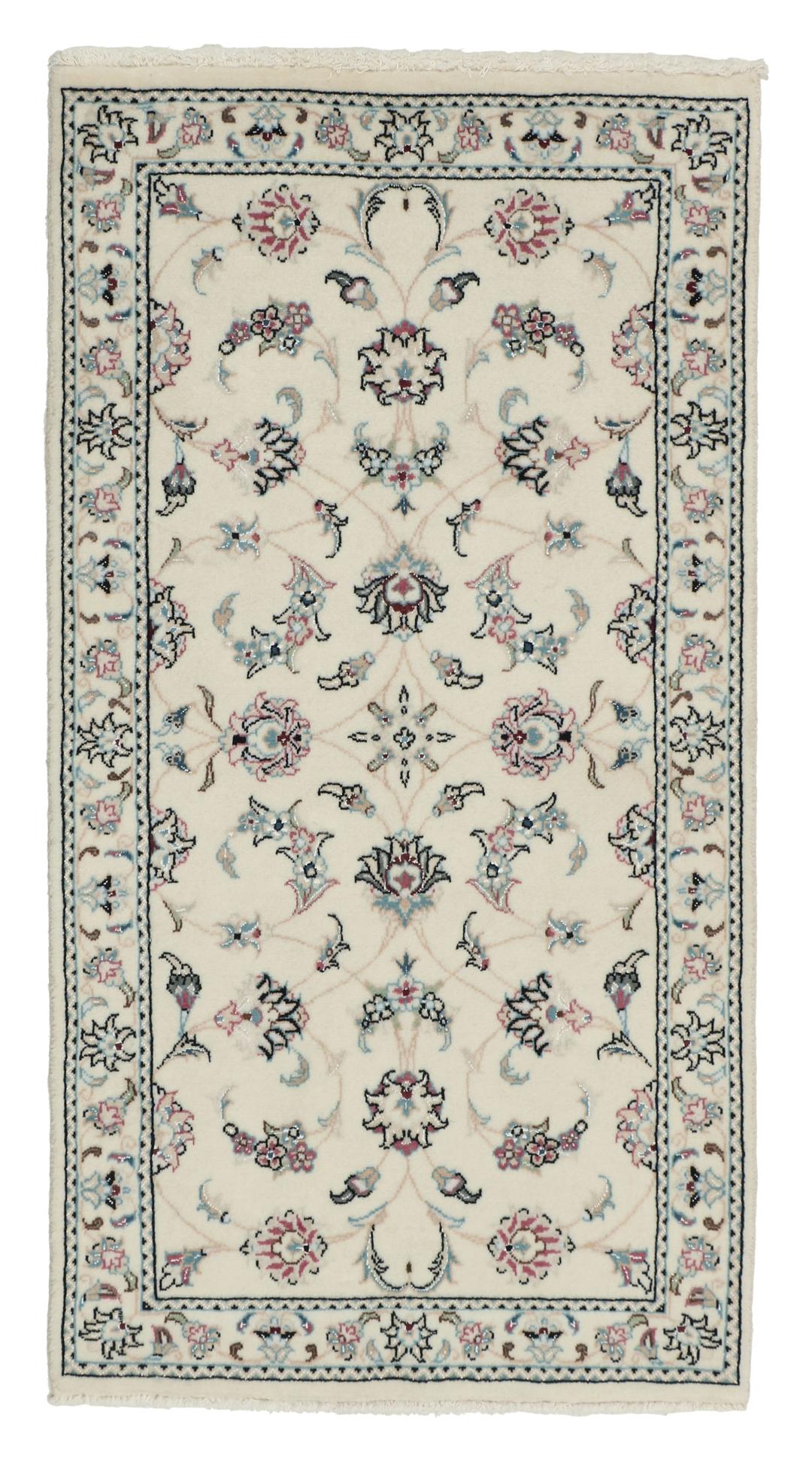
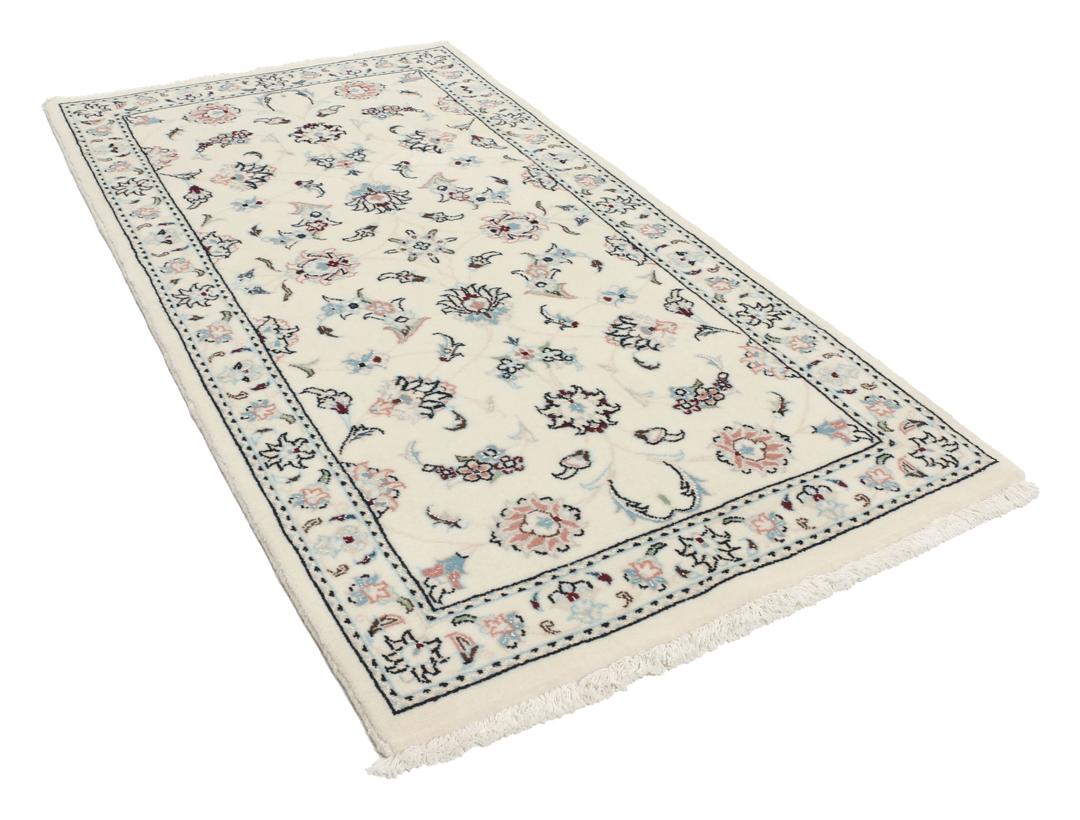
The Nain rug tradition originates from the historic city of Nain, situated in the heart of the Middle East. Originally known for its fine wool textiles and cloaks, the region transitioned into creating world-class rugs in the early 20th century, quickly establishing a reputation for elegance and technical perfection. The rugs from this region are celebrated for their sophisticated aesthetic, often drawing inspiration from architectural details and classical garden designs.
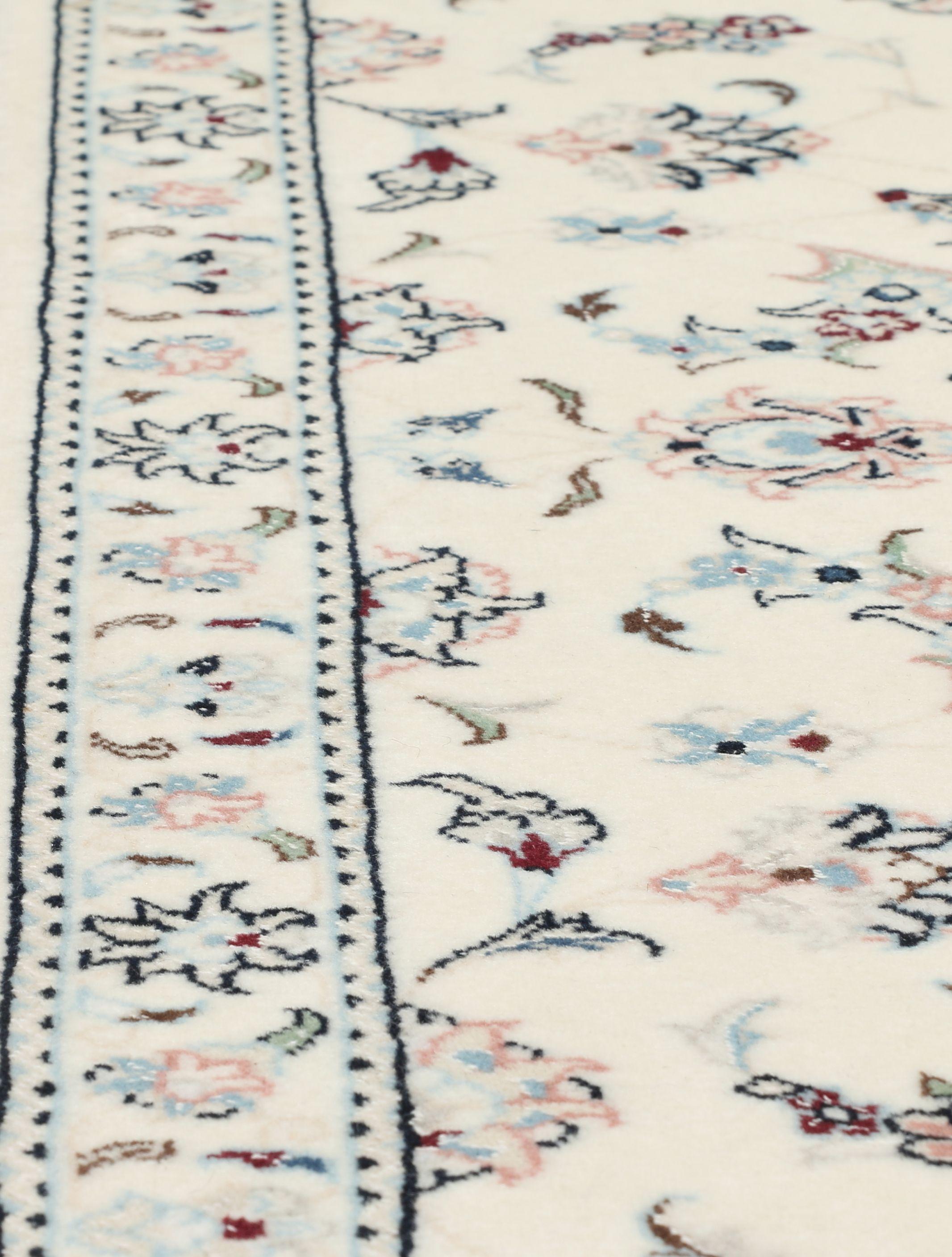
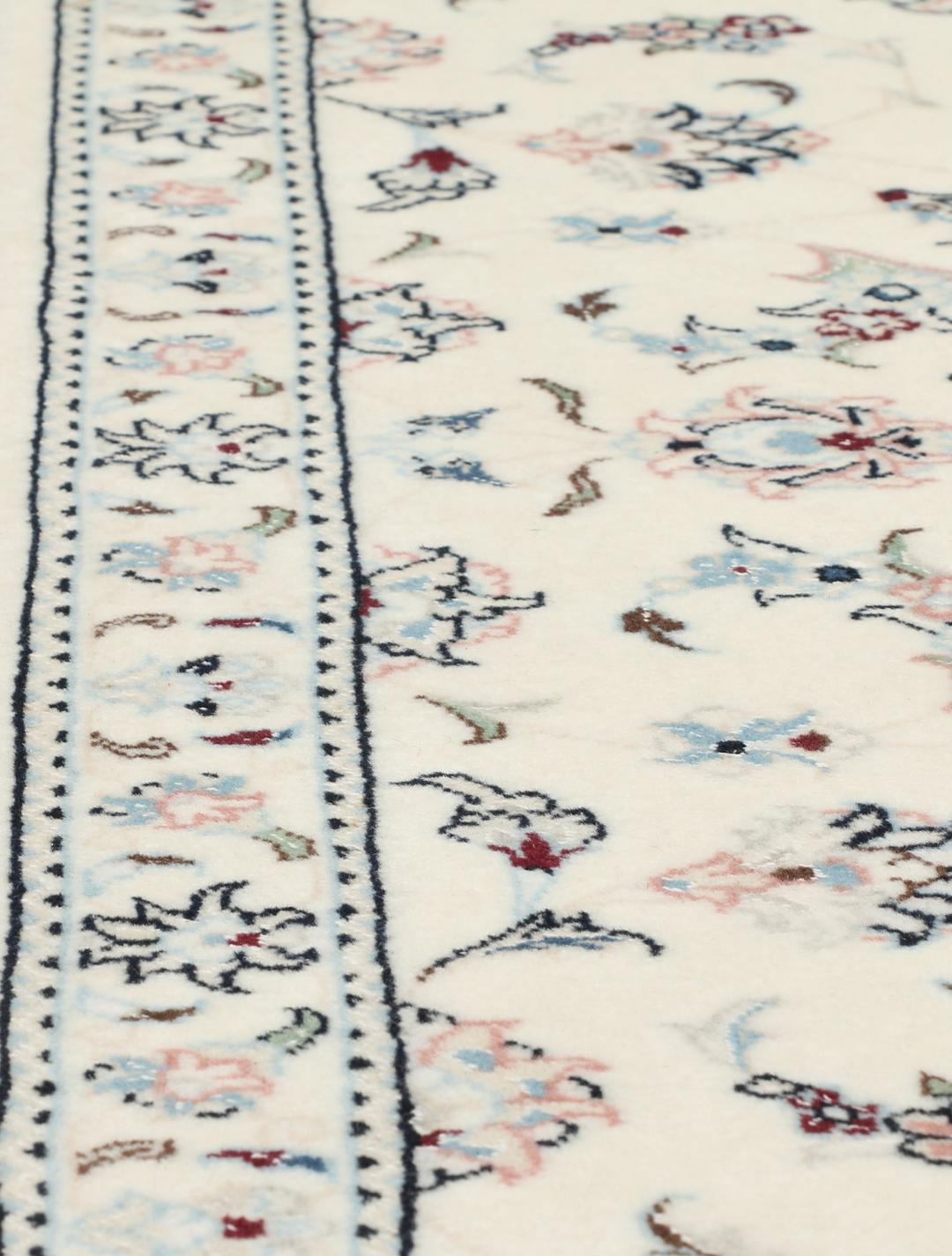
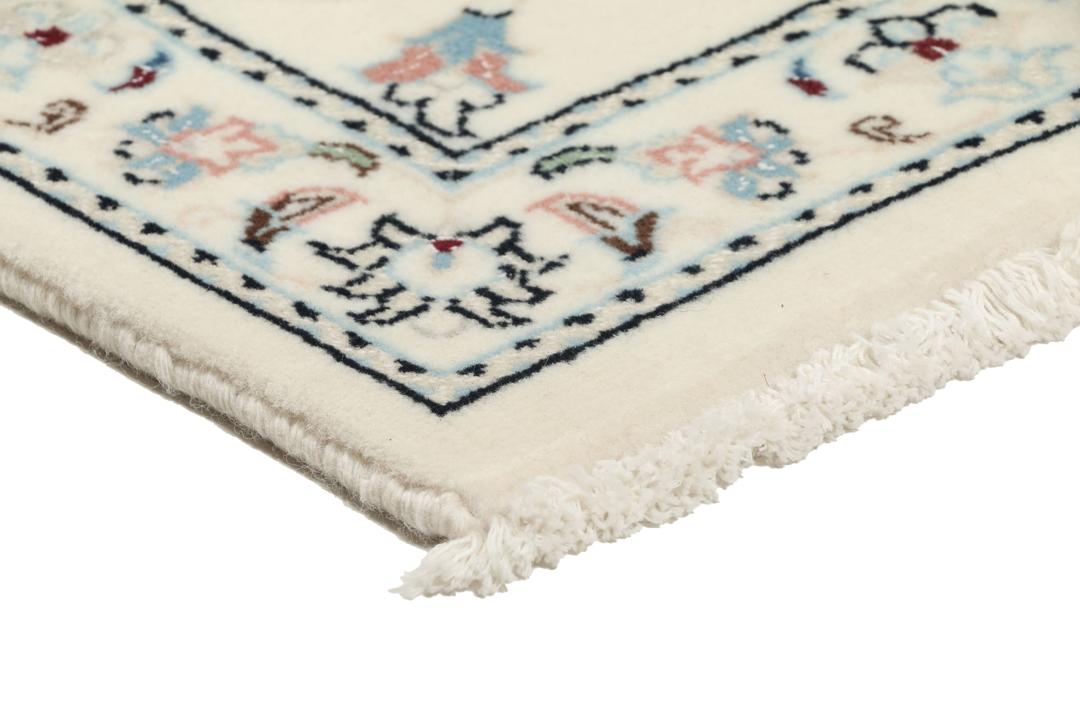
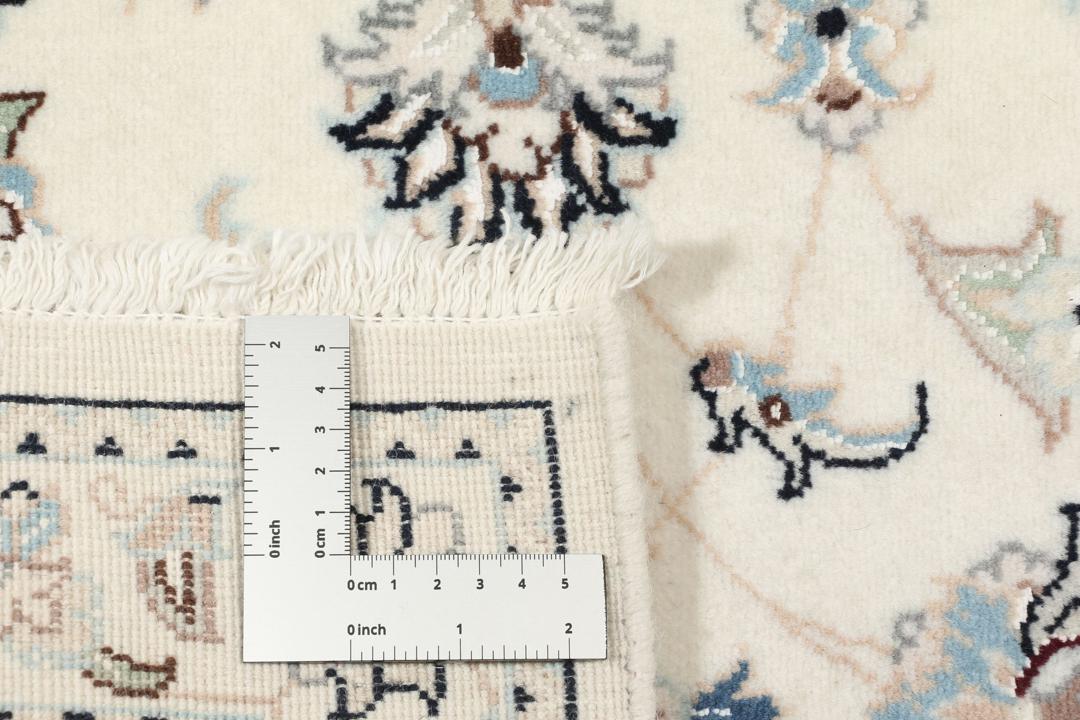
The term 9La refers to the specific number of threads used in the fringe, or the 'ply', of the rug's foundation. A 9La classification indicates a finer construction, where the thickness of the thread allows for more intricate detail and a more refined pile. This technical specification is a hallmark of quality, ensuring that the finished rug possesses a delicate, silk-like appearance and a dense, manageable texture that collectors highly prize.
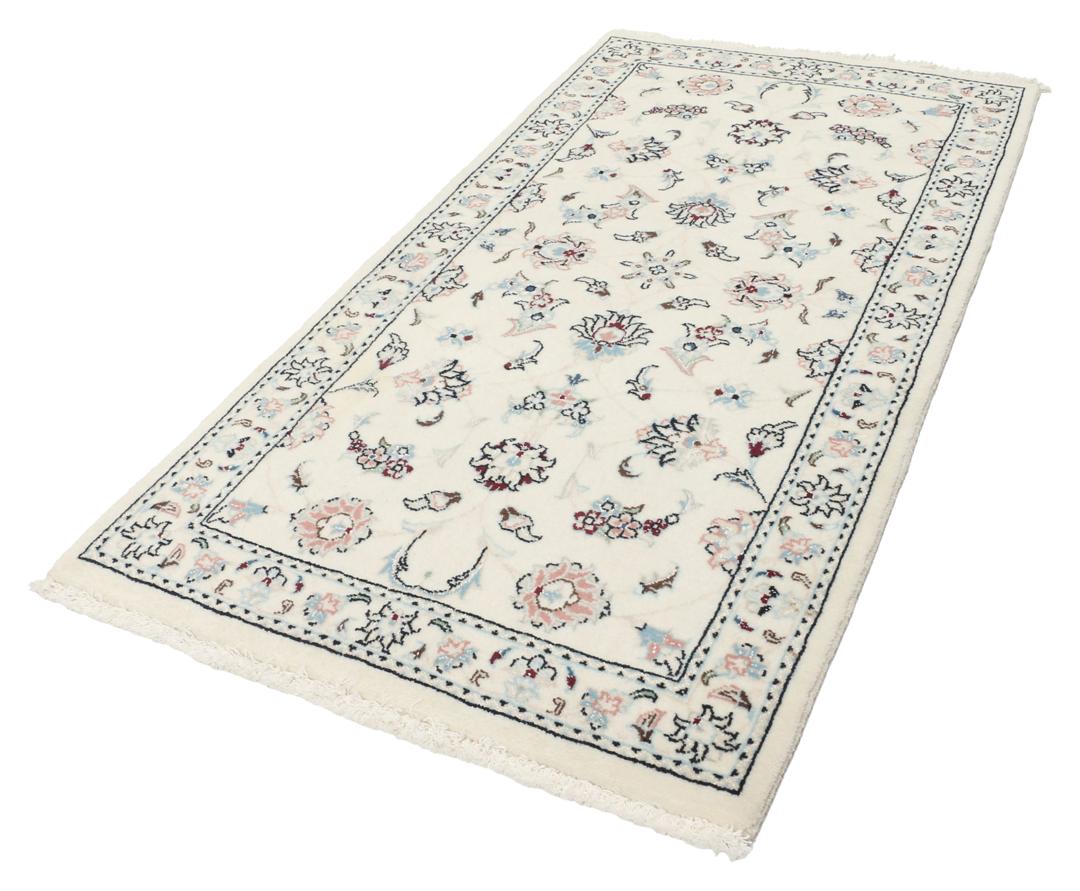
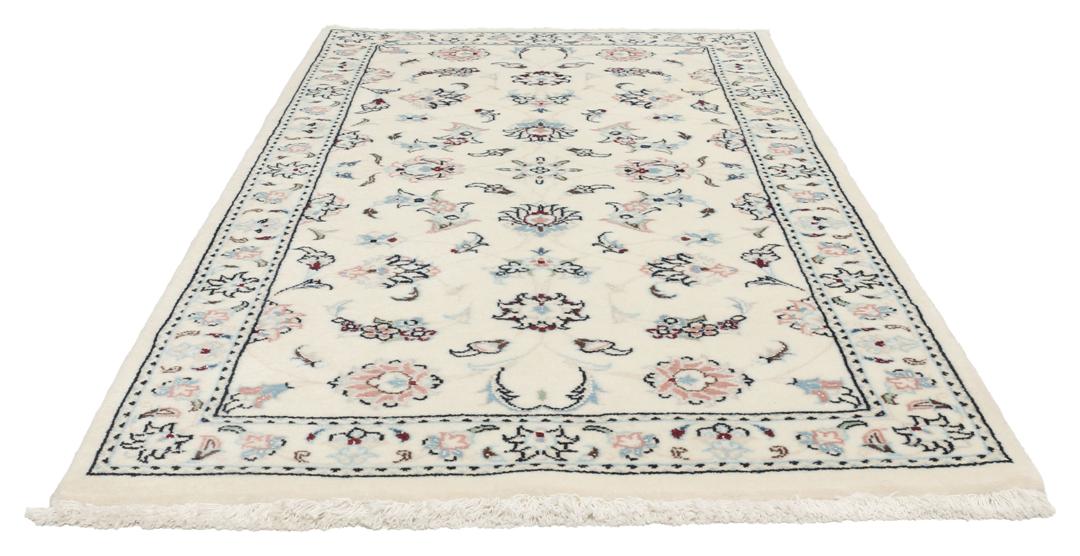
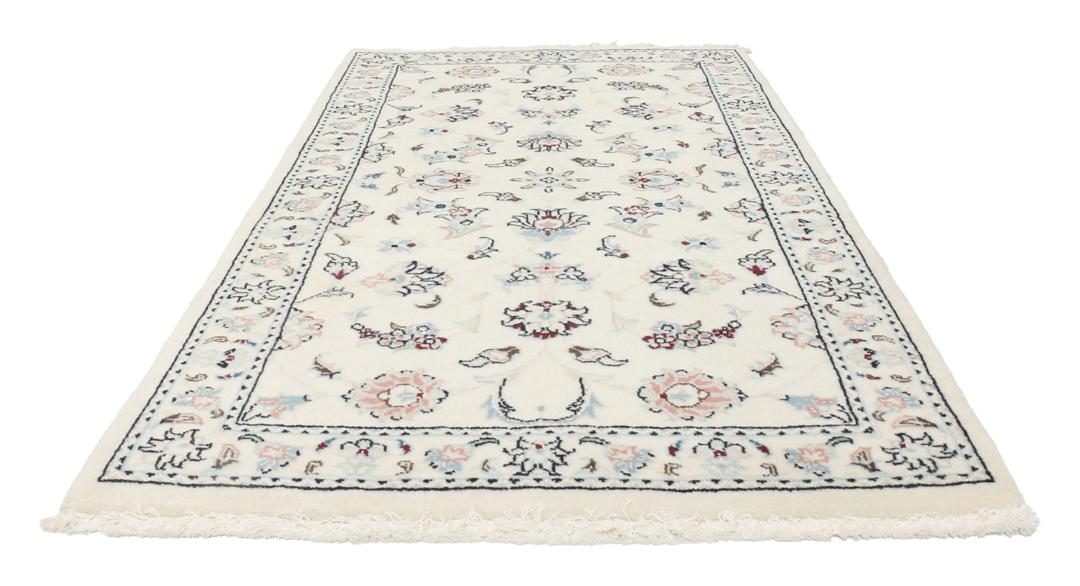
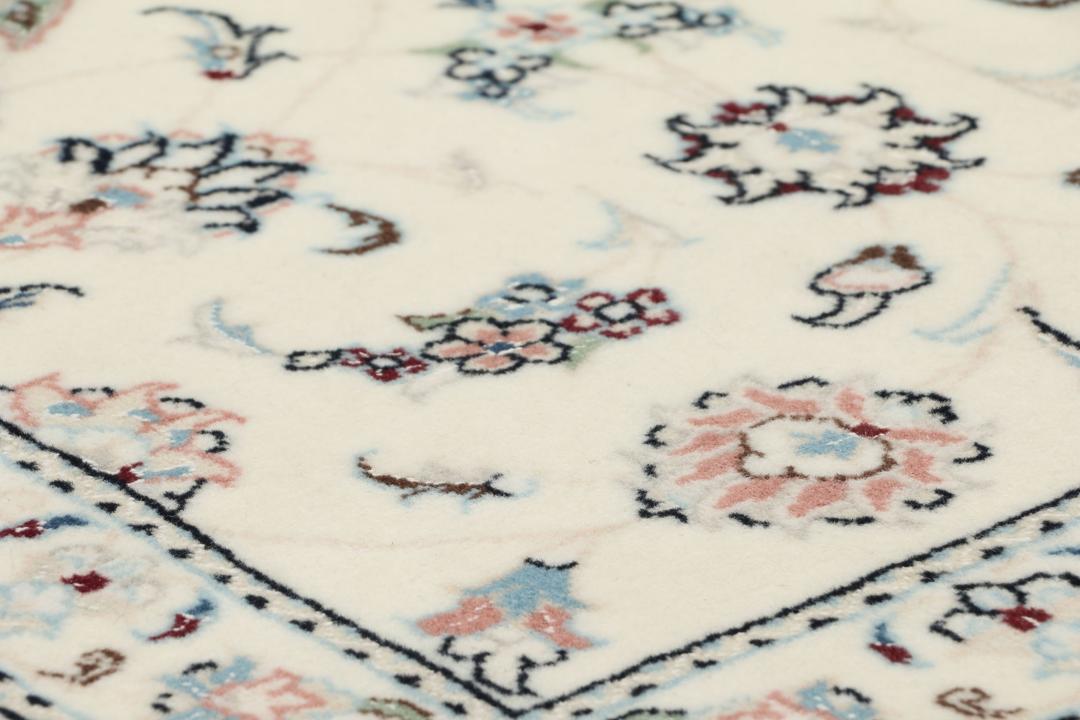
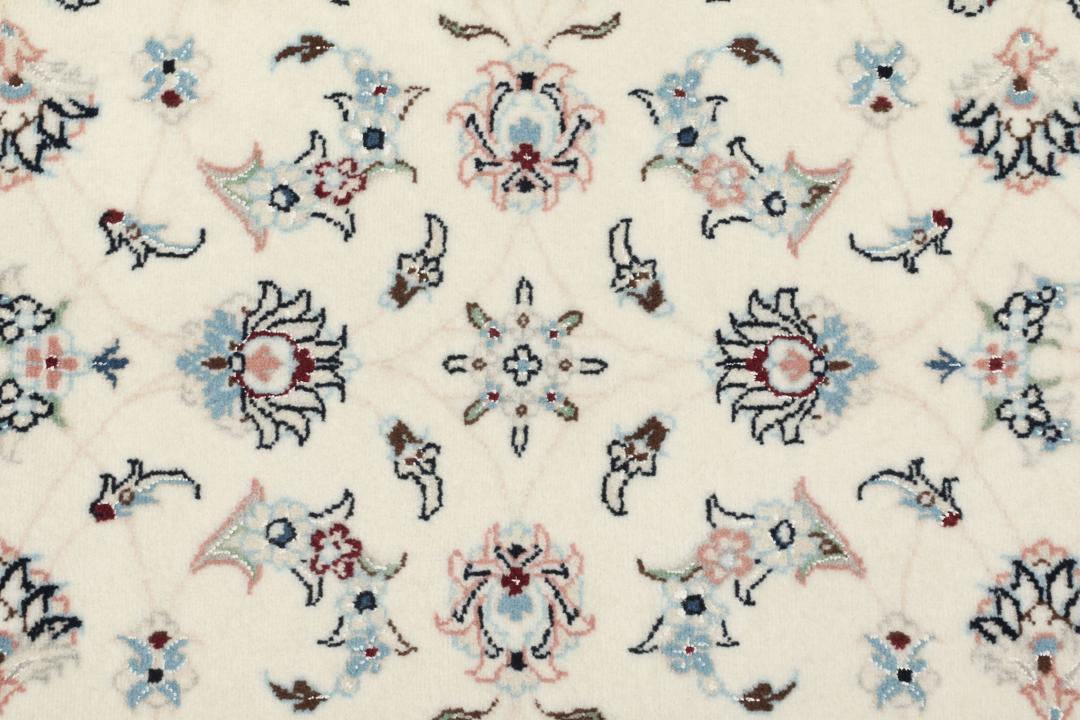
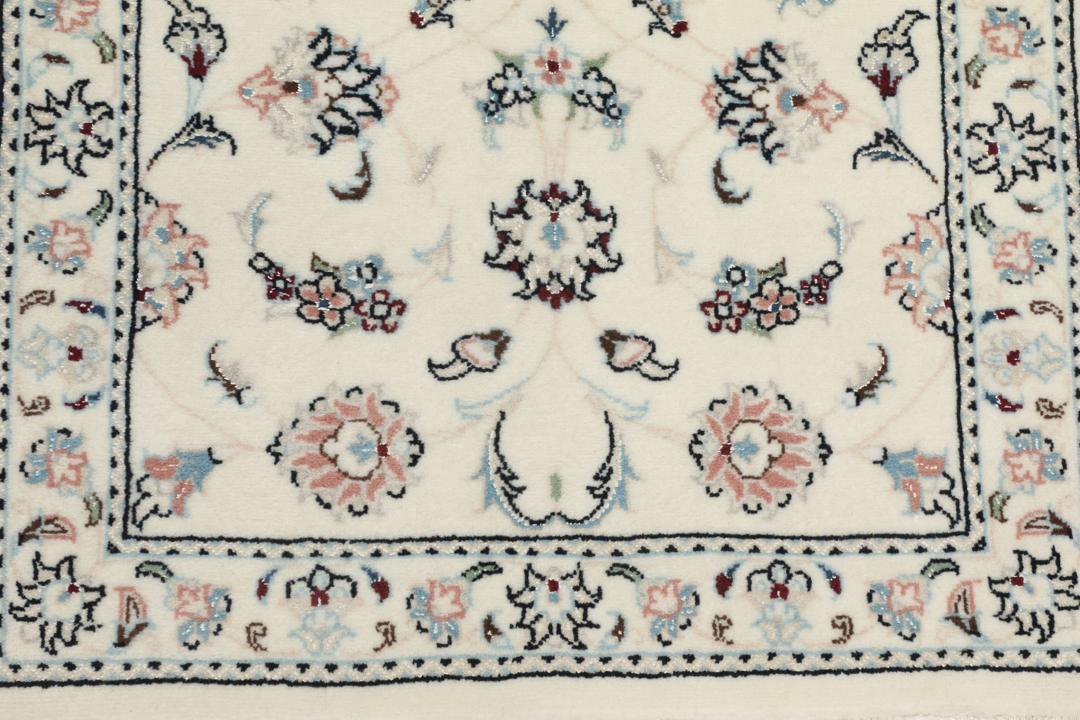
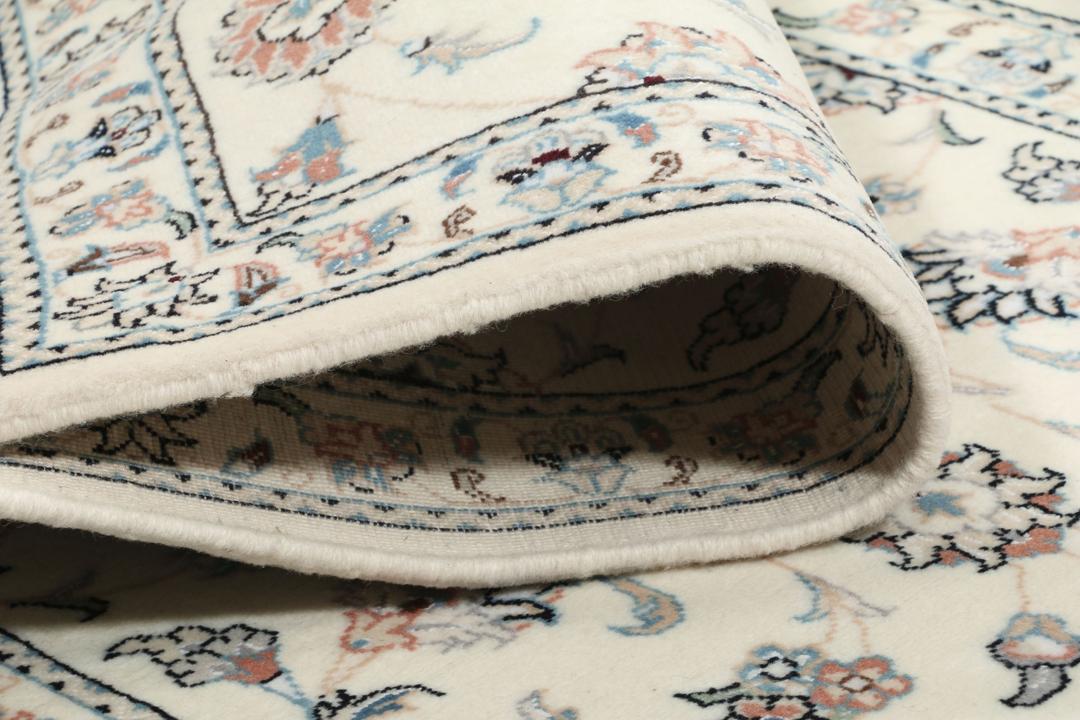
Nain rugs are famously characterised by their light, neutral fields—often cream or ivory—which serve as a canvas for complex, scrolling floral motifs and arabesques. These designs are frequently accented with soft blues and pinks, creating a balanced and serene visual language. Unlike the bold, tribal patterns found in other traditions, the Nain style is defined by its formal and graceful composition, emphasising symmetry and subtle elegance.
These pieces are highly sought after by collectors and interior enthusiasts alike due to their remarkable skill and cultural significance. Owning a Nain rug is an entry into a long-standing tradition of excellence, where every piece represents a fusion of history, artistic vision, and manual dexterity. It is a heritage piece that brings a sense of refinement and timeless beauty to any home, standing as a tribute to the enduring power of traditional craft.