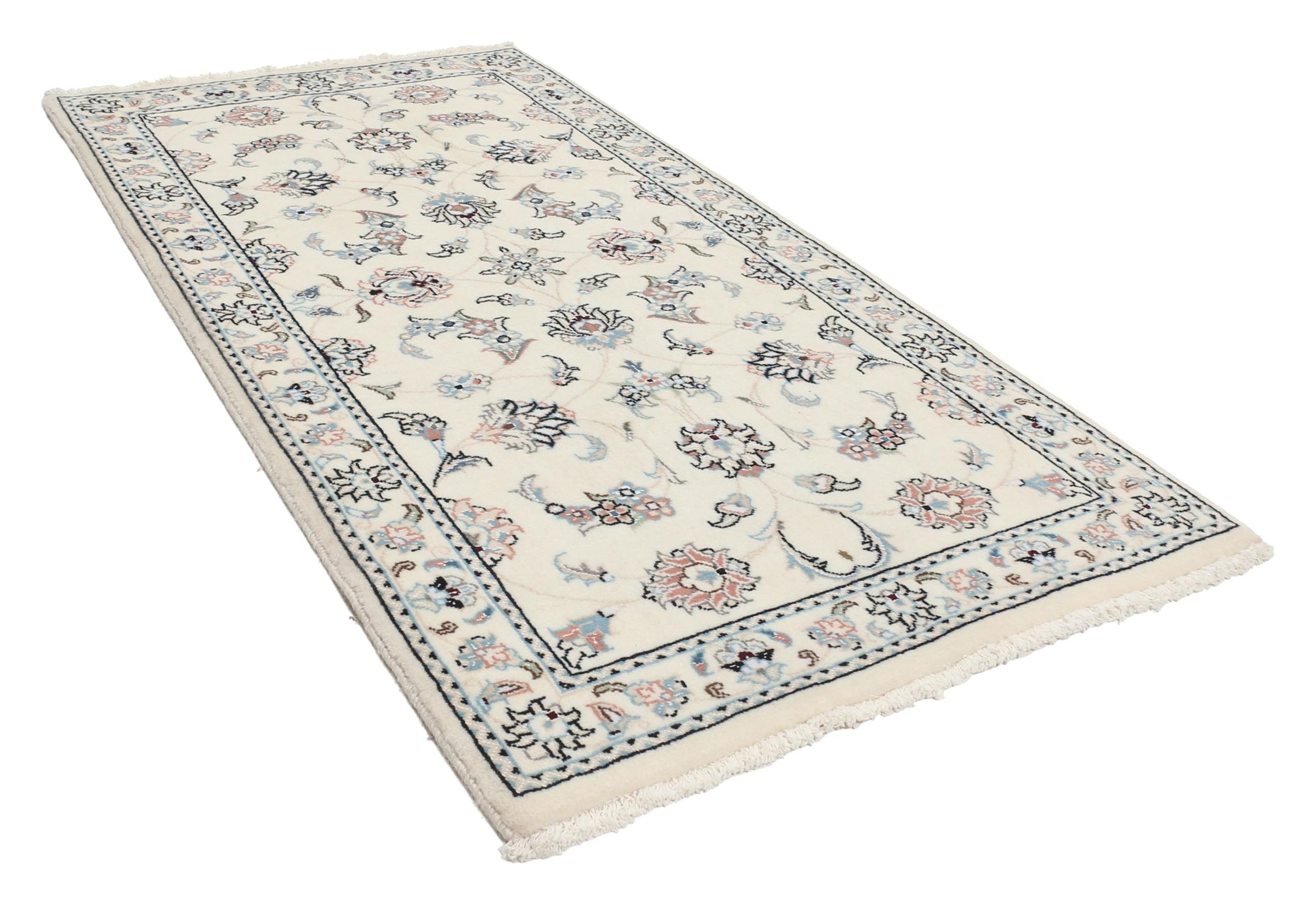
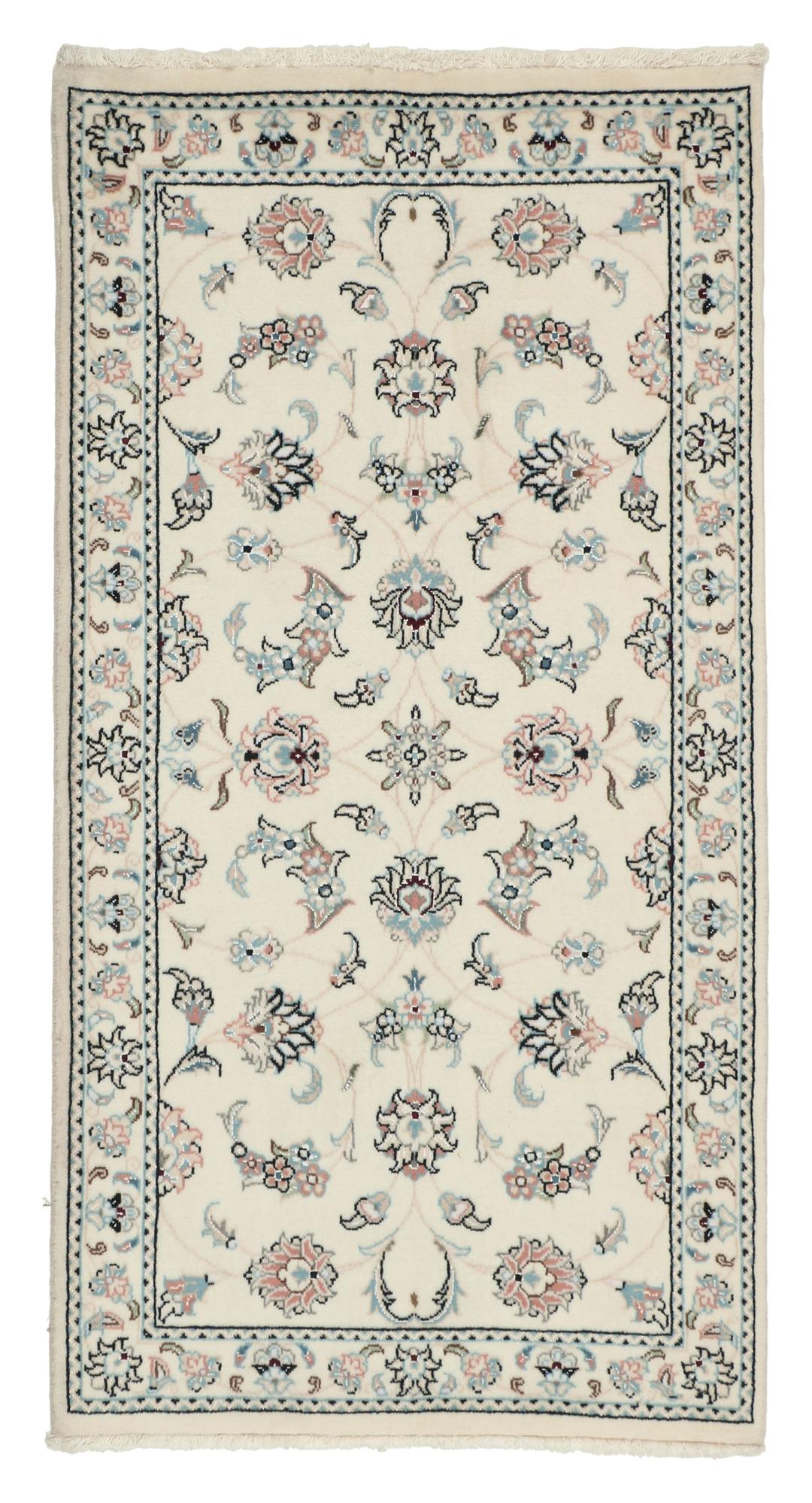
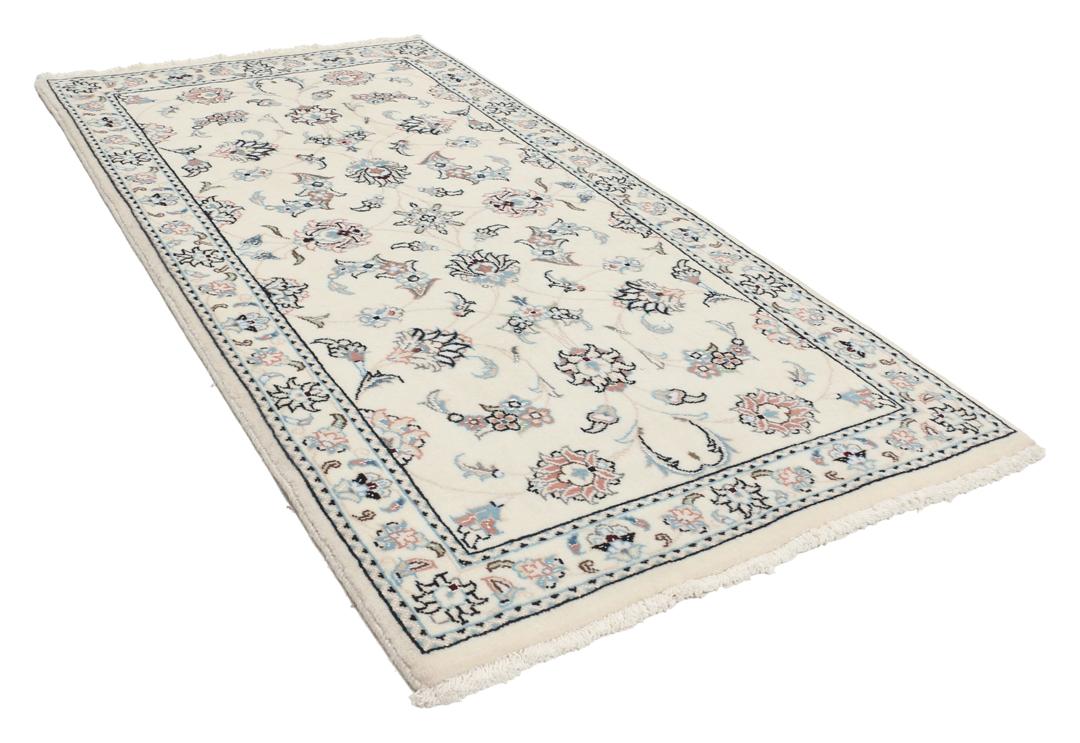
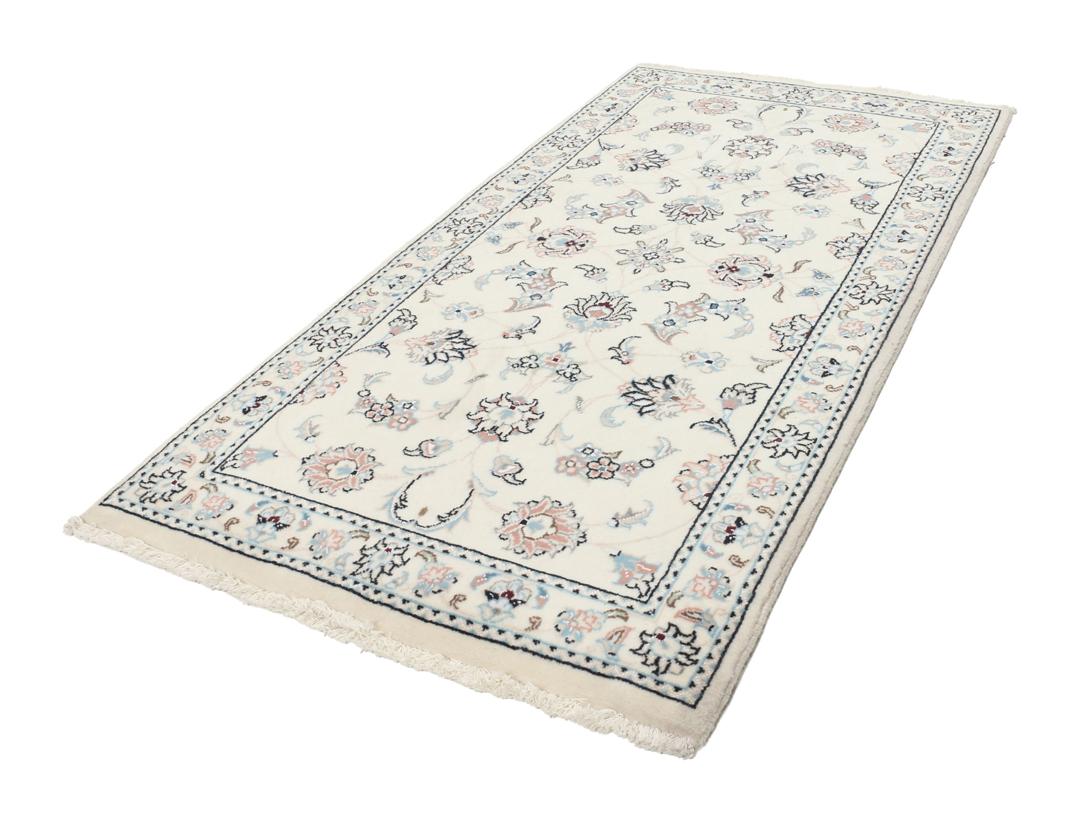
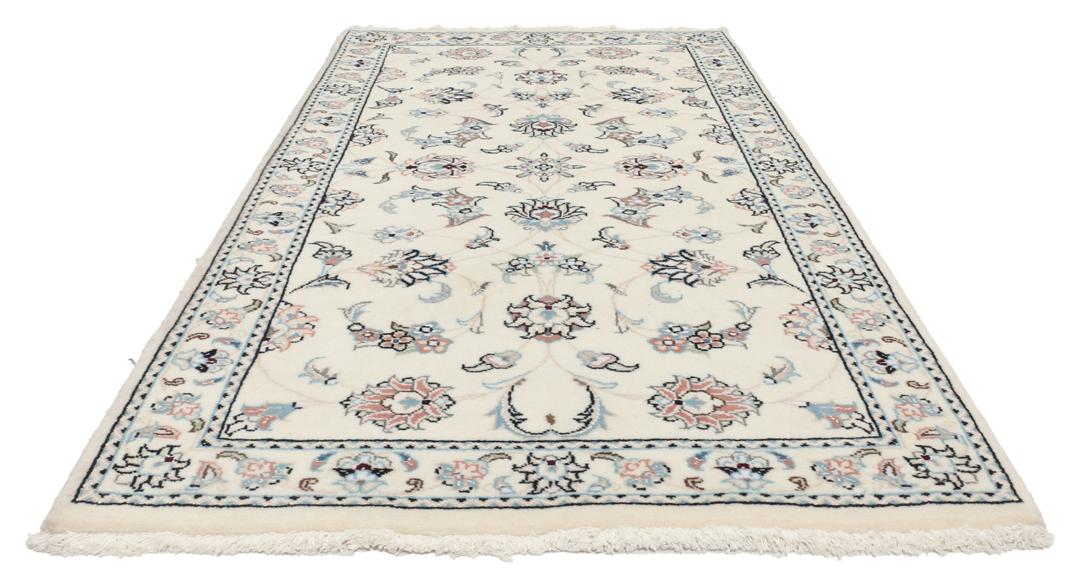
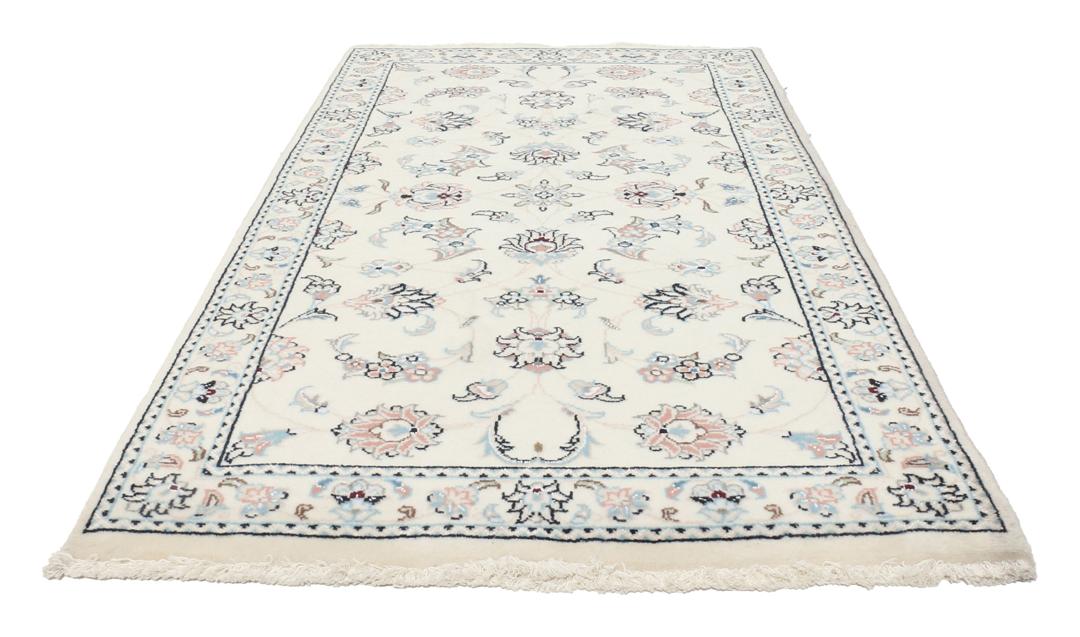
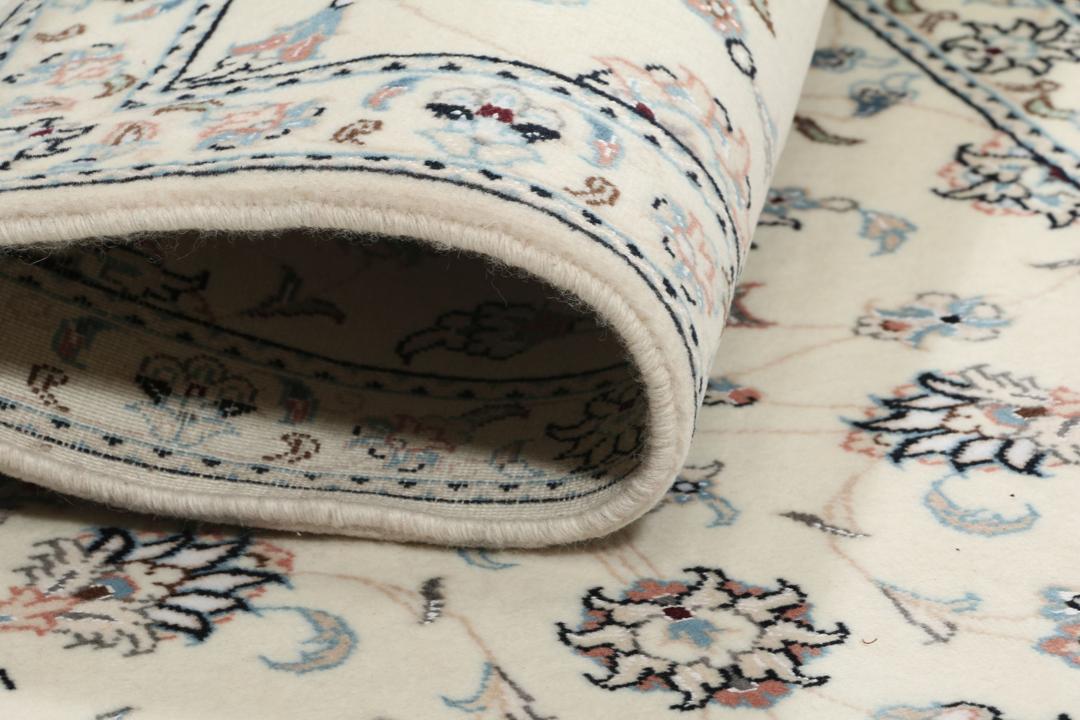
Nain rugs originate from the city of Nain, located in the heart of the Middle East. Originally known for high-quality wool textiles, the city transitioned into rug weaving in the early 20th century, quickly gaining a reputation for producing some of the finest, most elegant rugs in the region.
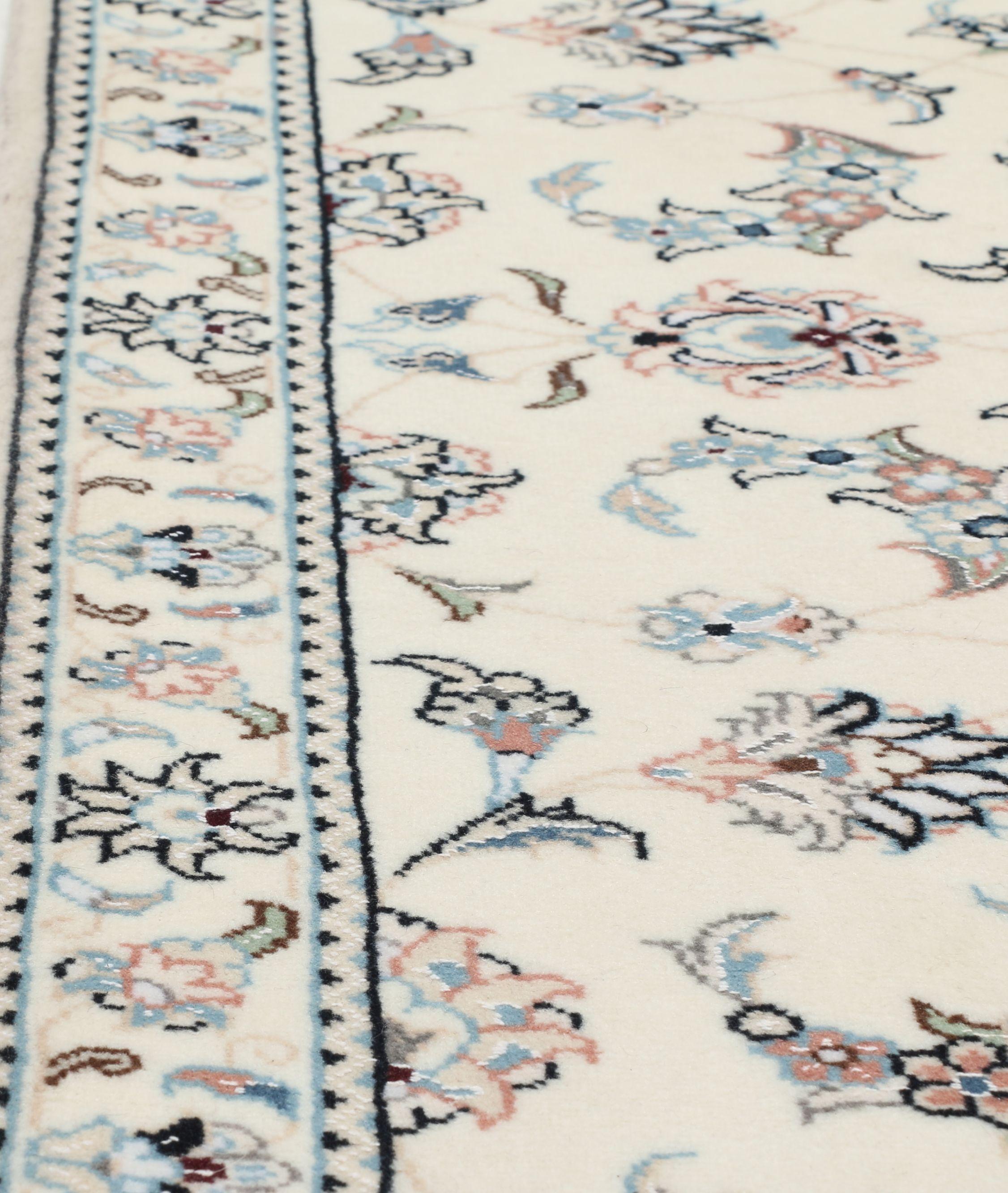
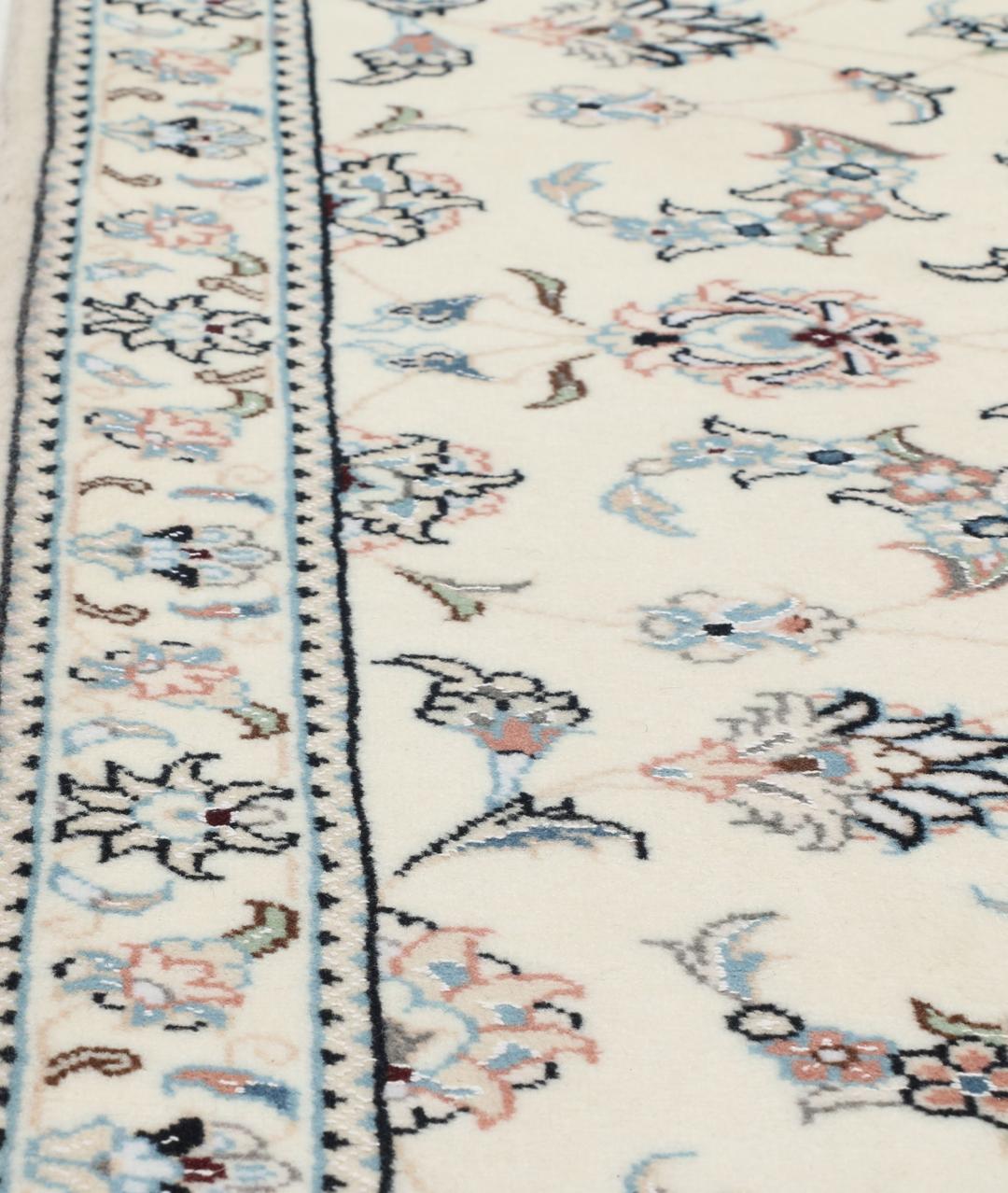
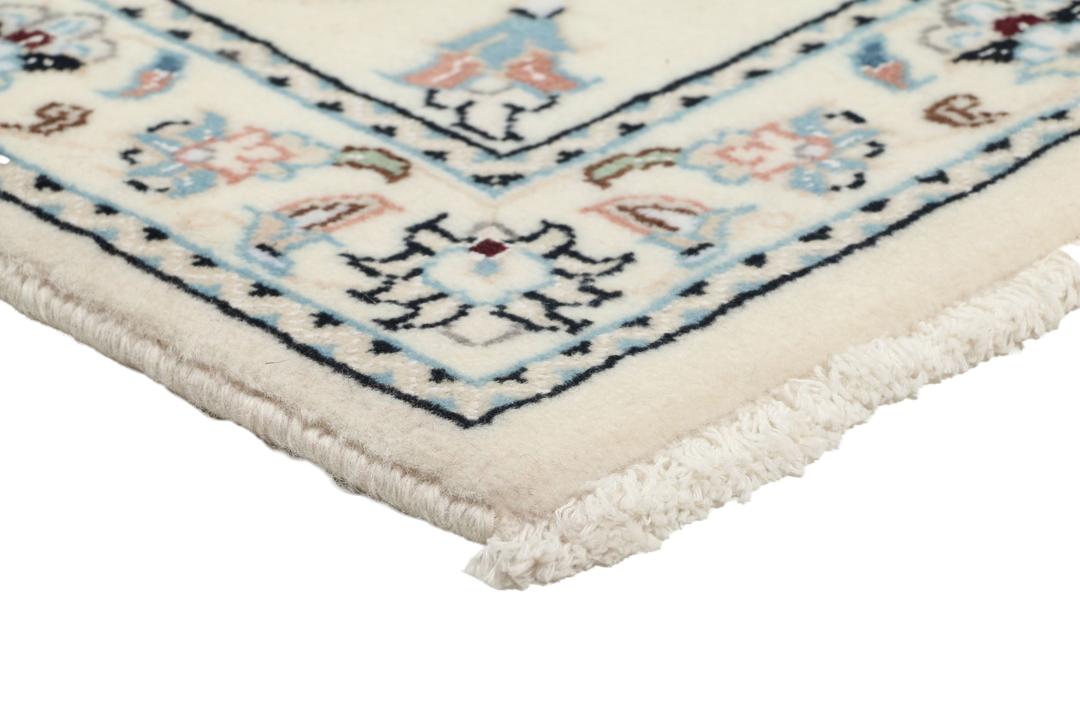
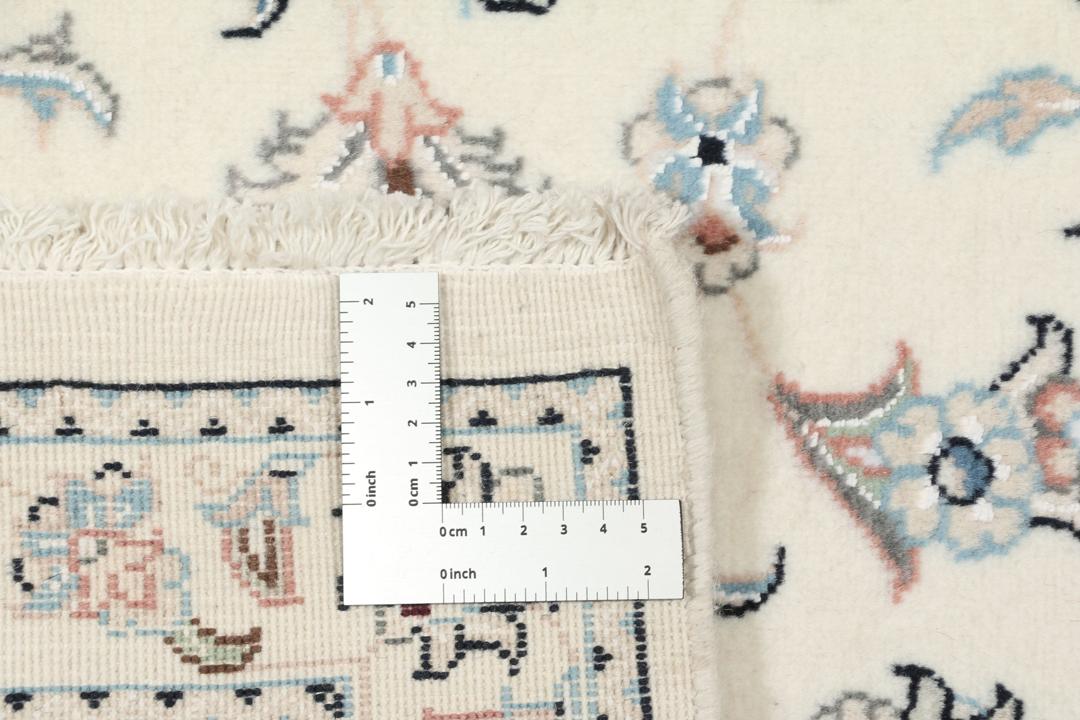
The term 9La refers to the number of threads used in the fringe, which serves as a standard for measuring the fineness of the weave. A lower number indicates a finer, more intricate rug. This technical precision is what allows for the characteristic detailed, curvilinear patterns that define the Nain style.
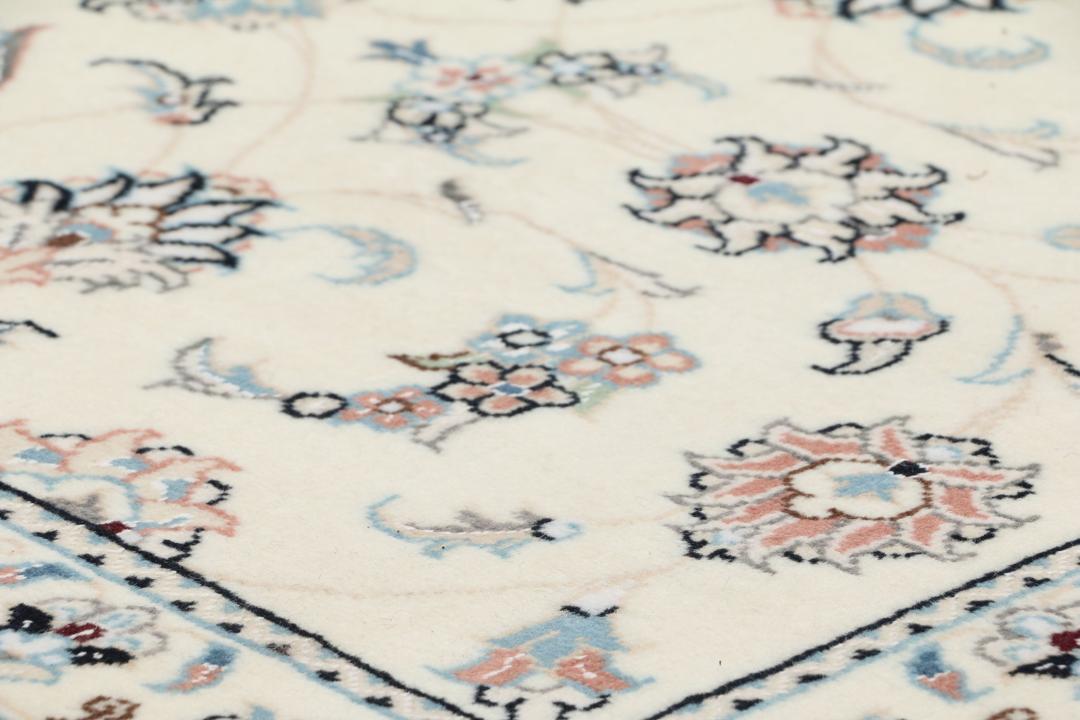
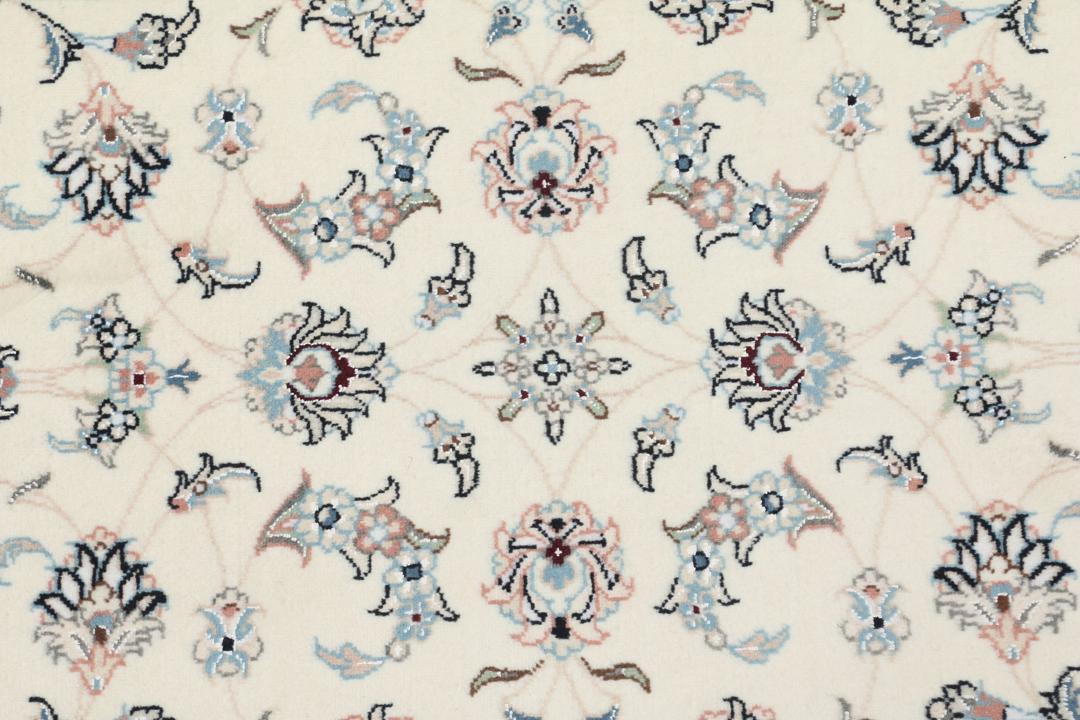
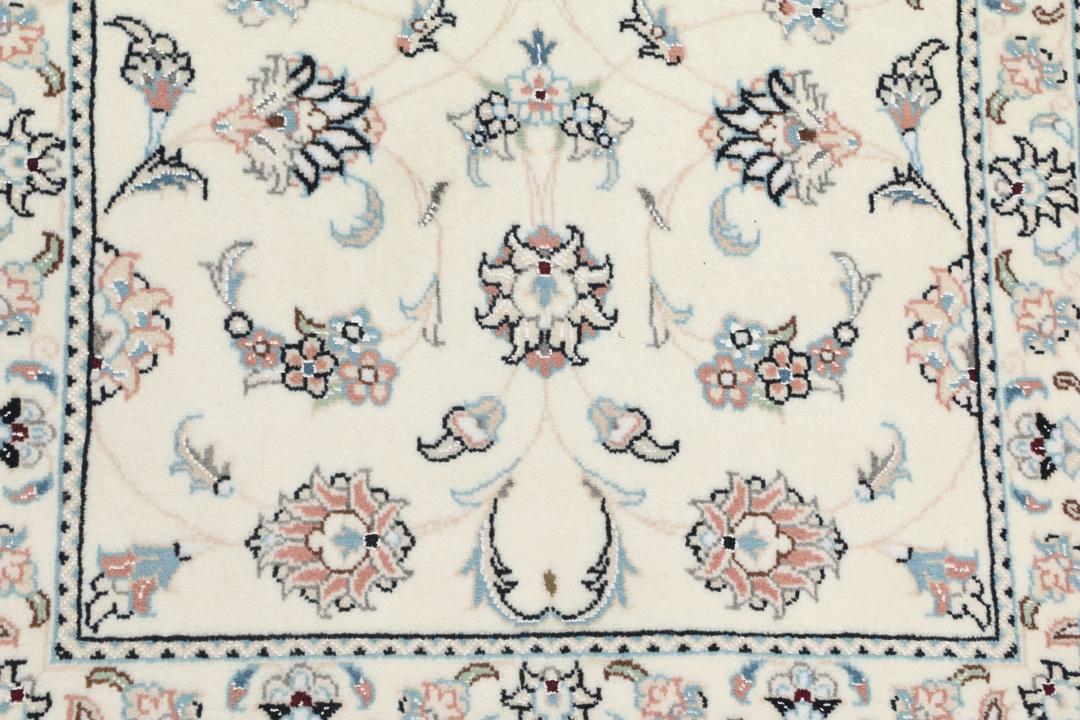
Signature design elements often include central medallions surrounded by sophisticated floral motifs and scrolling vine patterns. The palette is typically soft, often featuring ivory, beige, and light blue tones, which creates a light and airy aesthetic that contrasts with the bolder, darker colours found in other regional styles.
Nain rugs are highly sought after by collectors for their exceptional balance of artistic beauty and technical mastery. Owning a piece from this tradition is an investment in cultural heritage, representing a level of skill and dedication that is increasingly rare in the modern world.