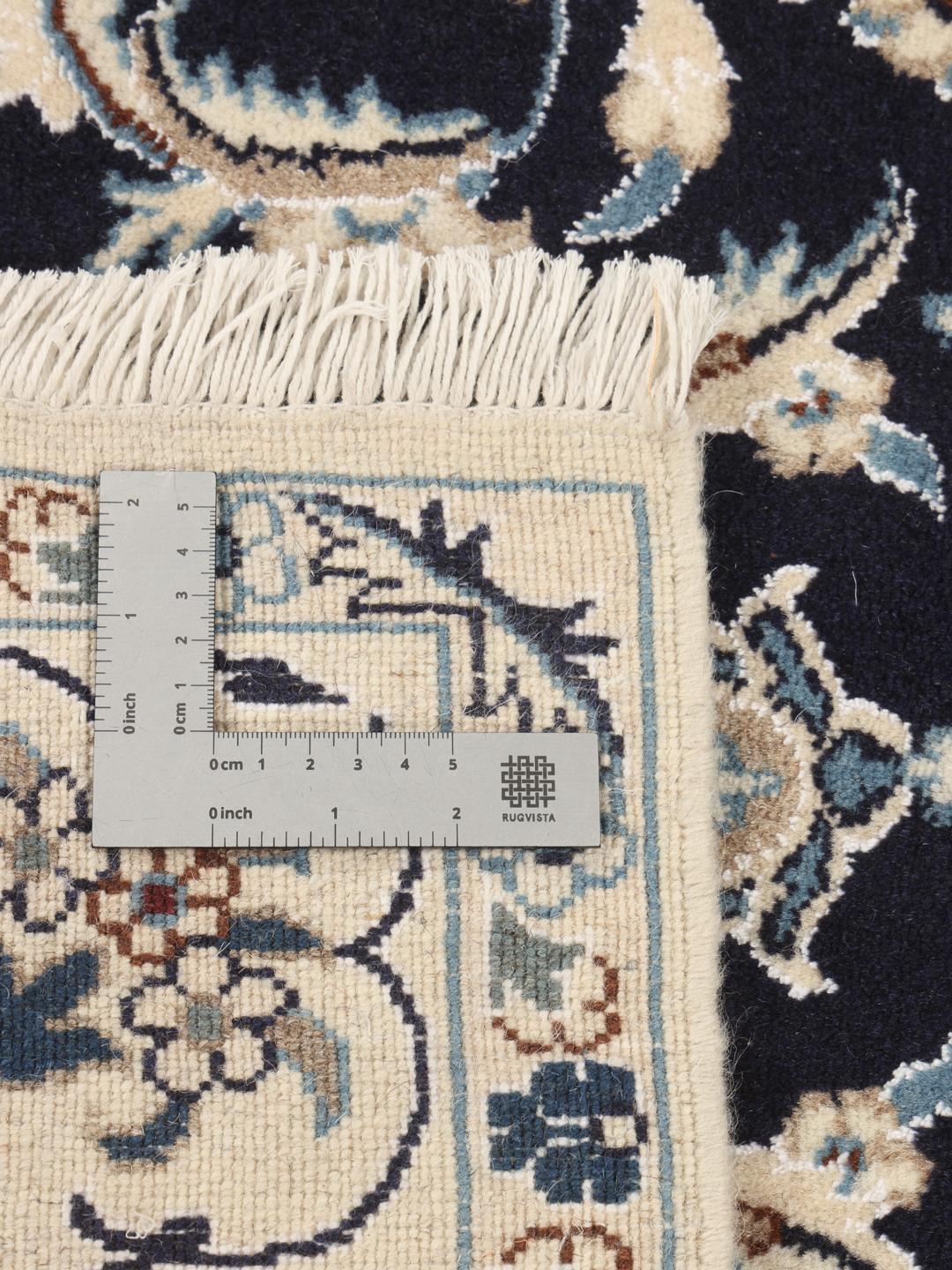
The Nain rug tradition originates from the desert town of Nain, located in the central region of the Middle East. Originally a center for the production of high-quality wool textiles, the town evolved during the 20th century to become one of the most prestigious names in the world of rug weaving. These rugs are celebrated for their sophisticated color palettes and a distinct style that often emphasizes balance and technical precision.
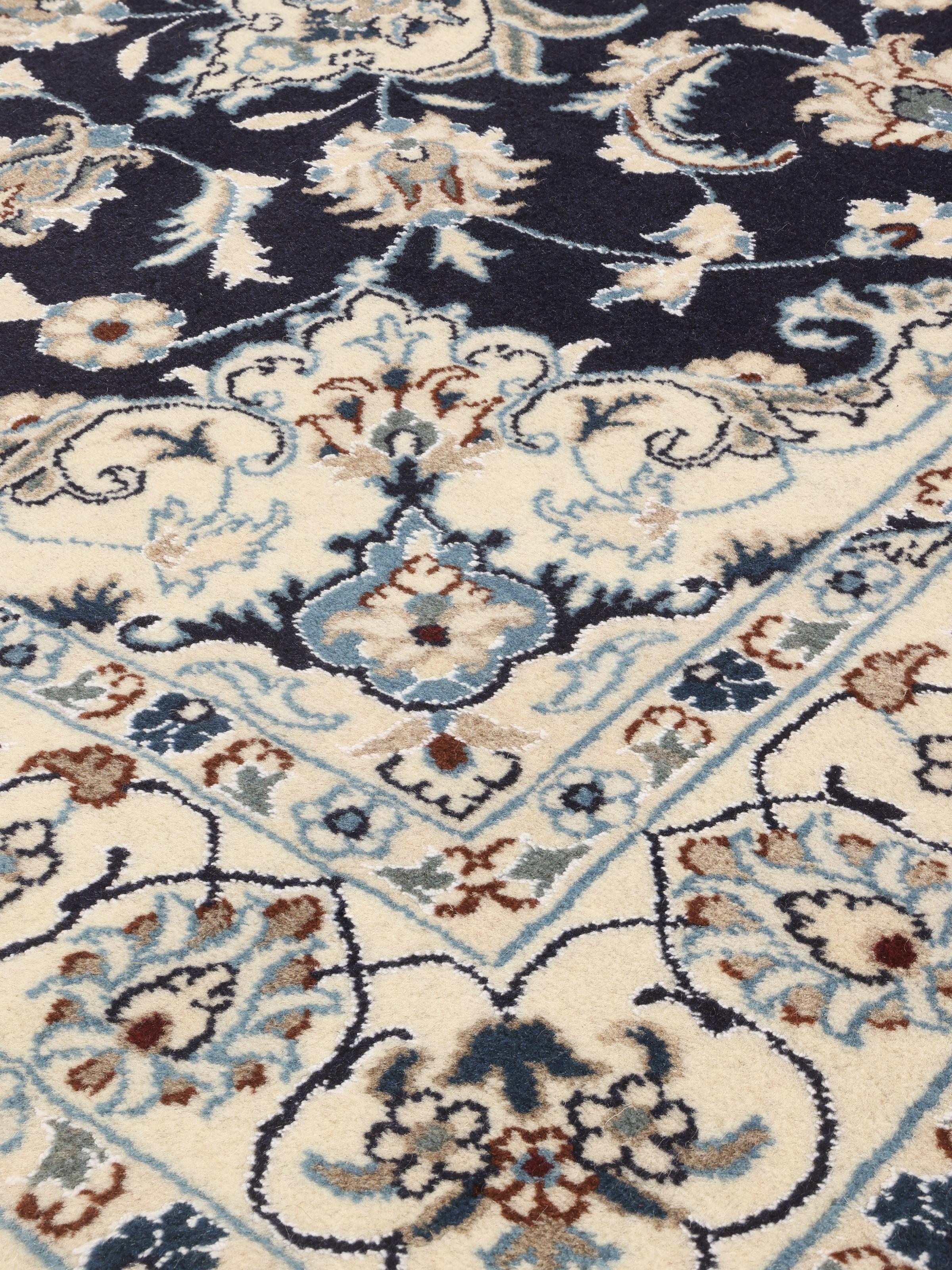
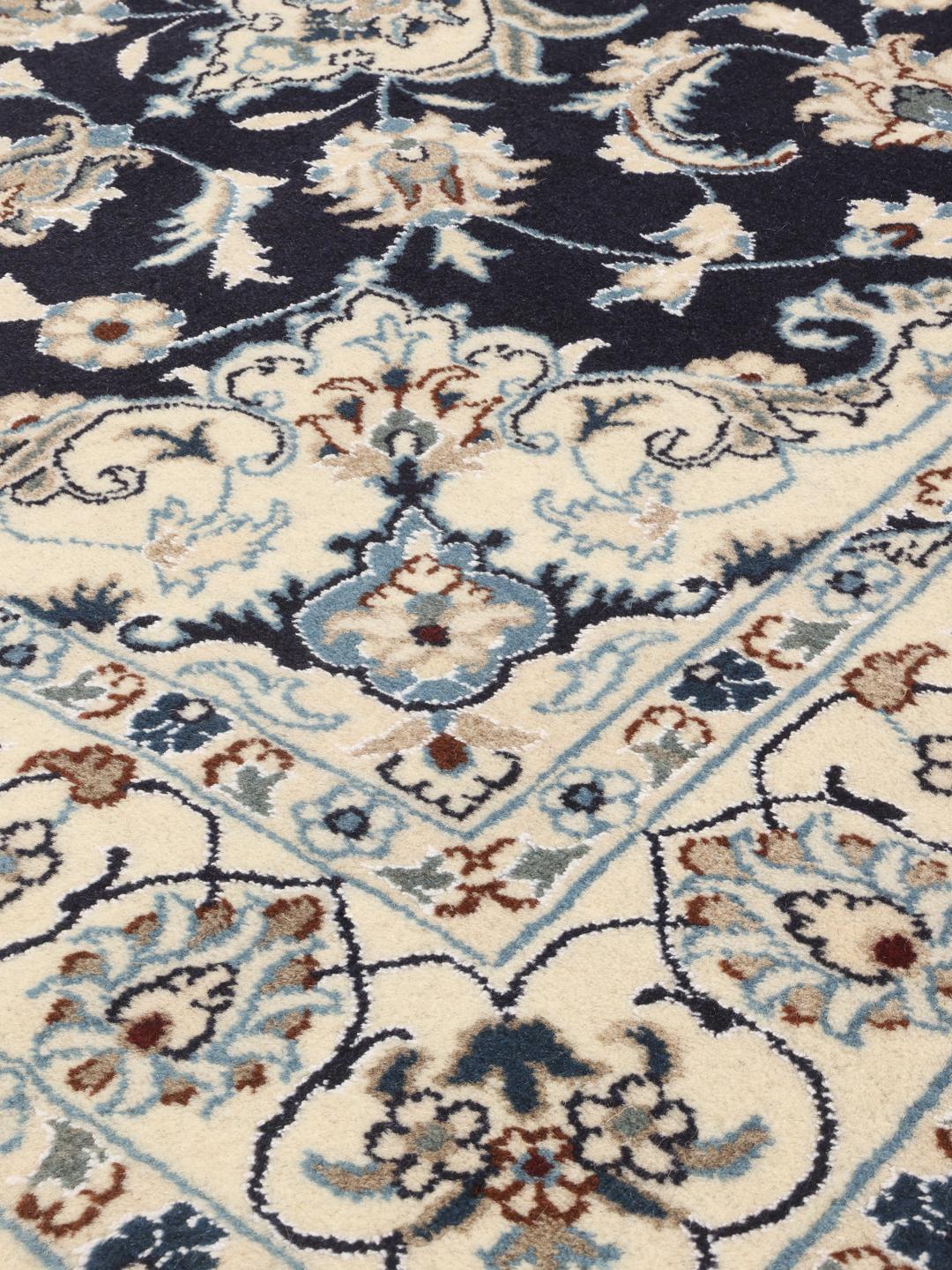
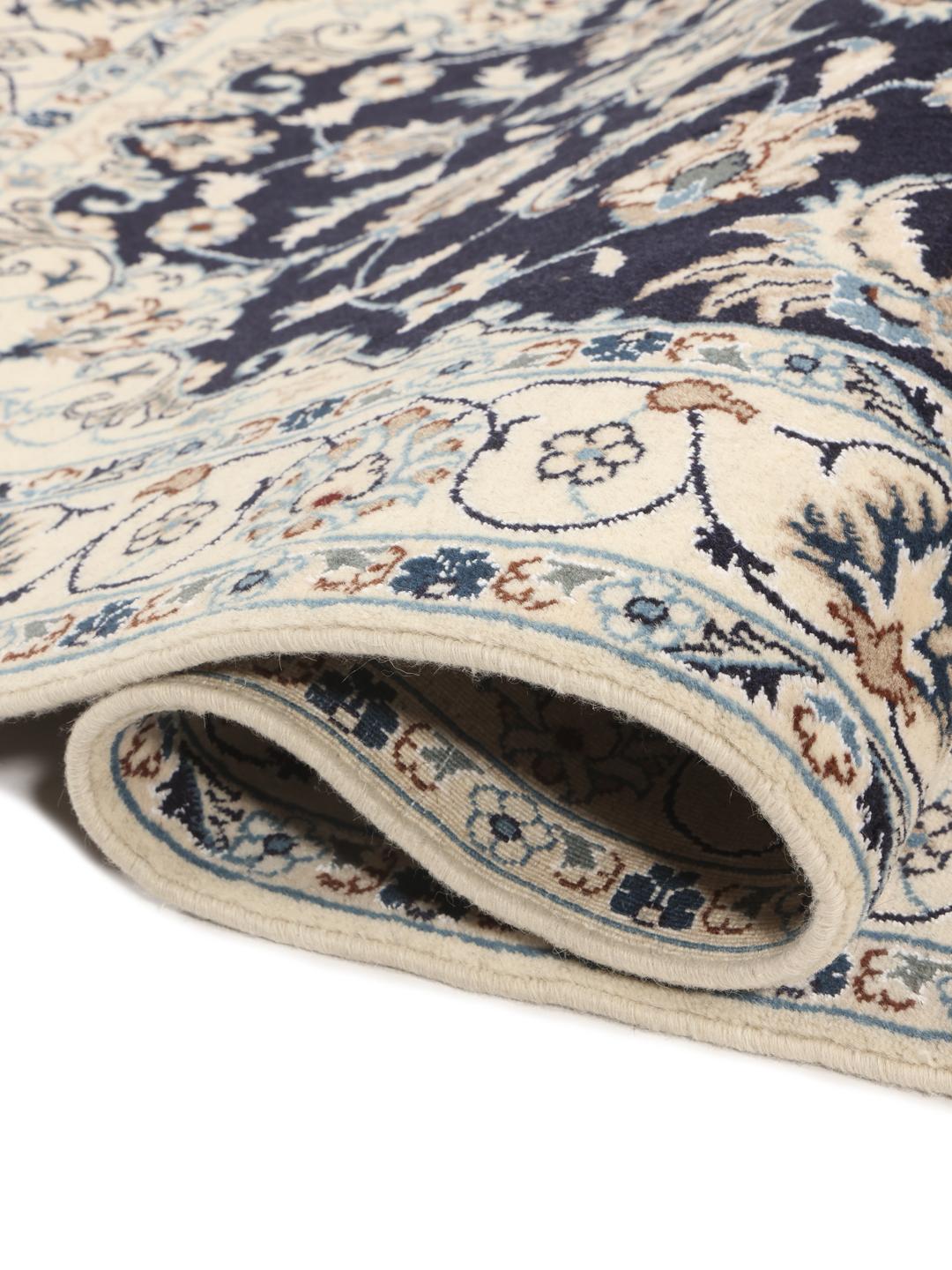
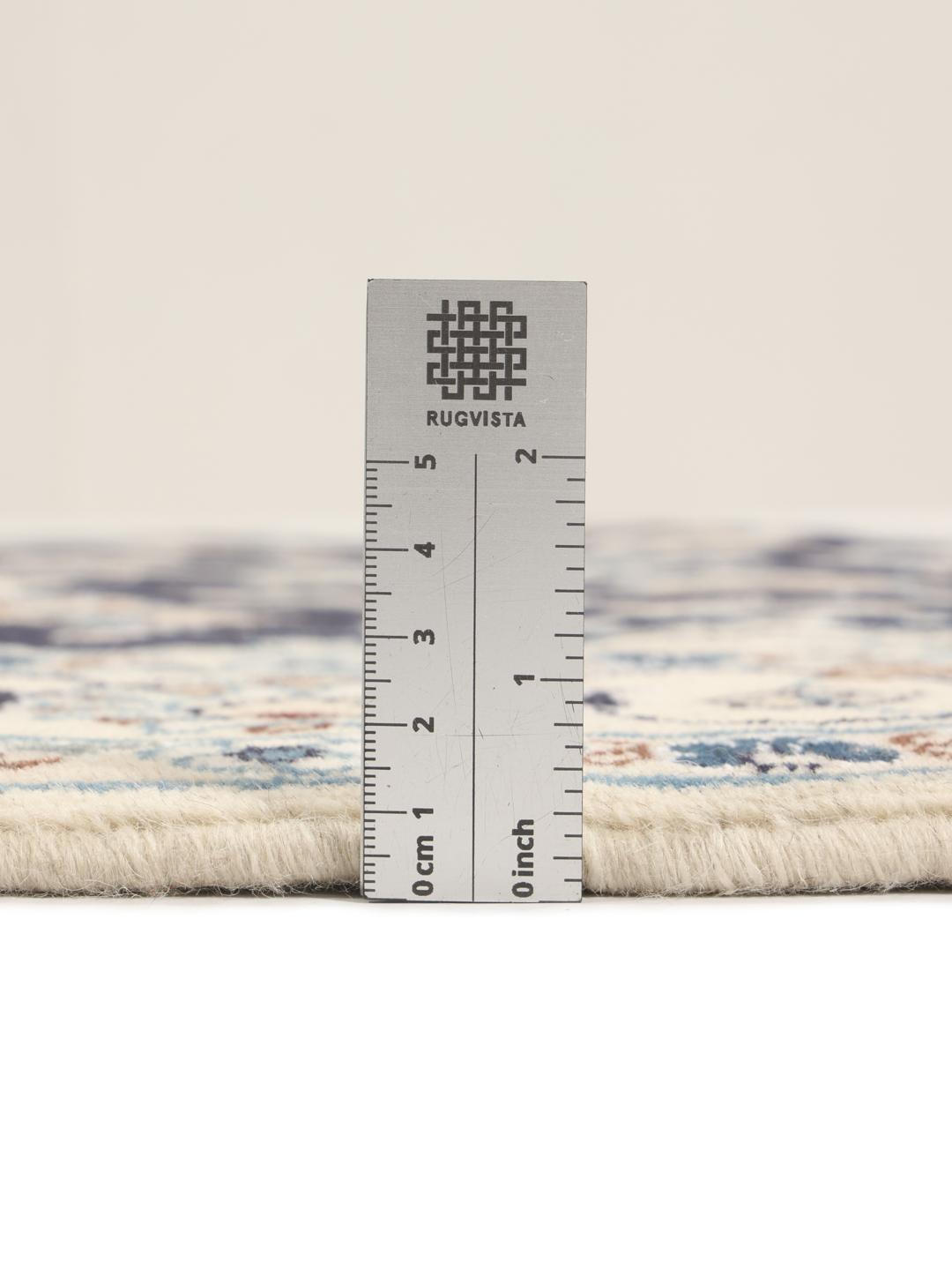
Technical terms are essential to understanding the value of a Nain rug. The weaving process in this region is known for its high level of detail, often incorporating high-quality wool that provides a soft, lustrous finish. The use of a cotton foundation is a hallmark of the region, ensuring that the rug maintains its shape and structural integrity over decades of use, making it a reliable choice for those who value longevity.
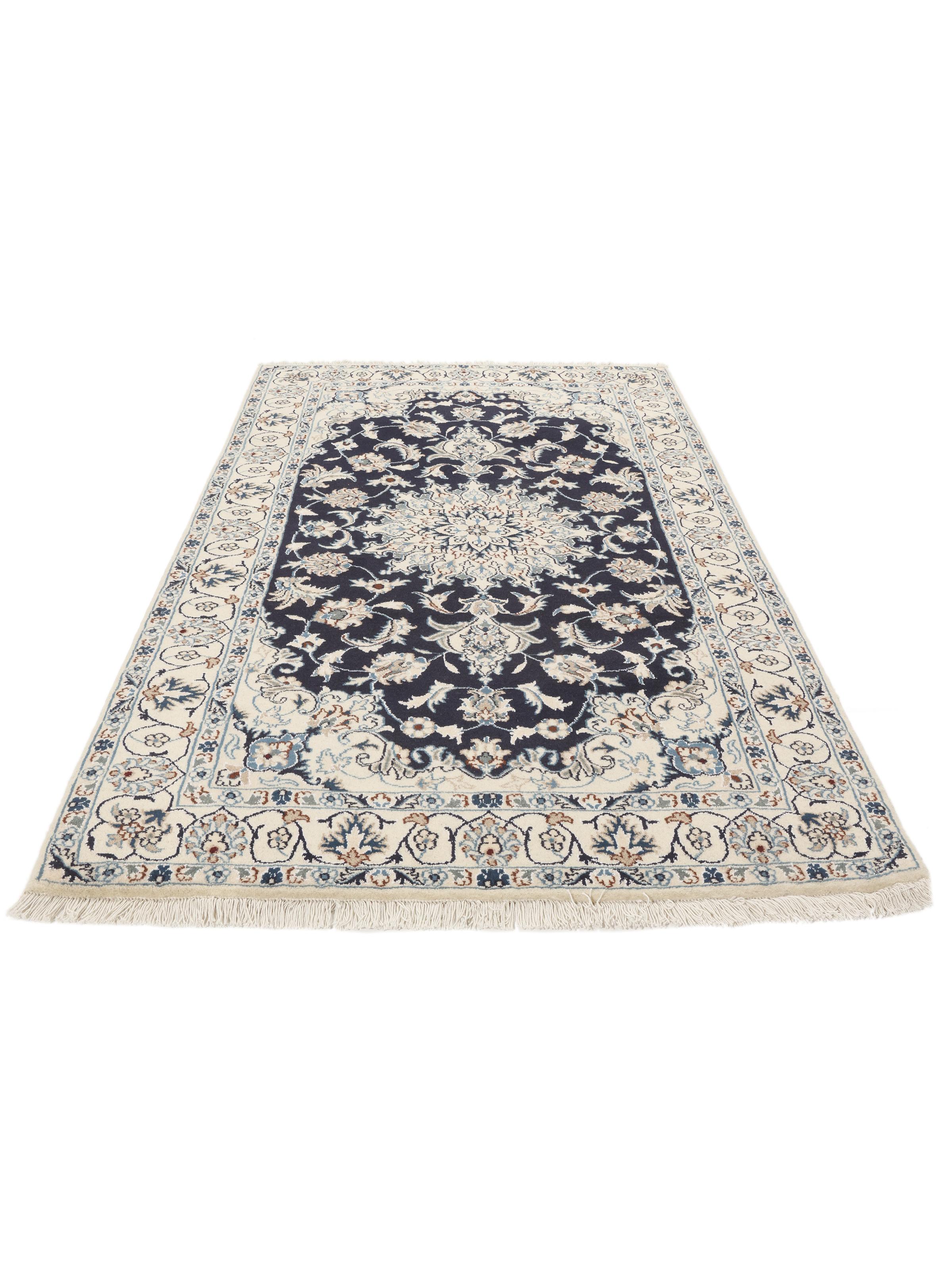
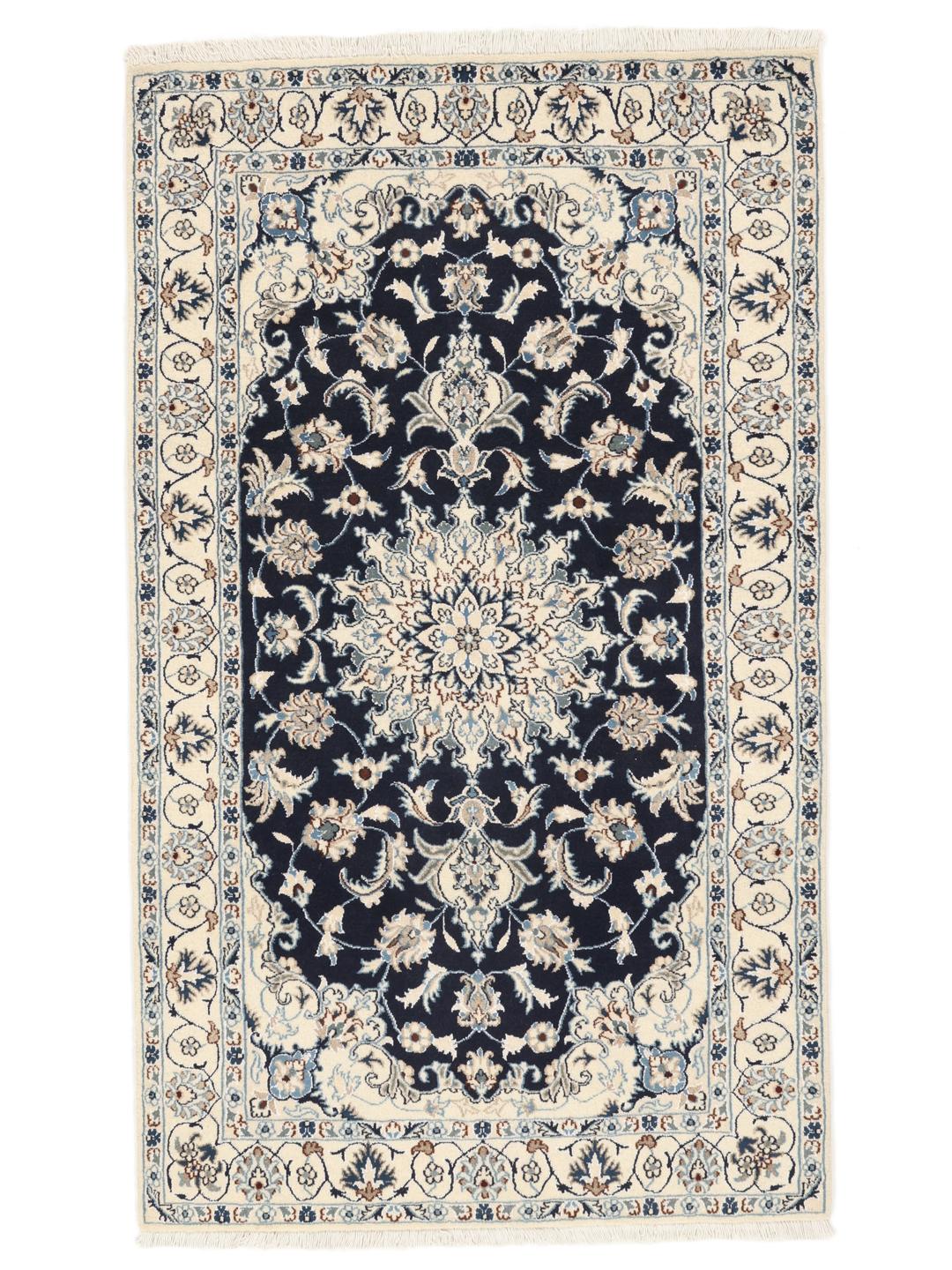
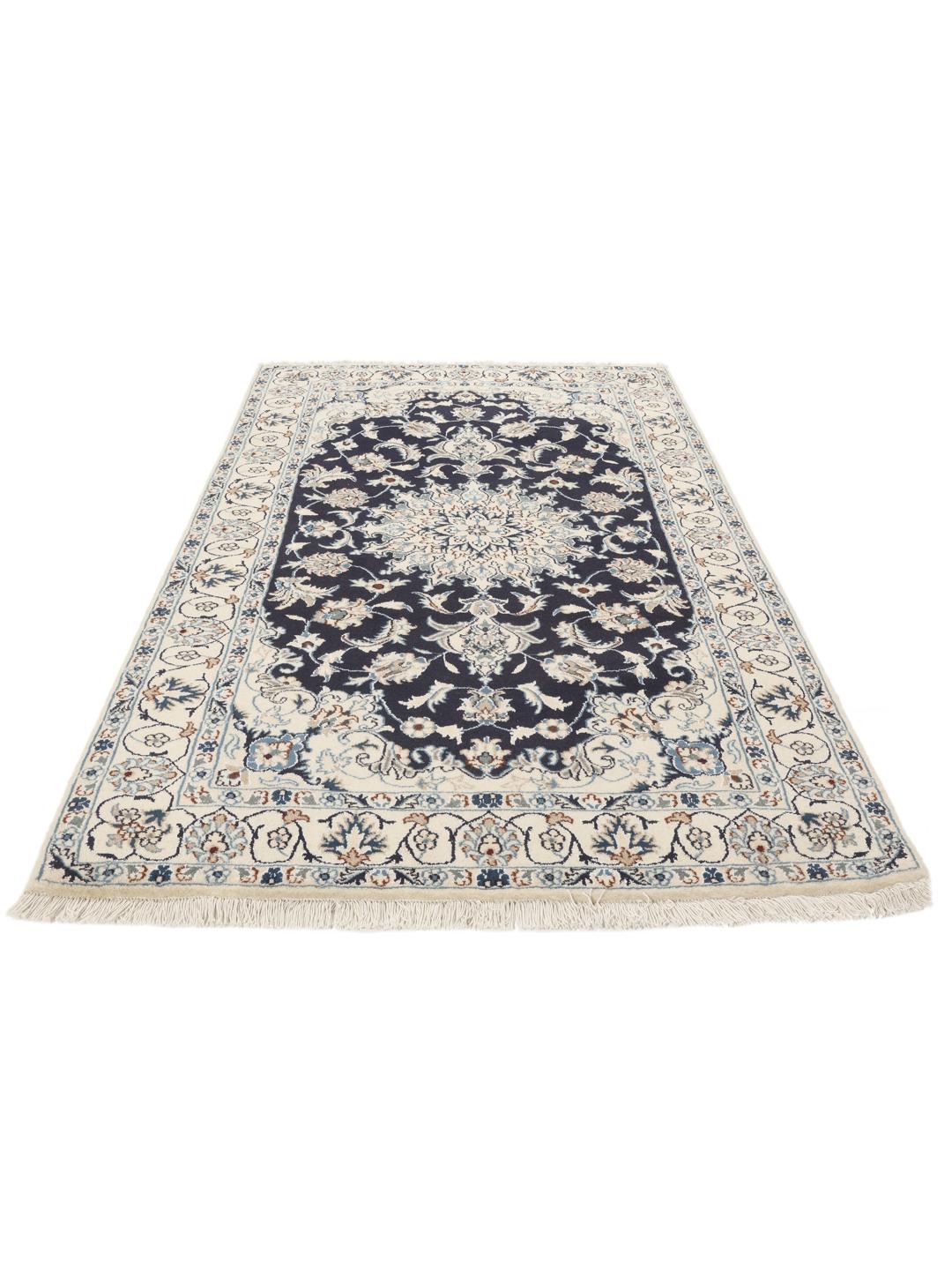
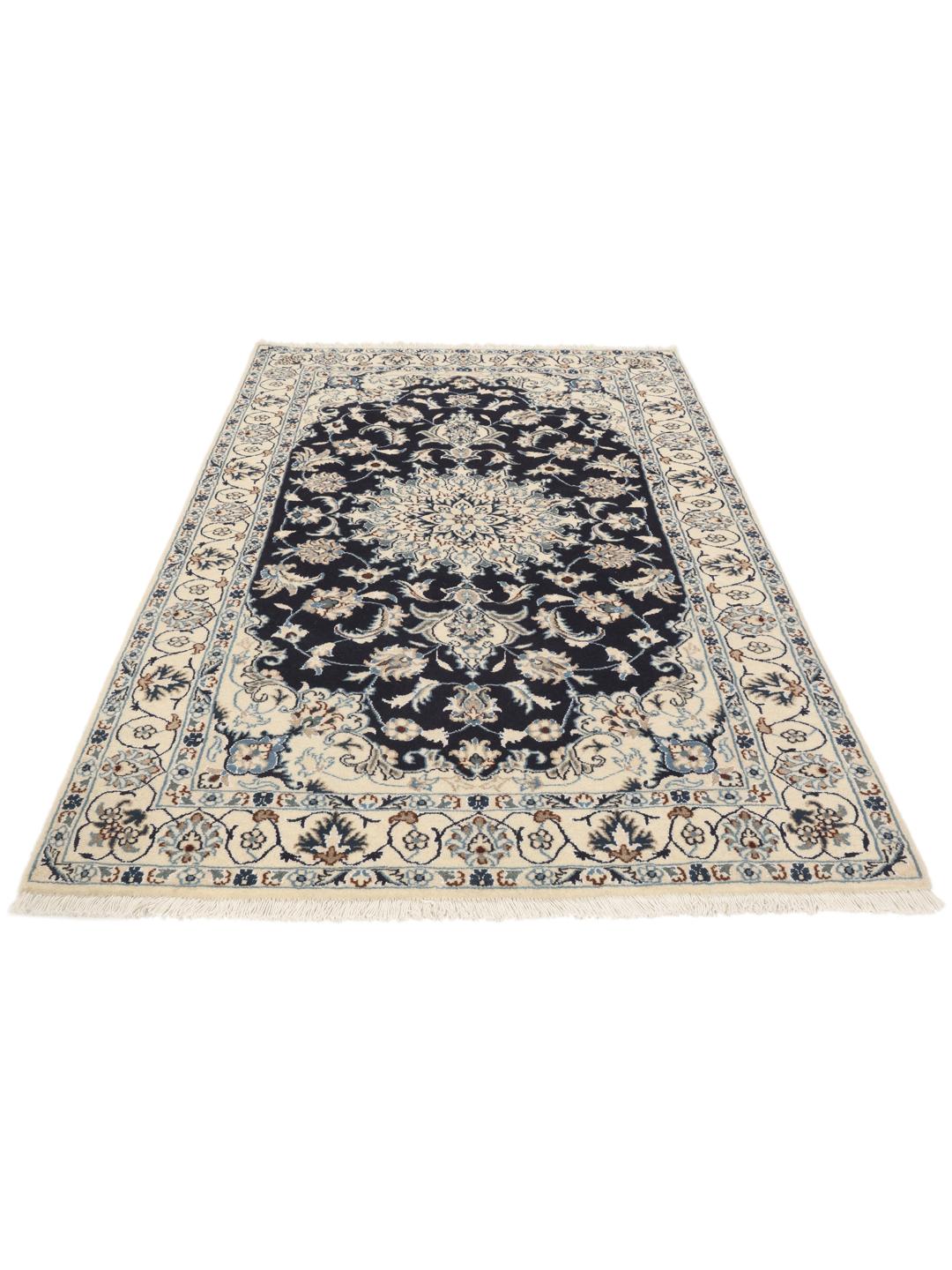
Visually, Nain rugs are defined by their elegant, curvilinear floral patterns and the prominent use of a central medallion. These designs often draw inspiration from classical artistic traditions, featuring scrolling vines, delicate blossoms, and intricate borders. While many traditional examples favor soft ivory or light blue tones, this specific piece stands out with its bold dark blue field, which offers a dramatic and modern contrast to the traditional motifs.
Owning a Nain rug is considered a mark of appreciation for fine craftsmanship and regional heritage. These rugs are highly sought after by collectors and homeowners alike for their ability to blend seamlessly into various interior settings while adding a sense of cultural weight. To own one is to possess a piece of history that continues to be defined by the patience, skill, and dedication of the artisans who keep this ancient craft alive.