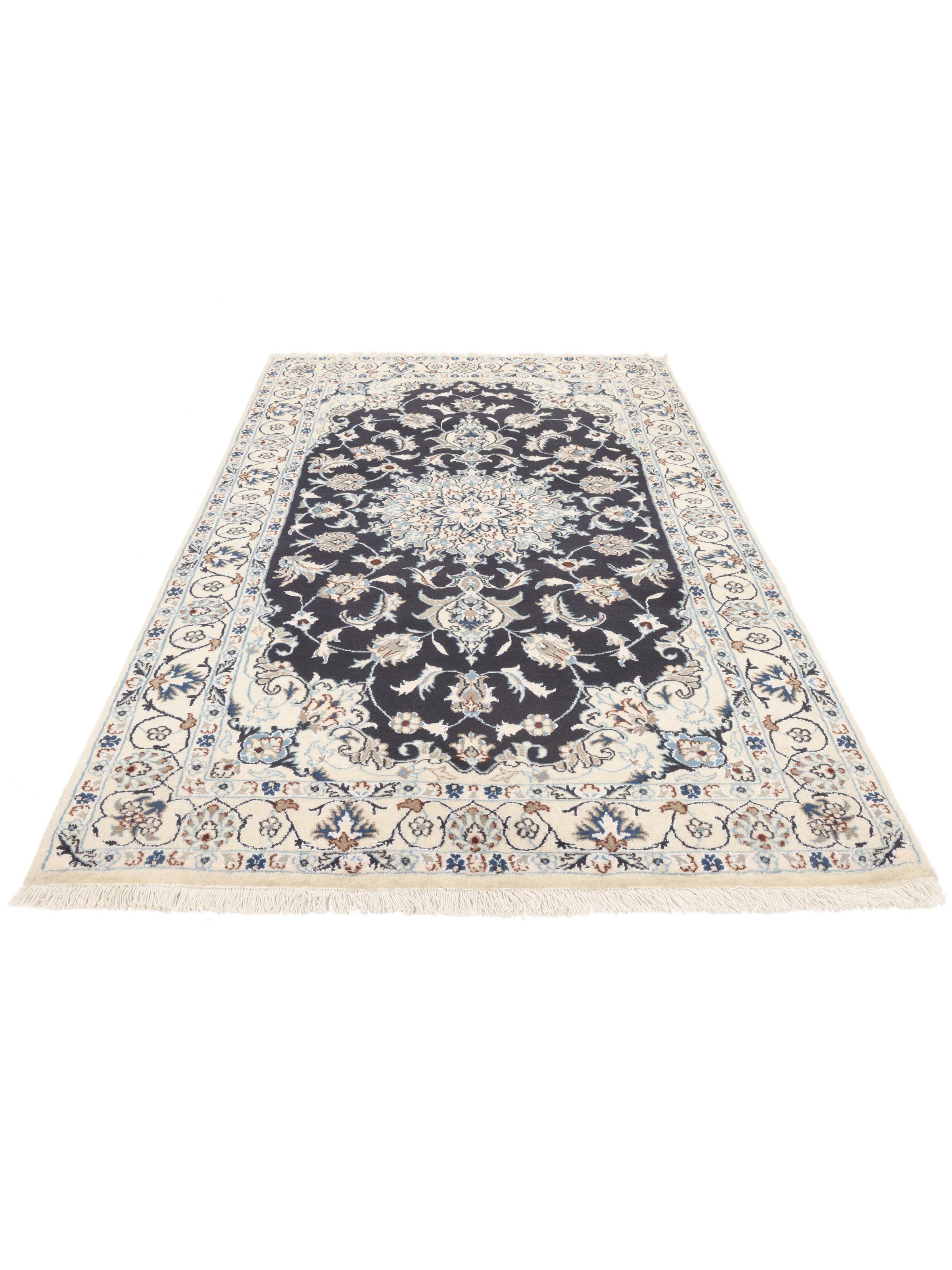
The Nain rug tradition originates from the town of Nain, located in the central desert region of the Middle East. Historically known for producing fine woollen textiles and religious garments, the area began transitioning into high-quality rug production in the early 20th century. Over time, these rugs gained international acclaim for their technical precision and sophisticated, often light or monochromatic palettes that differed significantly from the more vibrant, tribal styles of surrounding regions.
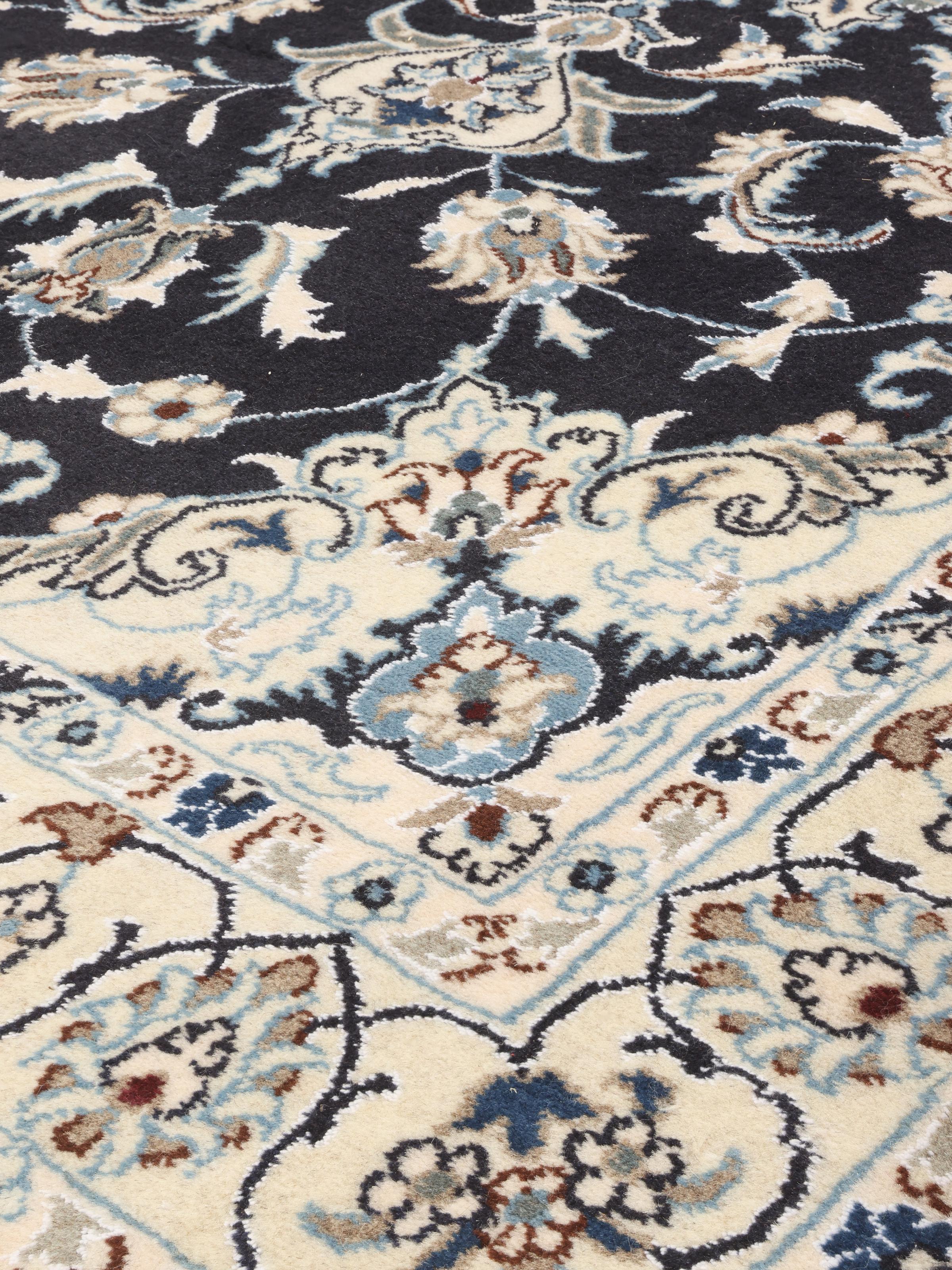
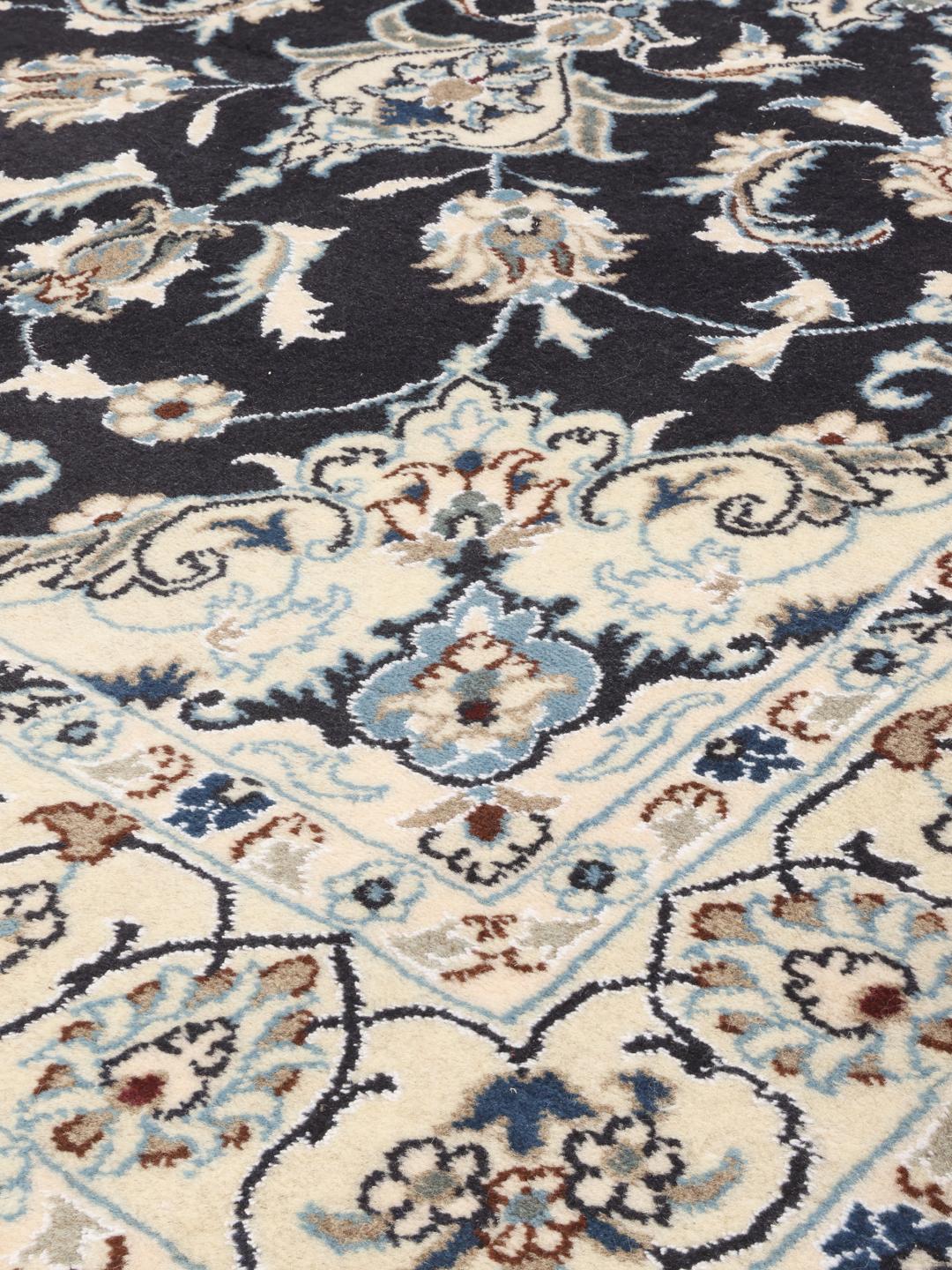
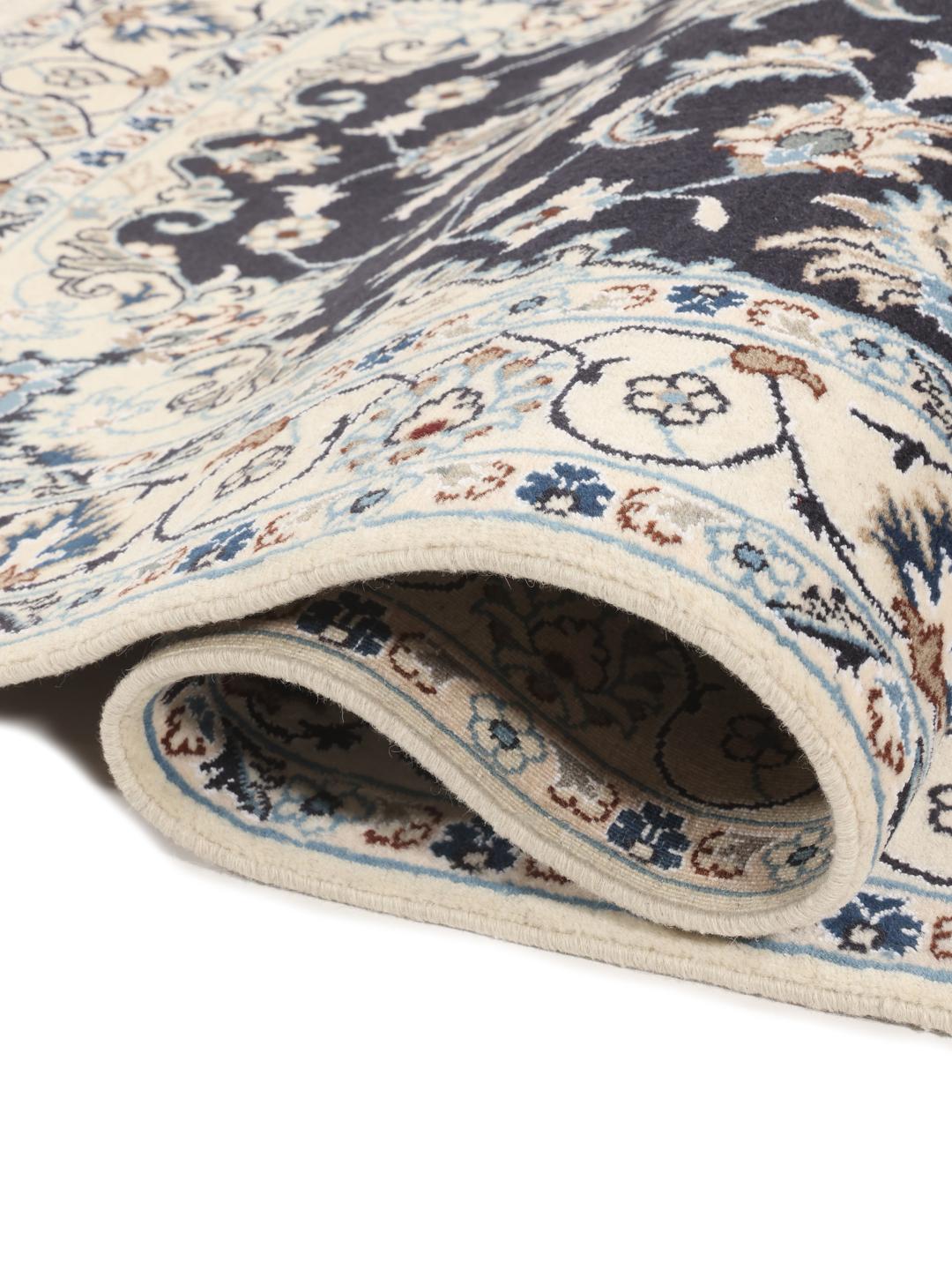
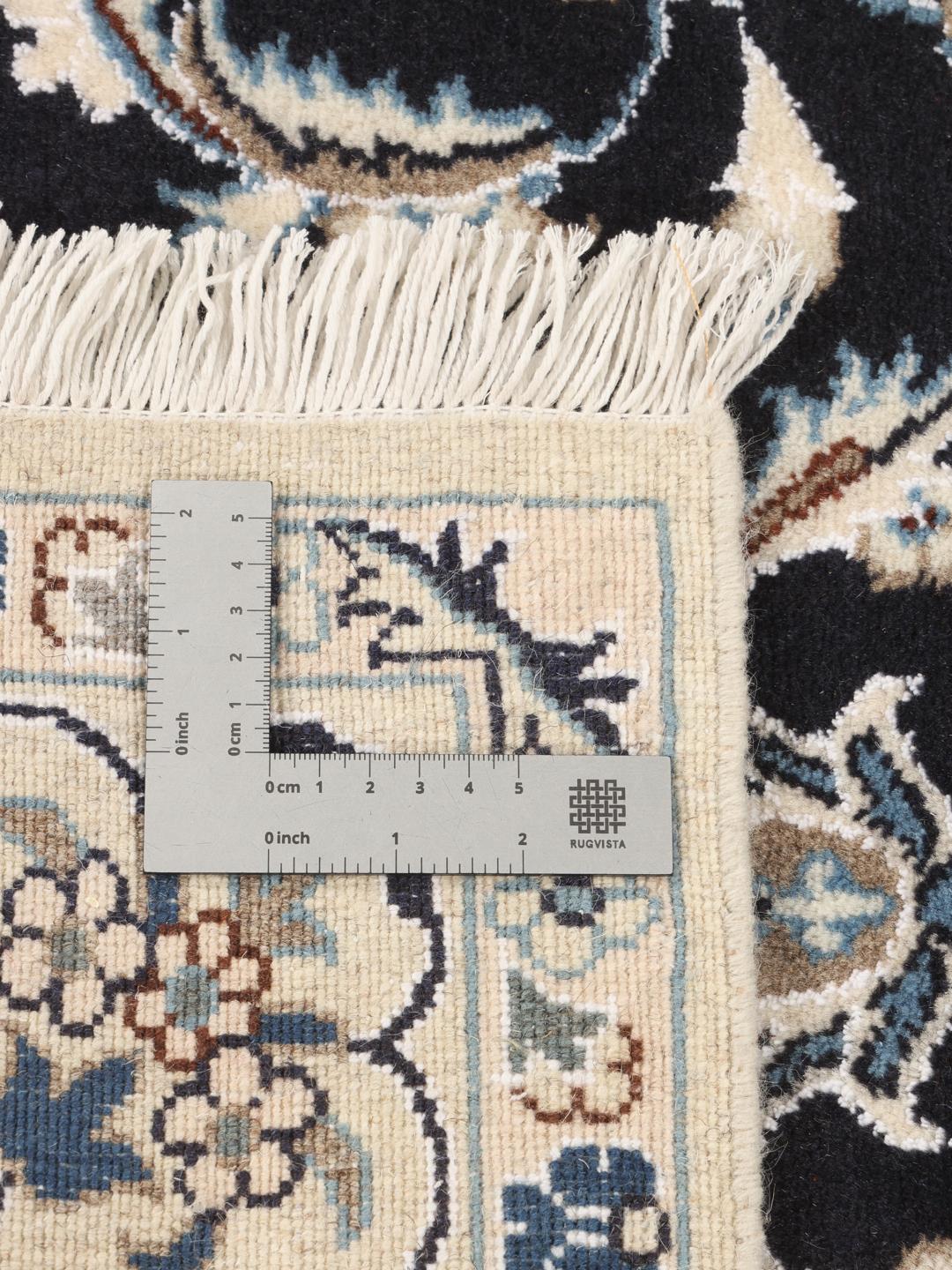
The technical quality of a Nain rug is often defined by its knot density and the use of high-grade wool. The precision required to execute such complex, flowing floral patterns necessitates a high knot count, which results in a smooth, elegant surface. This focus on detail ensures that the intricate curves of the vines and blossoms are rendered with clarity, a quality that distinguishes these rugs as some of the most refined examples of Middle Eastern craft.
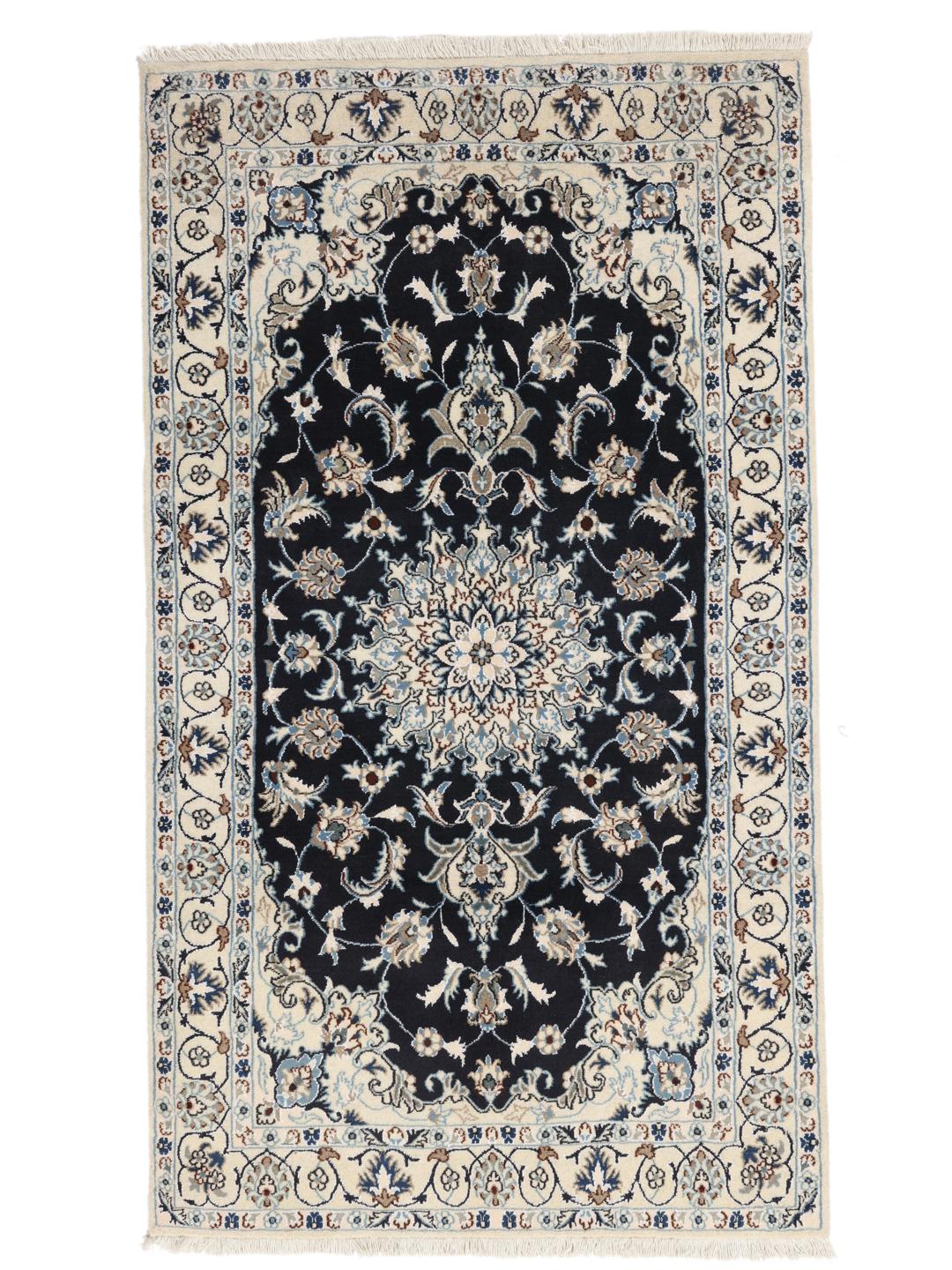
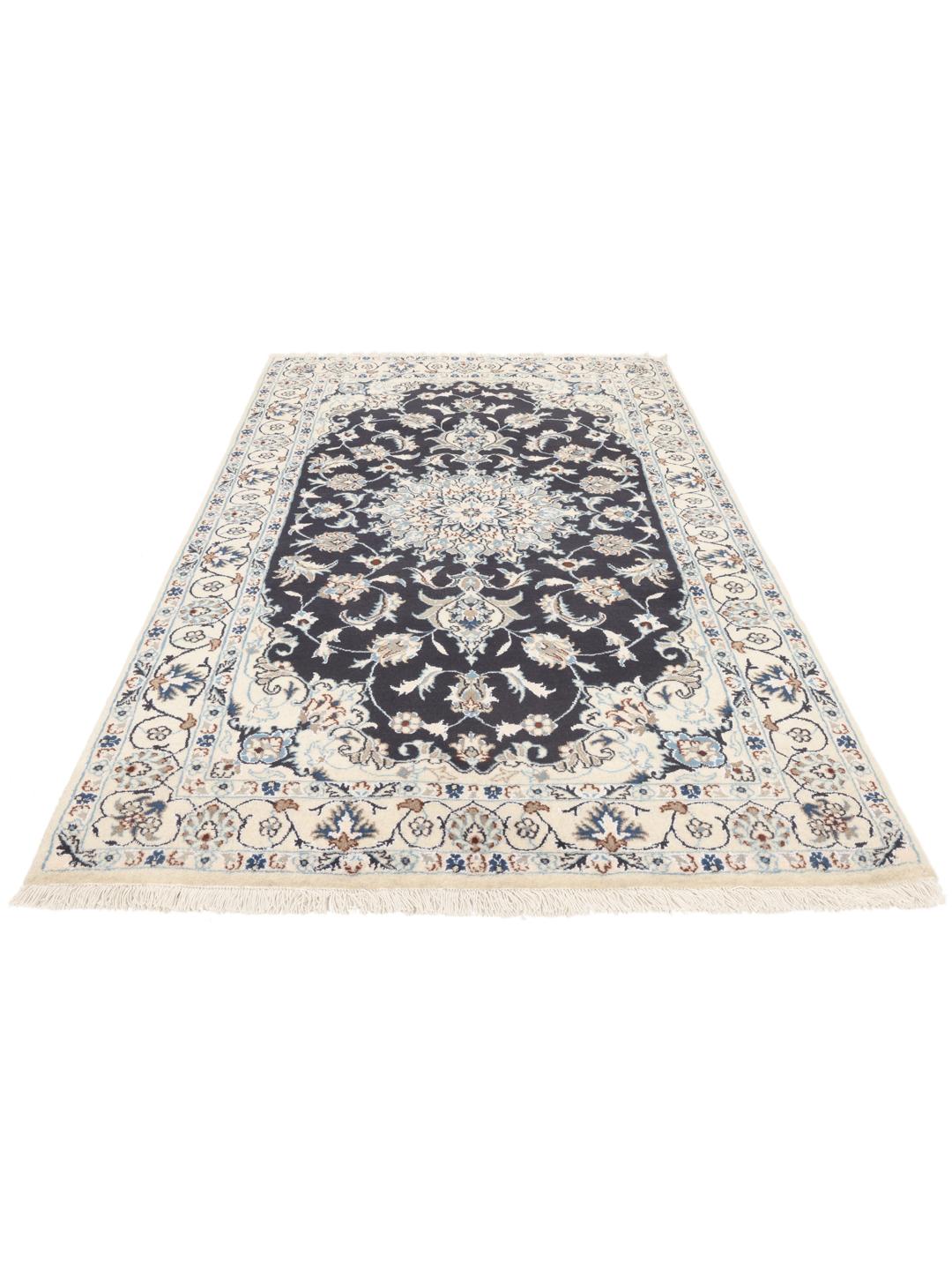
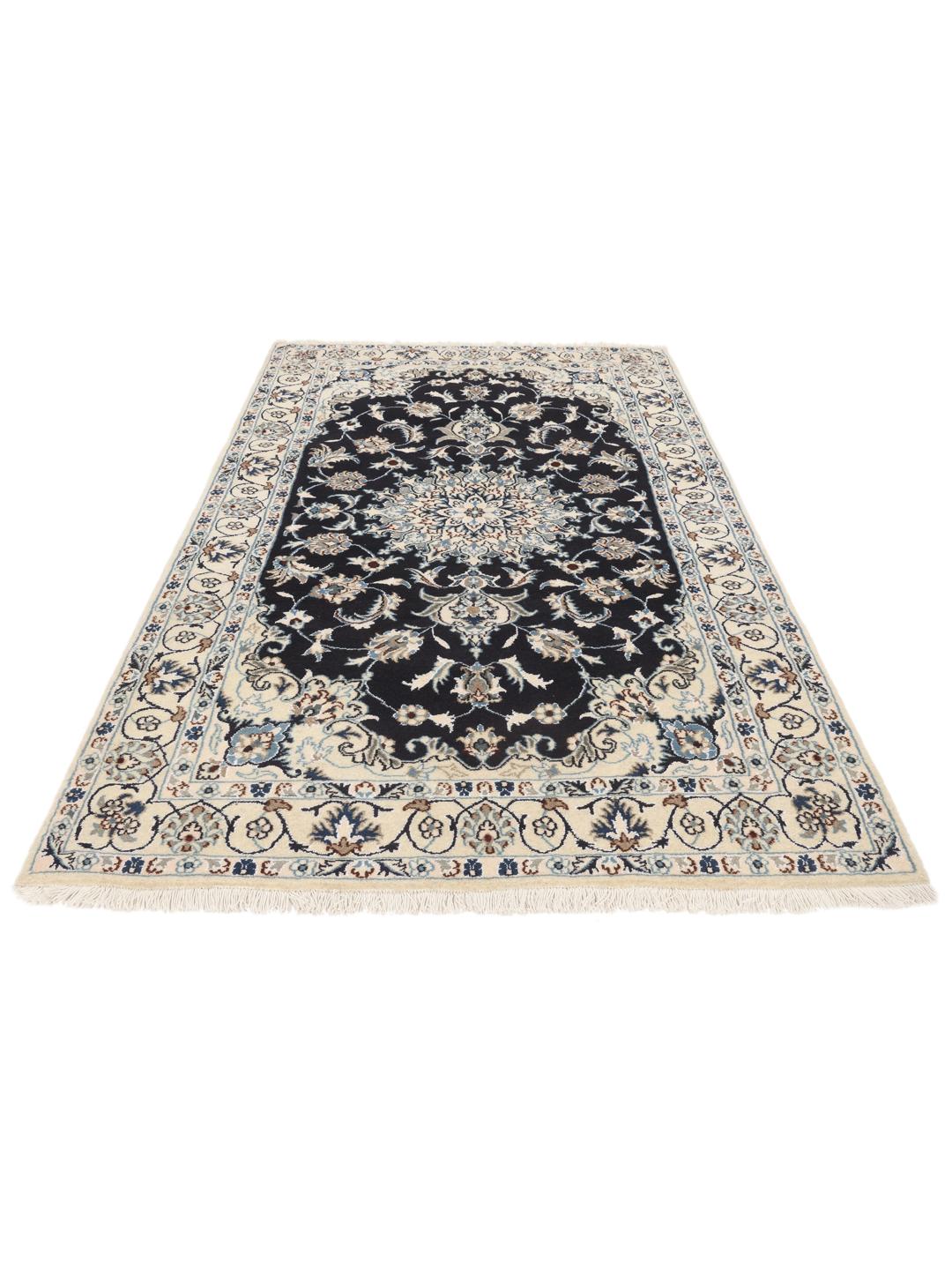
Signature design elements of the Nain style include a prominent central medallion surrounded by a sea of delicate, swirling vines, palmettes, and floral sprays. While many traditional examples favour lighter backgrounds, the use of a dark field creates a dramatic, modern contrast that highlights the intricacy of the white and blue floral work. The borders are typically filled with matching, smaller-scale floral motifs that frame the centre, creating a cohesive and formal aesthetic.
Nain rugs are highly prized by collectors for their blend of technical mastery and artistic vision. Owning a piece from this tradition is an investment in cultural heritage, as the skills required to create them are passed down through generations of dedicated artisans. These rugs are not merely floor coverings but are regarded as enduring works of art that bring a sense of history, patience, and beauty to any collection.