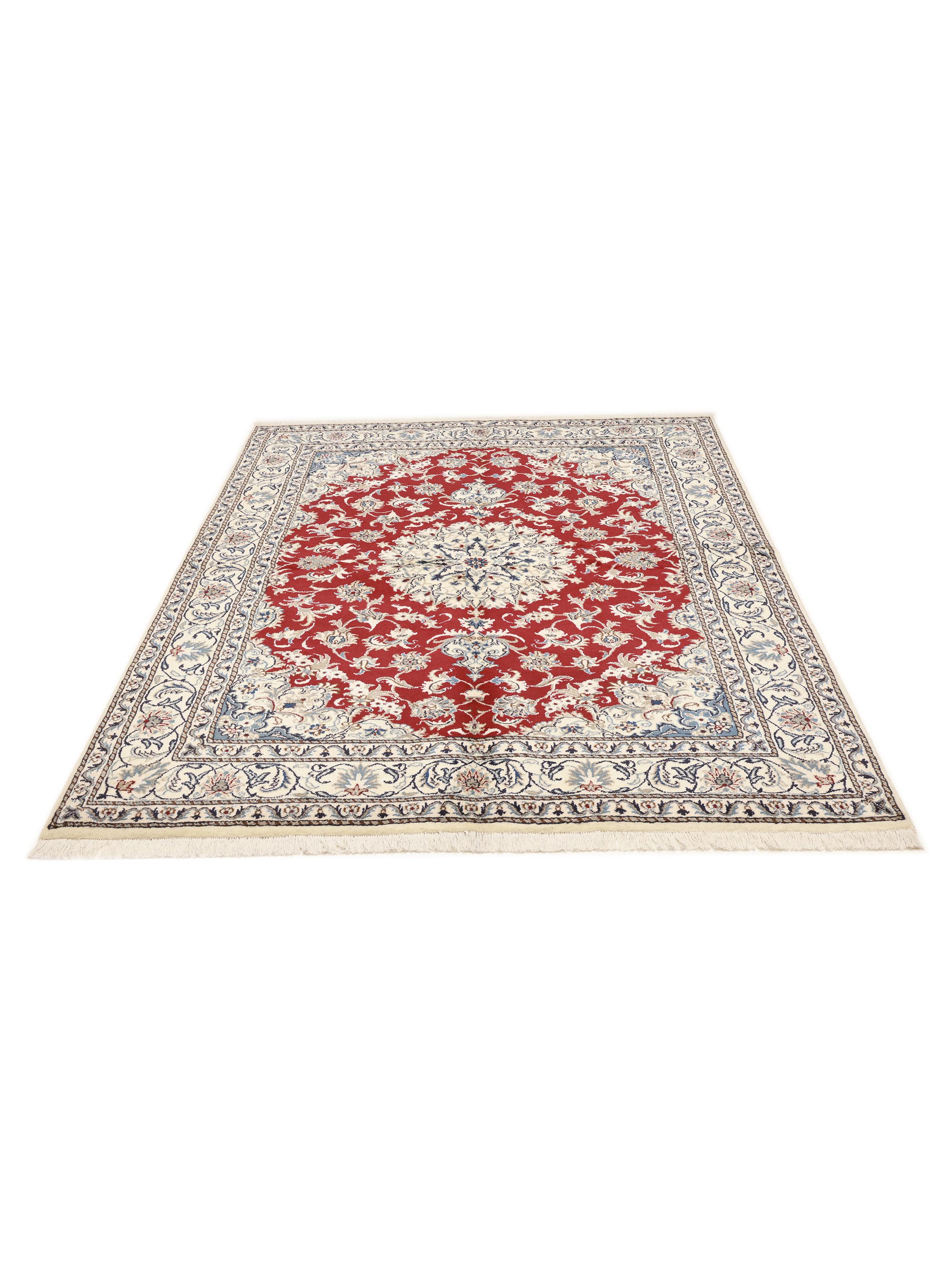
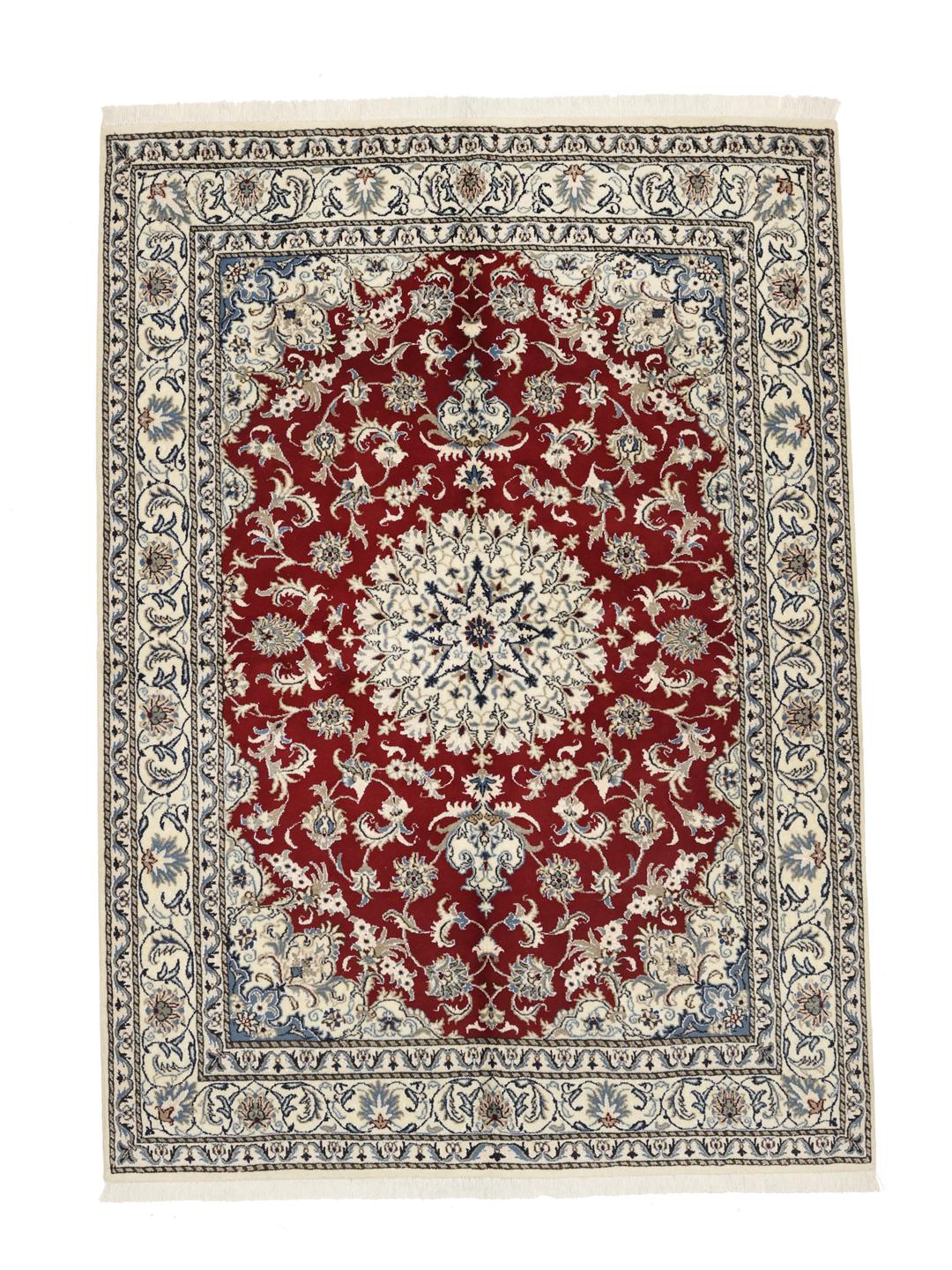
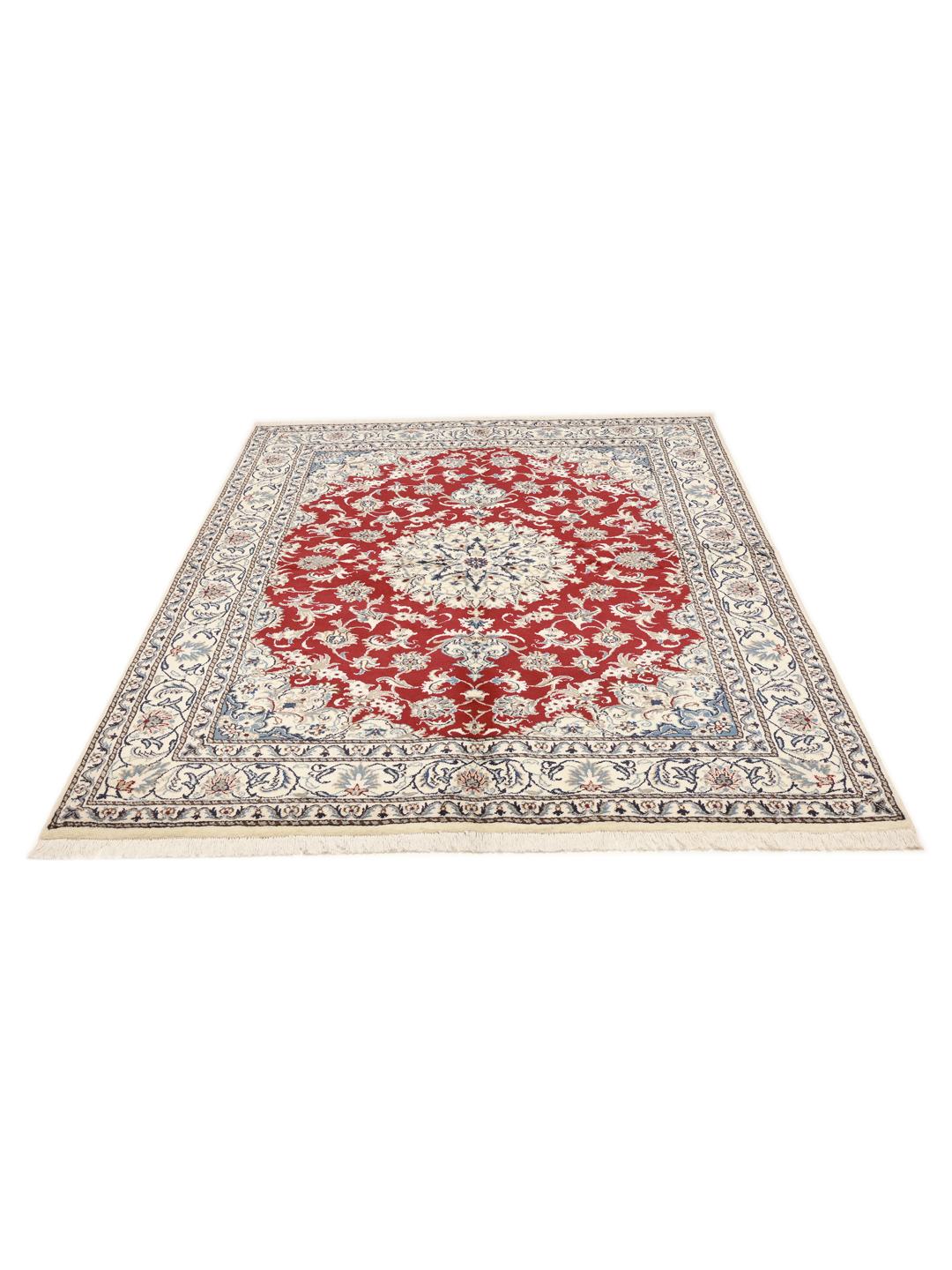
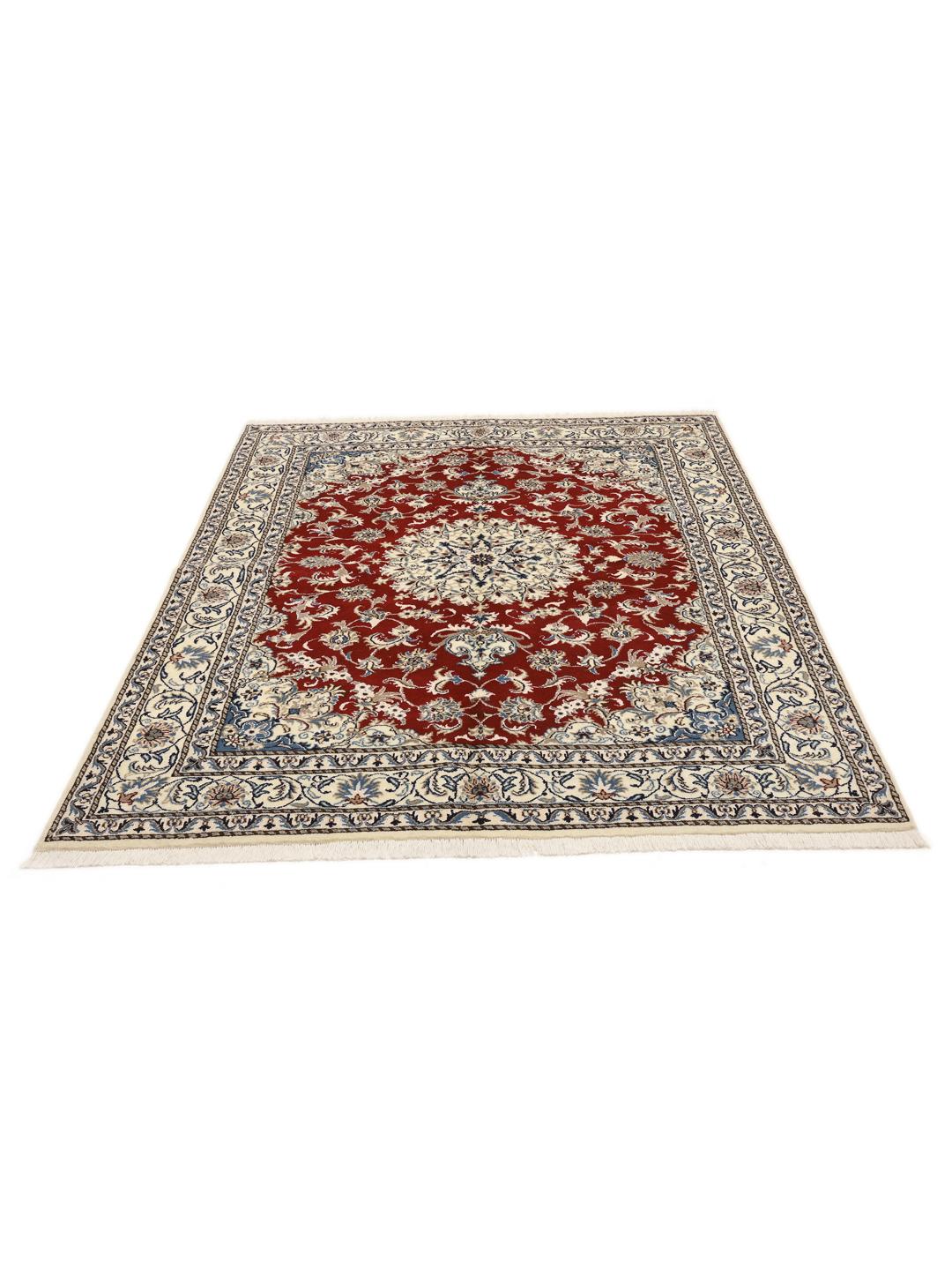
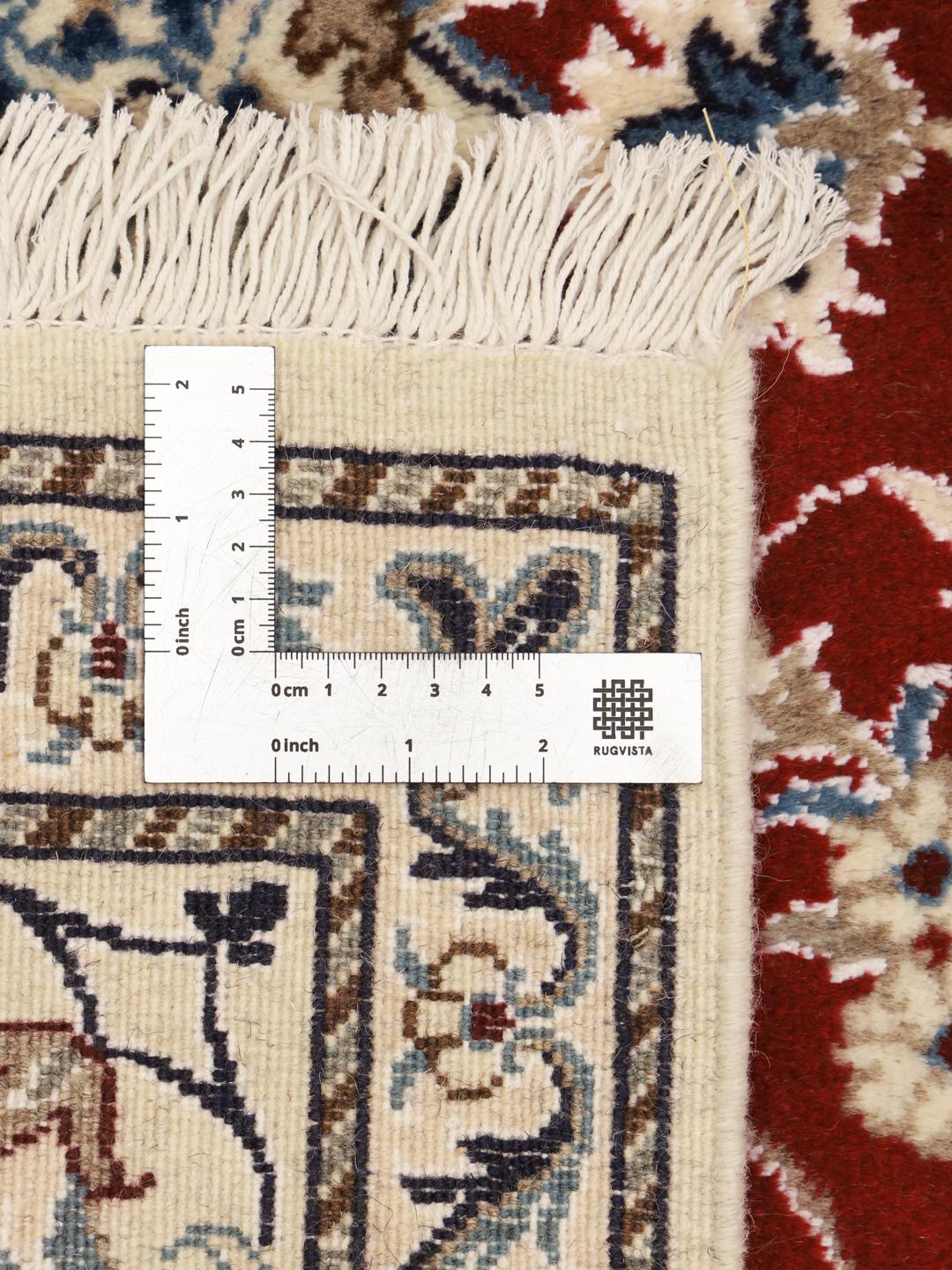
Nain rugs originate from the historic city of Nain, situated on the edge of the central deserts of the Middle East. Originally known for producing fine woollen cloaks, the city transitioned into high-quality rug weaving in the early 20th century. This evolution saw the region quickly earn a reputation for creating some of the most refined and sought-after rugs in the world.
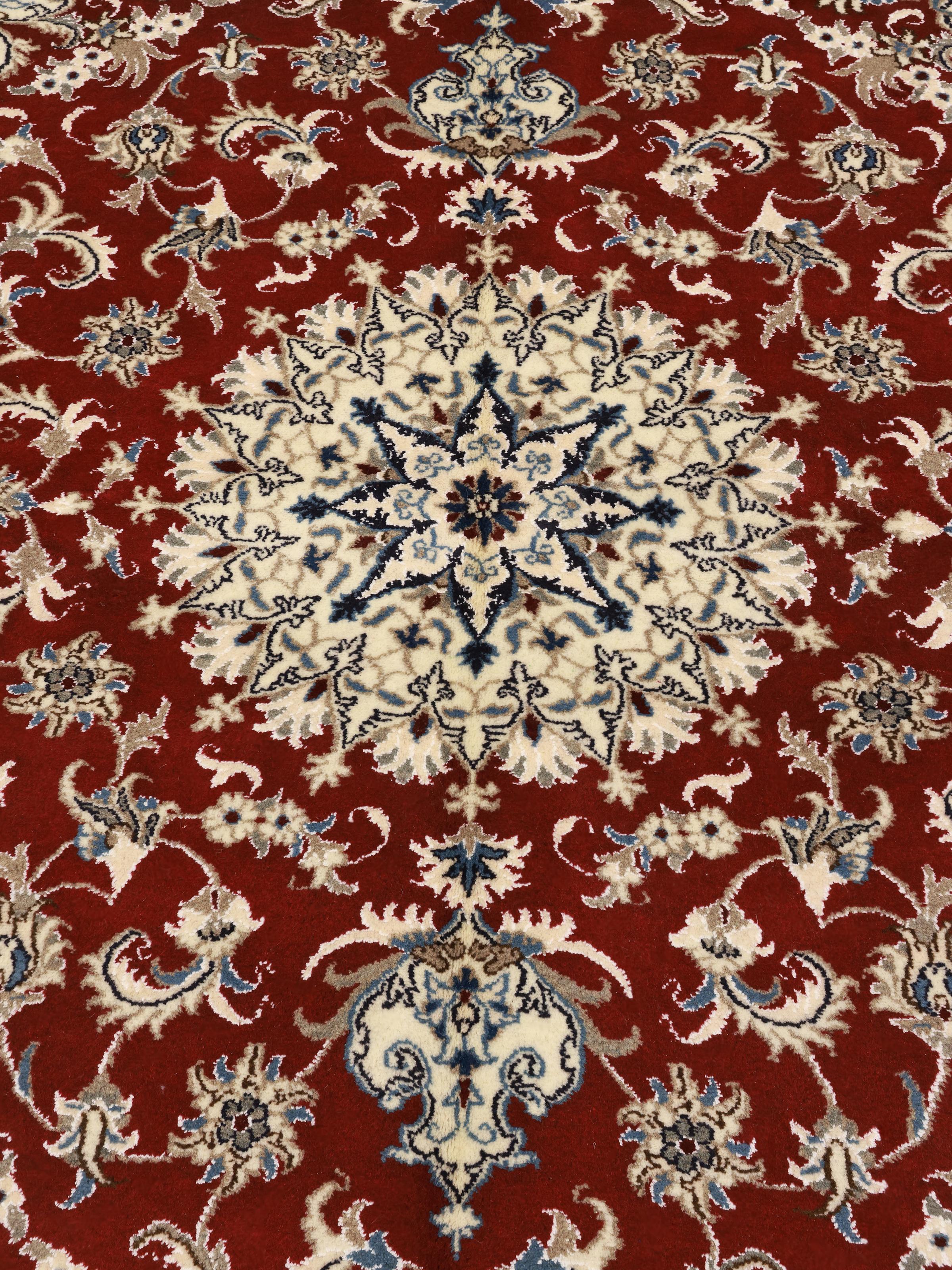
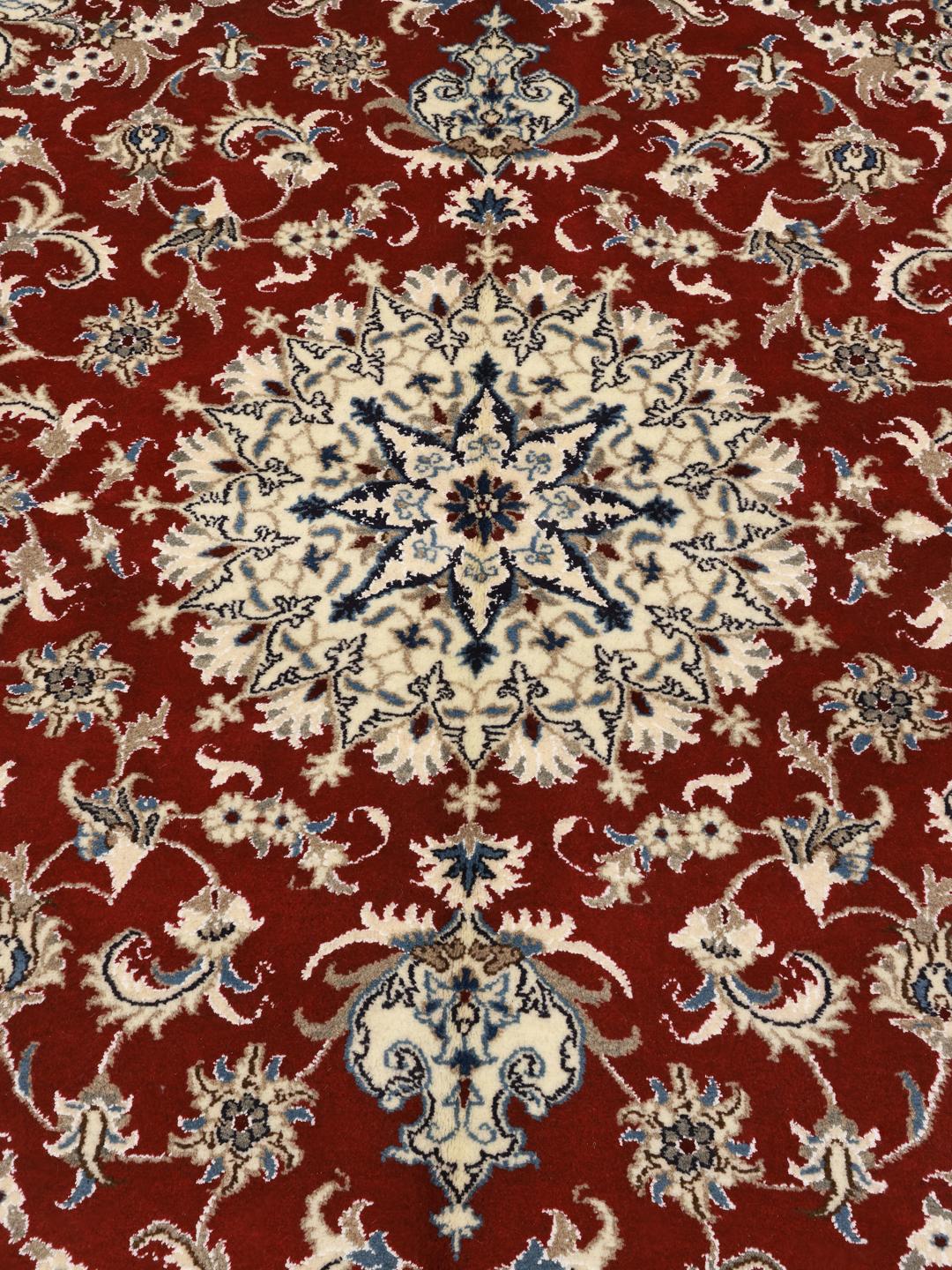
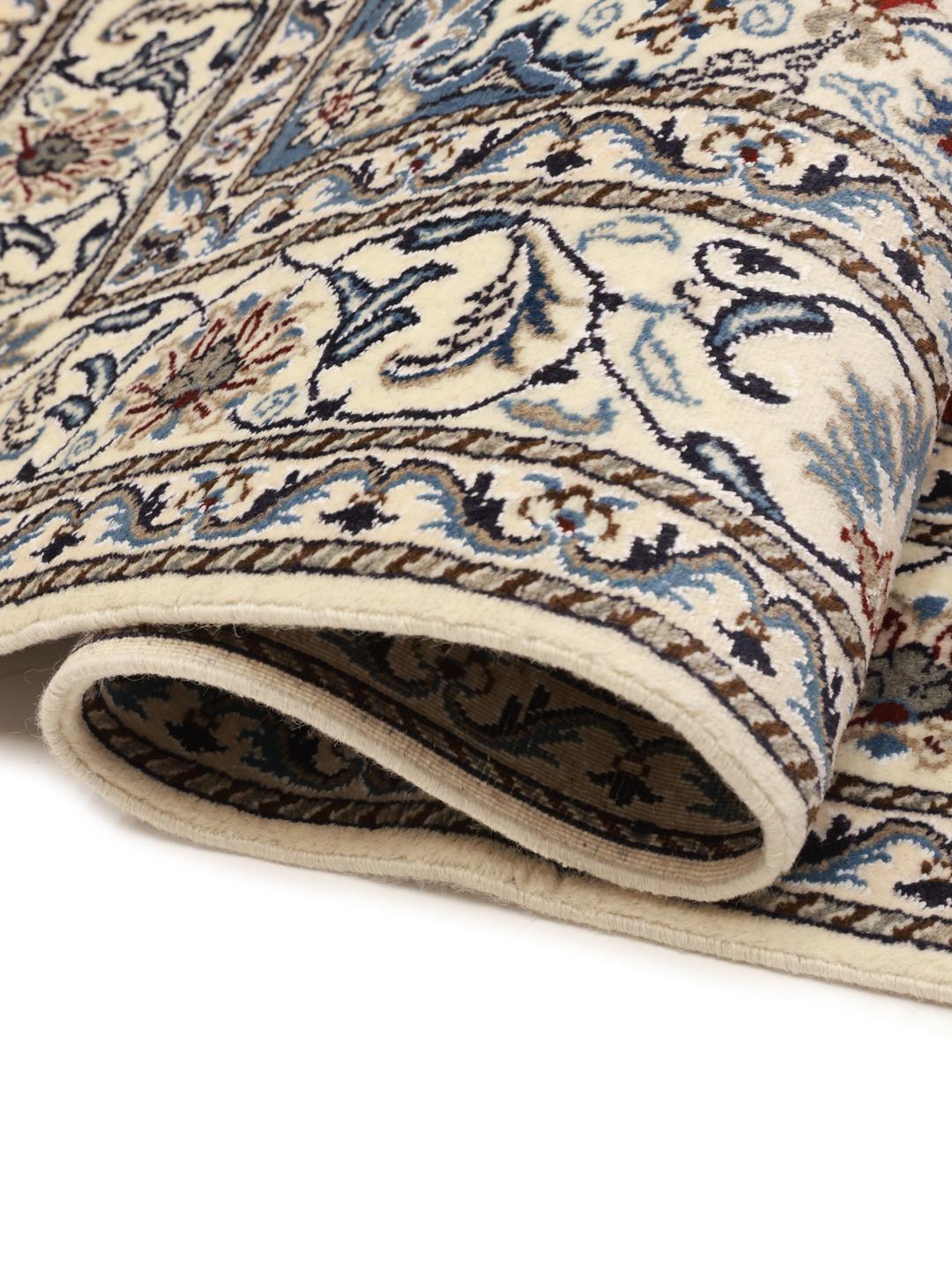
The hallmark of a Nain is its exceptional attention to detail and a commitment to fine craftsmanship. These rugs are renowned for their use of high-quality materials, often incorporating silk highlights to define the delicate floral patterns. This practice creates a subtle, shimmering contrast against the wool, adding depth and a sense of luxury that is characteristic of the Nain tradition.
The visual language of a Nain rug is typically defined by a central medallion surrounded by dense, flowing floral sprays and arabesques. The colour palette is often elegant and restrained, frequently utilising shades of cream, blue, and deep reds. The precision of these patterns is a testament to the weaver's skill, requiring a high knot density to capture the fine lines of the traditional motifs.
Owning a Nain rug is considered a mark of appreciation for traditional craftsmanship and cultural heritage. Because of the incredible skill required to produce such intricate designs, these rugs are highly valued by collectors and homeowners alike. They represent a bridge between ancient techniques and modern design, serving as an enduring legacy of the Middle Eastern weaving tradition.