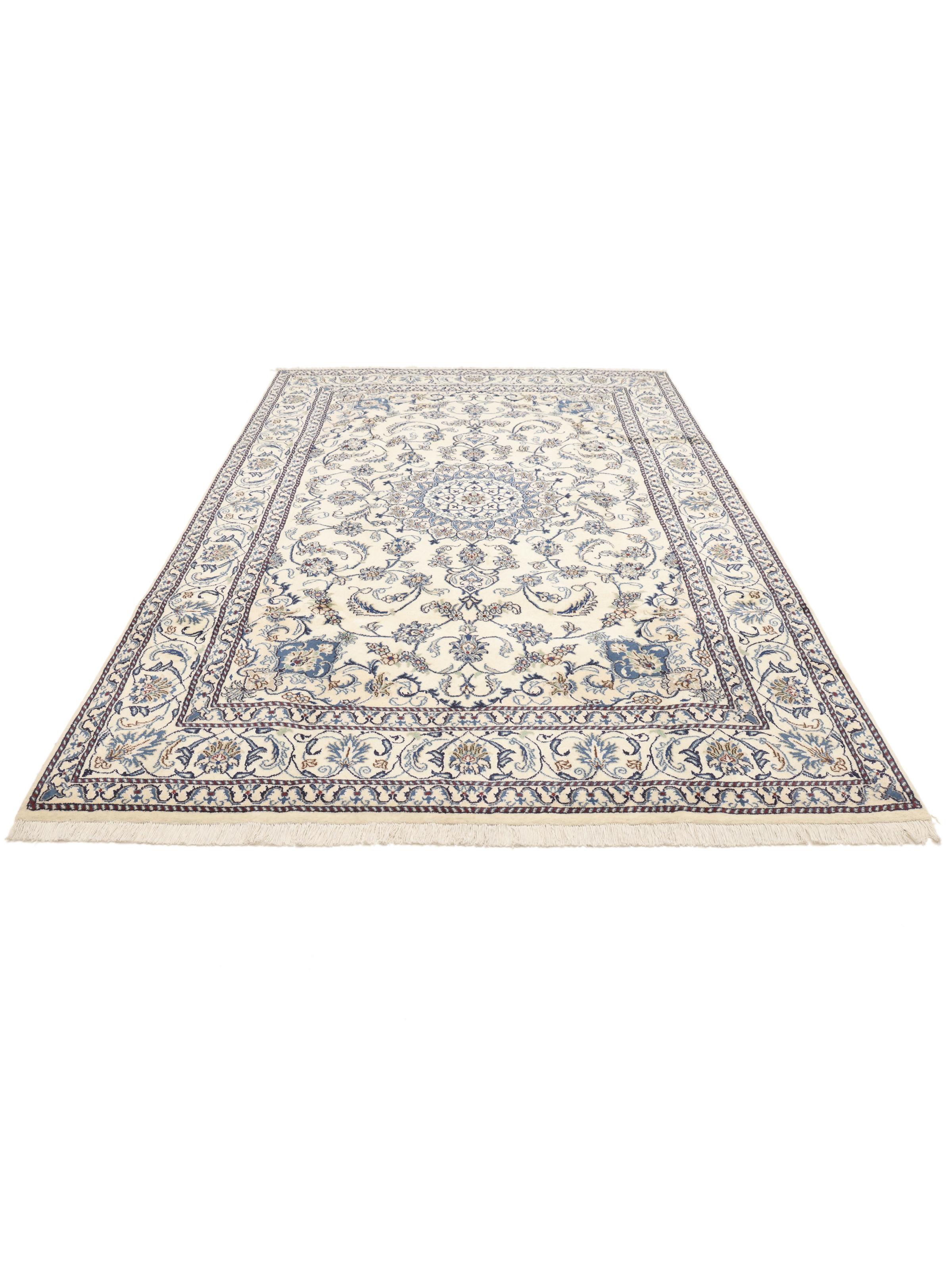
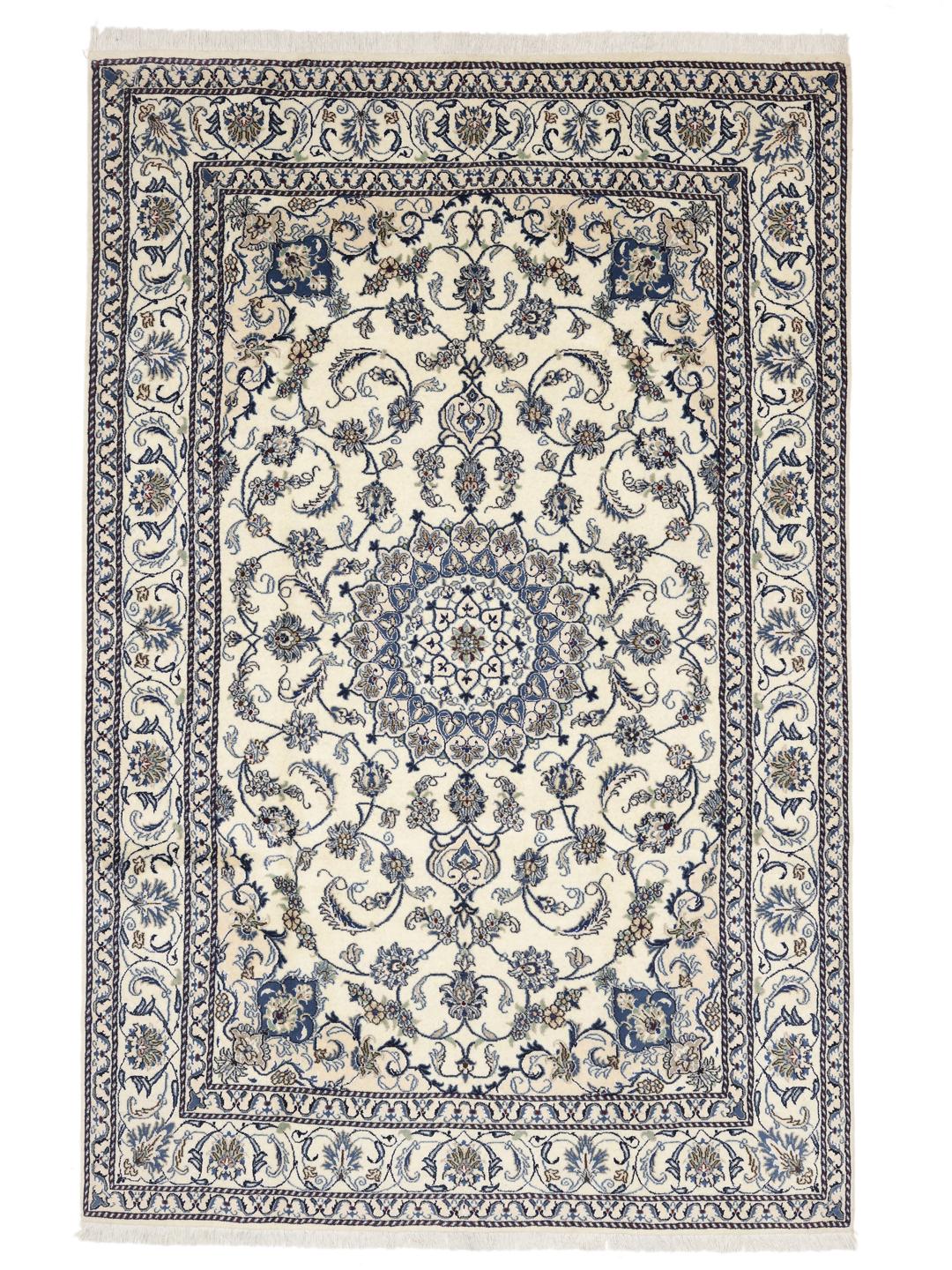
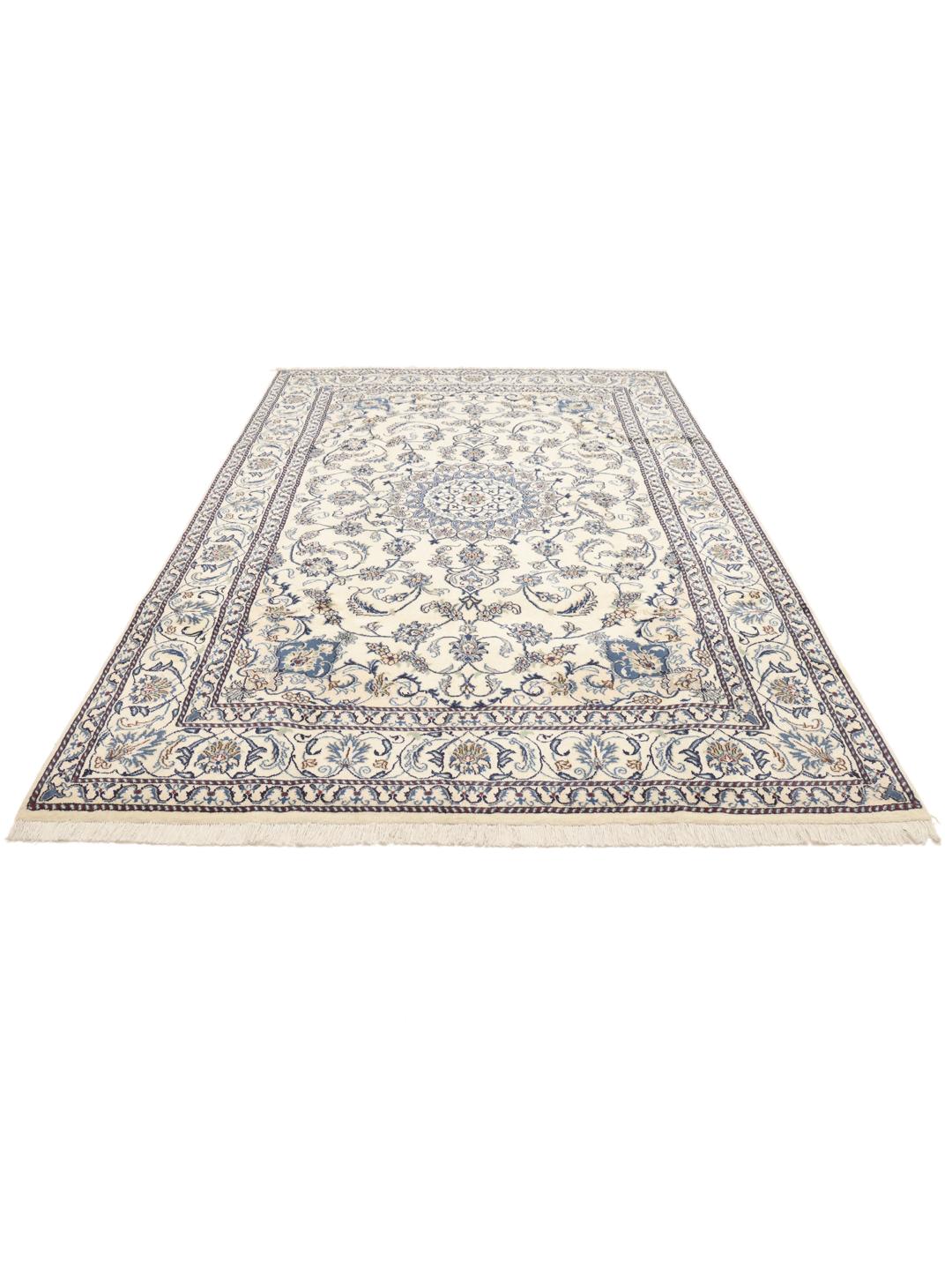
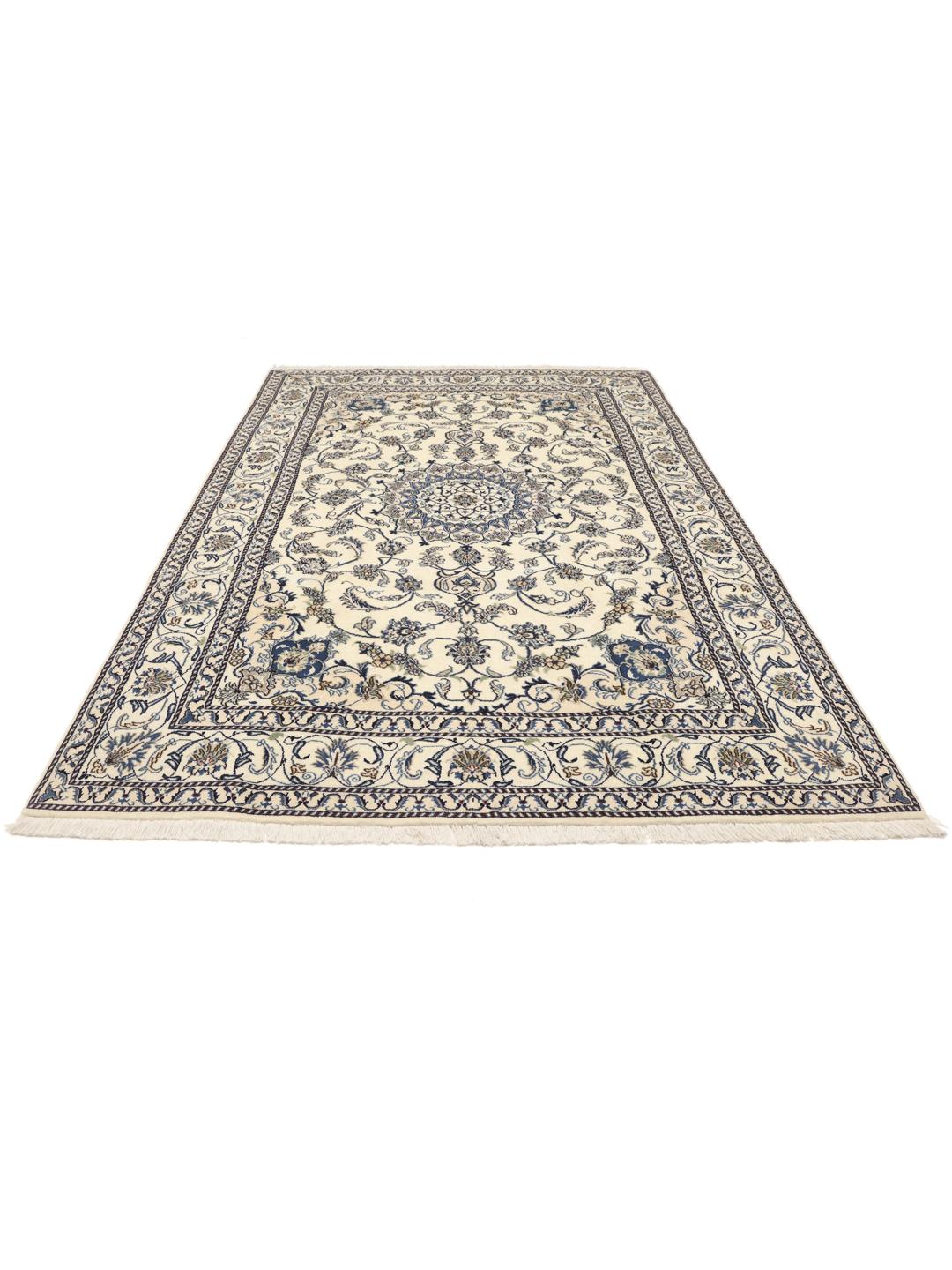
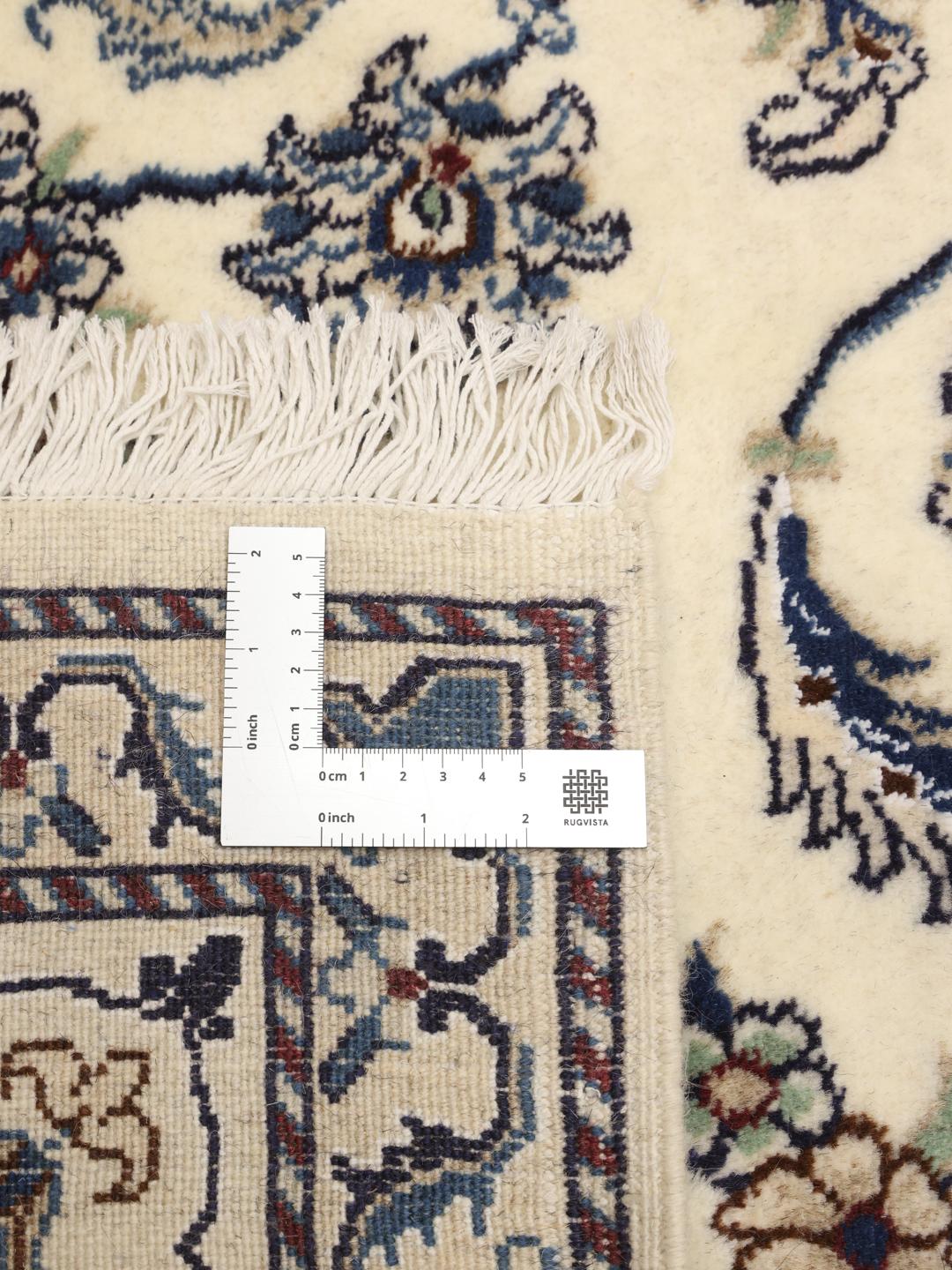
Nain rugs originate from the historic city of Nain, located in the heart of the Middle East. Originally known for producing high-quality wool textiles and cloaks, the region transitioned its immense skill to rug weaving in the early 20th century. Today, these rugs are celebrated for their sophisticated, formal designs that draw inspiration from traditional garden motifs and classic artistic architecture.
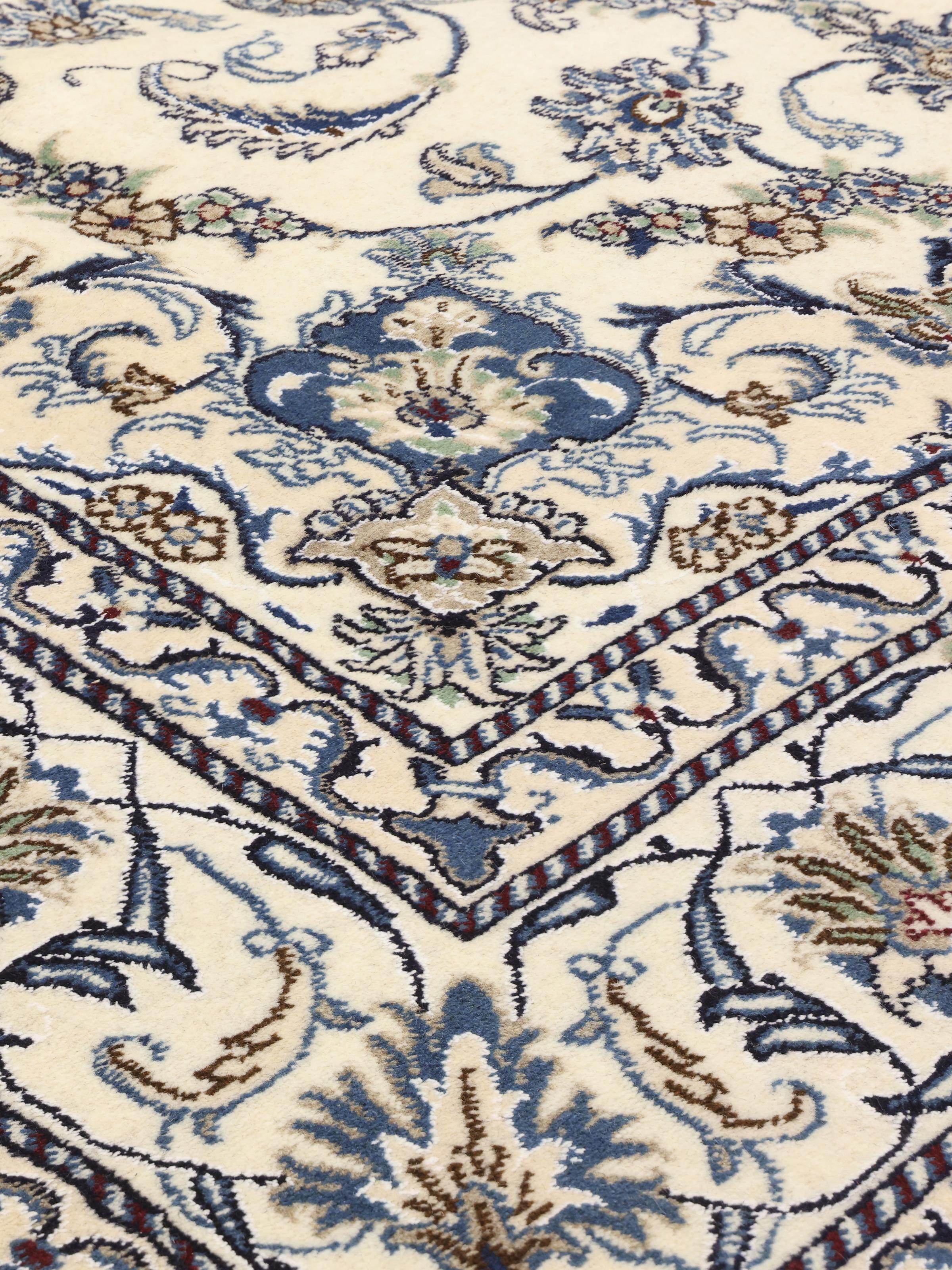
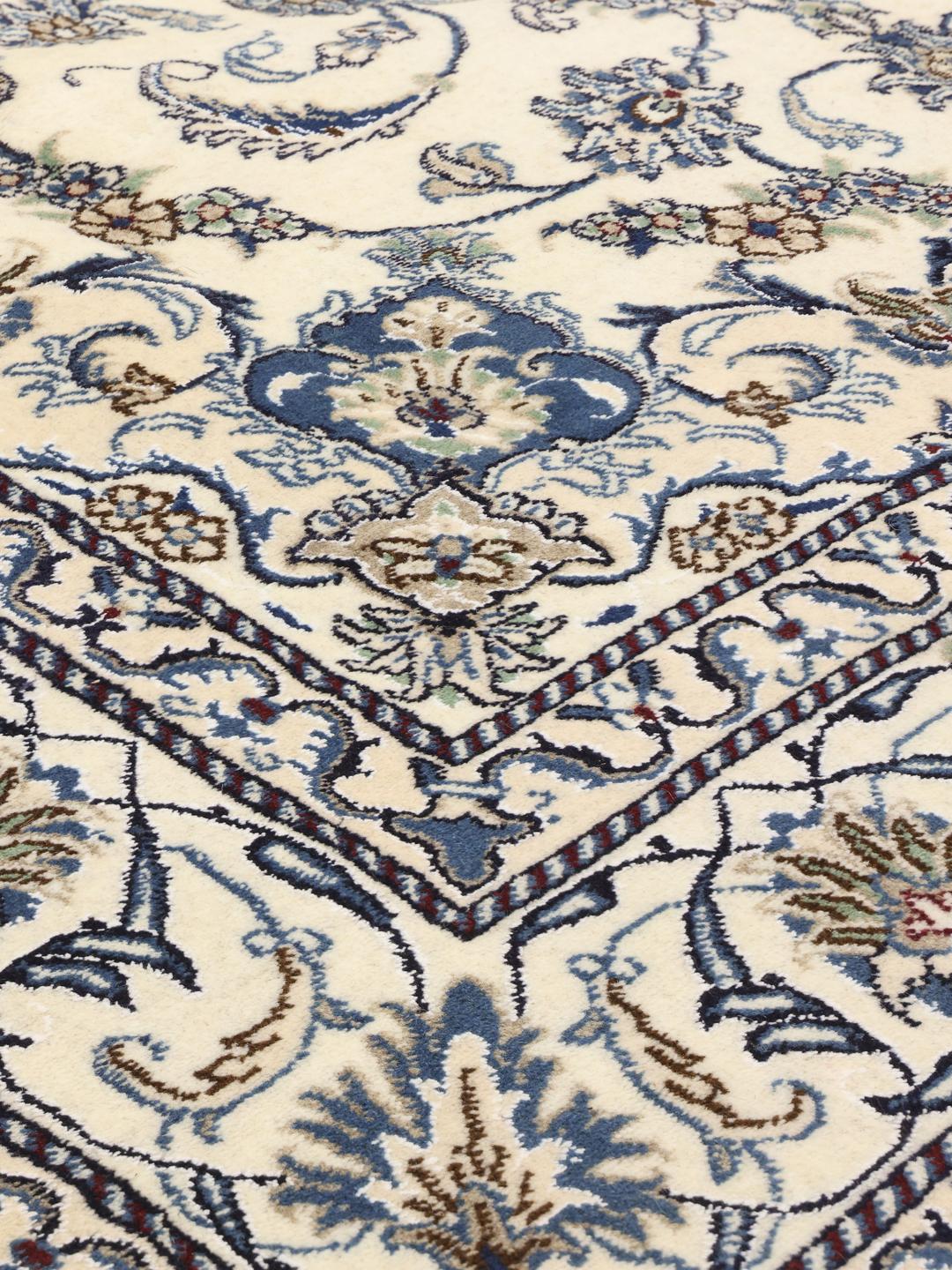
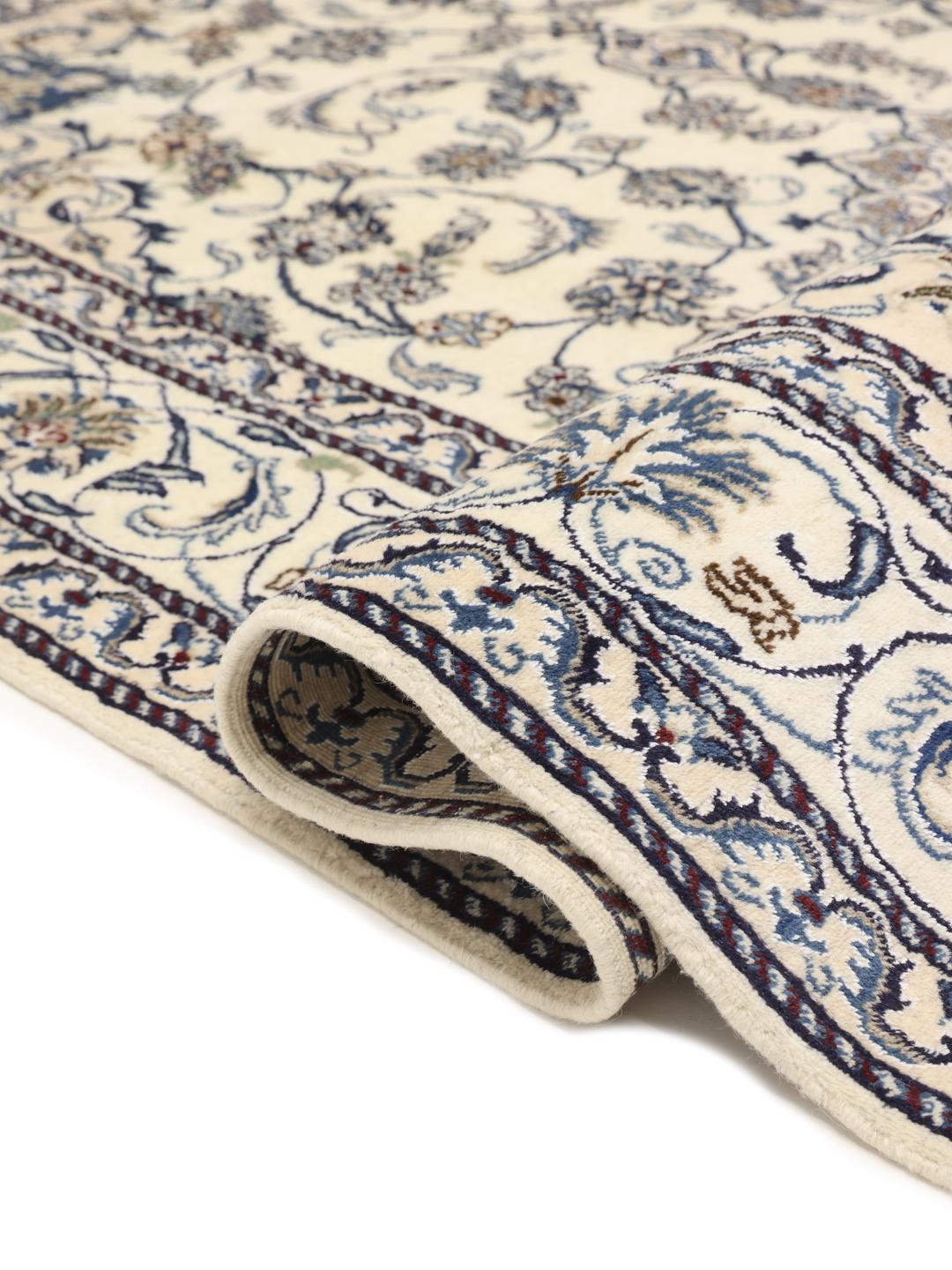
The quality of a Nain rug is often determined by the fineness of its construction, which allows for highly detailed, flowing patterns. These rugs are recognised for their mastery of curvilinear designs, where the weave is dense enough to capture delicate tendrils and complex flower petals. The precision required to execute these patterns is a hallmark of the region's artisans, representing a peak of technical achievement in the world of hand-knotted textiles.
Signature design elements of a Nain rug typically include a central medallion surrounded by a field of arabesques, palmettes, and scrolling vines. The borders are often equally ornate, providing a formal frame that balances the complexity of the centre. While many traditional examples utilise a palette of cream, blue, and white, the specific execution on each loom ensures that every rug has its own personality, often interpreted through the weaver's choice of floral arrangement.
Collecting a Nain rug is an appreciation of a craft tradition that values patience and meticulous attention to detail. These rugs are highly sought after by those who appreciate the intersection of formal beauty and lasting, durable utility. By choosing a Nain, you are acquiring a piece of textile heritage that has been shaped by generations of refined aesthetic development and expert manual skill.