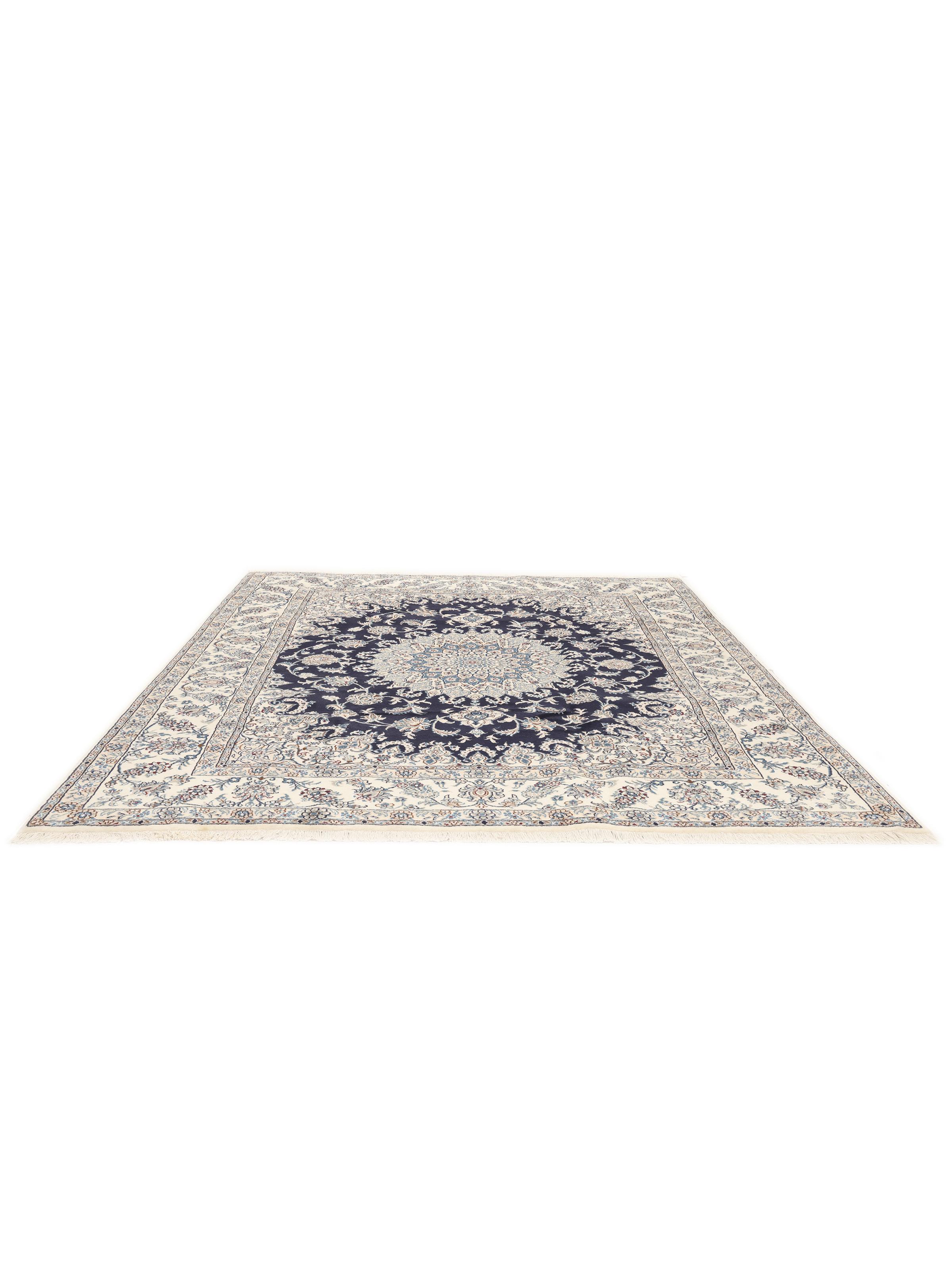
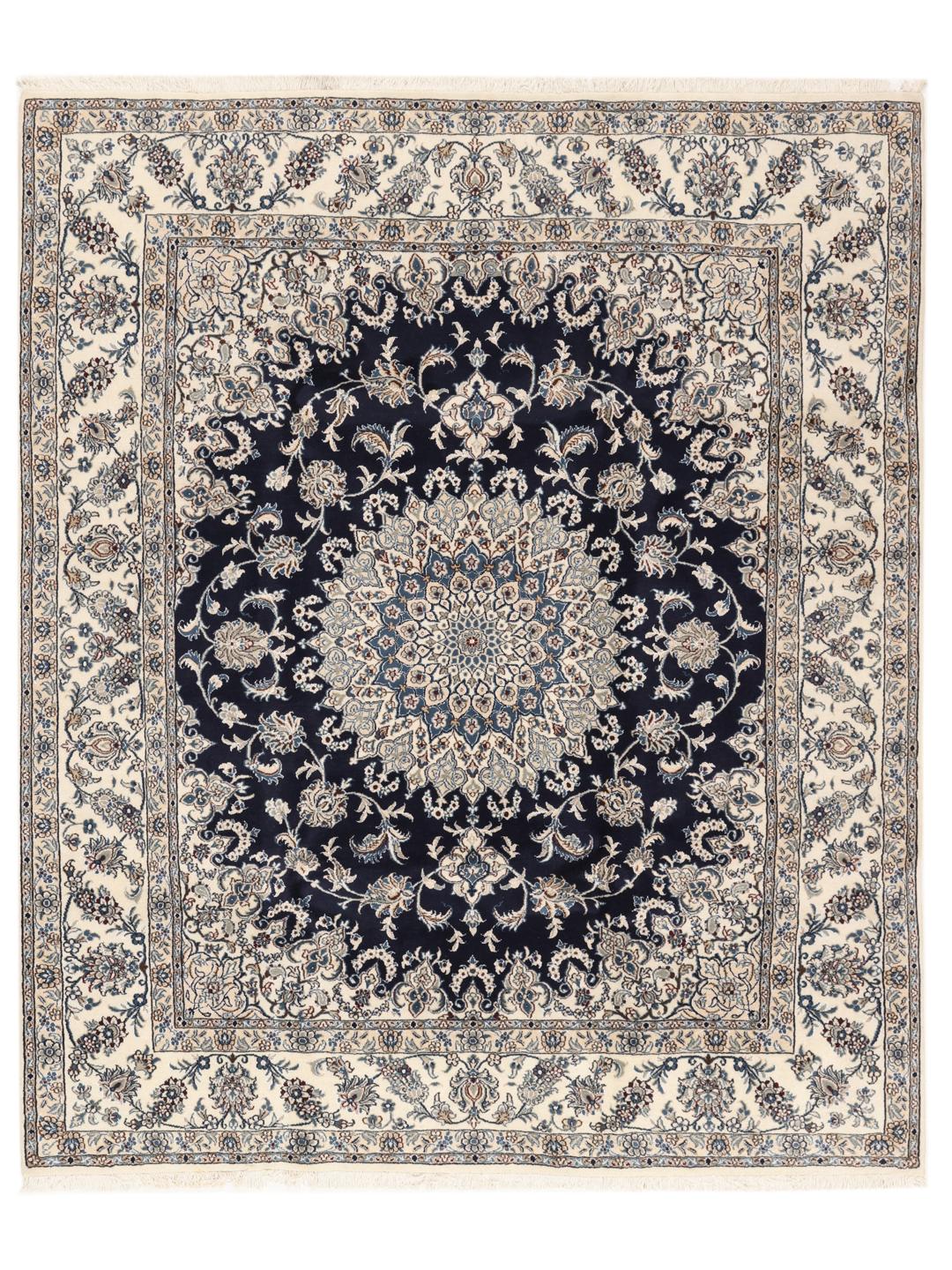
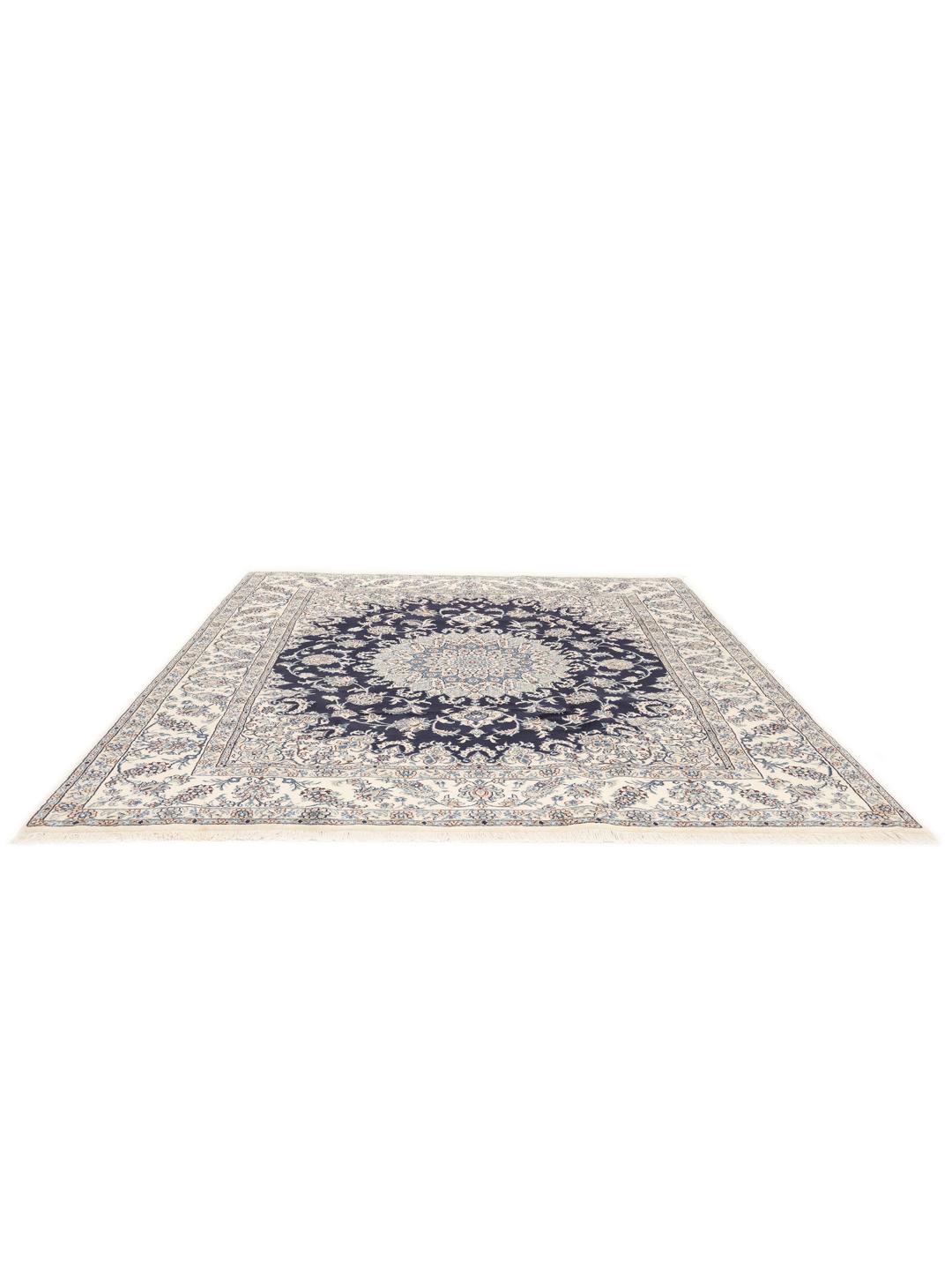
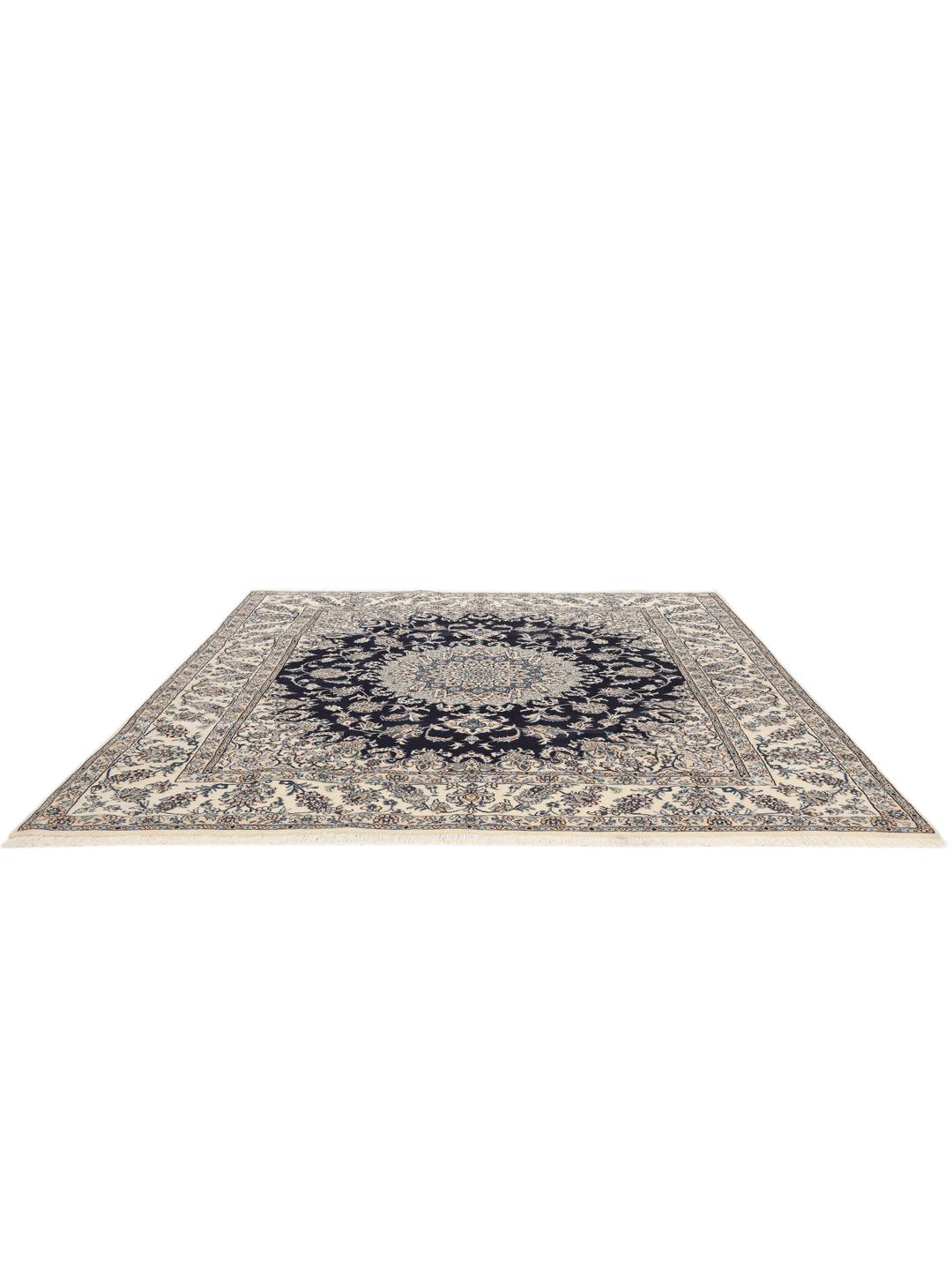
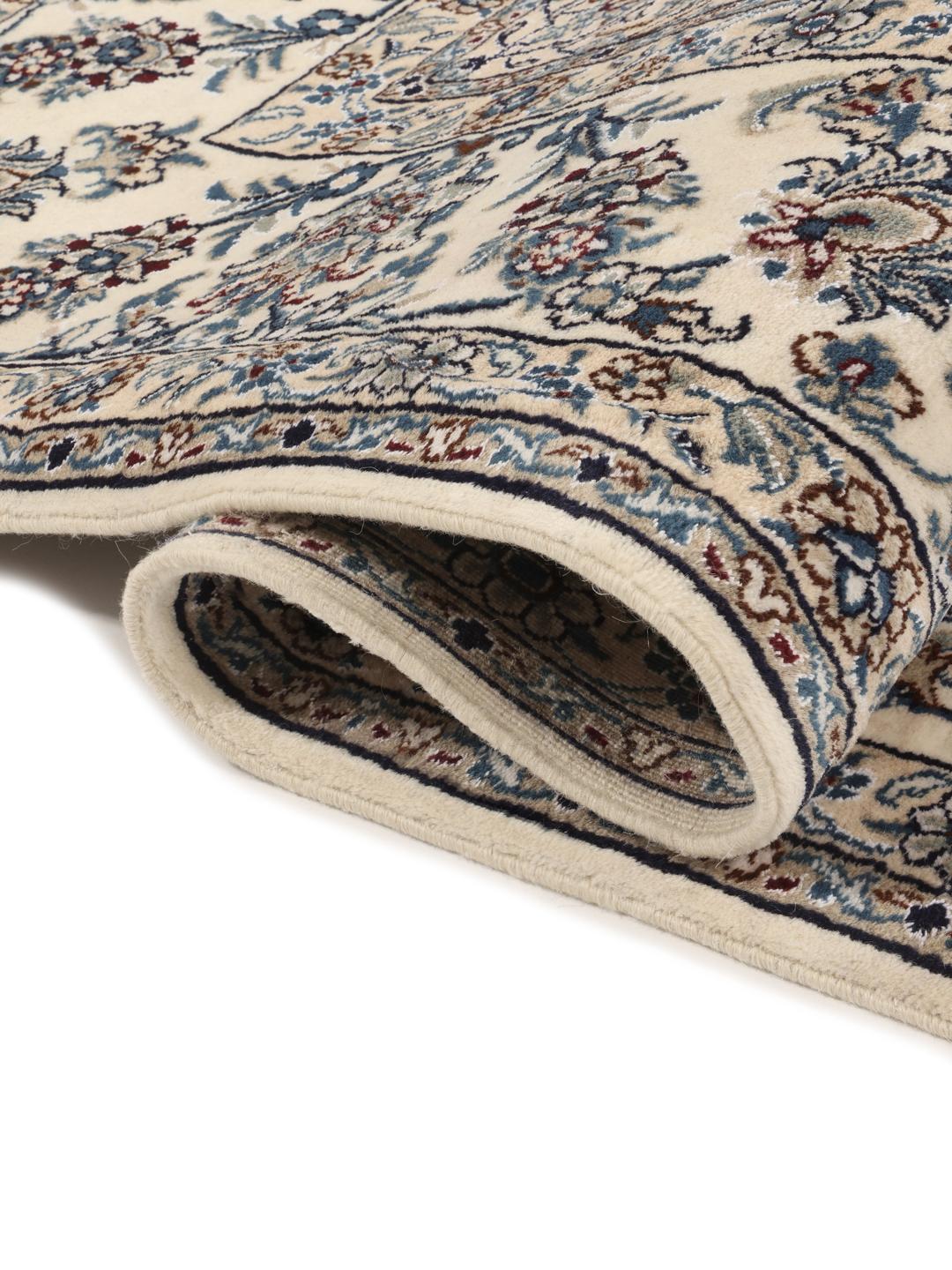
Nain rugs originate from the historic city of Nain, located in the heart of the Middle East. Historically a centre for fine textile production, the city developed its own distinct rug-making identity in the early 20th century, drawing inspiration from the rich decorative traditions of the wider region. While other areas focused on tribal or geometric styles, the workshops in Nain became famous for their preference for delicate, curvilinear floral designs and a refined colour palette.
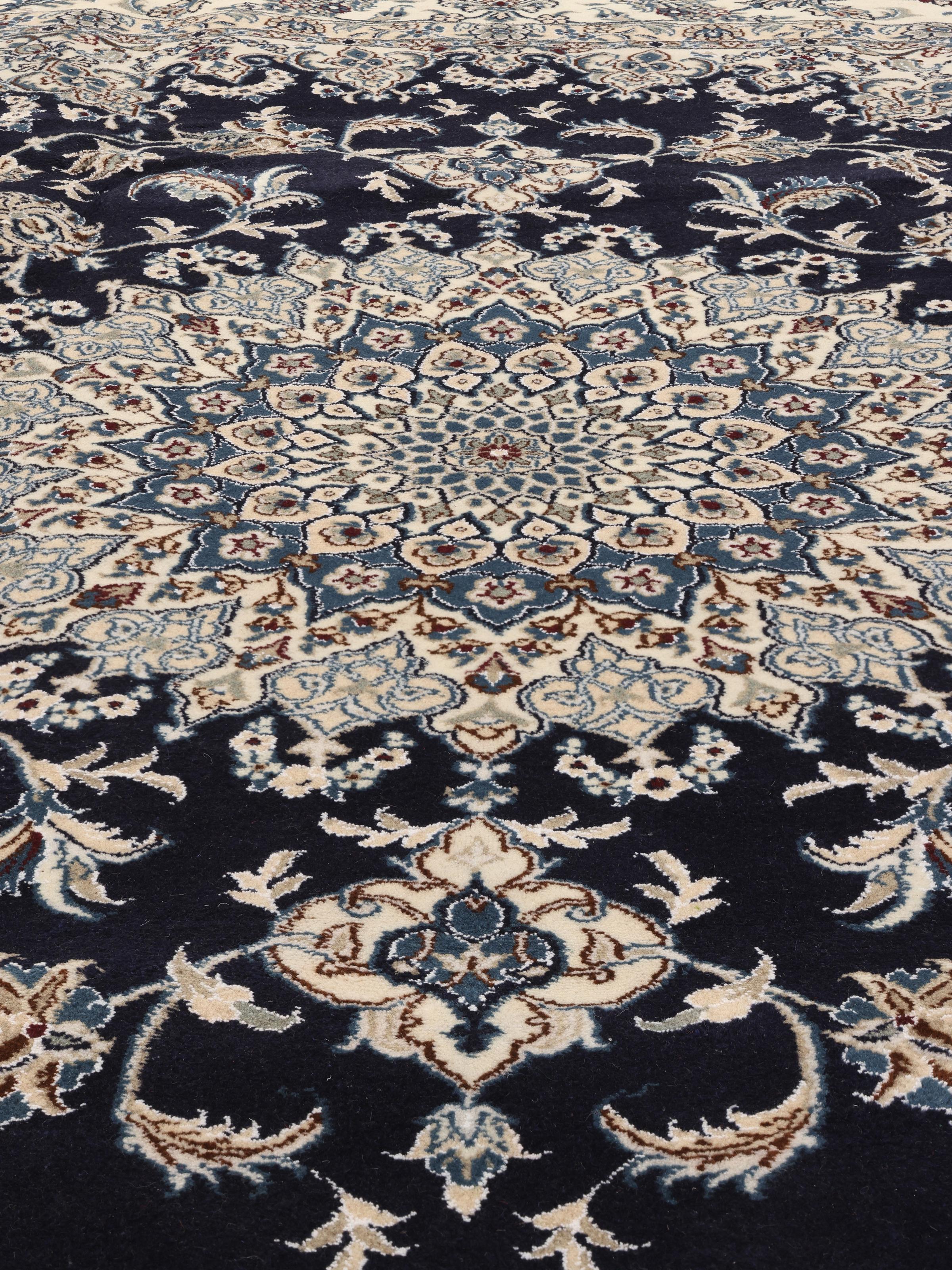
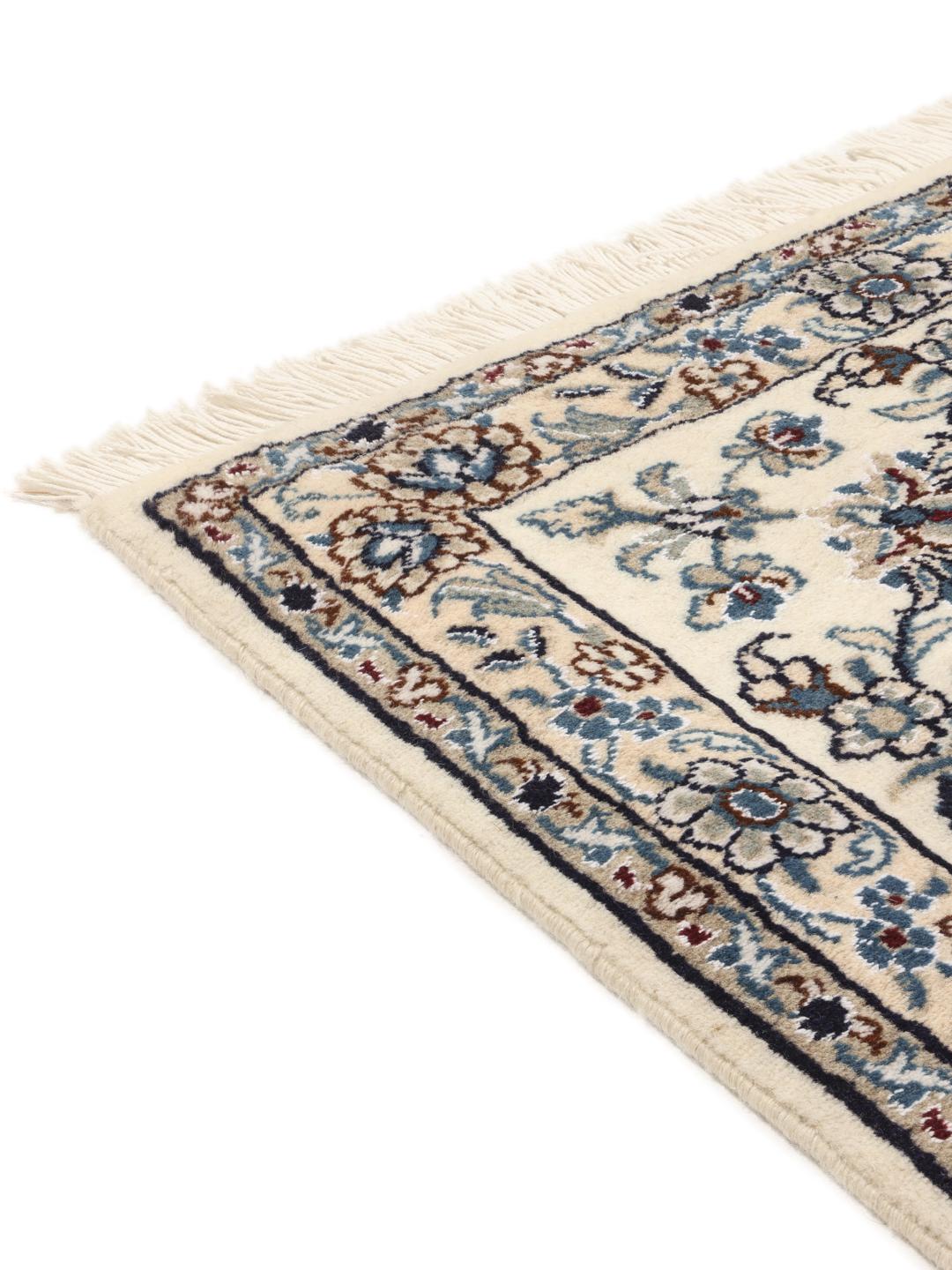
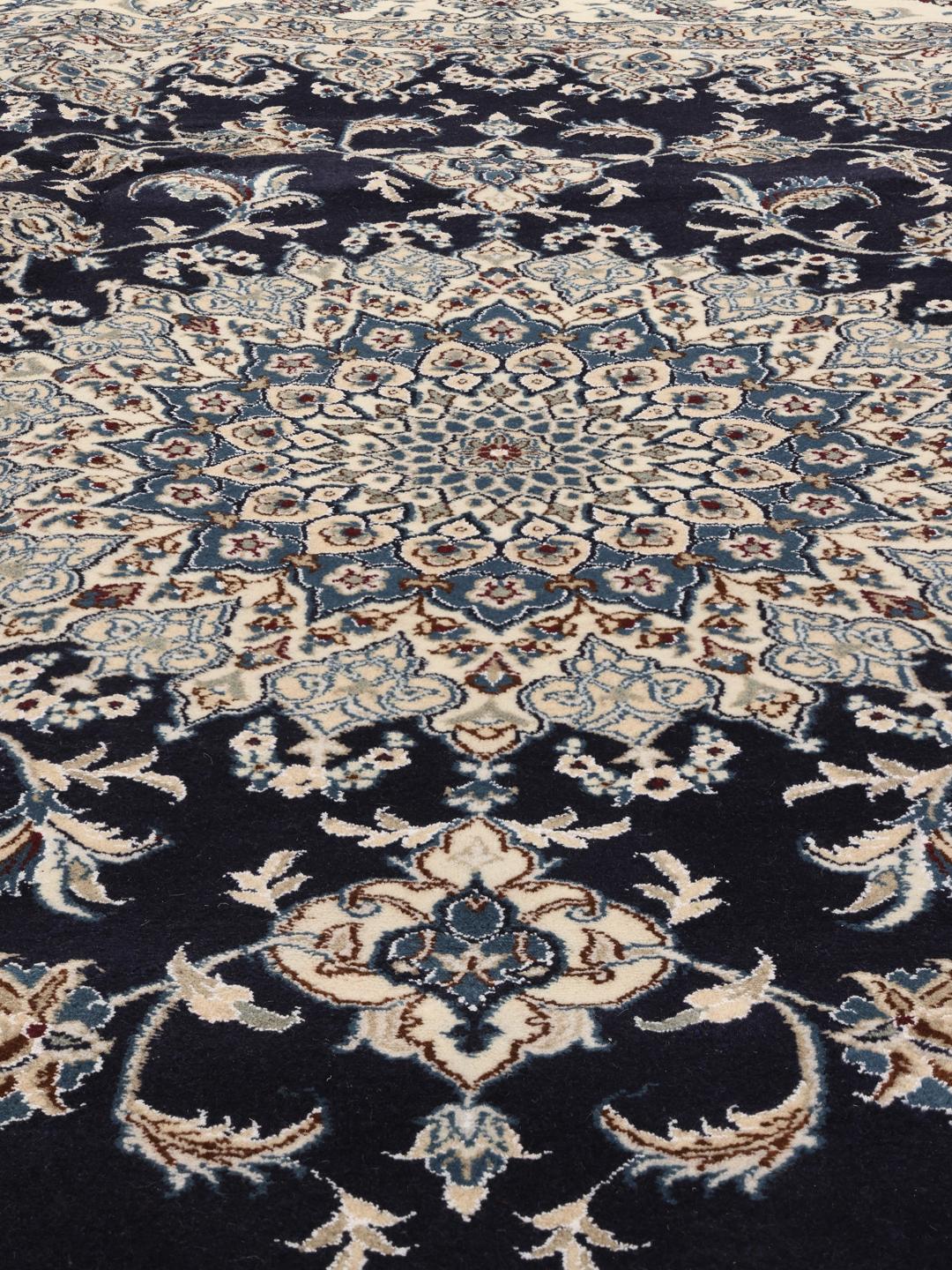
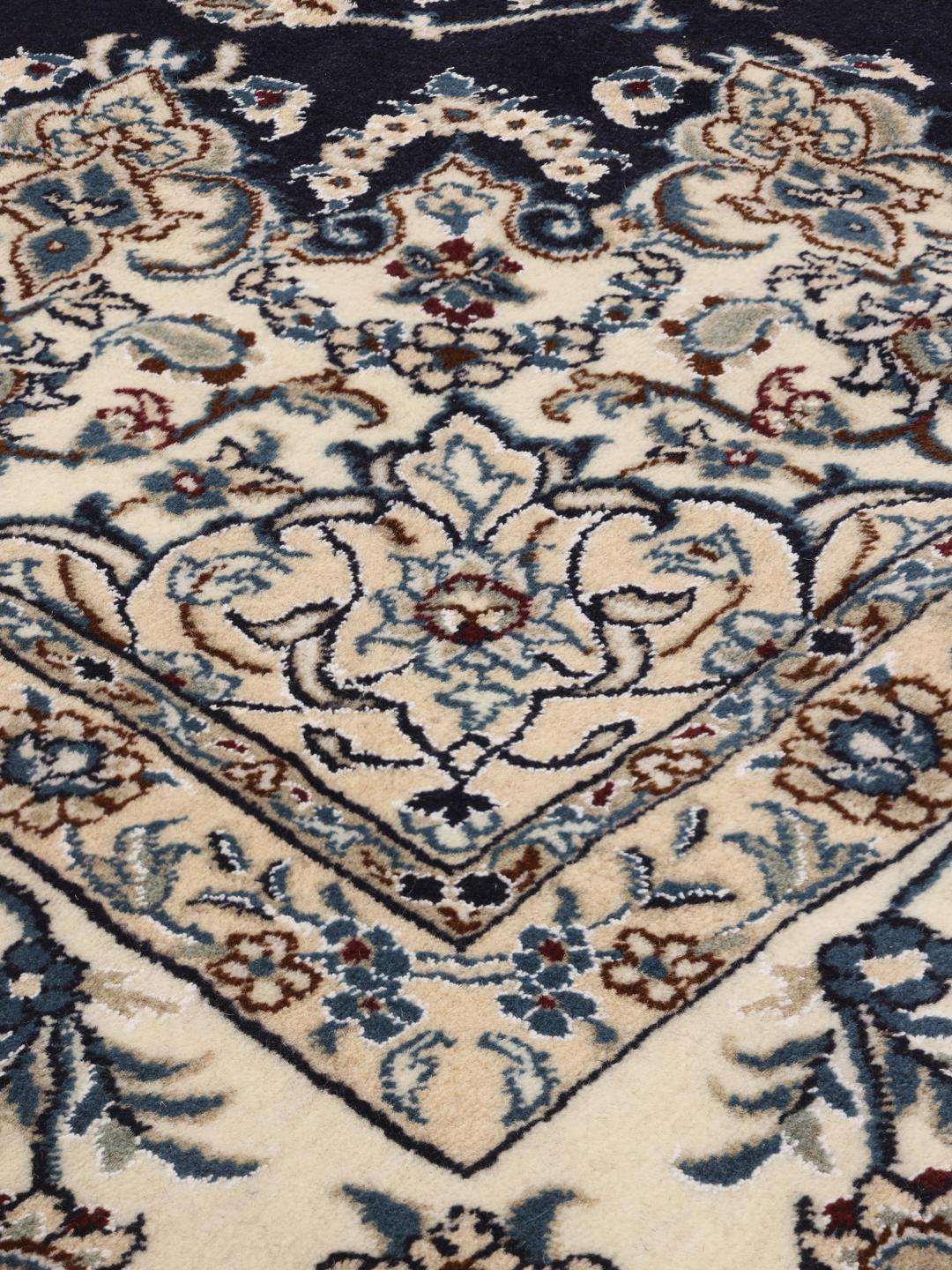
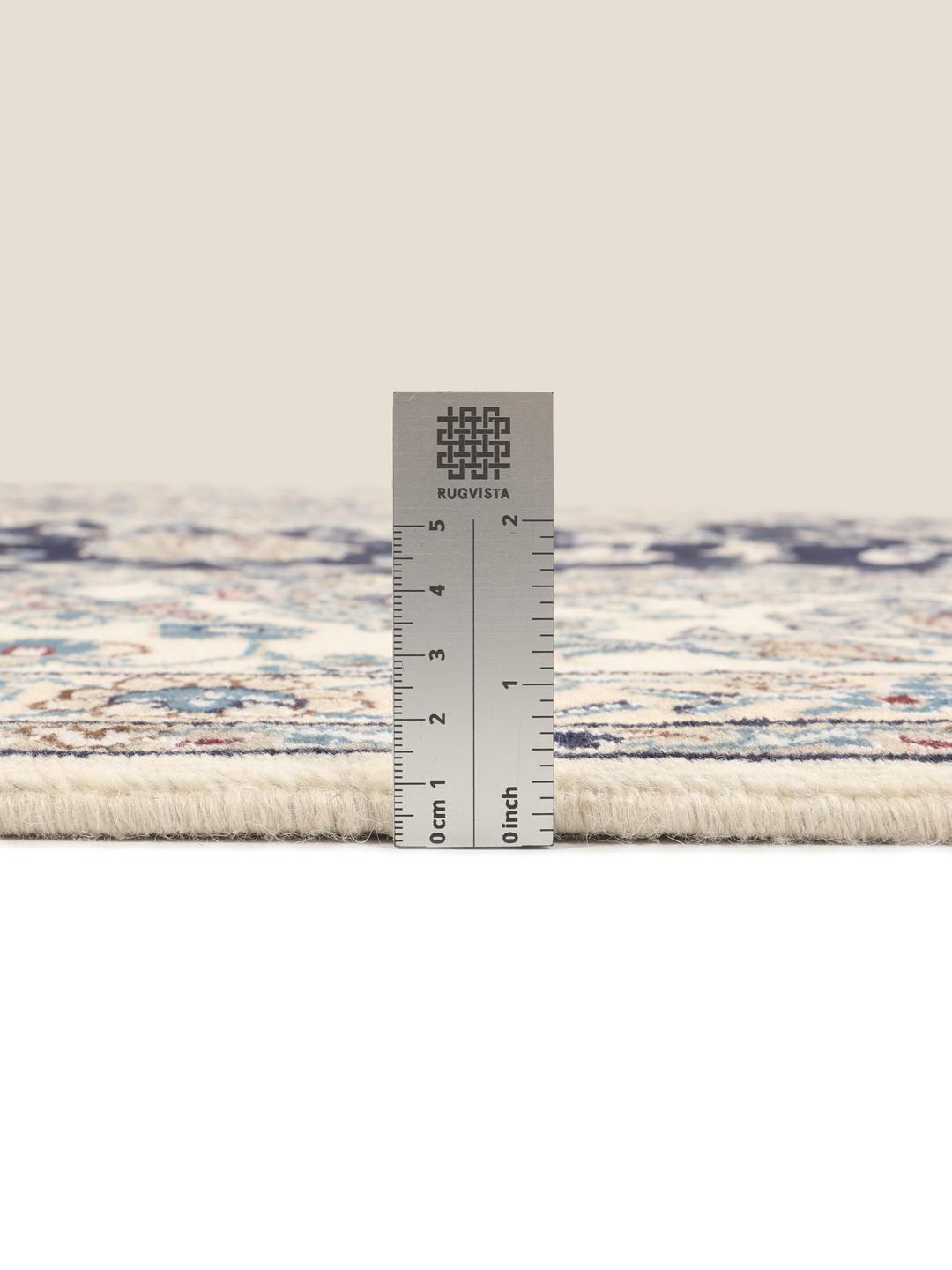
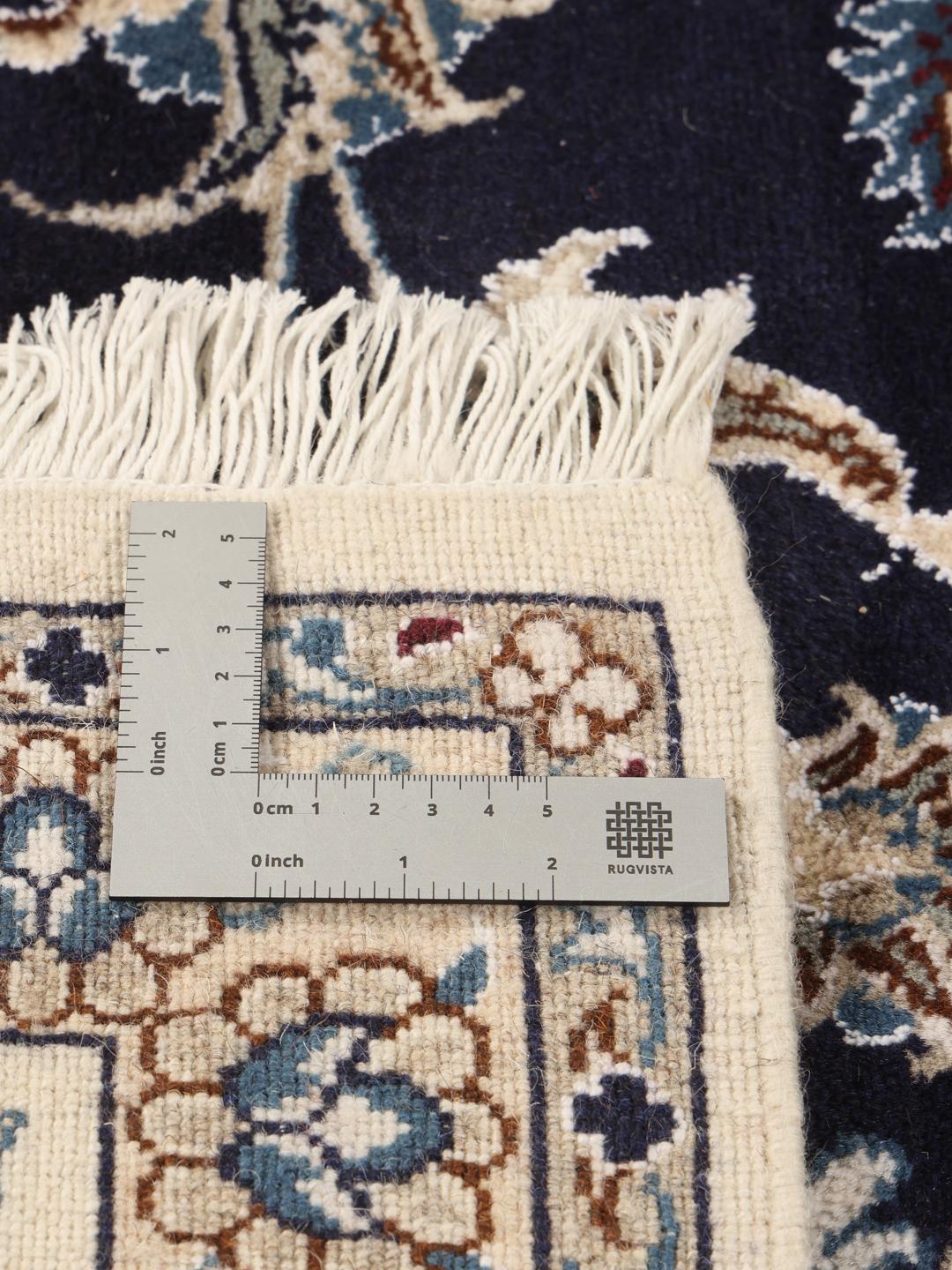
The craft terminology associated with Nain rugs often refers to the fineness of the weave, which is a hallmark of their quality. These rugs are celebrated for their use of high-quality materials and a construction method that emphasises precision. The dense, even pile is achieved through a controlled knotting technique, which allows for the fluid, detailed execution of the intricate scrolling vines and blossoms that define the Nain aesthetic.
The signature design of a Nain rug almost always centres on a beautifully detailed medallion, surrounded by a field of dense floral motifs, palmettes, and arabesques. The borders are typically multi-layered and just as complex as the centre, creating a frame that complements the main composition. The use of soft, muted tones combined with a dark, contrasting field creates a sophisticated visual tension that has made these rugs highly sought after by collectors.
Owning a Nain rug is an investment in cultural heritage and a history of exceptional skill. These rugs are valued not just for their aesthetic beauty, but for the discipline required to create them. As a collector or a homeowner, you are participating in a tradition that prioritises patience and detail, securing a piece of art that remains relevant and cherished across generations.