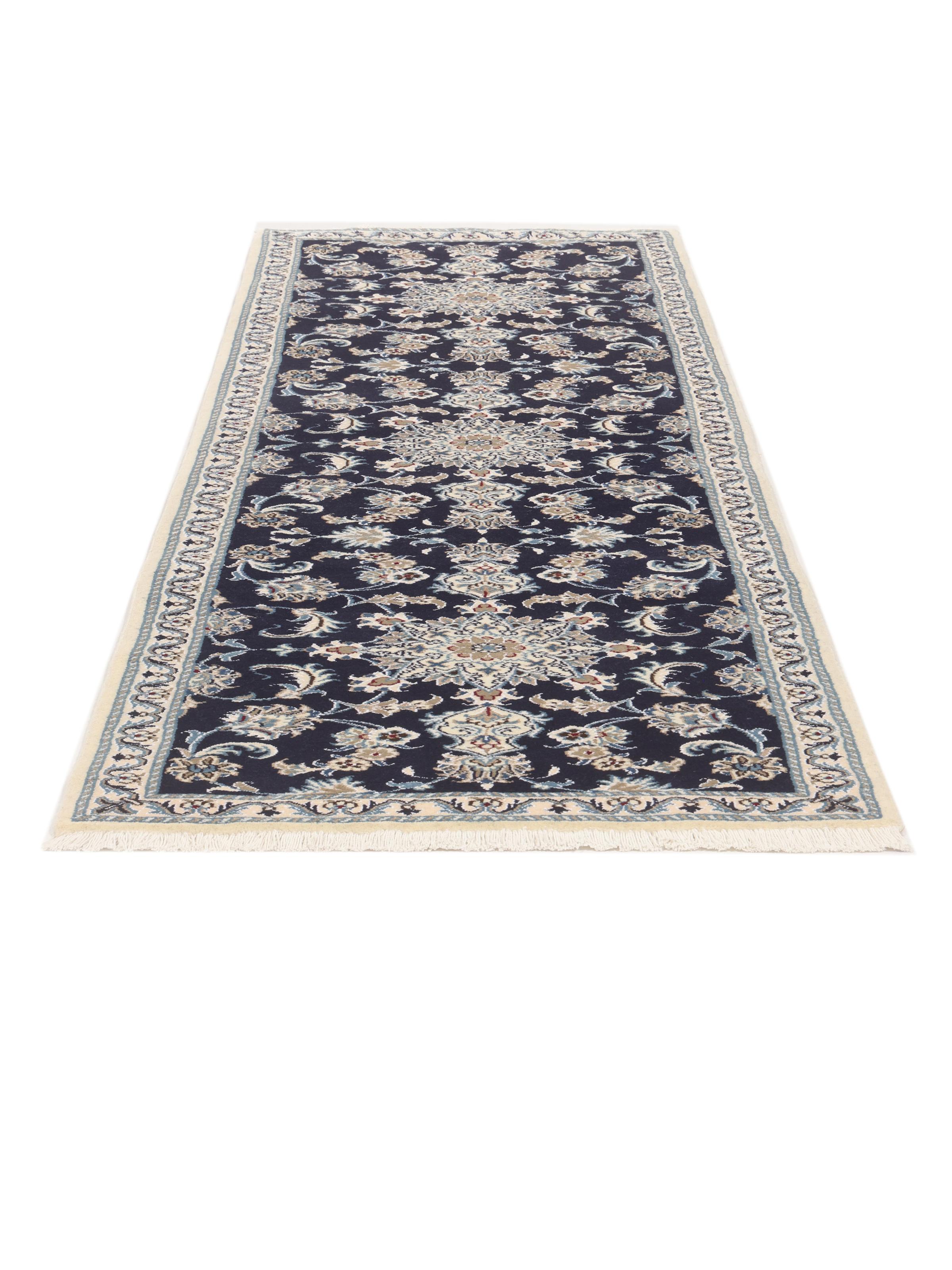
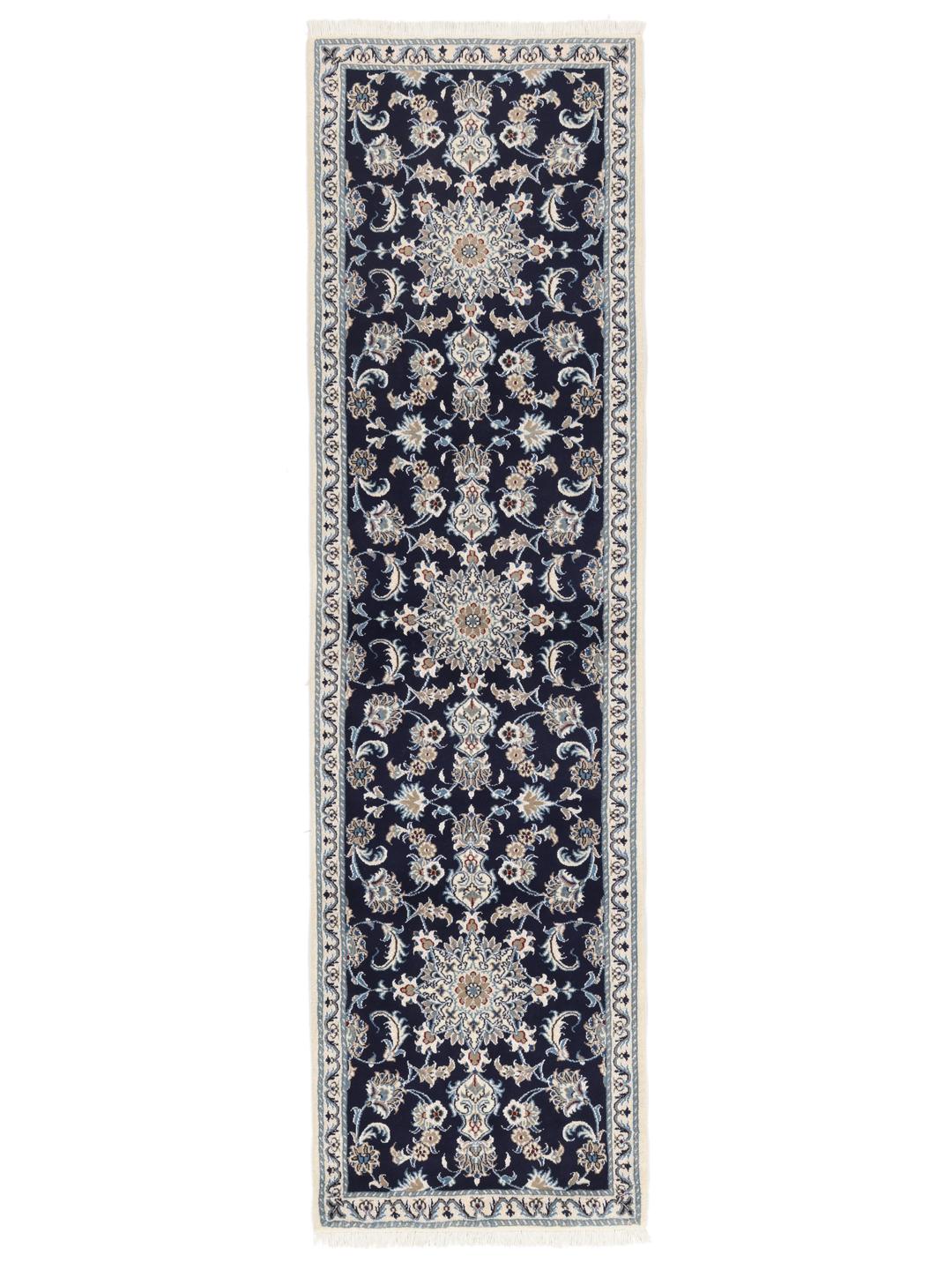
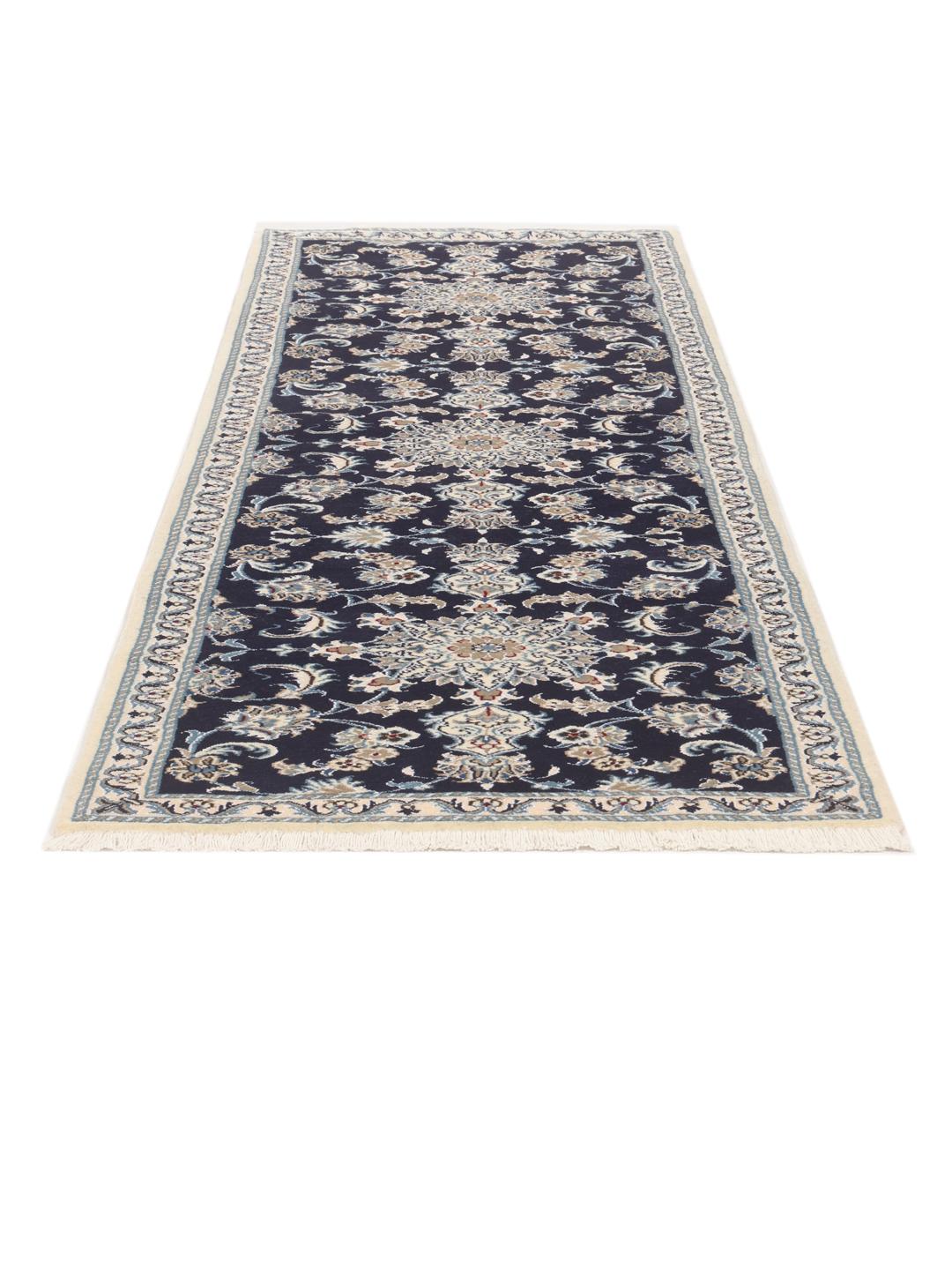
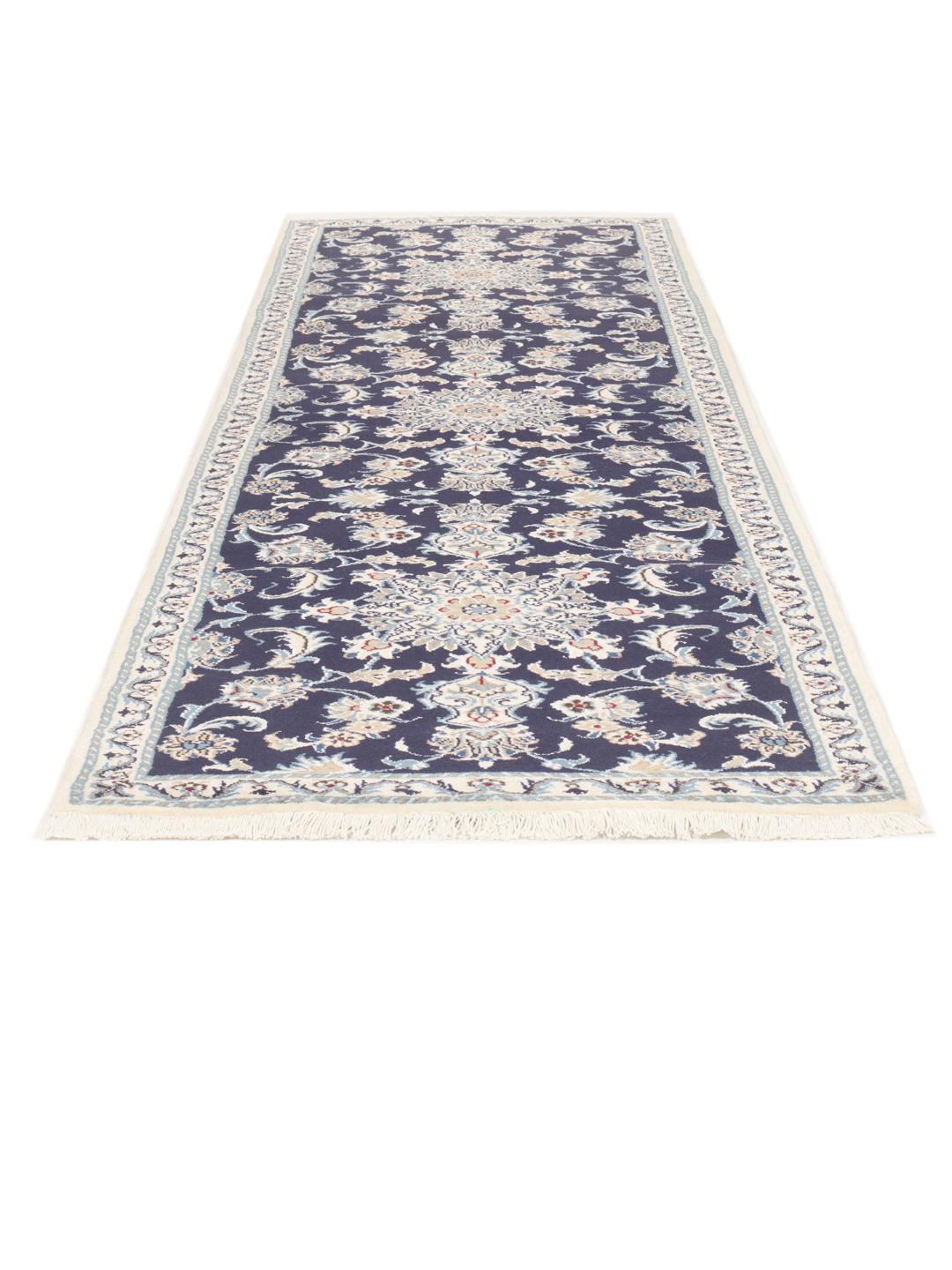
The Nain rug tradition originated in the town of Nain, located in the central part of the Middle East. Originally known for weaving high-quality woollen cloaks, the region transitioned to rug weaving in the early 20th century. Over time, Nain rugs gained a reputation for their exceptional refinement, often incorporating silk highlights into their floral designs to create a delicate, luminous appearance.
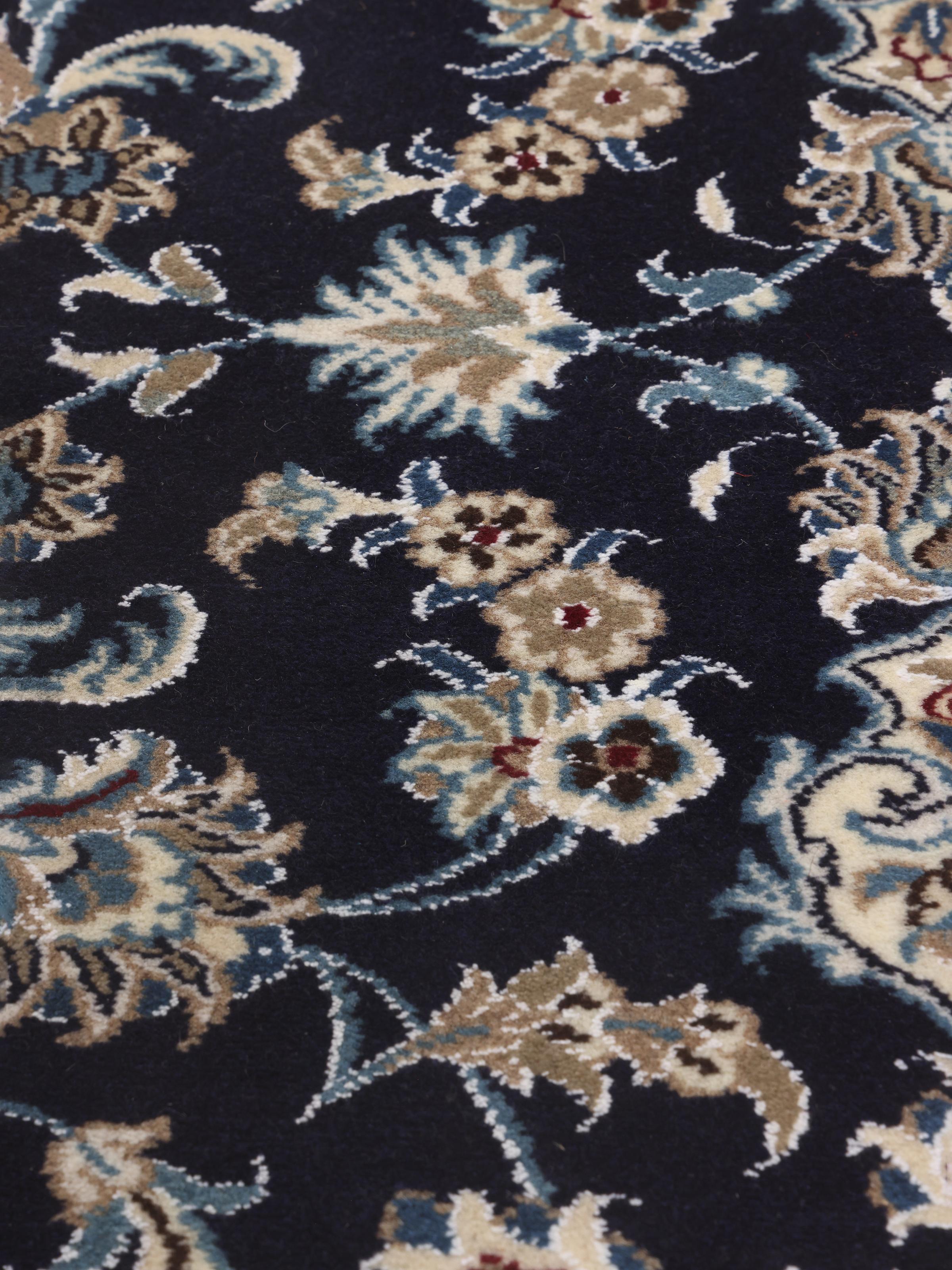
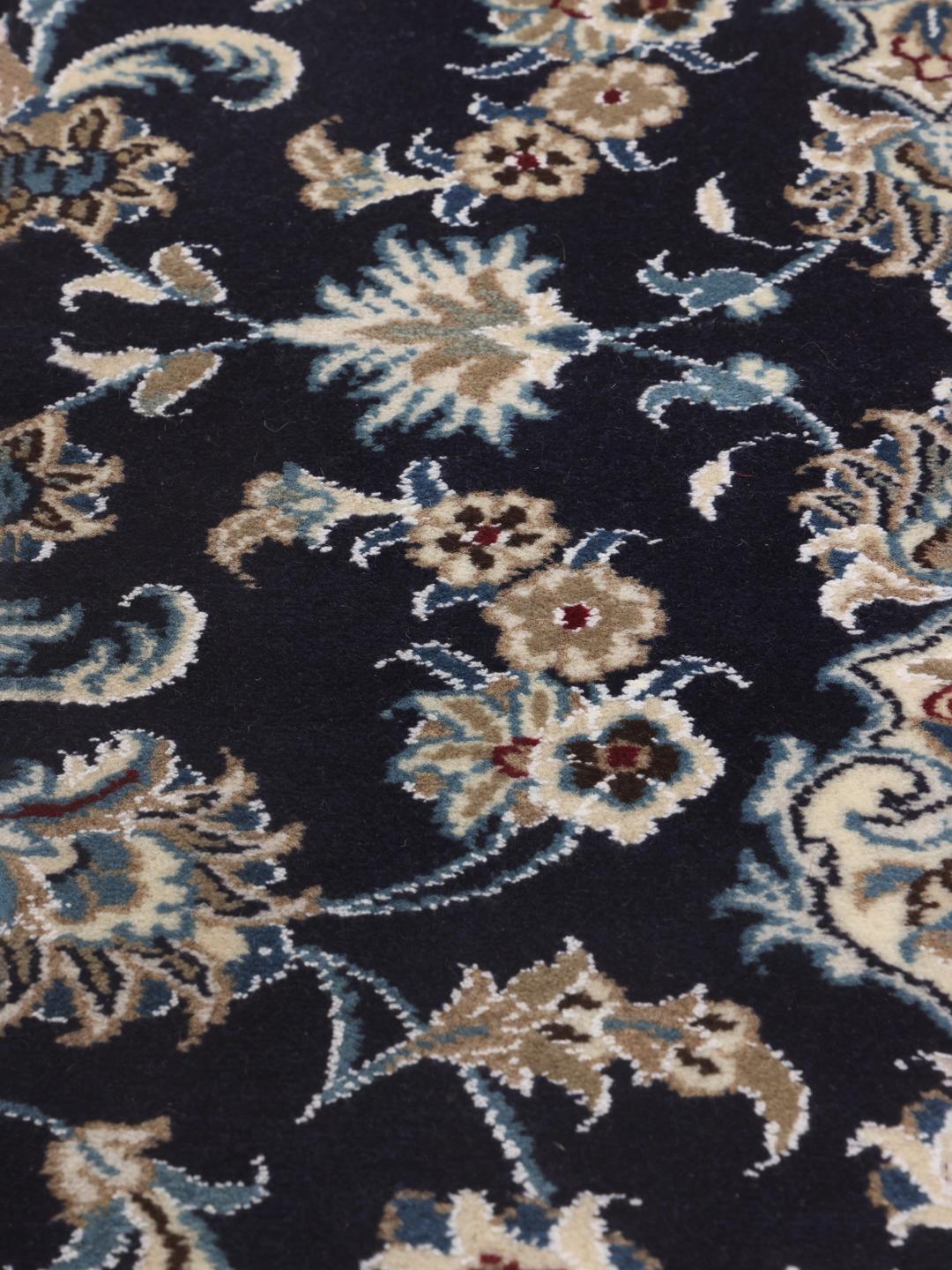
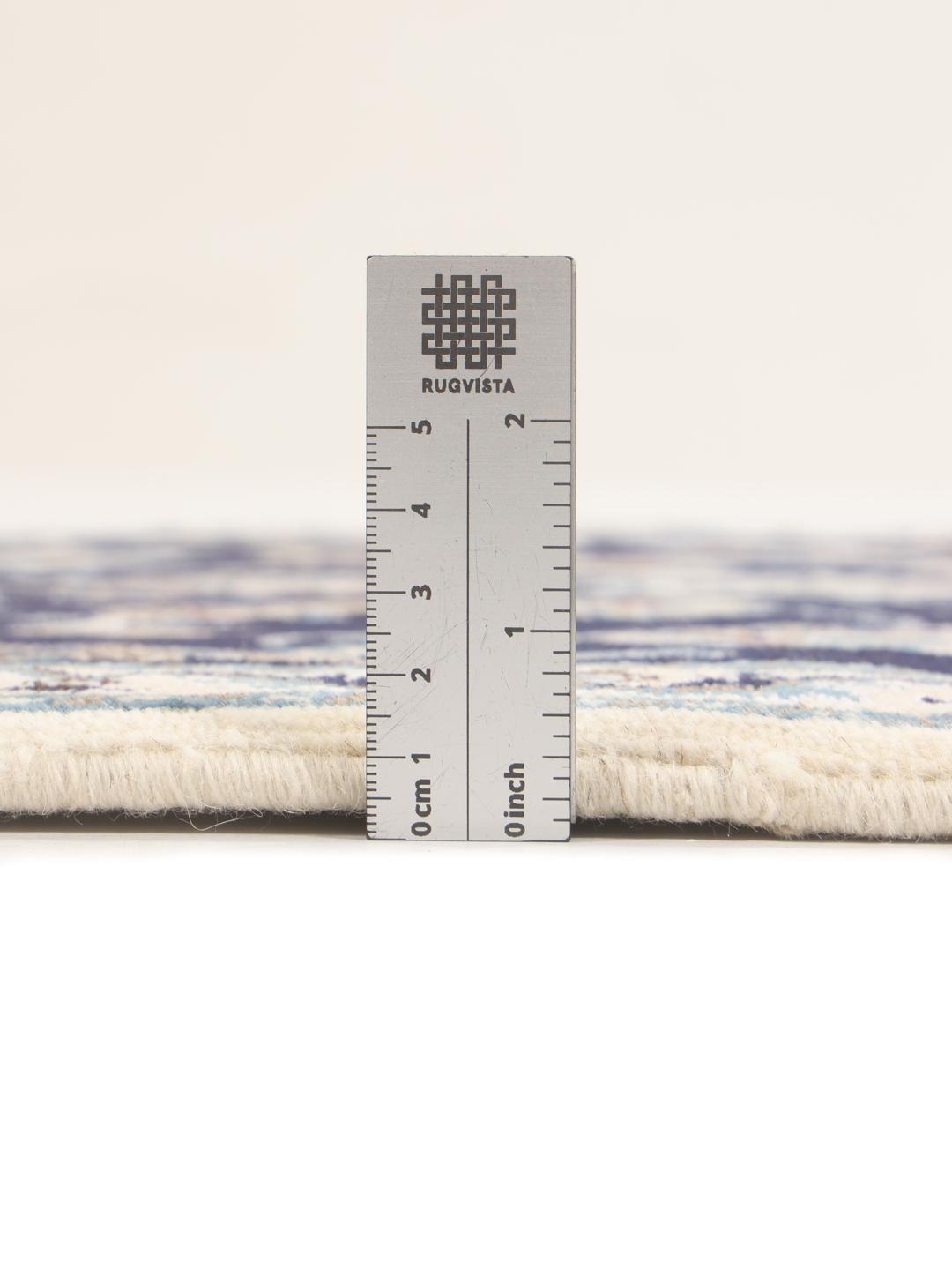
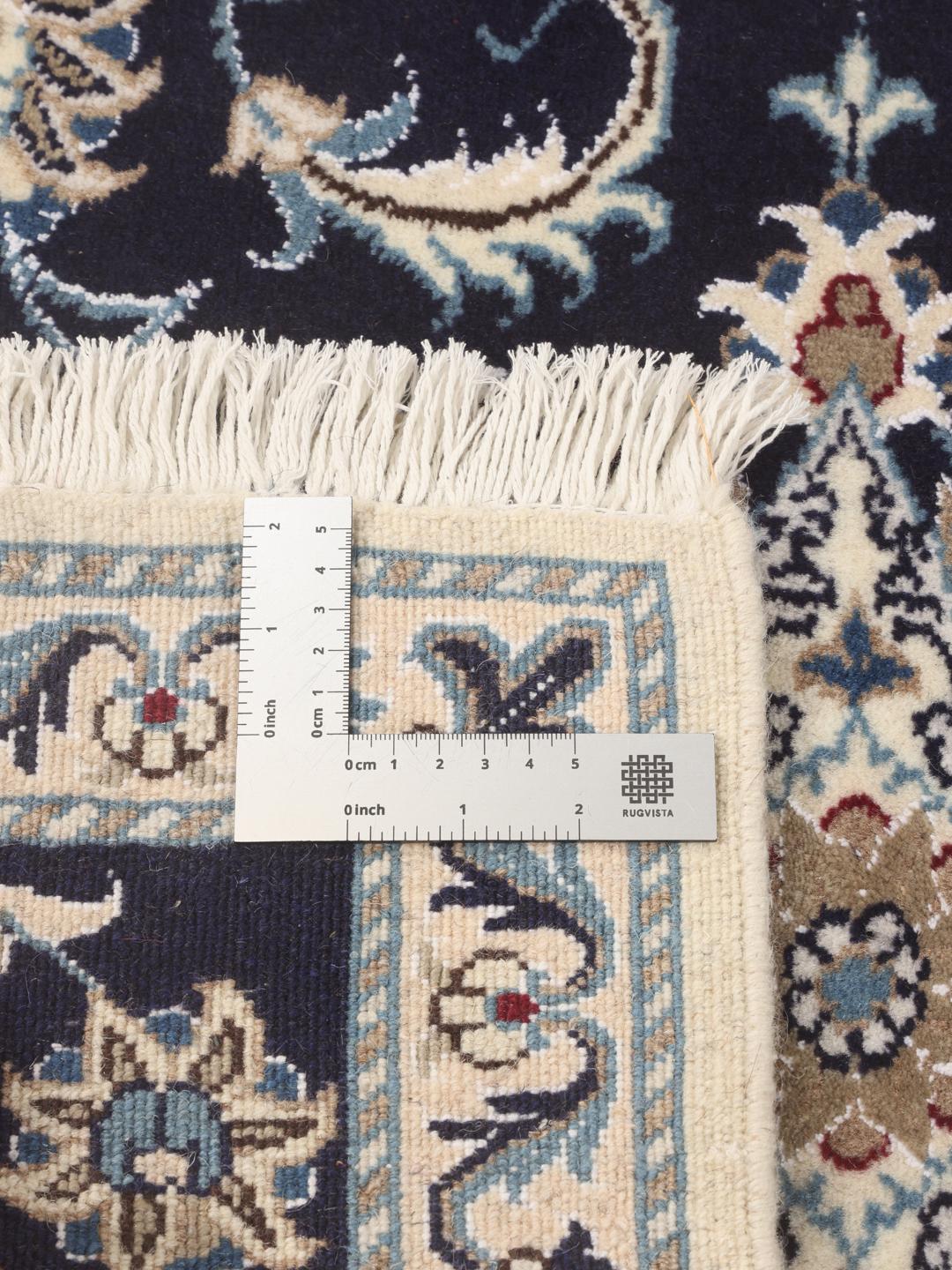
When discussing the quality of these rugs, the term 'knot density' is essential. A higher count, such as the one found in this piece, allows for much finer pattern detail and a more compact, luxurious pile. This technical precision is a hallmark of the Nain tradition, ensuring that the intricate arabesques and floral sprays remain crisp and clear regardless of the rug's age.
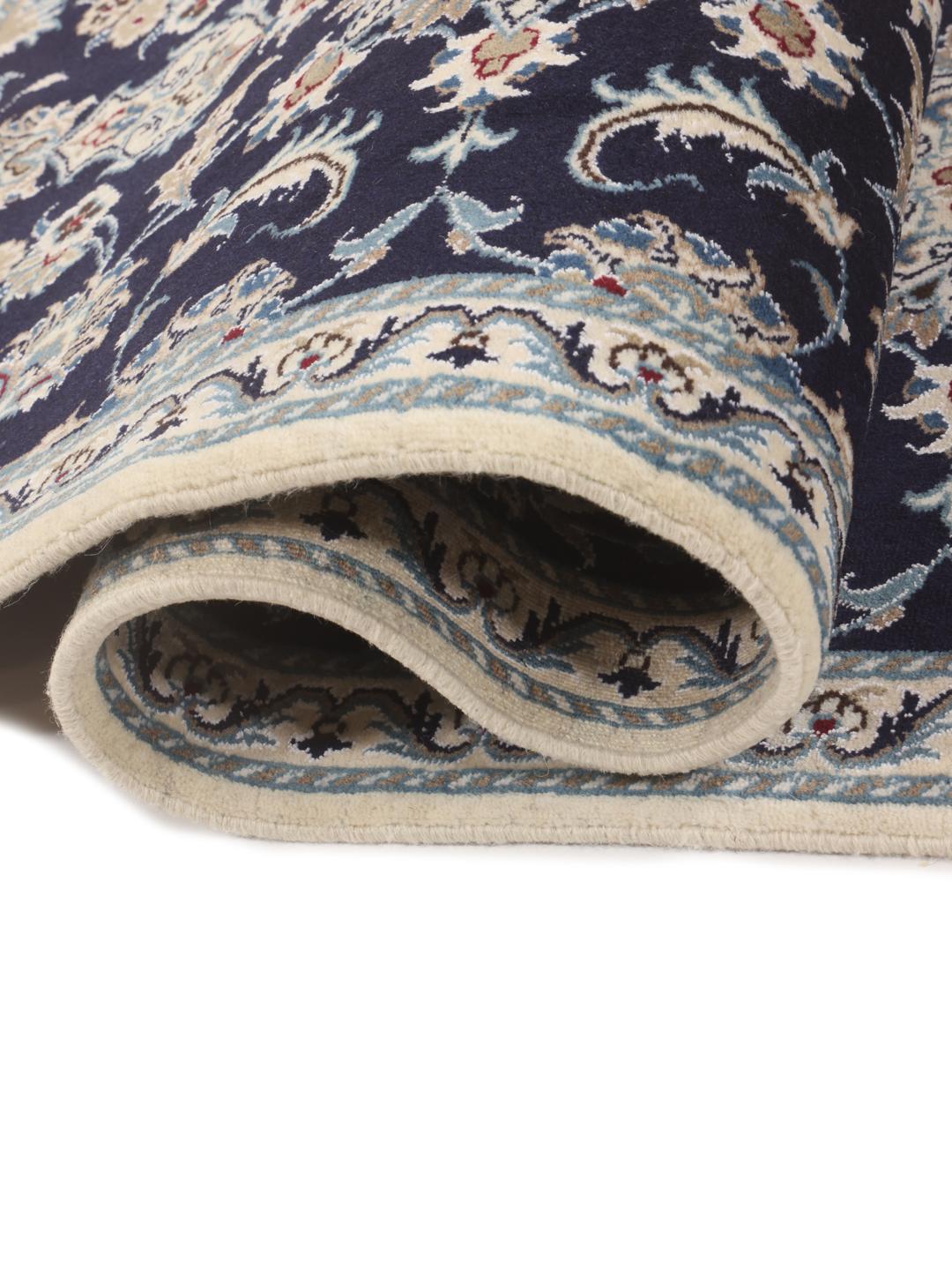
The visual language of a Nain rug is deeply rooted in traditional Middle Eastern aesthetics, typically featuring a central medallion surrounded by sophisticated floral vines and palmettes. The use of a dark blue field is a classic choice, providing a stark, elegant contrast to the ivory and lighter tones of the intricate motifs, which are frequently enclosed by a well-balanced, multi-layered border.
Collectors value these rugs for their balance of artistic expression and technical excellence. Owning a Nain is an investment in a storied craft tradition that prioritises harmony and detail. These rugs are not merely floor coverings but are regarded as cultural heritage pieces that represent the zenith of regional weaving skills.