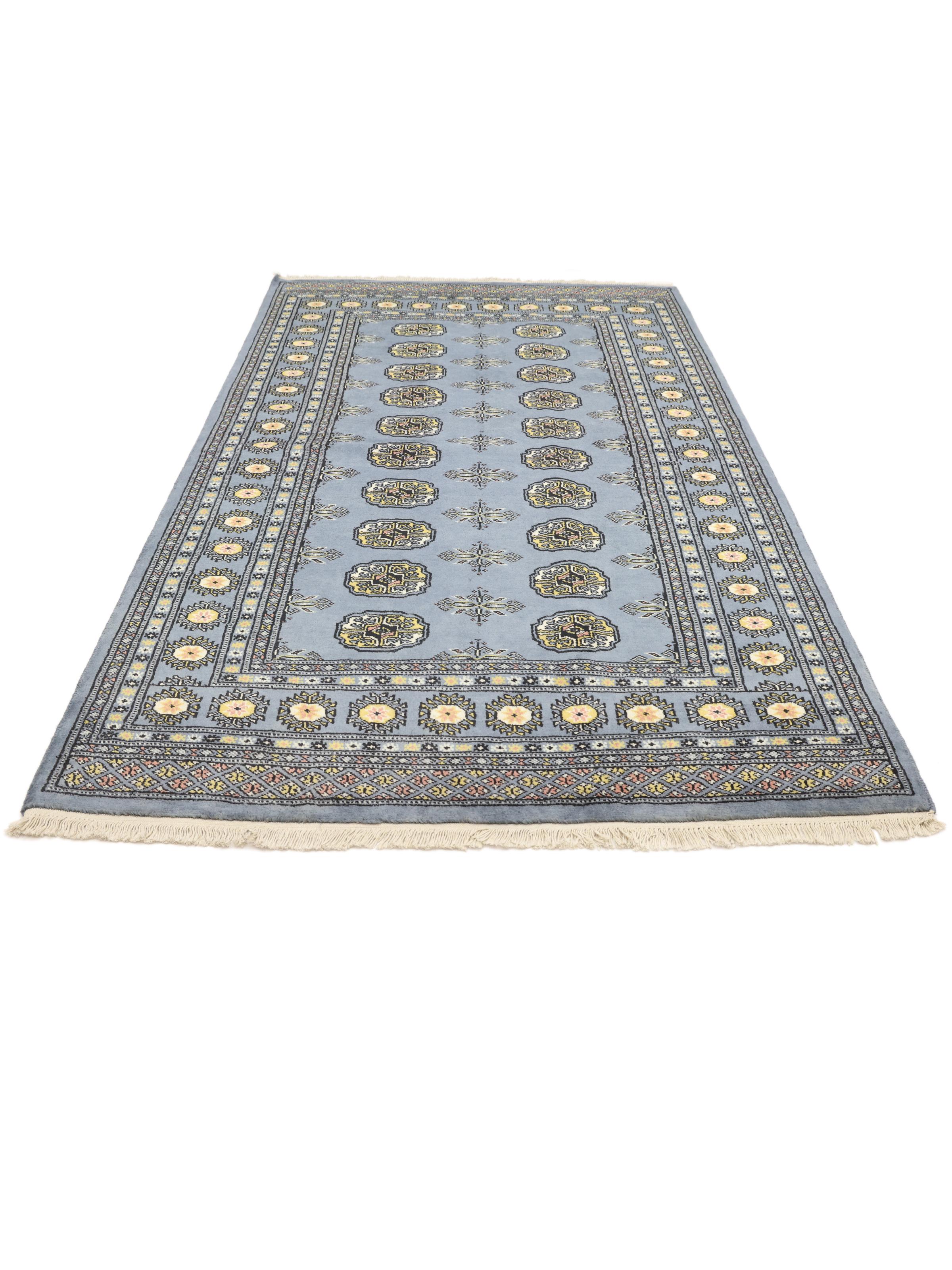
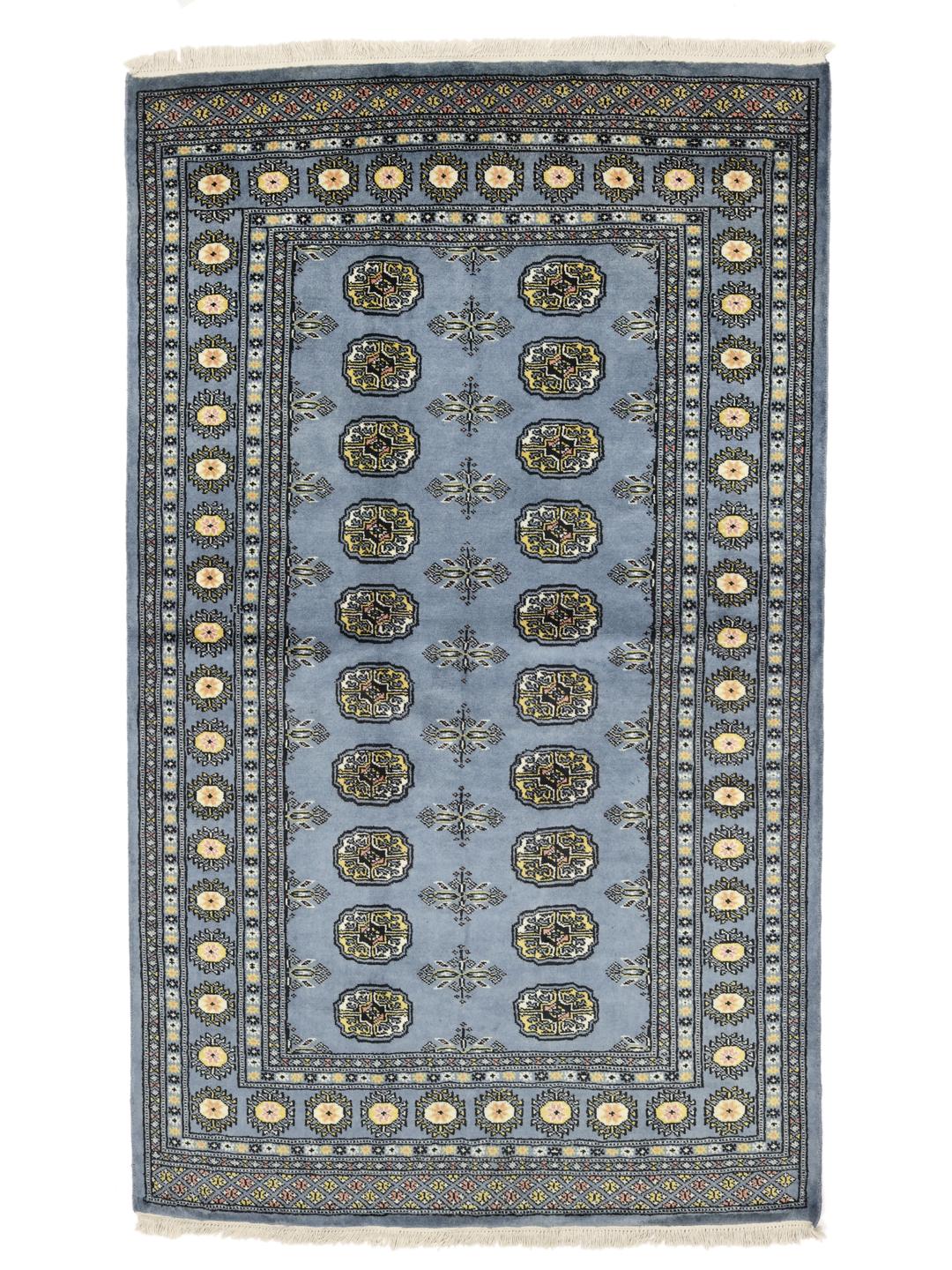
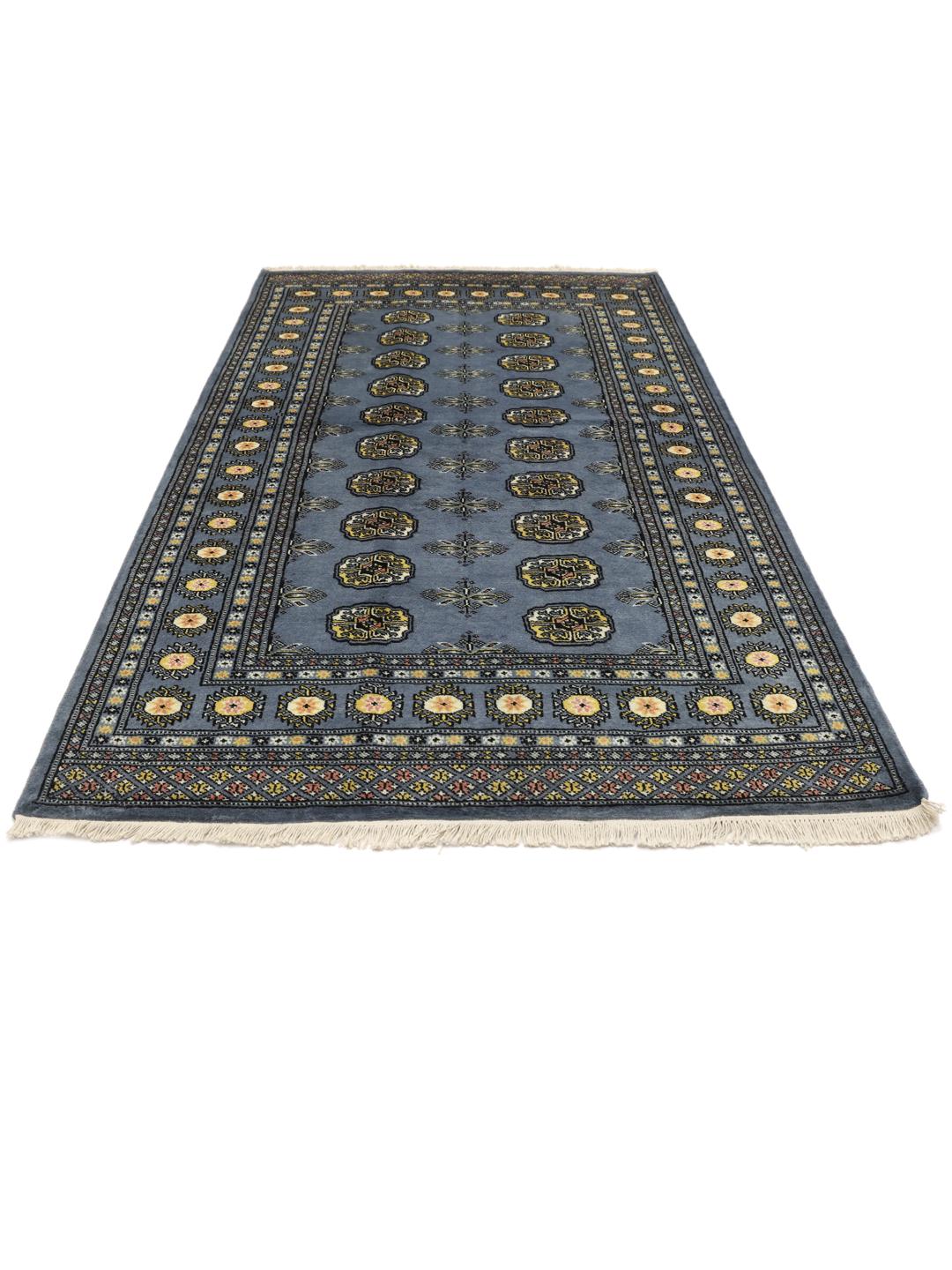
The Bokhara rug tradition is deeply rooted in the history of Central Asia, taking its name from the ancient Silk Road city of Bukhara. While its origins lie in the nomadic tribal weaving traditions of the region, the finest contemporary examples are now primarily produced in Pakistan, where artisans have elevated the craft to new levels of technical precision and aesthetic consistency.
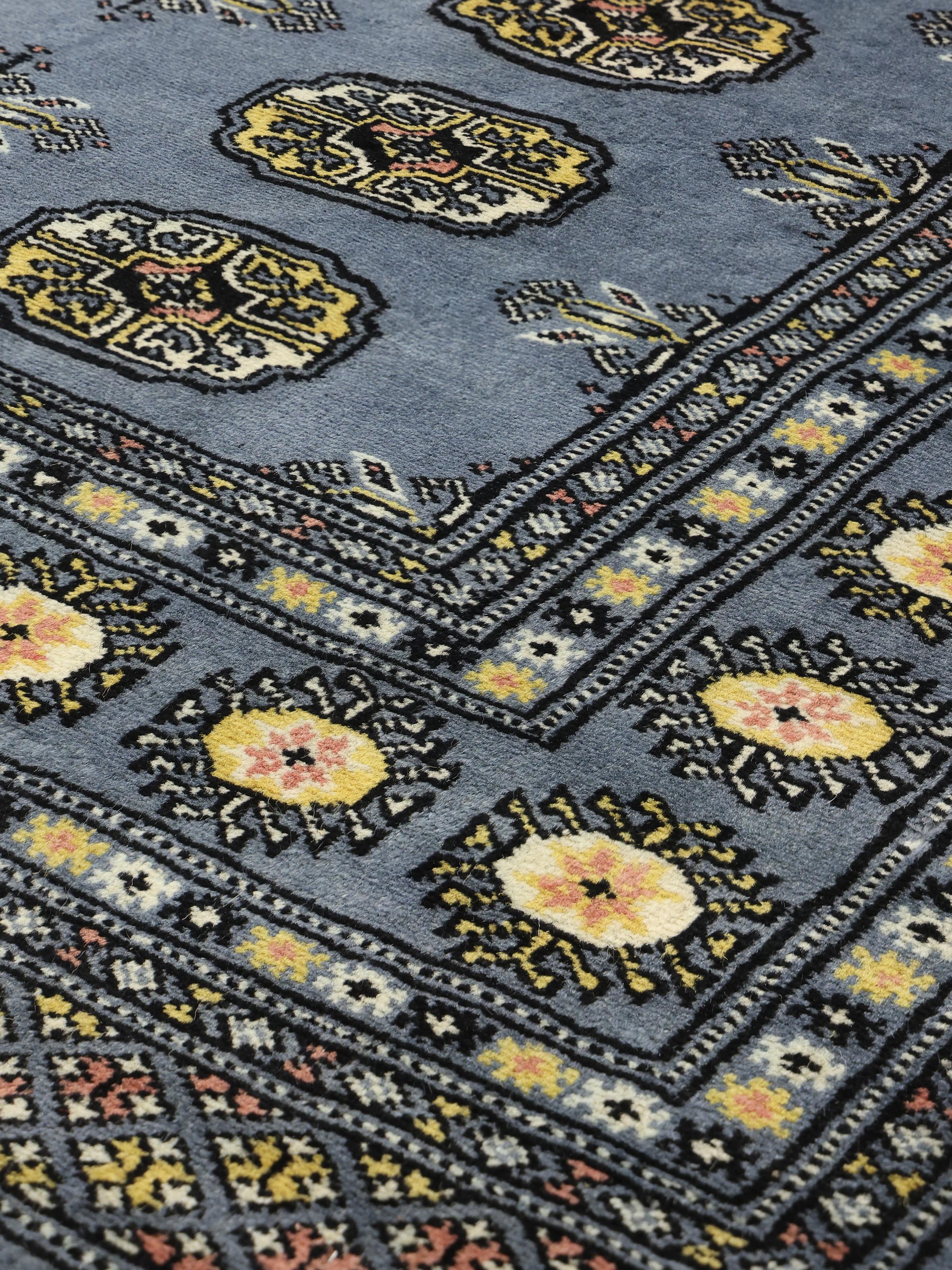
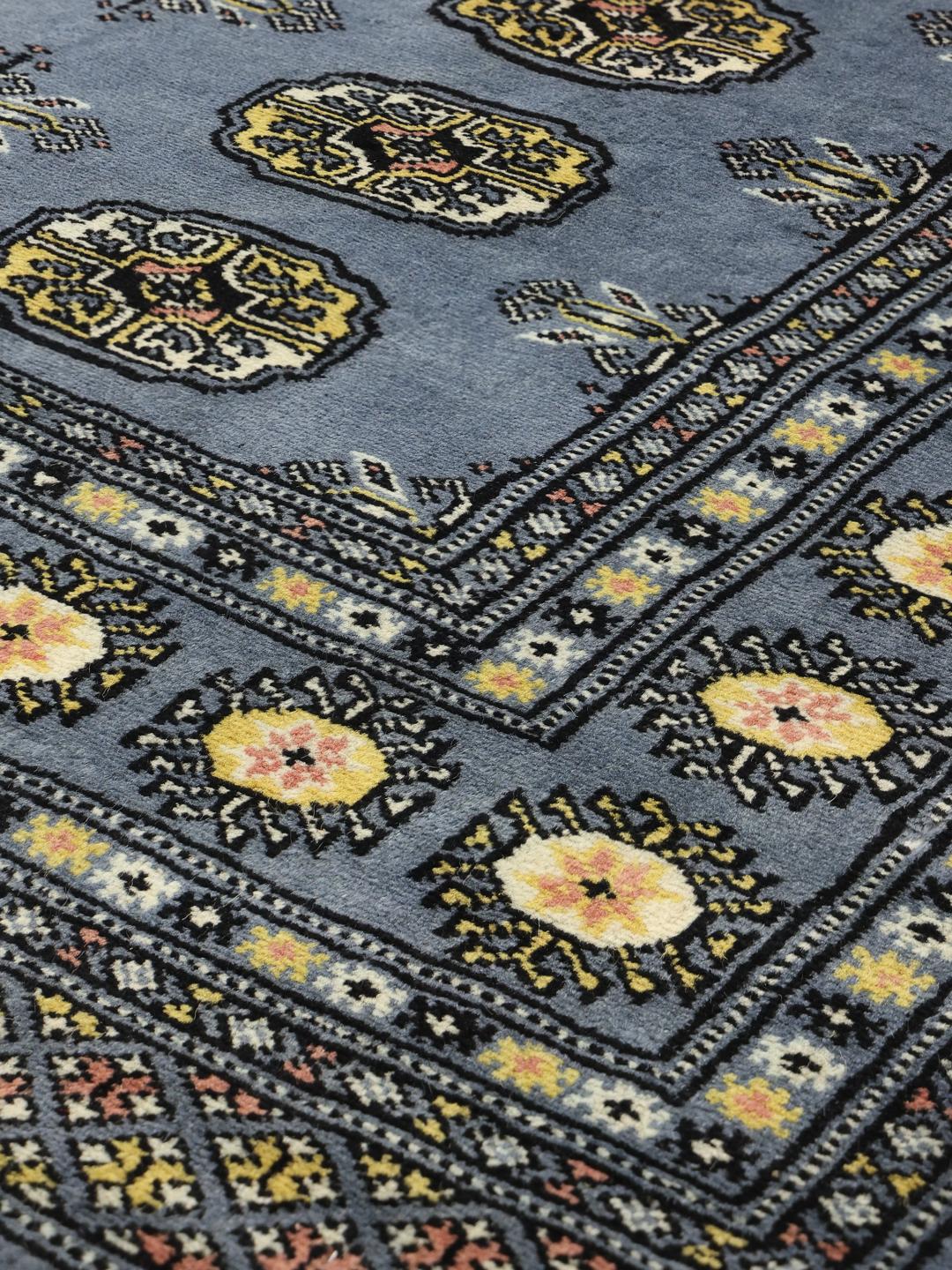
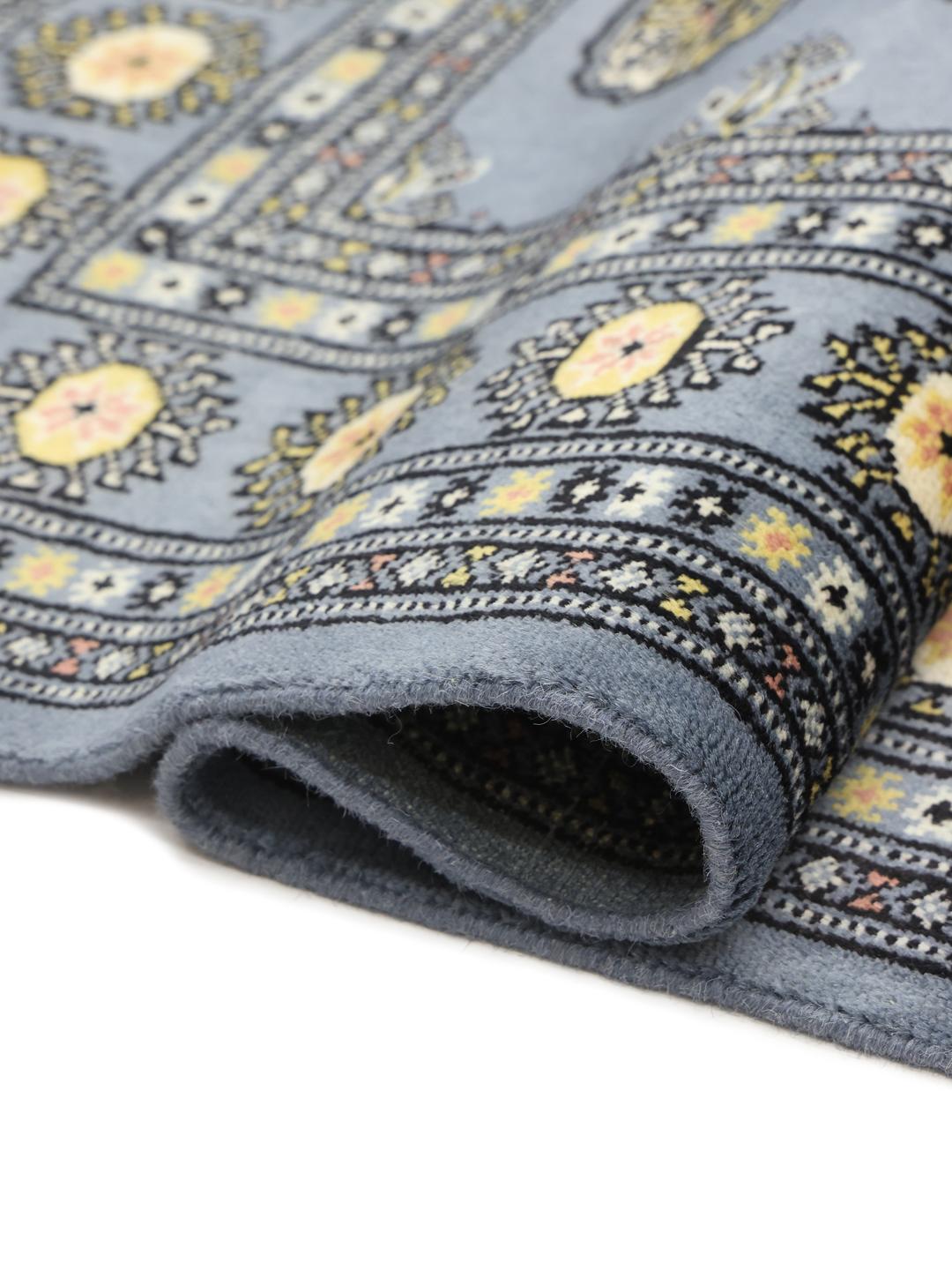
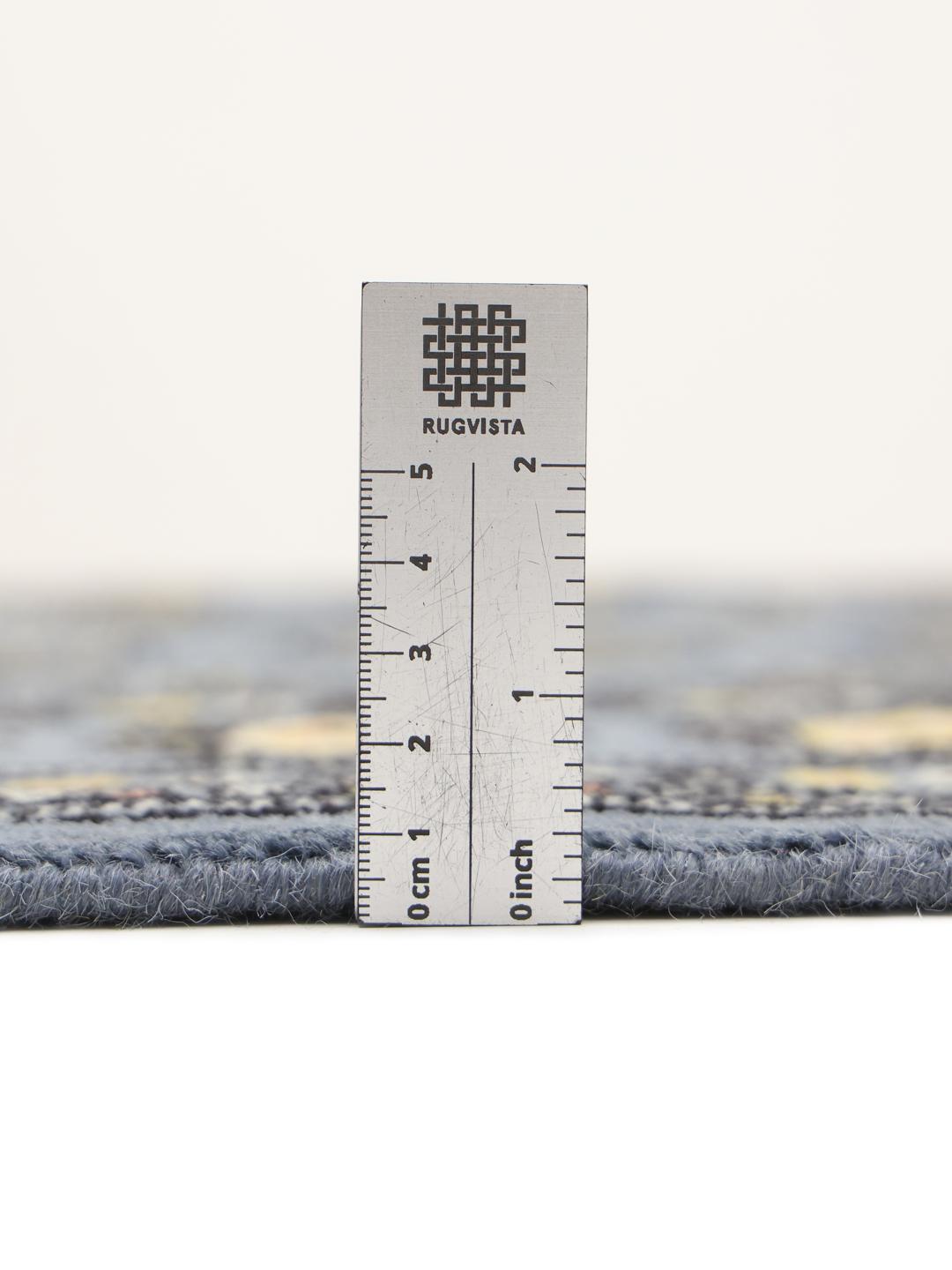
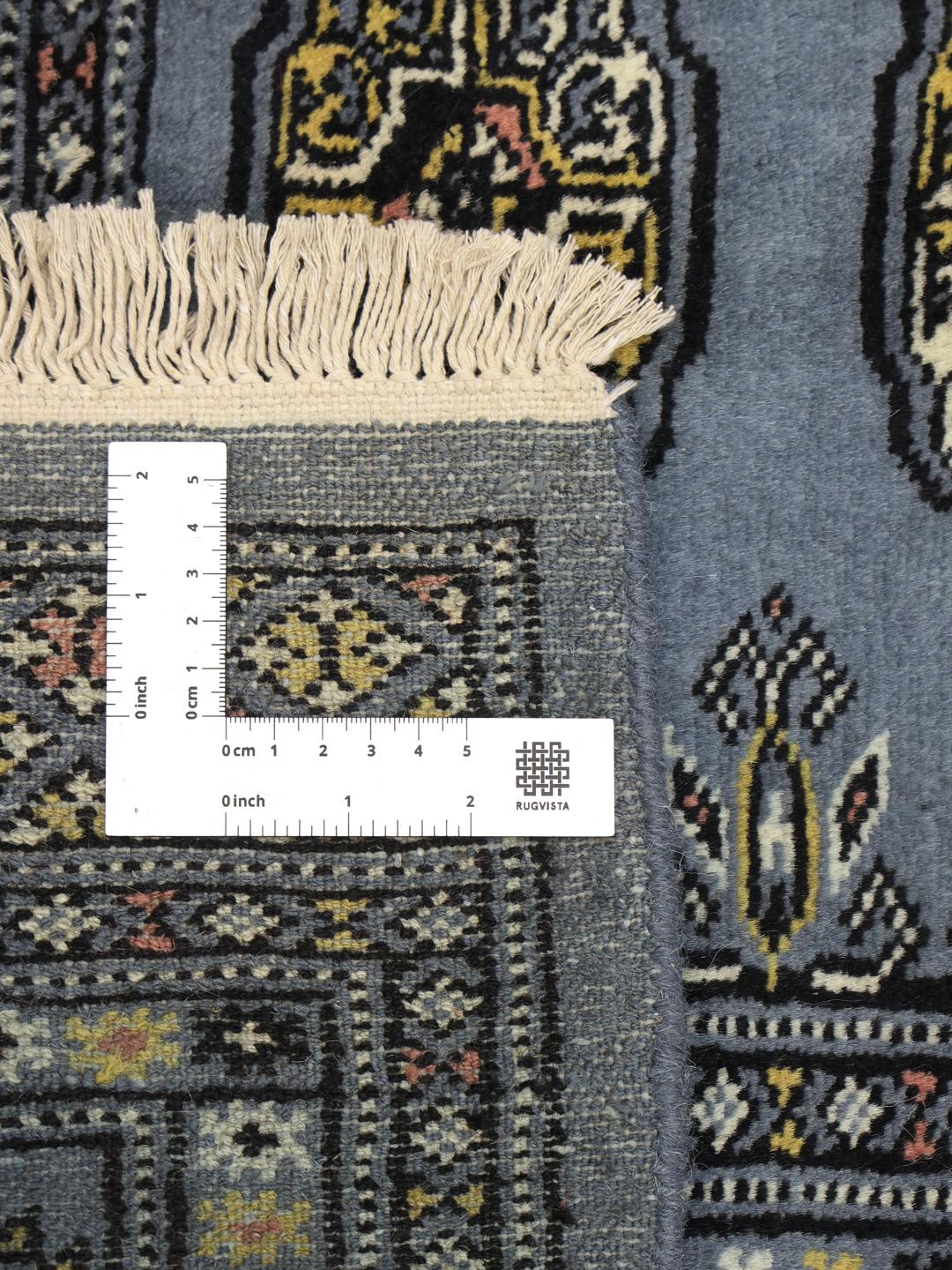
The term 2ply refers to the construction of the pile, where two strands of Wool are twisted together before being knotted. This technique is significant because it creates a more resilient, lustrous, and thicker pile than single-ply construction, ensuring the rug feels substantial underfoot and holds its appearance beautifully over many years of use.
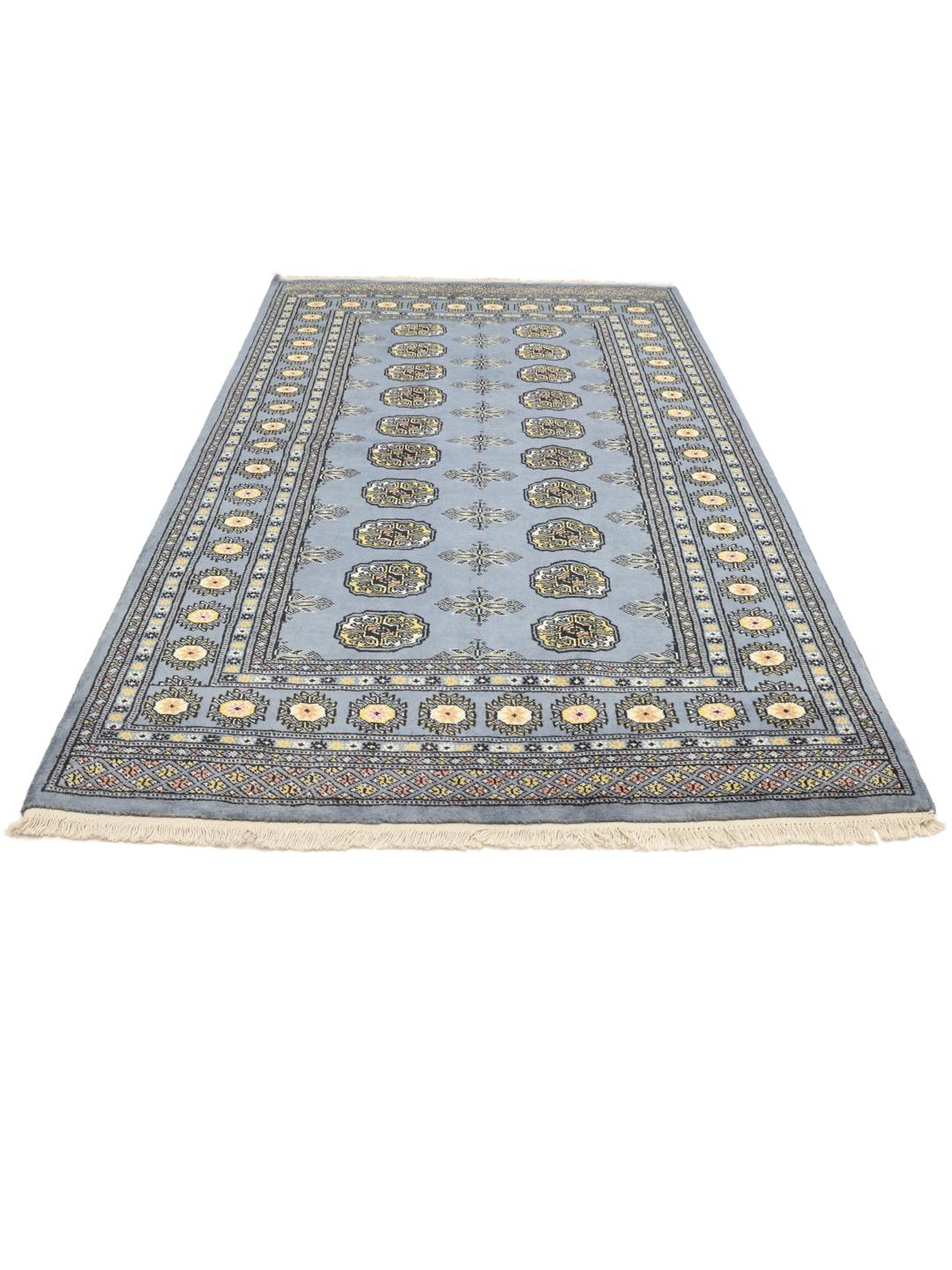
Visually, this tradition is defined by the repeating gul motif, which typically features octagonal or elephant-foot shapes arranged in orderly rows. This particular rug honours those classic design principles while utilising a distinctive blue field that sets it apart from more traditional red-based examples, offering a fresh take on a centuries-old visual language.
Owning a hand-knotted rug from this tradition is an investment in cultural heritage and human skill. These pieces are valued by collectors not just for their decorative impact, but for the connection they provide to a long lineage of craft, representing a level of dedication and artistry that is increasingly rare in the modern world.