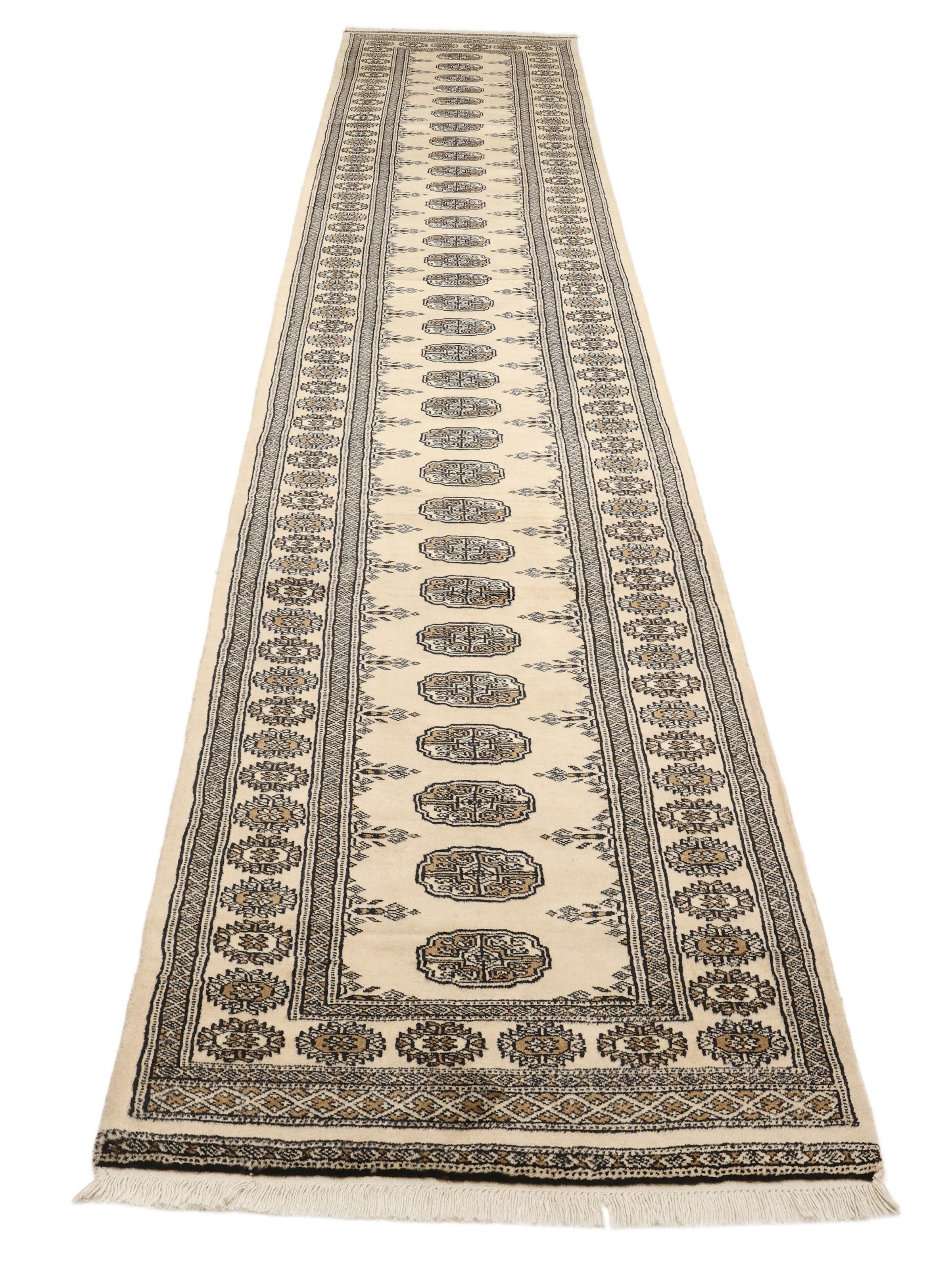
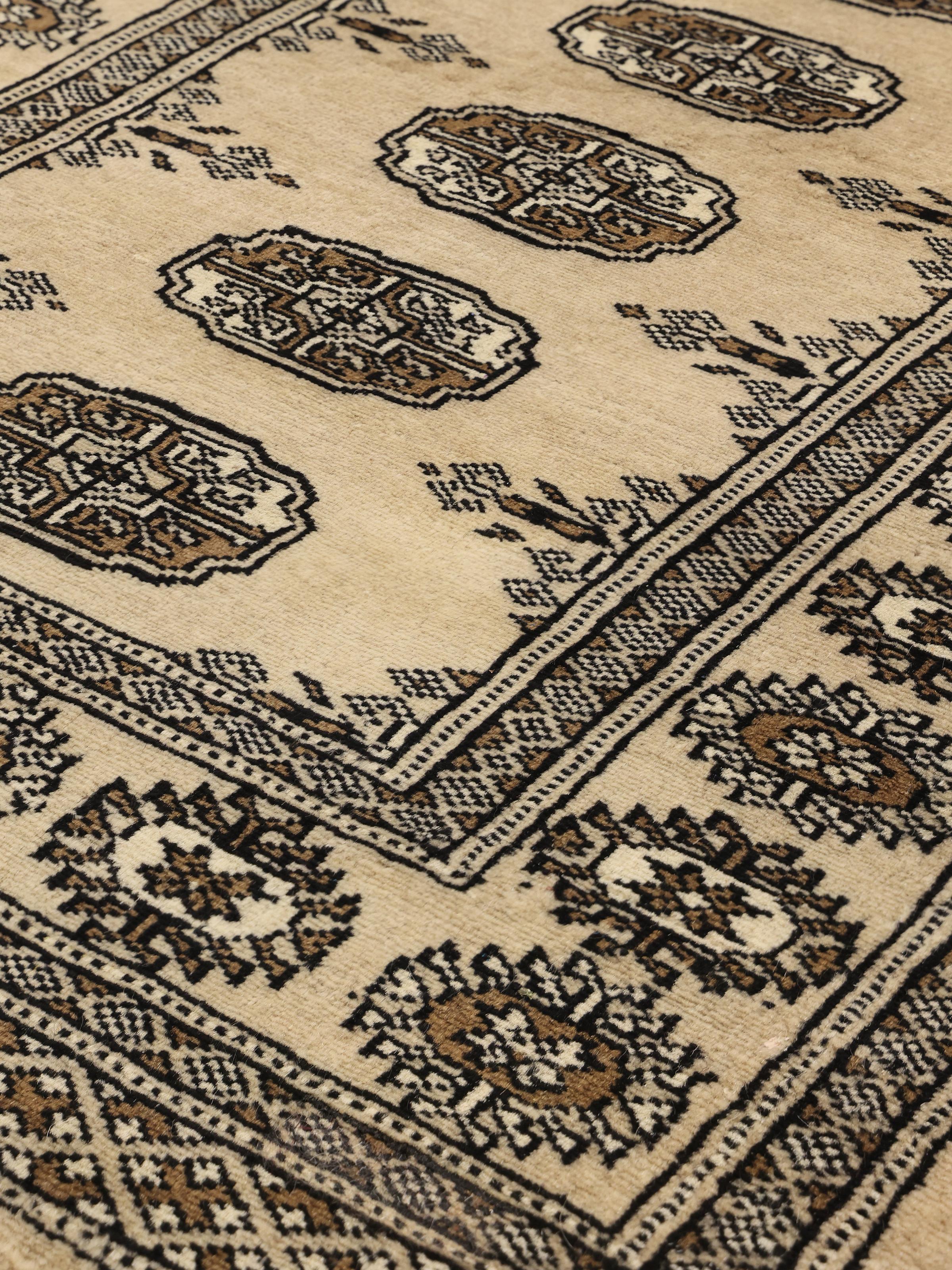
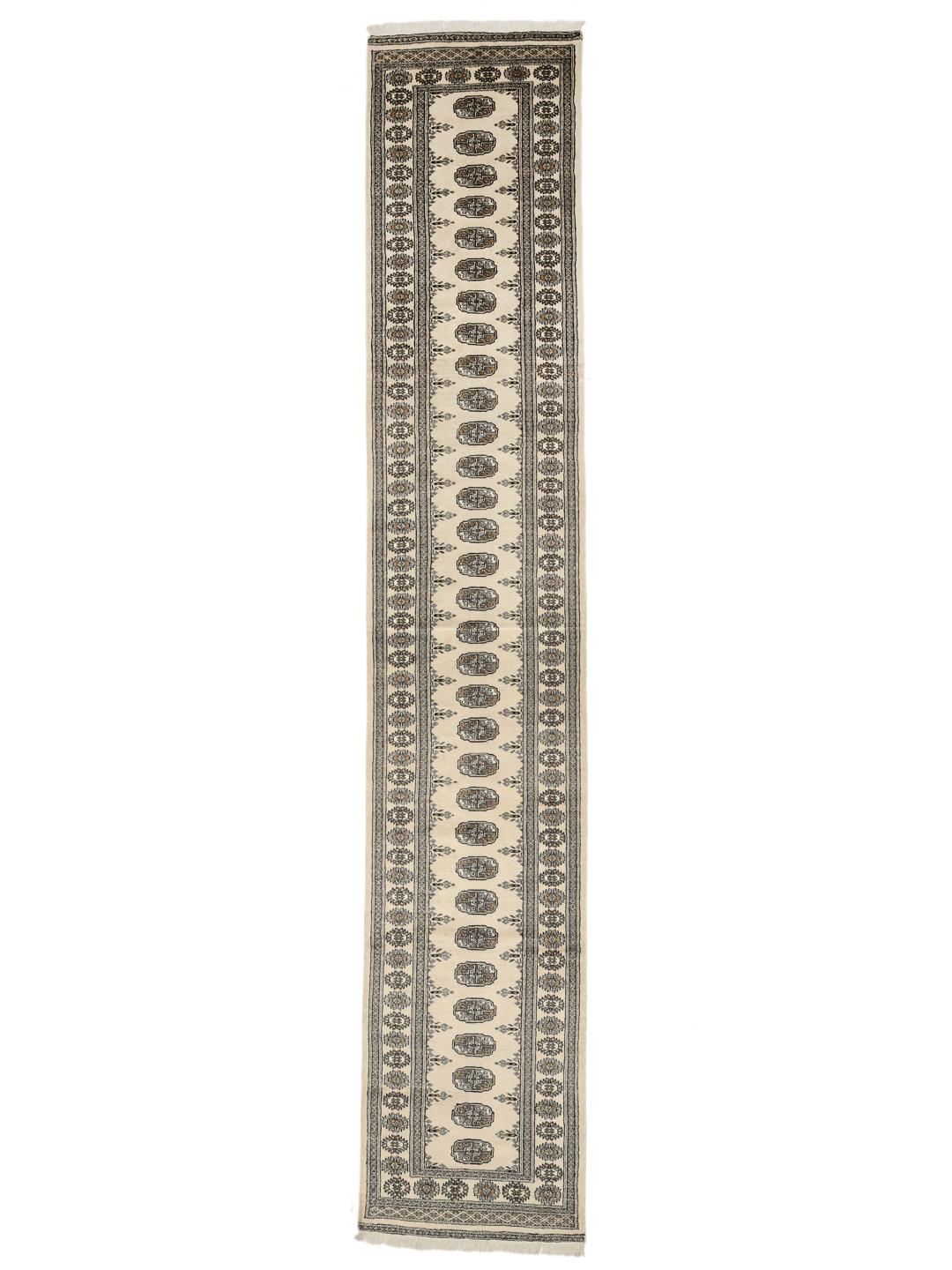
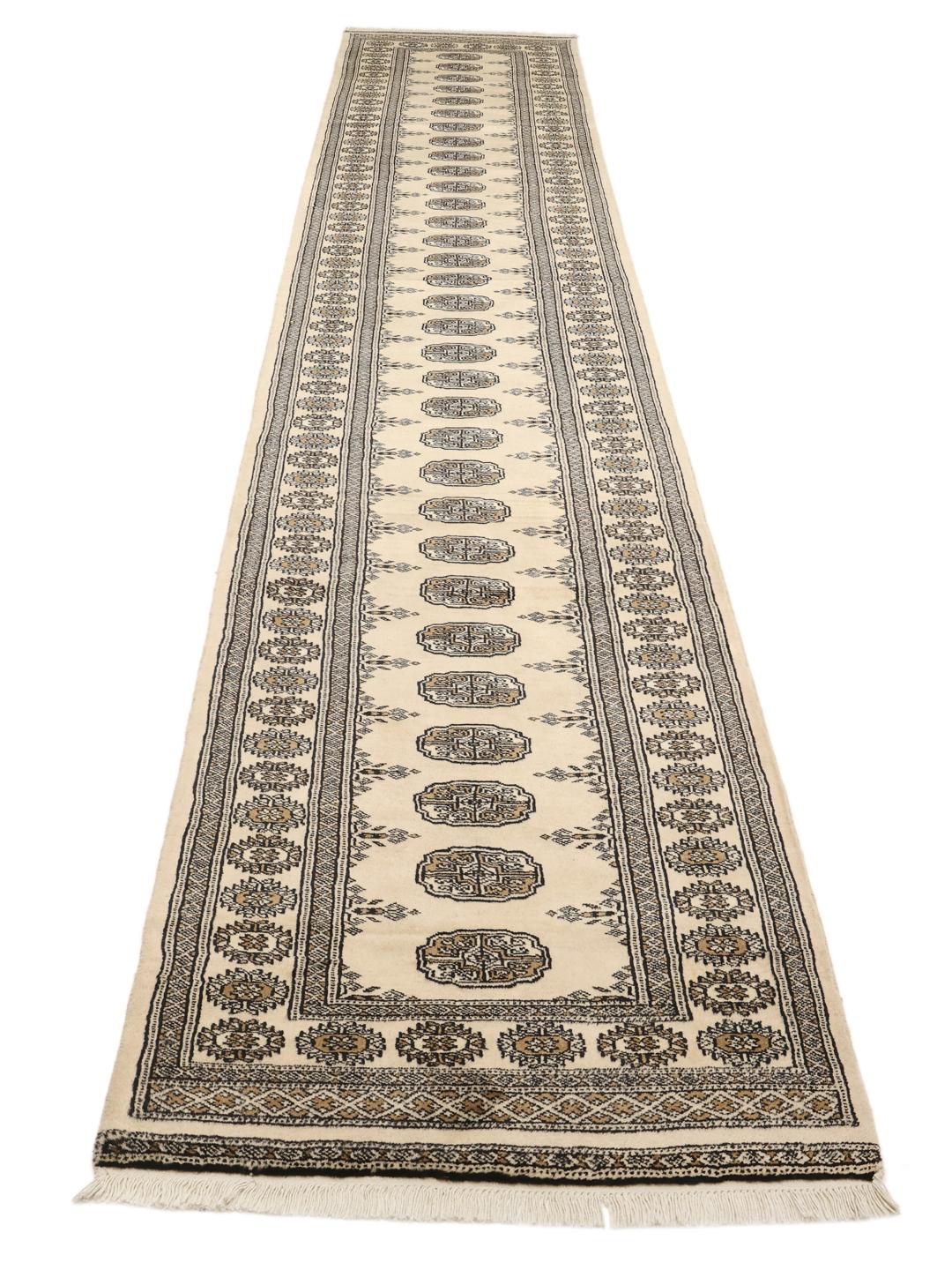
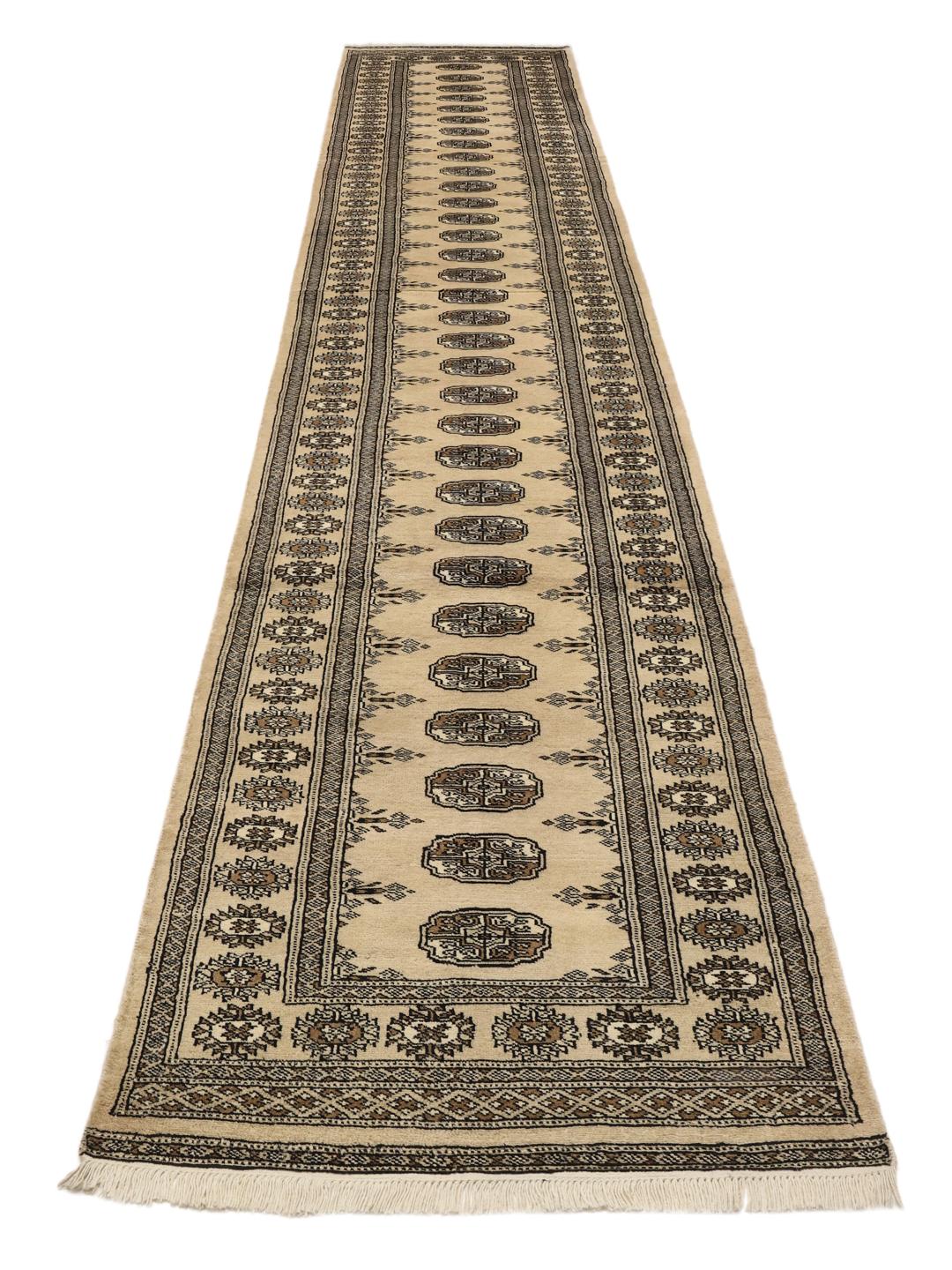
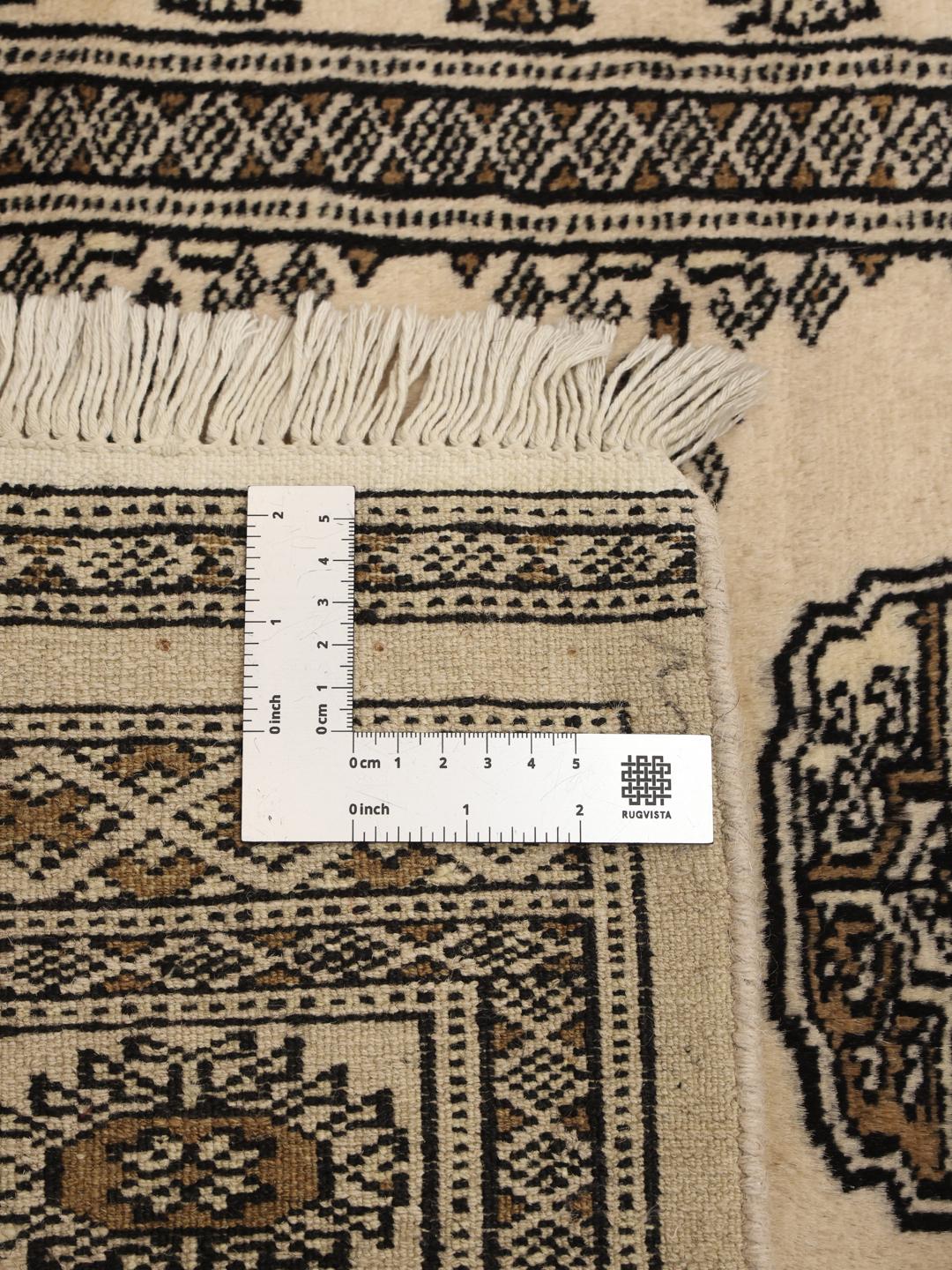
The Bokhara style takes its name from the ancient Silk Road city of Bukhara, which served as a central trading hub for textiles and goods for centuries. While the name originates from this historic region, the most refined examples produced today are crafted in Pakistan, where weavers have mastered the intricate techniques required to keep this tradition alive.
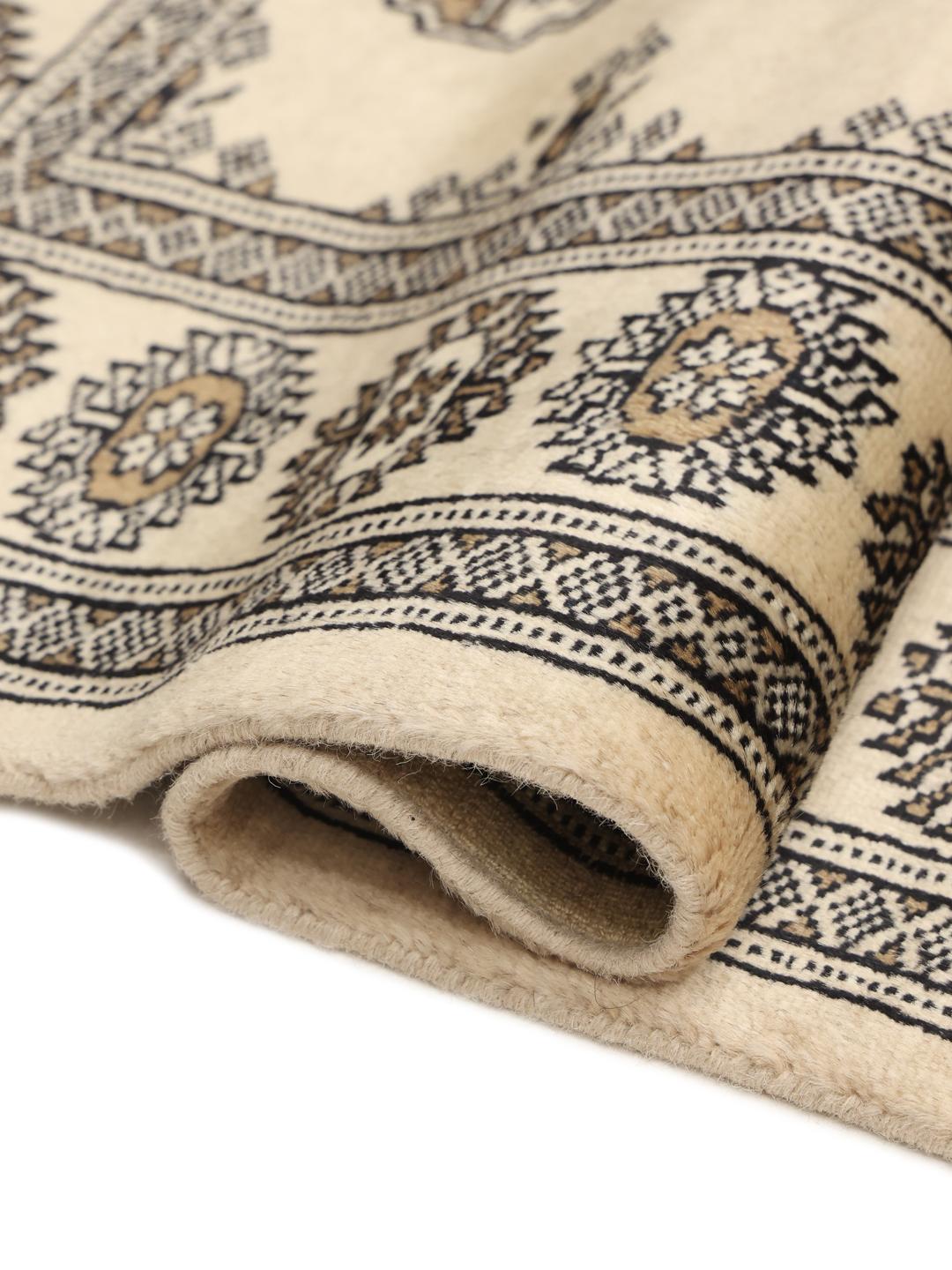
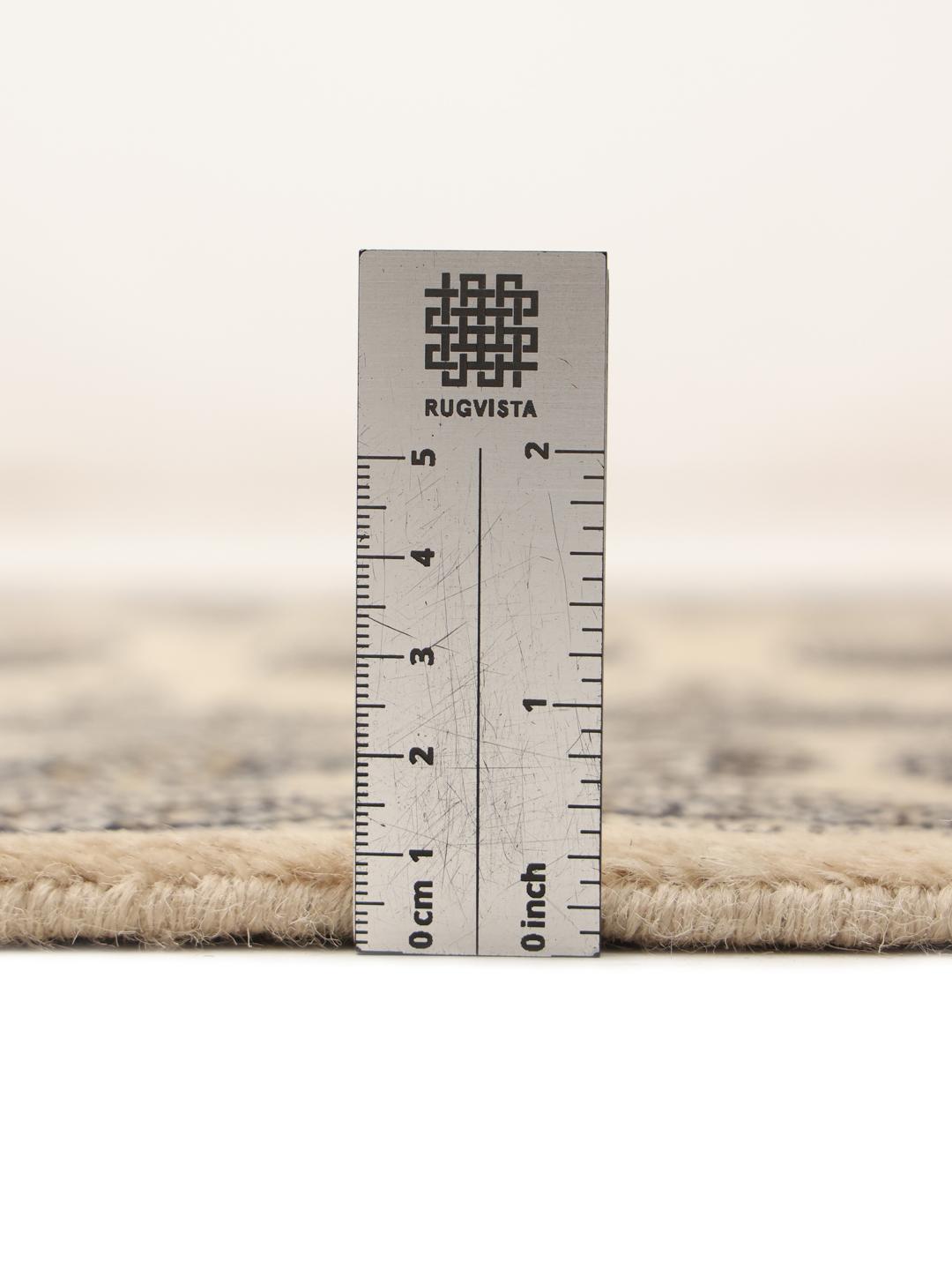
The term 2ply refers to the construction of the pile, where two strands of wool are twisted together before being knotted. This method creates a pile that is significantly more lustrous and durable than single-ply alternatives, ensuring that the rug maintains its depth and resilience over time, which is essential for a runner intended for daily movement.
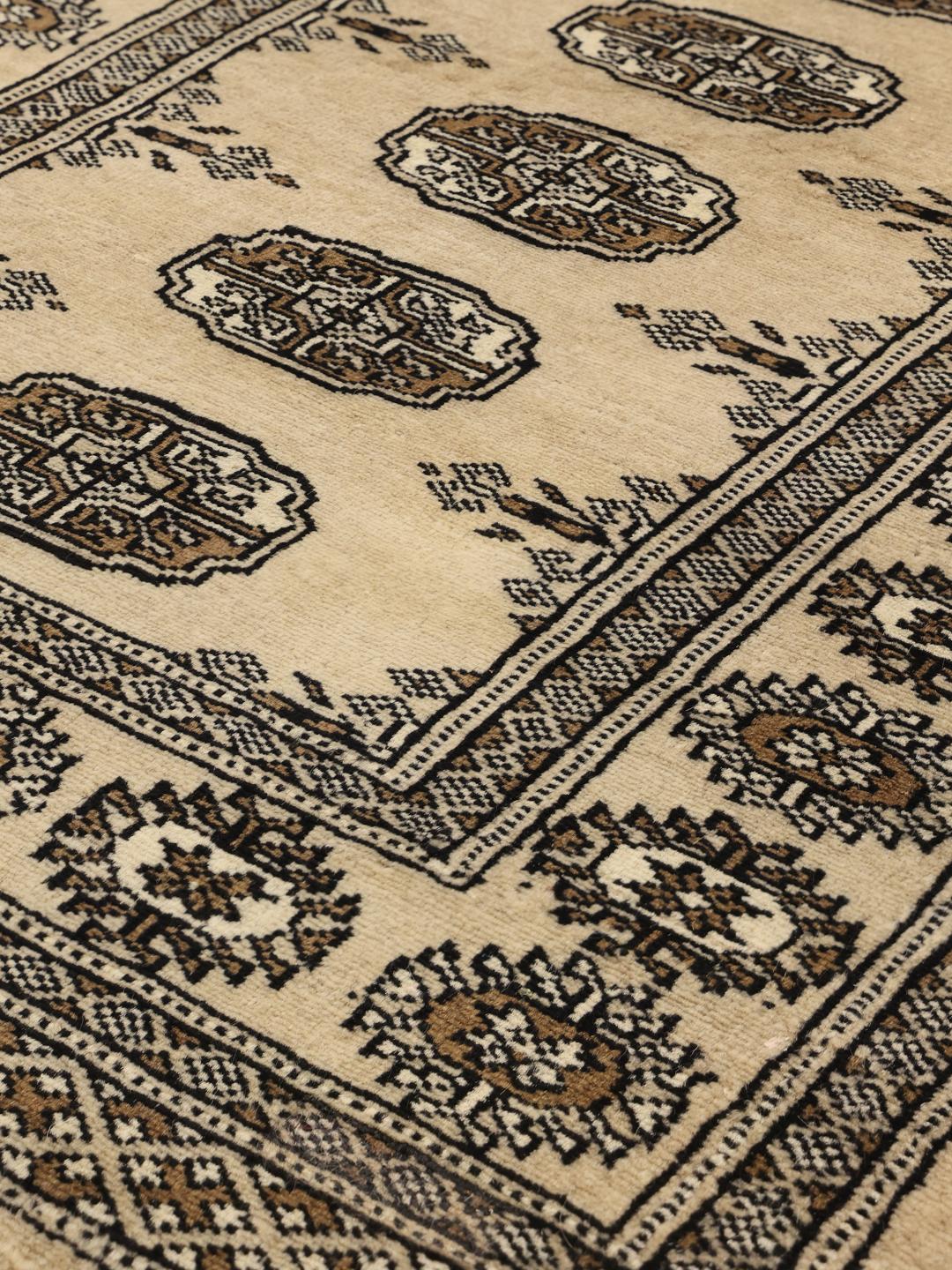
Visually, these rugs are defined by the repetition of the 'gul' motif, which are medallion-like shapes that often resemble elephant tracks or octagonal forms. These are arranged in structured rows, creating a sense of rhythmic symmetry that is a hallmark of the tradition. The border designs typically frame the field, providing a clean finish that complements the busy, repetitive nature of the central patterns.
Owning a hand-knotted runner from this tradition is about more than just floor coverage; it is about acquiring a piece of cultural history. These rugs are highly valued for their balance of complexity and order, representing a level of skill that connects the modern home to centuries of textile evolution, making them a meaningful investment for any collector.