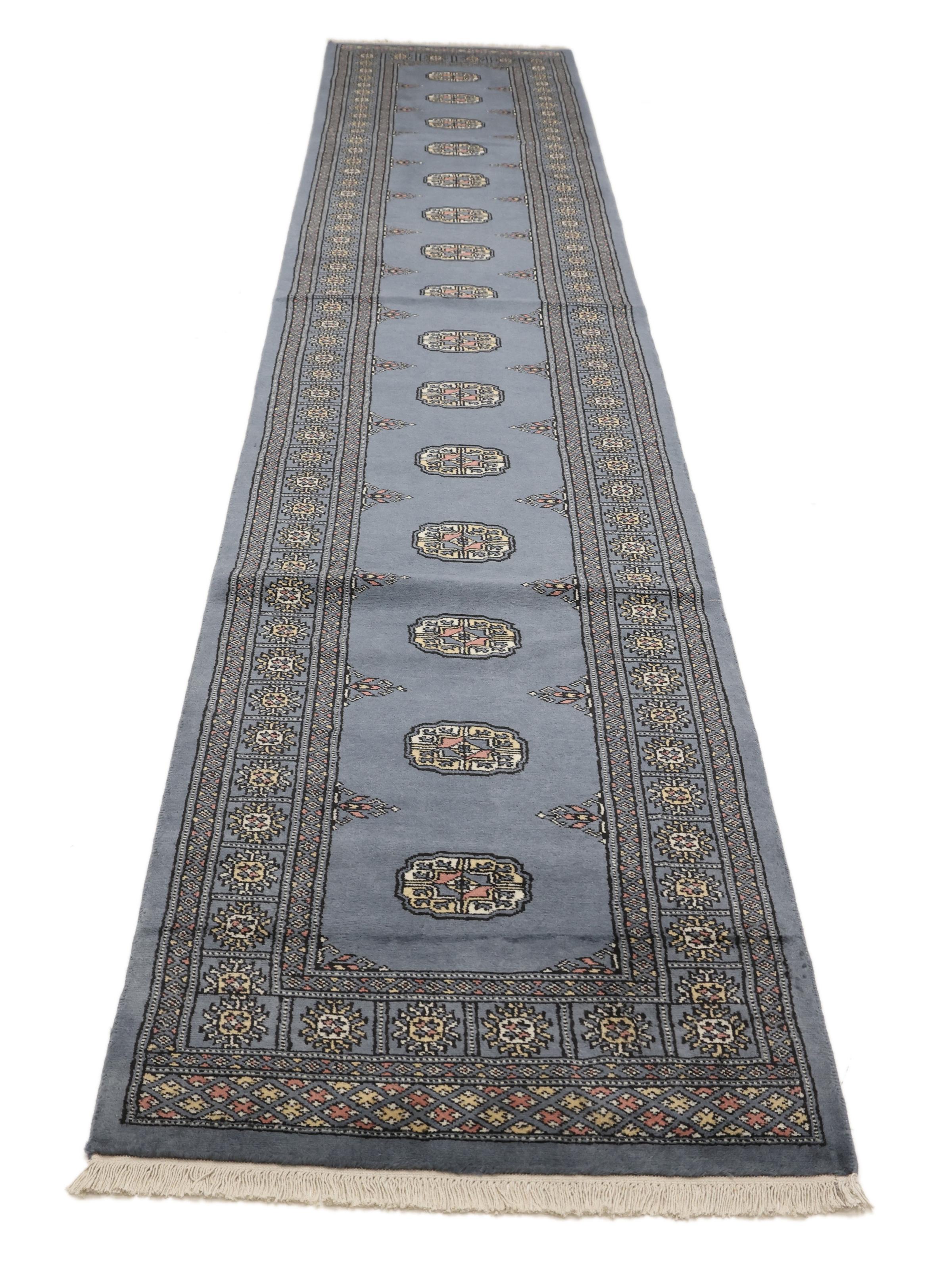
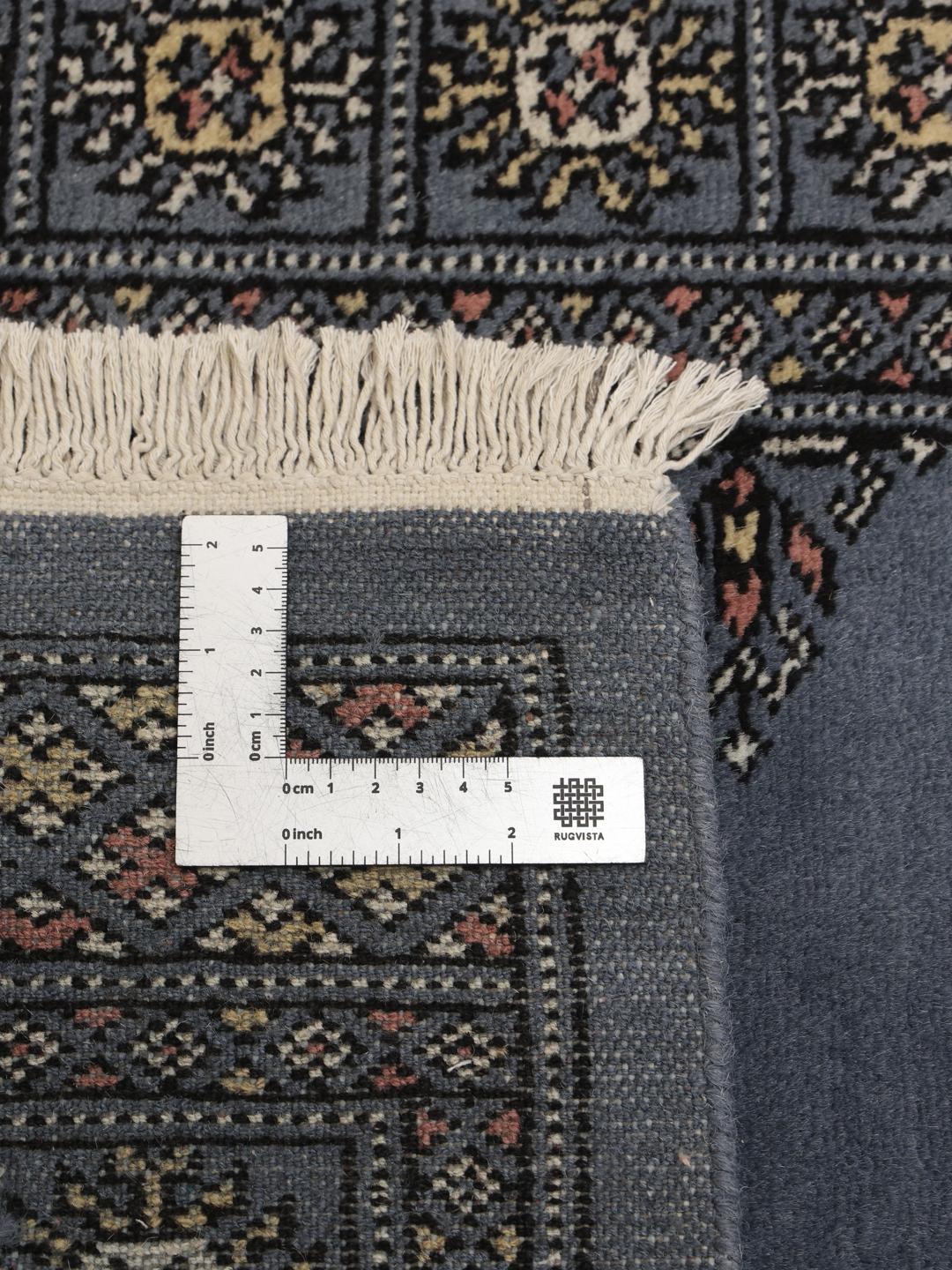
Bokhara rugs take their name from the ancient Silk Road city of Bukhara in Central Asia, a historical hub for trade and textile arts. While the name originates from this storied region, the most refined and sought-after examples today are crafted in Pakistan, where artisans have perfected these classic designs over generations, blending historical motifs with contemporary precision.
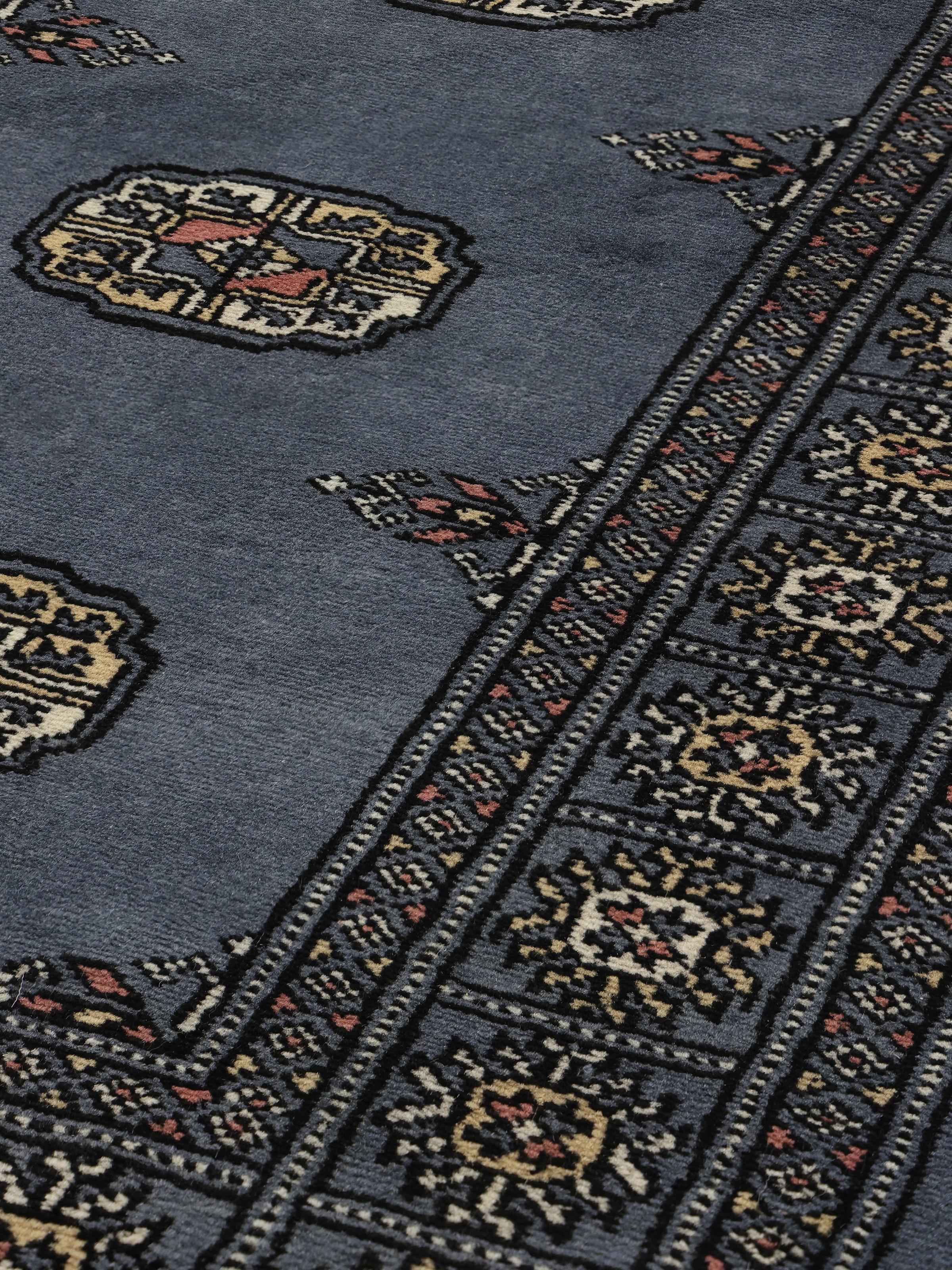
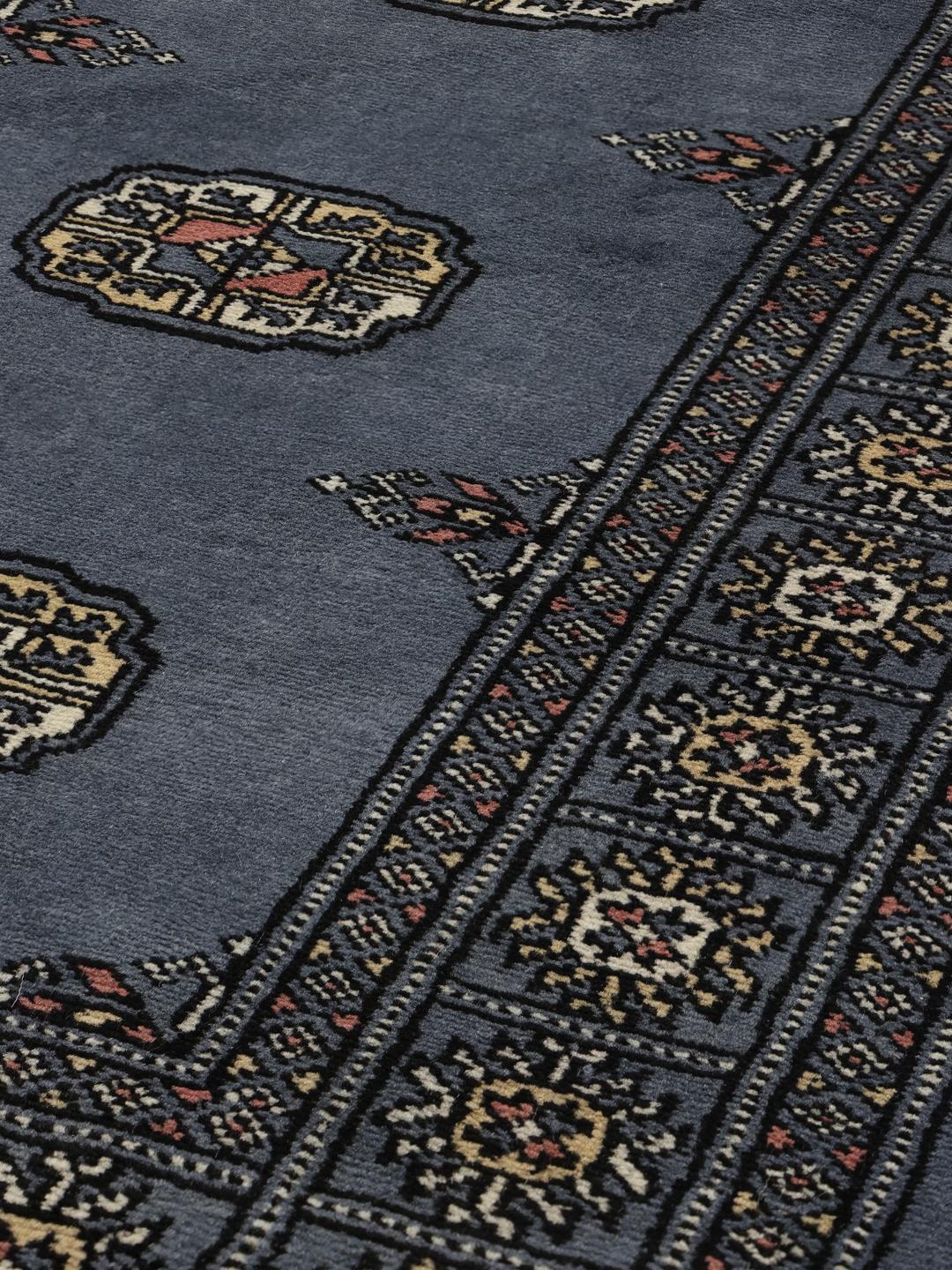
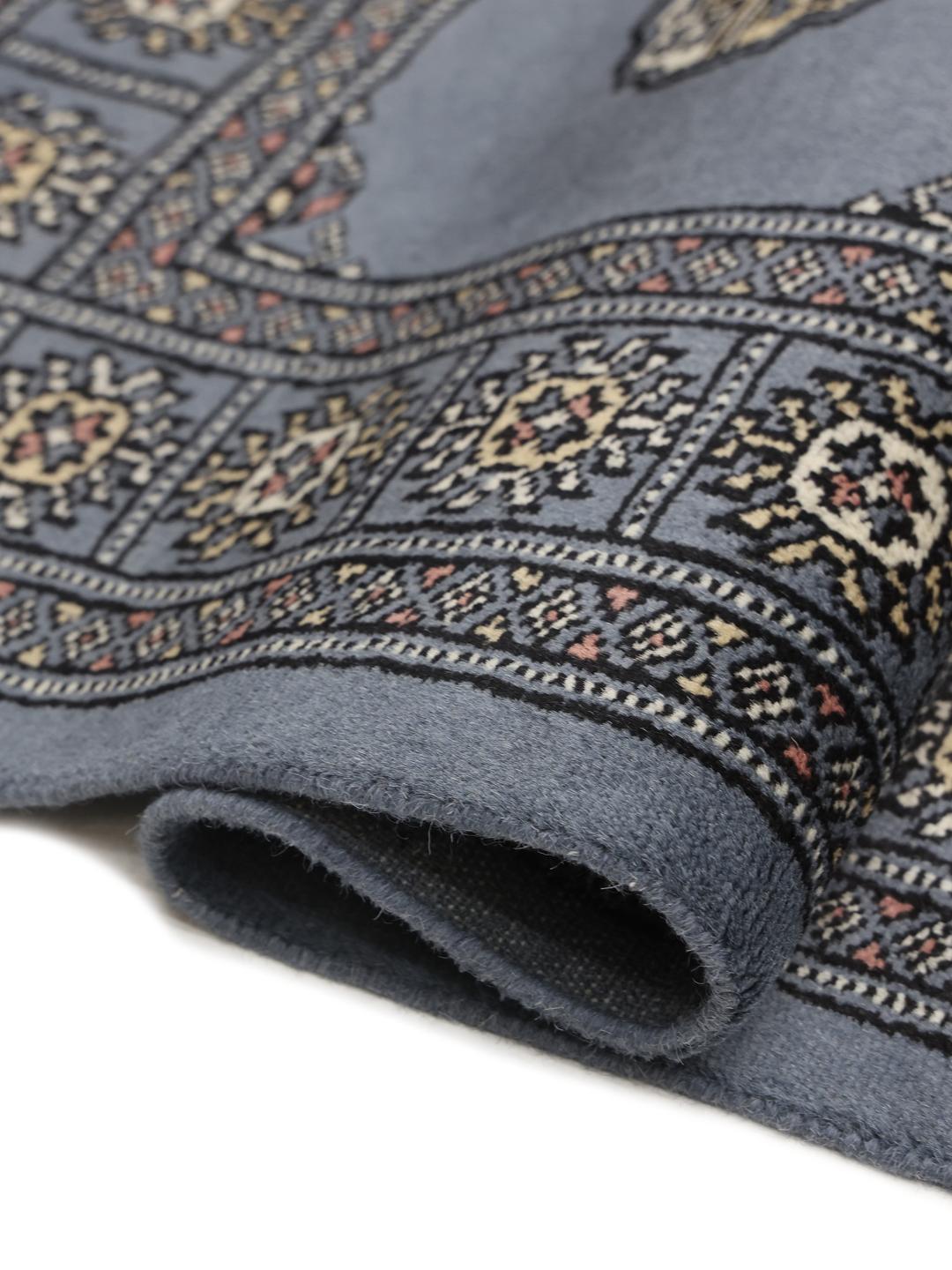
The 2ply designation refers to a specific construction method where the wool pile is created using two strands of wool twisted together before being knotted. This technique is significant because it results in a pile that is not only denser and more lustrous but also significantly more durable. It creates a fuller, more substantial feel that stands up to the wear and tear of everyday life.
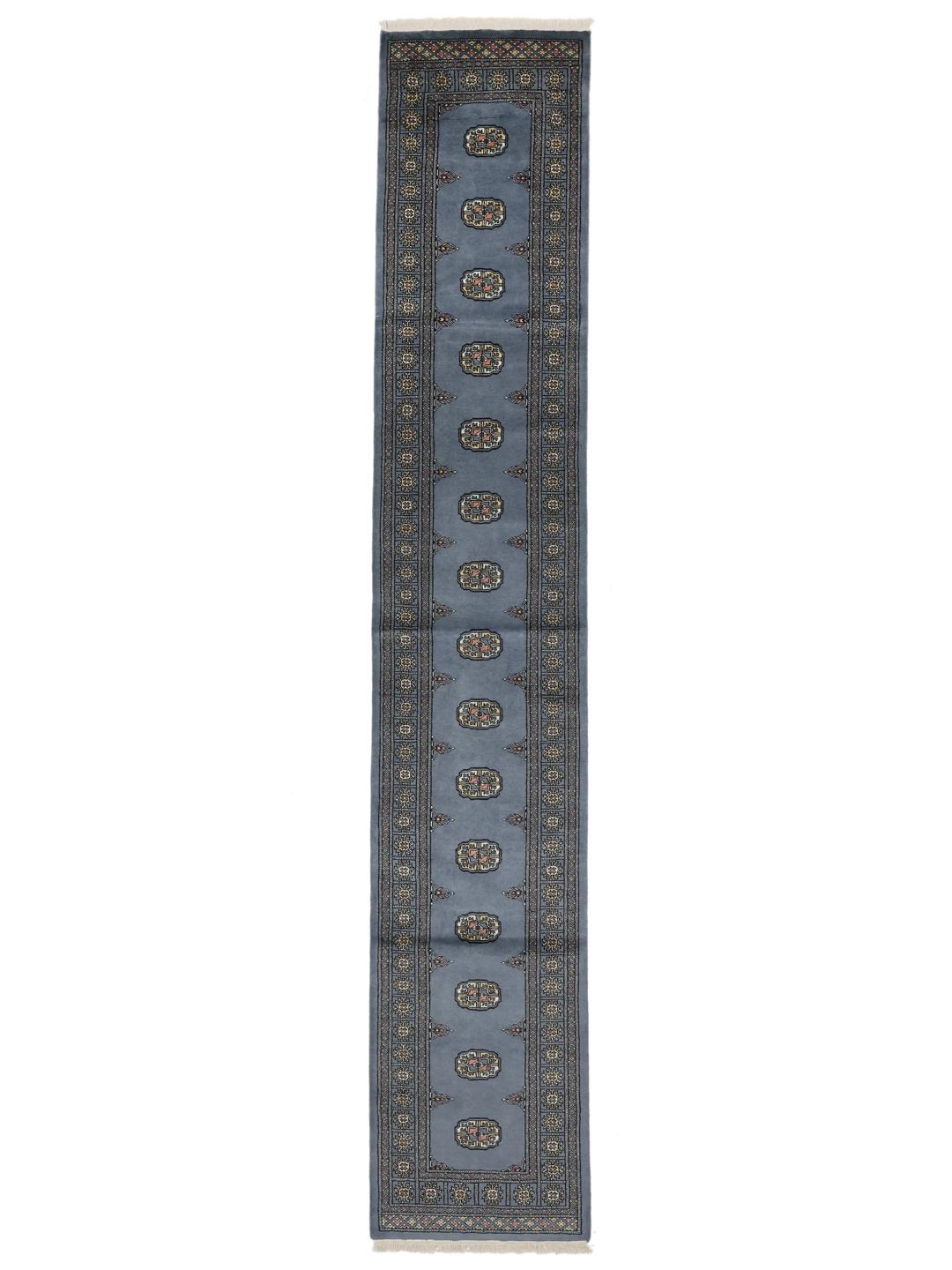
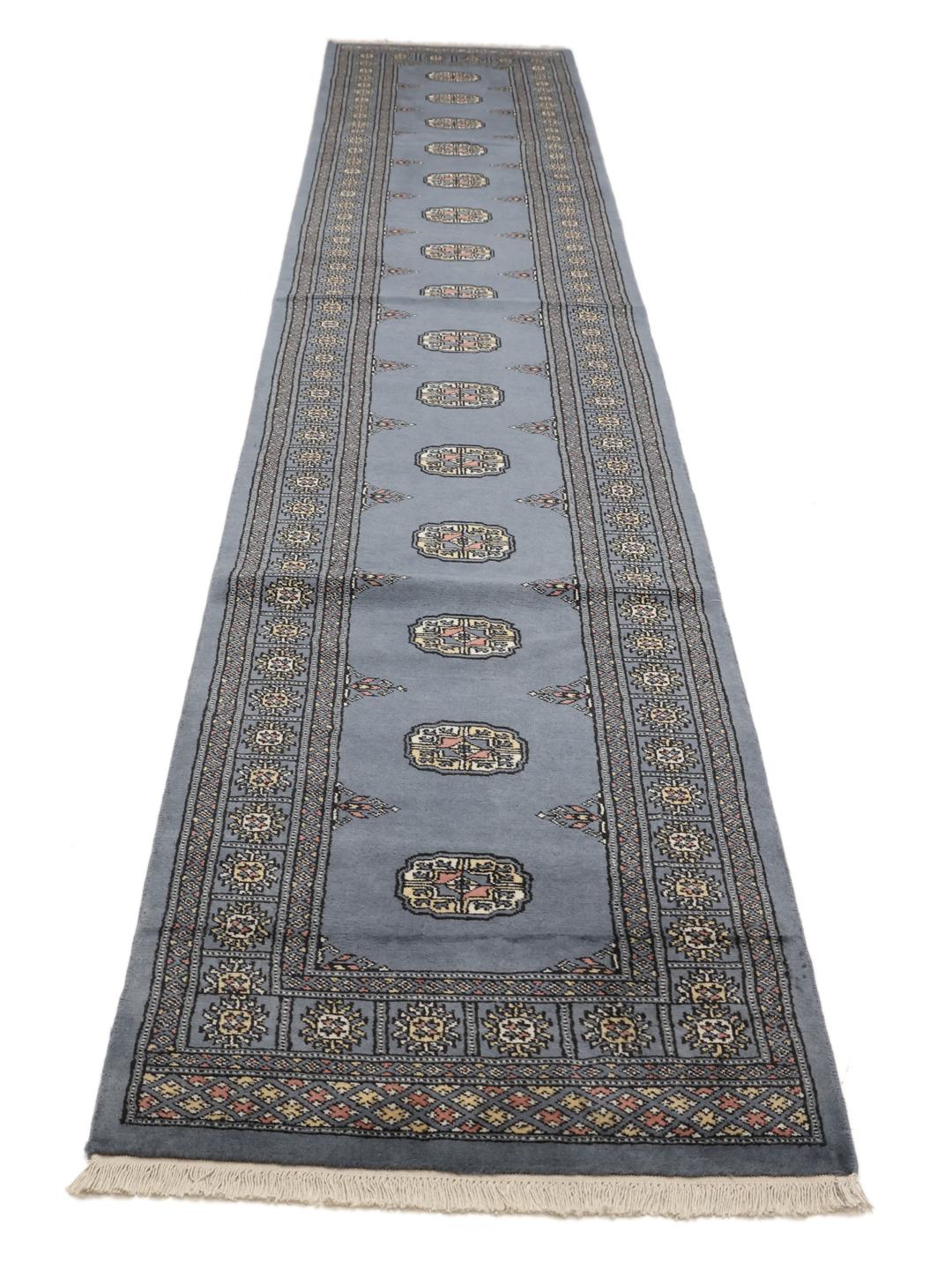
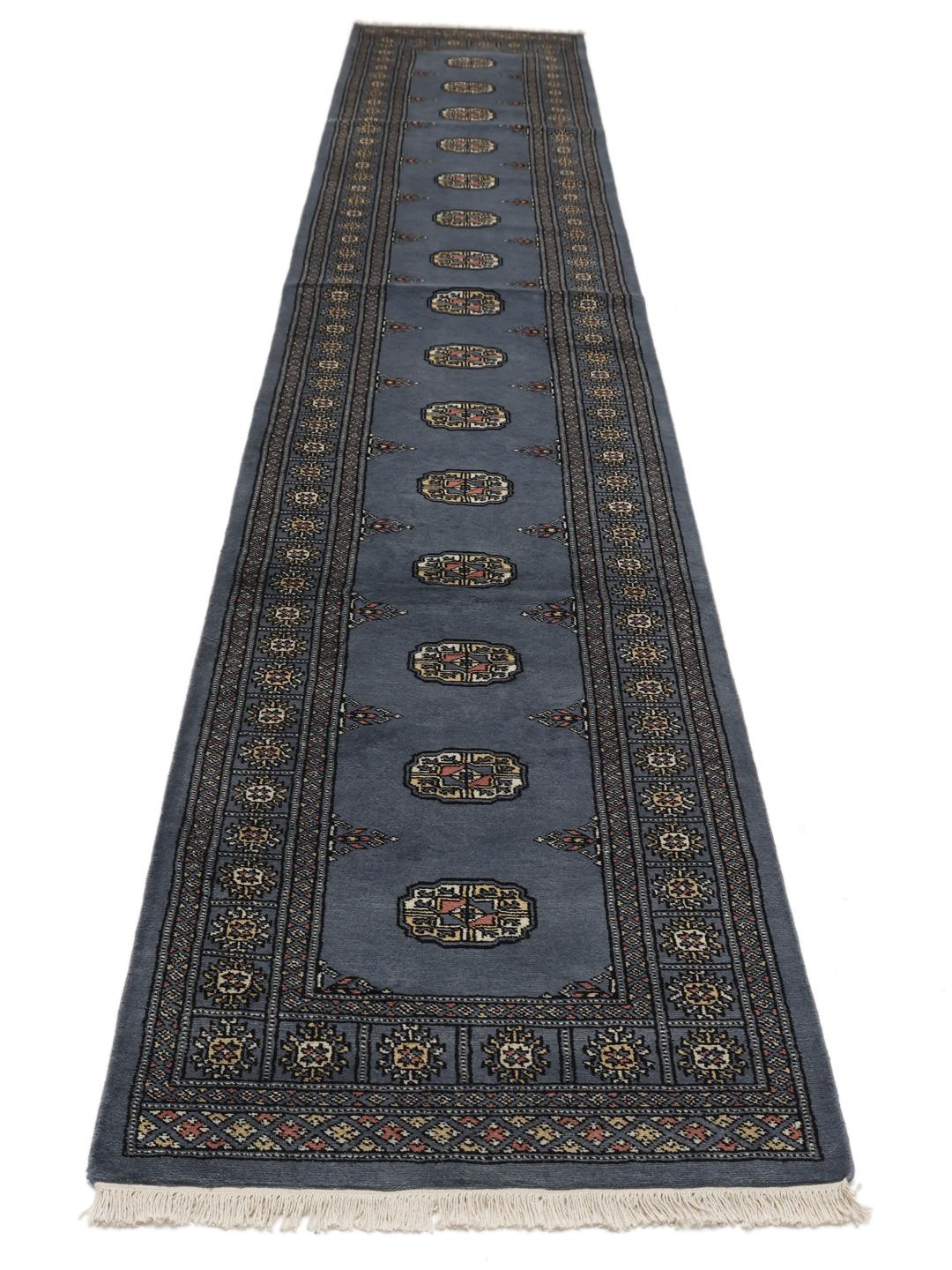
The visual language of this tradition is defined by the repetition of the gul motif, which are stylised, octagonal medallions often resembling elephant feet. These are typically arranged in clean, symmetrical rows across the field, framed by complex, decorative borders. While traditional Bokhara rugs are often found in shades of red, this blue version offers a modern, sophisticated departure, showcasing the versatility of the design tradition.
Owning a hand-knotted rug from this tradition is an investment in cultural heritage and human skill. These pieces are valued by collectors not just for their aesthetic appeal, but for the history they represent and the disciplined craft required to create them. By bringing this runner into your home, you are preserving a centuries-old art form that celebrates the tactile beauty of natural materials.